
Search
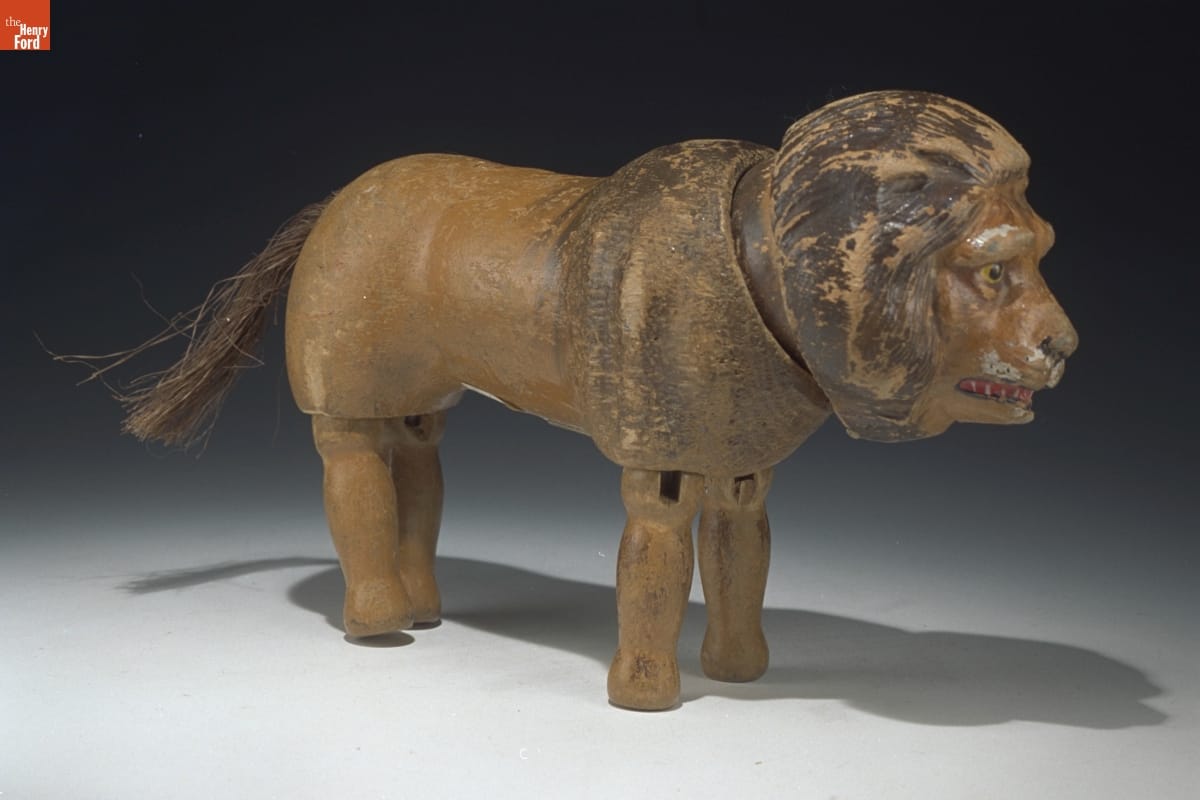
- Toy Lion from Humpty Dumpty Circus, 1918-1930 - German immigrant Albert Schoenhut first patented the Humpty Dumpty Circus in 1903. He followed the high-quality tradition of German toymakers in manufacturing the many unusual and complex pieces for this toy circus. The jointed heads, arms, and legs on the wooden animals and figures used elasticized cords, which allowed them to be posed.
- 1918-1930
- Collections - Artifact
Toy Lion from Humpty Dumpty Circus, 1918-1930
German immigrant Albert Schoenhut first patented the Humpty Dumpty Circus in 1903. He followed the high-quality tradition of German toymakers in manufacturing the many unusual and complex pieces for this toy circus. The jointed heads, arms, and legs on the wooden animals and figures used elasticized cords, which allowed them to be posed.
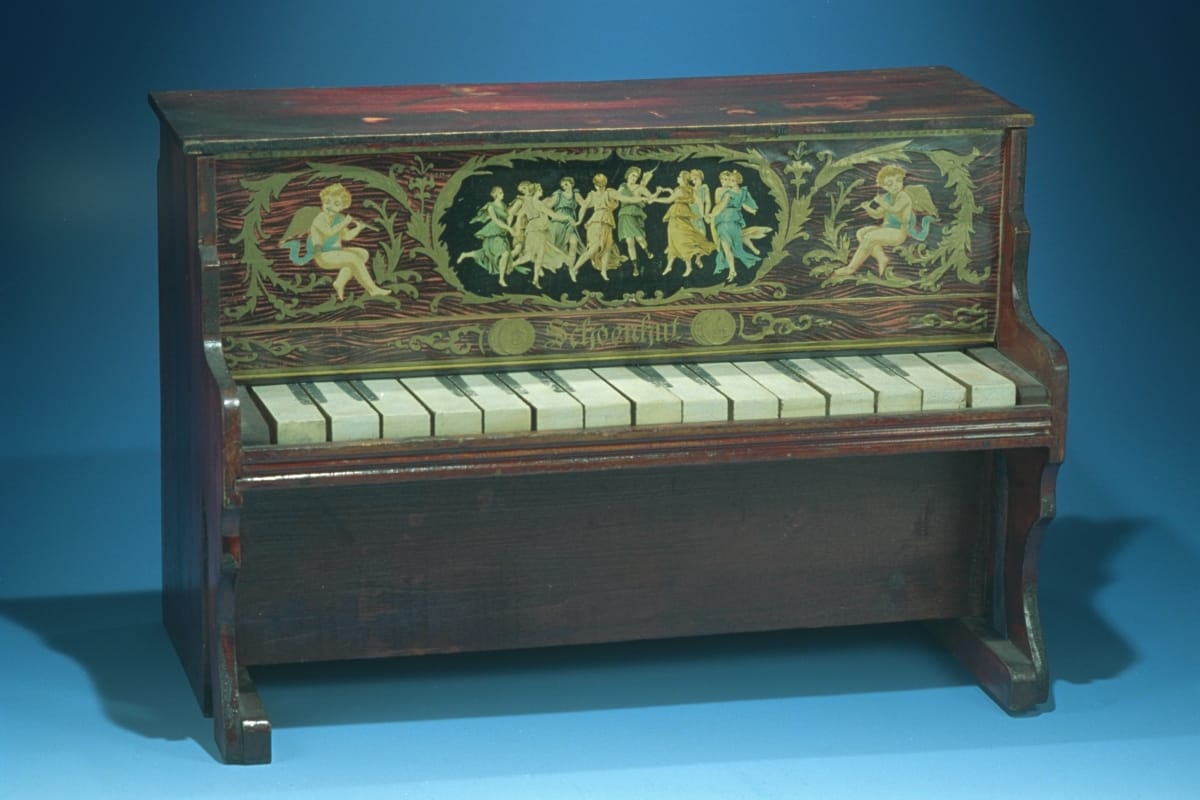
- Toy Piano, 1900-1915 - German immigrant Albert Schoenhut began producing pianos in 1872. The metal sounding bars inside the piano were designed to withstand children's rough handling of the keys, while the piano itself was marketed to parents as an educational tool for their children.
- 1900-1915
- Collections - Artifact
Toy Piano, 1900-1915
German immigrant Albert Schoenhut began producing pianos in 1872. The metal sounding bars inside the piano were designed to withstand children's rough handling of the keys, while the piano itself was marketed to parents as an educational tool for their children.
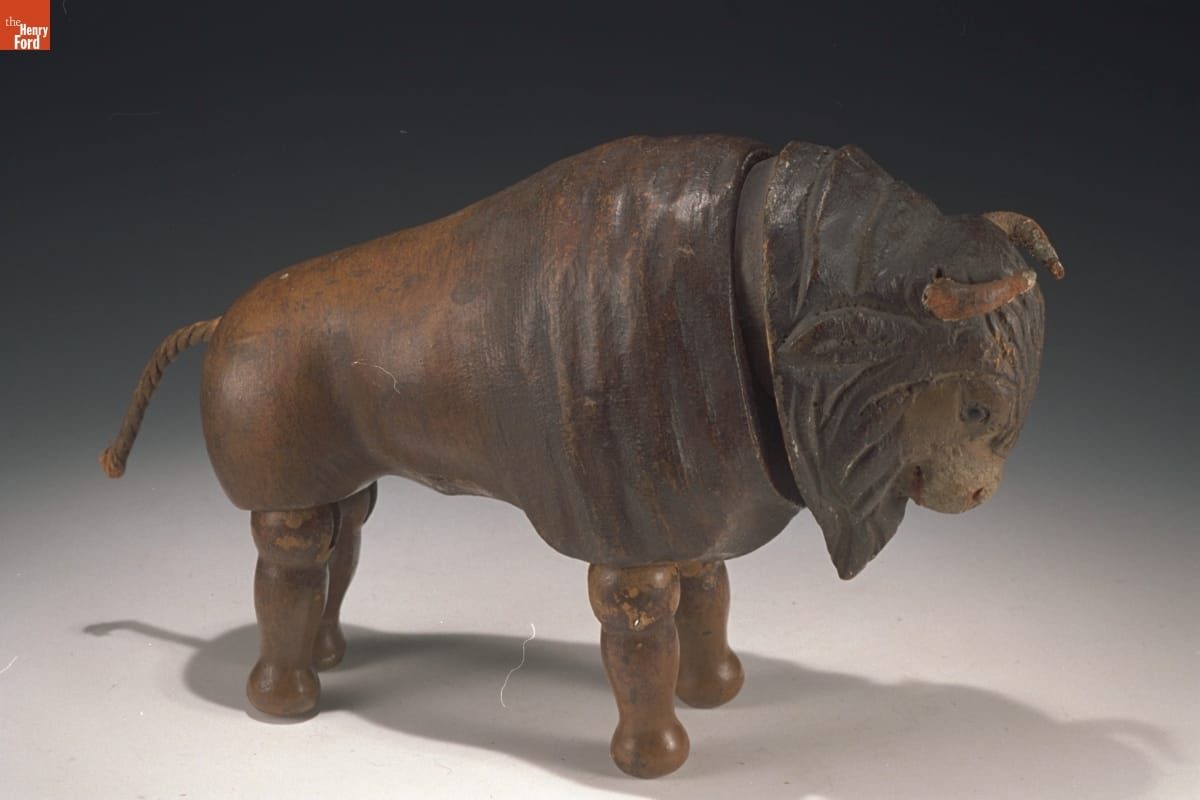
- Toy Bison, 1906-1918 - German immigrant Albert Schoenhut first patented the Humpty Dumpty Circus in 1903. He followed the high-quality tradition of German toymakers in manufacturing the many unusual and complex pieces for this toy circus. The jointed heads, arms, and legs on the wooden animals and figures used elasticized cords, which allowed them to be posed.
- 1906-1918
- Collections - Artifact
Toy Bison, 1906-1918
German immigrant Albert Schoenhut first patented the Humpty Dumpty Circus in 1903. He followed the high-quality tradition of German toymakers in manufacturing the many unusual and complex pieces for this toy circus. The jointed heads, arms, and legs on the wooden animals and figures used elasticized cords, which allowed them to be posed.
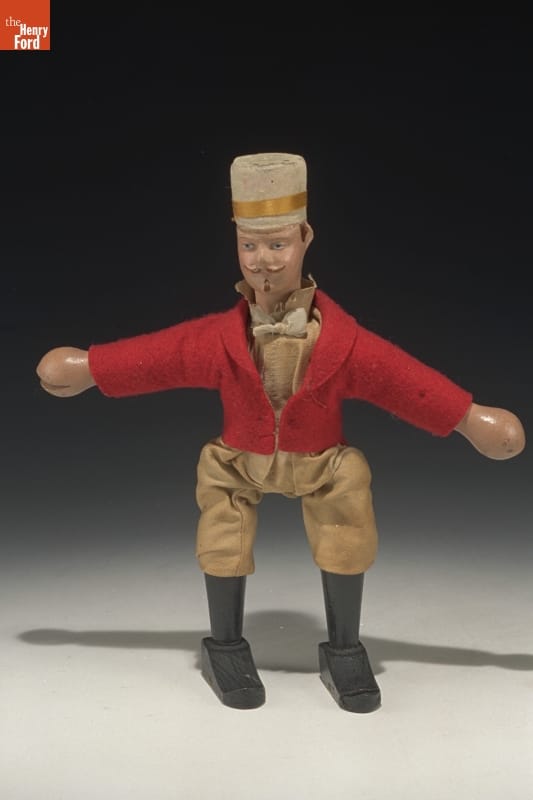
- Toy Ringmaster from Humpty Dumpty Circus, 1924-1930 - German immigrant Albert Schoenhut first patented the Humpty Dumpty Circus in 1903. He followed the high-quality tradition of German toymakers in manufacturing the many unusual and complex pieces for this toy circus. The jointed heads, arms, and legs on the wooden animals and figures used elasticized cords, which allowed them to be posed.
- 1924-1930
- Collections - Artifact
Toy Ringmaster from Humpty Dumpty Circus, 1924-1930
German immigrant Albert Schoenhut first patented the Humpty Dumpty Circus in 1903. He followed the high-quality tradition of German toymakers in manufacturing the many unusual and complex pieces for this toy circus. The jointed heads, arms, and legs on the wooden animals and figures used elasticized cords, which allowed them to be posed.
- Toy Camel, 1906-1918 - German immigrant Albert Schoenhut first patented the Humpty Dumpty Circus in 1903. He followed the high-quality tradition of German toymakers in manufacturing the many unusual and complex pieces for this toy circus. The jointed heads, arms, and legs on the wooden animals and figures used elasticized cords, which allowed them to be posed.
- 1906-1918
- Collections - Artifact
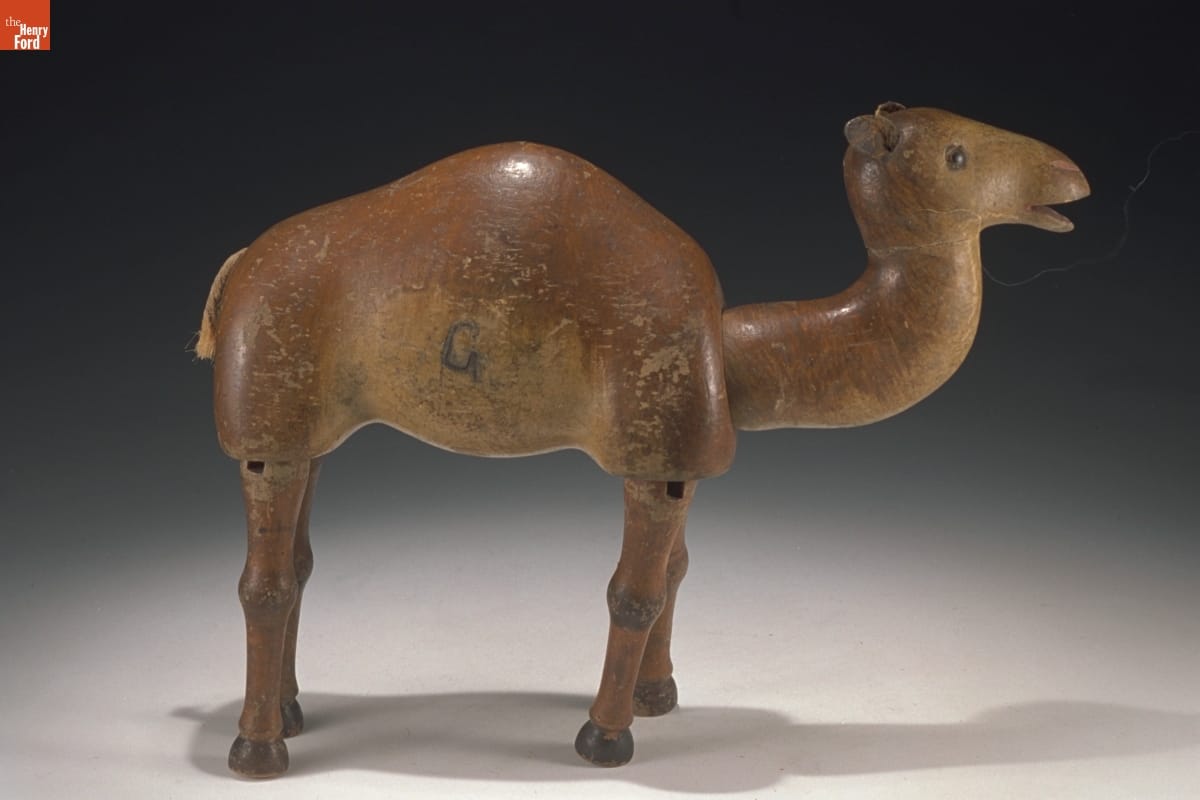
Toy Camel, 1906-1918
German immigrant Albert Schoenhut first patented the Humpty Dumpty Circus in 1903. He followed the high-quality tradition of German toymakers in manufacturing the many unusual and complex pieces for this toy circus. The jointed heads, arms, and legs on the wooden animals and figures used elasticized cords, which allowed them to be posed.
- Toy Clown From Humpty Dumpty Circus, 1923-1930 - German immigrant Albert Schoenhut first patented the Humpty Dumpty Circus in 1903. He followed the high-quality tradition of German toymakers in manufacturing the many unusual and complex pieces for this toy circus. The jointed heads, arms, and legs on the wooden animals and figures used elasticized cords, which allowed them to be posed.
- 1923-1930
- Collections - Artifact
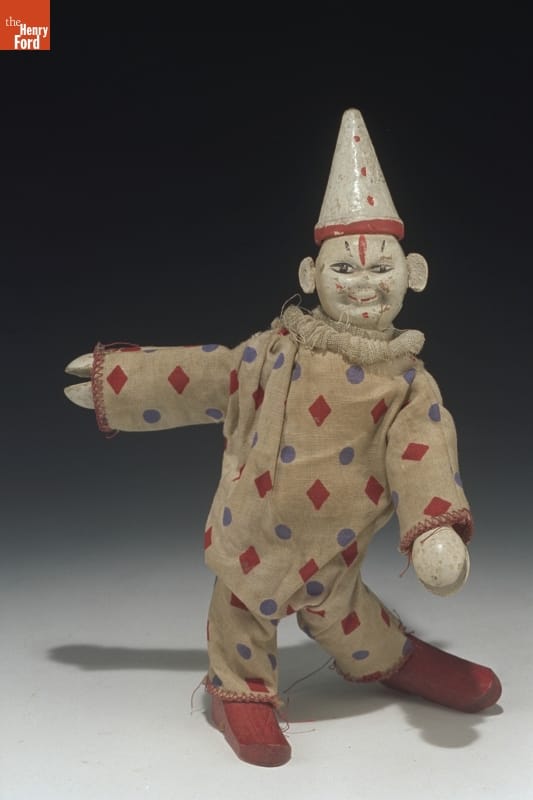
Toy Clown From Humpty Dumpty Circus, 1923-1930
German immigrant Albert Schoenhut first patented the Humpty Dumpty Circus in 1903. He followed the high-quality tradition of German toymakers in manufacturing the many unusual and complex pieces for this toy circus. The jointed heads, arms, and legs on the wooden animals and figures used elasticized cords, which allowed them to be posed.
- Humpty Dumpty Circus Flags and Banners, 1929-1930 - German immigrant Albert Schoenhut first patented the Humpty Dumpty Circus in 1903. He followed the high-quality tradition of German toymakers in manufacturing the many unusual and complex pieces for this toy circus. The jointed heads, arms, and legs on the wooden animals and figures used elasticized cords, which allowed them to be posed.
- 1929-1930
- Collections - Artifact
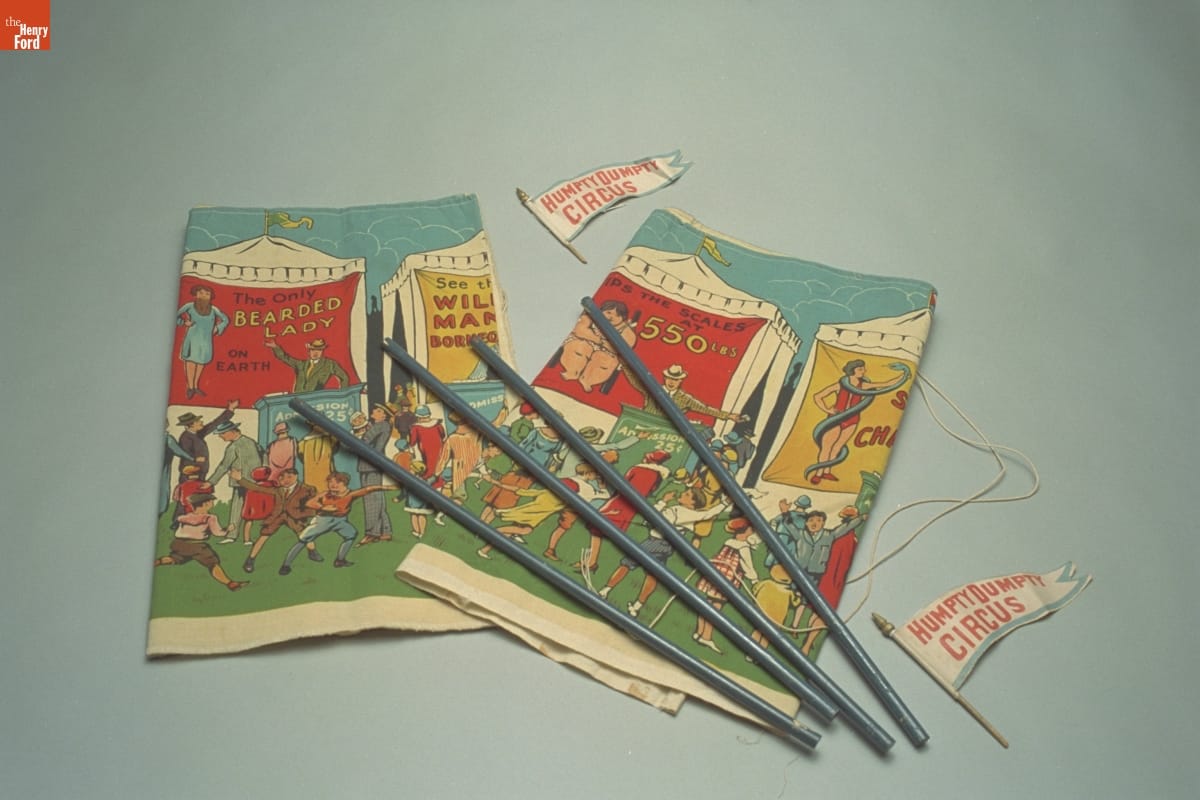
Humpty Dumpty Circus Flags and Banners, 1929-1930
German immigrant Albert Schoenhut first patented the Humpty Dumpty Circus in 1903. He followed the high-quality tradition of German toymakers in manufacturing the many unusual and complex pieces for this toy circus. The jointed heads, arms, and legs on the wooden animals and figures used elasticized cords, which allowed them to be posed.
- Alphies Alphabet Blocks, 1916-1930 - A creative take on classic alphabet blocks, A. Schoenhut Company's Alphie blocks appealed to children and adults. Interesting characters and colorful images attracted young eyes, and each box of Alphies came with rubber balls for a fun game of ten pins. Advertisements assured parents that while playing with these lettered blocks, children would be "unconsciously learning the alphabet."
- 1916-1930
- Collections - Artifact
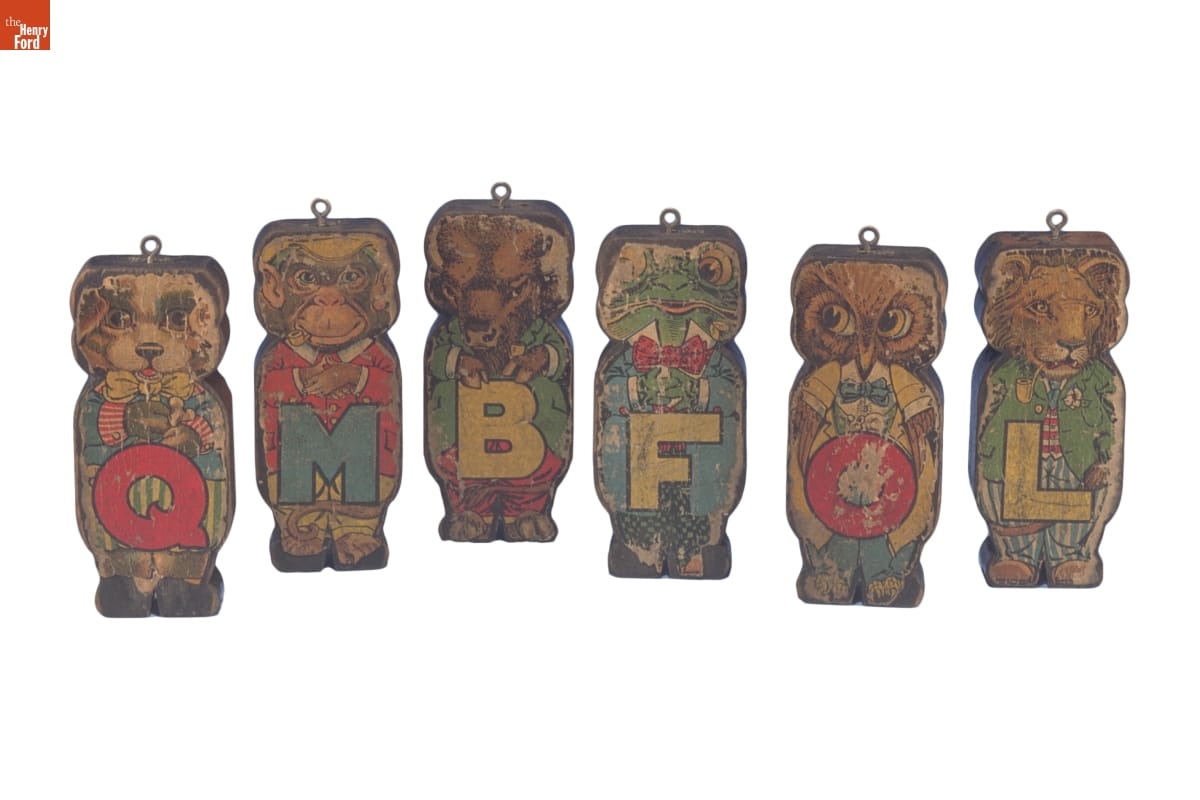
Alphies Alphabet Blocks, 1916-1930
A creative take on classic alphabet blocks, A. Schoenhut Company's Alphie blocks appealed to children and adults. Interesting characters and colorful images attracted young eyes, and each box of Alphies came with rubber balls for a fun game of ten pins. Advertisements assured parents that while playing with these lettered blocks, children would be "unconsciously learning the alphabet."
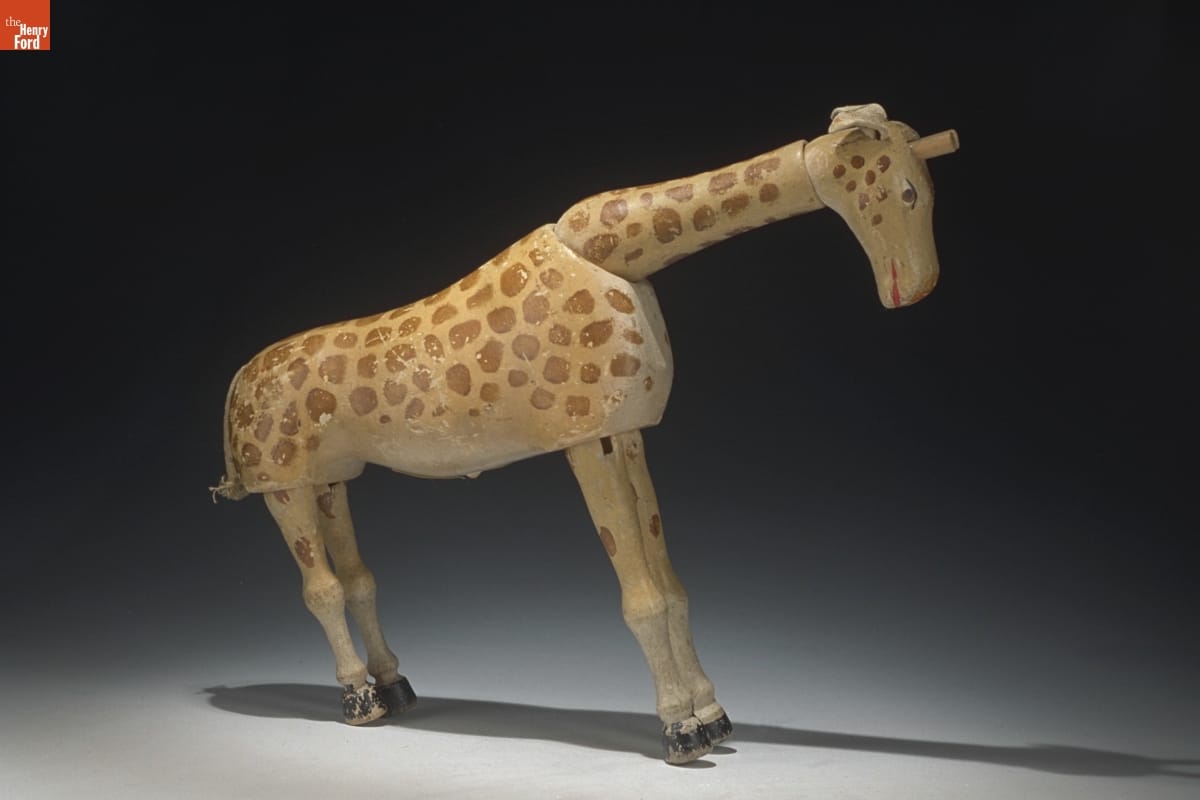
- Toy Giraffe from Humpty Dumpty Circus, 1918-1930 - German immigrant Albert Schoenhut first patented the Humpty Dumpty Circus in 1903. He followed the high-quality tradition of German toymakers in manufacturing the many unusual and complex pieces for this toy circus. The jointed heads, arms, and legs on the wooden animals and figures used elasticized cords, which allowed them to be posed.
- 1918-1930
- Collections - Artifact
Toy Giraffe from Humpty Dumpty Circus, 1918-1930
German immigrant Albert Schoenhut first patented the Humpty Dumpty Circus in 1903. He followed the high-quality tradition of German toymakers in manufacturing the many unusual and complex pieces for this toy circus. The jointed heads, arms, and legs on the wooden animals and figures used elasticized cords, which allowed them to be posed.