
Search
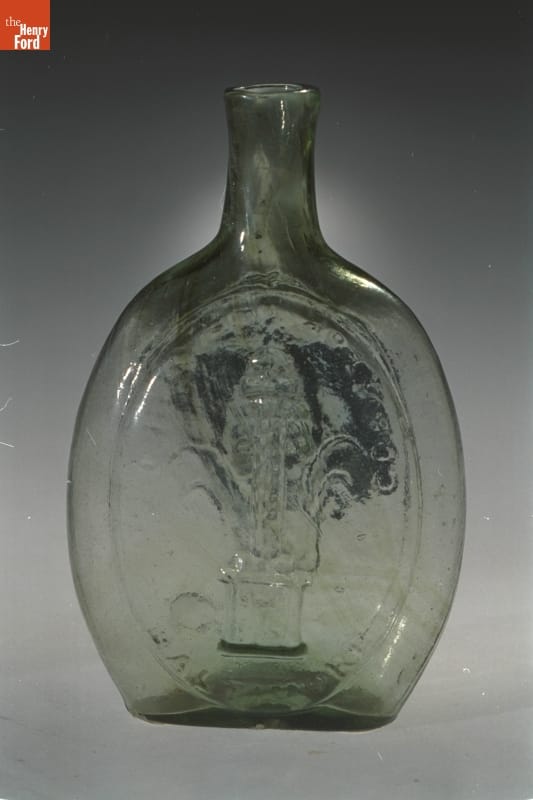
- Flask, 1840-1855 - Glass factories in America began producing inexpensive, mold-formed flasks in the early 1800s. These figured flasks, often decorated with symbols of national pride or political or cultural affiliation, appealed to America's common man. This Baltimore-made flask's slogan while referencing the alcoholic content also points to the importance of the Maryland city in the world grain trade.
- 1840-1855
- Collections - Artifact
Flask, 1840-1855
Glass factories in America began producing inexpensive, mold-formed flasks in the early 1800s. These figured flasks, often decorated with symbols of national pride or political or cultural affiliation, appealed to America's common man. This Baltimore-made flask's slogan while referencing the alcoholic content also points to the importance of the Maryland city in the world grain trade.
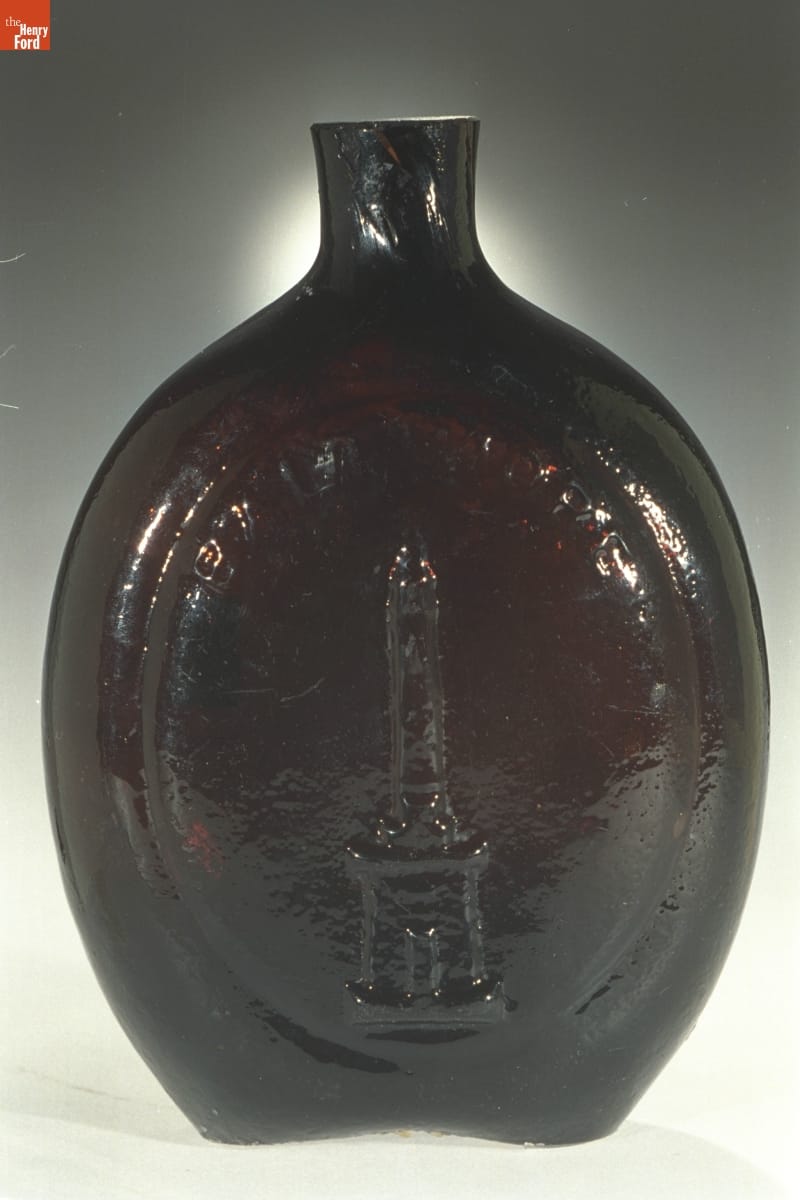
- Flask, 1840-1855 - Glass factories in America began producing inexpensive, mold-formed flasks in the early 1800s. These figured flasks, often decorated with phrases and symbols of national pride, appealed to the common man. Baltimore's Battle Monument adorns one side of this flask. On the other side is the often-repeated phrase "Liberty and Union" -- first used by Daniel Webster in an 1830 speech.
- 1840-1855
- Collections - Artifact
Flask, 1840-1855
Glass factories in America began producing inexpensive, mold-formed flasks in the early 1800s. These figured flasks, often decorated with phrases and symbols of national pride, appealed to the common man. Baltimore's Battle Monument adorns one side of this flask. On the other side is the often-repeated phrase "Liberty and Union" -- first used by Daniel Webster in an 1830 speech.
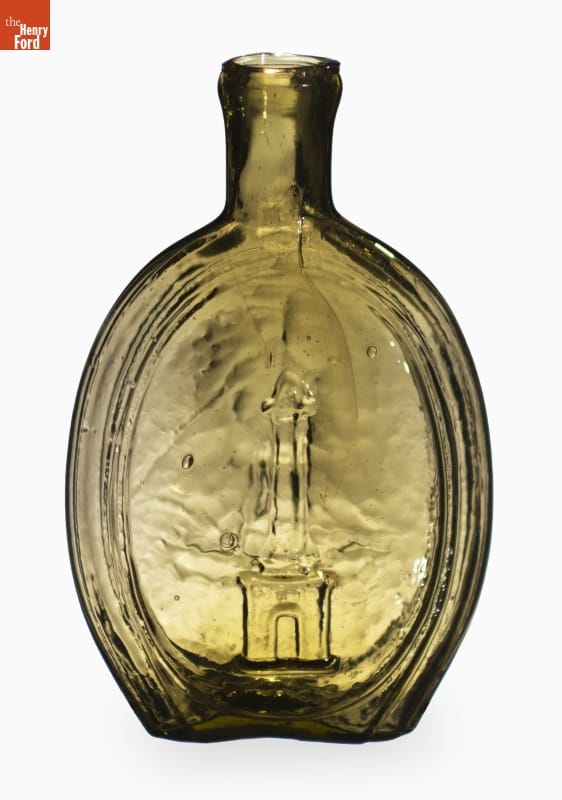
- Flask, 1825-1840 - Glass factories in America began producing inexpensive, mold-formed flasks in the early 1800s. These figured flasks, often decorated with symbols of national or civic pride, appealed to America's common man. Citizens of Baltimore, Maryland, would have recognized the image of the city's Washington Monument on this locally made flask. And the sloop would have been a familiar sight to those living in this port city.
- 1825-1840
- Collections - Artifact
Flask, 1825-1840
Glass factories in America began producing inexpensive, mold-formed flasks in the early 1800s. These figured flasks, often decorated with symbols of national or civic pride, appealed to America's common man. Citizens of Baltimore, Maryland, would have recognized the image of the city's Washington Monument on this locally made flask. And the sloop would have been a familiar sight to those living in this port city.
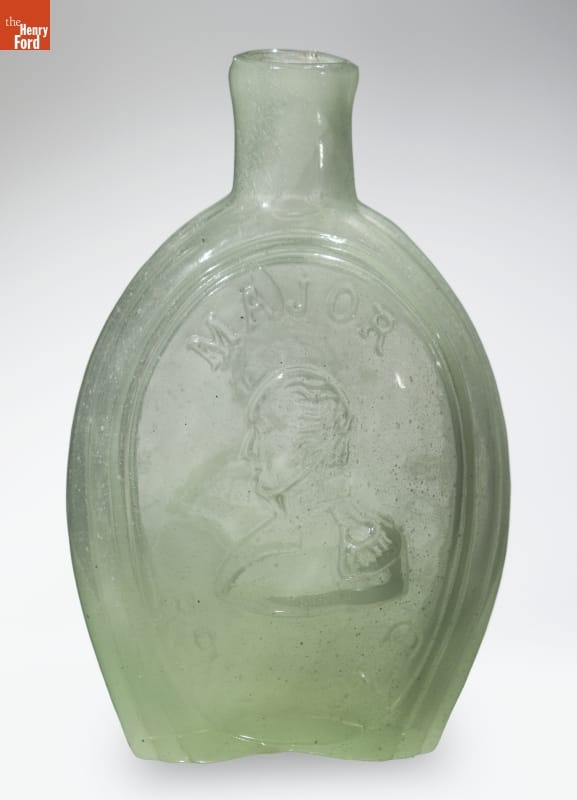
- Flask, 1846-1855 - Glass factories in America began producing inexpensive, mold-formed flasks in the early 1800s. These figured flasks, often decorated with symbols of national pride, appealed to America's common man. This flask contains images of two American heroes of the Mexican War -- General Zachary Taylor ("Rough and Ready") and Major Samuel Ringgold, one of the first casualties of the war.
- 1846-1855
- Collections - Artifact
Flask, 1846-1855
Glass factories in America began producing inexpensive, mold-formed flasks in the early 1800s. These figured flasks, often decorated with symbols of national pride, appealed to America's common man. This flask contains images of two American heroes of the Mexican War -- General Zachary Taylor ("Rough and Ready") and Major Samuel Ringgold, one of the first casualties of the war.
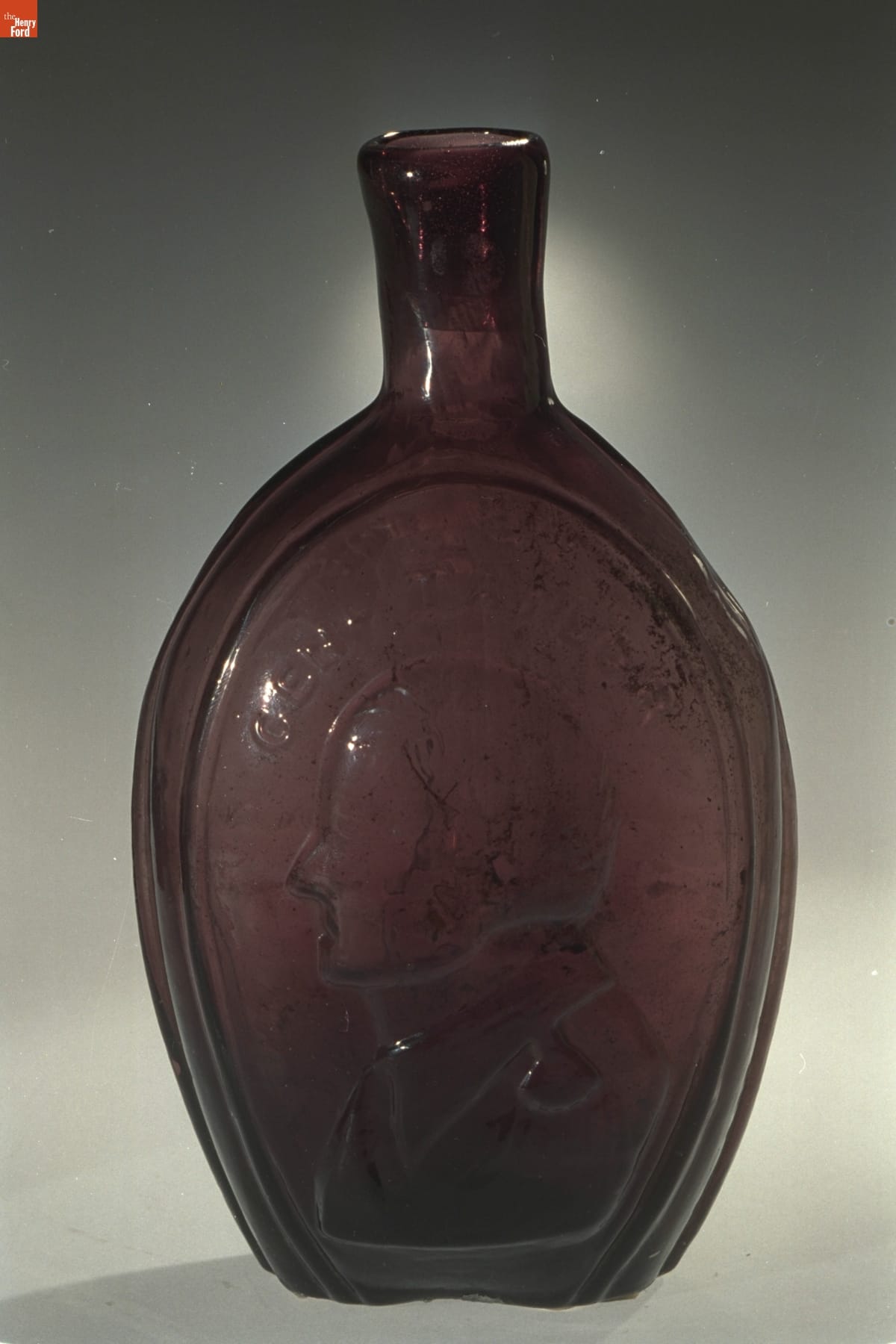
- Flask, 1848-1855 - Glass factories in America began producing inexpensive, mold-formed flasks in the early 1800s. These figured flasks, often decorated with symbols of national pride or political or cultural affiliation, appealed to America's common man. This flask pairs Mexican War hero General Zachary Taylor with Baltimore's Washington Monument. It is an appropriate connection; Taylor, like George Washington, would go on to be elected president.
- 1848-1855
- Collections - Artifact
Flask, 1848-1855
Glass factories in America began producing inexpensive, mold-formed flasks in the early 1800s. These figured flasks, often decorated with symbols of national pride or political or cultural affiliation, appealed to America's common man. This flask pairs Mexican War hero General Zachary Taylor with Baltimore's Washington Monument. It is an appropriate connection; Taylor, like George Washington, would go on to be elected president.
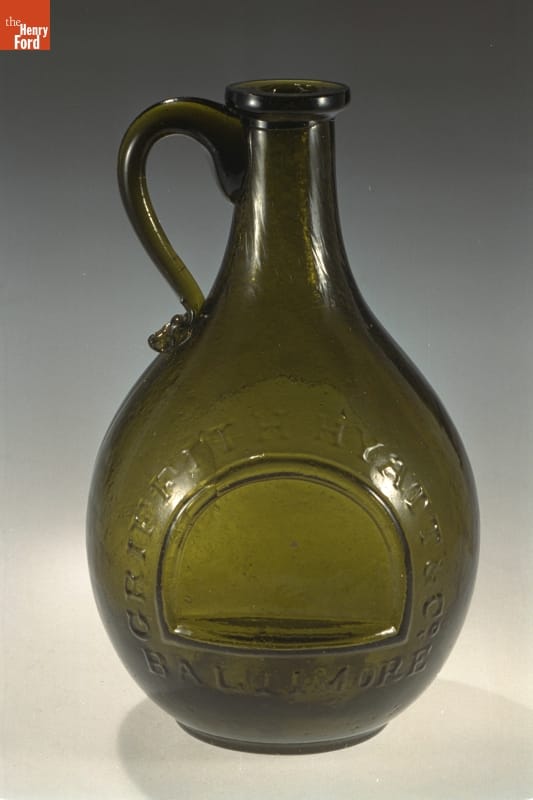
- Whiskey Bottle, 1840-1860 -
- 1840-1860
- Collections - Artifact
Whiskey Bottle, 1840-1860
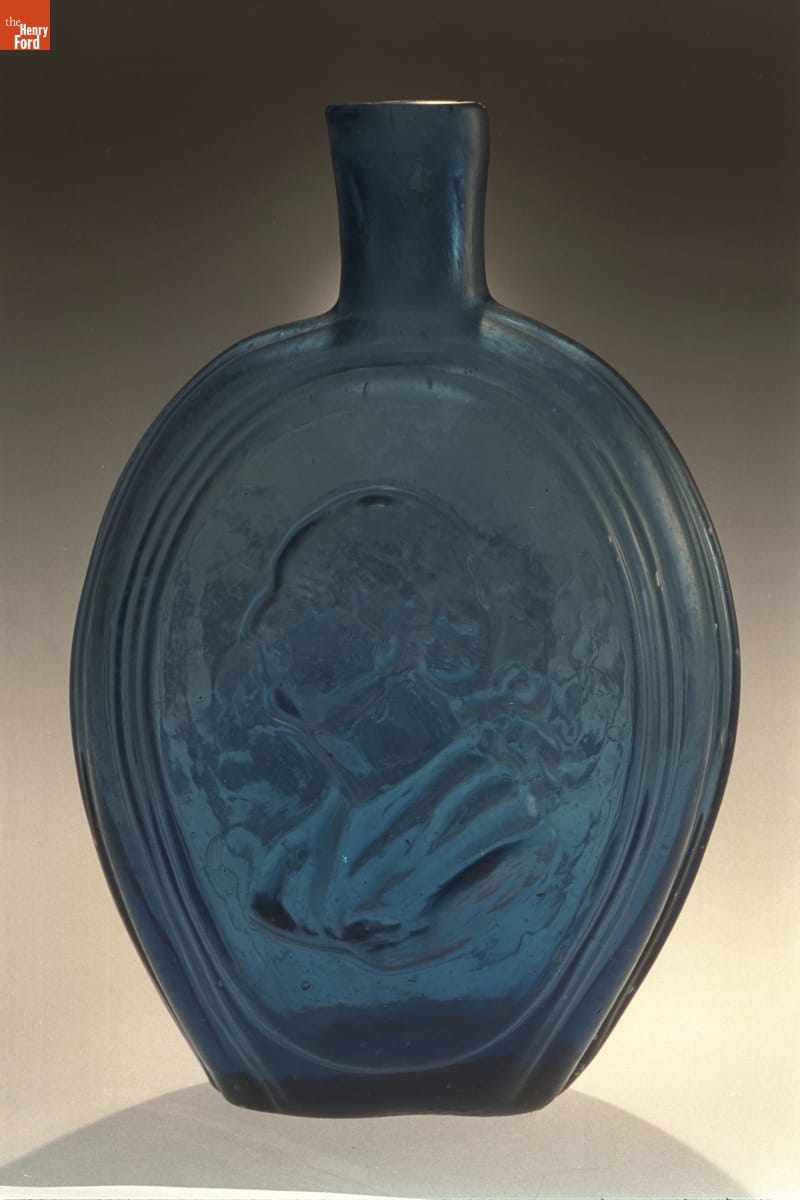
- Flask, 1836-1850 - Whether depicted as commander-in-chief of the Continental Army or the first president of the United States, George Washington is a common likeness on early American flasks. Washington appears on 72 recorded flask designs--more than any other person. This example depicts Washington as a classical statesman with an American eagle.
- 1836-1850
- Collections - Artifact
Flask, 1836-1850
Whether depicted as commander-in-chief of the Continental Army or the first president of the United States, George Washington is a common likeness on early American flasks. Washington appears on 72 recorded flask designs--more than any other person. This example depicts Washington as a classical statesman with an American eagle.
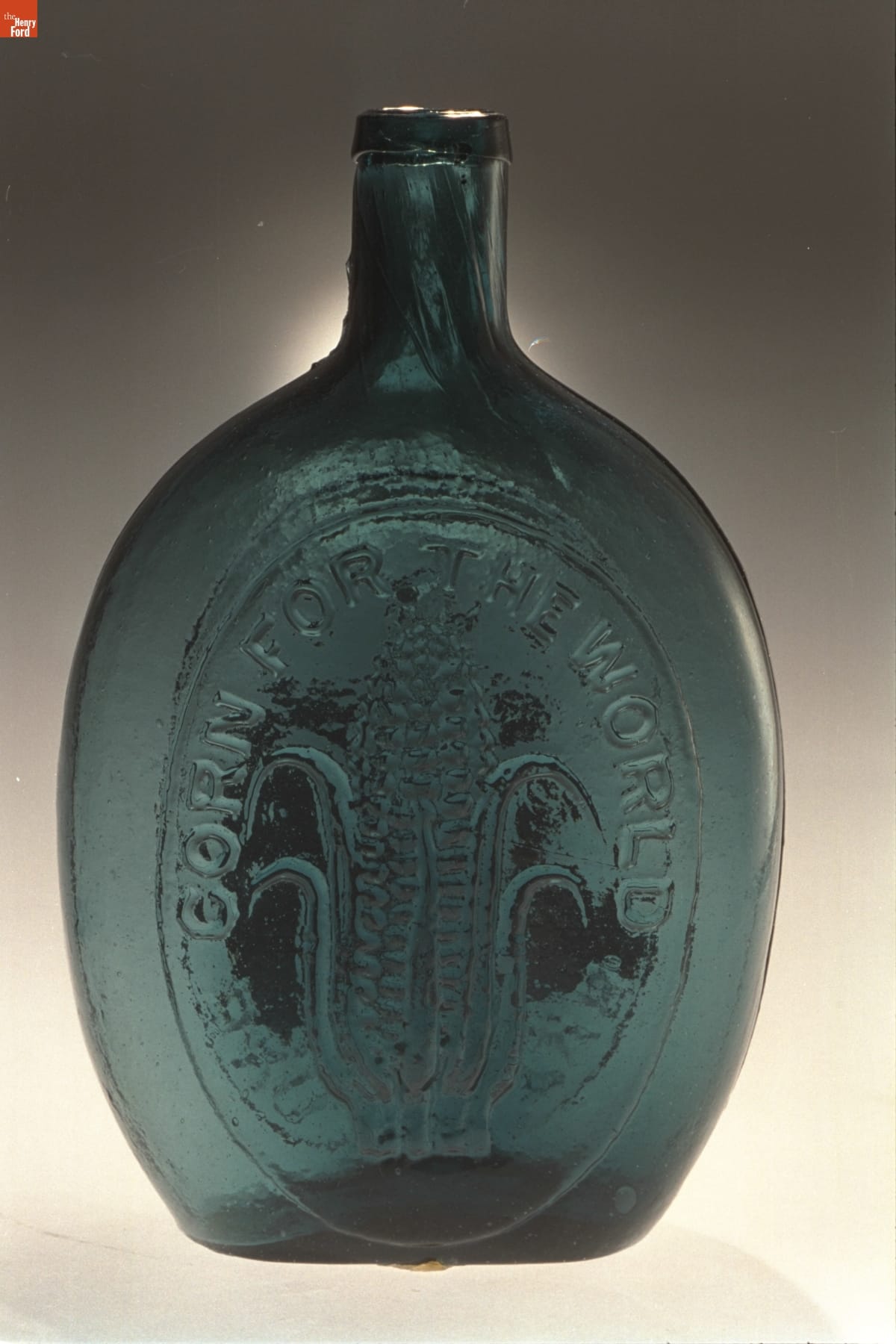
- Flask, 1840-1855 - Glass factories in America began producing inexpensive, mold-formed flasks in the early 1800s. These figured flasks, often decorated with symbols of national pride or political or cultural affiliation, appealed to America's common man. This Baltimore-made flask's slogan while referencing the alcoholic content also points to the importance of the Maryland city in the world grain trade.
- 1840-1855
- Collections - Artifact
Flask, 1840-1855
Glass factories in America began producing inexpensive, mold-formed flasks in the early 1800s. These figured flasks, often decorated with symbols of national pride or political or cultural affiliation, appealed to America's common man. This Baltimore-made flask's slogan while referencing the alcoholic content also points to the importance of the Maryland city in the world grain trade.
- Flask, 1840-1855 - Glass factories in America began producing inexpensive, mold-formed flasks in the early 1800s. These figured flasks, often decorated with symbols of national pride or political or cultural affiliation, appealed to America's common man. This Baltimore-made flask's slogan while referencing the alcoholic content also points to the importance of the Maryland city in the world grain trade.
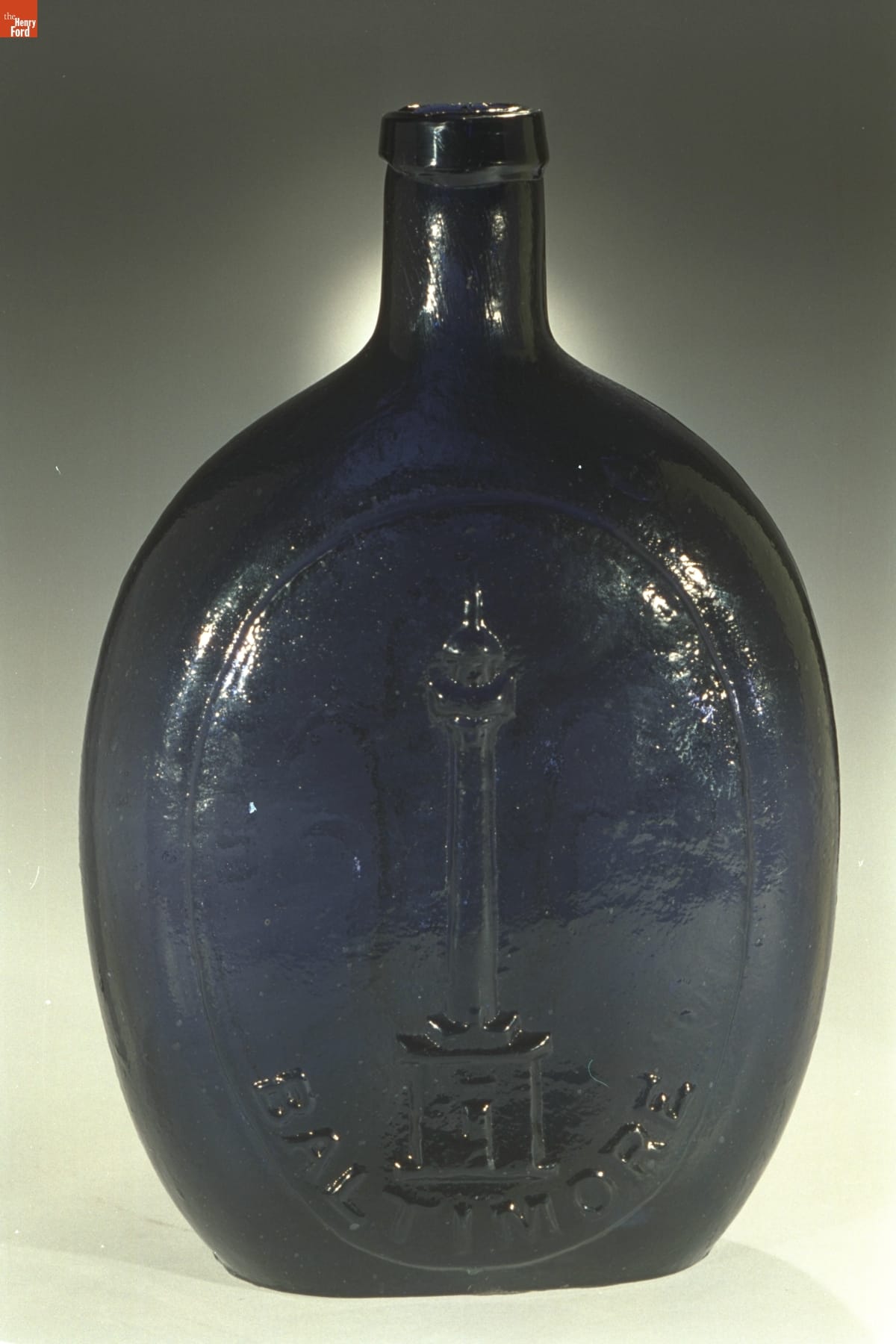
- 1840-1855
- Collections - Artifact
Flask, 1840-1855
Glass factories in America began producing inexpensive, mold-formed flasks in the early 1800s. These figured flasks, often decorated with symbols of national pride or political or cultural affiliation, appealed to America's common man. This Baltimore-made flask's slogan while referencing the alcoholic content also points to the importance of the Maryland city in the world grain trade.
- Flask, 1847-1855 - Glass factories in America began producing inexpensive, mold-formed flasks in the early 1800s. These figured flasks, often decorated with symbols of national pride, appealed to America's common man. An image of Mexican War hero Zachary Taylor adorns one side of this flask. On the other side, Baltimore flask makers touted the city's importance in the international grain trade with the slogan "Corn for the World."
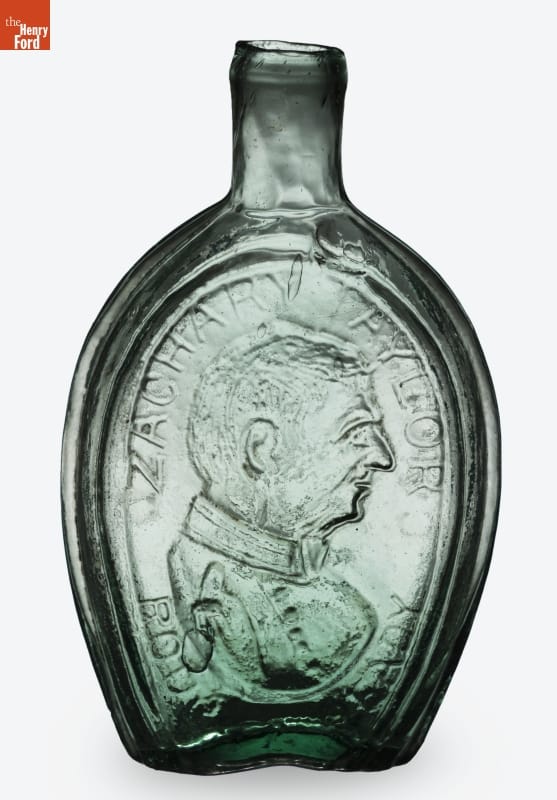
- 1847-1855
- Collections - Artifact
Flask, 1847-1855
Glass factories in America began producing inexpensive, mold-formed flasks in the early 1800s. These figured flasks, often decorated with symbols of national pride, appealed to America's common man. An image of Mexican War hero Zachary Taylor adorns one side of this flask. On the other side, Baltimore flask makers touted the city's importance in the international grain trade with the slogan "Corn for the World."