
Search
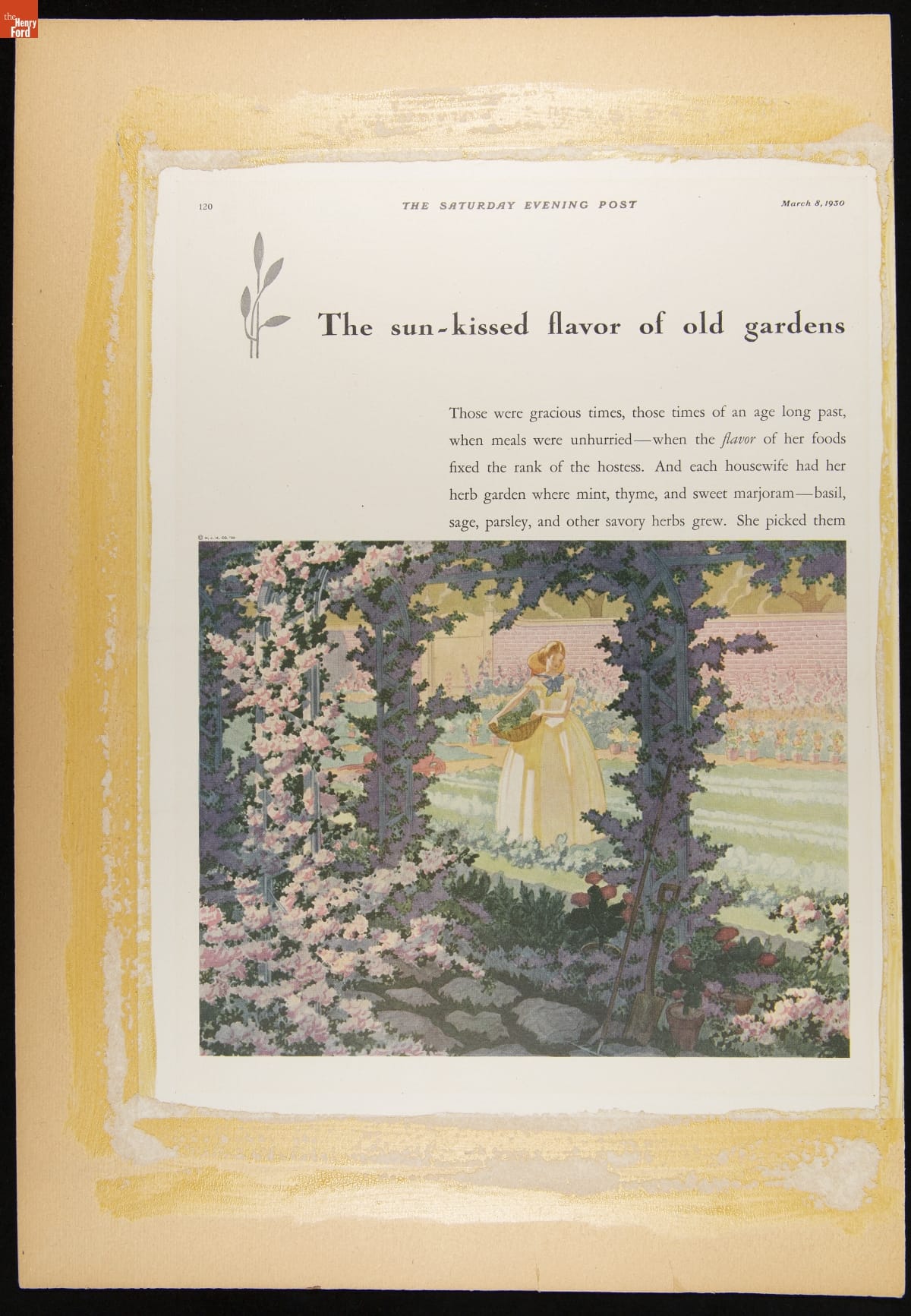
- "The Sun-Kissed Flavor of Old Gardens," Heinz Company Advertisement, March 8, 1930 - This two-page tear sheet advertising layout was created to be published in the Saturday Evening Post on March 8, 1930. The advertisement describes how old ways of cooking were painstaking and time consuming, whereas Heinz products exhibit the same great taste of old recipes without all the hassle.
- March 08, 1930
- Collections - Artifact
"The Sun-Kissed Flavor of Old Gardens," Heinz Company Advertisement, March 8, 1930
This two-page tear sheet advertising layout was created to be published in the Saturday Evening Post on March 8, 1930. The advertisement describes how old ways of cooking were painstaking and time consuming, whereas Heinz products exhibit the same great taste of old recipes without all the hassle.
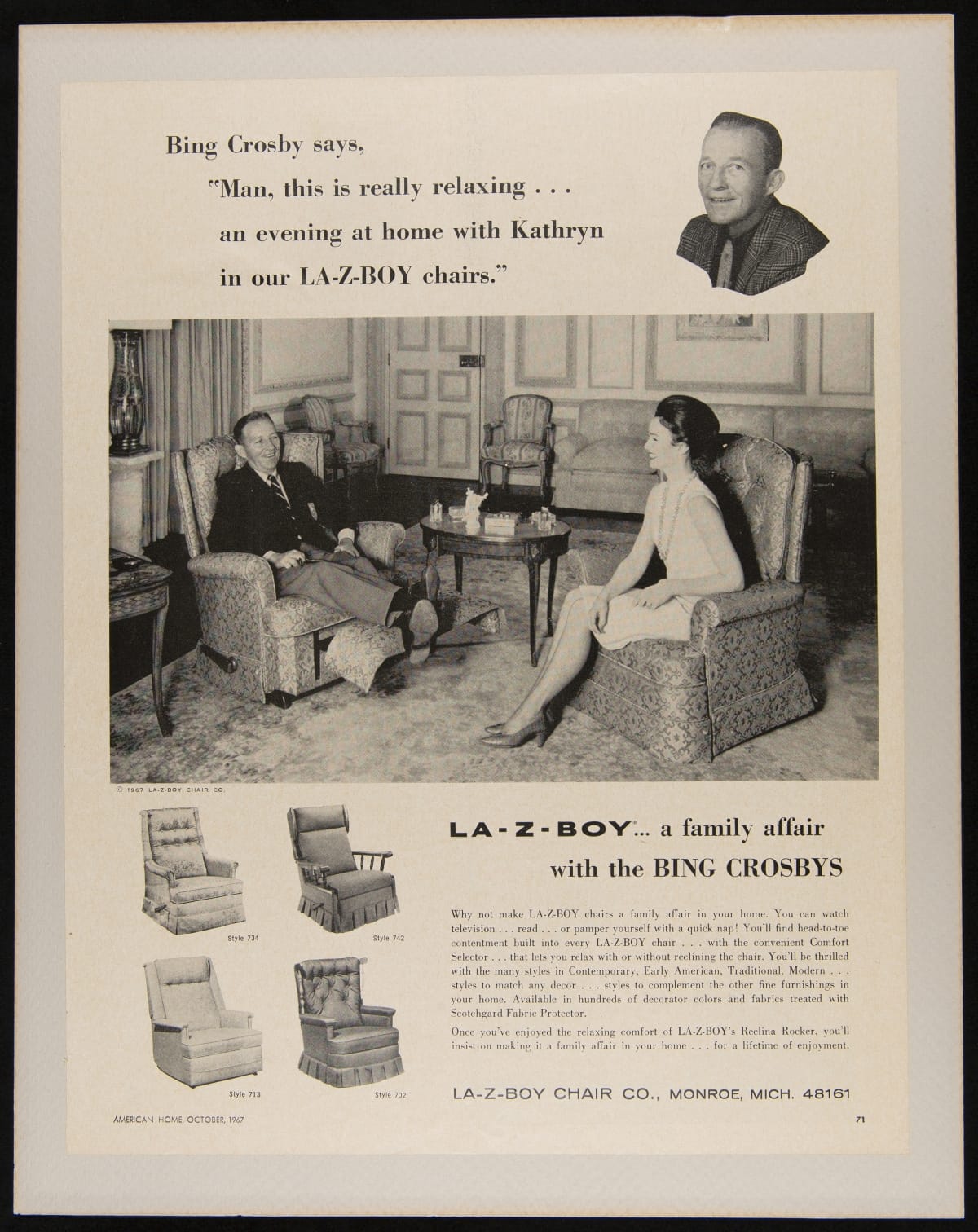
- La-Z-Boy Advertisement in American Home Magazine, "A Family Affair with the Bing Crosbys," October 1967 - In 1927, cousins Edward Knabusch and Edwin Shoemaker, established what would later become La-Z-Boy, Inc. in Monroe, Michigan. They were a perfect pair: Shoemaker was fascinated with technology and Knabusch was a master marketer. Celebrity endorsements, beginning with Bing and Kathryn Crosby in the 1960s, would become an enduring La-Z-Boy advertising strategy.
- October 01, 1967
- Collections - Artifact
La-Z-Boy Advertisement in American Home Magazine, "A Family Affair with the Bing Crosbys," October 1967
In 1927, cousins Edward Knabusch and Edwin Shoemaker, established what would later become La-Z-Boy, Inc. in Monroe, Michigan. They were a perfect pair: Shoemaker was fascinated with technology and Knabusch was a master marketer. Celebrity endorsements, beginning with Bing and Kathryn Crosby in the 1960s, would become an enduring La-Z-Boy advertising strategy.
- Bound Volume, The Ladies' Home Journal, 1896-1897 -

- December 1896 - November 1897
- Collections - Artifact
Bound Volume, The Ladies' Home Journal, 1896-1897
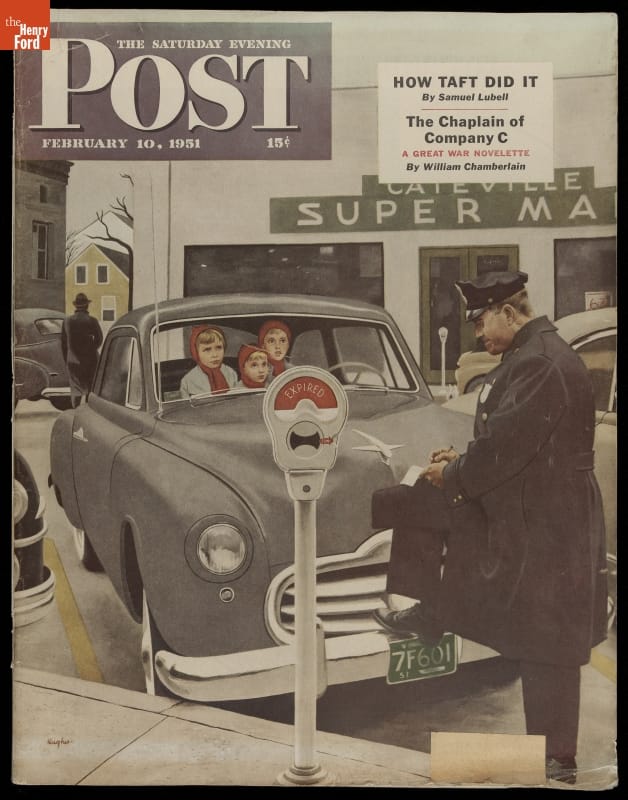
- "The Saturday Evening Post," February 10, 1951 - The <EM>Saturday Evening Post</EM> relied on a number of cover artists throughout its history to engage people to leaf through the magazine's pages. Time has expired in this illustration by cover artist George Hughes. The conflicted policeman struggles to issue a parking ticket under the soulful stares of three innocent children.
- February 10, 1951
- Collections - Artifact
"The Saturday Evening Post," February 10, 1951
The Saturday Evening Post relied on a number of cover artists throughout its history to engage people to leaf through the magazine's pages. Time has expired in this illustration by cover artist George Hughes. The conflicted policeman struggles to issue a parking ticket under the soulful stares of three innocent children.
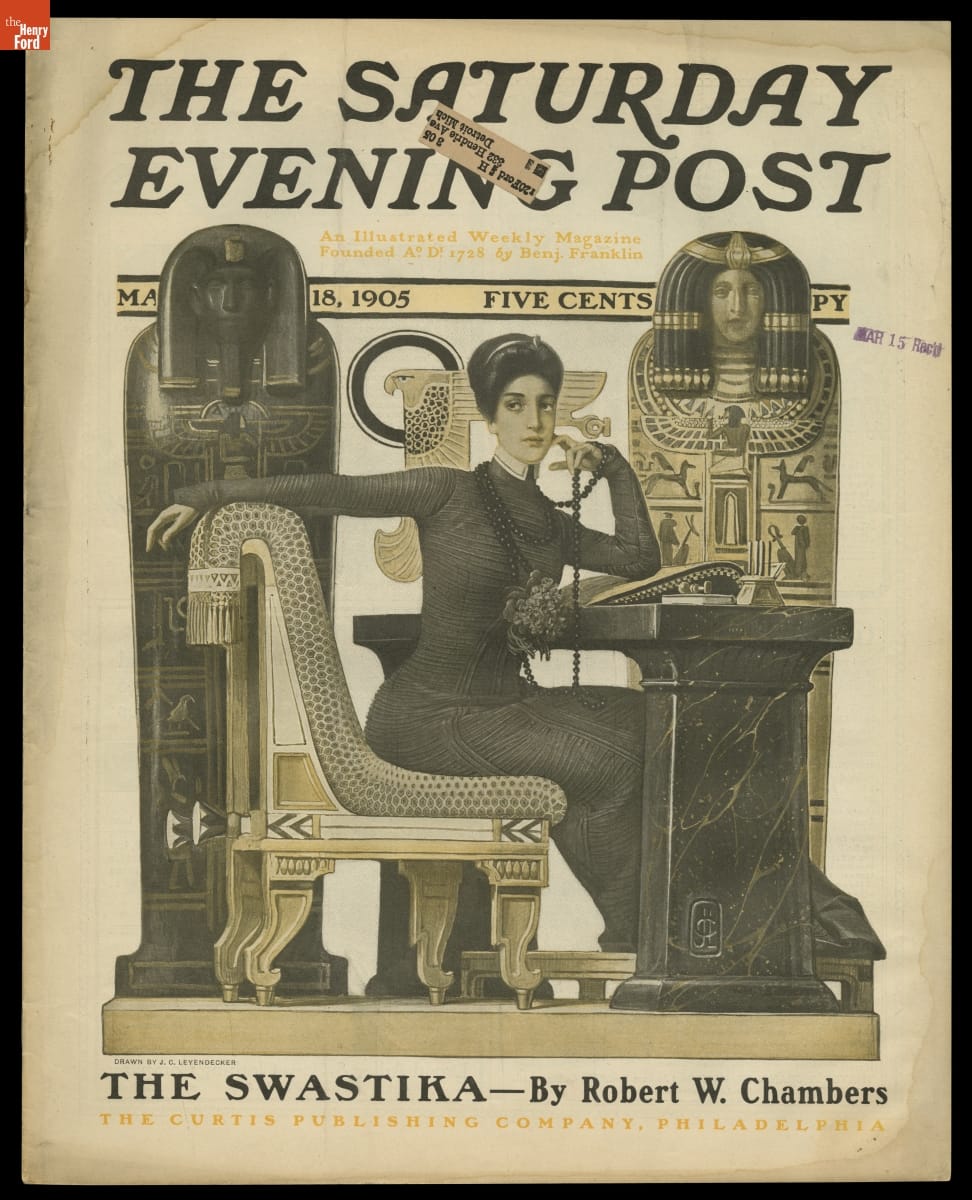
- "The Saturday Evening Post," March 18, 1905 - <em>The Saturday Evening Post</em>, first published in 1821 as a four-page weekly newspaper, became one of America's most popular weekly publications by the mid-1900s. The magazine contained news, commentaries, fiction, and general interest articles. But its most distinctive feature was its front cover illustrations by artists such as George Hughes, John Falter, J.C. Leyendecker, and Norman Rockwell.
- March 18, 1905
- Collections - Artifact
"The Saturday Evening Post," March 18, 1905
The Saturday Evening Post, first published in 1821 as a four-page weekly newspaper, became one of America's most popular weekly publications by the mid-1900s. The magazine contained news, commentaries, fiction, and general interest articles. But its most distinctive feature was its front cover illustrations by artists such as George Hughes, John Falter, J.C. Leyendecker, and Norman Rockwell.
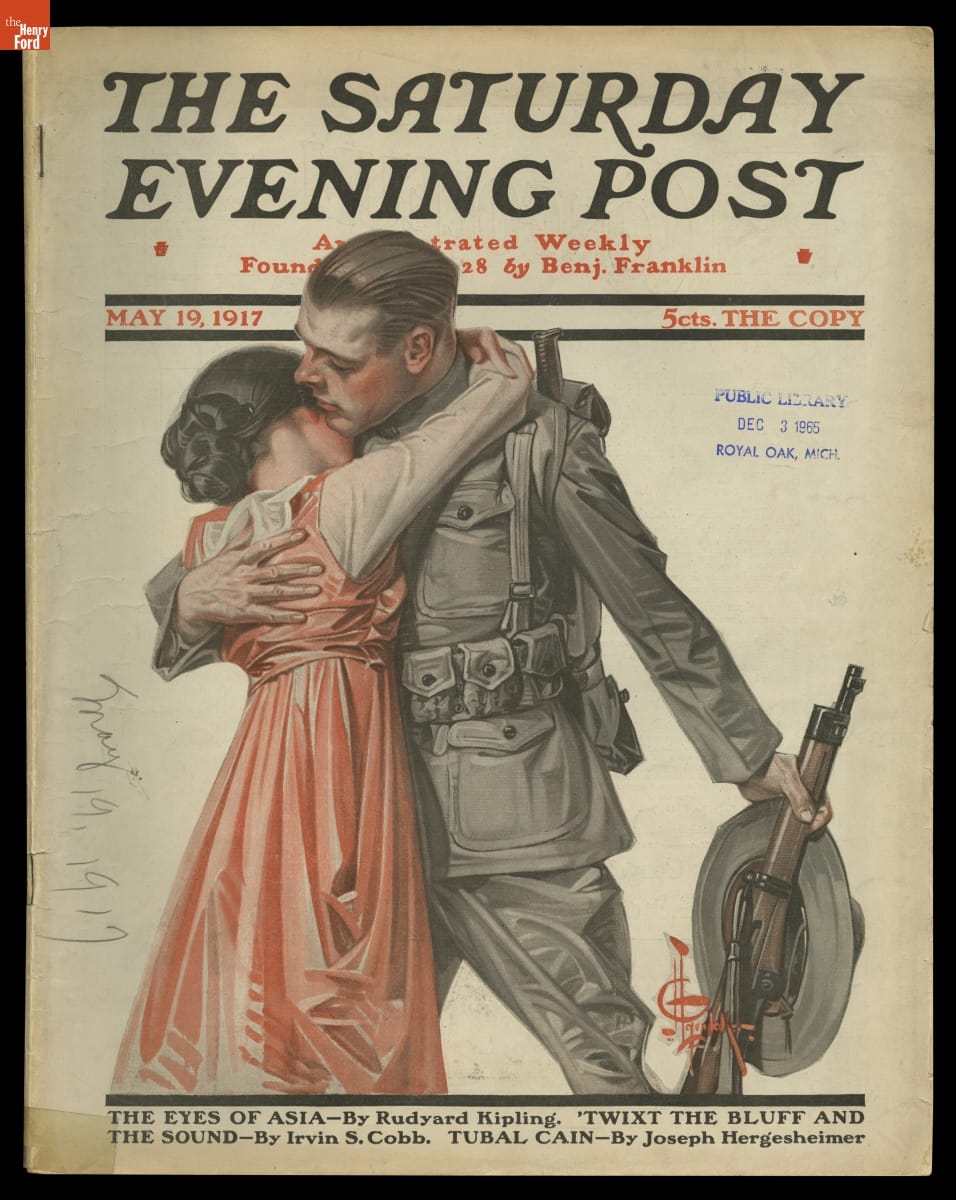
- "The Saturday Evening Post," May 19, 1917 - <em>The Saturday Evening Post</em>, first published in 1821 as a four-page weekly newspaper, became one of America's most popular weekly publications by the mid-1900s. The magazine contained news, commentaries, fiction, and general interest articles. But its most distinctive feature was its front cover illustrations by artists such as George Hughes, John Falter, J.C. Leyendecker, and Norman Rockwell.
- May 19, 1917
- Collections - Artifact
"The Saturday Evening Post," May 19, 1917
The Saturday Evening Post, first published in 1821 as a four-page weekly newspaper, became one of America's most popular weekly publications by the mid-1900s. The magazine contained news, commentaries, fiction, and general interest articles. But its most distinctive feature was its front cover illustrations by artists such as George Hughes, John Falter, J.C. Leyendecker, and Norman Rockwell.
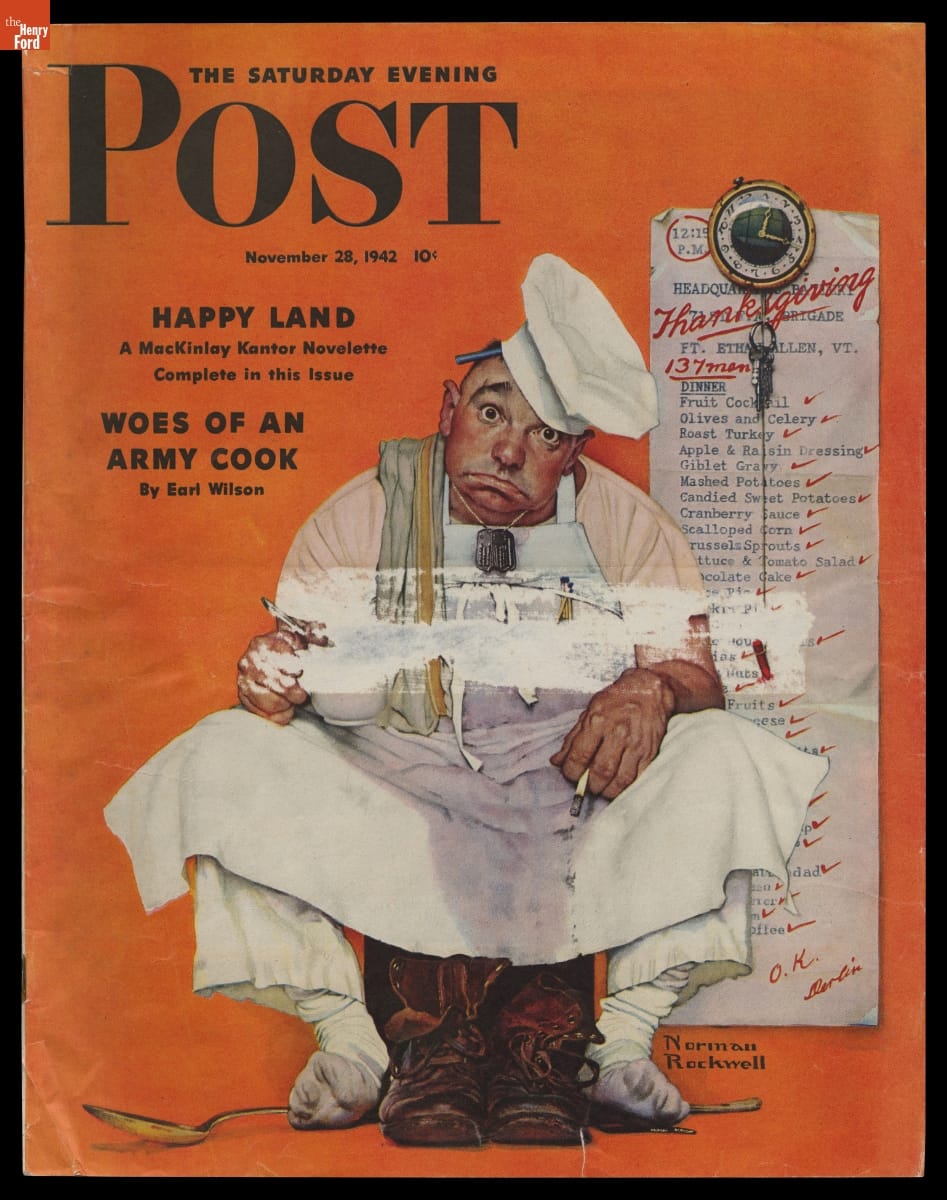
- "The Saturday Evening Post," November 28, 1942 - <em>The Saturday Evening Post</em>, first published in 1821 as a four-page weekly newspaper, became one of America's most popular weekly publications by the mid-1900s. The magazine contained news, commentaries, fiction, and general interest articles. But its most distinctive feature was its front cover illustrations by artists such as George Hughes, John Falter, J.C. Leyendecker, and Norman Rockwell.
- November 28, 1942
- Collections - Artifact
"The Saturday Evening Post," November 28, 1942
The Saturday Evening Post, first published in 1821 as a four-page weekly newspaper, became one of America's most popular weekly publications by the mid-1900s. The magazine contained news, commentaries, fiction, and general interest articles. But its most distinctive feature was its front cover illustrations by artists such as George Hughes, John Falter, J.C. Leyendecker, and Norman Rockwell.
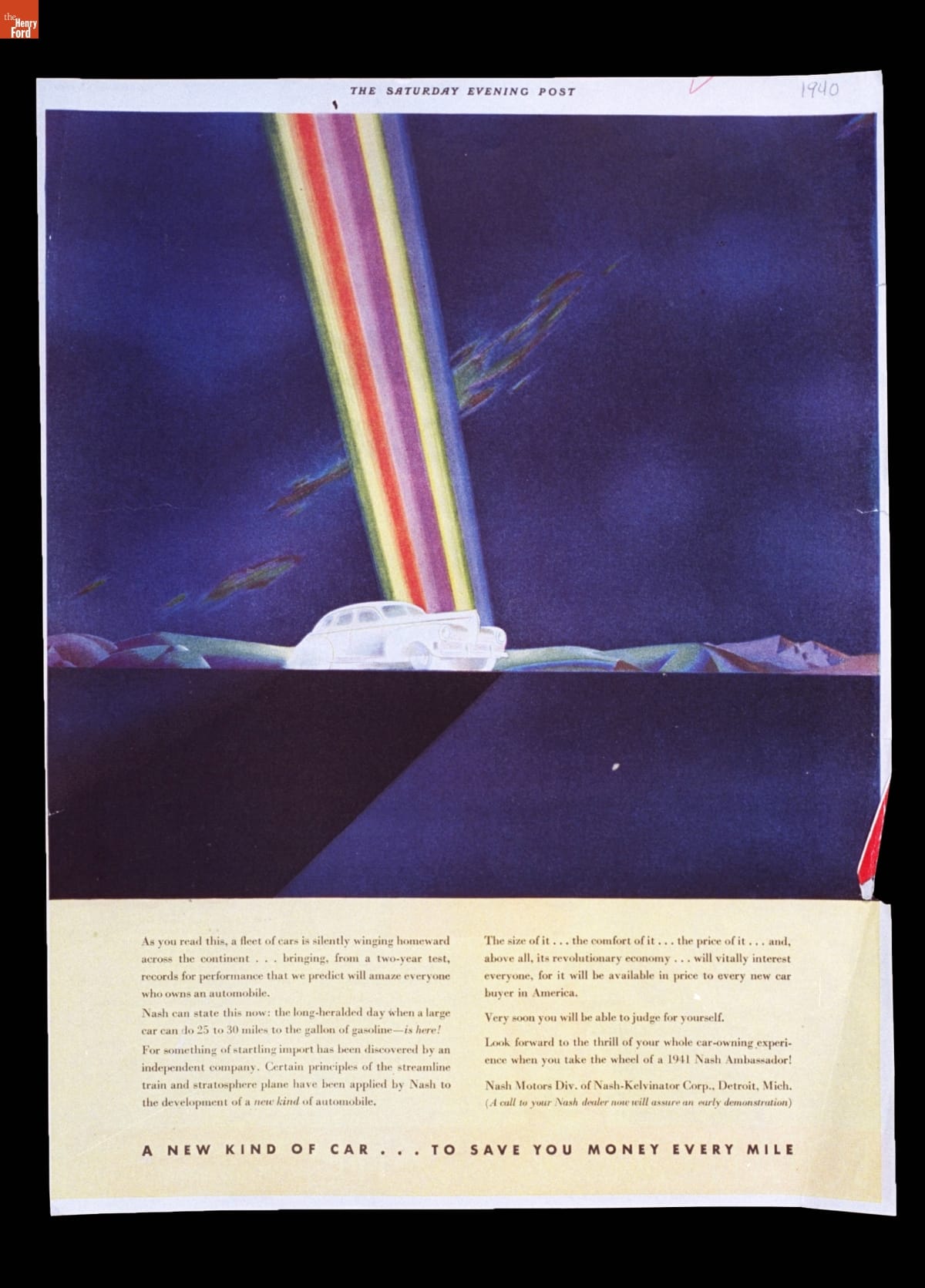
- A New Kind of Car... To Save You Money Every Mile, September 28, 1940 - In 1916, Charles W. Nash founded Nash Motors Company in Kenosha, Wisconsin, focusing on mid-priced vehicles. The company absorbed several Wisconsin-based automobile firms in the 1920s and later merged with refrigerator manufacturer Kelvinator. Nash-Kelvinator Corporation merged with Hudson Motor Car Company to create American Motors Company in 1954. The Nash brand was phased out in 1957.
- September 28, 1940
- Collections - Artifact
A New Kind of Car... To Save You Money Every Mile, September 28, 1940
In 1916, Charles W. Nash founded Nash Motors Company in Kenosha, Wisconsin, focusing on mid-priced vehicles. The company absorbed several Wisconsin-based automobile firms in the 1920s and later merged with refrigerator manufacturer Kelvinator. Nash-Kelvinator Corporation merged with Hudson Motor Car Company to create American Motors Company in 1954. The Nash brand was phased out in 1957.
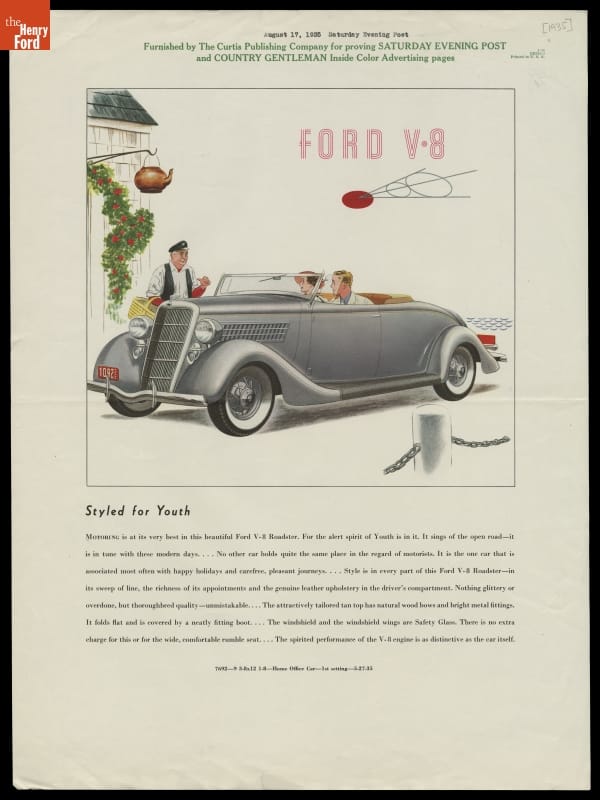
- Ford Advertisement, "Styled for Youth," 1935 - Ford Motor Company's 1935 models received a new lower and more streamlined look. Fenders were rounded and the side hood louvers were given four horizontal brightwork strips. Parking lamps were made integral with the headlamps, and the headlamp shells were painted to match the body color. Total production for the calendar year was 942,439 units.
- August 17, 1935
- Collections - Artifact
Ford Advertisement, "Styled for Youth," 1935
Ford Motor Company's 1935 models received a new lower and more streamlined look. Fenders were rounded and the side hood louvers were given four horizontal brightwork strips. Parking lamps were made integral with the headlamps, and the headlamp shells were painted to match the body color. Total production for the calendar year was 942,439 units.
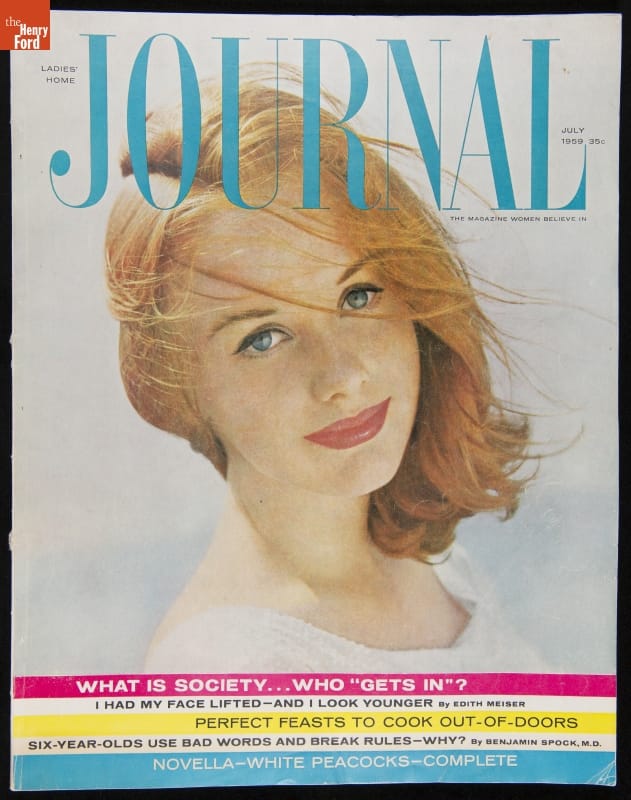
- "Ladies' Home Journal" Magazine for July 1959 -
- July 01, 1959
- Collections - Artifact
"Ladies' Home Journal" Magazine for July 1959