
Search
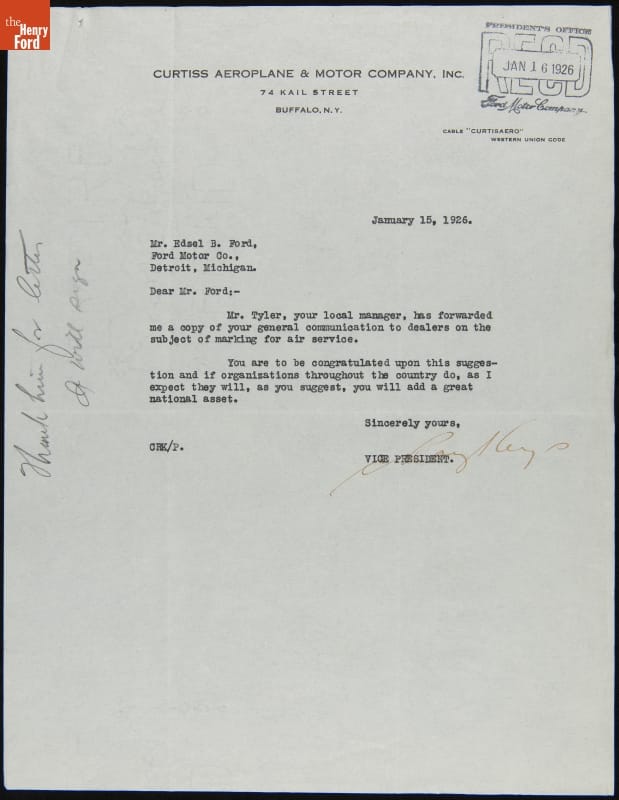
- Letter Congratulating Edsel Ford for Involving Ford Dealers with Airmarking Buildings in Their Towns, January 15, 1926 - Edsel Ford championed the development of commercial aviation in the United States. As an aid to aerial navigation, he wrote letters to Ford dealers encouraging them to paint two things on each dealer's roof: the name of the city and an arrow pointing due north. More than 4,000 communities had aerial markings of some sort by 1929.
- January 15, 1926
- Collections - Artifact
Letter Congratulating Edsel Ford for Involving Ford Dealers with Airmarking Buildings in Their Towns, January 15, 1926
Edsel Ford championed the development of commercial aviation in the United States. As an aid to aerial navigation, he wrote letters to Ford dealers encouraging them to paint two things on each dealer's roof: the name of the city and an arrow pointing due north. More than 4,000 communities had aerial markings of some sort by 1929.
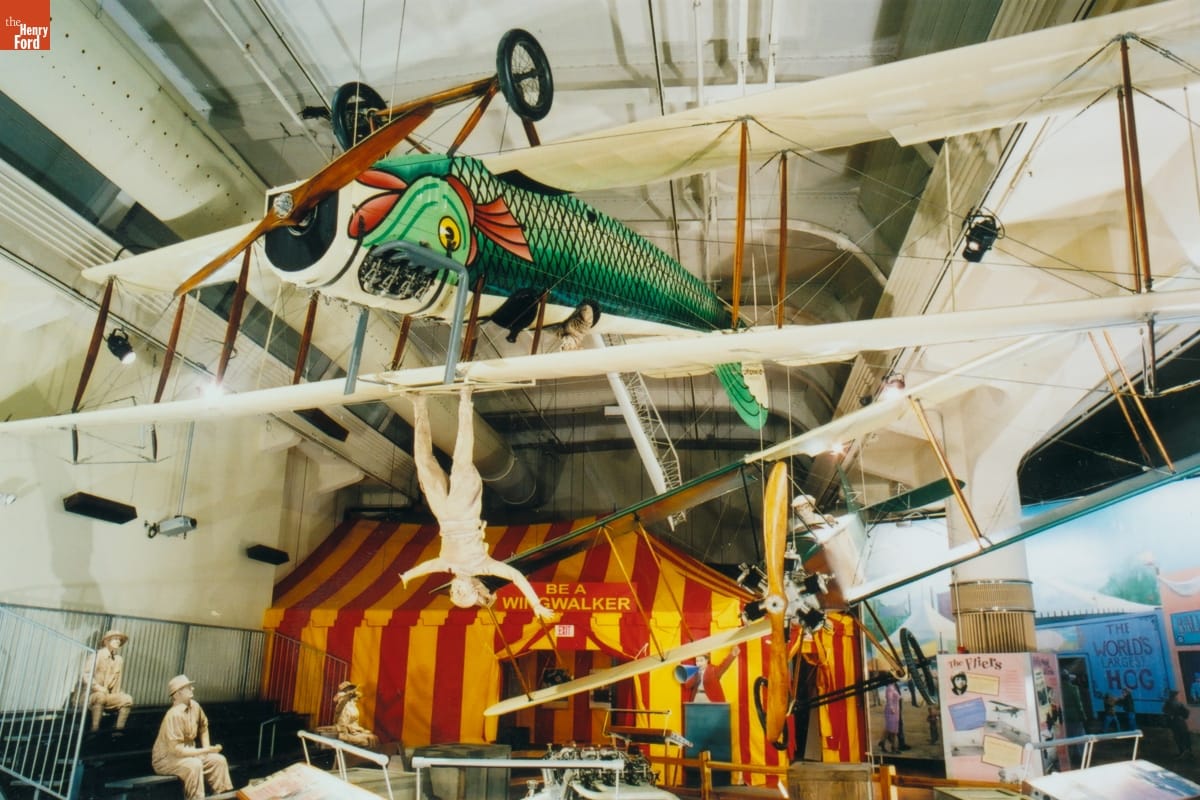
- 1917 Curtiss JN-4D "Canuck" Biplane - The Curtiss JN-4 "Jenny" was the U.S. Army's primary training aircraft in the World War I era. After the war, surplus Jennys formed the core of America's barnstorming fleet. The JN-4D variation employed a control stick rather than the wheel used in the standard version. The JN-4D originally was built for the Canadian market, explaining its "Canuck" nickname.
- 1917
- Collections - Artifact
1917 Curtiss JN-4D "Canuck" Biplane
The Curtiss JN-4 "Jenny" was the U.S. Army's primary training aircraft in the World War I era. After the war, surplus Jennys formed the core of America's barnstorming fleet. The JN-4D variation employed a control stick rather than the wheel used in the standard version. The JN-4D originally was built for the Canadian market, explaining its "Canuck" nickname.
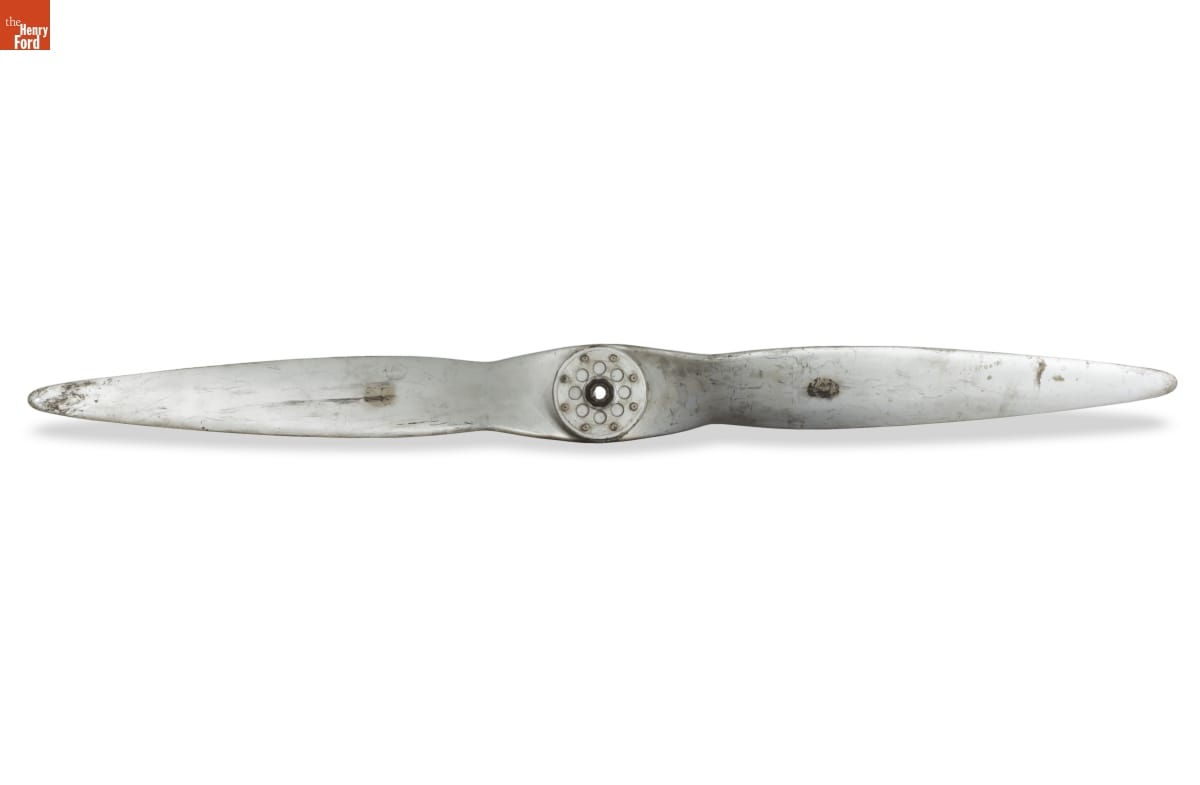
- Curtiss Reed Airplane Propeller, 1926-1929 - S. Albert Reed manufactured his first airplane propellers in 1922. His Reed Propeller Company became a subsidiary of airplane manufacturer Curtiss in 1924. Reed propellers were made from duralumin, an aluminum alloy more durable than wood. The adoption of variable-pitch propellers in the 1930s doomed Reed's fixed-pitch design.
- 1926-1929
- Collections - Artifact
Curtiss Reed Airplane Propeller, 1926-1929
S. Albert Reed manufactured his first airplane propellers in 1922. His Reed Propeller Company became a subsidiary of airplane manufacturer Curtiss in 1924. Reed propellers were made from duralumin, an aluminum alloy more durable than wood. The adoption of variable-pitch propellers in the 1930s doomed Reed's fixed-pitch design.
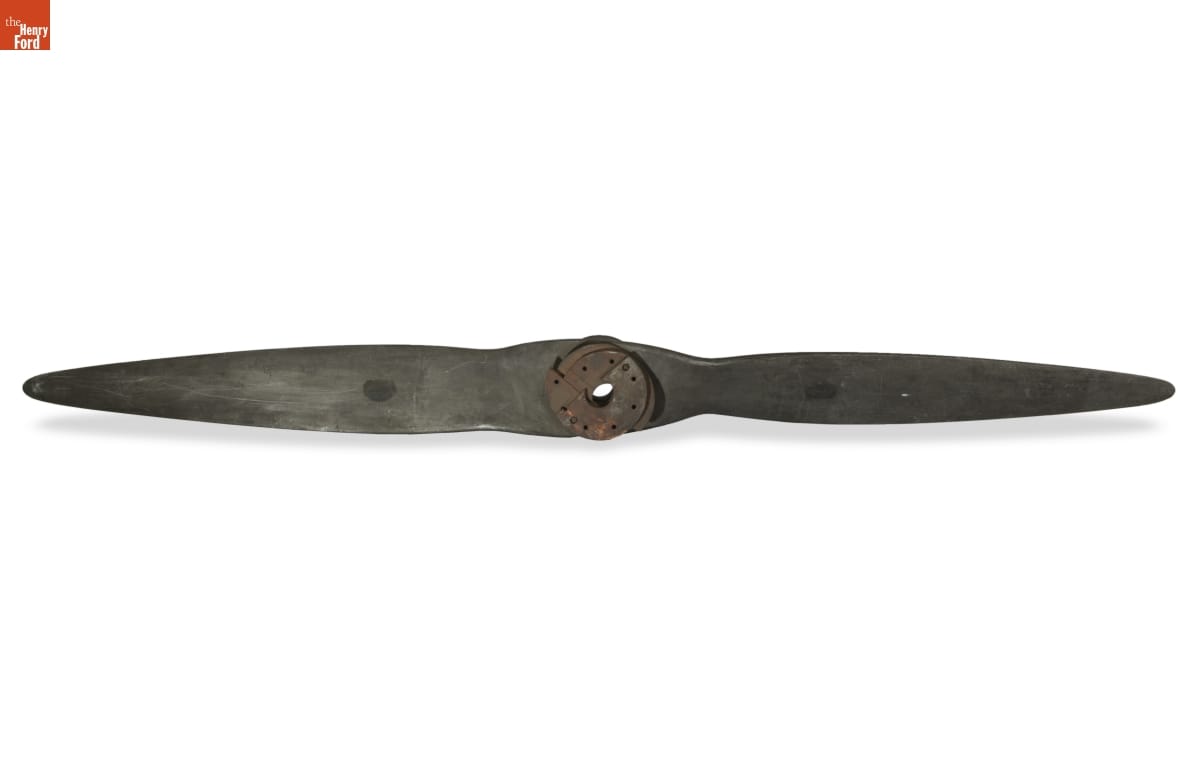
- Curtiss Reed Airplane Propeller, 1926-1929 - S. Albert Reed manufactured his first airplane propellers in 1922. His Reed Propeller Company became a subsidiary of airplane manufacturer Curtiss in 1924. Reed propellers were made from duralumin, an aluminum alloy more durable than wood. The adoption of variable-pitch propellers in the 1930s doomed Reed's fixed-pitch design.
- 1926-1929
- Collections - Artifact
Curtiss Reed Airplane Propeller, 1926-1929
S. Albert Reed manufactured his first airplane propellers in 1922. His Reed Propeller Company became a subsidiary of airplane manufacturer Curtiss in 1924. Reed propellers were made from duralumin, an aluminum alloy more durable than wood. The adoption of variable-pitch propellers in the 1930s doomed Reed's fixed-pitch design.
- Curtiss Reed Airplane Propeller, 1926-1929 - S. Albert Reed manufactured his first airplane propellers in 1922. His Reed Propeller Company became a subsidiary of airplane manufacturer Curtiss in 1924. Reed propellers were made from duralumin, an aluminum alloy more durable than wood. The adoption of variable-pitch propellers in the 1930s doomed Reed's fixed-pitch design.
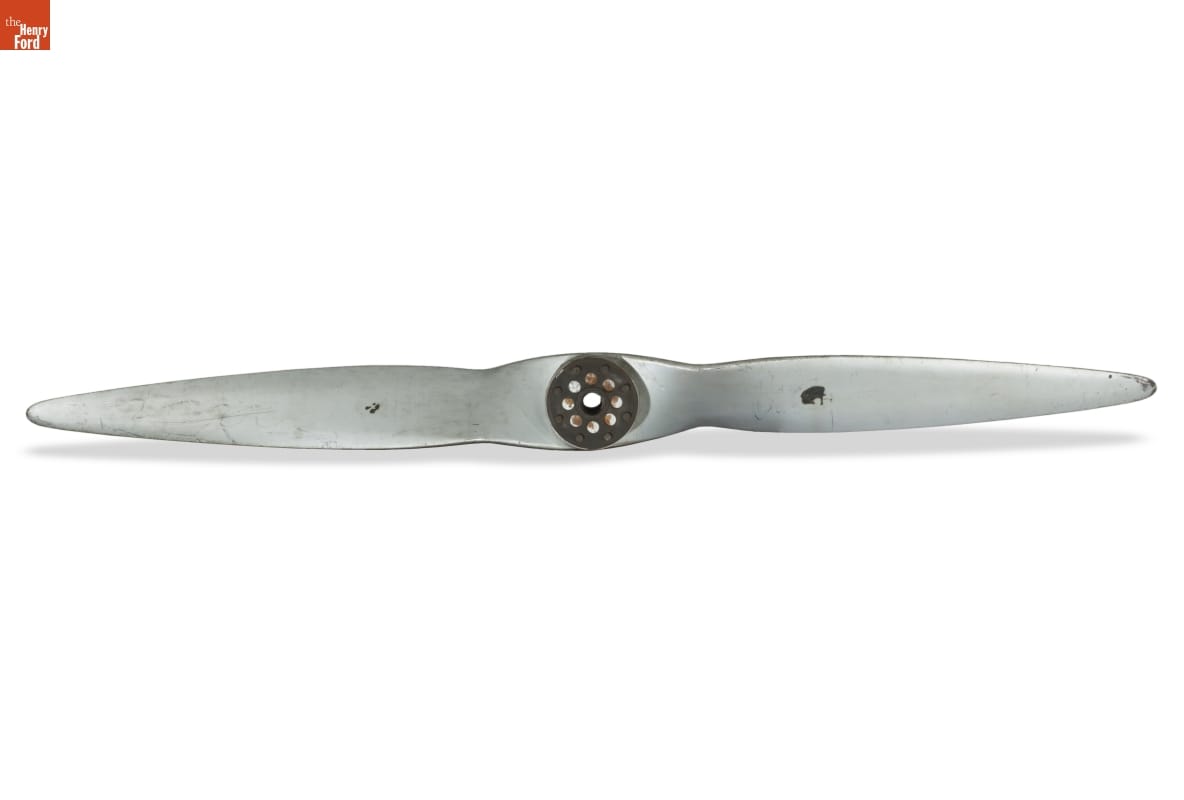
- 1926-1929
- Collections - Artifact
Curtiss Reed Airplane Propeller, 1926-1929
S. Albert Reed manufactured his first airplane propellers in 1922. His Reed Propeller Company became a subsidiary of airplane manufacturer Curtiss in 1924. Reed propellers were made from duralumin, an aluminum alloy more durable than wood. The adoption of variable-pitch propellers in the 1930s doomed Reed's fixed-pitch design.