
Search
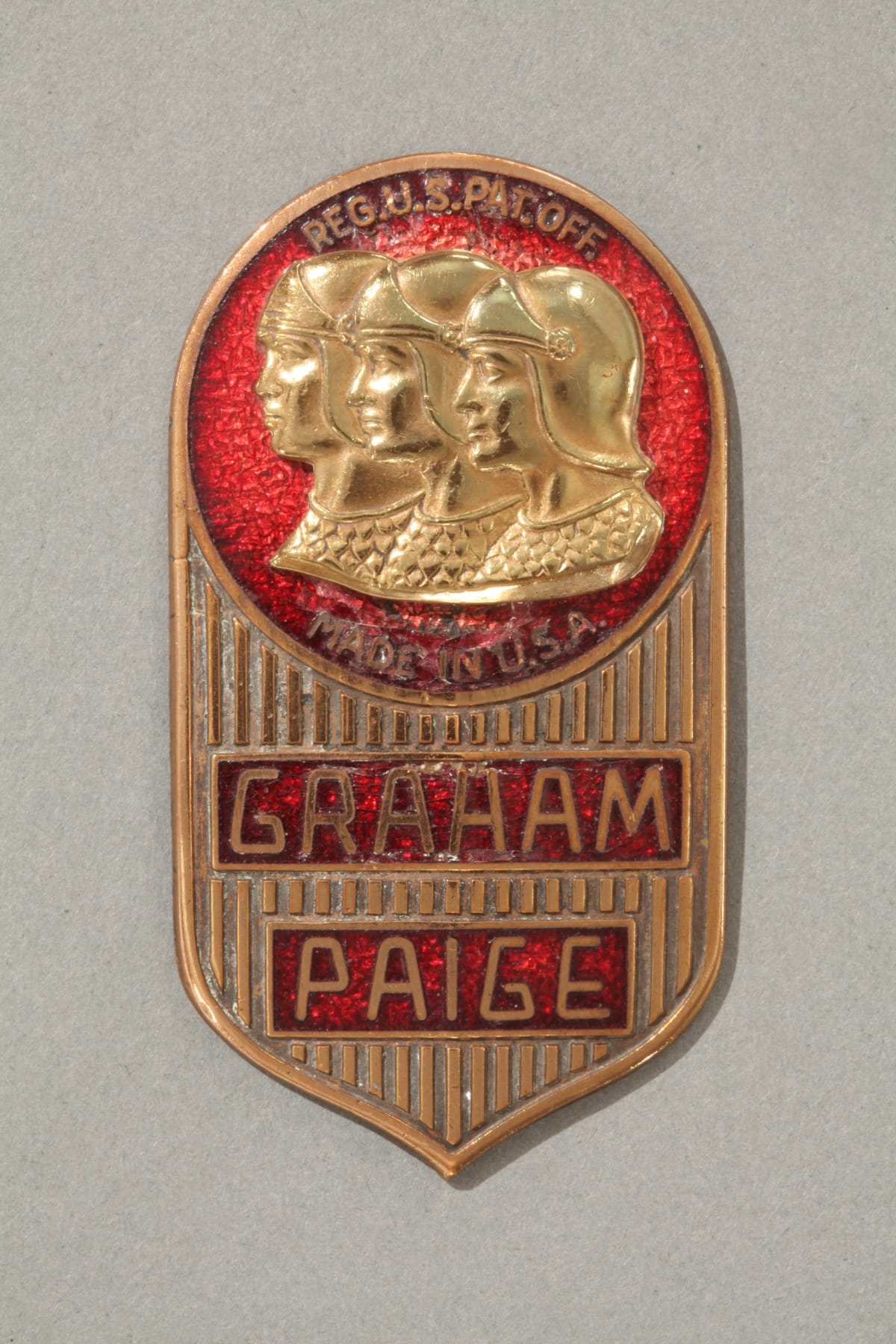
- Graham-Paige Automobile Emblem, 1930 - Truck-building brothers Joseph, Robert and Ray Graham purchased Paige-Detroit Motor Car Company in 1927 and rebranded it Graham-Paige. The brothers' new automobile, introduced in January 1928, sold more than 73,000 units in its first year. But the Great Depression devastated Graham-Paige. The company's last cars appeared in 1940, and its assets went to Kaiser-Frazer in 1947.
- 1930
- Collections - Artifact
Graham-Paige Automobile Emblem, 1930
Truck-building brothers Joseph, Robert and Ray Graham purchased Paige-Detroit Motor Car Company in 1927 and rebranded it Graham-Paige. The brothers' new automobile, introduced in January 1928, sold more than 73,000 units in its first year. But the Great Depression devastated Graham-Paige. The company's last cars appeared in 1940, and its assets went to Kaiser-Frazer in 1947.
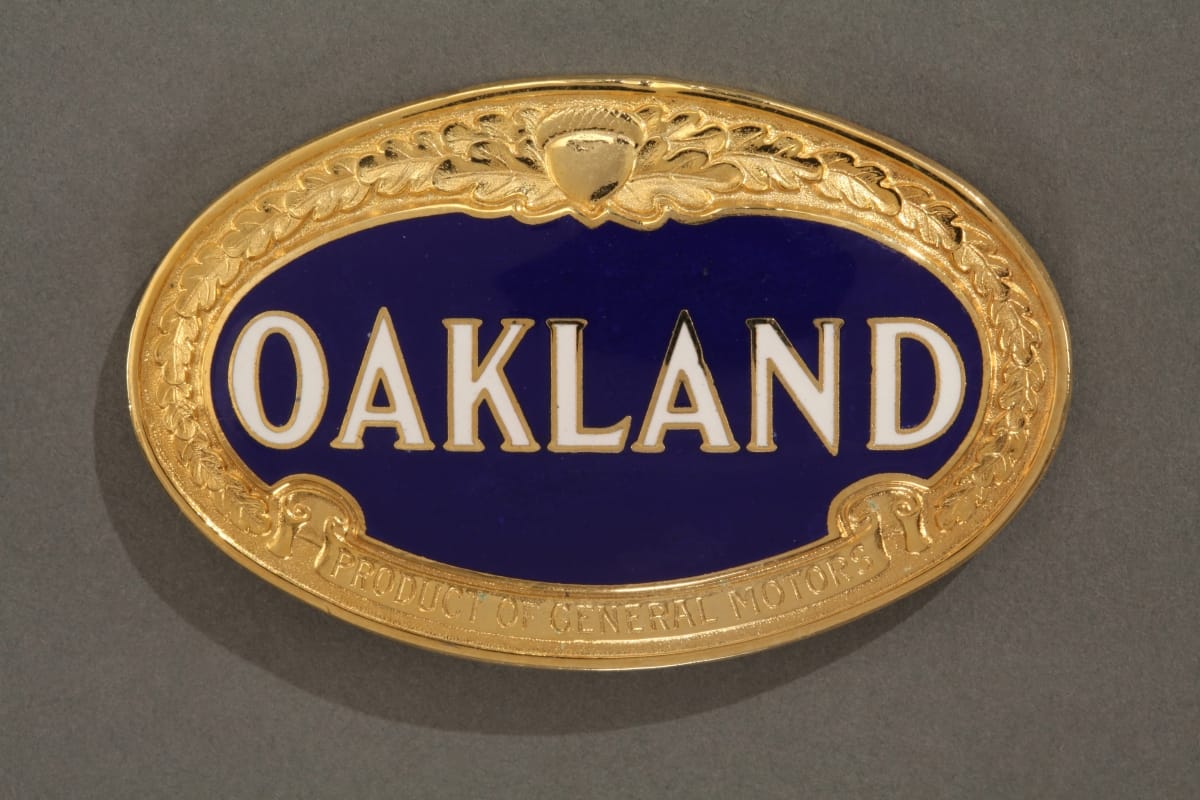
- Oakland Radiator Emblem, circa 1925 - This oval emblem consists of the company name surrounded by an oak leaf wreath topped with an acorn. The inscription in the banner states that Oakland is a product of General Motors. Oakland began as an independent company in 1907, but in 1909 became part of the newly formed General Motors Corporation. The Oakland brand name lasted until 1931.
- circa 1925
- Collections - Artifact
Oakland Radiator Emblem, circa 1925
This oval emblem consists of the company name surrounded by an oak leaf wreath topped with an acorn. The inscription in the banner states that Oakland is a product of General Motors. Oakland began as an independent company in 1907, but in 1909 became part of the newly formed General Motors Corporation. The Oakland brand name lasted until 1931.
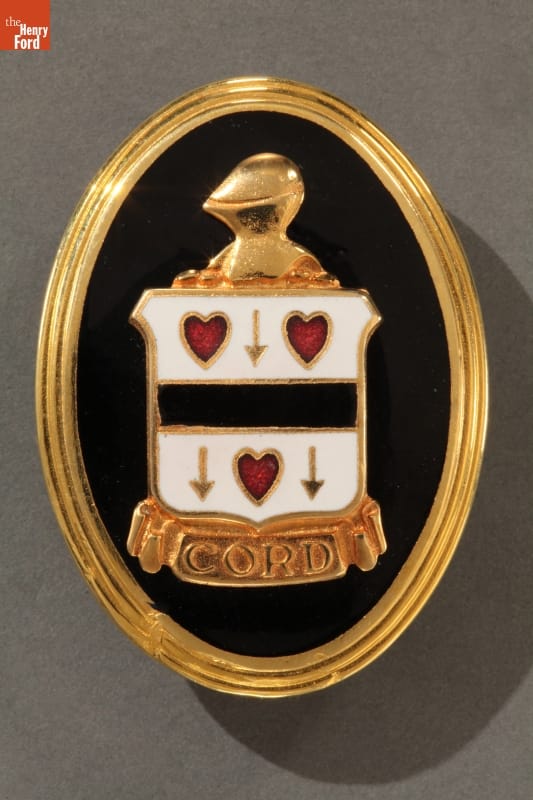
- Cord Automobile Emblem, 1937 - Errett Lobban Cord became general manager of the Auburn Automobile Company in 1924. He hired imaginative designers, purchased Duesenberg, and began a line of front-wheel-drive Cord automobiles named for himself. Though stylish and well engineered, Cord's cars were expensive. The company did not survive the Great Depression. Cord used this family crest logo -- invented by an advertising firm to create prestige.
- 1937
- Collections - Artifact
Cord Automobile Emblem, 1937
Errett Lobban Cord became general manager of the Auburn Automobile Company in 1924. He hired imaginative designers, purchased Duesenberg, and began a line of front-wheel-drive Cord automobiles named for himself. Though stylish and well engineered, Cord's cars were expensive. The company did not survive the Great Depression. Cord used this family crest logo -- invented by an advertising firm to create prestige.
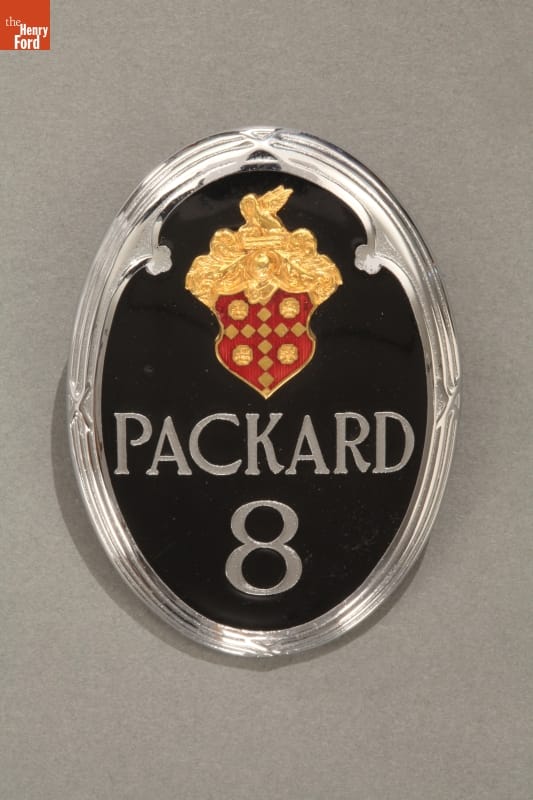
- Packard 8 Radiator Emblem, circa 1935 - Several automobile emblems incorporated family coat of arms. Packard, claiming relationship to the Packers of England, incorporated their coat of arms into this oval emblem.
- circa 1935
- Collections - Artifact
Packard 8 Radiator Emblem, circa 1935
Several automobile emblems incorporated family coat of arms. Packard, claiming relationship to the Packers of England, incorporated their coat of arms into this oval emblem.
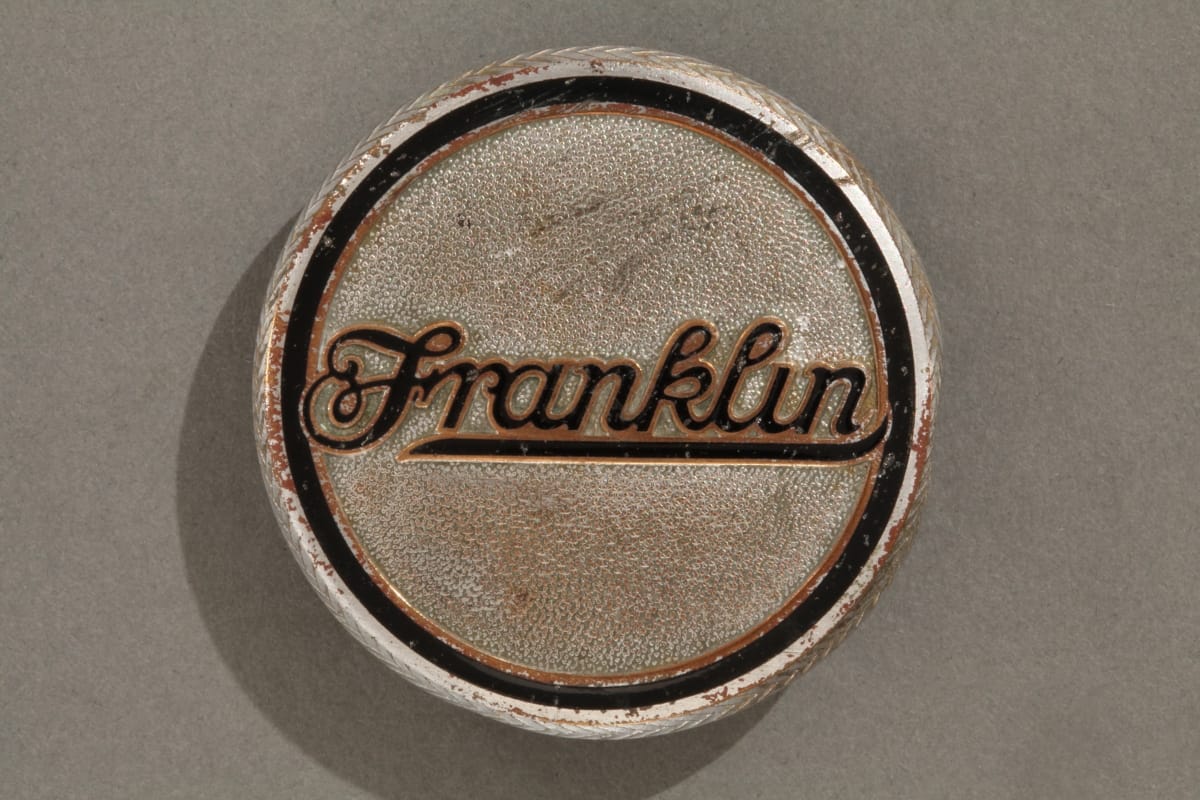
- Franklin Automobile Emblem, circa 1925 - Early automobile manufacturers took advantage of the prominent location of radiators and affixed branded emblems to them. As cars evolved and radiators were hidden within vehicle bodies, manufacturers retained this practice by branding hoods or grilles. Emblems remained important branding tools, but also became meaningful to consumers as statements about their cars and themselves.
- 1920-1930
- Collections - Artifact
Franklin Automobile Emblem, circa 1925
Early automobile manufacturers took advantage of the prominent location of radiators and affixed branded emblems to them. As cars evolved and radiators were hidden within vehicle bodies, manufacturers retained this practice by branding hoods or grilles. Emblems remained important branding tools, but also became meaningful to consumers as statements about their cars and themselves.
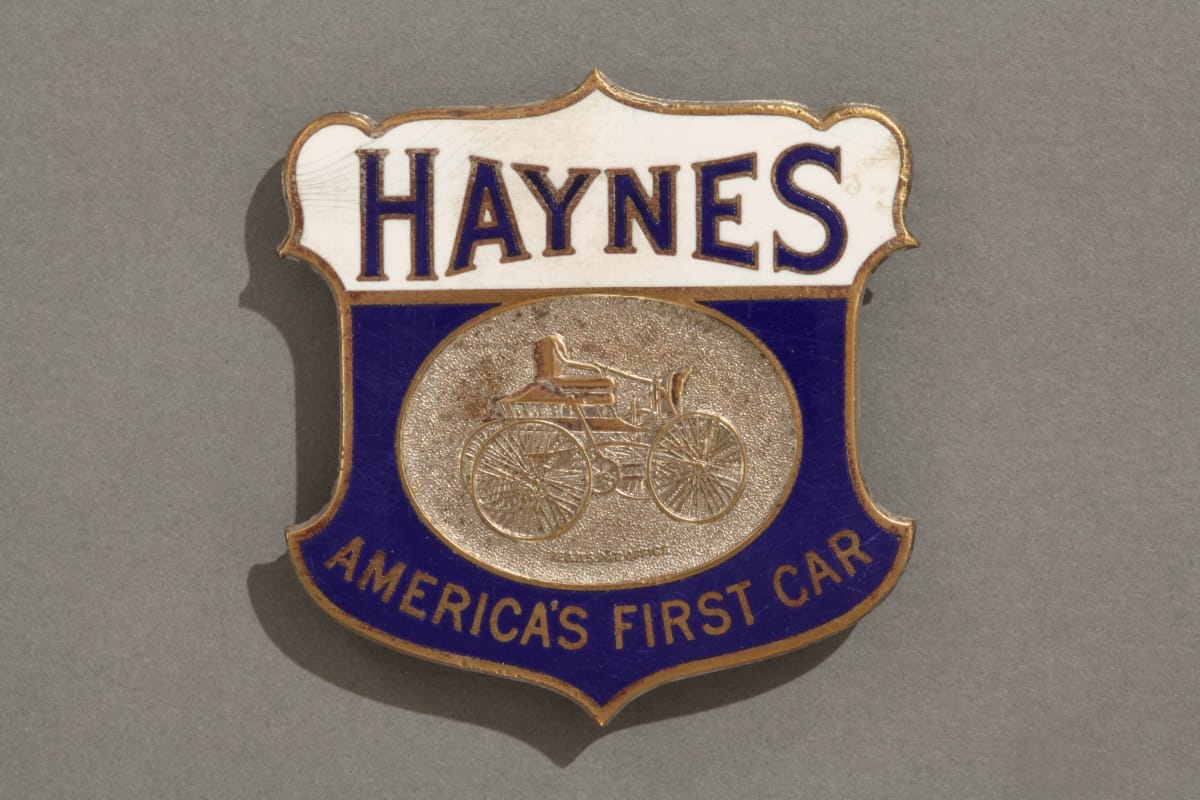
- Haynes Automobile Emblem, 1920-1930 - Elwood Haynes and Elmer and Edgar Apperson completed their first automobile in 1894, with Haynes designing the vehicle and the Apperson brothers building it. They organized the Haynes-Apperson Company of Kokomo, Indiana, in 1898. The Appersons left in 1901, but Haynes continued manufacturing cars until 1924. Haynes frequently -- though exaggeratingly -- promoted his company as the maker of "America's first car."
- 1920-1930
- Collections - Artifact
Haynes Automobile Emblem, 1920-1930
Elwood Haynes and Elmer and Edgar Apperson completed their first automobile in 1894, with Haynes designing the vehicle and the Apperson brothers building it. They organized the Haynes-Apperson Company of Kokomo, Indiana, in 1898. The Appersons left in 1901, but Haynes continued manufacturing cars until 1924. Haynes frequently -- though exaggeratingly -- promoted his company as the maker of "America's first car."
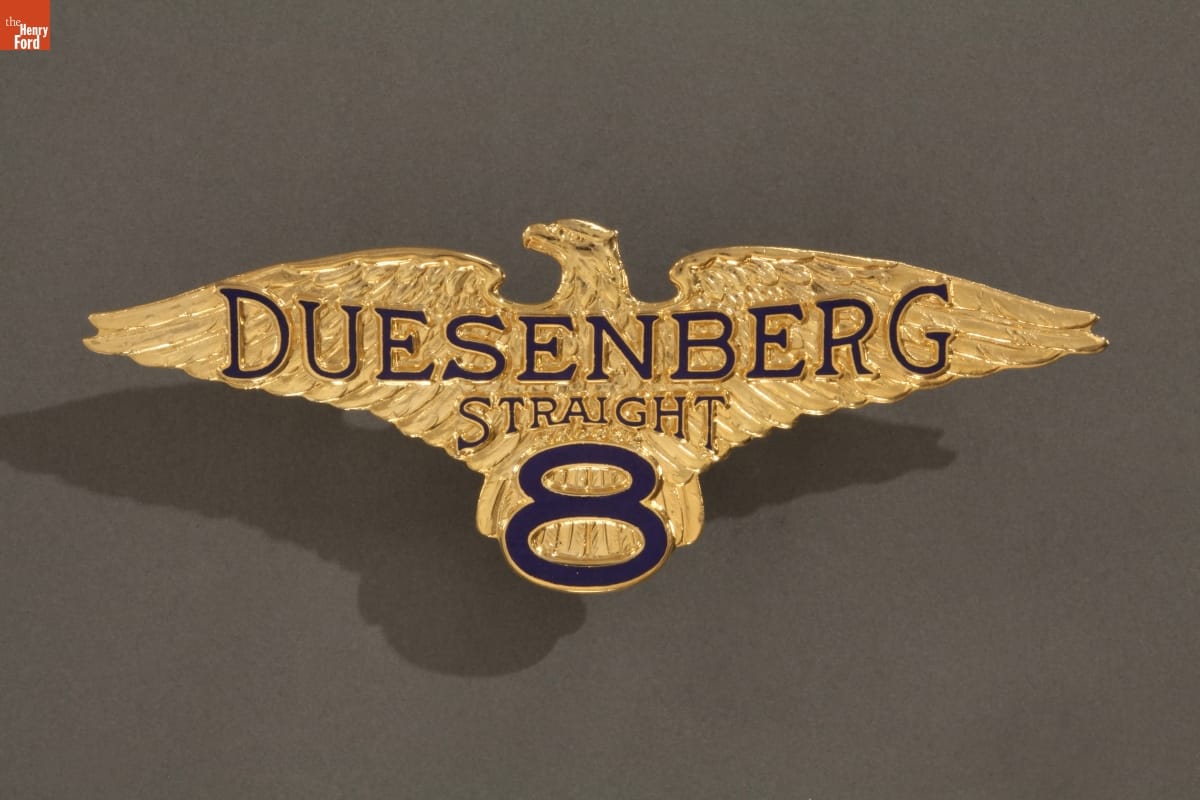
- Duesenberg Automobile Emblem, circa 1930 - Fred and August Duesenberg were respected builders of racing engines when they introduced their first production car, the Duesenberg Straight Eight, in 1921. The new car used a single-overhead-camshaft, eight-cylinder engine derived from their competition engines. It also featured industry-first four-wheel hydraulic brakes. Production ended in 1927, but the car was followed by the sporty Model X and the luxurious Model J.
- circa 1930
- Collections - Artifact
Duesenberg Automobile Emblem, circa 1930
Fred and August Duesenberg were respected builders of racing engines when they introduced their first production car, the Duesenberg Straight Eight, in 1921. The new car used a single-overhead-camshaft, eight-cylinder engine derived from their competition engines. It also featured industry-first four-wheel hydraulic brakes. Production ended in 1927, but the car was followed by the sporty Model X and the luxurious Model J.
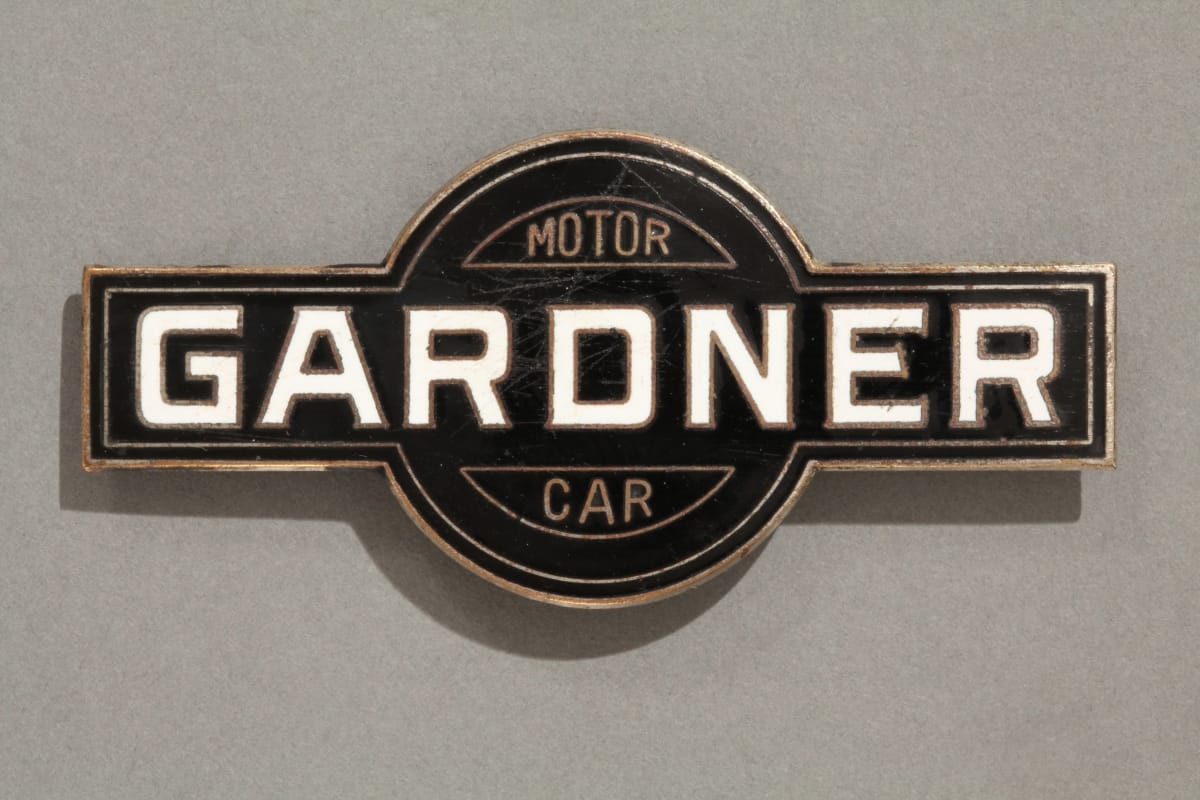
- Gardner Automobile Emblem, circa 1920-1931 - The Gardner Motor Company assembled automobiles in St. Louis, Missouri, from 1920 to 1931.
- 1920-1931
- Collections - Artifact
Gardner Automobile Emblem, circa 1920-1931
The Gardner Motor Company assembled automobiles in St. Louis, Missouri, from 1920 to 1931.
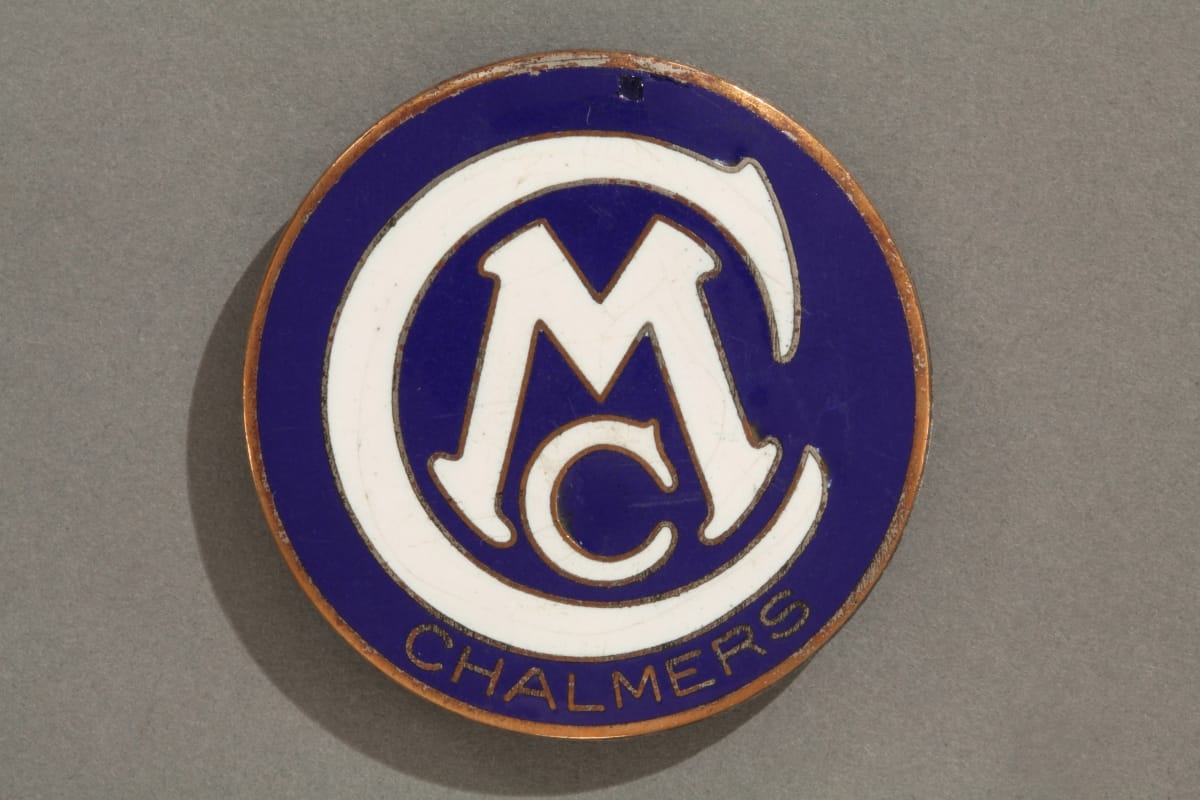
- Chalmers Automobile Emblem, 1915-1925 - This round emblem with CMC initials identified an automobile made by Chalmers Motor Car Company. In 1908, Hugh Chalmers infused capital into the Thomas-Detroit Company. The company, then named Chalmers-Detroit, became Chalmers Motor Car Company in 1911. It merged with the Maxwell Company in 1922 after facing economic problems. The last Chalmers model was built in 1923.
- 1915-1925
- Collections - Artifact
Chalmers Automobile Emblem, 1915-1925
This round emblem with CMC initials identified an automobile made by Chalmers Motor Car Company. In 1908, Hugh Chalmers infused capital into the Thomas-Detroit Company. The company, then named Chalmers-Detroit, became Chalmers Motor Car Company in 1911. It merged with the Maxwell Company in 1922 after facing economic problems. The last Chalmers model was built in 1923.
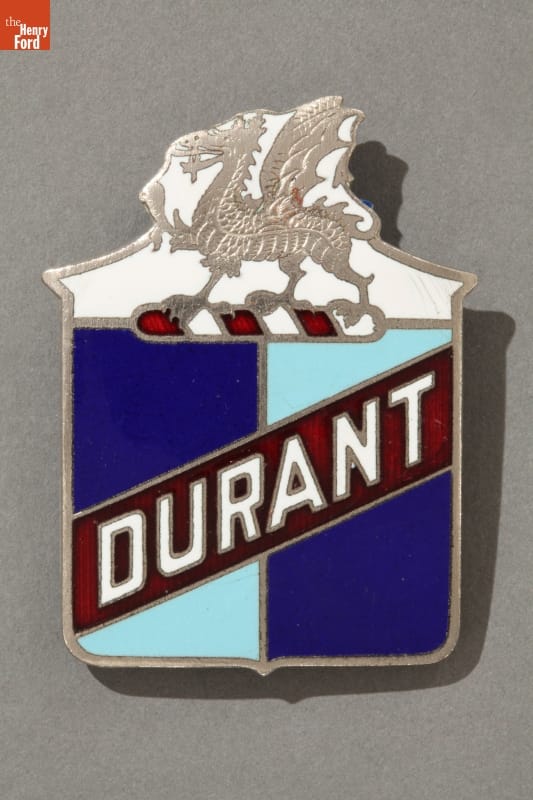
- Durant Autombile Emblem, circa 1930 - This shield-shaped Durant emblem is topped with a winged dragon, a common symbol found on other Durant emblems. William C. Durant established Durant Motors Incorporated in 1921 after his ouster from General Motors. The Great Depression hit the company and its founder hard. The company's assets were liquidated in 1933, and William Durant declared personal bankruptcy four years later.
- circa 1930
- Collections - Artifact
Durant Autombile Emblem, circa 1930
This shield-shaped Durant emblem is topped with a winged dragon, a common symbol found on other Durant emblems. William C. Durant established Durant Motors Incorporated in 1921 after his ouster from General Motors. The Great Depression hit the company and its founder hard. The company's assets were liquidated in 1933, and William Durant declared personal bankruptcy four years later.