
Search
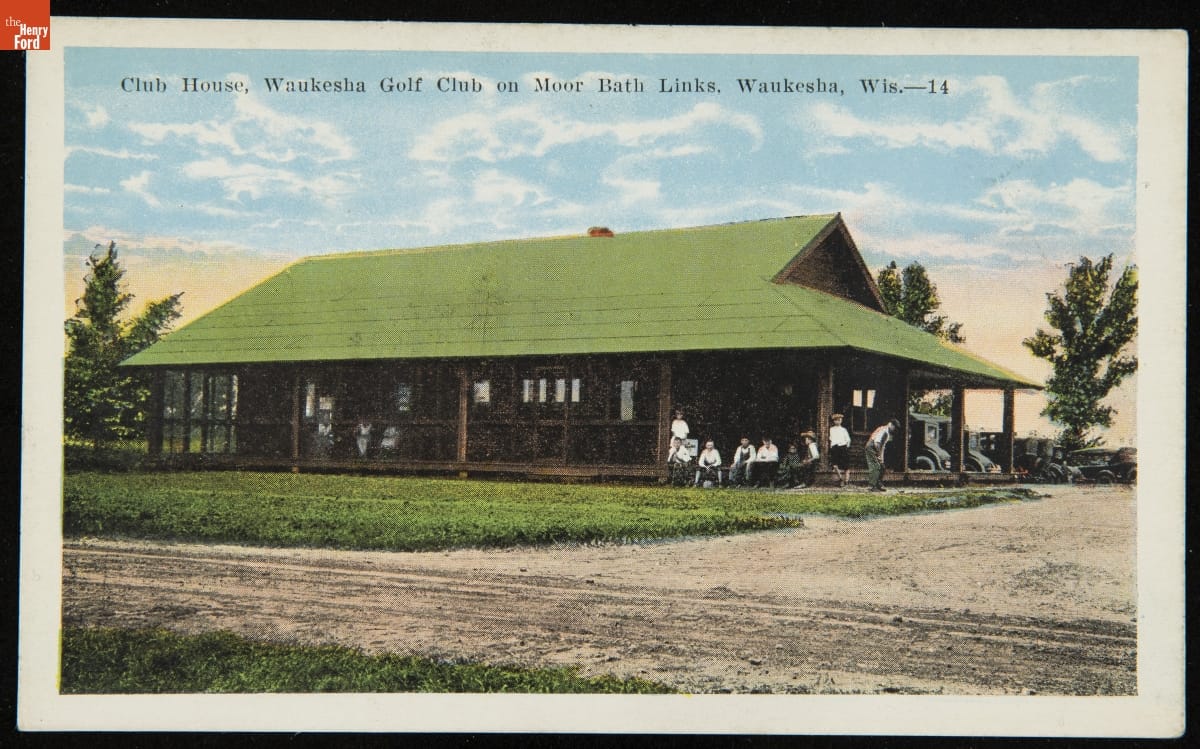
- Club House, Waukesha Golf Club on Moor Bath Links, Waukesha, Wis. -
- 1930-1956
- Collections - Artifact
Club House, Waukesha Golf Club on Moor Bath Links, Waukesha, Wis.
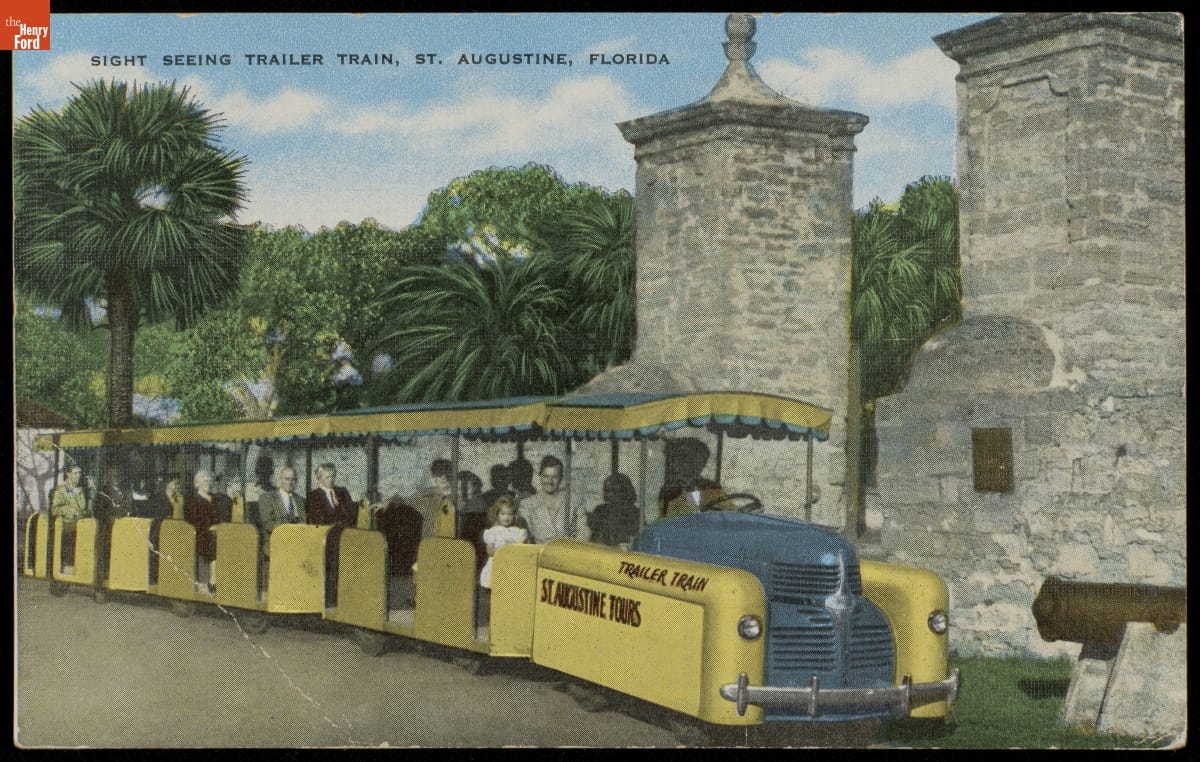
- "Sight Seeing Trailer Train, St. Augustine, Florida," circa 1950 - St. Augustine, Florida, dating back to Spanish occupation in the 1500s, became a popular winter resort for wealthy northerners in the 1880s when the railroad came to town. By the 1950s, most tourists arrived by automobile -- though they could still tour the historic city by "train" in rubber-tired trailer vehicles like this.
- circa 1950
- Collections - Artifact
"Sight Seeing Trailer Train, St. Augustine, Florida," circa 1950
St. Augustine, Florida, dating back to Spanish occupation in the 1500s, became a popular winter resort for wealthy northerners in the 1880s when the railroad came to town. By the 1950s, most tourists arrived by automobile -- though they could still tour the historic city by "train" in rubber-tired trailer vehicles like this.
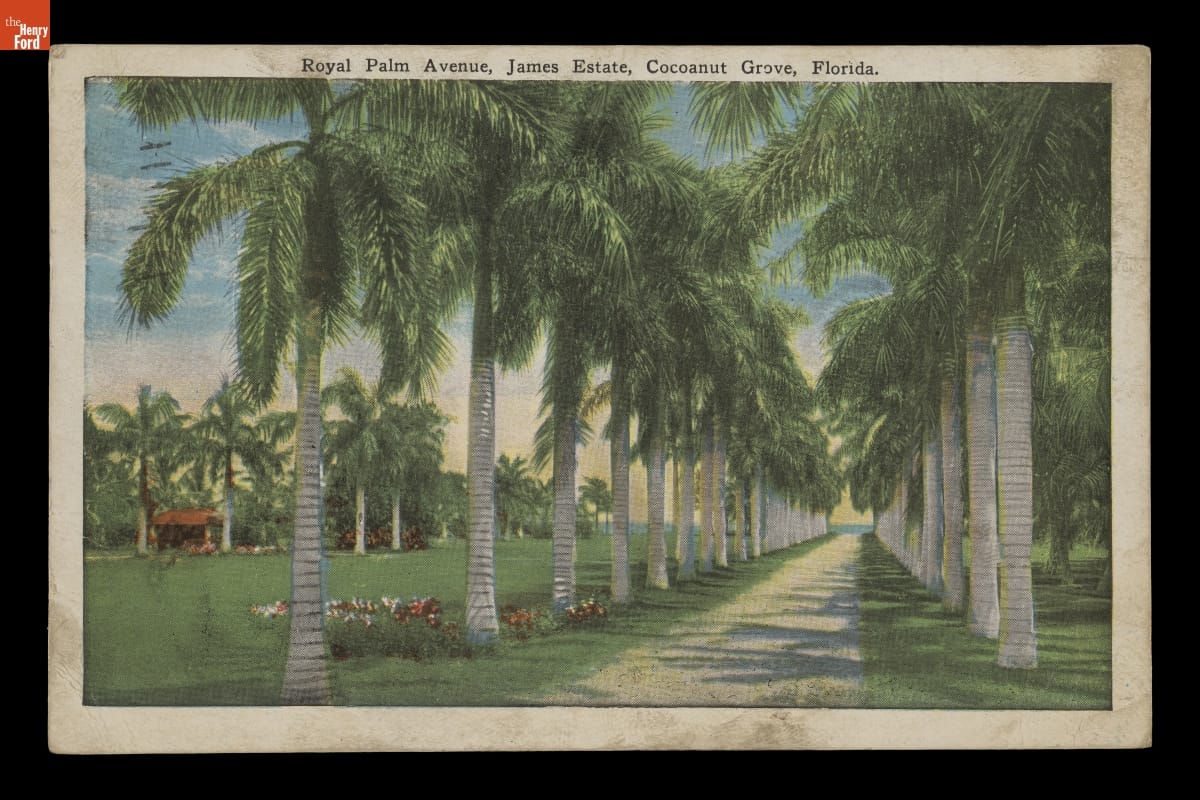
- "Royal Palm Avenue, James Estate, Cocoanut Grove, Florida," Sent to Andrew Purnell, Postmarked May 10, 1926 - Andrew Purnell Jr. (1898-1975) was born in Selma, Alabama. He served in France during World War I and returned to the U.S. in 1919. Purnell married Lela May Cooper in 1920, and by 1926, the couple had moved to Mobile, where he worked as a railroad freight handler. The Purnells kept in touch with family and friends by exchanging postcards and letters.
- Collections - Artifact
"Royal Palm Avenue, James Estate, Cocoanut Grove, Florida," Sent to Andrew Purnell, Postmarked May 10, 1926
Andrew Purnell Jr. (1898-1975) was born in Selma, Alabama. He served in France during World War I and returned to the U.S. in 1919. Purnell married Lela May Cooper in 1920, and by 1926, the couple had moved to Mobile, where he worked as a railroad freight handler. The Purnells kept in touch with family and friends by exchanging postcards and letters.
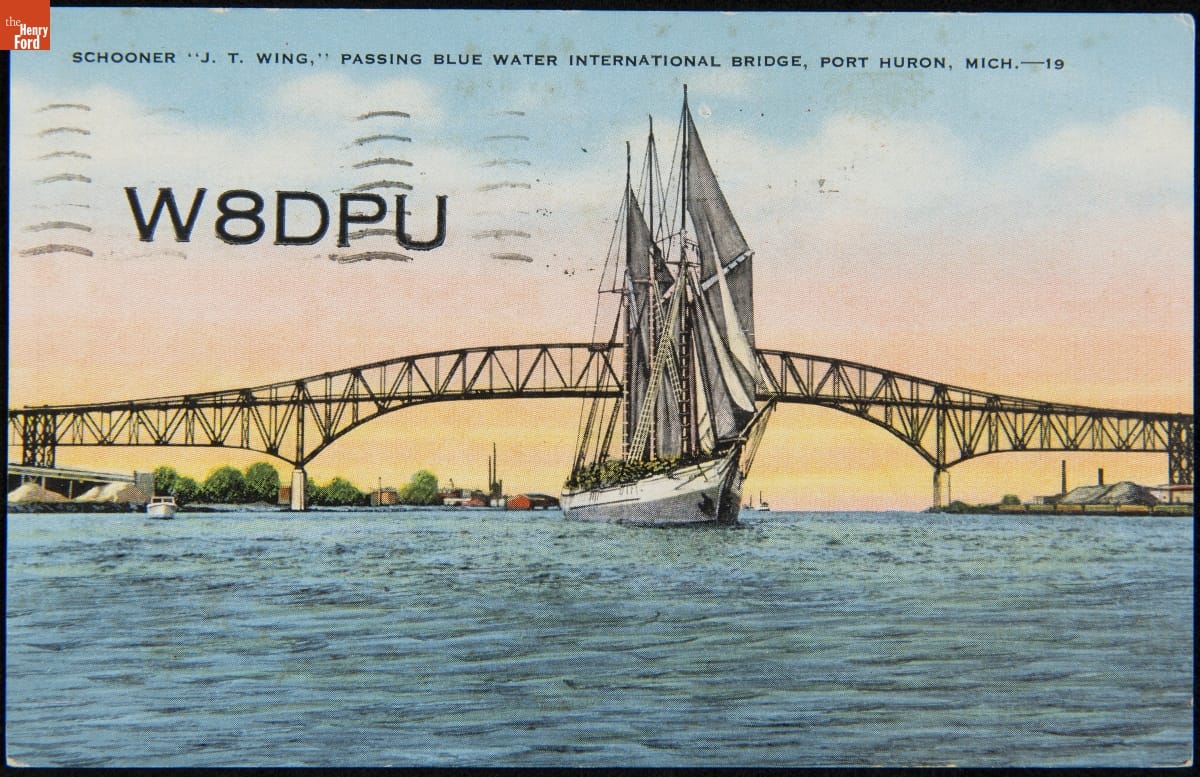
- Blue Water International Bridge Depicted on QSL Card from W8DPU to W6DQZ (Hamid Durmisevich), March 9, 1948 - It was customary for ham radio operators (hams) to exchange these "QSL cards" with one another through the mail after their first conversation. Long-time hams amassed collections of thousands of cards, some from far-flung places. There is a story embedded in each example: the ham's call sign dominates the design, with additional details about location, reception reports, and weather conditions.
- March 09, 1948
- Collections - Artifact
Blue Water International Bridge Depicted on QSL Card from W8DPU to W6DQZ (Hamid Durmisevich), March 9, 1948
It was customary for ham radio operators (hams) to exchange these "QSL cards" with one another through the mail after their first conversation. Long-time hams amassed collections of thousands of cards, some from far-flung places. There is a story embedded in each example: the ham's call sign dominates the design, with additional details about location, reception reports, and weather conditions.
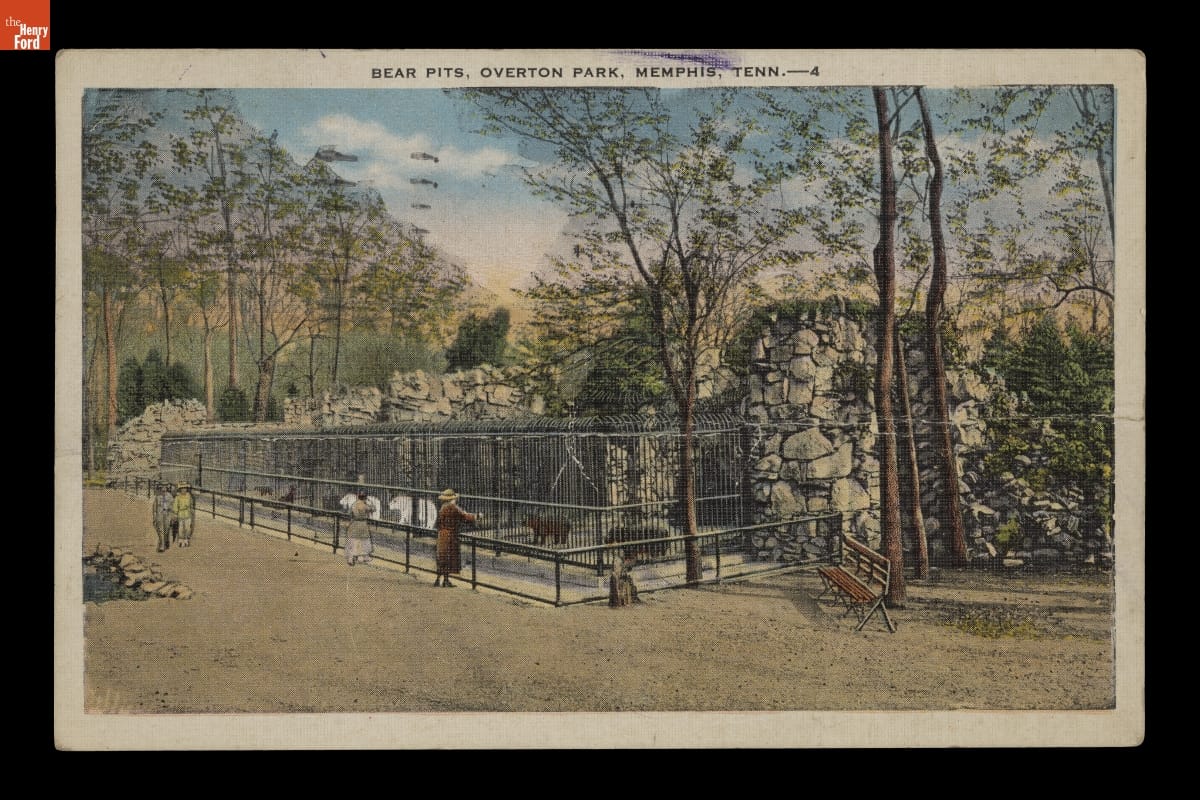
- "Bear Pits, Overton Park, Memphis, Tenn.," Sent to Andrew Purnell, Postmarked September 21, 1937 - Andrew Purnell Jr. (1898-1975) was born in Selma, Alabama. He served in France during World War I and returned to the U.S. in 1919. Purnell married Lela May Cooper in 1920, and by 1926, the couple had moved to Mobile, where he worked as a railroad freight handler. The Purnells kept in touch with family and friends by exchanging postcards and letters.
- Collections - Artifact
"Bear Pits, Overton Park, Memphis, Tenn.," Sent to Andrew Purnell, Postmarked September 21, 1937
Andrew Purnell Jr. (1898-1975) was born in Selma, Alabama. He served in France during World War I and returned to the U.S. in 1919. Purnell married Lela May Cooper in 1920, and by 1926, the couple had moved to Mobile, where he worked as a railroad freight handler. The Purnells kept in touch with family and friends by exchanging postcards and letters.
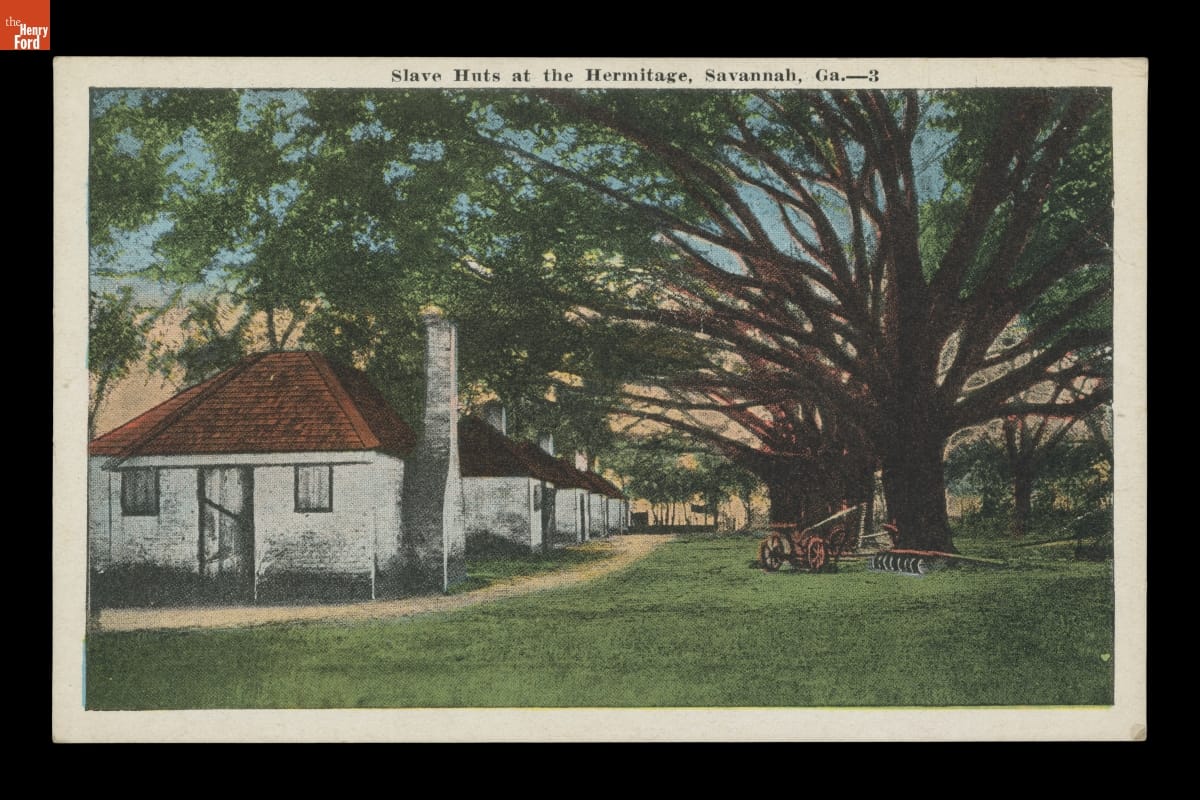
- "Slave Huts at the Hermitage, Savannah, Ga." - Hundreds of enslaved people worked on the Hermitage Plantation near Savannah, Georgia, before the Civil War. They cultivated rice, raised livestock, made bricks, and operated a sawmill and foundry. After the war, depictions of the "old slave huts" and the now-freed people who lived in them appealed to tourists seeking the last vestiges of the "Old South" and intent on romanticizing times of enslavement.
- Collections - Artifact
"Slave Huts at the Hermitage, Savannah, Ga."
Hundreds of enslaved people worked on the Hermitage Plantation near Savannah, Georgia, before the Civil War. They cultivated rice, raised livestock, made bricks, and operated a sawmill and foundry. After the war, depictions of the "old slave huts" and the now-freed people who lived in them appealed to tourists seeking the last vestiges of the "Old South" and intent on romanticizing times of enslavement.
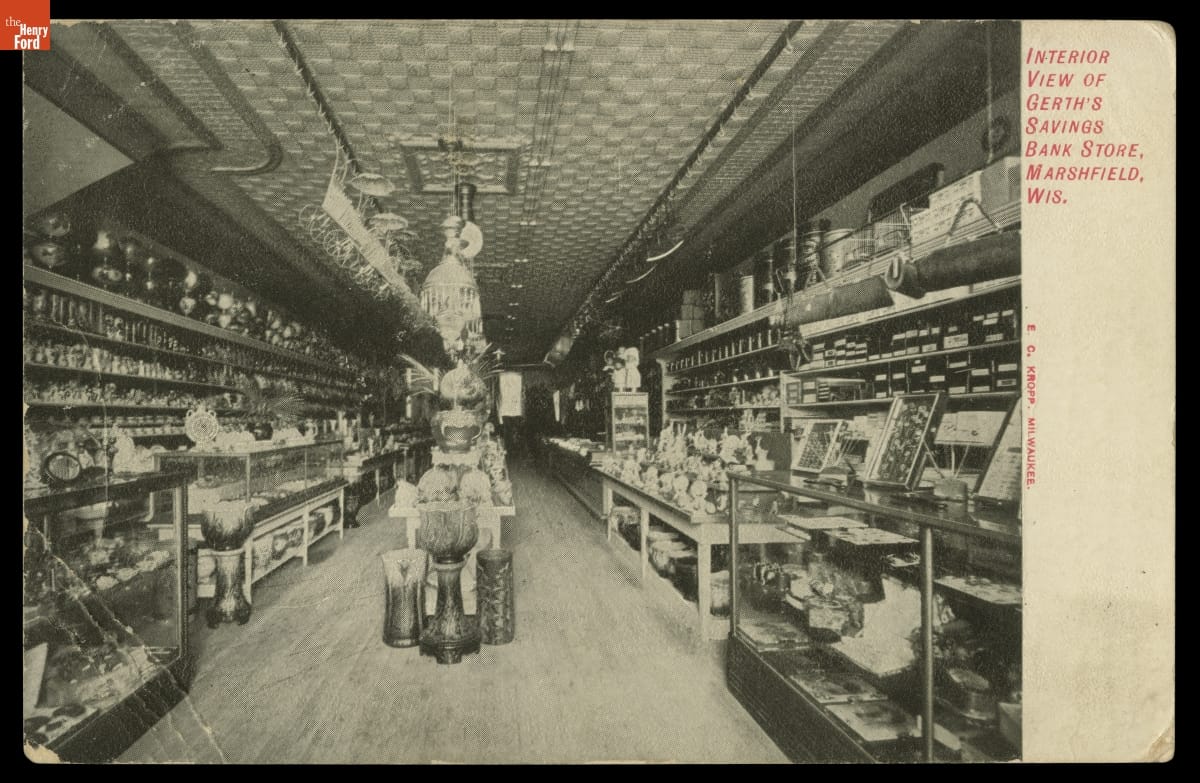
- Interior View of Gerth's Savings Bank Store, Marshfield, Wisconsin, 1910 -
- 1910
- Collections - Artifact
Interior View of Gerth's Savings Bank Store, Marshfield, Wisconsin, 1910
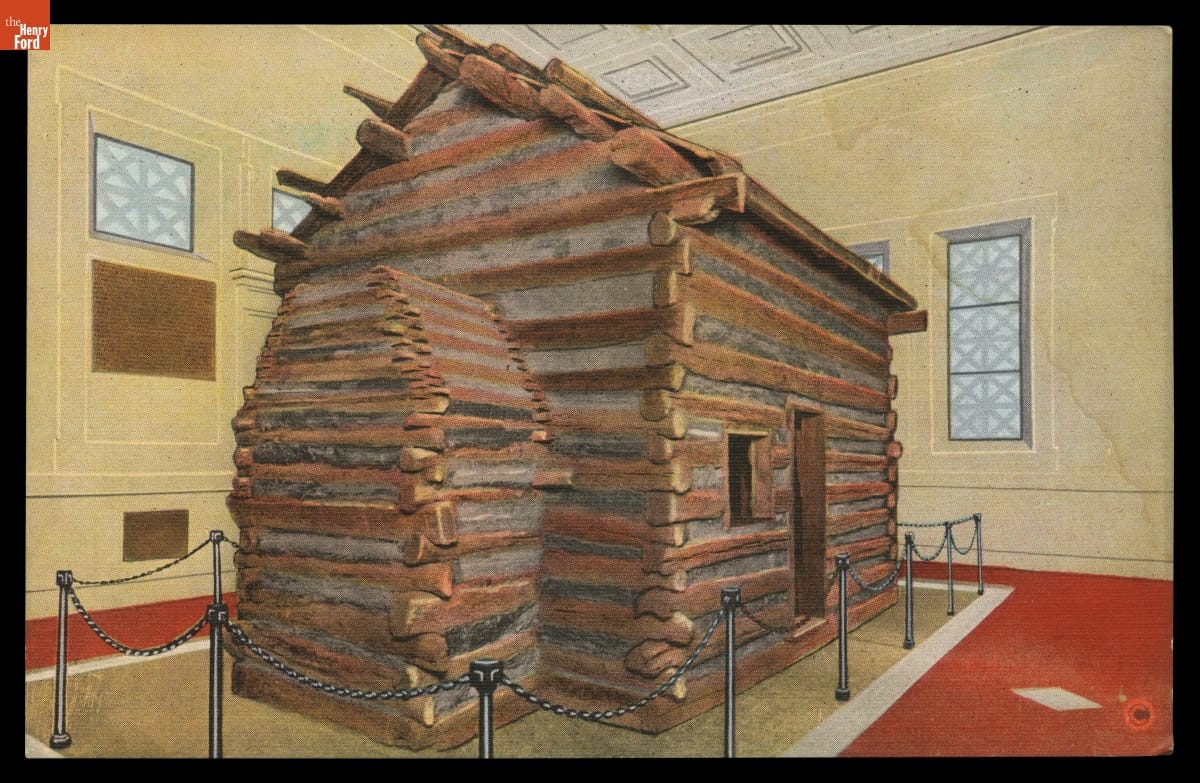
- Birthplace of Abraham Lincoln inside Memorial Building near Hodgenville, Kentucky, circa 1940 Postcard - By the early 20th century, the real Abraham Lincoln had long since faded from people's memory. A new generation of Americans had come of age who only knew the stories, the myths, the legends. This generation transformed Lincoln the man into Lincoln the hero. This first memorial to Lincoln, enshrining his birthplace in Hodgenville, Kentucky, was dedicated in 1911.
- circa 1940
- Collections - Artifact
Birthplace of Abraham Lincoln inside Memorial Building near Hodgenville, Kentucky, circa 1940 Postcard
By the early 20th century, the real Abraham Lincoln had long since faded from people's memory. A new generation of Americans had come of age who only knew the stories, the myths, the legends. This generation transformed Lincoln the man into Lincoln the hero. This first memorial to Lincoln, enshrining his birthplace in Hodgenville, Kentucky, was dedicated in 1911.
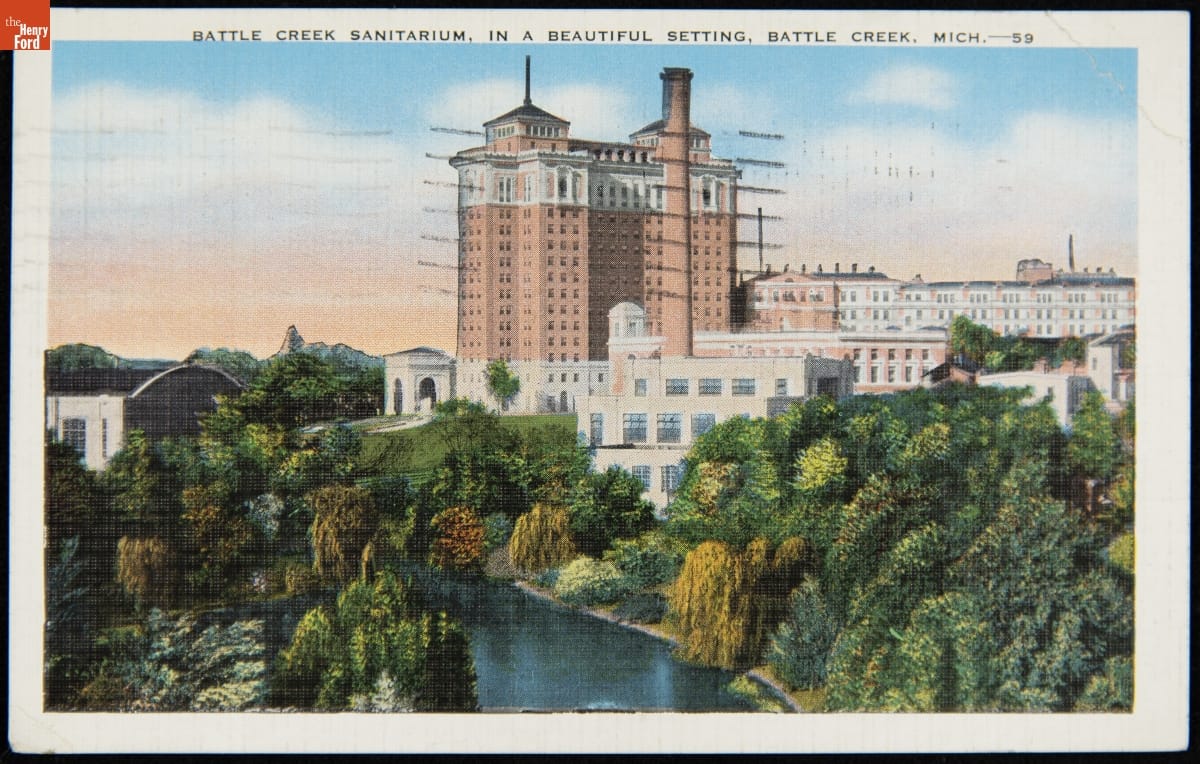
- Battle Creek Sanitarium, Battle Creek, Michigan, circa 1938 - Dr. John Harvey Kellogg became director of the Battle Creek Sanitarium in 1876. Under his leadership, the "San" grew into a leading health resort with treatment programs focused on vegetarianism, hydrotherapy, exercise, and fresh air. The facility survived a 1902 fire, but it couldn't endure the decline in its well-to-do clientele begun by the Great Depression.
- October 27, 1938
- Collections - Artifact
Battle Creek Sanitarium, Battle Creek, Michigan, circa 1938
Dr. John Harvey Kellogg became director of the Battle Creek Sanitarium in 1876. Under his leadership, the "San" grew into a leading health resort with treatment programs focused on vegetarianism, hydrotherapy, exercise, and fresh air. The facility survived a 1902 fire, but it couldn't endure the decline in its well-to-do clientele begun by the Great Depression.
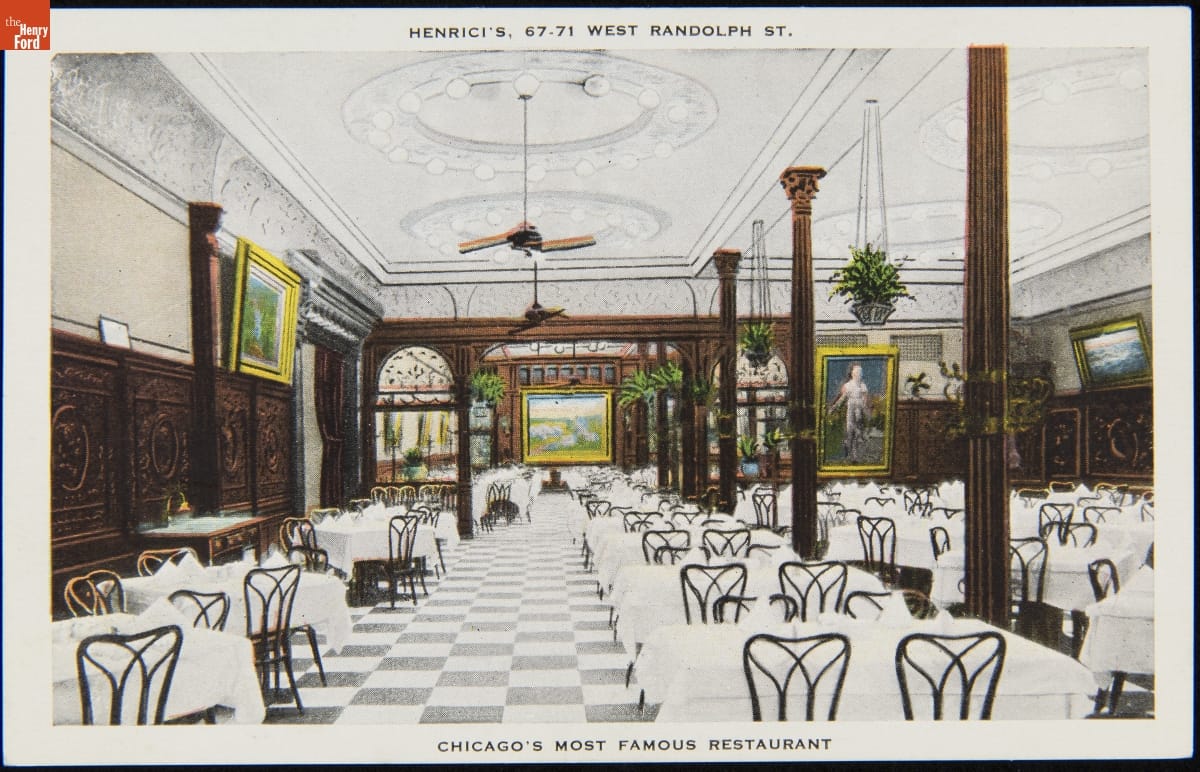
- Henrici's, 67-71 W. Randolph Street, "Chicago's Most Famous Restaurant," circa 1920 -
- circa 1910
- Collections - Artifact
Henrici's, 67-71 W. Randolph Street, "Chicago's Most Famous Restaurant," circa 1920