
Search
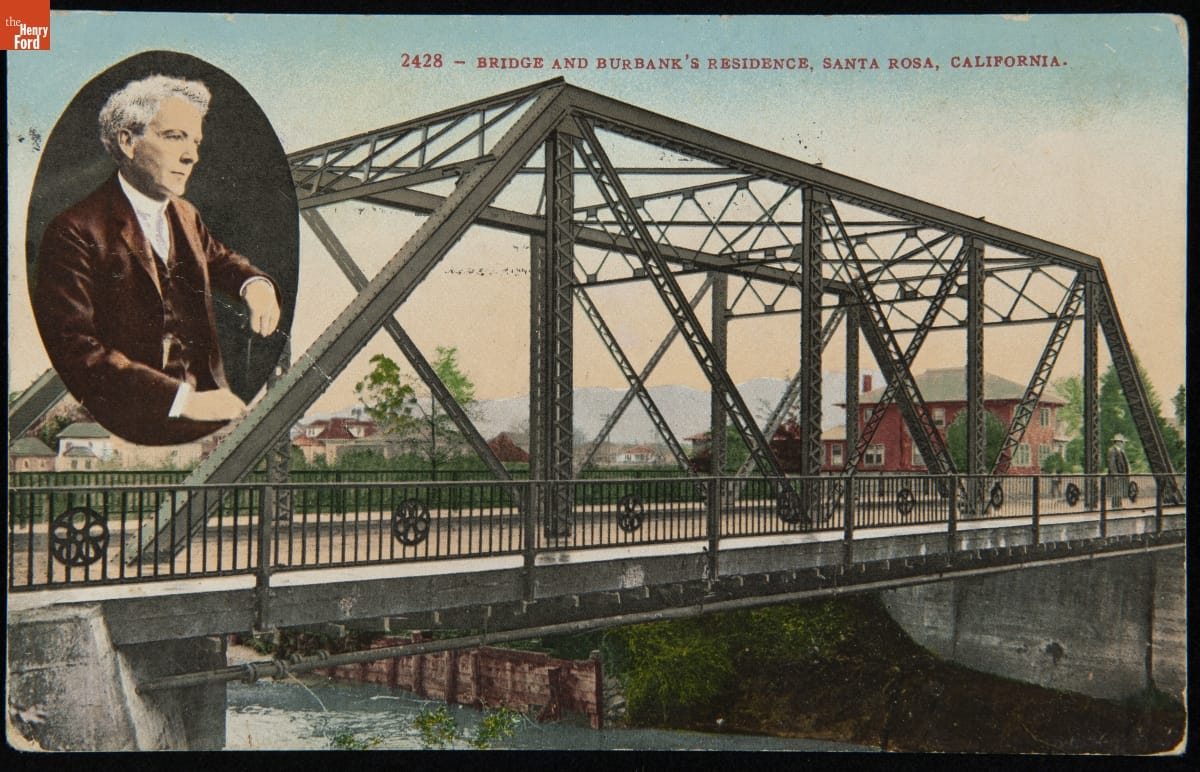
- Bridge and Burbank's Residence, Santa Rosa, California, 1913 - The reconstruction of Santa Rosa, California, after the 1906 earthquake, privileged automobiles over railways. This steel-truss bridge afforded easier pedestrian and automobile access to Luther Burbank's experimental gardens. Burbank's new home, completed by December 1906, is visible through the trusses. During the 1960s, urban renewal and flood control projects destroyed Burbank's 1906 home and buried Santa Rosa Creek.
- October 17, 1913
- Collections - Artifact
Bridge and Burbank's Residence, Santa Rosa, California, 1913
The reconstruction of Santa Rosa, California, after the 1906 earthquake, privileged automobiles over railways. This steel-truss bridge afforded easier pedestrian and automobile access to Luther Burbank's experimental gardens. Burbank's new home, completed by December 1906, is visible through the trusses. During the 1960s, urban renewal and flood control projects destroyed Burbank's 1906 home and buried Santa Rosa Creek.
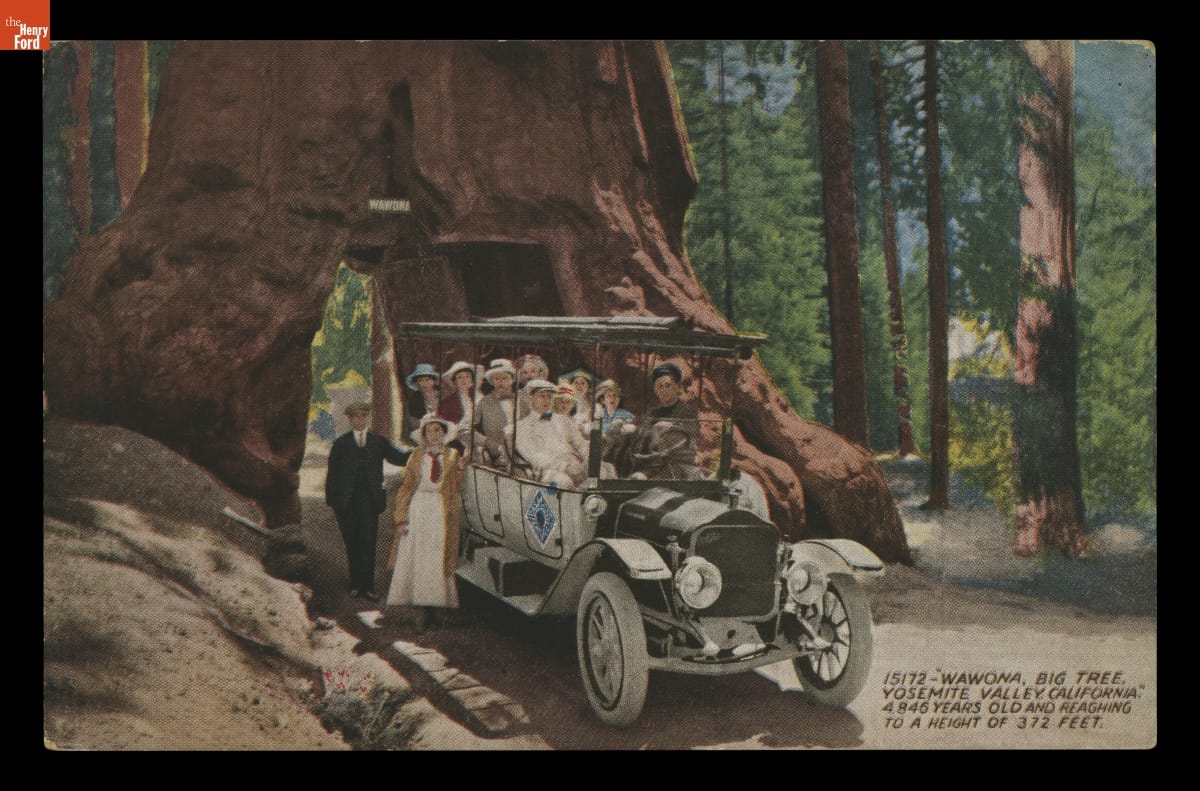
- "Wawona, Big Tree, Yosemite Valley, California," 1917-1920 - People love to buy and send postcards that document their travels. This postcard depicts "Wawona" in the Mariposa Grove of Big Trees in Yosemite National Park. A human-made tunnel was cut through the giant Sequoia in 1881, allowing vehicles to pass through the tree's massive trunk. Tourists flocked to see it. The tree fell in 1969, but it remains a popular tourist attraction.
- 1917-1920
- Collections - Artifact
"Wawona, Big Tree, Yosemite Valley, California," 1917-1920
People love to buy and send postcards that document their travels. This postcard depicts "Wawona" in the Mariposa Grove of Big Trees in Yosemite National Park. A human-made tunnel was cut through the giant Sequoia in 1881, allowing vehicles to pass through the tree's massive trunk. Tourists flocked to see it. The tree fell in 1969, but it remains a popular tourist attraction.
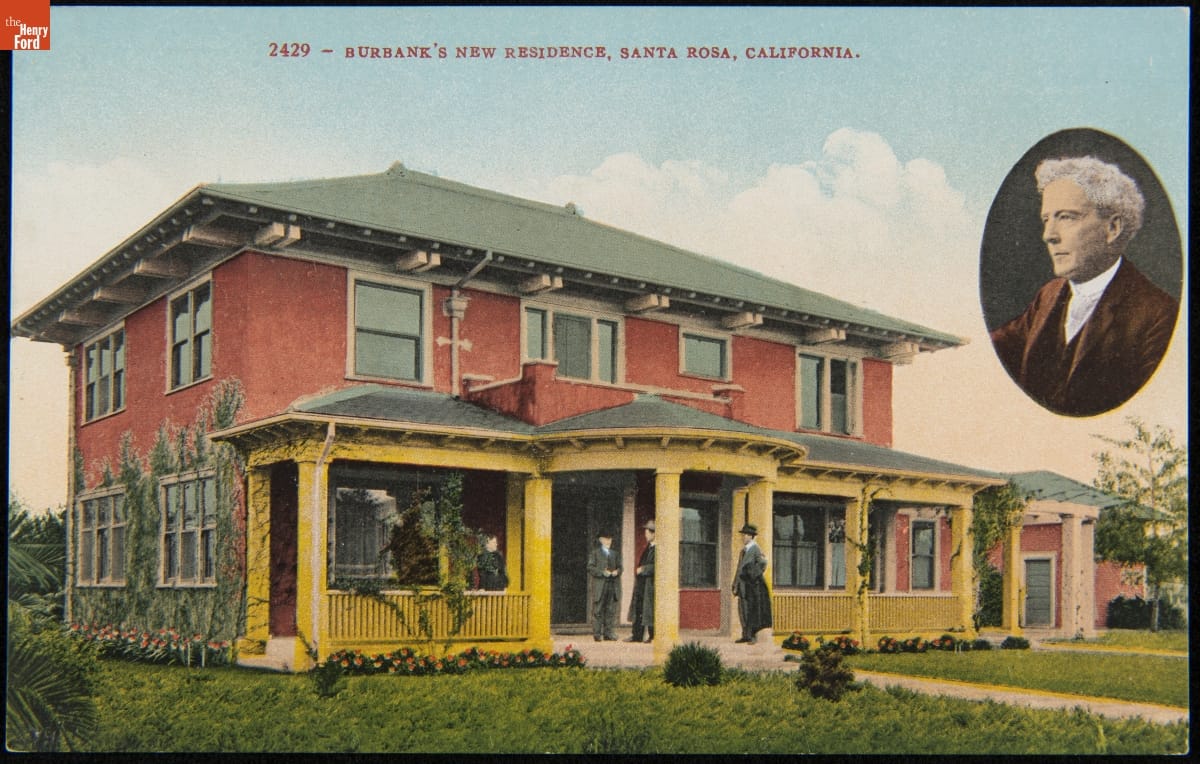
- "Burbank's New Residence, Santa Rosa, California," circa 1915 - Luther Burbank moved into his new and spacious 12-room home in December 1906, just months after the San Francisco earthquake. The Mission and Colonial Revival design suited popular tastes at the times, while the furnishings ensured Burbank's comfort. His private den opened onto the balcony above the porch which offered a breath of air and a view of staff at work in his experimental gardens.
- circa 1915
- Collections - Artifact
"Burbank's New Residence, Santa Rosa, California," circa 1915
Luther Burbank moved into his new and spacious 12-room home in December 1906, just months after the San Francisco earthquake. The Mission and Colonial Revival design suited popular tastes at the times, while the furnishings ensured Burbank's comfort. His private den opened onto the balcony above the porch which offered a breath of air and a view of staff at work in his experimental gardens.
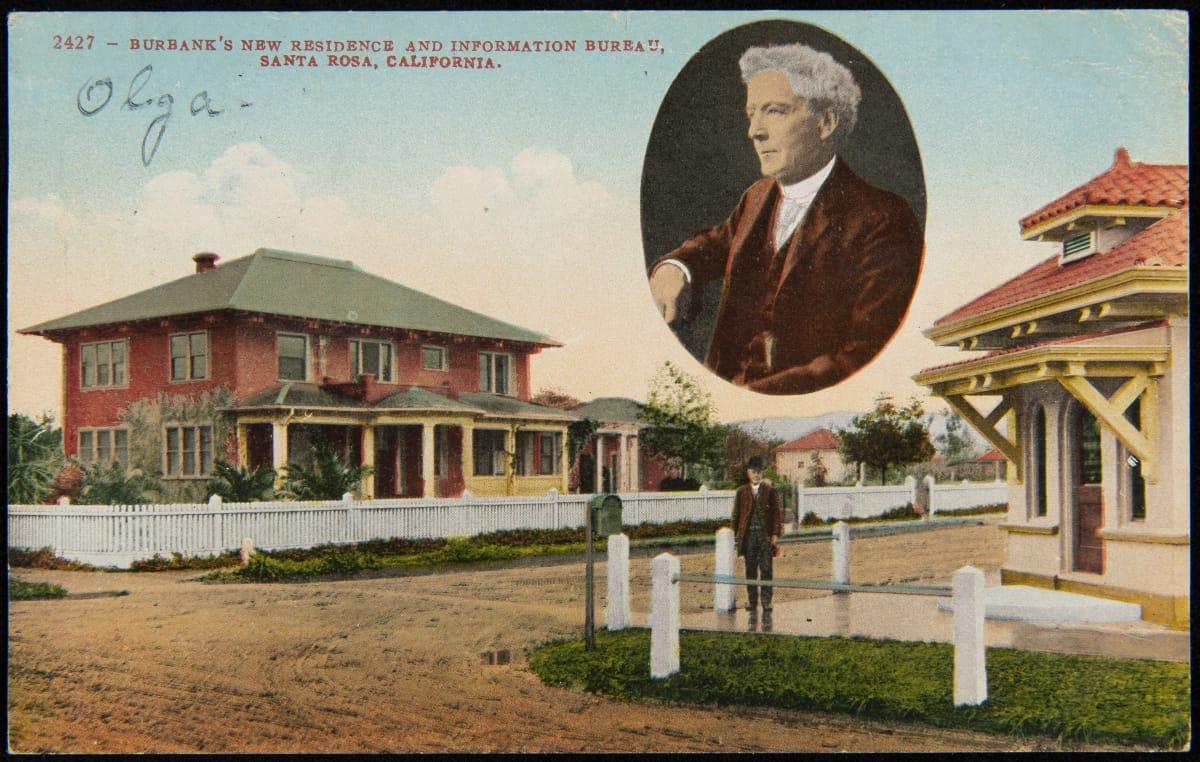
- Burbank's New Residence and Information Bureau, Santa Rosa, California, 1910 - Luther Burbank (1849-1926), an American horticulturalist and author, gained a reputation for selective breeding that yielded more than 800 new fruits, vegetables, flowers, and other plants. This postcard shows him standing at his Bureau of Information, opened in 1910, across from his new home, built in 1906. The public could purchase seeds and souvenirs at the Bureau and drop postcards in the mailbox in front of the office.
- November 01, 1910
- Collections - Artifact
Burbank's New Residence and Information Bureau, Santa Rosa, California, 1910
Luther Burbank (1849-1926), an American horticulturalist and author, gained a reputation for selective breeding that yielded more than 800 new fruits, vegetables, flowers, and other plants. This postcard shows him standing at his Bureau of Information, opened in 1910, across from his new home, built in 1906. The public could purchase seeds and souvenirs at the Bureau and drop postcards in the mailbox in front of the office.
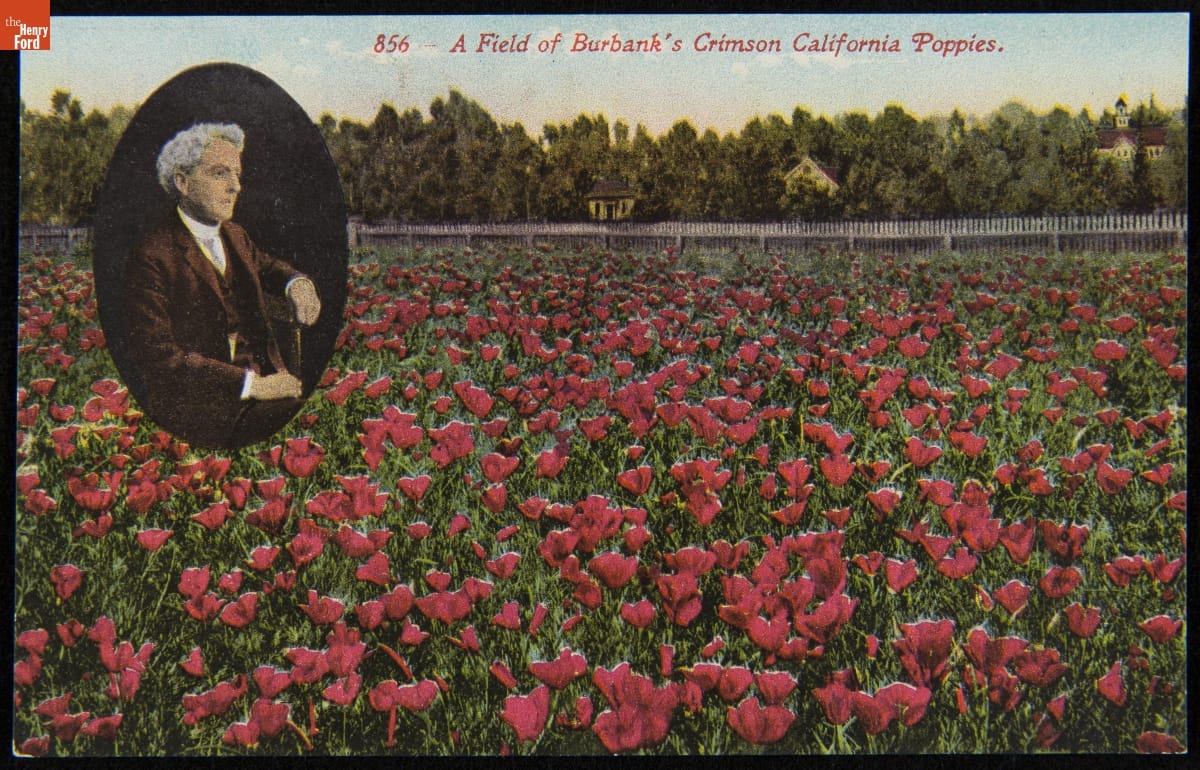
- "A Field of Burbank's Crimson California Poppies," circa 1915 - California legislators named Eschscholzia californica (the California poppy) as the state flower in 1903. Luther Burbank, an American horticulturalist who gained a reputation for his commercially successful plant creations, believed he could improve on the state flower. He selectively bred the California Native Yellow Variety and created not a vivid yellow, but a consistently crimson, poppy.
- circa 1915
- Collections - Artifact
"A Field of Burbank's Crimson California Poppies," circa 1915
California legislators named Eschscholzia californica (the California poppy) as the state flower in 1903. Luther Burbank, an American horticulturalist who gained a reputation for his commercially successful plant creations, believed he could improve on the state flower. He selectively bred the California Native Yellow Variety and created not a vivid yellow, but a consistently crimson, poppy.
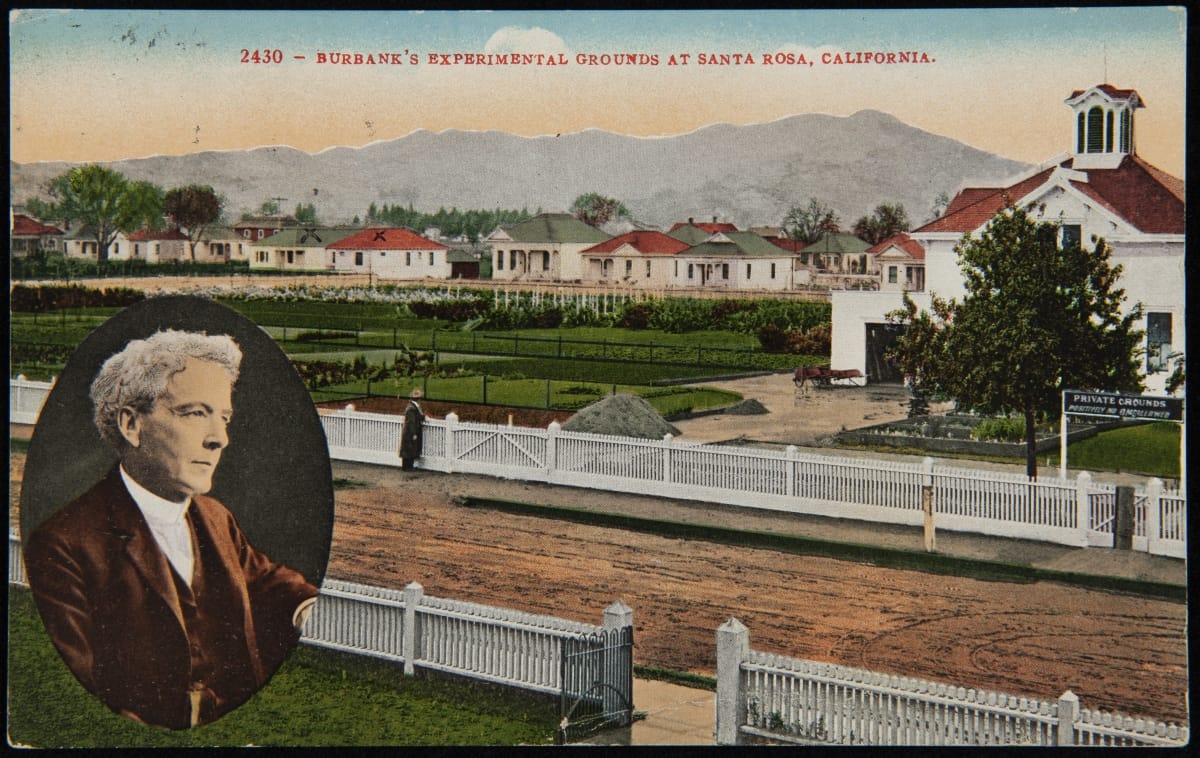
- Burbank's Experimental Grounds at Santa Rosa, California, 1910 - This postcard features the bird's-eye view that horticulturalist Luther Burbank had of his 40-acre experimental garden from the balcony of his new home in Santa Rosa, California. He could watch the staff move wheelbarrows and other tools from the carriage shed into the garden plots and watch house construction around the perimeter of his land. This included a home built by the person who mailed the post card.
- August 18, 1910
- Collections - Artifact
Burbank's Experimental Grounds at Santa Rosa, California, 1910
This postcard features the bird's-eye view that horticulturalist Luther Burbank had of his 40-acre experimental garden from the balcony of his new home in Santa Rosa, California. He could watch the staff move wheelbarrows and other tools from the carriage shed into the garden plots and watch house construction around the perimeter of his land. This included a home built by the person who mailed the post card.
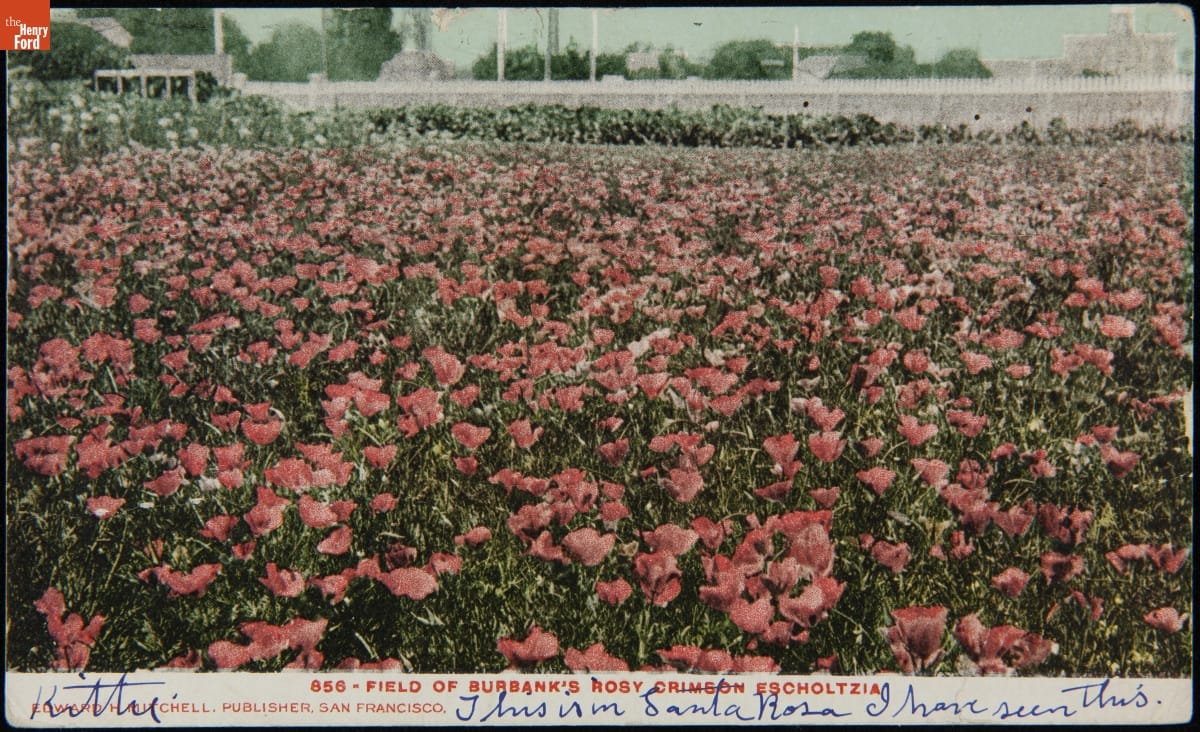
- Field of Burbank's Rosy Crimson Escholtzia, April 13, 1908 - California legislators named Eschscholzia californica (the California poppy) as the state flower in 1903. Luther Burbank, an American horticulturalist who gained a reputation for his commercially successful plant creations, believed he could improve on the state flower. He selectively bred the native plant and introduced The Burbank (1909), a consistently crimson poppy, though the postcard text misspelled the genus.
- April 13, 1908
- Collections - Artifact
Field of Burbank's Rosy Crimson Escholtzia, April 13, 1908
California legislators named Eschscholzia californica (the California poppy) as the state flower in 1903. Luther Burbank, an American horticulturalist who gained a reputation for his commercially successful plant creations, believed he could improve on the state flower. He selectively bred the native plant and introduced The Burbank (1909), a consistently crimson poppy, though the postcard text misspelled the genus.
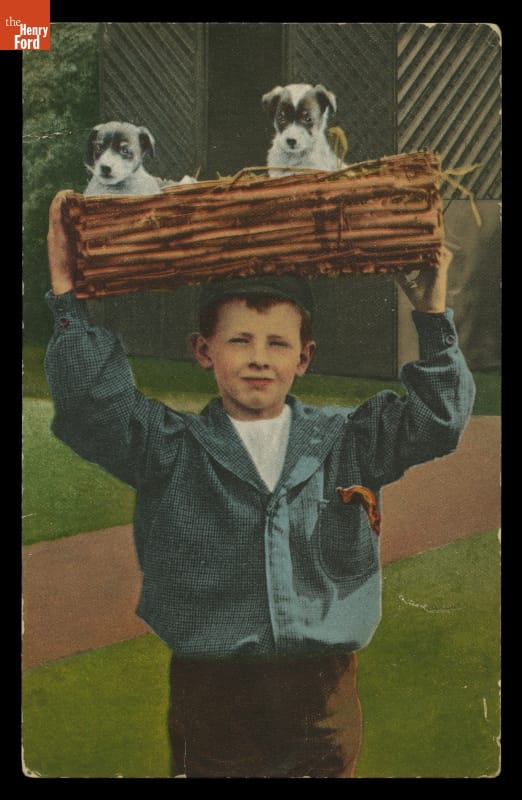
- Postcard, Boy Holding a Basket with Two Puppies, circa 1908 - Depictions of dogs and puppies often appeared in art and folk art in the United States. Inexpensive lithograph prints made in the mid-19th century emphasized people's relationship with dogs. Starting in the late 1890s picture postcards included these types of popular illustrations of dogs. Sending colorful postcards through the U.S. mail continued to be widespread well into the 1910s.
- circa 1908
- Collections - Artifact
Postcard, Boy Holding a Basket with Two Puppies, circa 1908
Depictions of dogs and puppies often appeared in art and folk art in the United States. Inexpensive lithograph prints made in the mid-19th century emphasized people's relationship with dogs. Starting in the late 1890s picture postcards included these types of popular illustrations of dogs. Sending colorful postcards through the U.S. mail continued to be widespread well into the 1910s.
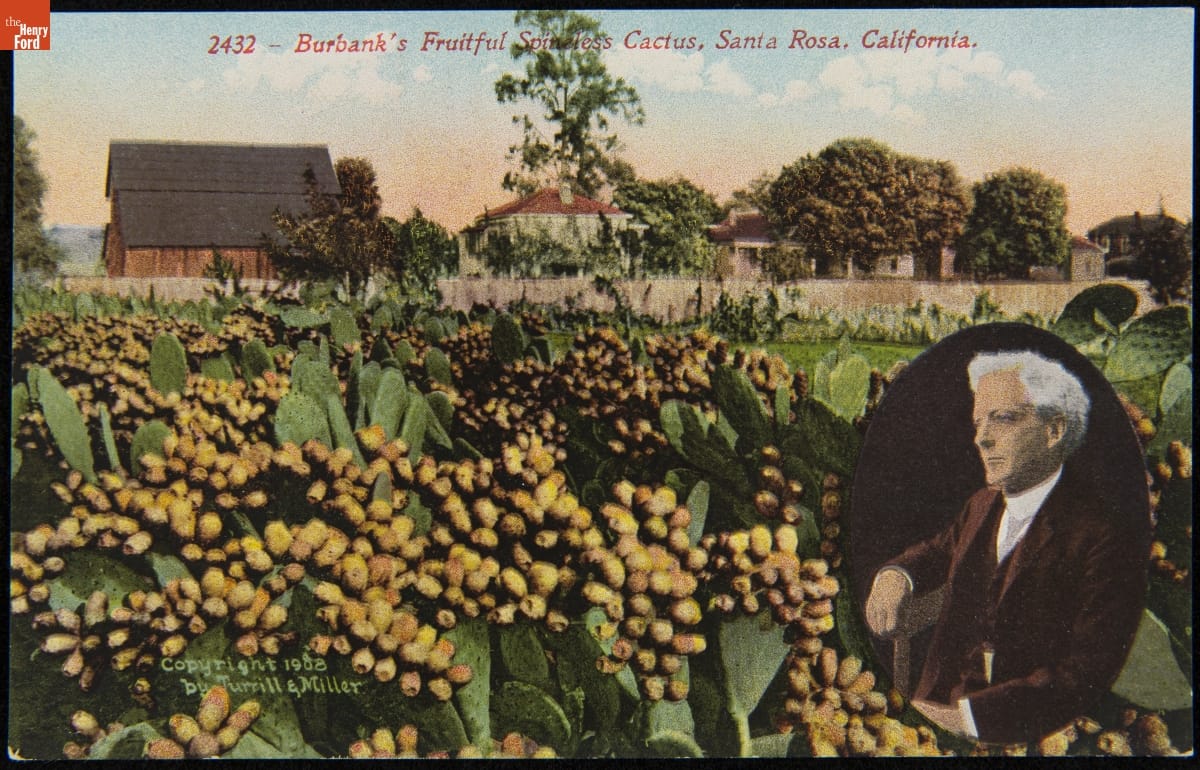
- "Burbank's Fruitful Spineless Cactus, Santa Rosa, California," circa 1908 - Luther Burbank (1849-1926), an American horticulturalist, devoted years of research to perfect spineless cacti as a new livestock feed that could free acreage for crops to feed humans. Others sought new sources of livestock feed to sustain arid range land and the American ranching tradition. Fraudulent distribution of cactus purported to be Burbank's invention caused him to retreat from public engagement and recommit himself to research.
- circa 1908
- Collections - Artifact
"Burbank's Fruitful Spineless Cactus, Santa Rosa, California," circa 1908
Luther Burbank (1849-1926), an American horticulturalist, devoted years of research to perfect spineless cacti as a new livestock feed that could free acreage for crops to feed humans. Others sought new sources of livestock feed to sustain arid range land and the American ranching tradition. Fraudulent distribution of cactus purported to be Burbank's invention caused him to retreat from public engagement and recommit himself to research.