
Search
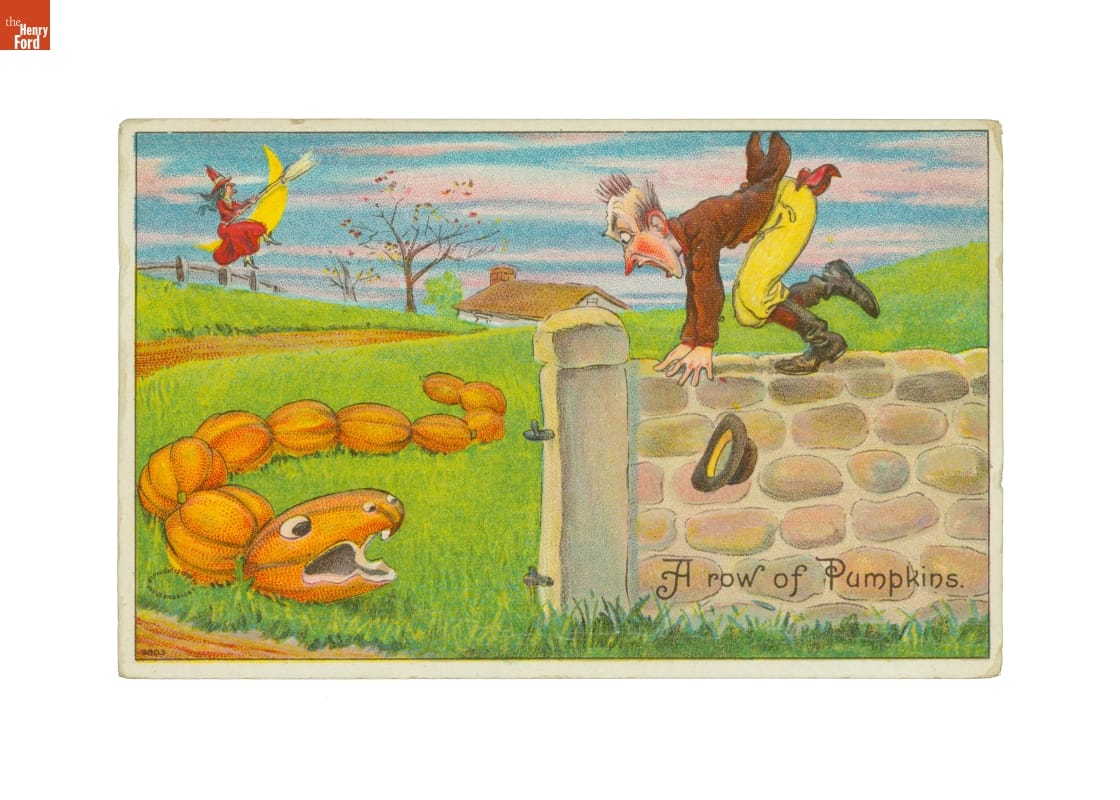
- Halloween Postcard, "A row of Pumpkins," 1909 - A distinctly American blend of Halloween traditions emerged by the late 1800s. Into the 20th century, the holiday was mostly an innocent celebration of mystery and fun, but friends and neighbors often exchanged seasonal greeting postcards that evoked Halloween's superstitious origins. This colorful example includes a witch and a jack-o-lantern -- two symbols of Halloween's superstitious origins.
- 1909
- Collections - Artifact
Halloween Postcard, "A row of Pumpkins," 1909
A distinctly American blend of Halloween traditions emerged by the late 1800s. Into the 20th century, the holiday was mostly an innocent celebration of mystery and fun, but friends and neighbors often exchanged seasonal greeting postcards that evoked Halloween's superstitious origins. This colorful example includes a witch and a jack-o-lantern -- two symbols of Halloween's superstitious origins.
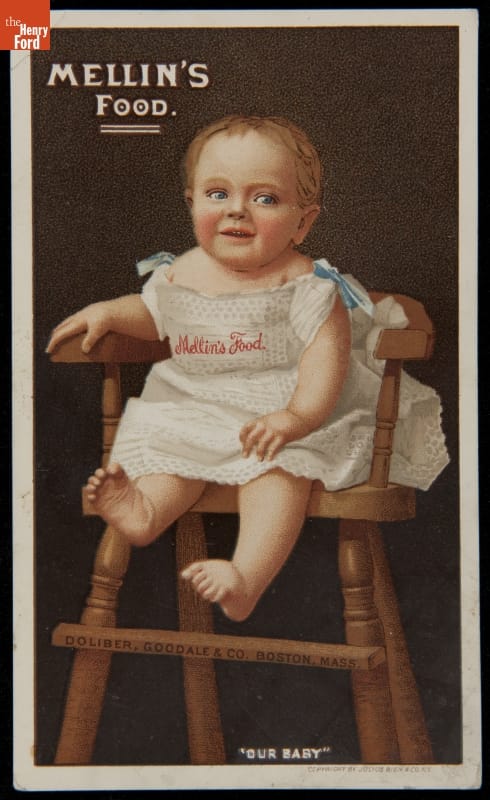
- Trade Card for Mellin's Food, 1883-1899 - In the last third of the nineteenth century, an unprecedented variety of consumer goods and services flooded the American market. Advertisers, armed with new methods of color printing, bombarded potential customers with trade cards. Americans enjoyed and often saved the vibrant little advertisements found in product packages or distributed by local merchants. Many survive as historical records of commercialism in the United States.
- 1883-1899
- Collections - Artifact
Trade Card for Mellin's Food, 1883-1899
In the last third of the nineteenth century, an unprecedented variety of consumer goods and services flooded the American market. Advertisers, armed with new methods of color printing, bombarded potential customers with trade cards. Americans enjoyed and often saved the vibrant little advertisements found in product packages or distributed by local merchants. Many survive as historical records of commercialism in the United States.
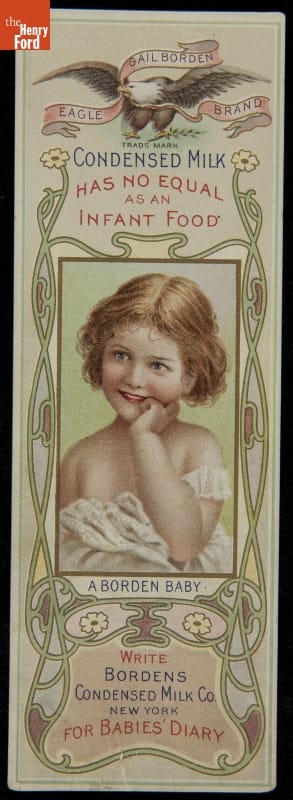
- Trade Card for Eagle Brand Condensed Milk, Borden's Condensed Milk Co., 1904 - Feeding infants tainted cow's milk was a common cause of infant mortality. In 1856, Gail Borden introduced Eagle Brand Condensed Milk to combat this. This product became so popular for soldiers during the Civil War that, by the end of the war, it had gained a reputation for being safe, wholesome, and nourishing -- a trusted food for infants and children.
- 1904
- Collections - Artifact
Trade Card for Eagle Brand Condensed Milk, Borden's Condensed Milk Co., 1904
Feeding infants tainted cow's milk was a common cause of infant mortality. In 1856, Gail Borden introduced Eagle Brand Condensed Milk to combat this. This product became so popular for soldiers during the Civil War that, by the end of the war, it had gained a reputation for being safe, wholesome, and nourishing -- a trusted food for infants and children.
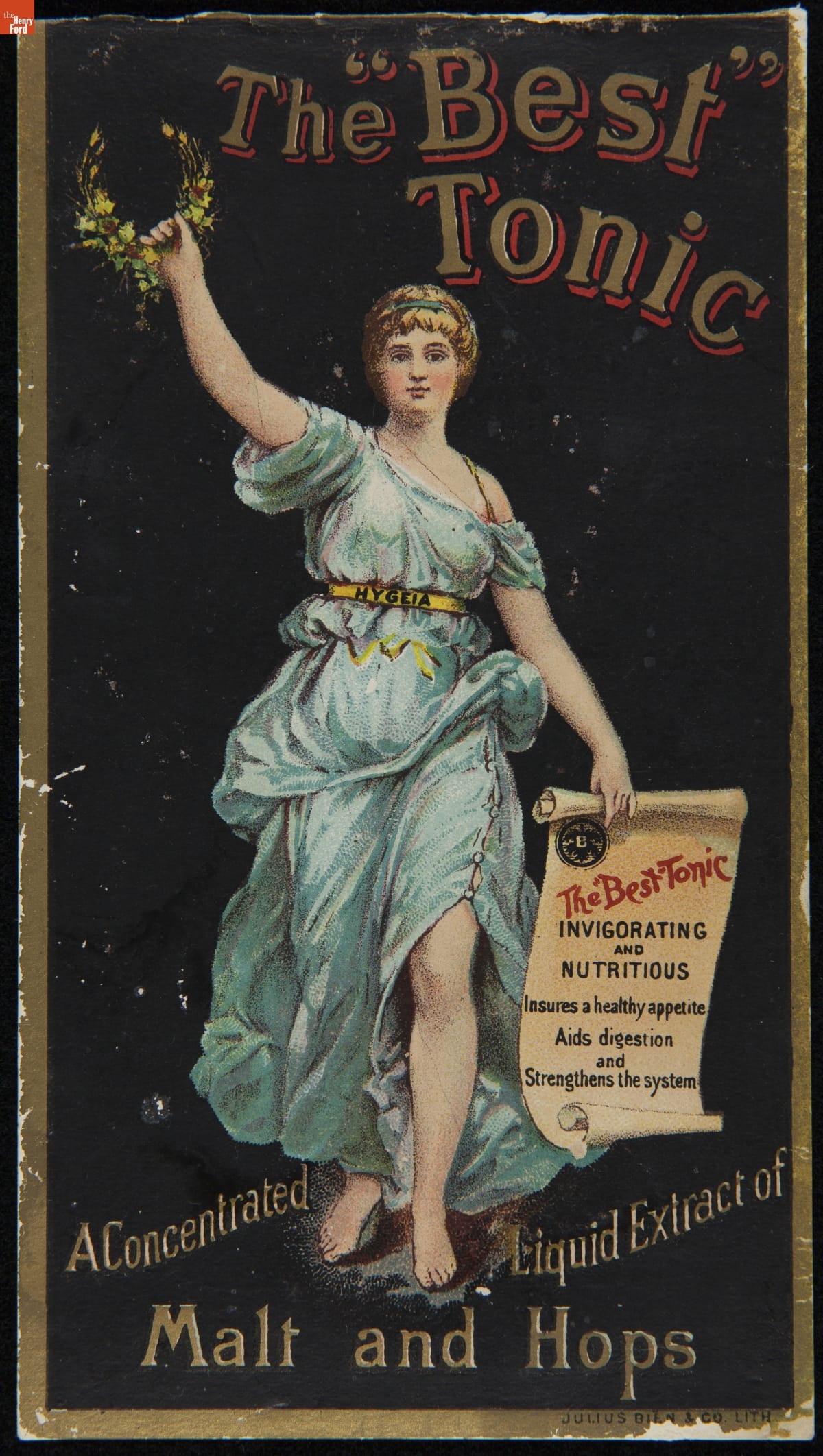
- Trade Card for The "Best Tonic," 1880-1900 - In the last third of the nineteenth century, an unprecedented variety of consumer goods and services flooded the American market. Advertisers, armed with new methods of color printing, bombarded potential customers with trade cards. Americans enjoyed and often saved the vibrant little advertisements found in product packages or distributed by local merchants. Many survive as historical records of commercialism in the United States.
- 1880-1900
- Collections - Artifact
Trade Card for The "Best Tonic," 1880-1900
In the last third of the nineteenth century, an unprecedented variety of consumer goods and services flooded the American market. Advertisers, armed with new methods of color printing, bombarded potential customers with trade cards. Americans enjoyed and often saved the vibrant little advertisements found in product packages or distributed by local merchants. Many survive as historical records of commercialism in the United States.