
Search
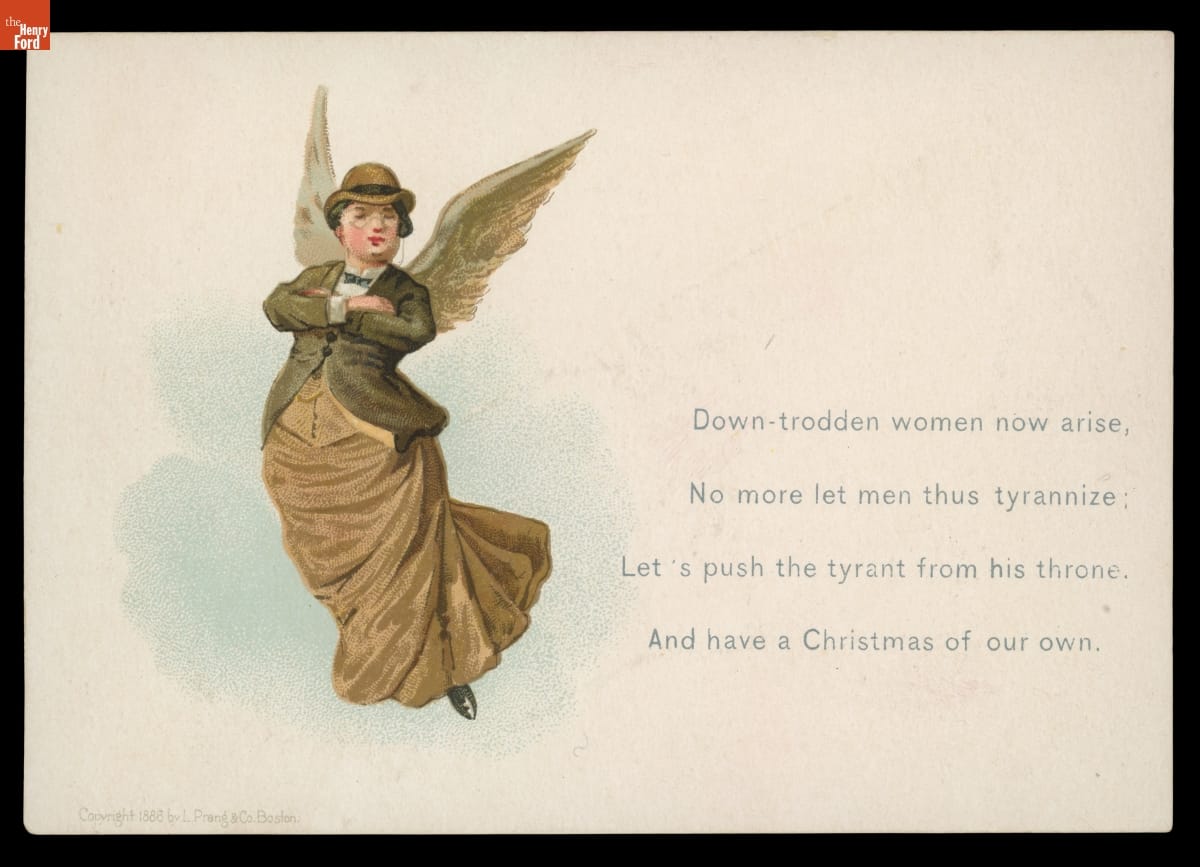
- "...Have a Christmas of Our Own," 1886 - In the mid-1800s, Americans began mailing commercially designed European greeting cards wishing friends, family, or neighbors a merry Christmas. Domestically published holiday cards became available after 1874, when German immigrant Louis Prang - through the L. Prang and Company in Boston - began printing and selling Christmas cards in the United States. This is one of his designs from 1886.
- 1886
- Collections - Artifact
"...Have a Christmas of Our Own," 1886
In the mid-1800s, Americans began mailing commercially designed European greeting cards wishing friends, family, or neighbors a merry Christmas. Domestically published holiday cards became available after 1874, when German immigrant Louis Prang - through the L. Prang and Company in Boston - began printing and selling Christmas cards in the United States. This is one of his designs from 1886.
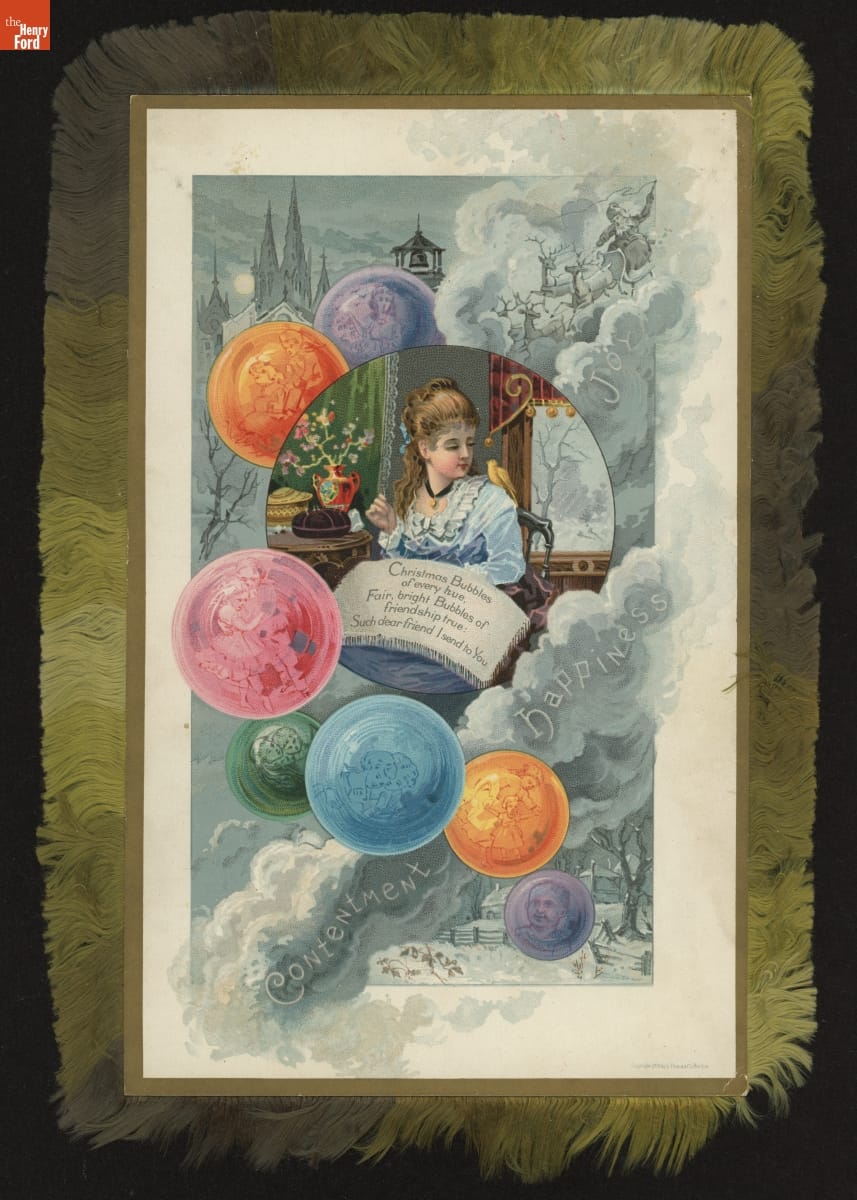
- "Christmas Bubbles of Every Hue...," 1881 - Louis Prang, a German immigrant printer based in Boston, Massachusetts, introduced colorful chromolithographed Christmas cards in the mid-1870s, which helped spur an annual holiday card-giving tradition in America. In the early 1880s, Prang initiated card contests and produced more elaborate cards, some which included silk fringe, tassels, or hangars. Today, many consider Louis Prang the father of the American Christmas card.
- 1881
- Collections - Artifact
"Christmas Bubbles of Every Hue...," 1881
Louis Prang, a German immigrant printer based in Boston, Massachusetts, introduced colorful chromolithographed Christmas cards in the mid-1870s, which helped spur an annual holiday card-giving tradition in America. In the early 1880s, Prang initiated card contests and produced more elaborate cards, some which included silk fringe, tassels, or hangars. Today, many consider Louis Prang the father of the American Christmas card.
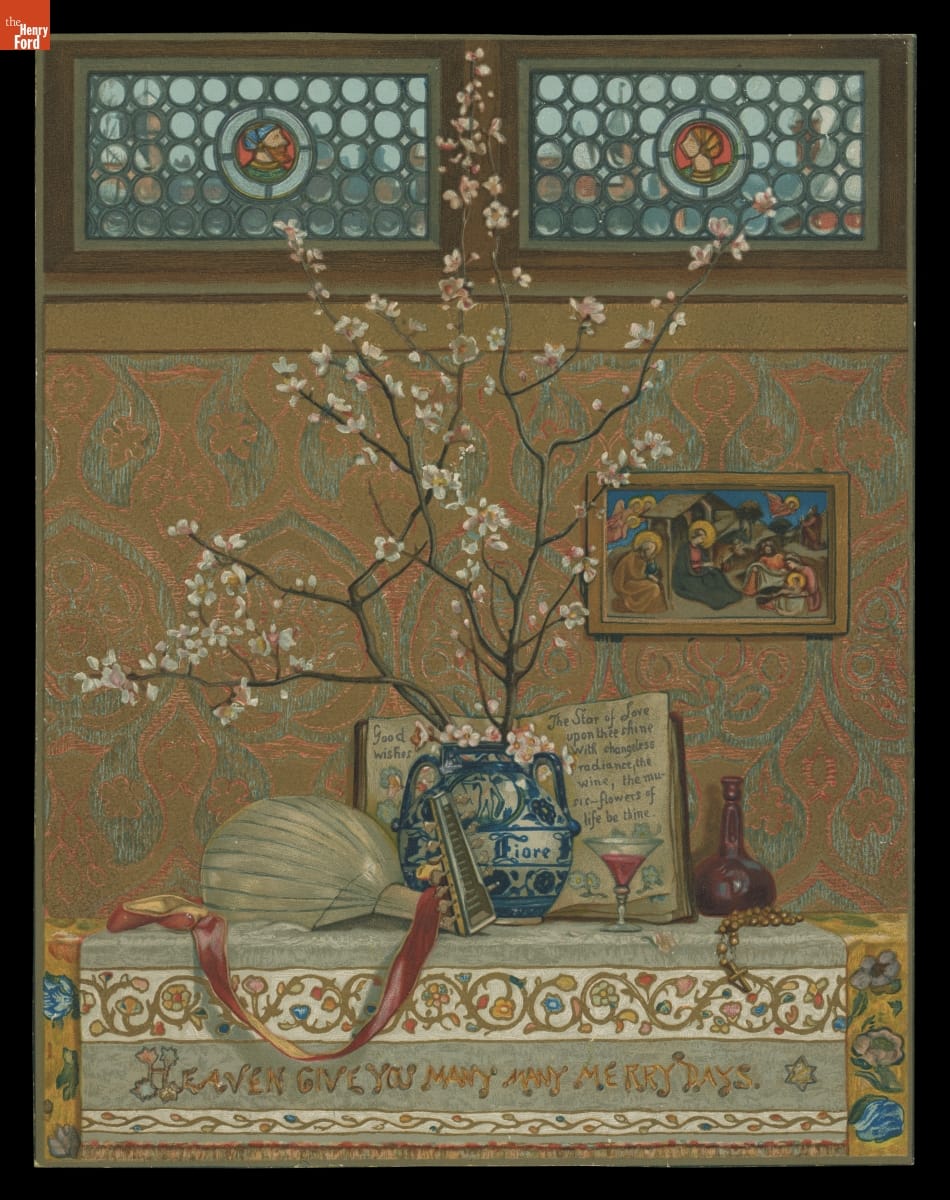
- "Heaven Give You Many Merry Days," 1881 - Beginning in the mid-1870s, Louis Prang, a German immigrant printer based in Boston, Massachusetts, created colorful chromolithographed Christmas cards. Prang later initiated a Christmas card design contest for American artists, where he would reproduce and sell the winning entries to eager consumers. Four contests were held from 1880 to 1884. This card shows one of the winning designs for 1881.
- 1881
- Collections - Artifact
"Heaven Give You Many Merry Days," 1881
Beginning in the mid-1870s, Louis Prang, a German immigrant printer based in Boston, Massachusetts, created colorful chromolithographed Christmas cards. Prang later initiated a Christmas card design contest for American artists, where he would reproduce and sell the winning entries to eager consumers. Four contests were held from 1880 to 1884. This card shows one of the winning designs for 1881.
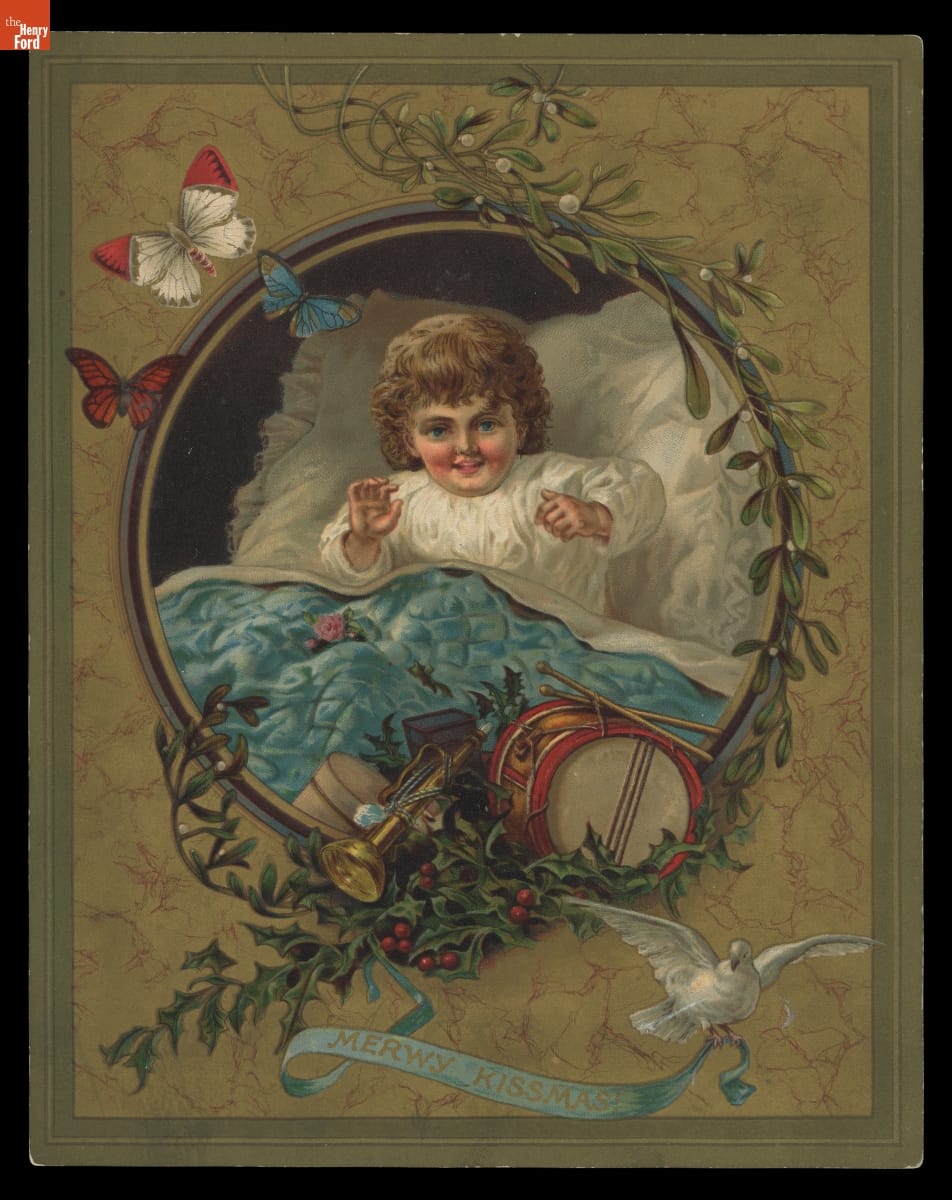
- "Merwy Kissmas!," 1882 - Beginning in the mid-1870s, Louis Prang, a German immigrant printer based in Boston, Massachusetts, created colorful chromolithographed Christmas cards. Prang later initiated a Christmas card design contest for American artists, where he would reproduce and sell the winning entries to eager consumers. Four contests were held from 1880 to 1884. This card shows one of the winning designs for 1882.
- 1882
- Collections - Artifact
"Merwy Kissmas!," 1882
Beginning in the mid-1870s, Louis Prang, a German immigrant printer based in Boston, Massachusetts, created colorful chromolithographed Christmas cards. Prang later initiated a Christmas card design contest for American artists, where he would reproduce and sell the winning entries to eager consumers. Four contests were held from 1880 to 1884. This card shows one of the winning designs for 1882.
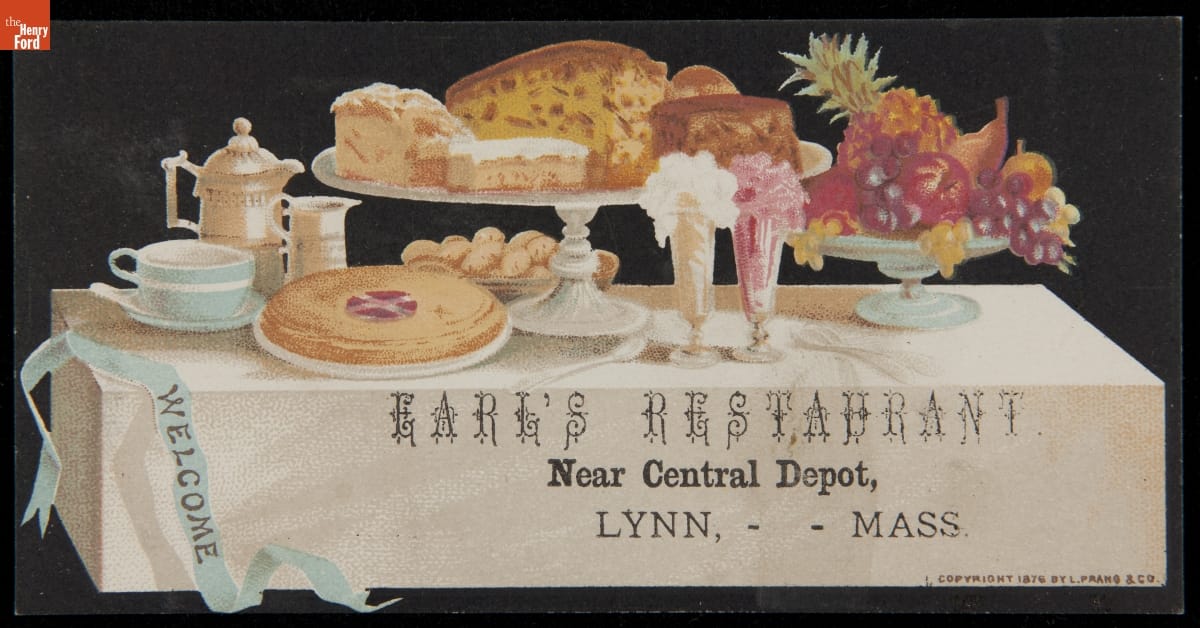
- Trade Card for Earl's Restaurant, 1876 - In the 1870s, Lynn, Massachusetts, was a busy industrial seaboard town of about 28,000 inhabitants, located about 11 miles northeast of Boston. By the time of this trade card, the Eastern Railroad made trips from Lynn's Central Depot to Boston every hour of the day and evening. Earl's Restaurant, advertised here, was likely a popular gathering spot.
- 1876
- Collections - Artifact
Trade Card for Earl's Restaurant, 1876
In the 1870s, Lynn, Massachusetts, was a busy industrial seaboard town of about 28,000 inhabitants, located about 11 miles northeast of Boston. By the time of this trade card, the Eastern Railroad made trips from Lynn's Central Depot to Boston every hour of the day and evening. Earl's Restaurant, advertised here, was likely a popular gathering spot.
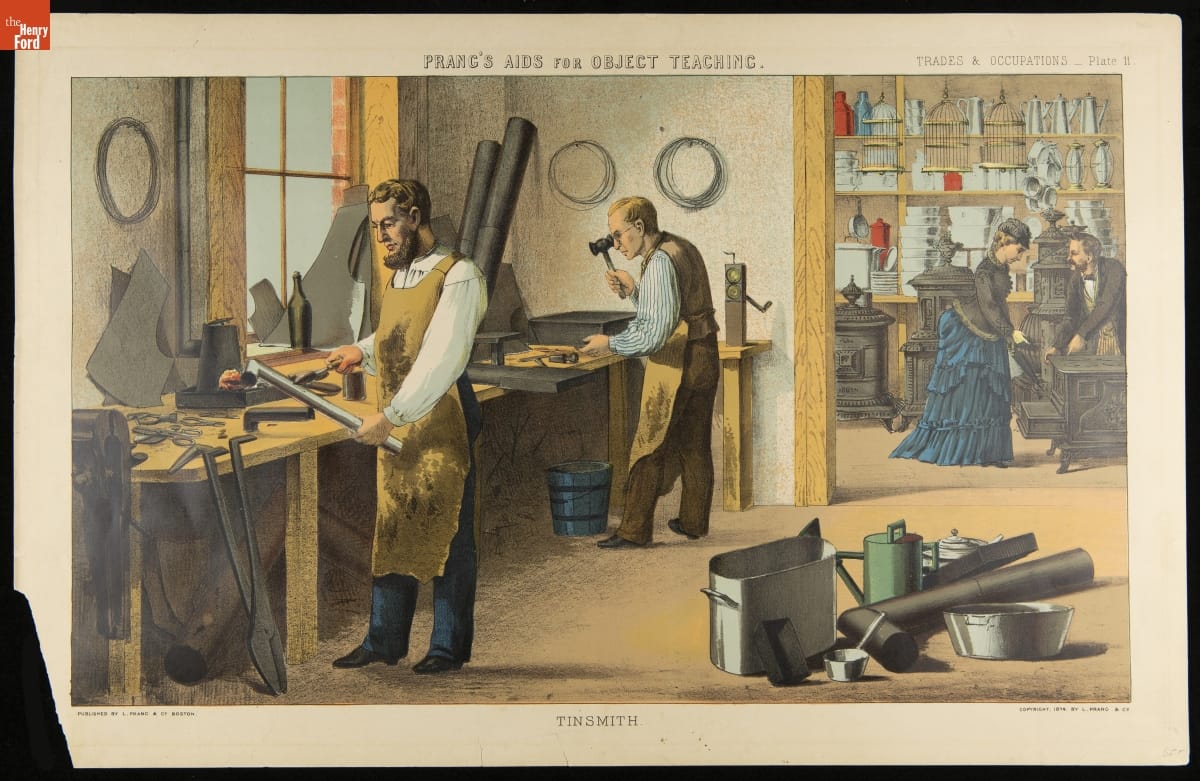
- Chromolithograph, "Prang's Aids for Object Teaching, Trades & Occupations-Plate 11, Tinsmith," 1874 - Louis Prang (1824–1909), the son of a textile manufacturer, learned engraving, calico dyeing, and printing as a young boy. He emigrated to the United States in 1850 and would produce colorful chromolithographs. Prang also worked to improve the artistic tastes of 19th-century Americans and created valuable teaching aids. His company's Educational Department produced prints like this for the instruction of occupational trades.
- 1874
- Collections - Artifact
Chromolithograph, "Prang's Aids for Object Teaching, Trades & Occupations-Plate 11, Tinsmith," 1874
Louis Prang (1824–1909), the son of a textile manufacturer, learned engraving, calico dyeing, and printing as a young boy. He emigrated to the United States in 1850 and would produce colorful chromolithographs. Prang also worked to improve the artistic tastes of 19th-century Americans and created valuable teaching aids. His company's Educational Department produced prints like this for the instruction of occupational trades.
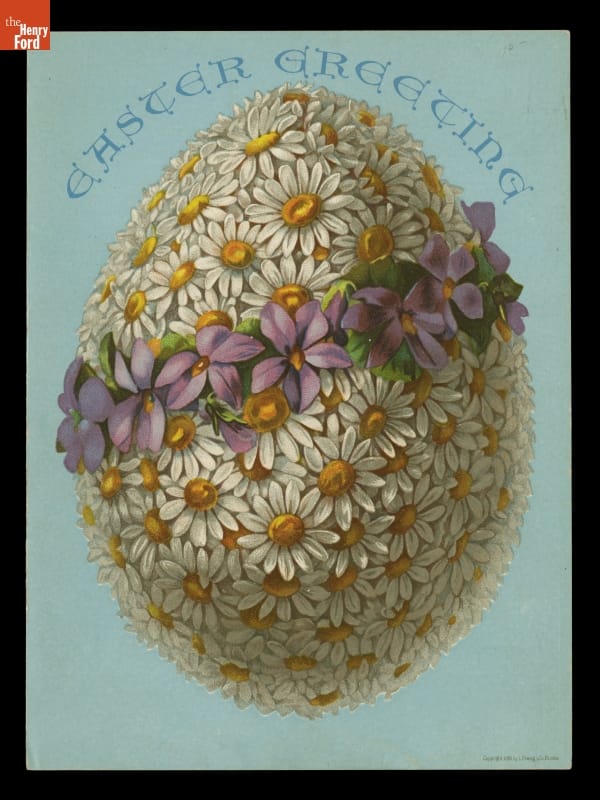
- Easter Greeting Card, "Easter Greeting," 1881 - Sending greeting cards and postcards for the Easter holiday became popular in the United States by the 1880s. Publishers made cards with themes of a religious nature as well as secular decorations to celebrate the arrival of spring. Artists working for these publishers illustrated the cards with images symbolic of the season, such as crosses, angels, flowers, eggs, children, birds, and rabbits.
- 1881
- Collections - Artifact
Easter Greeting Card, "Easter Greeting," 1881
Sending greeting cards and postcards for the Easter holiday became popular in the United States by the 1880s. Publishers made cards with themes of a religious nature as well as secular decorations to celebrate the arrival of spring. Artists working for these publishers illustrated the cards with images symbolic of the season, such as crosses, angels, flowers, eggs, children, birds, and rabbits.
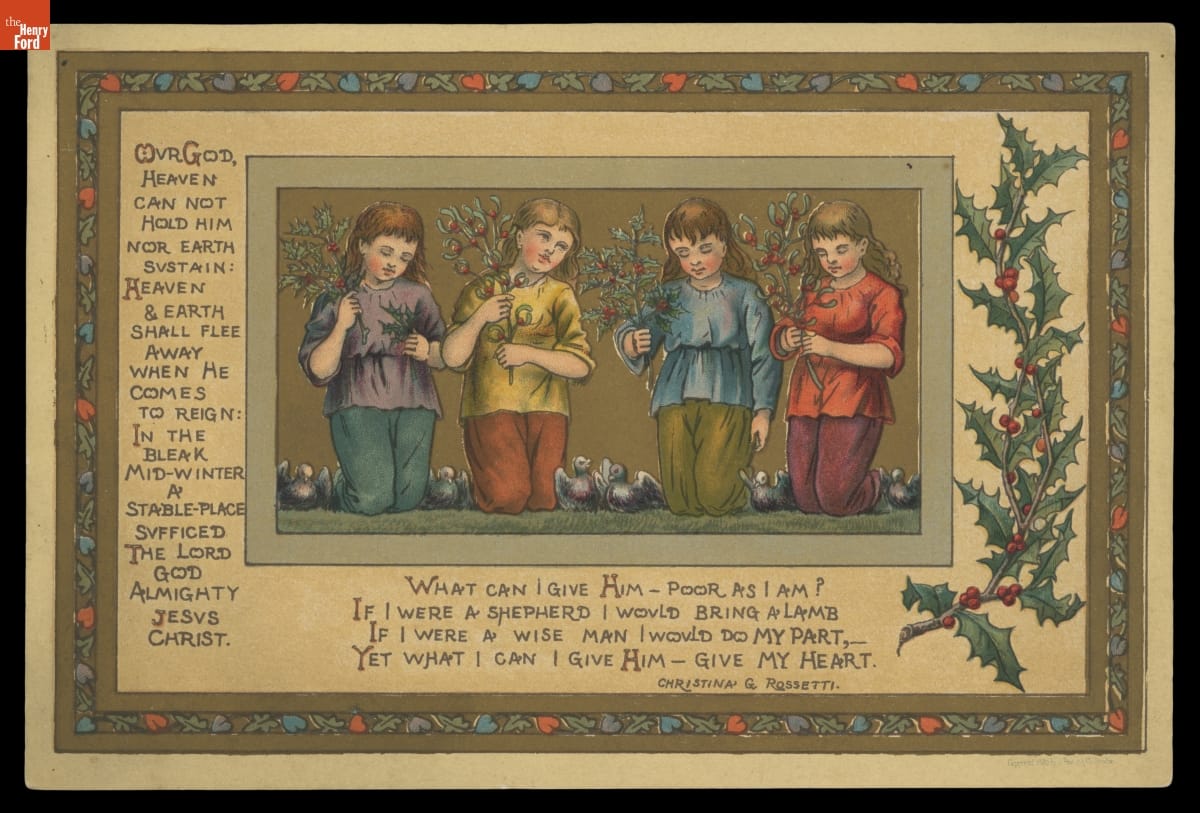
- Christmas Card with "A Christmas Carol" Poem by Christina G. Rossetti, 1880 - Beginning in the mid-1870s, Louis Prang, a German immigrant printer based in Boston, Massachusetts, created colorful chromolithographed Christmas cards. Prang later initiated a Christmas card design contest for American artists, where he would reproduce and sell the winning entries to eager consumers. Four contests were held from 1880 to 1884. This card shows one of the winning designs for 1880.
- 1880
- Collections - Artifact
Christmas Card with "A Christmas Carol" Poem by Christina G. Rossetti, 1880
Beginning in the mid-1870s, Louis Prang, a German immigrant printer based in Boston, Massachusetts, created colorful chromolithographed Christmas cards. Prang later initiated a Christmas card design contest for American artists, where he would reproduce and sell the winning entries to eager consumers. Four contests were held from 1880 to 1884. This card shows one of the winning designs for 1880.
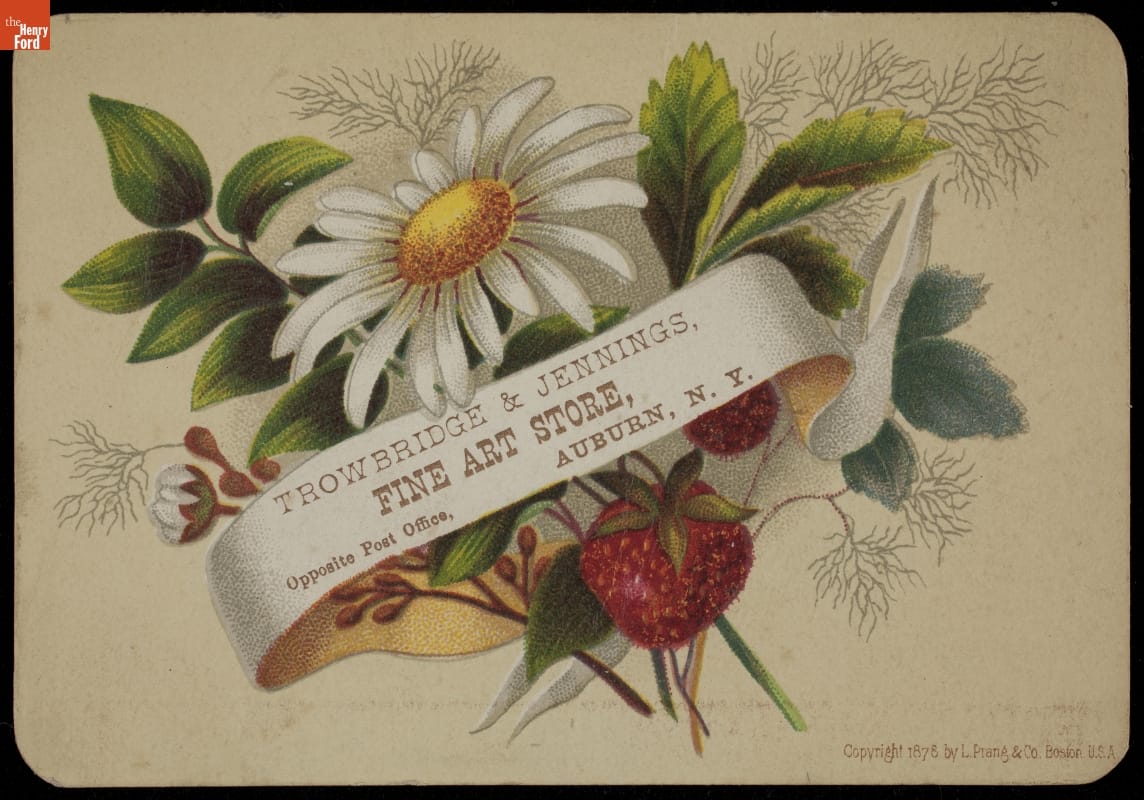
- Trade Card for Fine Art, Trowbridge & Jennings, 1878 - In the last third of the nineteenth century, an unprecedented variety of consumer goods and services flooded the American market. Advertisers, armed with new methods of color printing, bombarded potential customers with trade cards. Americans enjoyed and often saved the vibrant little advertisements found in product packages or distributed by local merchants. Many survive as historical records of commercialism in the United States.
- 1878
- Collections - Artifact
Trade Card for Fine Art, Trowbridge & Jennings, 1878
In the last third of the nineteenth century, an unprecedented variety of consumer goods and services flooded the American market. Advertisers, armed with new methods of color printing, bombarded potential customers with trade cards. Americans enjoyed and often saved the vibrant little advertisements found in product packages or distributed by local merchants. Many survive as historical records of commercialism in the United States.
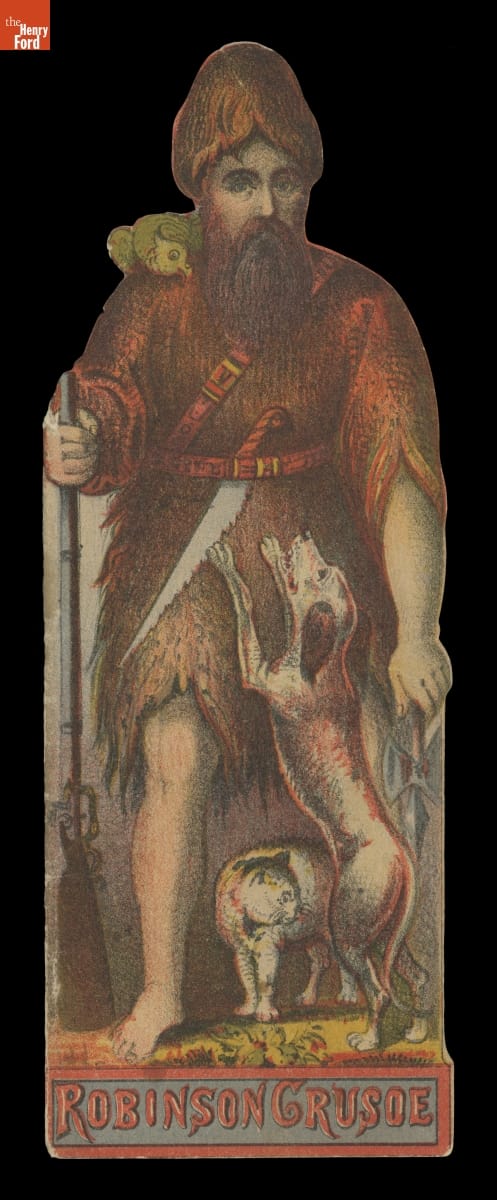
- "Robinson Crusoe," 1864 - Die-cut shape books are not like traditional rectangular books -- they take on the outline of a person, object, or other form. Boston printmaker and publisher Louis Prang claimed the idea originated with him in the early 1860s. This issue of Robinson Crusoe, published in 1864, was one of his first shape books. Lydia Very adapted the 18th-century Daniel Defoe novel and designed the book.
- 1864
- Collections - Artifact
"Robinson Crusoe," 1864
Die-cut shape books are not like traditional rectangular books -- they take on the outline of a person, object, or other form. Boston printmaker and publisher Louis Prang claimed the idea originated with him in the early 1860s. This issue of Robinson Crusoe, published in 1864, was one of his first shape books. Lydia Very adapted the 18th-century Daniel Defoe novel and designed the book.