
Search
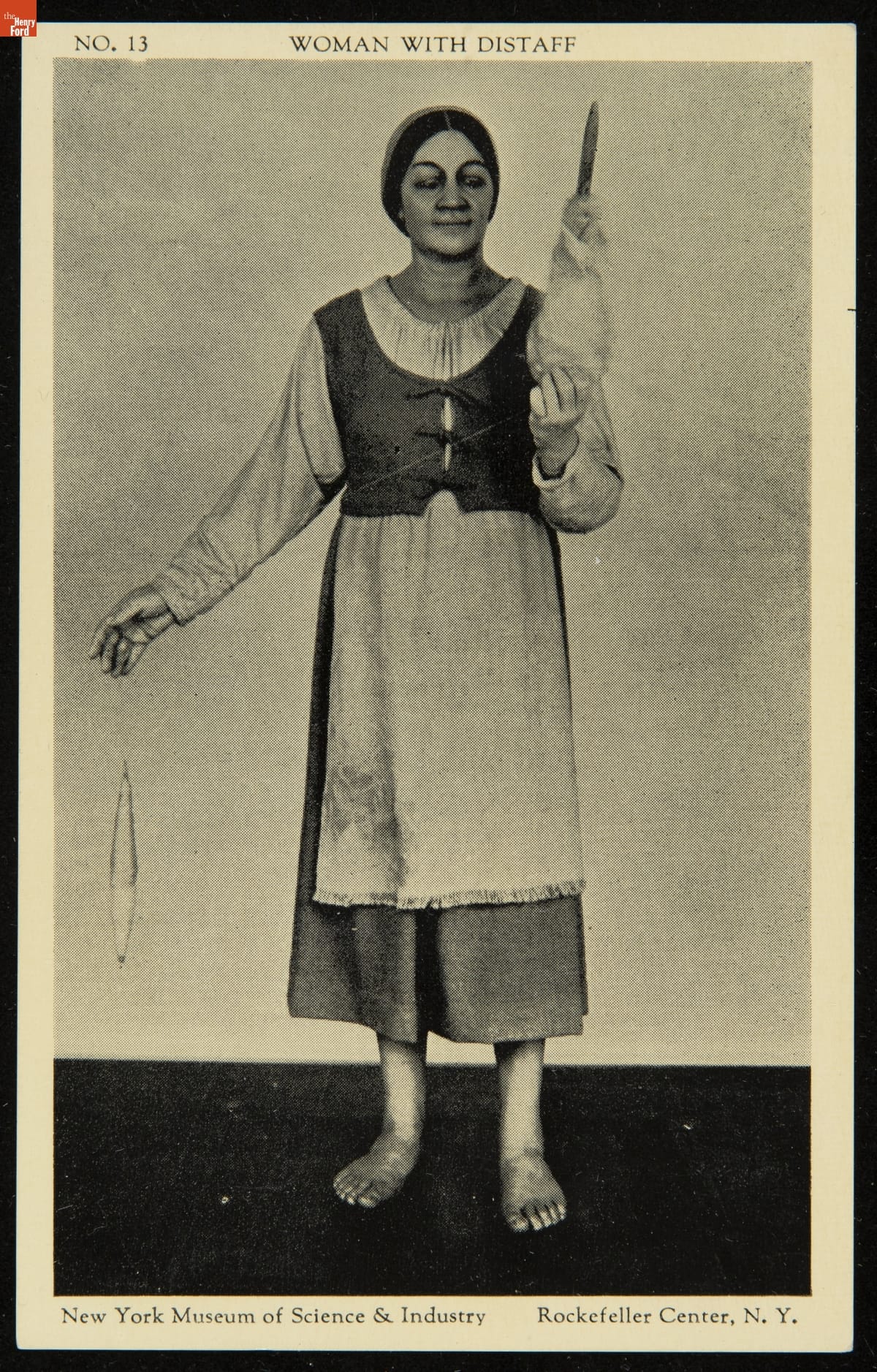
- Display of a Woman Spinning Thread with a Distaff at the New York Museum of Science and Industry, 1936-1960 -
- 1936-1960
- Collections - Artifact
Display of a Woman Spinning Thread with a Distaff at the New York Museum of Science and Industry, 1936-1960
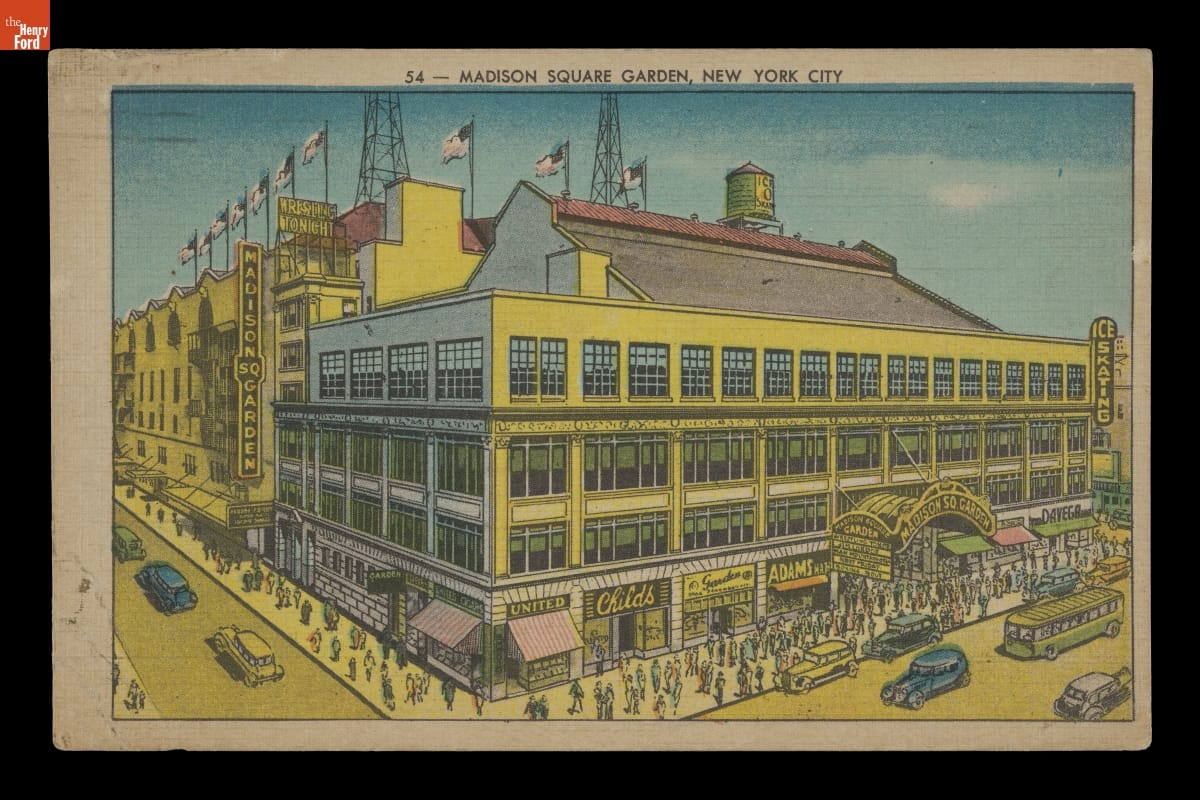
- "Madison Square Garden, New York City," Sent to Andrew Purnell, Postmarked May 23, 1944 - Andrew Purnell Jr. (1898-1975) was born in Selma, Alabama. He served in France during World War I and returned to the U.S. in 1919. Purnell married Lela May Cooper in 1920, and by 1926, the couple had moved to Mobile, where he worked as a railroad freight handler. The Purnells kept in touch with family and friends by exchanging postcards and letters.
- Collections - Artifact
"Madison Square Garden, New York City," Sent to Andrew Purnell, Postmarked May 23, 1944
Andrew Purnell Jr. (1898-1975) was born in Selma, Alabama. He served in France during World War I and returned to the U.S. in 1919. Purnell married Lela May Cooper in 1920, and by 1926, the couple had moved to Mobile, where he worked as a railroad freight handler. The Purnells kept in touch with family and friends by exchanging postcards and letters.
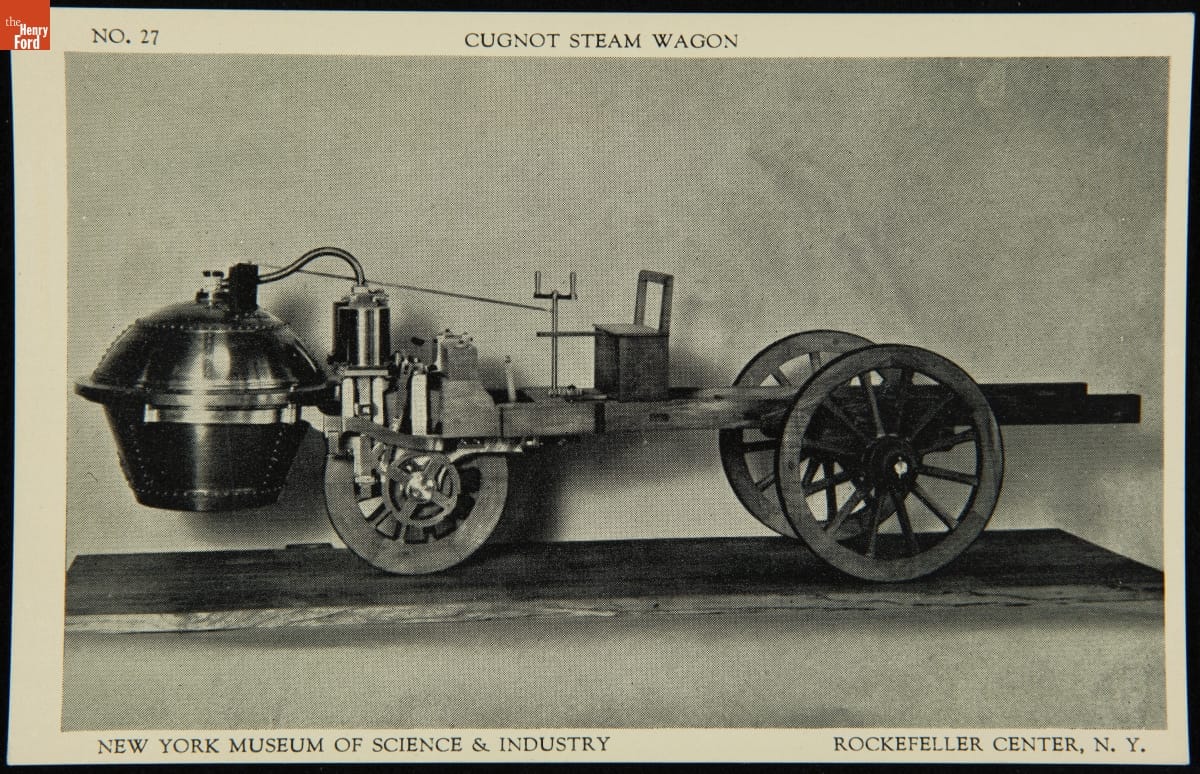
- Cugnot Steam Wagon, Built 1770, on Exhibit at the New York Museum of Science and Industry - French military engineer Nicolas-Joseph Cugnot designed his three-wheeled, steam-powered dray to haul cannons. While it could carry five tons at two miles per hour, Cugnot's unwieldy wagon was difficult to steer, and its inefficient boiler limited the dray's operating time to about 15 minutes. Unimpressed, French officials did not approve Cugnot's steam wagon for military use.
- 1770
- Collections - Artifact
Cugnot Steam Wagon, Built 1770, on Exhibit at the New York Museum of Science and Industry
French military engineer Nicolas-Joseph Cugnot designed his three-wheeled, steam-powered dray to haul cannons. While it could carry five tons at two miles per hour, Cugnot's unwieldy wagon was difficult to steer, and its inefficient boiler limited the dray's operating time to about 15 minutes. Unimpressed, French officials did not approve Cugnot's steam wagon for military use.
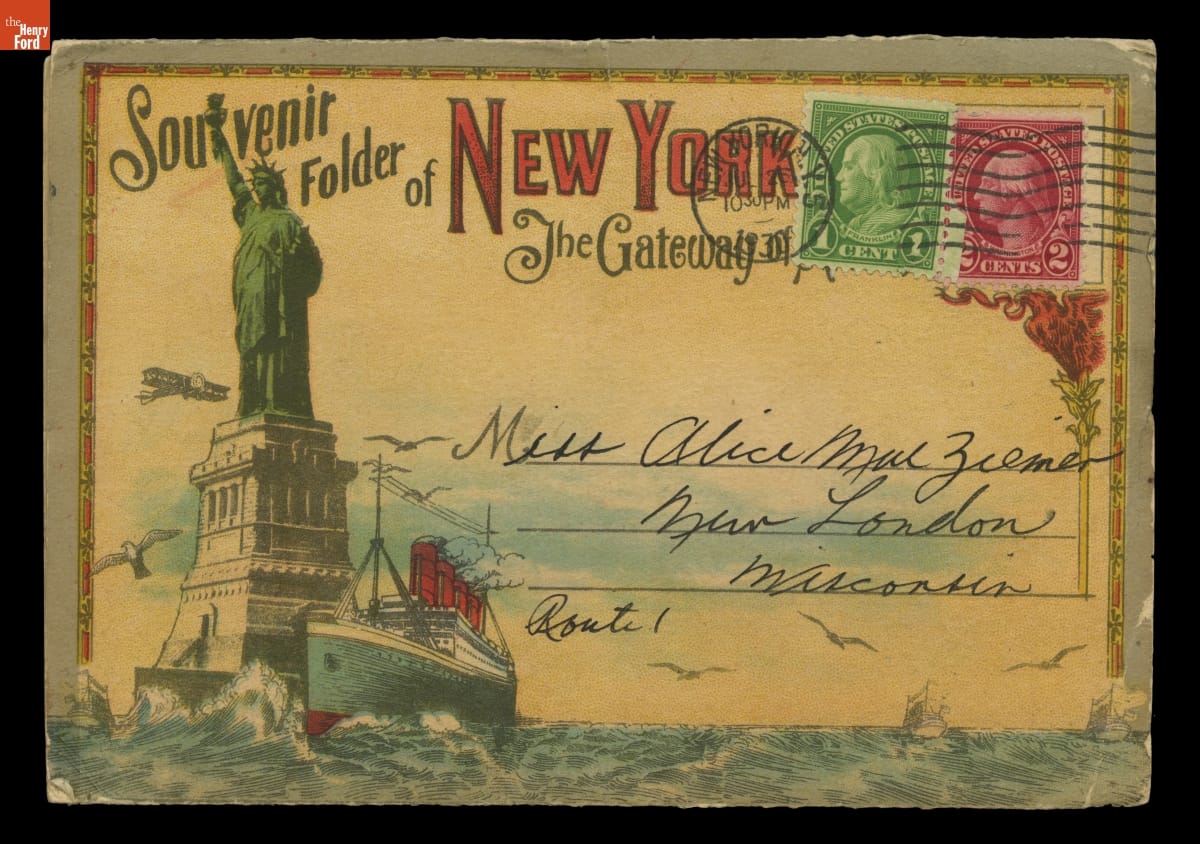
- Souvenir Viewbook of New York City, circa 1930 - What's better than receiving a postcard from a vacationing friend? How about a souvenir viewbook with multiple images that fold neatly into a postcard-sized packet? This viewbook contains twenty color views and information about New York City. This souvenir includes images of museums, monuments, government buildings, steamships, parks, and out-of-the-way neighborhoods found in America's largest metropolis around 1930.
- circa 1930
- Collections - Artifact
Souvenir Viewbook of New York City, circa 1930
What's better than receiving a postcard from a vacationing friend? How about a souvenir viewbook with multiple images that fold neatly into a postcard-sized packet? This viewbook contains twenty color views and information about New York City. This souvenir includes images of museums, monuments, government buildings, steamships, parks, and out-of-the-way neighborhoods found in America's largest metropolis around 1930.
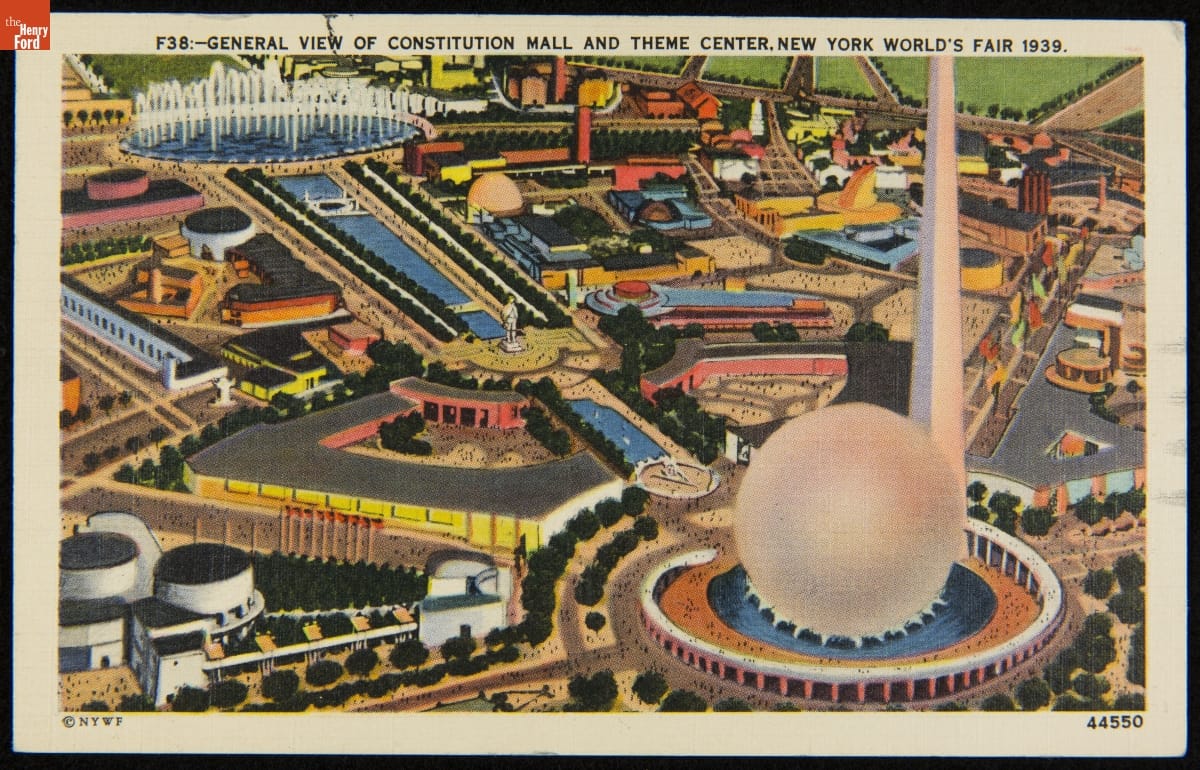
- "General View of Constitution Mall and Theme Center, New York World's Fair 1939" - Postcards from the 1939 New York World's Fair depicted colorful images of exposition buildings or other scenes. Tourists purchased these and mailed them back to family and friends. This scene shows a general view of the main area of the fair, with all roads leading to the fair's iconic symbols, the Trylon and Perisphere.
- May 05, 1939
- Collections - Artifact
"General View of Constitution Mall and Theme Center, New York World's Fair 1939"
Postcards from the 1939 New York World's Fair depicted colorful images of exposition buildings or other scenes. Tourists purchased these and mailed them back to family and friends. This scene shows a general view of the main area of the fair, with all roads leading to the fair's iconic symbols, the Trylon and Perisphere.