
Search
- The Samson Battery No. 2, 1916-1935 - In the late 19th and early 20th centuries, people used batteries to power telegraph and telephone systems, ring bells and alarms, or spark gasoline engines. The Samson Electric Company had made wet cell battery like this one for years before moving production to Canton, Massachusetts. The glass jar held a conductive solution surrounding the carbon and zinc elements that produced an electrochemical reaction.
- 1916-1935
- Collections - Artifact
The Samson Battery No. 2, 1916-1935
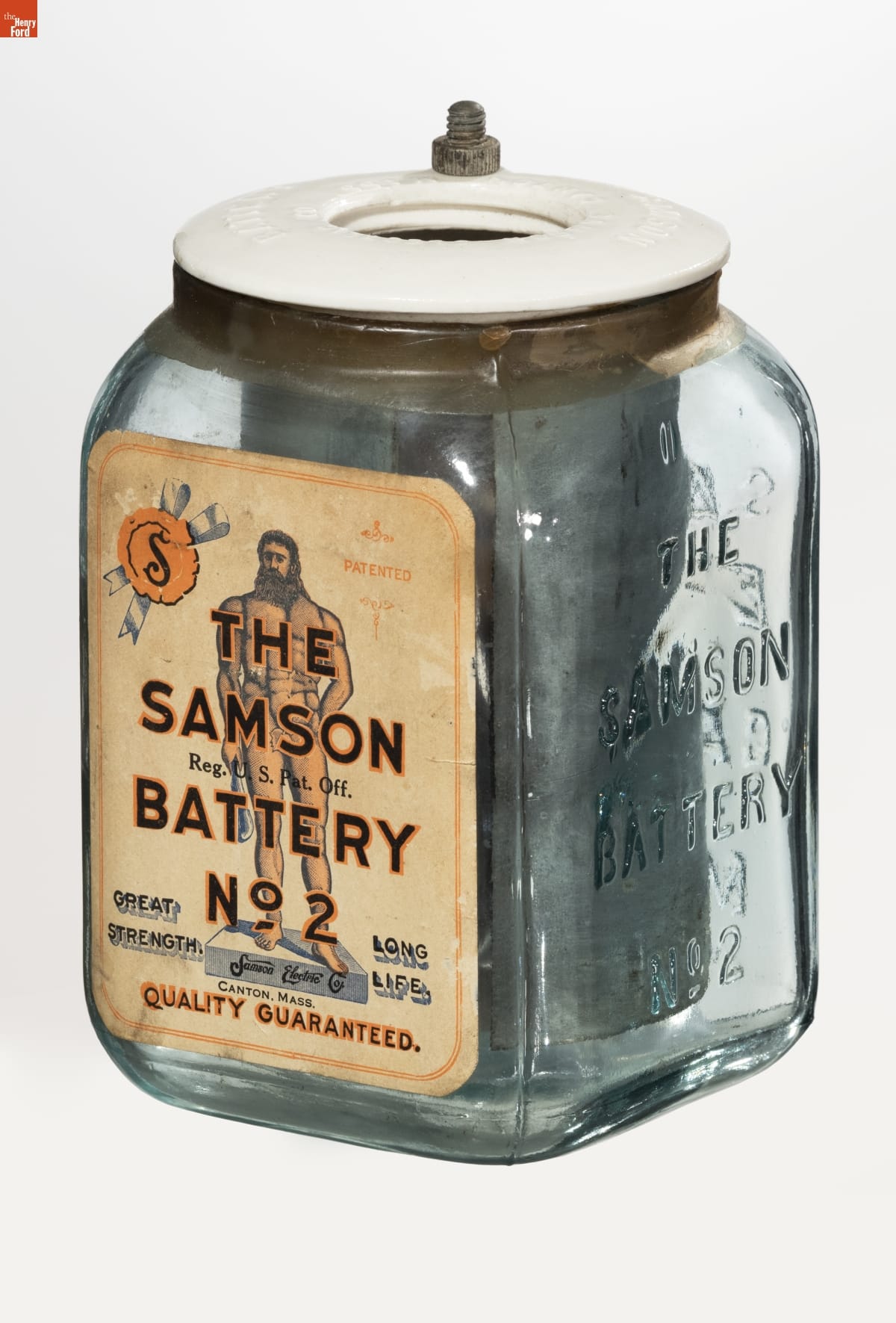
In the late 19th and early 20th centuries, people used batteries to power telegraph and telephone systems, ring bells and alarms, or spark gasoline engines. The Samson Electric Company had made wet cell battery like this one for years before moving production to Canton, Massachusetts. The glass jar held a conductive solution surrounding the carbon and zinc elements that produced an electrochemical reaction.
- The Samson Battery No. 2, 1916-1935 - In the late 19th and early 20th centuries, people used batteries to power telegraph and telephone systems, ring bells and alarms, or spark gasoline engines. The Burn Boston Battery and Manufacturing Works (established in 1910) made grounding devices and batteries. The glass jar held a conductive solution surrounding the carbon and zinc elements that produced an electrochemical reaction.
- 1916-1935
- Collections - Artifact
The Samson Battery No. 2, 1916-1935
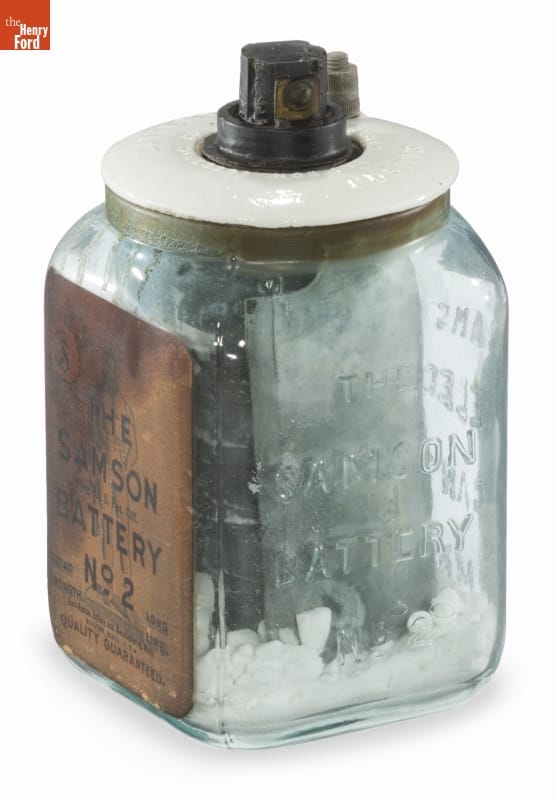
In the late 19th and early 20th centuries, people used batteries to power telegraph and telephone systems, ring bells and alarms, or spark gasoline engines. The Burn Boston Battery and Manufacturing Works (established in 1910) made grounding devices and batteries. The glass jar held a conductive solution surrounding the carbon and zinc elements that produced an electrochemical reaction.
- The Samson Battery No. 2, 1916-1935 - In the late 19th and early 20th centuries, people used batteries to power telegraph and telephone systems, ring bells and alarms, or spark gasoline engines. The Samson Electric Company had made wet cell battery like this one for years before moving production to Canton, Massachusetts. The glass jar held a conductive solution surrounding the carbon and zinc elements that produced an electrochemical reaction.
- 1916-1935
- Collections - Artifact
The Samson Battery No. 2, 1916-1935
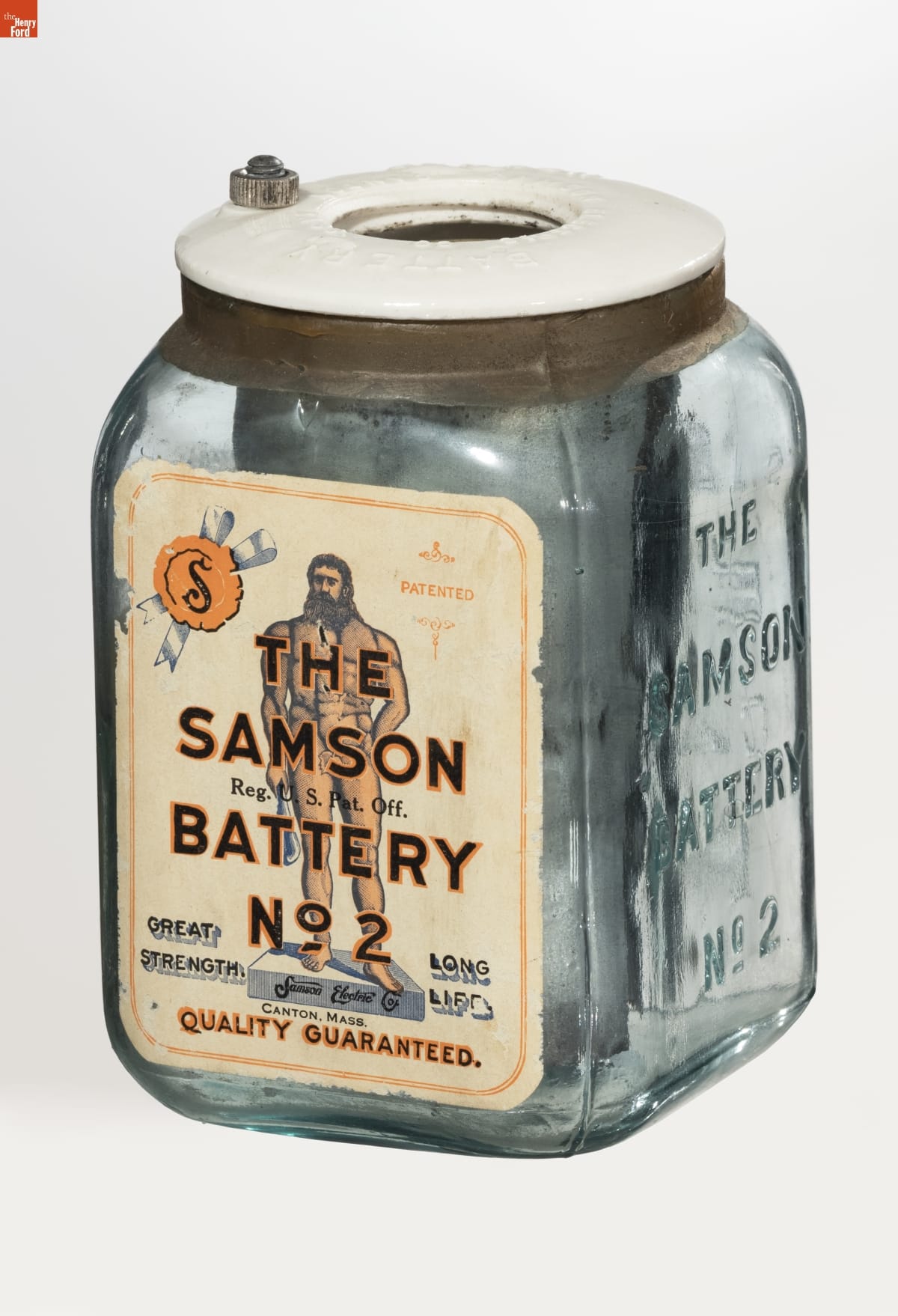
In the late 19th and early 20th centuries, people used batteries to power telegraph and telephone systems, ring bells and alarms, or spark gasoline engines. The Samson Electric Company had made wet cell battery like this one for years before moving production to Canton, Massachusetts. The glass jar held a conductive solution surrounding the carbon and zinc elements that produced an electrochemical reaction.
- The Samson Battery No. 2, 1916-1935 - In the late 19th and early 20th centuries, people used batteries to power telegraph and telephone systems, ring bells and alarms, or spark gasoline engines. The Samson Electric Company had made wet cell battery like this one for years before moving production to Canton, Massachusetts. The glass jar held a conductive solution surrounding the carbon and zinc elements that produced an electrochemical reaction.
- 1916-1935
- Collections - Artifact
The Samson Battery No. 2, 1916-1935
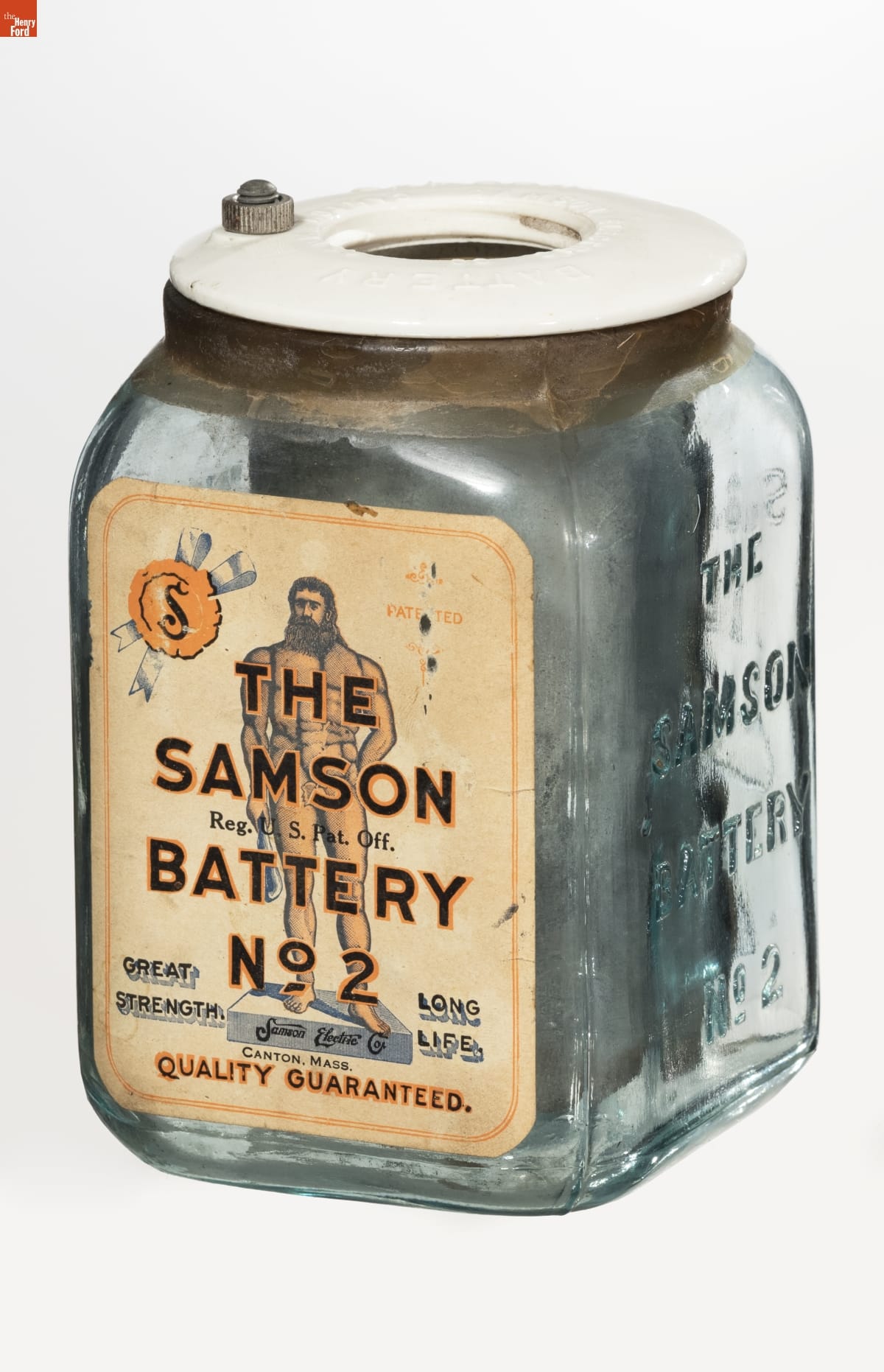
In the late 19th and early 20th centuries, people used batteries to power telegraph and telephone systems, ring bells and alarms, or spark gasoline engines. The Samson Electric Company had made wet cell battery like this one for years before moving production to Canton, Massachusetts. The glass jar held a conductive solution surrounding the carbon and zinc elements that produced an electrochemical reaction.
- The Samson Battery No. 2, 1916-1935 - In the late 19th and early 20th centuries, people used batteries to power telegraph and telephone systems, ring bells and alarms, or spark gasoline engines. The Samson Electric Company had made wet cell battery like this one for years before moving production to Canton, Massachusetts. The glass jar held a conductive solution surrounding the carbon and zinc elements that produced an electrochemical reaction.
- 1916-1935
- Collections - Artifact
The Samson Battery No. 2, 1916-1935
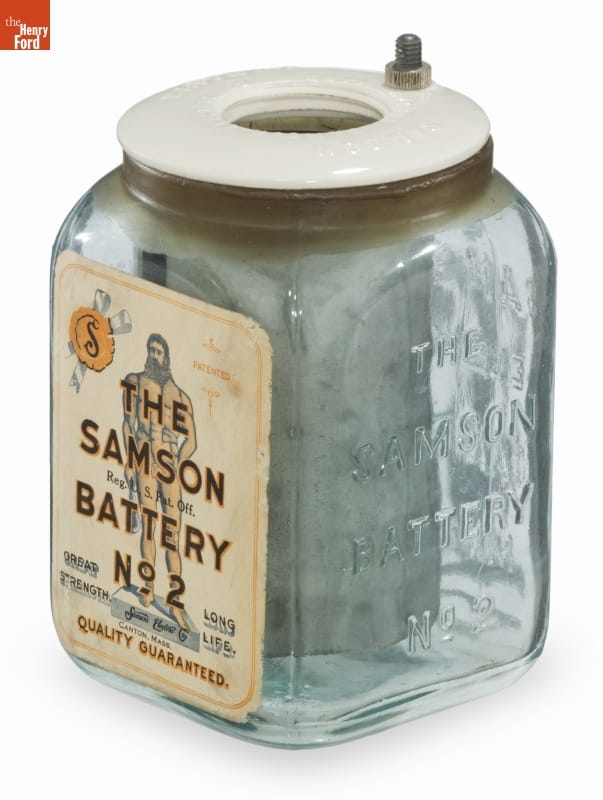
In the late 19th and early 20th centuries, people used batteries to power telegraph and telephone systems, ring bells and alarms, or spark gasoline engines. The Samson Electric Company had made wet cell battery like this one for years before moving production to Canton, Massachusetts. The glass jar held a conductive solution surrounding the carbon and zinc elements that produced an electrochemical reaction.
- The Samson Battery No. 2, 1916-1935 - In the late 19th and early 20th centuries, people used batteries to power telegraph and telephone systems, ring bells and alarms, or spark gasoline engines. The Burn Boston Battery and Manufacturing Works (established in 1910) made grounding devices and batteries. The glass jar held a conductive solution surrounding the carbon and zinc elements that produced an electrochemical reaction.
- 1916-1935
- Collections - Artifact
The Samson Battery No. 2, 1916-1935
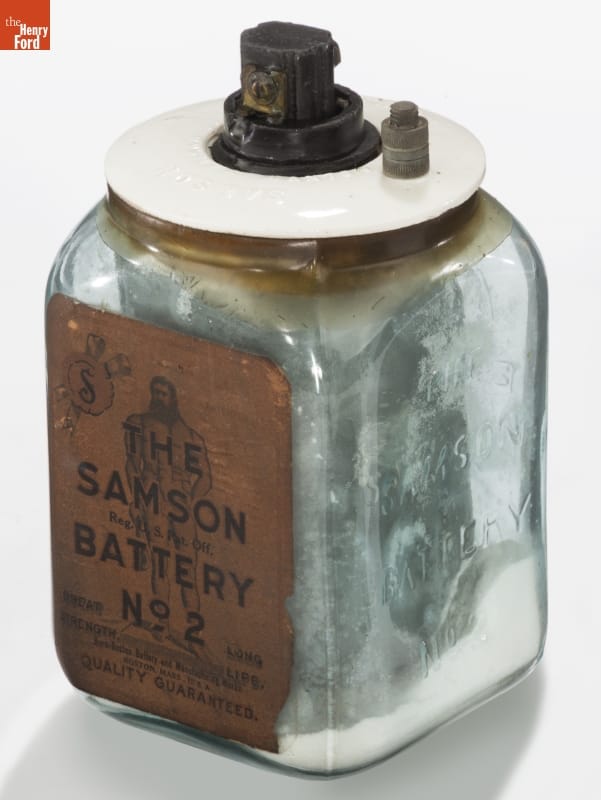
In the late 19th and early 20th centuries, people used batteries to power telegraph and telephone systems, ring bells and alarms, or spark gasoline engines. The Burn Boston Battery and Manufacturing Works (established in 1910) made grounding devices and batteries. The glass jar held a conductive solution surrounding the carbon and zinc elements that produced an electrochemical reaction.
- The Samson Battery No. 2, 1916-1935 - In the late 19th and early 20th centuries, people used batteries to power telegraph and telephone systems, ring bells and alarms, or spark gasoline engines. The Burn Boston Battery and Manufacturing Works (established in 1910) made grounding devices and batteries. The glass jar held a conductive solution surrounding the carbon and zinc elements that produced an electrochemical reaction.
- 1916-1935
- Collections - Artifact
The Samson Battery No. 2, 1916-1935
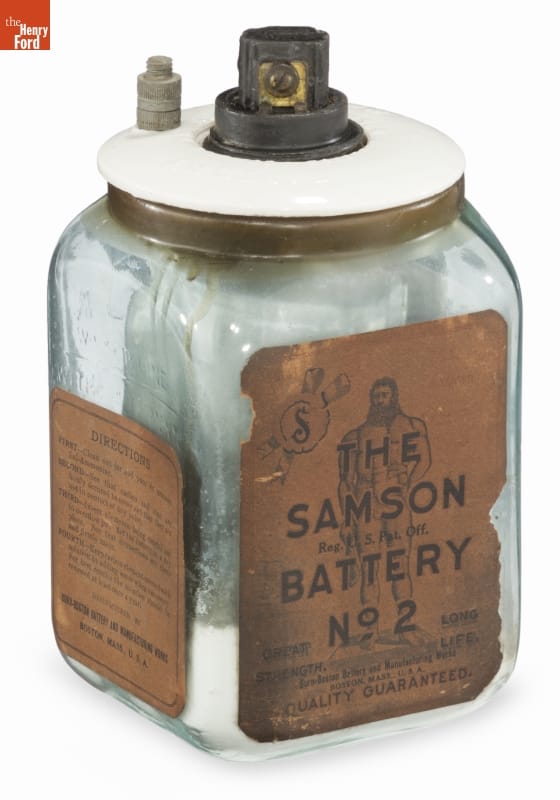
In the late 19th and early 20th centuries, people used batteries to power telegraph and telephone systems, ring bells and alarms, or spark gasoline engines. The Burn Boston Battery and Manufacturing Works (established in 1910) made grounding devices and batteries. The glass jar held a conductive solution surrounding the carbon and zinc elements that produced an electrochemical reaction.
- The Samson Battery No. 2, 1916-1935 - In the late 19th and early 20th centuries, people used batteries to power telegraph and telephone systems, ring bells and alarms, or spark gasoline engines. The Burn Boston Battery and Manufacturing Works (established in 1910) made grounding devices and batteries. The glass jar held a conductive solution surrounding the carbon and zinc elements that produced an electrochemical reaction.
- 1916-1935
- Collections - Artifact
The Samson Battery No. 2, 1916-1935
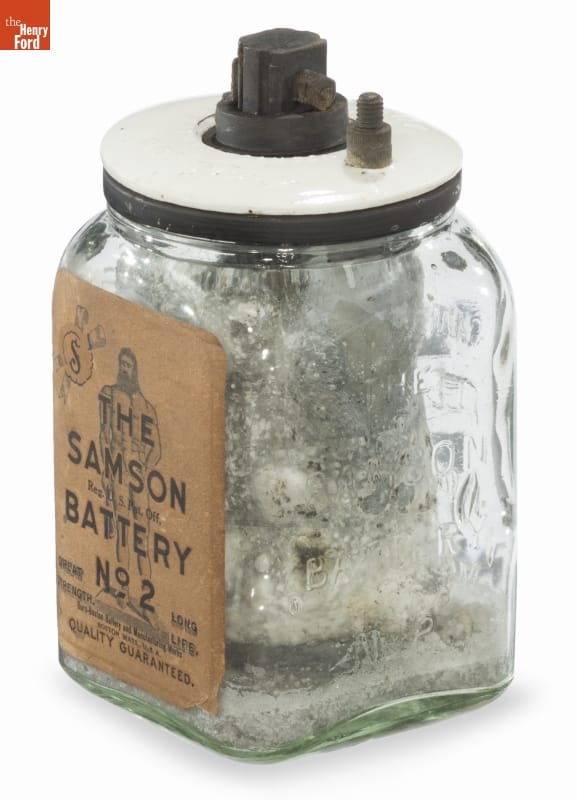
In the late 19th and early 20th centuries, people used batteries to power telegraph and telephone systems, ring bells and alarms, or spark gasoline engines. The Burn Boston Battery and Manufacturing Works (established in 1910) made grounding devices and batteries. The glass jar held a conductive solution surrounding the carbon and zinc elements that produced an electrochemical reaction.
- The Samson Battery No. 2, 1916-1935 - In the late 19th and early 20th centuries, people used batteries to power telegraph and telephone systems, ring bells and alarms, or spark gasoline engines. The Burn Boston Battery and Manufacturing Works (established in 1910) made grounding devices and batteries. The glass jar held a conductive solution surrounding the carbon and zinc elements that produced an electrochemical reaction.
- 1916-1935
- Collections - Artifact
The Samson Battery No. 2, 1916-1935
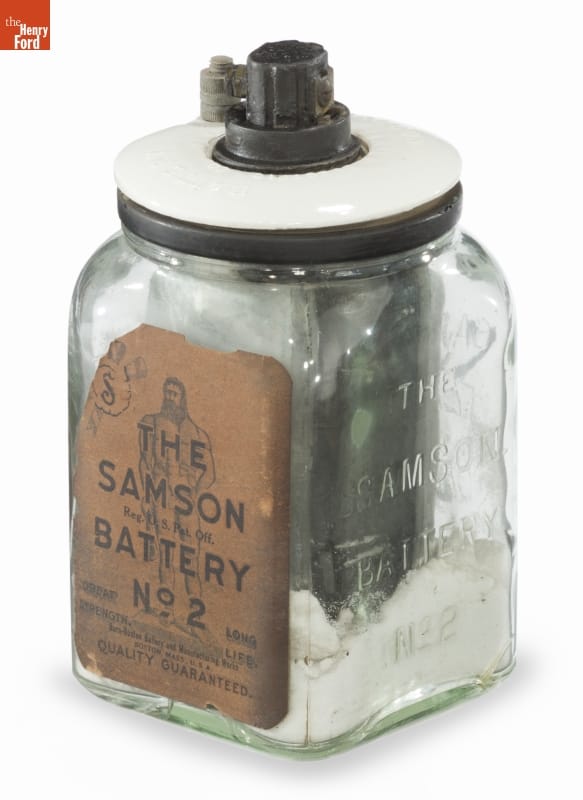
In the late 19th and early 20th centuries, people used batteries to power telegraph and telephone systems, ring bells and alarms, or spark gasoline engines. The Burn Boston Battery and Manufacturing Works (established in 1910) made grounding devices and batteries. The glass jar held a conductive solution surrounding the carbon and zinc elements that produced an electrochemical reaction.
- The Samson Battery No. 2, 1916-1935 - In the late 19th and early 20th centuries, people used batteries to power telegraph and telephone systems, ring bells and alarms, or spark gasoline engines. The Burn Boston Battery and Manufacturing Works (established in 1910) made grounding devices and batteries. The glass jar held a conductive solution surrounding the carbon and zinc elements that produced an electrochemical reaction.
- 1916-1935
- Collections - Artifact
The Samson Battery No. 2, 1916-1935
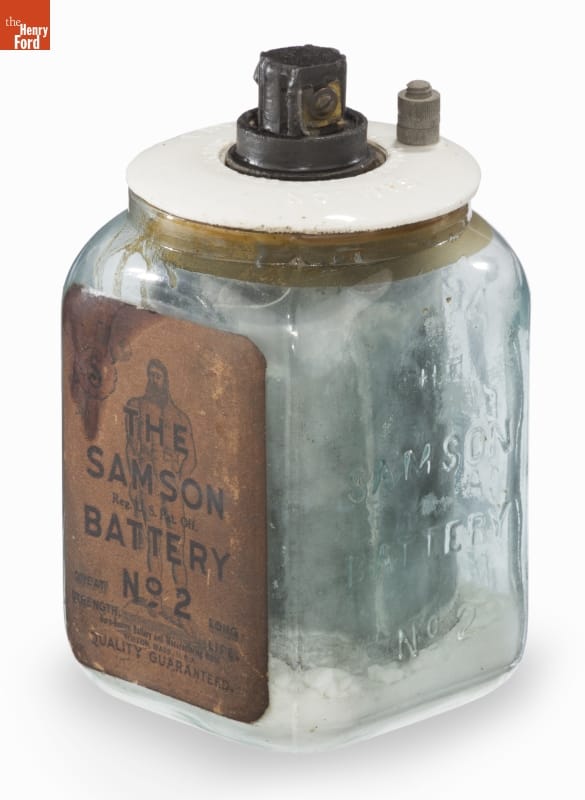
In the late 19th and early 20th centuries, people used batteries to power telegraph and telephone systems, ring bells and alarms, or spark gasoline engines. The Burn Boston Battery and Manufacturing Works (established in 1910) made grounding devices and batteries. The glass jar held a conductive solution surrounding the carbon and zinc elements that produced an electrochemical reaction.