
Search
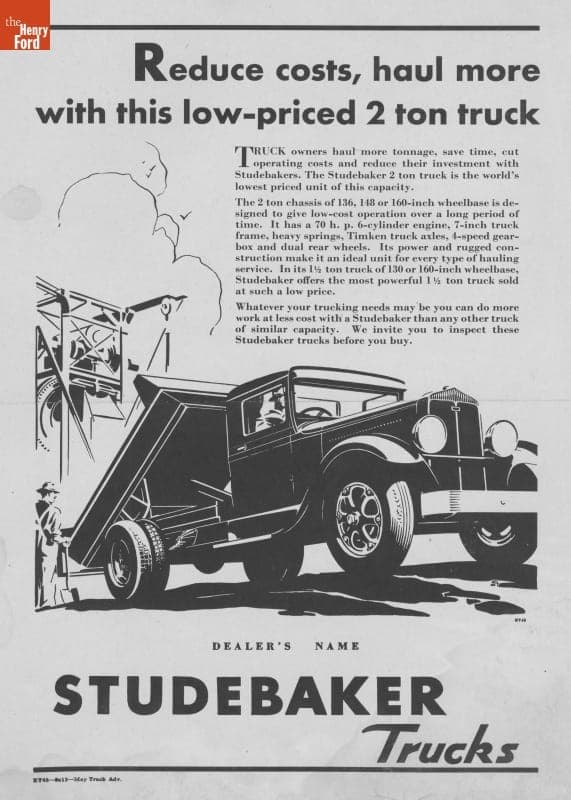
- "Reduce Costs, Haul More with this Low-Priced 2 Ton Truck" Studebaker Advertisement, circa 1932 - Studebaker had built horse-drawn commercial vehicles from the company's founding in 1852, but its entry into the motorized commercial vehicle market was more gradual. Studebaker's first significant heavy-duty trucks debuted for 1931. The company continued to offer various light, medium, and heavy-duty trucks into 1964 -- just two years before Studebaker ended motor vehicle production altogether.
- circa 1932
- Collections - Artifact
"Reduce Costs, Haul More with this Low-Priced 2 Ton Truck" Studebaker Advertisement, circa 1932
Studebaker had built horse-drawn commercial vehicles from the company's founding in 1852, but its entry into the motorized commercial vehicle market was more gradual. Studebaker's first significant heavy-duty trucks debuted for 1931. The company continued to offer various light, medium, and heavy-duty trucks into 1964 -- just two years before Studebaker ended motor vehicle production altogether.
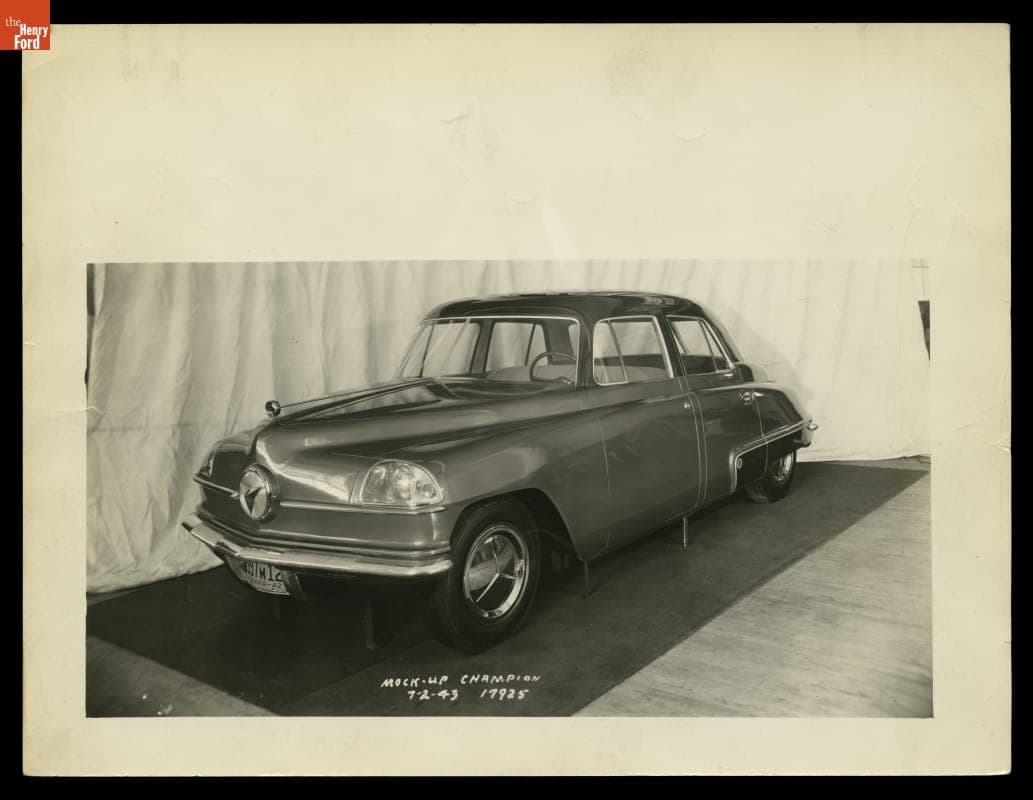
- Studebaker Champion Mock-Up, 1943 - Virgil Exner's long career in automotive design included time with General Motors, Raymond Loewy Associates, and Studebaker -- for which he produced this work. Exner is best remembered for his tenure as design head at Chrysler, where his dramatic "Forward Look" characterized the company's vehicles from 1955 to 1961.
- July 02, 1943
- Collections - Artifact
Studebaker Champion Mock-Up, 1943
Virgil Exner's long career in automotive design included time with General Motors, Raymond Loewy Associates, and Studebaker -- for which he produced this work. Exner is best remembered for his tenure as design head at Chrysler, where his dramatic "Forward Look" characterized the company's vehicles from 1955 to 1961.
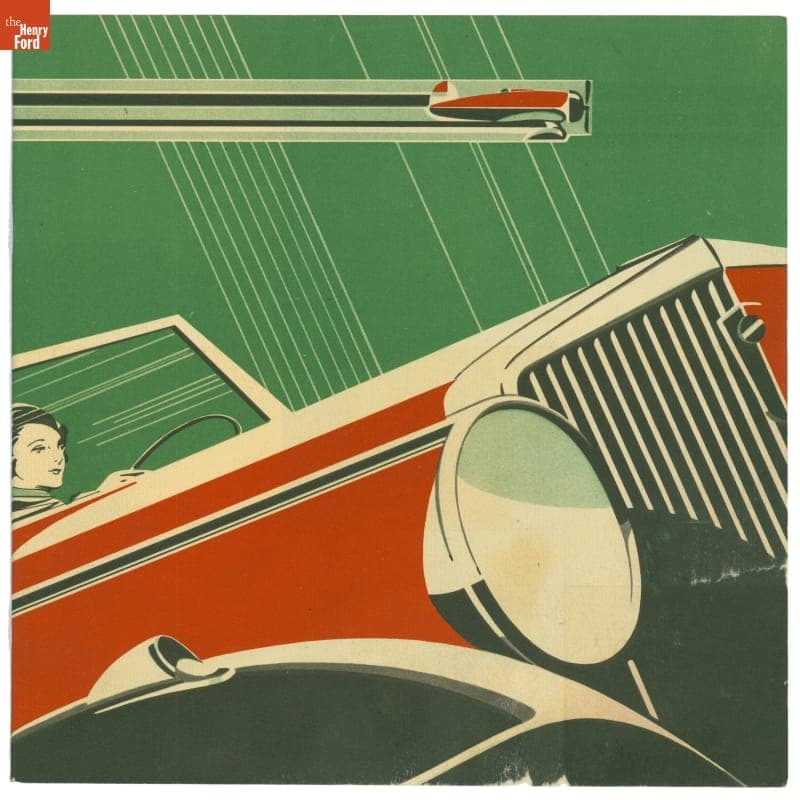
- Studebaker Sales Brochure, 1932 - Virgil Exner's long career in automotive design included time with General Motors, Raymond Loewy Associates, and Studebaker -- for which he produced this work. Exner is best remembered for his tenure as design head at Chrysler, where his dramatic "Forward Look" characterized the company's vehicles from 1955 to 1961.
- 1932
- Collections - Artifact
Studebaker Sales Brochure, 1932
Virgil Exner's long career in automotive design included time with General Motors, Raymond Loewy Associates, and Studebaker -- for which he produced this work. Exner is best remembered for his tenure as design head at Chrysler, where his dramatic "Forward Look" characterized the company's vehicles from 1955 to 1961.
- 1950 Studebaker Advertisement, "Sleek New Studebaker Styling Saves Gasoline for You!" - The headline in this advertisement for the 1950 Studebaker Champion touts its gas-saving styling. Visually, however, the styling suggests the sleek and modern jet in the shadows behind it.

- 1950
- Collections - Artifact
1950 Studebaker Advertisement, "Sleek New Studebaker Styling Saves Gasoline for You!"
The headline in this advertisement for the 1950 Studebaker Champion touts its gas-saving styling. Visually, however, the styling suggests the sleek and modern jet in the shadows behind it.
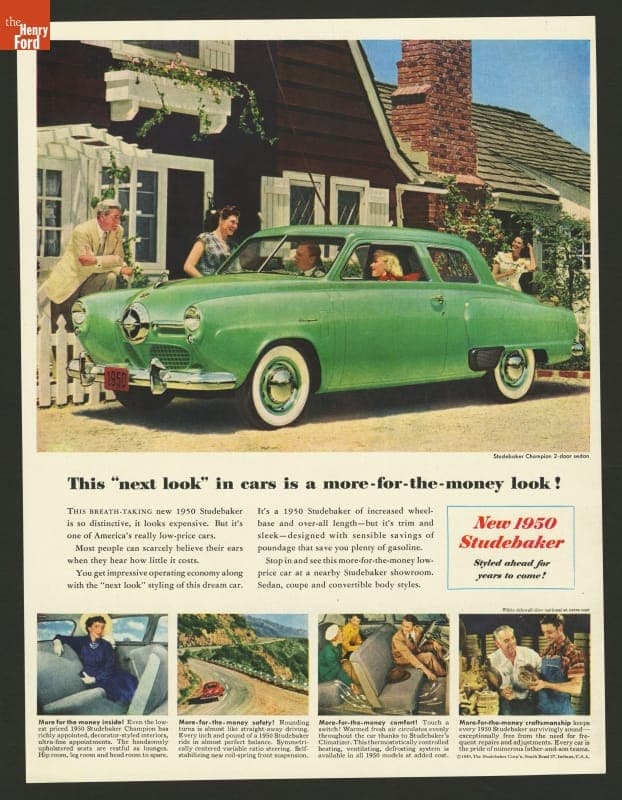
- 1950 Studebaker Advertisement, "This Next Look in Cars is a More-for-the-Money Look!" - The automobile is a paradox -- a practical tool that plays host to both human needs and fantasies. Like car consumers, automotive ads seem to land somewhere between fantasy and reality, emotions and rationality. Many ads incorporate apparent opposites: fantasy can sell practicality, and vice versa. Sometimes the car has disappeared completely -- an emotional appeal prompts us to complete the ad.
- November 14, 1949
- Collections - Artifact
1950 Studebaker Advertisement, "This Next Look in Cars is a More-for-the-Money Look!"
The automobile is a paradox -- a practical tool that plays host to both human needs and fantasies. Like car consumers, automotive ads seem to land somewhere between fantasy and reality, emotions and rationality. Many ads incorporate apparent opposites: fantasy can sell practicality, and vice versa. Sometimes the car has disappeared completely -- an emotional appeal prompts us to complete the ad.
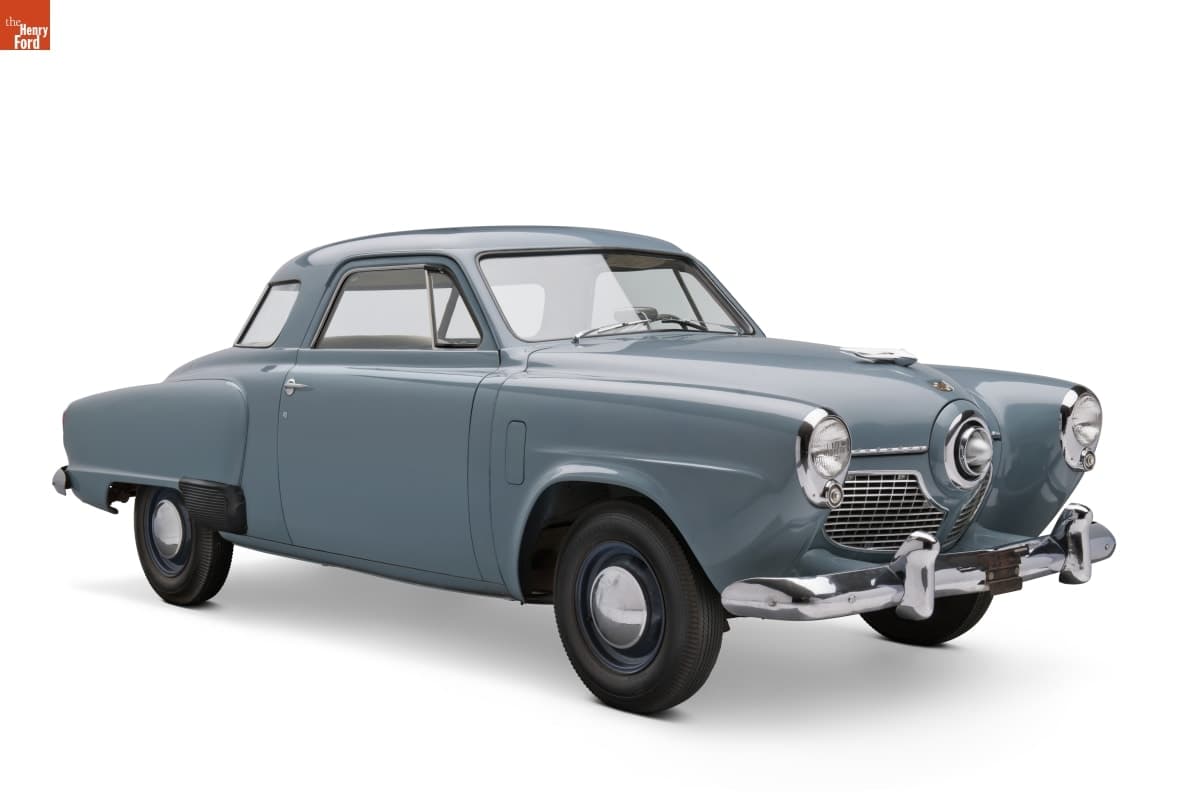
- 1951 Studebaker Champion Starlight Coupe - By the 1950s, Americans expected to have cars and travel widely. Even people of average income wanted their cars to reflect their personalities. If you wanted to turn heads, then Studebaker was the brand for you. Studebaker competed for customers with Ford, Chevy, and Plymouth, using airplane-inspired styling and radical wraparound rear windows. This model seems to leap forward even when standing still.
- 1951
- Collections - Artifact
1951 Studebaker Champion Starlight Coupe
By the 1950s, Americans expected to have cars and travel widely. Even people of average income wanted their cars to reflect their personalities. If you wanted to turn heads, then Studebaker was the brand for you. Studebaker competed for customers with Ford, Chevy, and Plymouth, using airplane-inspired styling and radical wraparound rear windows. This model seems to leap forward even when standing still.
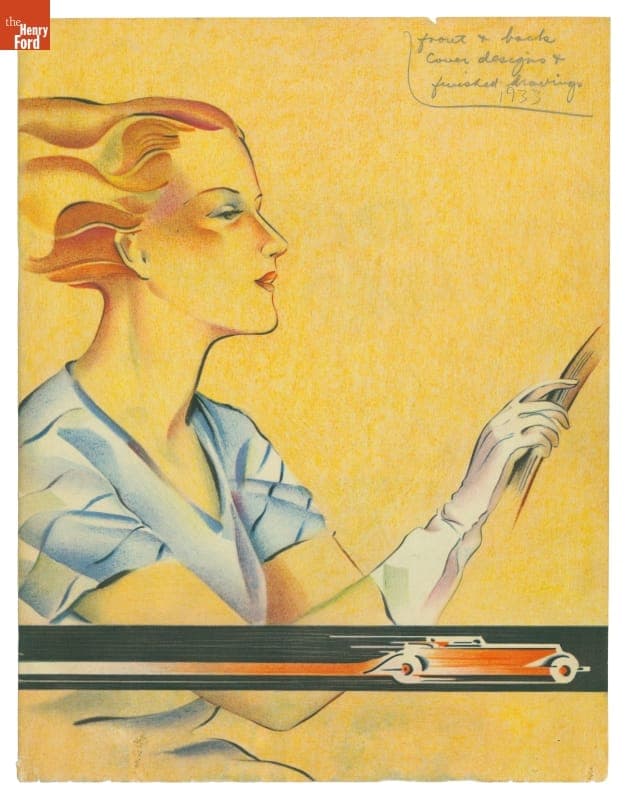
- Brochure with Cover Designed by Virgil M. Exner, "Studebaker Offers for 1933" - Virgil Exner's long career in automotive design included time with General Motors, Raymond Loewy Associates, and Studebaker -- for which he produced this work. Exner is best remembered for his tenure as design head at Chrysler, where his dramatic "Forward Look" characterized the company's vehicles from 1955 to 1961.
- 1933
- Collections - Artifact
Brochure with Cover Designed by Virgil M. Exner, "Studebaker Offers for 1933"
Virgil Exner's long career in automotive design included time with General Motors, Raymond Loewy Associates, and Studebaker -- for which he produced this work. Exner is best remembered for his tenure as design head at Chrysler, where his dramatic "Forward Look" characterized the company's vehicles from 1955 to 1961.
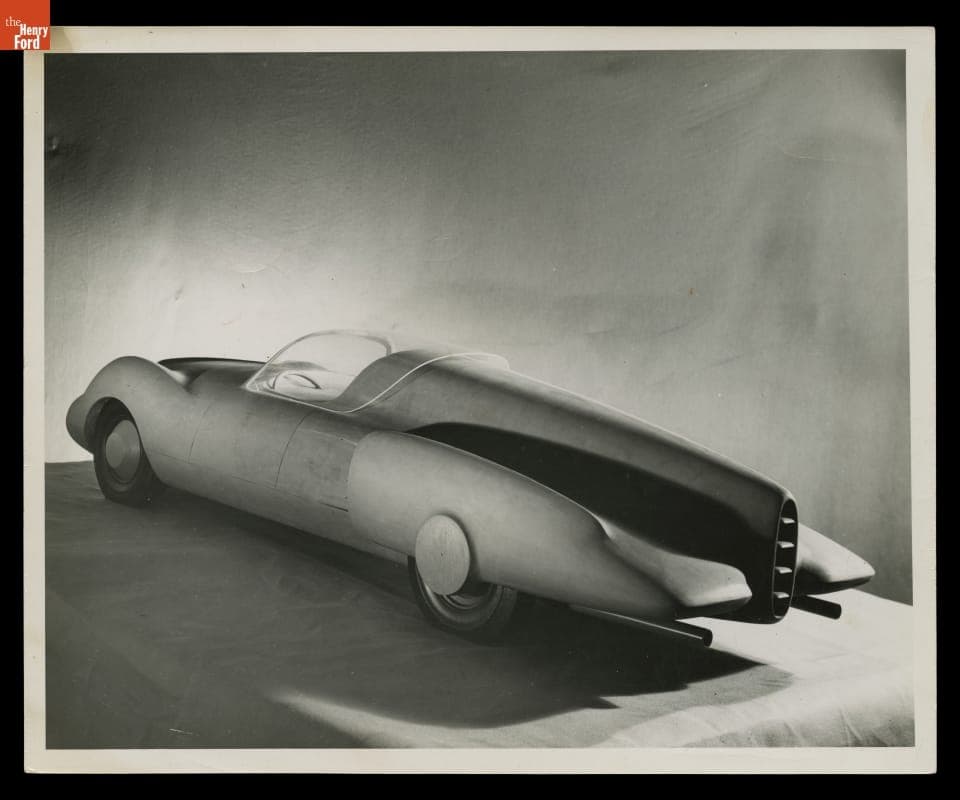
- Clay Model for a Studebaker Concept Car, 1944 - Virgil Exner's long career in automotive design included time with General Motors, Raymond Loewy Associates, and Studebaker -- for which he produced this work. Exner is best remembered for his tenure as design head at Chrysler, where his dramatic "Forward Look" characterized the company's vehicles from 1955 to 1961.
- 1944
- Collections - Artifact
Clay Model for a Studebaker Concept Car, 1944
Virgil Exner's long career in automotive design included time with General Motors, Raymond Loewy Associates, and Studebaker -- for which he produced this work. Exner is best remembered for his tenure as design head at Chrysler, where his dramatic "Forward Look" characterized the company's vehicles from 1955 to 1961.
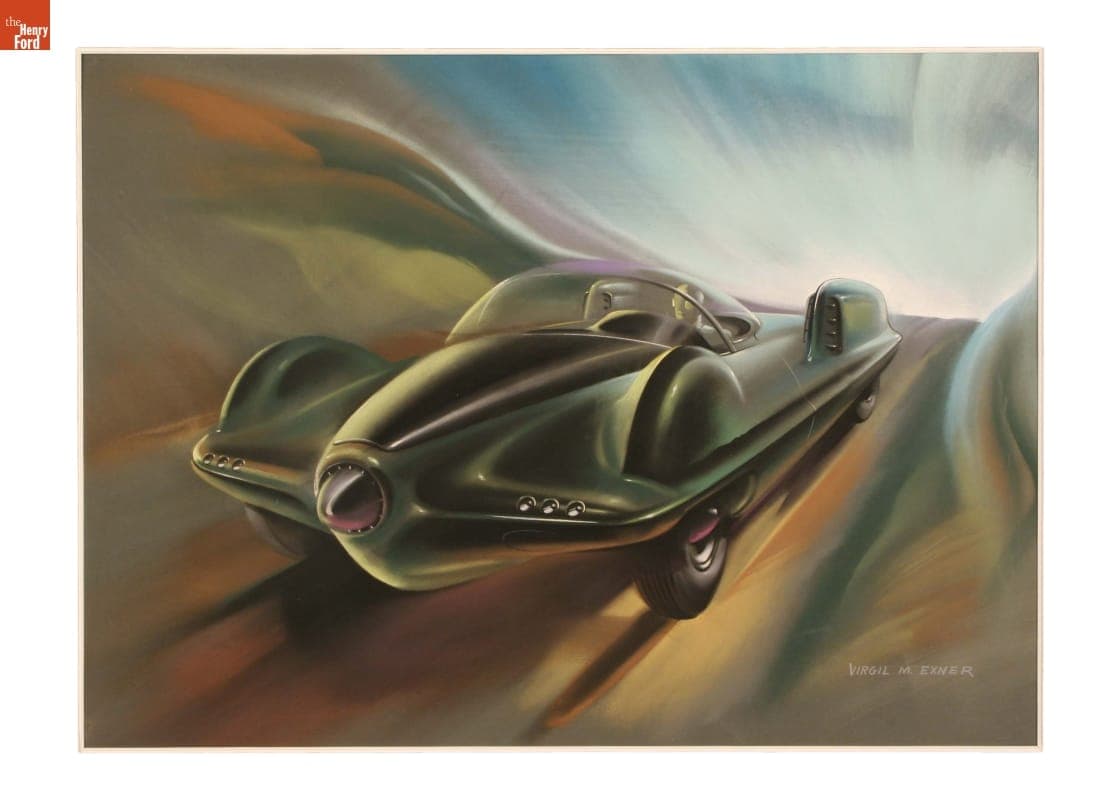
- Design Drawing by Virgil Exner for Studebaker Corporation, circa 1945 - Virgil Exner's long career in automotive design included time with General Motors, Raymond Loewy Associates, and Studebaker -- for which he produced this work. Exner is best remembered for his tenure as design head at Chrysler, where his dramatic "Forward Look" characterized the company's vehicles from 1955 to 1961.
- circa 1945
- Collections - Artifact
Design Drawing by Virgil Exner for Studebaker Corporation, circa 1945
Virgil Exner's long career in automotive design included time with General Motors, Raymond Loewy Associates, and Studebaker -- for which he produced this work. Exner is best remembered for his tenure as design head at Chrysler, where his dramatic "Forward Look" characterized the company's vehicles from 1955 to 1961.
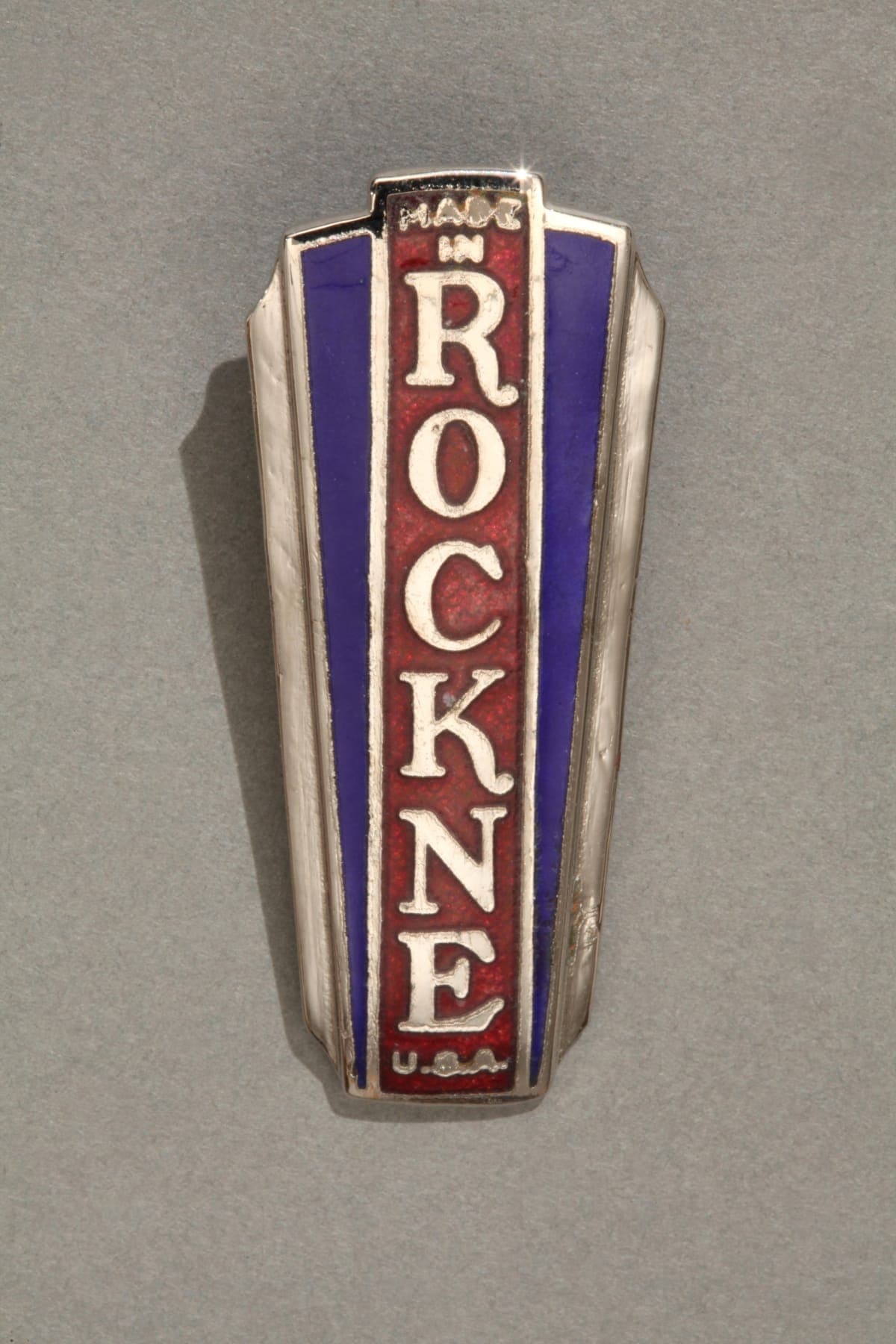
- Rockne Radiator Emblem, circa 1930 - Studebaker introduced its Rockne automobile brand for 1932. The car was named for famous Notre Dame football coach Knute Rockne, who had died in an airplane crash in 1931. The six-cylinder Rockne was well built and affordably priced, but the Great Depression hurt sales. Studebaker canceled the Rockne line in 1933.
- circa 1930
- Collections - Artifact
Rockne Radiator Emblem, circa 1930
Studebaker introduced its Rockne automobile brand for 1932. The car was named for famous Notre Dame football coach Knute Rockne, who had died in an airplane crash in 1931. The six-cylinder Rockne was well built and affordably priced, but the Great Depression hurt sales. Studebaker canceled the Rockne line in 1933.