
Search
- How to Grow the Peanut and 105 Ways of Preparing it for Human Consumption, May 1917 - George Washington Carver directed the agricultural Experiment Station at Tuskegee Institute in Alabama. As part of his work, Carver wrote what he called "threefold" agricultural bulletins: they included information for the farmer, for the teacher, and for the housewife. This bulletin on growing and cooking peanuts, along with Carver's other advocacy work, helped popularize the peanut as a useful and nutritious crop for Southern farmers.

- May 01, 1917
- Collections - Artifact
How to Grow the Peanut and 105 Ways of Preparing it for Human Consumption, May 1917
George Washington Carver directed the agricultural Experiment Station at Tuskegee Institute in Alabama. As part of his work, Carver wrote what he called "threefold" agricultural bulletins: they included information for the farmer, for the teacher, and for the housewife. This bulletin on growing and cooking peanuts, along with Carver's other advocacy work, helped popularize the peanut as a useful and nutritious crop for Southern farmers.
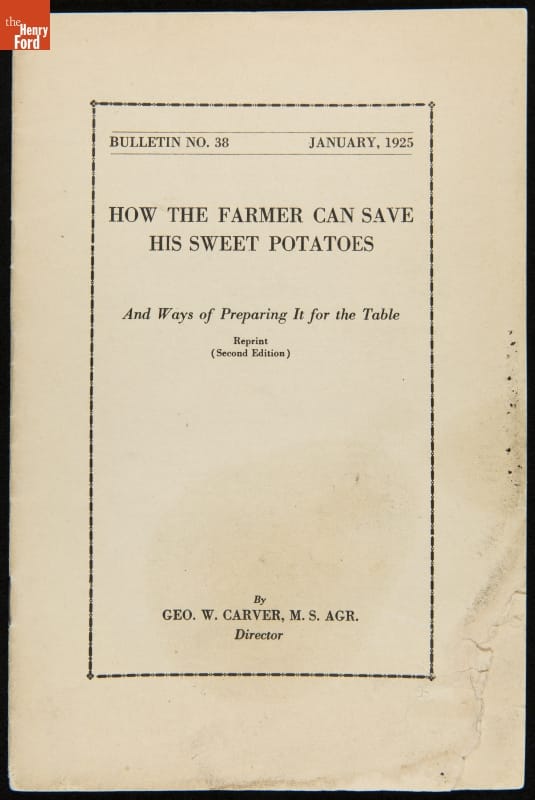
- How the Farmer Can Save His Sweet Potatoes and Ways of Preparing It for the Table, January 1925 (2nd ed.) -
- January 01, 1925
- Collections - Artifact
How the Farmer Can Save His Sweet Potatoes and Ways of Preparing It for the Table, January 1925 (2nd ed.)
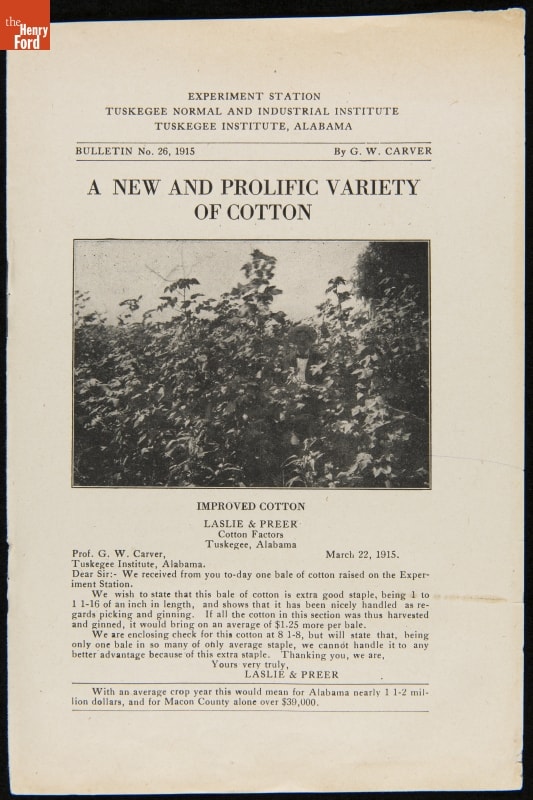
- A New and Prolific Variety of Cotton, Bulletin No. 26, 1915 -
- 1915
- Collections - Artifact
A New and Prolific Variety of Cotton, Bulletin No. 26, 1915
- How to Make and Save Money on the Farm, Bulletin No. 39, 1927 -
- 1927
- Collections - Artifact
How to Make and Save Money on the Farm, Bulletin No. 39, 1927
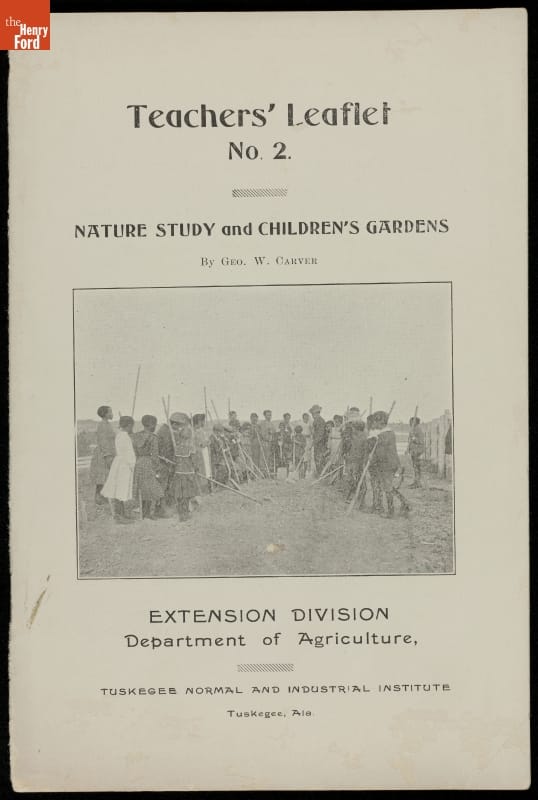
- Teacher's Leaflet No. 2, Nature Study and Children's Gardens, 1904 - Among George Washington Carver's contributions were the bulletins he issued from the Agricultural Experiment Station at the Tuskegee Institute. This pamphlet, written for teachers, treats the popular topic of "nature study," the early 20th century's version of environmental education. It was a guide for educators wanting to involve school children in gardening to help prepare them for successful farming careers. Carver's nature study bulletins emphasized both aesthetic and scientific understandings of nature and were popular across the country.
- 1904
- Collections - Artifact
Teacher's Leaflet No. 2, Nature Study and Children's Gardens, 1904
Among George Washington Carver's contributions were the bulletins he issued from the Agricultural Experiment Station at the Tuskegee Institute. This pamphlet, written for teachers, treats the popular topic of "nature study," the early 20th century's version of environmental education. It was a guide for educators wanting to involve school children in gardening to help prepare them for successful farming careers. Carver's nature study bulletins emphasized both aesthetic and scientific understandings of nature and were popular across the country.
- The Need of Scientific Agriculture in the South, 1902 -
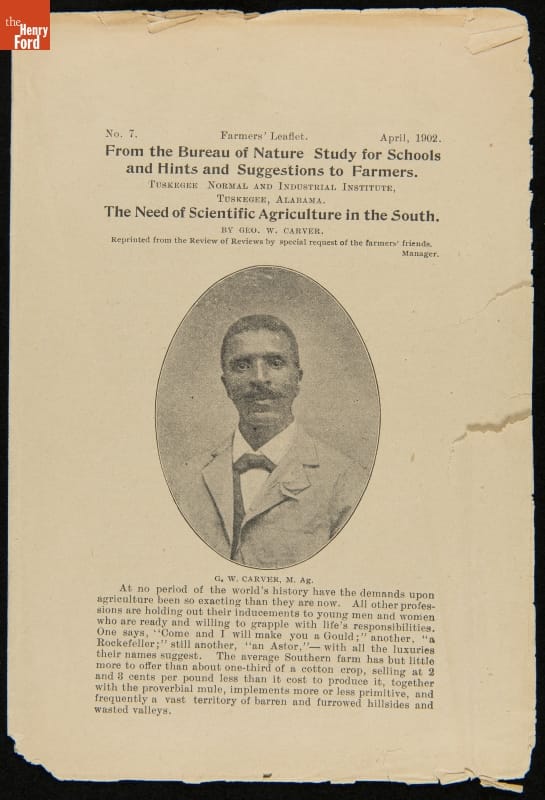
- 1902
- Collections - Artifact
The Need of Scientific Agriculture in the South, 1902
- The Canning and Preserving of Fruits and Vegetables in the Home, 1912 -
- May 07, 1917
- Collections - Artifact
The Canning and Preserving of Fruits and Vegetables in the Home, 1912
- How to Live Comfortably This Winter, 1916 -
- 1916
- Collections - Artifact
How to Live Comfortably This Winter, 1916
- Fertilizer Experiments with Cotton, Bulletin No. 3, 1899 - George Washington Carver directed the Agricultural Experiment Station at Tuskegee Institute in Alabama. Soil was the foundation of his work, and he urged farm families to incorporate biomass as well as natural and chemical fertilizers to replace nutrients leached out of soils by extensive cotton cultivation.
- 1899
- Collections - Artifact
Fertilizer Experiments with Cotton, Bulletin No. 3, 1899
George Washington Carver directed the Agricultural Experiment Station at Tuskegee Institute in Alabama. Soil was the foundation of his work, and he urged farm families to incorporate biomass as well as natural and chemical fertilizers to replace nutrients leached out of soils by extensive cotton cultivation.
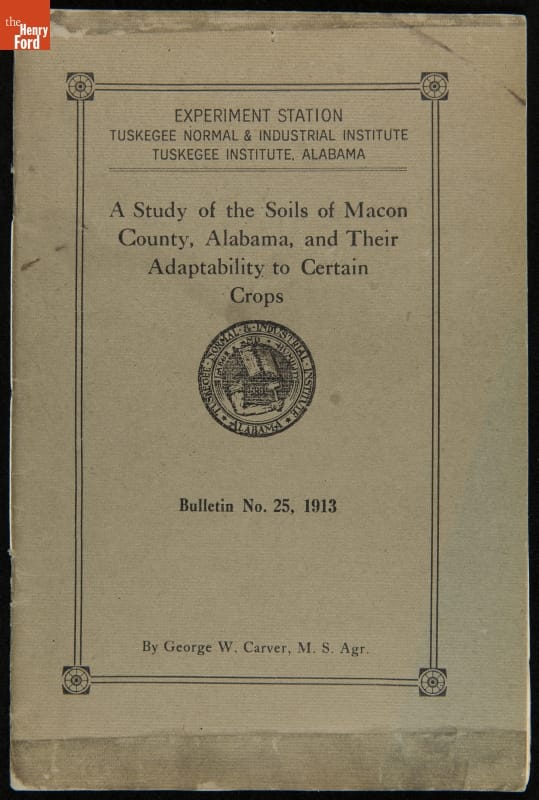
- Study of the Soils of Macon County, Alabama, and Their Adaptability to Certain Crops, Bulletin No. 25, 1913 -
- 1913
- Collections - Artifact
Study of the Soils of Macon County, Alabama, and Their Adaptability to Certain Crops, Bulletin No. 25, 1913