
Search
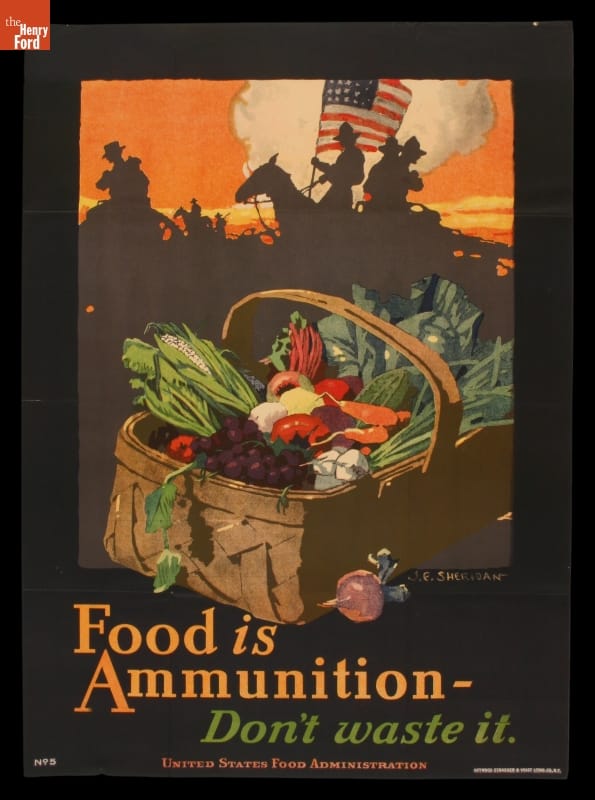
- World War I Poster, "Food is Ammunition-- Don't Waste It," circa 1918 - During the First World War, governments of all the warring nations used poster campaigns to encourage civilian and military support of the war effort. Artists widely used an innovative advertising technique for these posters that moved away from a factual depiction of a product's material or event's subject to an emphasis on appealing to the viewer's emotions.
- circa 1918
- Collections - Artifact
World War I Poster, "Food is Ammunition-- Don't Waste It," circa 1918
During the First World War, governments of all the warring nations used poster campaigns to encourage civilian and military support of the war effort. Artists widely used an innovative advertising technique for these posters that moved away from a factual depiction of a product's material or event's subject to an emphasis on appealing to the viewer's emotions.
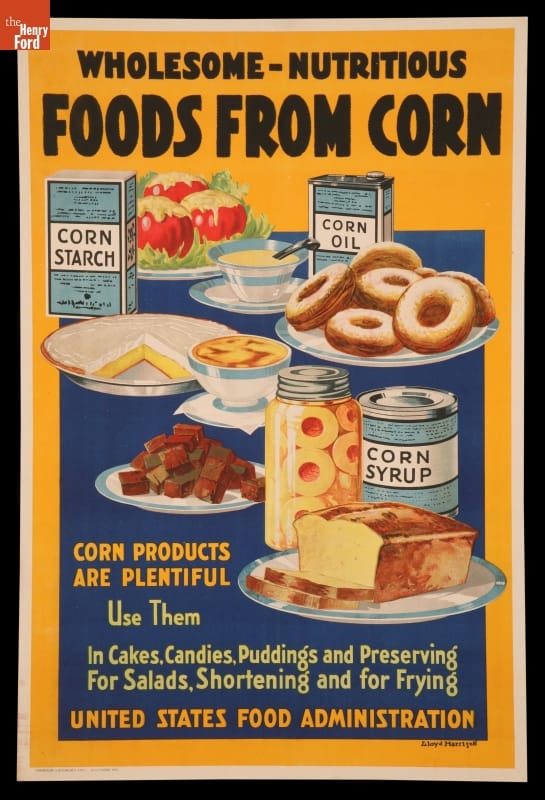
- World War I Poster, "Wholesome - Nutritious Foods from Corn, " 1918 - During the First World War, governments of all the warring nations used poster campaigns to encourage civilian and military support of the war effort. Artists widely used an innovative advertising technique for these posters that moved away from a factual depiction of a product's material or event's subject to an emphasis on appealing to the viewer's emotions.
- 1918
- Collections - Artifact
World War I Poster, "Wholesome - Nutritious Foods from Corn, " 1918
During the First World War, governments of all the warring nations used poster campaigns to encourage civilian and military support of the war effort. Artists widely used an innovative advertising technique for these posters that moved away from a factual depiction of a product's material or event's subject to an emphasis on appealing to the viewer's emotions.
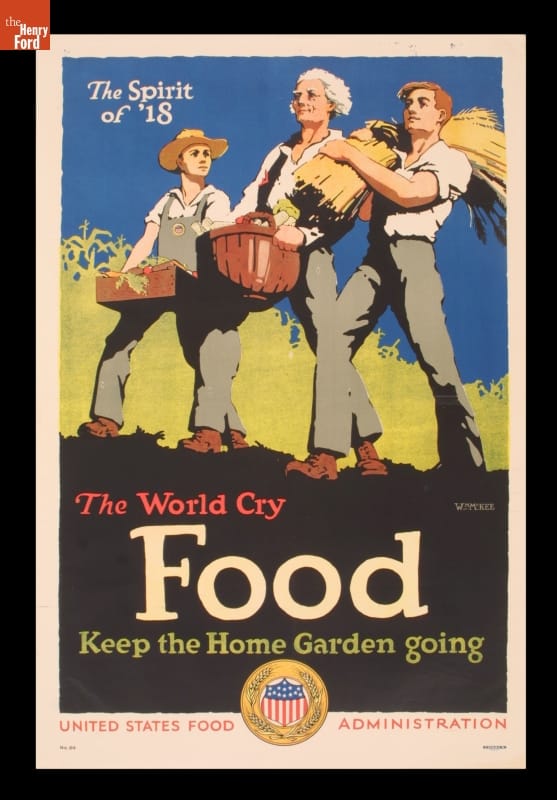
- Poster, "The Spirit of '18, Food- Keep the Home Garden Going," 1918 -
- 1918
- Collections - Artifact
Poster, "The Spirit of '18, Food- Keep the Home Garden Going," 1918
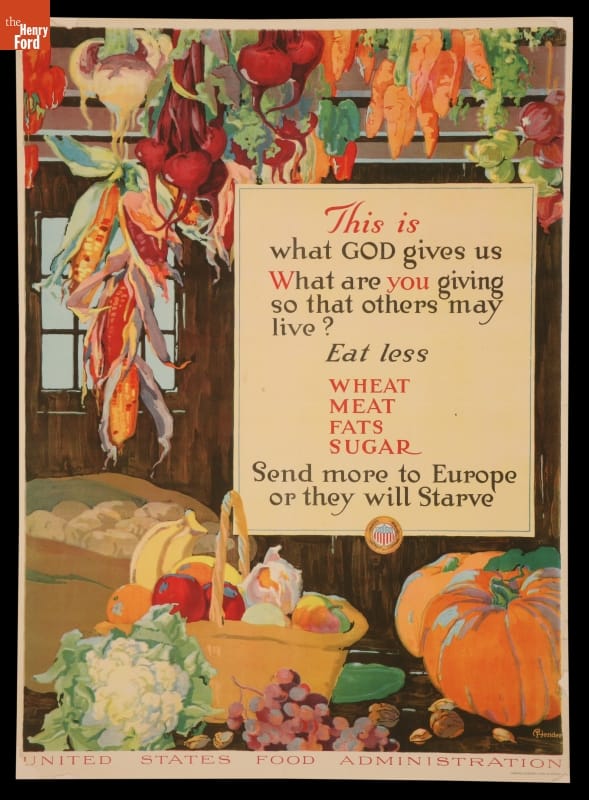
- World War I Poster, "This is what God gives us," circa 1918 - During the First World War, governments of all the warring nations used poster campaigns to encourage civilian and military support of the war effort. Artists widely used an innovative advertising technique for these posters that moved away from a factual depiction of a product's material or event's subject to an emphasis on appealing to the viewer's emotions.
- circa 1918
- Collections - Artifact
World War I Poster, "This is what God gives us," circa 1918
During the First World War, governments of all the warring nations used poster campaigns to encourage civilian and military support of the war effort. Artists widely used an innovative advertising technique for these posters that moved away from a factual depiction of a product's material or event's subject to an emphasis on appealing to the viewer's emotions.
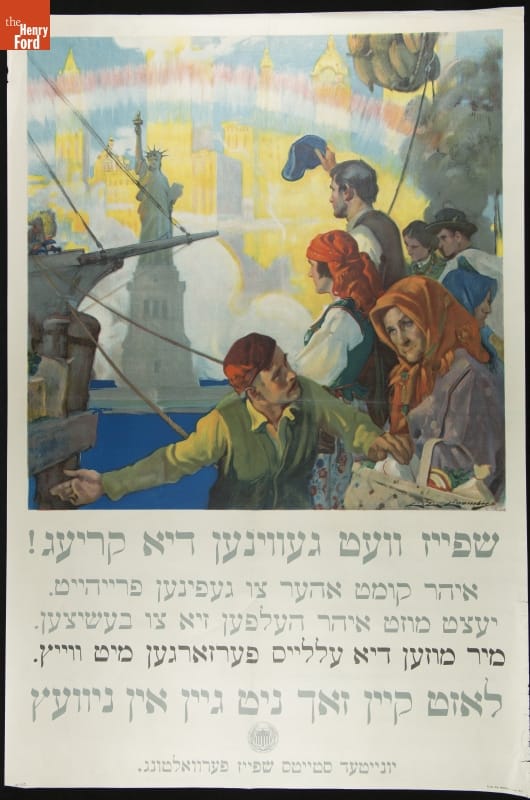
- Immigrants Arriving at New York Harbor, circa 1917 - To combat starvation in Europe, President Woodrow Wilson established the U.S. Food Administration in August 1917. This highly successful initiative delivered almost 34 million pounds of food to Europe during and after the war. This Administration's Yiddish-language poster, aimed at Jewish immigrants, begins, "Food will win the war -- You came here seeking freedom, now you must help to preserve it..."
- circa 1917
- Collections - Artifact
Immigrants Arriving at New York Harbor, circa 1917
To combat starvation in Europe, President Woodrow Wilson established the U.S. Food Administration in August 1917. This highly successful initiative delivered almost 34 million pounds of food to Europe during and after the war. This Administration's Yiddish-language poster, aimed at Jewish immigrants, begins, "Food will win the war -- You came here seeking freedom, now you must help to preserve it..."
- World War I Poster, "Eat More Corn, Oats and Rye," circa 1918 - During the First World War, governments of all the warring nations used poster campaigns to encourage civilian and military support of the war effort. Artists widely used an innovative advertising technique for these posters that moved away from a factual depiction of a product's material or event's subject to an emphasis on appealing to the viewer's emotions.
- circa 1918
- Collections - Artifact
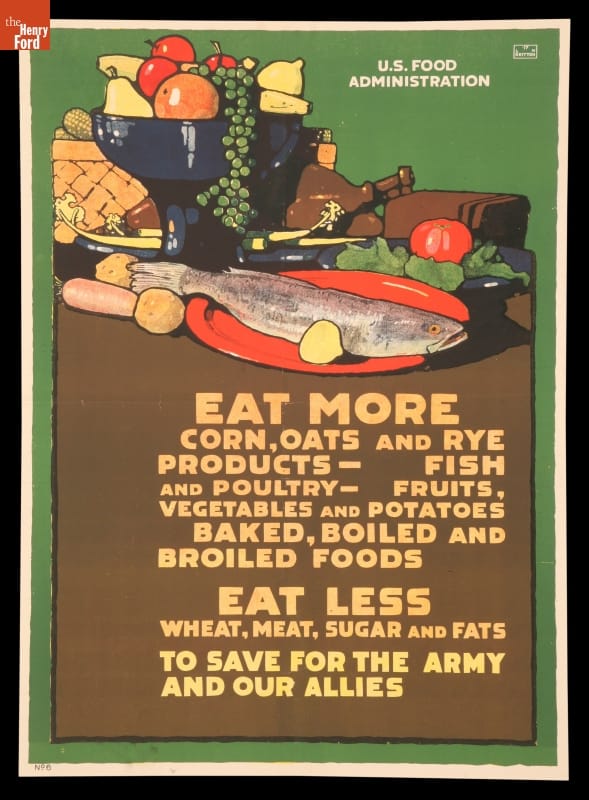
World War I Poster, "Eat More Corn, Oats and Rye," circa 1918
During the First World War, governments of all the warring nations used poster campaigns to encourage civilian and military support of the war effort. Artists widely used an innovative advertising technique for these posters that moved away from a factual depiction of a product's material or event's subject to an emphasis on appealing to the viewer's emotions.
- World War I Poster, "Save Food For World Relief," 1917-1919 - During the First World War, Abraham Lincoln's reputation extended to the international arena. For, who could more perfectly symbolize the international fight for freedom--the fight to make the world safe for democracy--than America's own Abraham Lincoln? Excerpts of his most stirring speeches were revived on posters, encouraging Americans to "Buy Liberty Bonds" and "Save Food for World Relief."
- 1917-1919
- Collections - Artifact
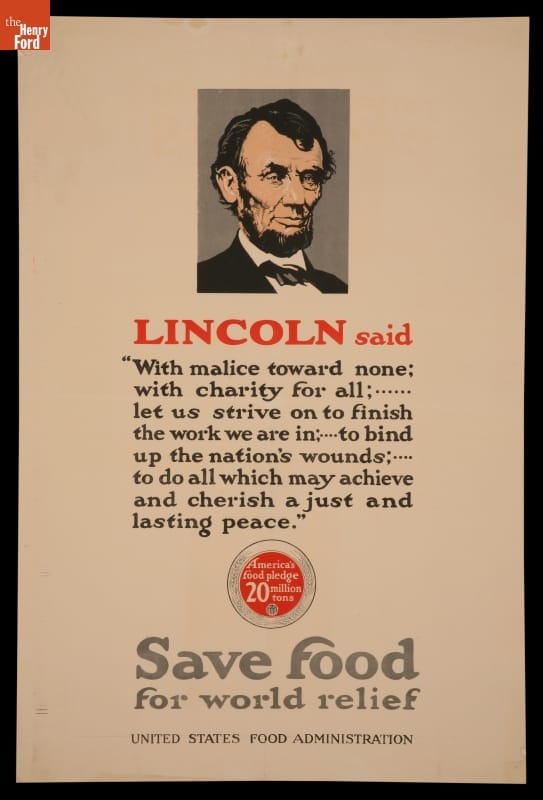
World War I Poster, "Save Food For World Relief," 1917-1919
During the First World War, Abraham Lincoln's reputation extended to the international arena. For, who could more perfectly symbolize the international fight for freedom--the fight to make the world safe for democracy--than America's own Abraham Lincoln? Excerpts of his most stirring speeches were revived on posters, encouraging Americans to "Buy Liberty Bonds" and "Save Food for World Relief."
- World War I Poster, "Corn, the Food of the Nation," 1918 -
- 1918
- Collections - Artifact
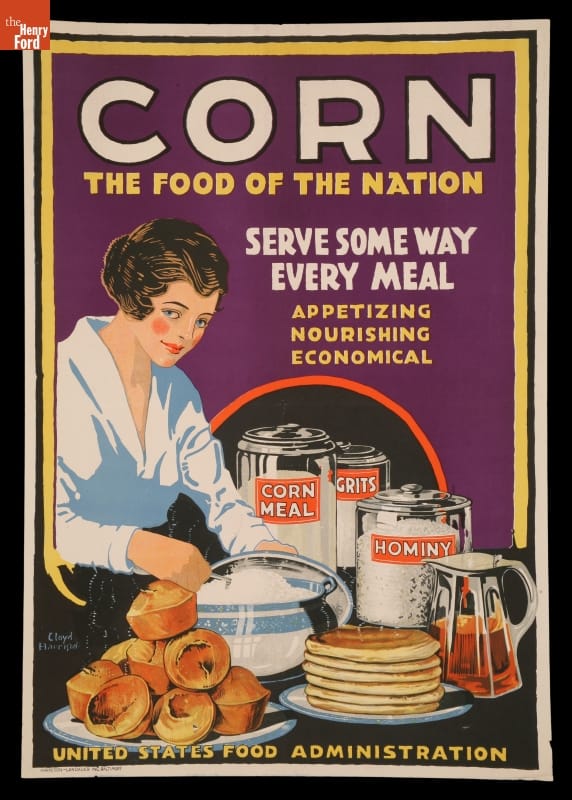
World War I Poster, "Corn, the Food of the Nation," 1918
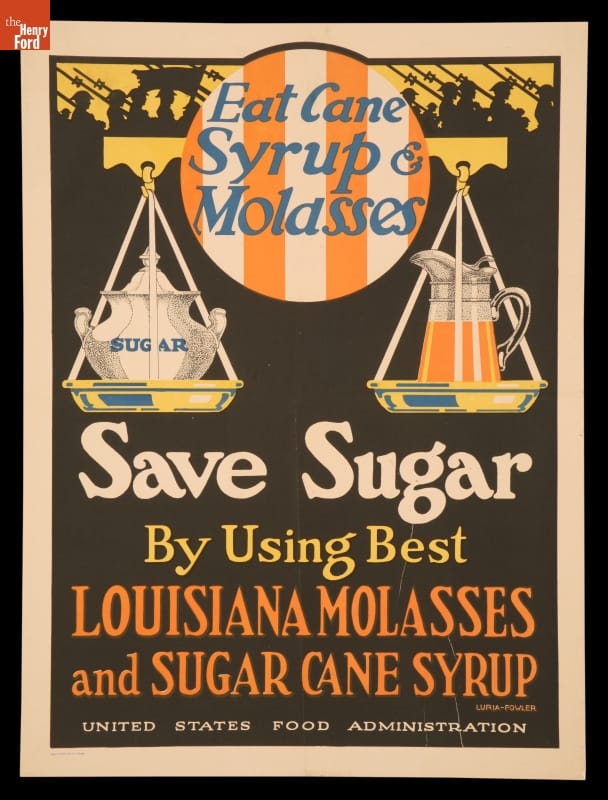
- World War I Poster, "Eat Cane Syrup & Molasses, Save Sugar," circa 1918 - During the First World War, governments of all the warring nations used poster campaigns to encourage civilian and military support of the war effort. Artists widely used an innovative advertising technique for these posters that moved away from a factual depiction of a product's material or event's subject to an emphasis on appealing to the viewer's emotions.
- circa 1918
- Collections - Artifact
World War I Poster, "Eat Cane Syrup & Molasses, Save Sugar," circa 1918
During the First World War, governments of all the warring nations used poster campaigns to encourage civilian and military support of the war effort. Artists widely used an innovative advertising technique for these posters that moved away from a factual depiction of a product's material or event's subject to an emphasis on appealing to the viewer's emotions.
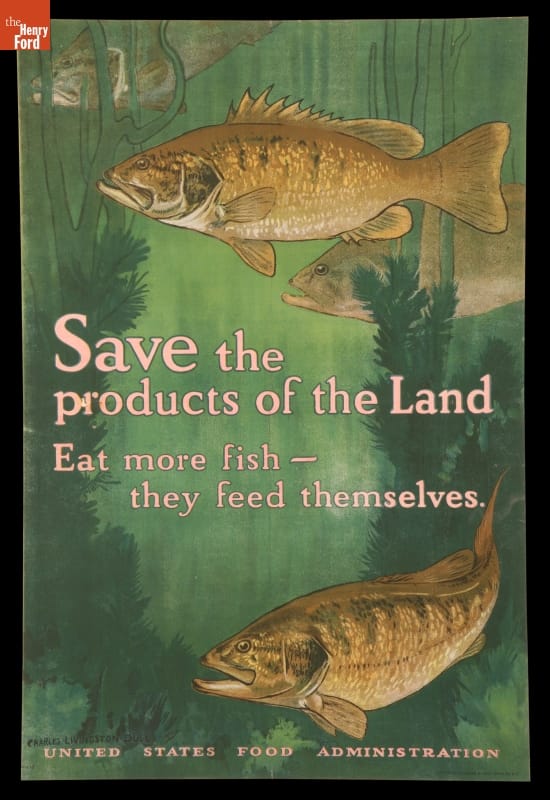
- World War I Poster, "Save the Products of the Land. Eat more Fish-- They Feed Themselves, " circa 1918 - During the First World War, governments of all the warring nations used poster campaigns to encourage civilian and military support of the war effort. Artists widely used an innovative advertising technique for these posters that moved away from a factual depiction of a product's material or event's subject to an emphasis on appealing to the viewer's emotions.
- circa 1918
- Collections - Artifact
World War I Poster, "Save the Products of the Land. Eat more Fish-- They Feed Themselves, " circa 1918
During the First World War, governments of all the warring nations used poster campaigns to encourage civilian and military support of the war effort. Artists widely used an innovative advertising technique for these posters that moved away from a factual depiction of a product's material or event's subject to an emphasis on appealing to the viewer's emotions.