
Search
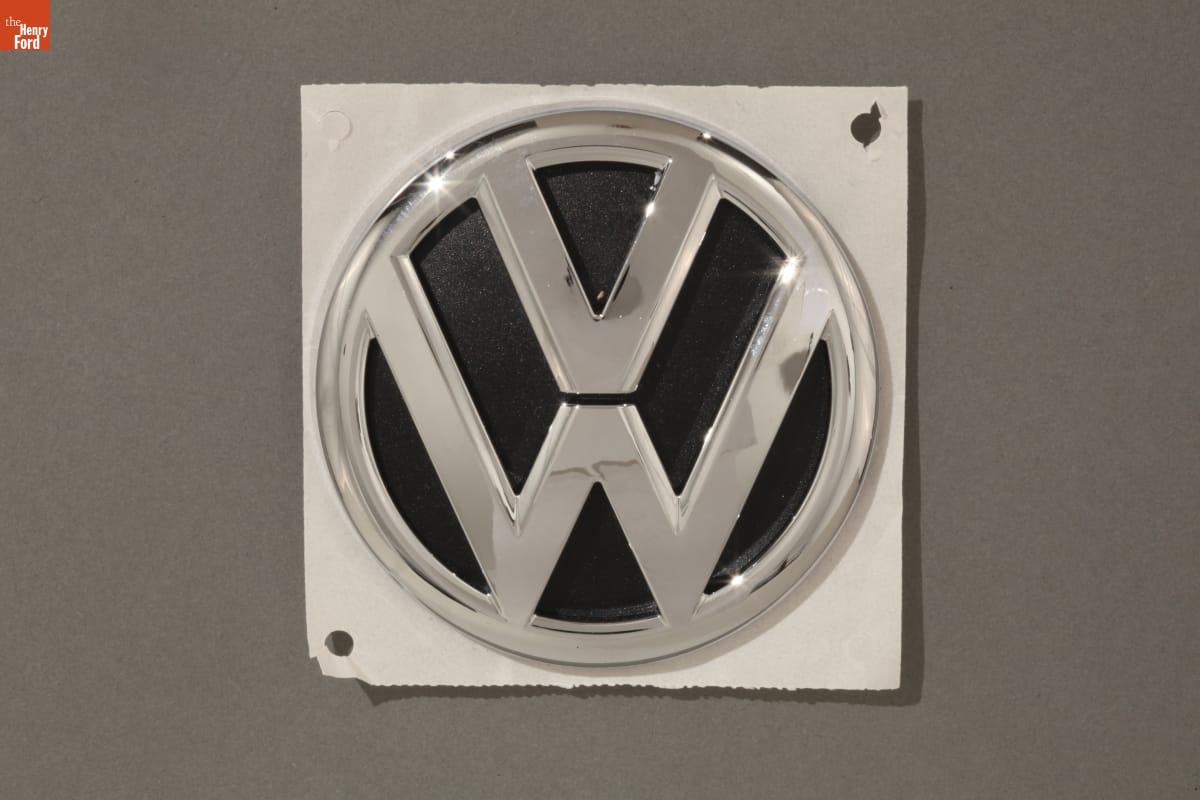
- Volkswagen Badge, 2011 - An automobile manufacturer's badge is fundamental to the company's brand identity -- just as the maker's name is often important to <EM>our</EM> identity as consumers and drivers. Early automobile badges tended to be small and often discreetly located; today they have evolved into enlarged, prominently placed, and frequently symmetrical logos -- easy to recognize, even at a glance in a rear-view mirror.
- 2011
- Collections - Artifact
Volkswagen Badge, 2011
An automobile manufacturer's badge is fundamental to the company's brand identity -- just as the maker's name is often important to our identity as consumers and drivers. Early automobile badges tended to be small and often discreetly located; today they have evolved into enlarged, prominently placed, and frequently symmetrical logos -- easy to recognize, even at a glance in a rear-view mirror.
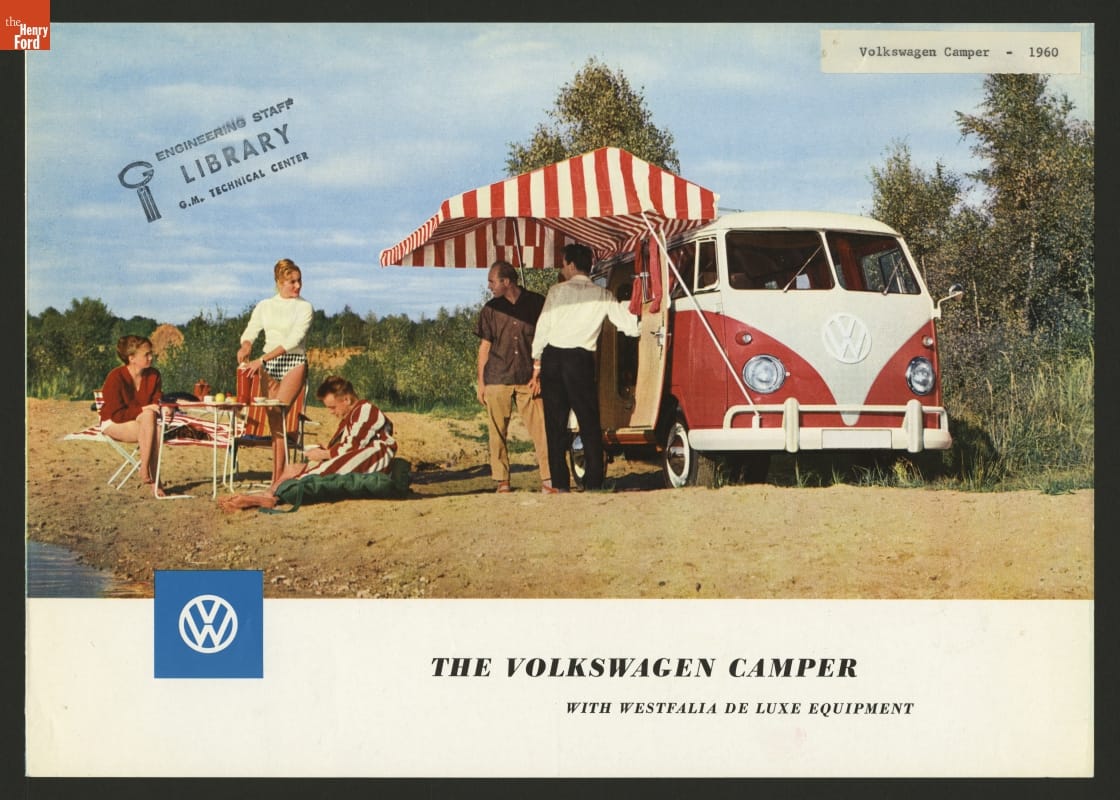
- "The Volkswagen Camper with Westfalia De Luxe Equipment," 1960 - This colorful 1960 catalog features the amenities found in the Volkswagen Camper. The VW Westfalia's interior transformed from dining room to kitchen to bedroom. Owners could also purchase exterior awnings. VW referred to the Westfalia as a house on wheels.
- 1960
- Collections - Artifact
"The Volkswagen Camper with Westfalia De Luxe Equipment," 1960
This colorful 1960 catalog features the amenities found in the Volkswagen Camper. The VW Westfalia's interior transformed from dining room to kitchen to bedroom. Owners could also purchase exterior awnings. VW referred to the Westfalia as a house on wheels.
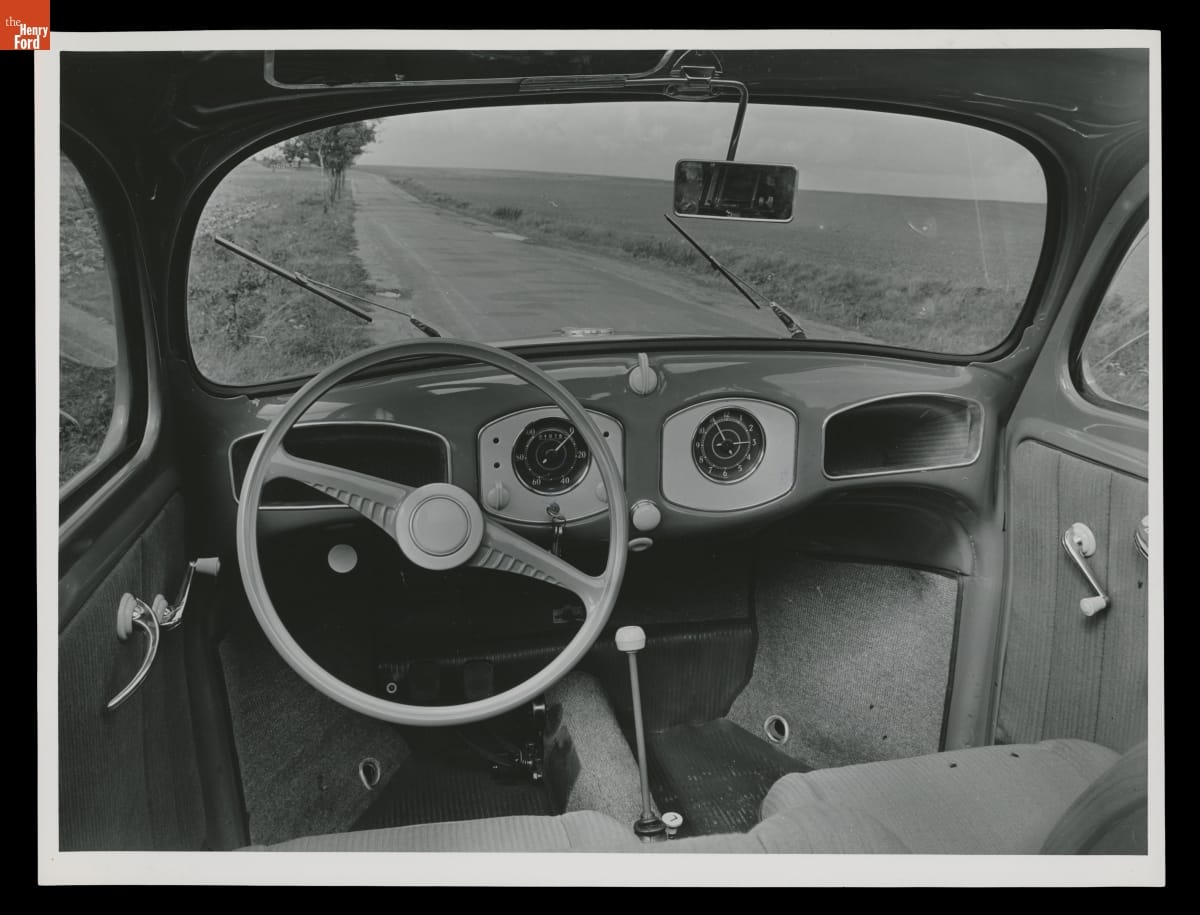
- Interior View of a 1950 Volkswagen Sedan - The spartan interior of a 1950 Volkswagen can be seen in this photograph. The front consists mainly of a gear shift lever, steering wheel, and dashboard. And the dash contains only a speedometer and clock, but no fuel gauge!
- 1950
- Collections - Artifact
Interior View of a 1950 Volkswagen Sedan
The spartan interior of a 1950 Volkswagen can be seen in this photograph. The front consists mainly of a gear shift lever, steering wheel, and dashboard. And the dash contains only a speedometer and clock, but no fuel gauge!
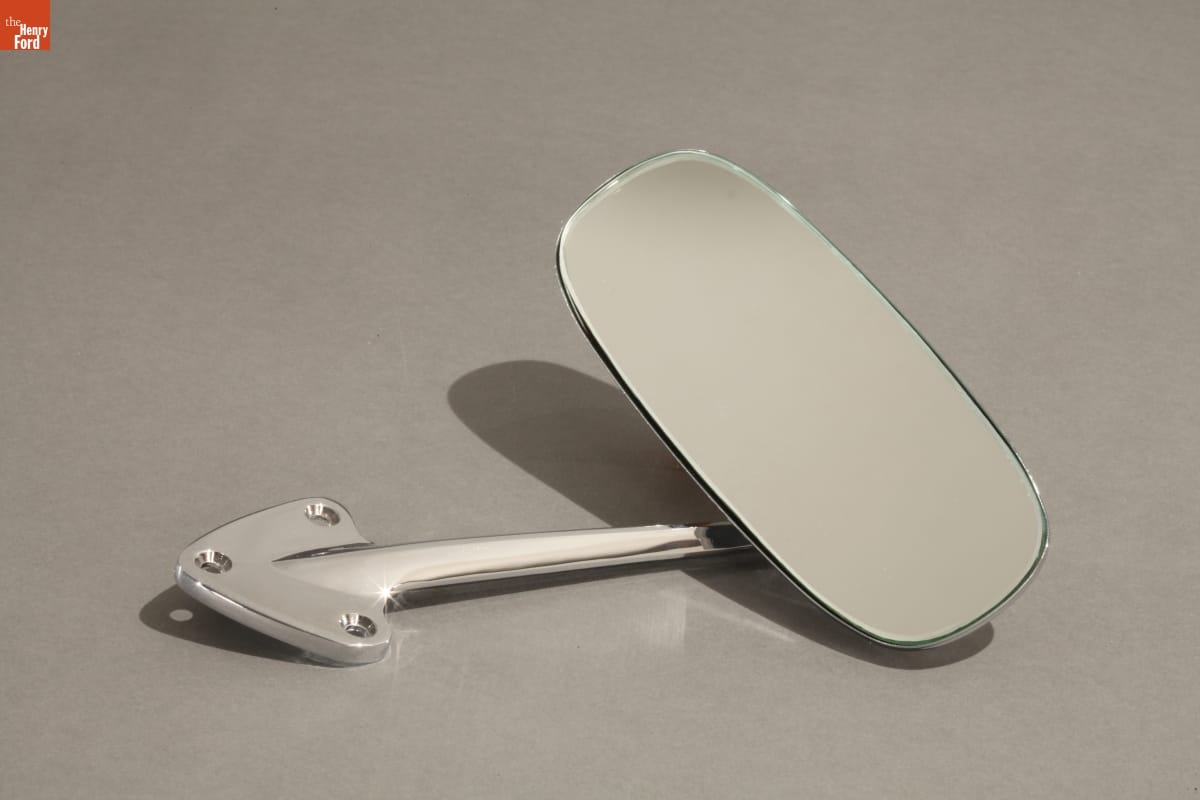
- Rearview Mirror for 1965-1967 Volkswagen - This rear-view Volkswagen mirror would have been the perfect place for a new teenage driver to proudly hang a high school graduation tassel.
- 1965-1967
- Collections - Artifact
Rearview Mirror for 1965-1967 Volkswagen
This rear-view Volkswagen mirror would have been the perfect place for a new teenage driver to proudly hang a high school graduation tassel.
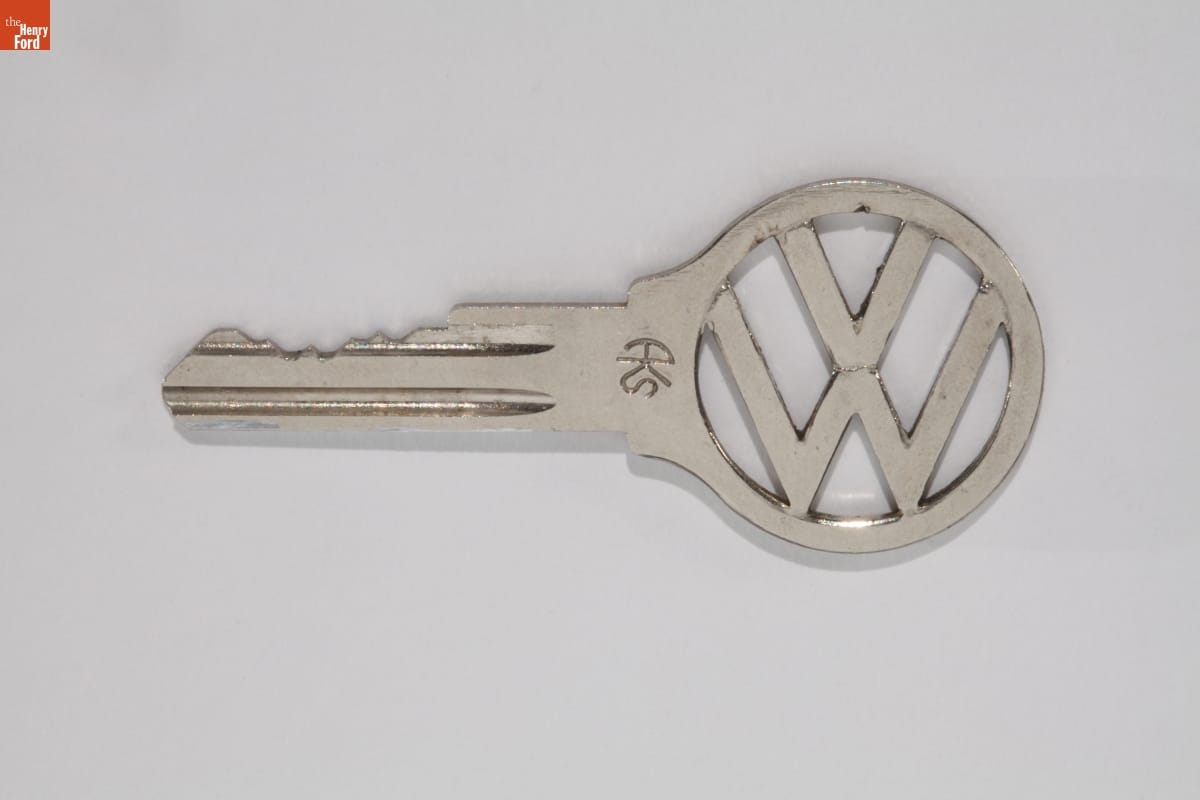
- Volkswagen Beetle Ignition Key, 1952-1959 - This ignition key, with the VW insignia in its head, might have been used for a Volkswagen Beetle or van.
- 1952-1959
- Collections - Artifact
Volkswagen Beetle Ignition Key, 1952-1959
This ignition key, with the VW insignia in its head, might have been used for a Volkswagen Beetle or van.
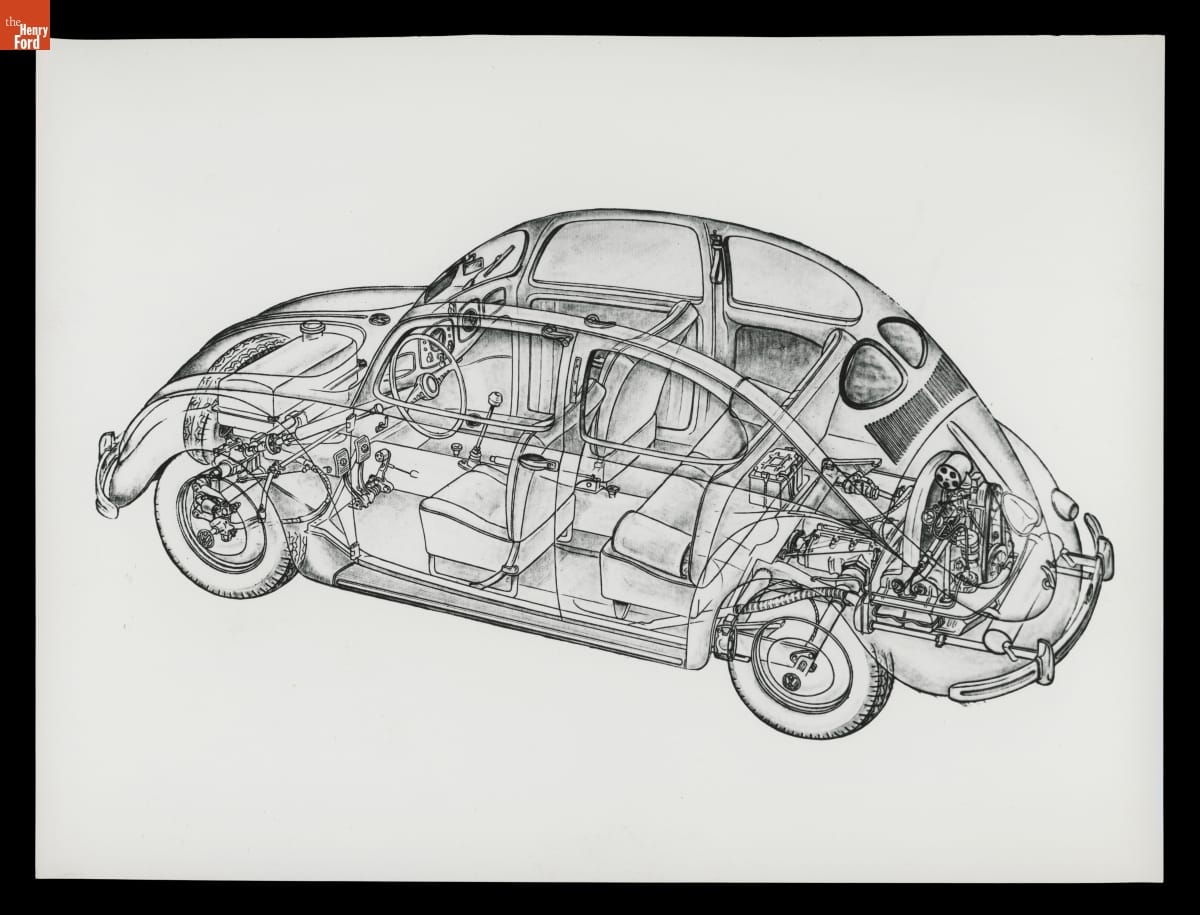
- 1950 Volkswagen Sedan, Overhead View Showing Interior - The 1950 Volkswagen press kit included this drawing showing an interior arrangement unfamiliar to Americans -- trunk in front, engine in back. Other carmakers offered rear-engined cars, but the VW design proved to be long-lived.
- 1950
- Collections - Artifact
1950 Volkswagen Sedan, Overhead View Showing Interior
The 1950 Volkswagen press kit included this drawing showing an interior arrangement unfamiliar to Americans -- trunk in front, engine in back. Other carmakers offered rear-engined cars, but the VW design proved to be long-lived.
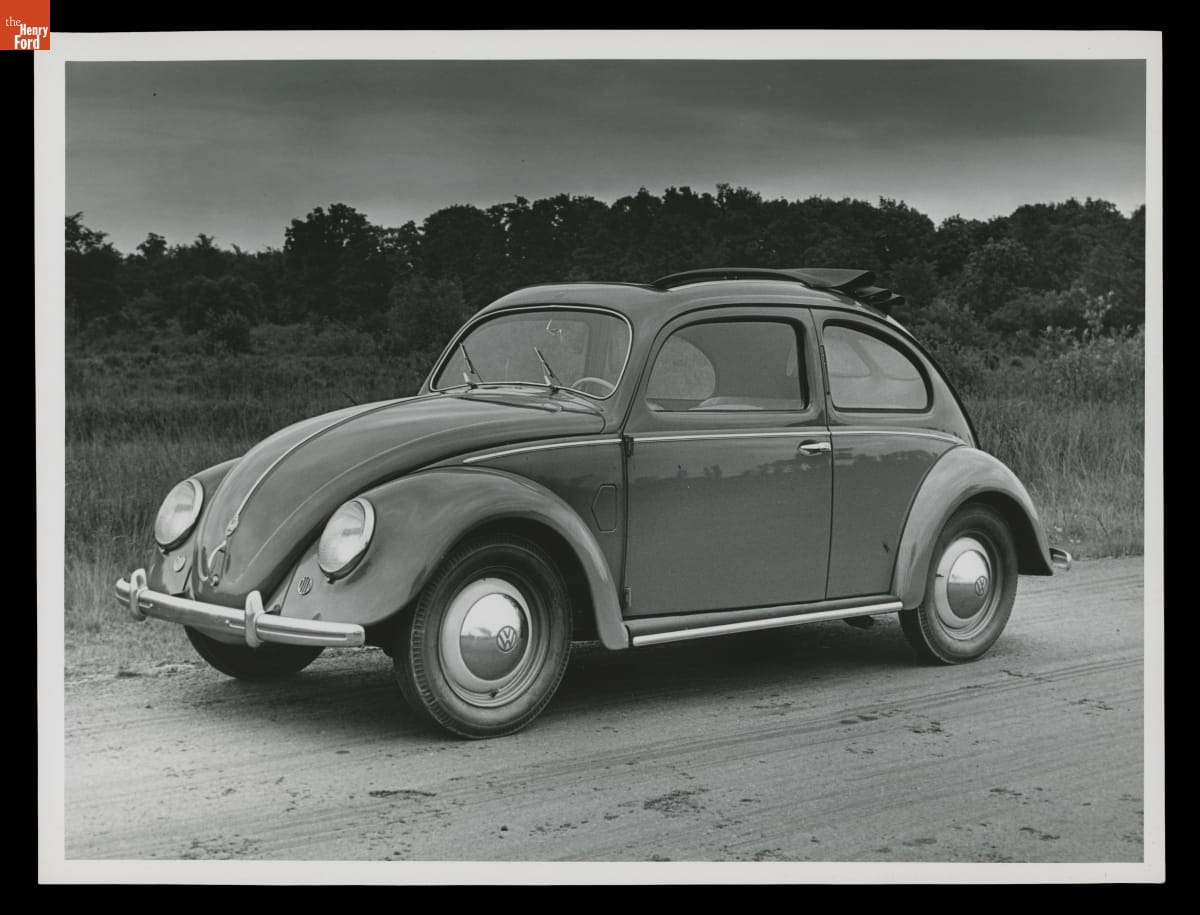
- Volkswagen Sedan, 1950 - Volkswagen's Type 1 Beetle sedan was different. Its compact size and rear-mounted, air-cooled engine set it apart from American cars. The Beetle appealed to a different type of American consumer -- one who favored thrifty practicality over flashy style. VW sold more than 21 million units during the car's 65-year production run.
- 1950
- Collections - Artifact
Volkswagen Sedan, 1950
Volkswagen's Type 1 Beetle sedan was different. Its compact size and rear-mounted, air-cooled engine set it apart from American cars. The Beetle appealed to a different type of American consumer -- one who favored thrifty practicality over flashy style. VW sold more than 21 million units during the car's 65-year production run.
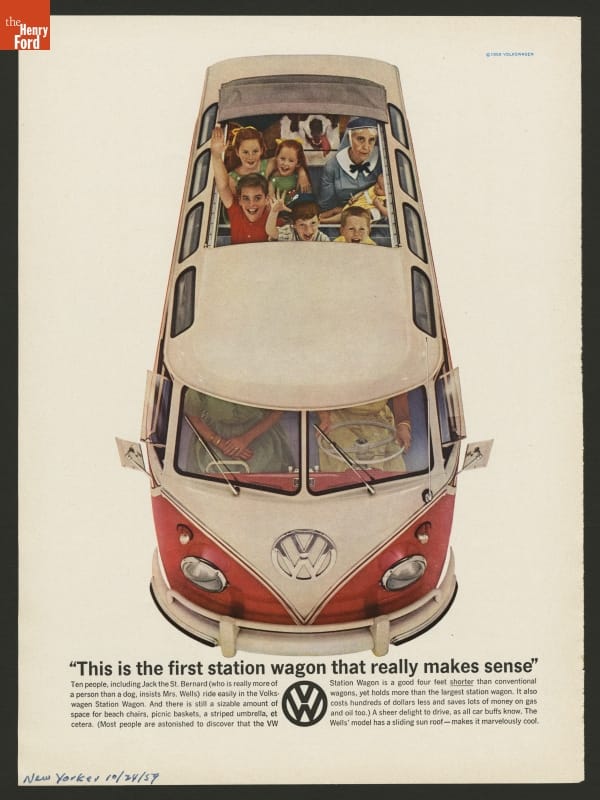
- 1959 Volkswagen Advertisement, "This is the First Station Wagon that Makes Sense" - Volkswagen advertised its roomy practicality in this 1959 ad. If you had six children, a nanny, a close friend, and a large dog, you didn't need a sports car. You didn't even need a larger conventional station wagon. You needed the VW station wagon. According to this ad, Volkswagen provided an easy ride and had more than enough room.
- 1959
- Collections - Artifact
1959 Volkswagen Advertisement, "This is the First Station Wagon that Makes Sense"
Volkswagen advertised its roomy practicality in this 1959 ad. If you had six children, a nanny, a close friend, and a large dog, you didn't need a sports car. You didn't even need a larger conventional station wagon. You needed the VW station wagon. According to this ad, Volkswagen provided an easy ride and had more than enough room.
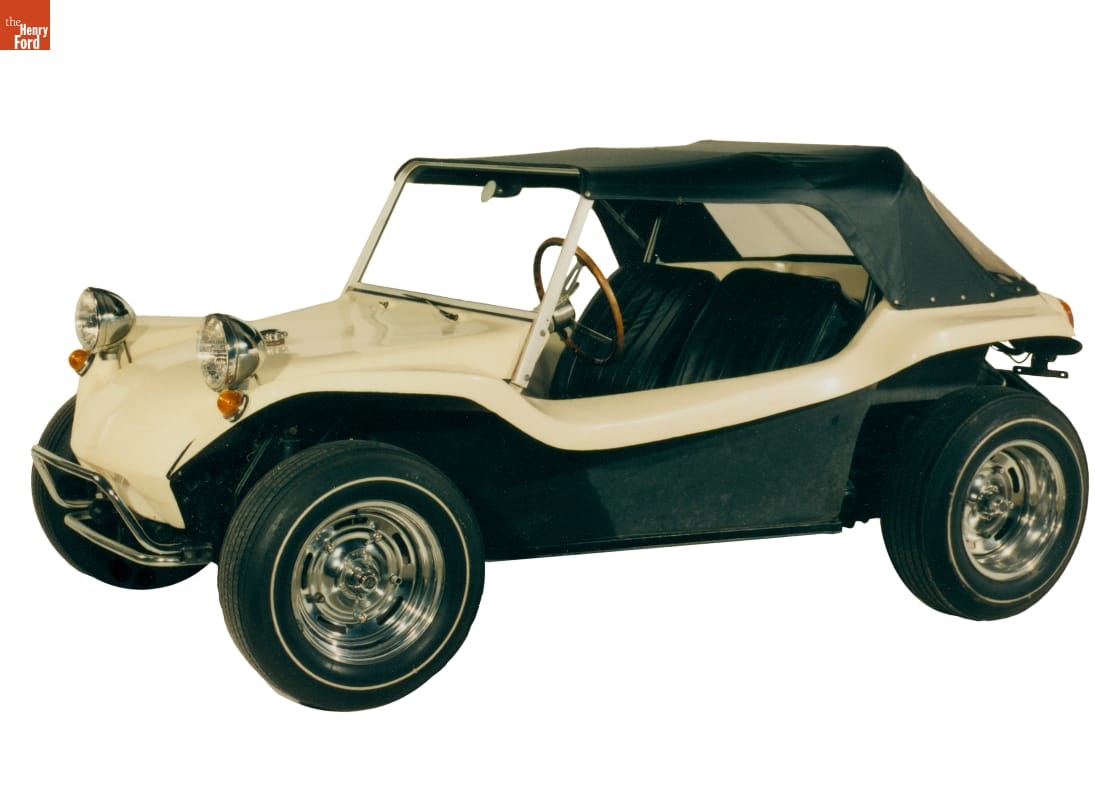
- 1970 Meyers Manx Dune Buggy - The Meyers Manx was a famous model of the dune buggies first built for use on the beaches of California. Less than $1,000 bought a fiberglass body, a windshield and a hood. Buyers supplied the rest from a used Volkswagen Beetle, plus the labor to assemble the parts. A teenager from Birmingham, Michigan, built this one with his grandfather.
- 1970
- Collections - Artifact
1970 Meyers Manx Dune Buggy
The Meyers Manx was a famous model of the dune buggies first built for use on the beaches of California. Less than $1,000 bought a fiberglass body, a windshield and a hood. Buyers supplied the rest from a used Volkswagen Beetle, plus the labor to assemble the parts. A teenager from Birmingham, Michigan, built this one with his grandfather.