
Search
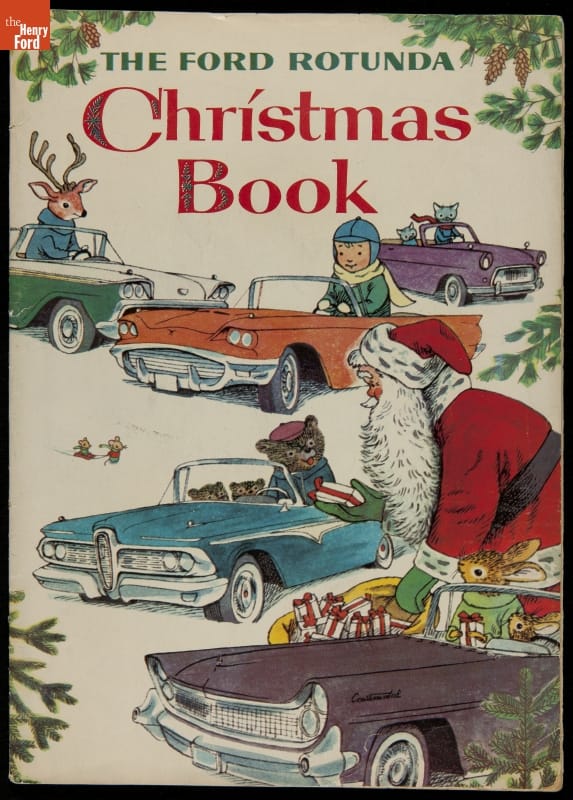
- Children's Activity Book, "Christmas at the Ford Rotunda," 1958 - After the Century of Progress Exposition ended in 1934, Ford Motor Company brought its central Rotunda building from that fair back to Dearborn. From 1936 to 1962, Ford recreated the excitement of a World's Fair exposition on its home turf. This souvenir Christmas book from 1958 was illustrated by noted children's book illustrator Richard Scarry.
- 1958
- Collections - Artifact
Children's Activity Book, "Christmas at the Ford Rotunda," 1958
After the Century of Progress Exposition ended in 1934, Ford Motor Company brought its central Rotunda building from that fair back to Dearborn. From 1936 to 1962, Ford recreated the excitement of a World's Fair exposition on its home turf. This souvenir Christmas book from 1958 was illustrated by noted children's book illustrator Richard Scarry.
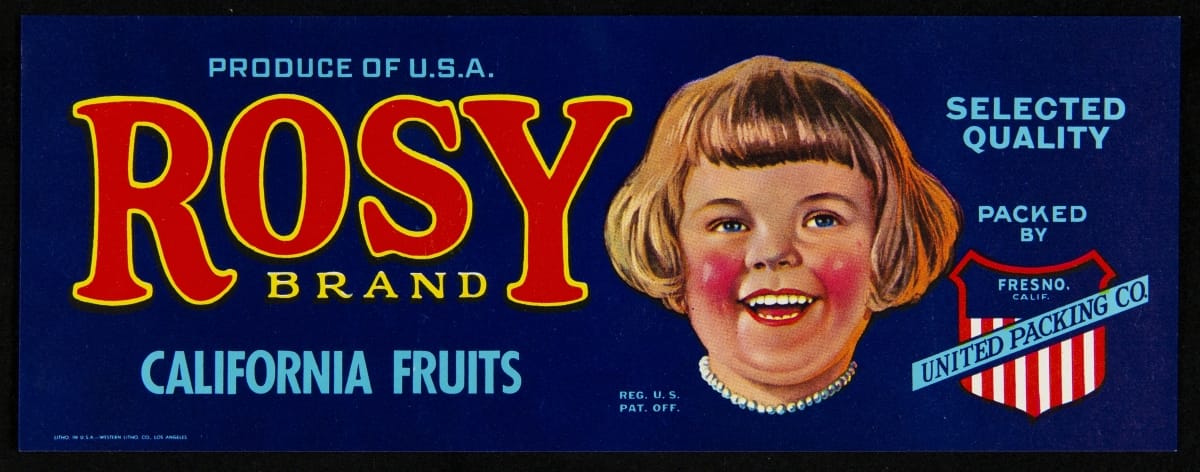
- Crate Label, "Rosy Brand California Fruits," circa 1950 - In 1869, the transcontinental railroad opened eastern markets to the West Coast produce industry for the first time. As produce companies shipped crates of fruits and vegetables across the country, they needed a way to distinguish their goods from their competitors'. Colorful, eye-catching labels, like this one for Rosy Brand Fruits, were created to attract grocers purchasing goods from wholesale markets.
- circa 1950
- Collections - Artifact
Crate Label, "Rosy Brand California Fruits," circa 1950
In 1869, the transcontinental railroad opened eastern markets to the West Coast produce industry for the first time. As produce companies shipped crates of fruits and vegetables across the country, they needed a way to distinguish their goods from their competitors'. Colorful, eye-catching labels, like this one for Rosy Brand Fruits, were created to attract grocers purchasing goods from wholesale markets.
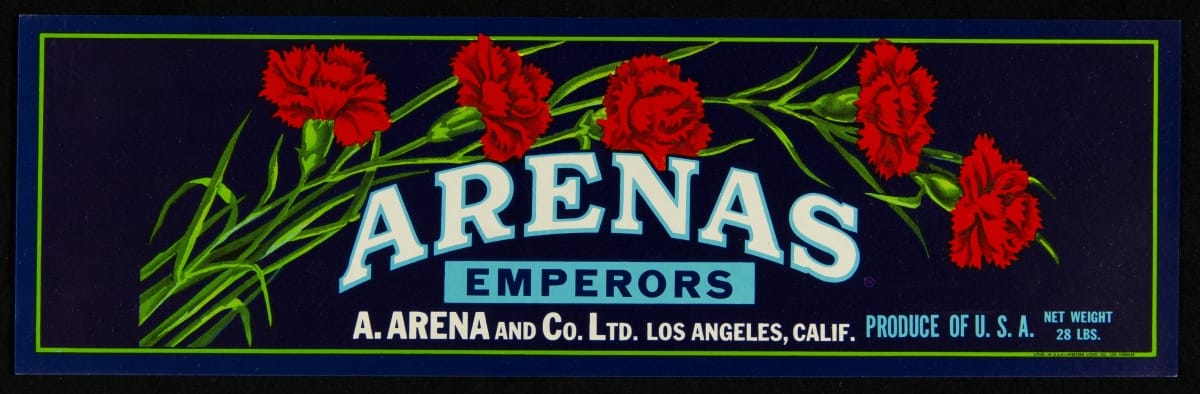
- Crate Label, "Arenas Brand Emperor Grapes," circa 1950 - In 1869, the transcontinental railroad opened eastern markets to the West Coast produce industry for the first time. As produce companies shipped crates of fruits and vegetables across the country, they needed a way to distinguish their goods from their competitors'. Colorful, eye-catching labels, like this one for Arenas Brand Emperor Grapes, were created to attract grocers purchasing goods from wholesale markets.
- circa 1950
- Collections - Artifact
Crate Label, "Arenas Brand Emperor Grapes," circa 1950
In 1869, the transcontinental railroad opened eastern markets to the West Coast produce industry for the first time. As produce companies shipped crates of fruits and vegetables across the country, they needed a way to distinguish their goods from their competitors'. Colorful, eye-catching labels, like this one for Arenas Brand Emperor Grapes, were created to attract grocers purchasing goods from wholesale markets.
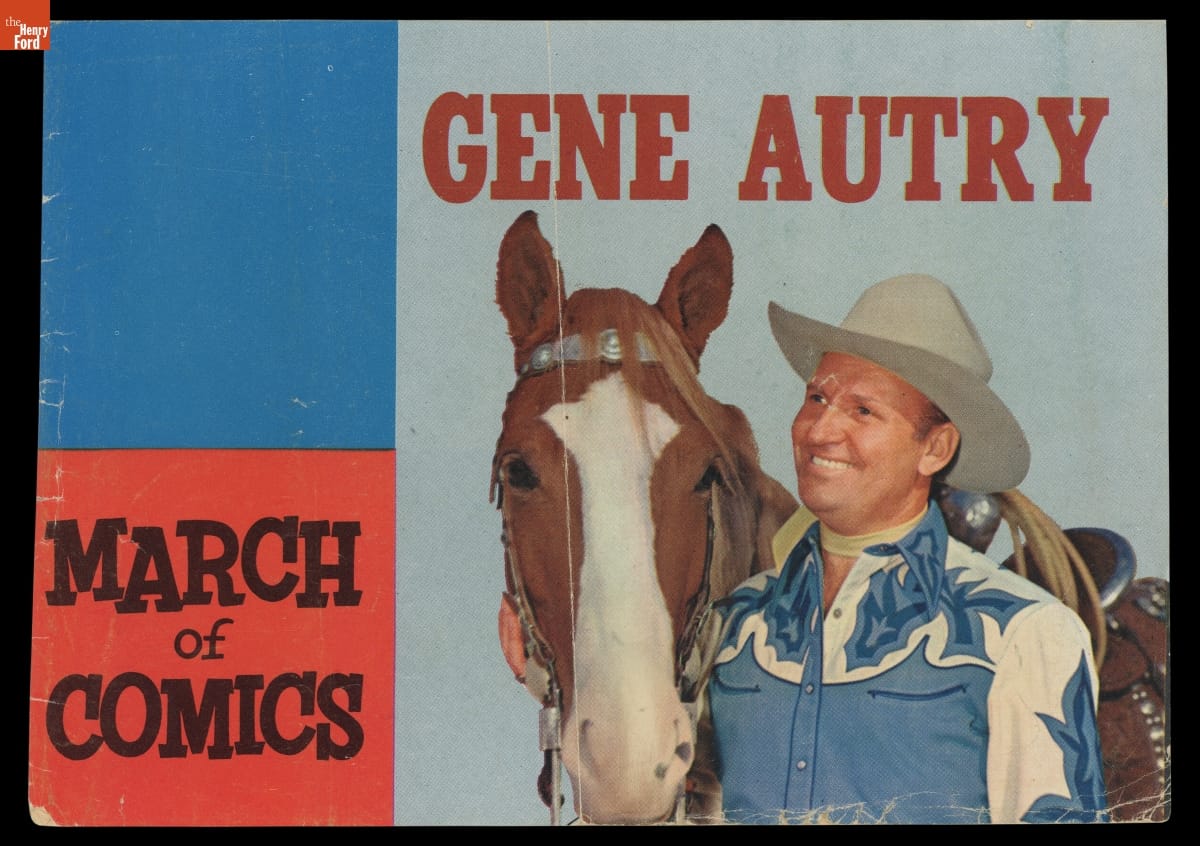
- "March of Comics" (Gene Autry) Comic Book, 1955 -
- 1955
- Collections - Artifact
"March of Comics" (Gene Autry) Comic Book, 1955
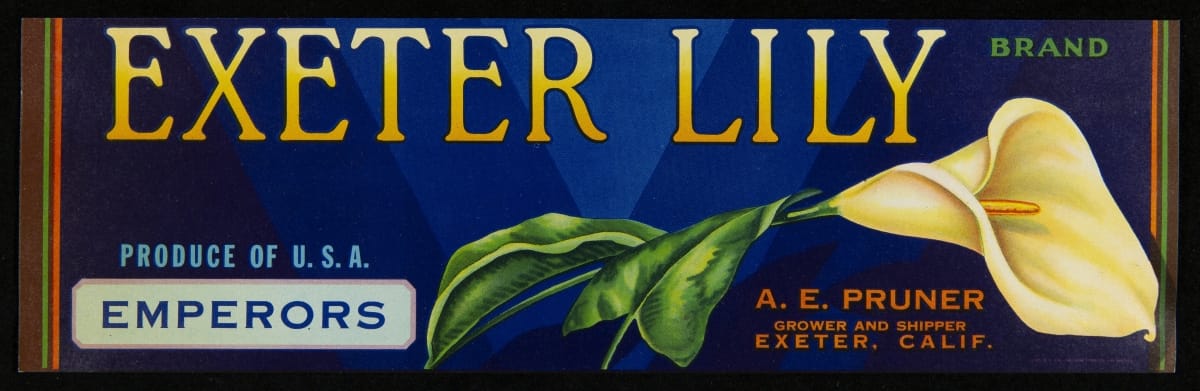
- Crate Label, "Exeter Lily Brand Emperor Grapes," 1940-1950 - In 1869, the transcontinental railroad opened eastern markets to the West Coast produce industry for the first time. As produce companies shipped crates of fruits and vegetables across the country, they needed a way to distinguish their goods from their competitors'. Colorful, eye-catching labels, like this one for Exeter Lily Brand Emperor Grapes, were created to attract grocers purchasing goods from wholesale markets.
- 1940-1950
- Collections - Artifact
Crate Label, "Exeter Lily Brand Emperor Grapes," 1940-1950
In 1869, the transcontinental railroad opened eastern markets to the West Coast produce industry for the first time. As produce companies shipped crates of fruits and vegetables across the country, they needed a way to distinguish their goods from their competitors'. Colorful, eye-catching labels, like this one for Exeter Lily Brand Emperor Grapes, were created to attract grocers purchasing goods from wholesale markets.
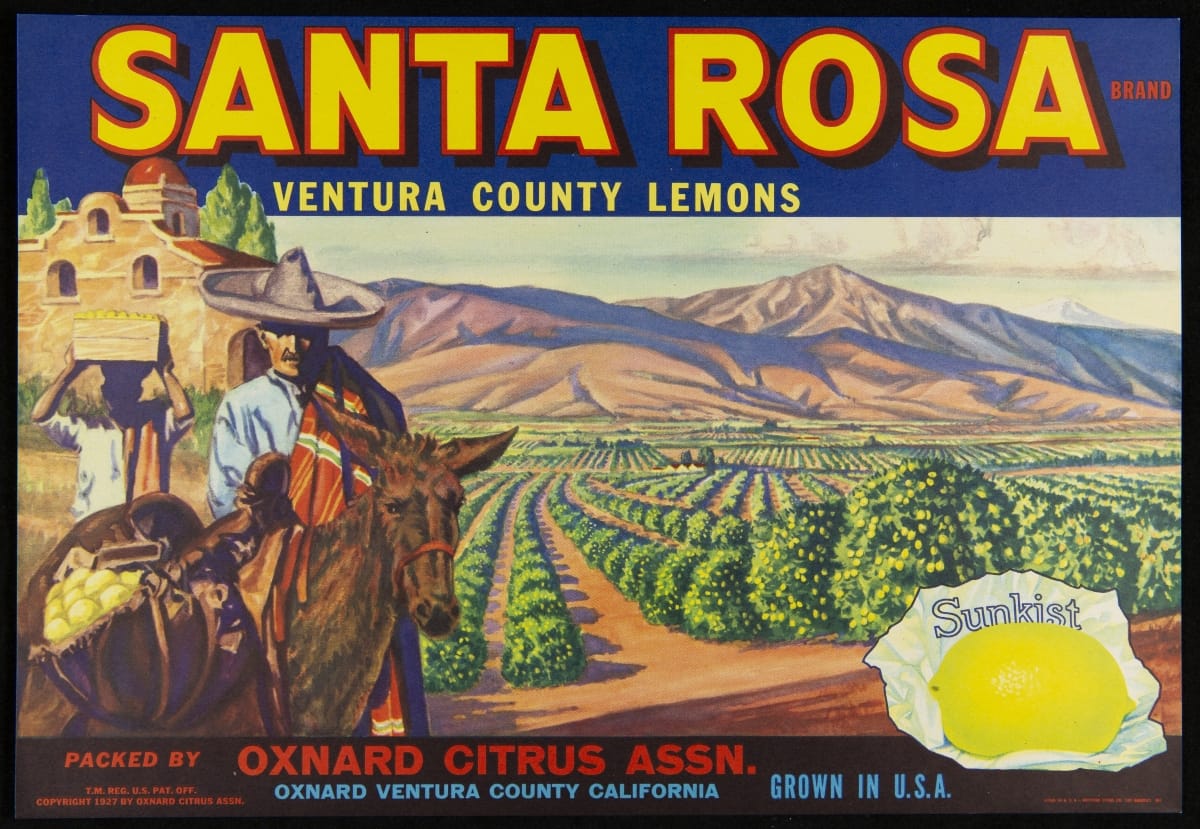
- Crate Label, "Santa Rosa Brand Ventura County Lemons," 1927 - As produce companies shipped crates of fruits and vegetables across the country, they needed a way to distinguish their goods from their competitors'. Colorful, eye-catching labels were created to attract the attention of grocers purchasing goods from wholesale markets. The Sunkist Growers cooperative featured an orange or lemon on the corner of its labels-- a logo that consumers came to associate with high-quality citrus.
- 1927
- Collections - Artifact
Crate Label, "Santa Rosa Brand Ventura County Lemons," 1927
As produce companies shipped crates of fruits and vegetables across the country, they needed a way to distinguish their goods from their competitors'. Colorful, eye-catching labels were created to attract the attention of grocers purchasing goods from wholesale markets. The Sunkist Growers cooperative featured an orange or lemon on the corner of its labels-- a logo that consumers came to associate with high-quality citrus.
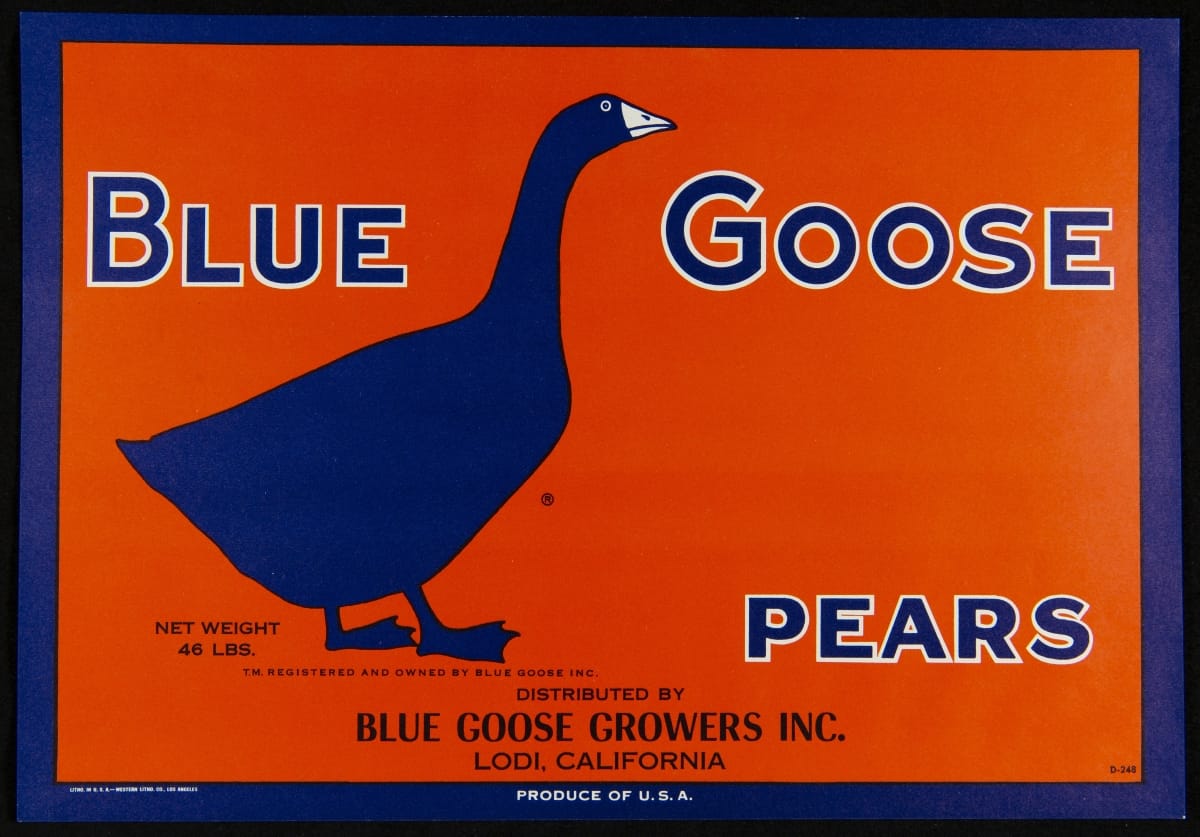
- Crate Label, "Blue Goose Brand Pears," 1940-1950 - In 1869, the transcontinental railroad opened eastern markets to the West Coast produce industry for the first time. As produce companies shipped crates of fruits and vegetables across the country, they needed a way to distinguish their goods from their competitors'. Colorful, eye-catching labels, like this one for Blue Goose Brand Pears, were created to attract grocers purchasing goods from wholesale markets.
- 1940-1950
- Collections - Artifact
Crate Label, "Blue Goose Brand Pears," 1940-1950
In 1869, the transcontinental railroad opened eastern markets to the West Coast produce industry for the first time. As produce companies shipped crates of fruits and vegetables across the country, they needed a way to distinguish their goods from their competitors'. Colorful, eye-catching labels, like this one for Blue Goose Brand Pears, were created to attract grocers purchasing goods from wholesale markets.
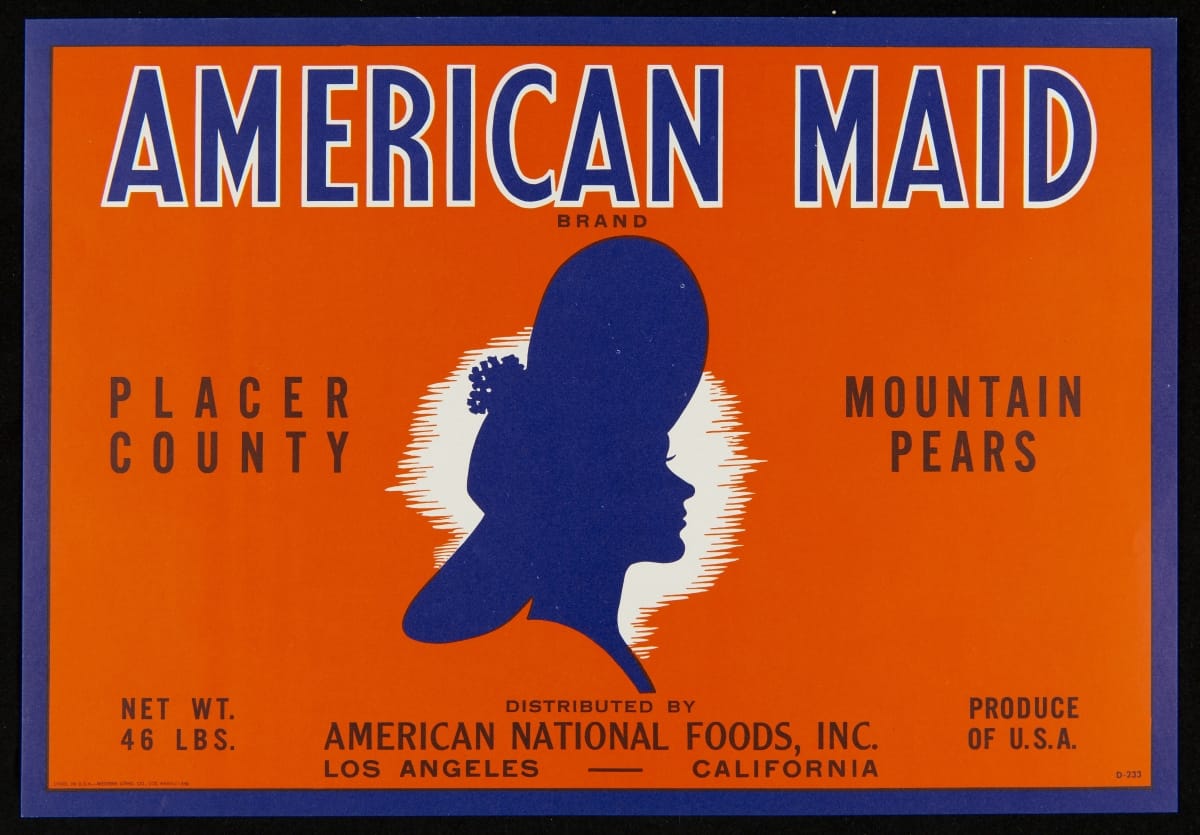
- Crate Label, "American Maid Brand Placer County Mountain Pears," circa 1950 - In 1869, the transcontinental railroad opened eastern markets to the West Coast produce industry for the first time. As produce companies shipped crates of fruits and vegetables across the country, they needed a way to distinguish their goods from their competitors'. Colorful, eye-catching labels, like this one for American Maid Brand Placer County Mountain Pears, were created to attract grocers purchasing goods from wholesale markets.
- circa 1950
- Collections - Artifact
Crate Label, "American Maid Brand Placer County Mountain Pears," circa 1950
In 1869, the transcontinental railroad opened eastern markets to the West Coast produce industry for the first time. As produce companies shipped crates of fruits and vegetables across the country, they needed a way to distinguish their goods from their competitors'. Colorful, eye-catching labels, like this one for American Maid Brand Placer County Mountain Pears, were created to attract grocers purchasing goods from wholesale markets.
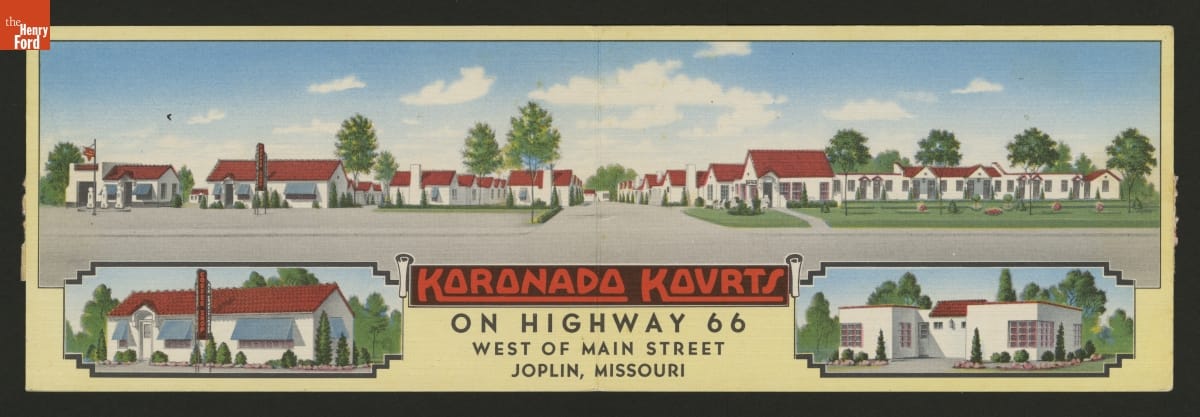
- Koronado Kourts Motel on Route 66, Joplin, Missouri, circa 1940 - Motorists traveling on U.S. Highway 66 around 1940 could stop at the Koronado Kourts in Joplin, Missouri. This foldout postcard depicts the clean and well laid out buildings of this tourist court. Owners confidently claimed that their establishment was "The Finest and Most Up-to-Date Tourist Kourts in the Entire Southwest on U.S. 66 Highway."
- circa 1940
- Collections - Artifact
Koronado Kourts Motel on Route 66, Joplin, Missouri, circa 1940
Motorists traveling on U.S. Highway 66 around 1940 could stop at the Koronado Kourts in Joplin, Missouri. This foldout postcard depicts the clean and well laid out buildings of this tourist court. Owners confidently claimed that their establishment was "The Finest and Most Up-to-Date Tourist Kourts in the Entire Southwest on U.S. 66 Highway."