
Search
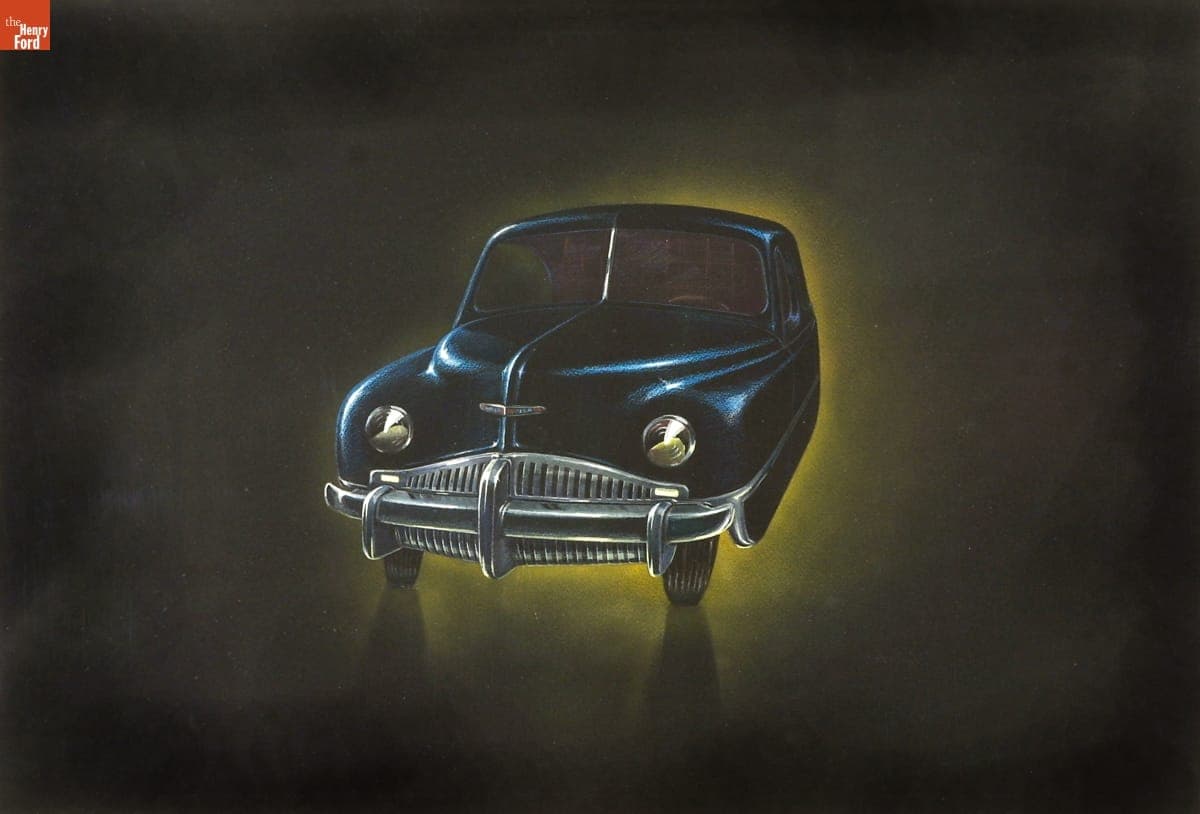
- Willys Automobile Concept, Front View, November 13, 1944 - A pioneer of industrial design, Walter Dorwin Teague is best remembered for his work for the Eastman Kodak Company and the 1933 Chicago and 1939 New York World's Fairs. At both fairs, he designed buildings for Ford Motor Company. Teague's studio produced this automobile concept drawing for a Ford rival: Willys-Overland of Toledo, Ohio.
- November 13, 1944
- Collections - Artifact
Willys Automobile Concept, Front View, November 13, 1944
A pioneer of industrial design, Walter Dorwin Teague is best remembered for his work for the Eastman Kodak Company and the 1933 Chicago and 1939 New York World's Fairs. At both fairs, he designed buildings for Ford Motor Company. Teague's studio produced this automobile concept drawing for a Ford rival: Willys-Overland of Toledo, Ohio.
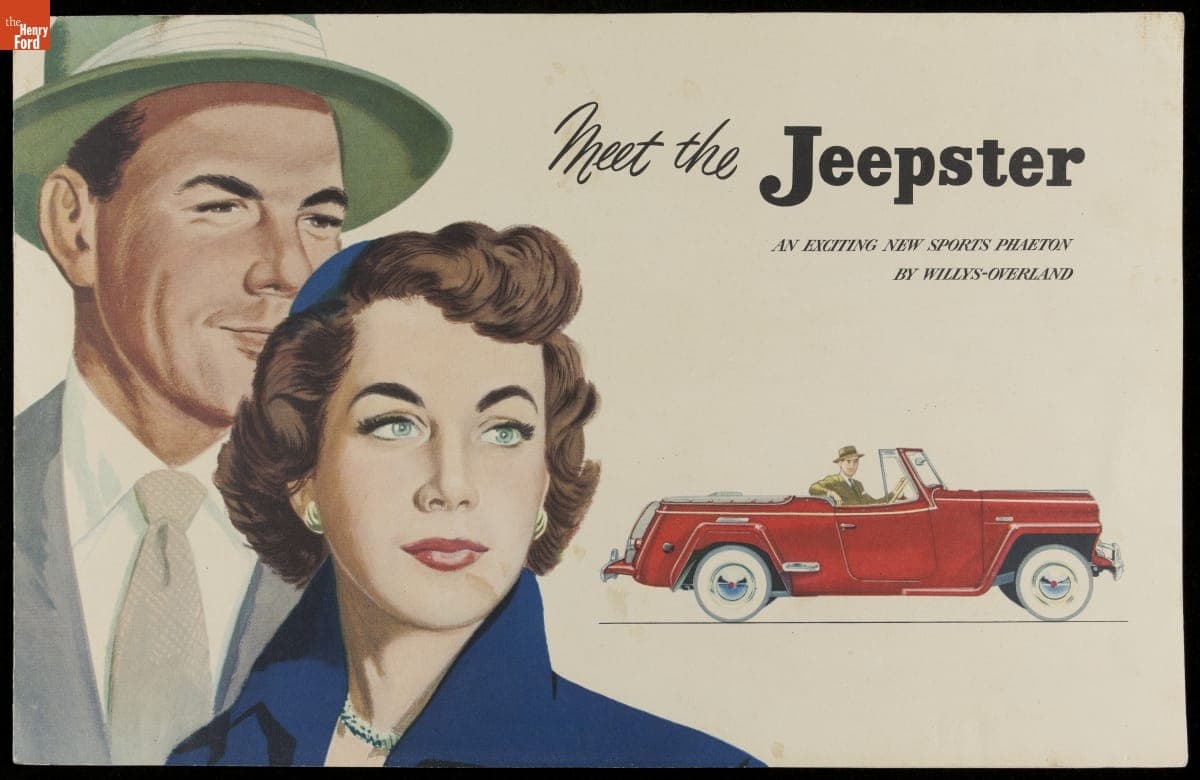
- "Meet the Jeepster" Sales Brochure for 1948 Willys-Overland Car Company, 1948 - Willys-Overland built more than half of the 650,000 jeeps manufactured for the Allies during World War II. Afterward, Willys sold civilian versions. The Jeepster, produced for the 1948-1951 model years, was a somewhat more stylish and refined version of the basic jeep. Willys marketed the two-wheel-drive Jeepster as a "sports phaeton," ideal for country drives but easy to maneuver through city traffic.
- 1948
- Collections - Artifact
"Meet the Jeepster" Sales Brochure for 1948 Willys-Overland Car Company, 1948
Willys-Overland built more than half of the 650,000 jeeps manufactured for the Allies during World War II. Afterward, Willys sold civilian versions. The Jeepster, produced for the 1948-1951 model years, was a somewhat more stylish and refined version of the basic jeep. Willys marketed the two-wheel-drive Jeepster as a "sports phaeton," ideal for country drives but easy to maneuver through city traffic.
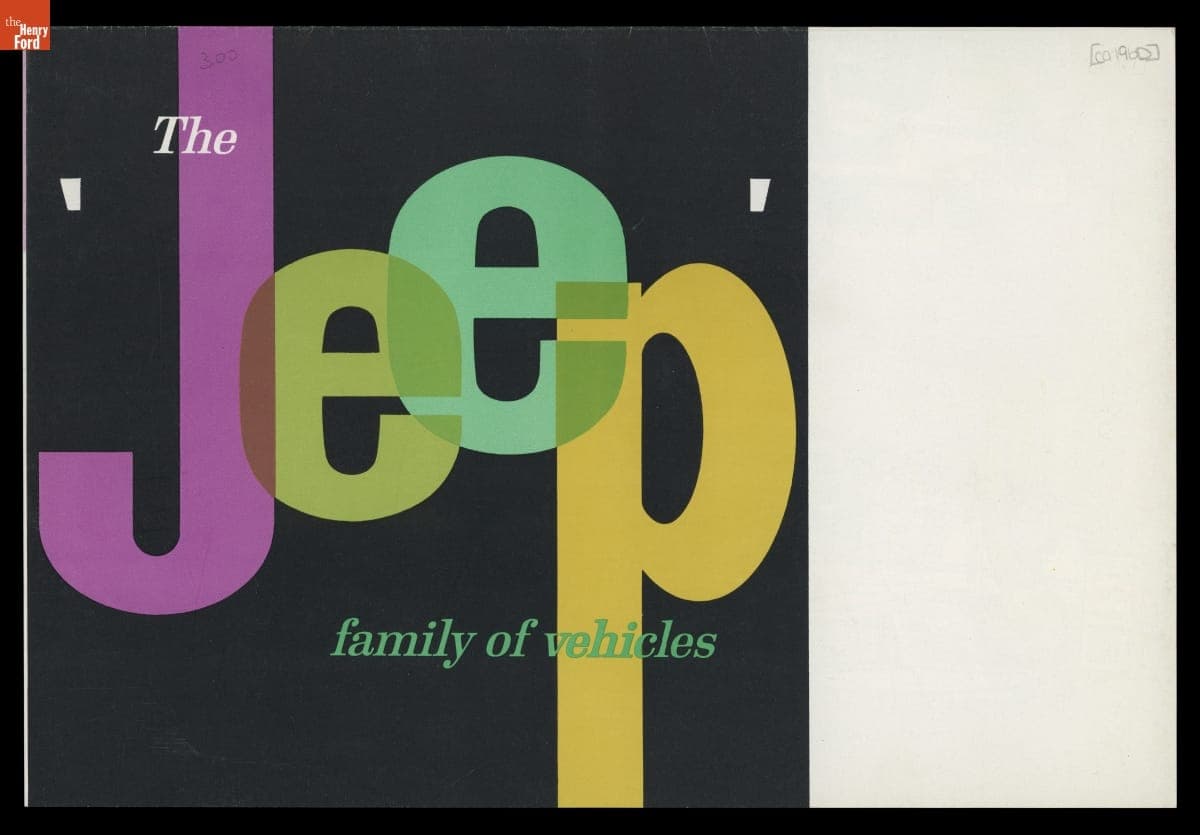
- "The Jeep Family of Vehicles," 1961 - Kaiser Motors purchased Willys-Overland, including its successful Jeep brand, in 1953. Kaiser ended passenger car production to focus on Jeep runabout, truck, and van models. Under Kaiser's ownership, Jeep introduced important models like the CJ-5, the Wagoneer and luxury Super Wagoneer, the Gladiator pickup, and the Jeepster and Jeepster Commando. American Motors purchased Kaiser Jeep in 1970.
- 1961
- Collections - Artifact
"The Jeep Family of Vehicles," 1961
Kaiser Motors purchased Willys-Overland, including its successful Jeep brand, in 1953. Kaiser ended passenger car production to focus on Jeep runabout, truck, and van models. Under Kaiser's ownership, Jeep introduced important models like the CJ-5, the Wagoneer and luxury Super Wagoneer, the Gladiator pickup, and the Jeepster and Jeepster Commando. American Motors purchased Kaiser Jeep in 1970.
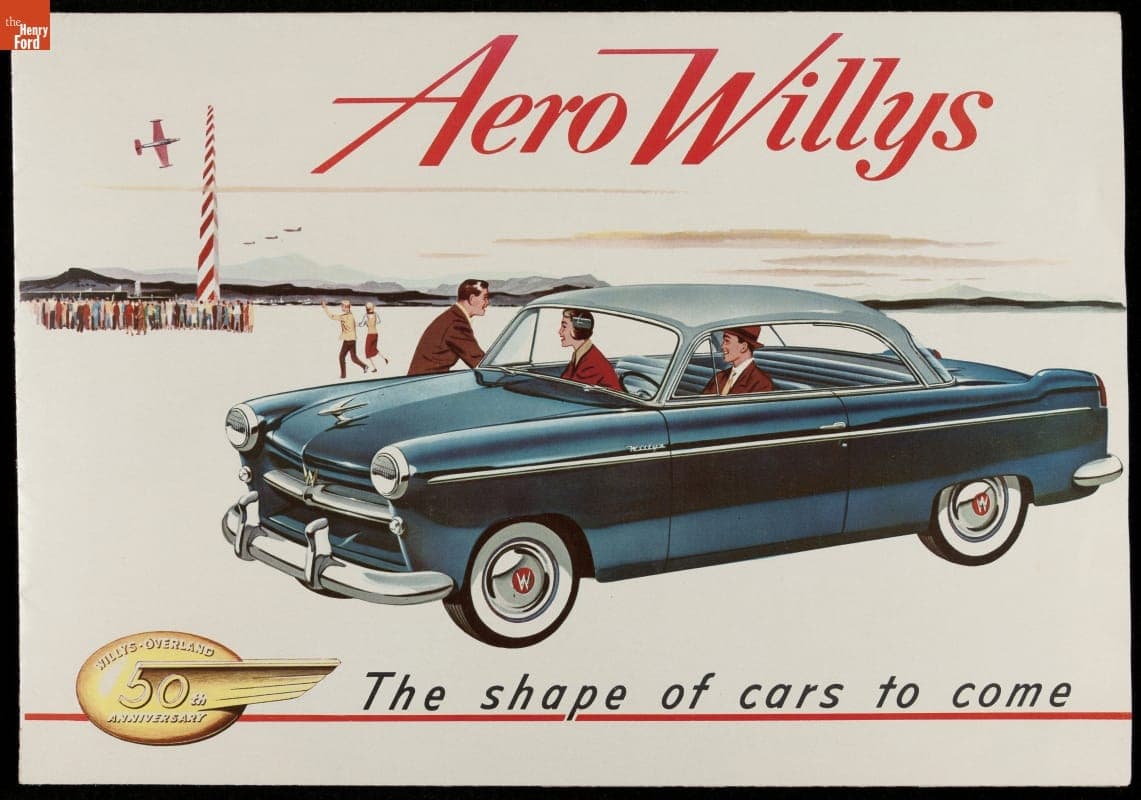
- "The Shape of Cars to Come" Sales Brochure for 1953 Aero-Willys - Willys-Overland introduced its Willys Aero line of cars for 1952. Designed by Phil Wright and engineered by Clyde Paton, the compact Aero featured unibody construction. Over its three-year run, Aero was variously available in Wing, Lark, Ace, Eagle, and Falcon models. Kaiser-Willys dropped Aero from the U.S. market after 1954, though versions were built in Brazil until 1971.
- 1953
- Collections - Artifact
"The Shape of Cars to Come" Sales Brochure for 1953 Aero-Willys
Willys-Overland introduced its Willys Aero line of cars for 1952. Designed by Phil Wright and engineered by Clyde Paton, the compact Aero featured unibody construction. Over its three-year run, Aero was variously available in Wing, Lark, Ace, Eagle, and Falcon models. Kaiser-Willys dropped Aero from the U.S. market after 1954, though versions were built in Brazil until 1971.
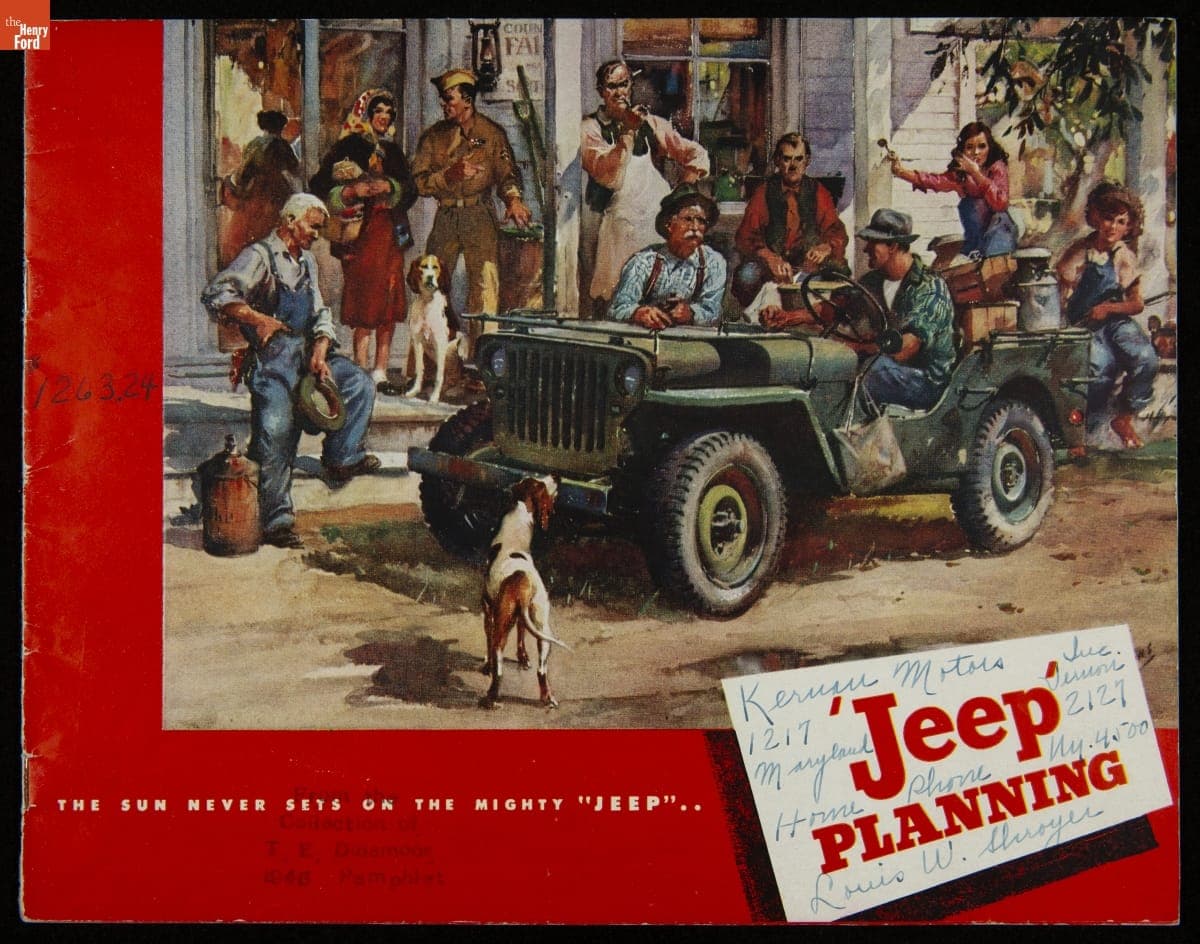
- "The Sun Never Sets on the Mighty 'Jeep'... Jeep Planning" Trade Catalog, 1946 - Willys-Overland built more than half of the 650,000 jeeps manufactured for the Allies during World War II. Afterward, Willys sold civilian versions. The company marketed its civilian Jeep as a functional, versatile vehicle suitable for many different jobs -- from pulling farm equipment, to plowing snow, to simply running errands around town.
- 1946
- Collections - Artifact
"The Sun Never Sets on the Mighty 'Jeep'... Jeep Planning" Trade Catalog, 1946
Willys-Overland built more than half of the 650,000 jeeps manufactured for the Allies during World War II. Afterward, Willys sold civilian versions. The company marketed its civilian Jeep as a functional, versatile vehicle suitable for many different jobs -- from pulling farm equipment, to plowing snow, to simply running errands around town.
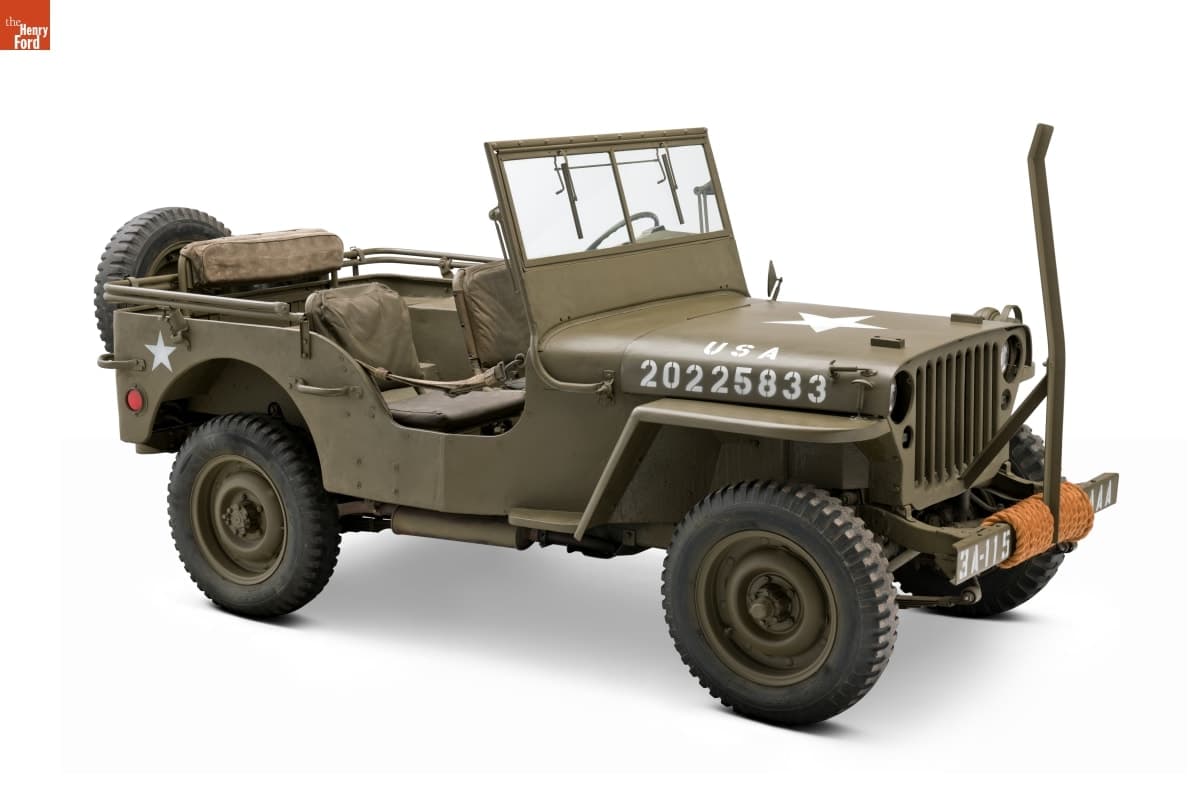
- 1943 Willys-Overland Jeep Runabout - World War II produced one of America's all-time favorite vehicles -- the jeep. Soldiers loved the homely little car because it could go anywhere and do almost anything. They used it to tow artillery, carry the wounded, and deliver ammunition. When fitted with a machine gun, it became a weapon itself. The jeep came to symbolize American ingenuity and productivity to allies and enemies alike.
- 1943
- Collections - Artifact
1943 Willys-Overland Jeep Runabout
World War II produced one of America's all-time favorite vehicles -- the jeep. Soldiers loved the homely little car because it could go anywhere and do almost anything. They used it to tow artillery, carry the wounded, and deliver ammunition. When fitted with a machine gun, it became a weapon itself. The jeep came to symbolize American ingenuity and productivity to allies and enemies alike.
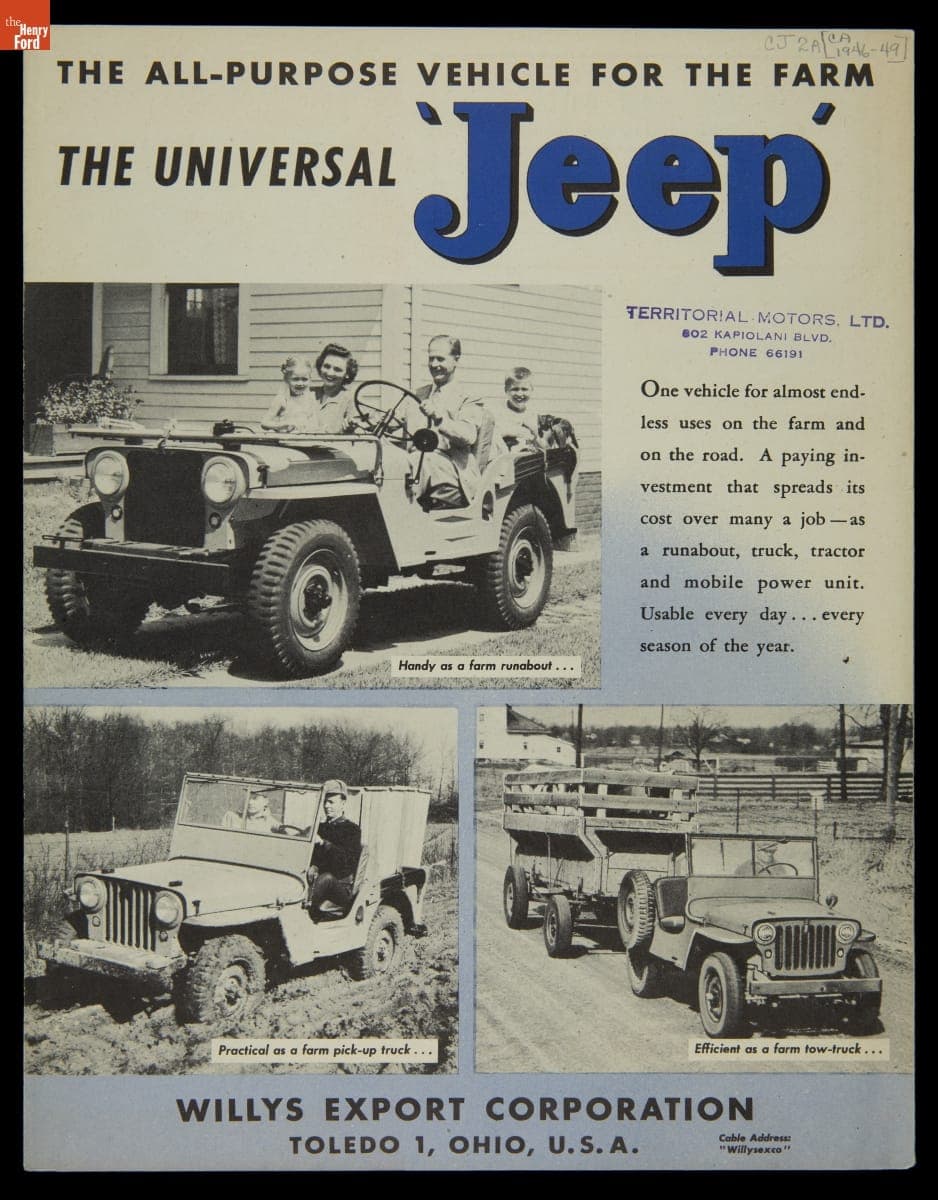
- "The All-Purpose Vehicle for the Farm: The Universal Jeep," 1946-1949 - Both Willys-Overland and subsequent brand owner Kaiser Motors marketed the civilian Jeep runabout with the word "Universal" -- both as a slogan and as a model name. It was a fitting description for a functional, versatile vehicle suitable for many different jobs -- from pulling farm equipment, to plowing snow, to simply running errands around town.
- 1946-1949
- Collections - Artifact
"The All-Purpose Vehicle for the Farm: The Universal Jeep," 1946-1949
Both Willys-Overland and subsequent brand owner Kaiser Motors marketed the civilian Jeep runabout with the word "Universal" -- both as a slogan and as a model name. It was a fitting description for a functional, versatile vehicle suitable for many different jobs -- from pulling farm equipment, to plowing snow, to simply running errands around town.
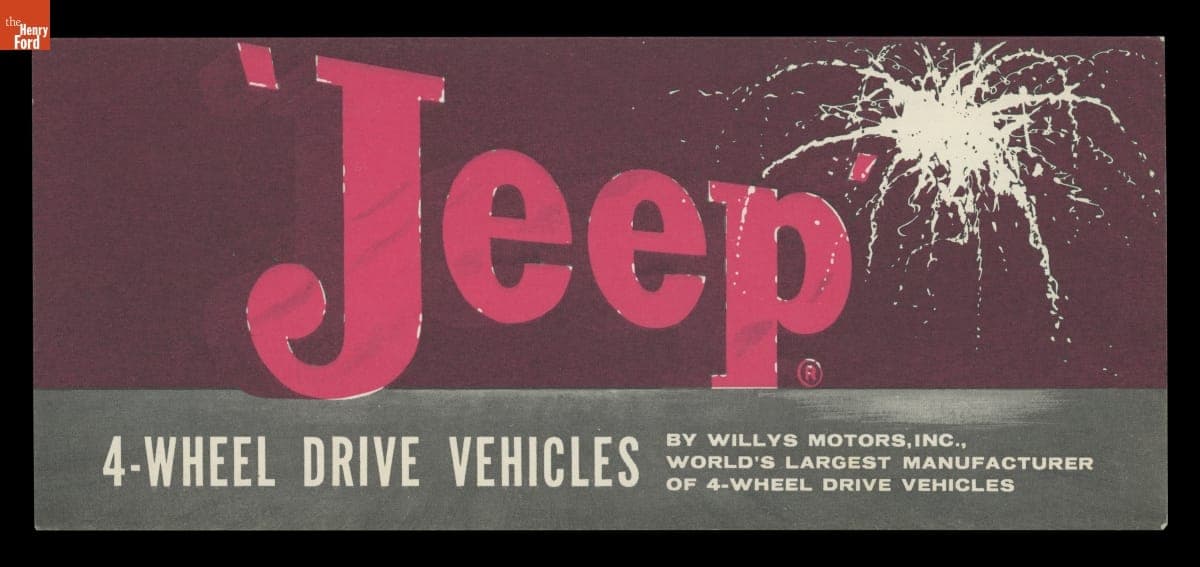
- "Jeep 4-Wheel Drive Vehicles," 1957-1961 - Kaiser Motors purchased Willys-Overland, including its successful Jeep brand, in 1953. Kaiser ended passenger car production to focus on Jeep runabout, truck, and van models. Under Kaiser's ownership, Jeep introduced important models like the CJ-5, the Wagoneer and luxury Super Wagoneer, the Gladiator pickup, and the Jeepster and Jeepster Commando. American Motors purchased Kaiser Jeep in 1970.
- 1957-1961
- Collections - Artifact
"Jeep 4-Wheel Drive Vehicles," 1957-1961
Kaiser Motors purchased Willys-Overland, including its successful Jeep brand, in 1953. Kaiser ended passenger car production to focus on Jeep runabout, truck, and van models. Under Kaiser's ownership, Jeep introduced important models like the CJ-5, the Wagoneer and luxury Super Wagoneer, the Gladiator pickup, and the Jeepster and Jeepster Commando. American Motors purchased Kaiser Jeep in 1970.
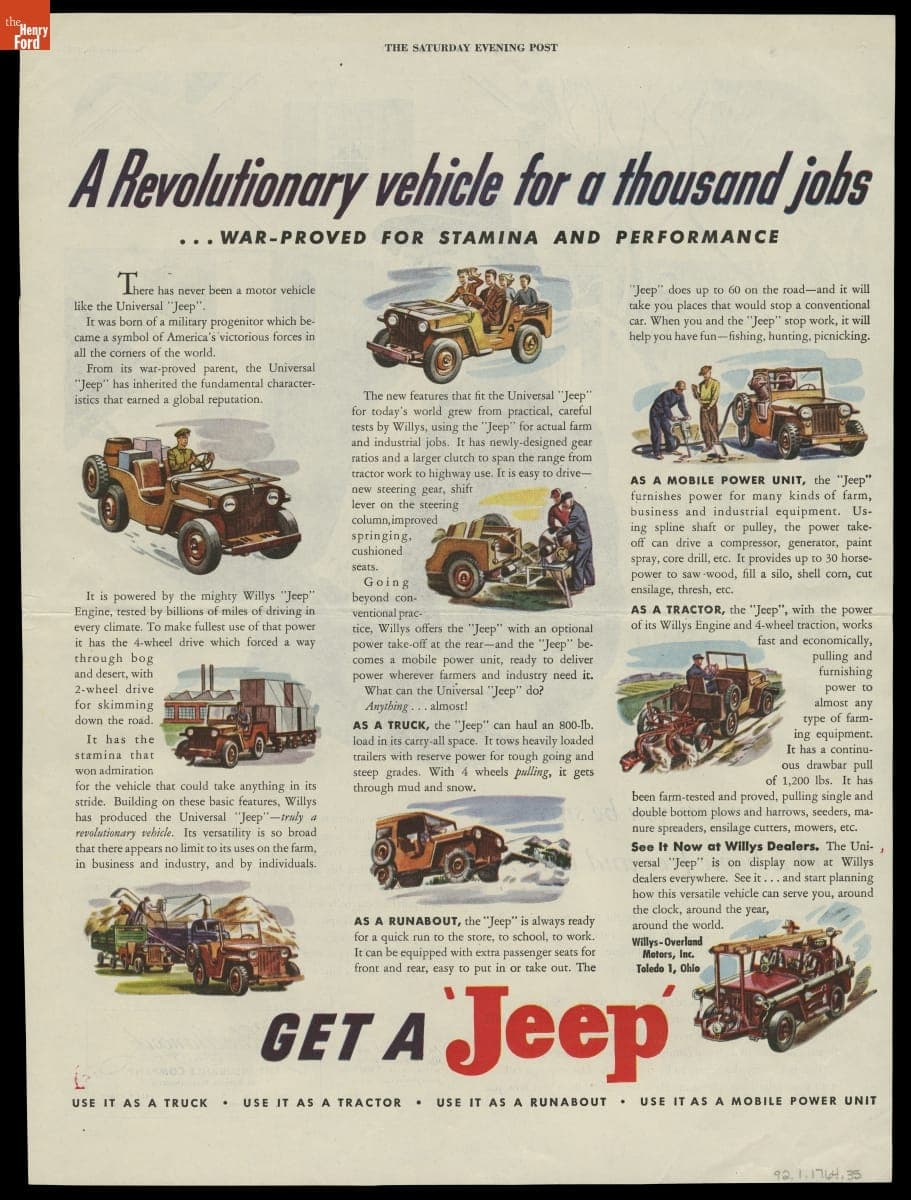
- "A Revolutionary Vehicle for a Thousand Jobs," Universal Jeep Advertisement, 1945 - Willys-Overland built more than half of the 650,000 jeeps manufactured for the Allies during World War II. Afterward, Willys sold civilian versions. The company marketed its civilian Jeep as a functional, versatile vehicle suitable for many different jobs -- from pulling farm equipment, to plowing snow, to simply running errands around town.
- November 10, 1945
- Collections - Artifact
"A Revolutionary Vehicle for a Thousand Jobs," Universal Jeep Advertisement, 1945
Willys-Overland built more than half of the 650,000 jeeps manufactured for the Allies during World War II. Afterward, Willys sold civilian versions. The company marketed its civilian Jeep as a functional, versatile vehicle suitable for many different jobs -- from pulling farm equipment, to plowing snow, to simply running errands around town.
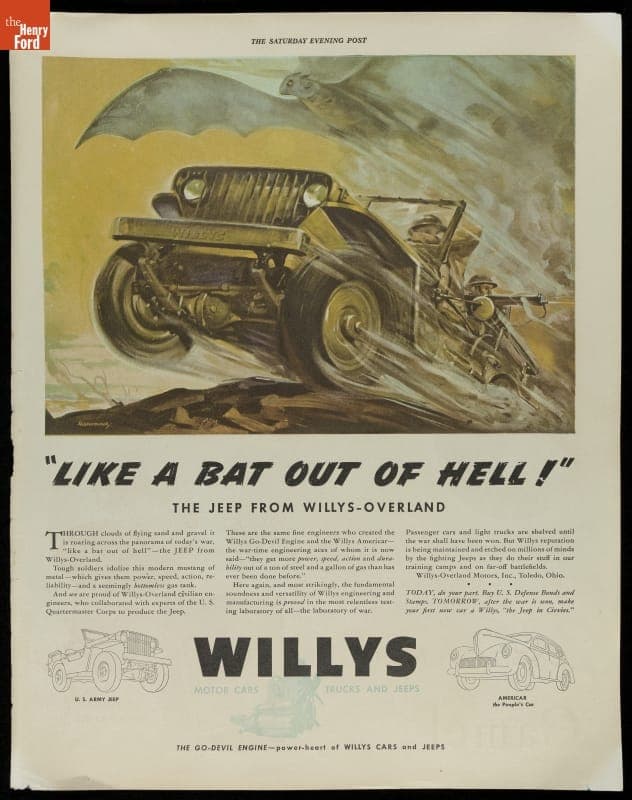
- "Like a Bat Out of Hell!, Jeep from Willys-Overland," 1942 - Few things are as iconic of World War II as the jeep. American Bantam created the design in response to a call from the U.S. Army, but Bantam couldn't produce it in the quantities required. Willys-Overland and Ford built the majority of the 650,000 jeeps manufactured for the war effort. Willys built Jeeps for the civilian market after the war.
- May 02, 1942
- Collections - Artifact
"Like a Bat Out of Hell!, Jeep from Willys-Overland," 1942
Few things are as iconic of World War II as the jeep. American Bantam created the design in response to a call from the U.S. Army, but Bantam couldn't produce it in the quantities required. Willys-Overland and Ford built the majority of the 650,000 jeeps manufactured for the war effort. Willys built Jeeps for the civilian market after the war.