
Search
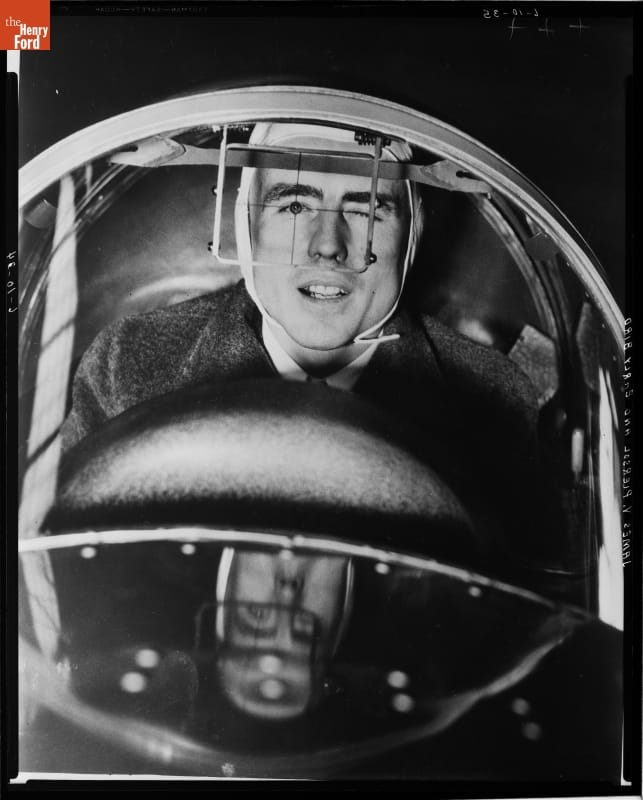
- Detroit News--Airplane--Lockheed Orion--James V. Piersol, William A. Kuenzel and Early Bird--Item1 - The <EM>Detroit News</EM> bought a new Lockheed Orion in 1934 to assist in its news-gathering efforts. The monoplane, christened "Early Bird", contained space for a reporter or radio operator, a compact radio broadcasting station and three cameras--one of which was located in a streamlined nacelle on the left wing. A viewfinder in the cockpit interior helped the pilot line up the wing-mounted camera.
- June 10, 1934
- Collections - Artifact
Detroit News--Airplane--Lockheed Orion--James V. Piersol, William A. Kuenzel and Early Bird--Item1
The Detroit News bought a new Lockheed Orion in 1934 to assist in its news-gathering efforts. The monoplane, christened "Early Bird", contained space for a reporter or radio operator, a compact radio broadcasting station and three cameras--one of which was located in a streamlined nacelle on the left wing. A viewfinder in the cockpit interior helped the pilot line up the wing-mounted camera.
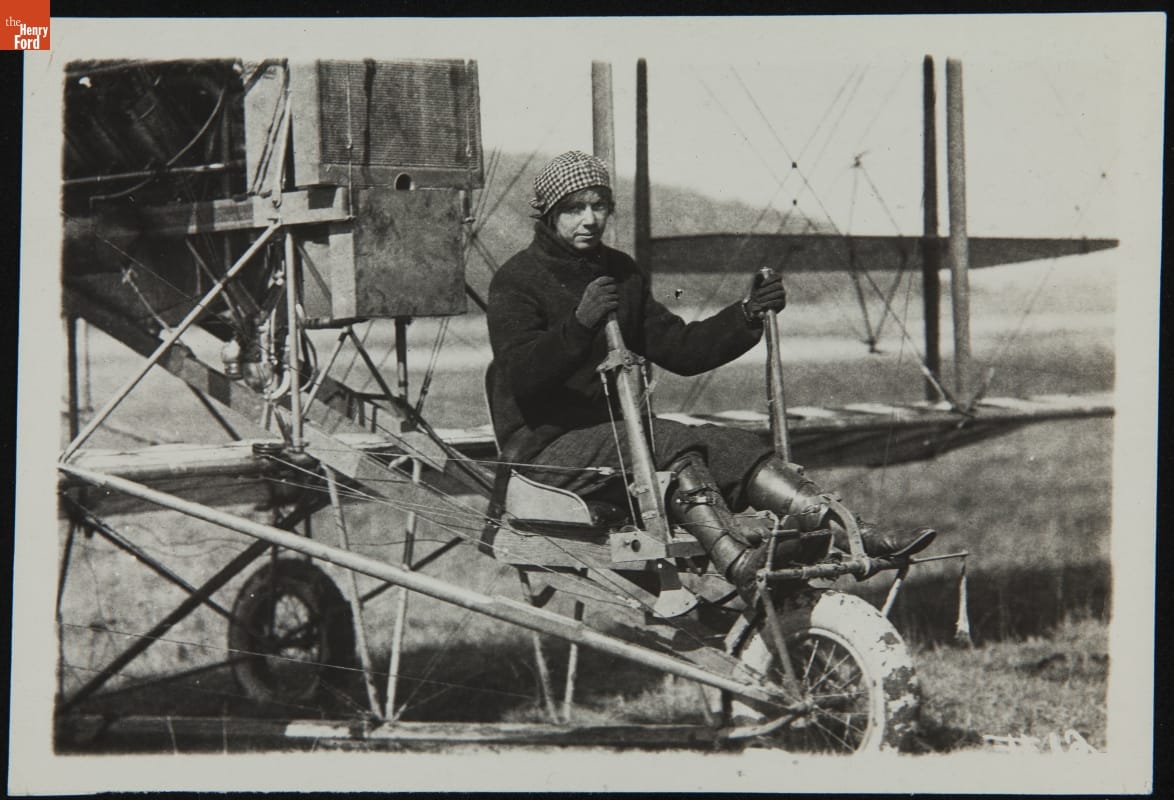
- Ruth Law in Curtiss Pusher Aircraft, circa 1915 - Ruth Law earned her pilot's license in 1912 and soon developed a taste for aerobatics and record breaking. In 1916 she flew 590 nonstop miles from Chicago to the state of New York. During World War I, Law argued unsuccessfully for women to fly in combat roles. Law continued to set records until she retired from flying in 1922.
- circa 1915
- Collections - Artifact
Ruth Law in Curtiss Pusher Aircraft, circa 1915
Ruth Law earned her pilot's license in 1912 and soon developed a taste for aerobatics and record breaking. In 1916 she flew 590 nonstop miles from Chicago to the state of New York. During World War I, Law argued unsuccessfully for women to fly in combat roles. Law continued to set records until she retired from flying in 1922.
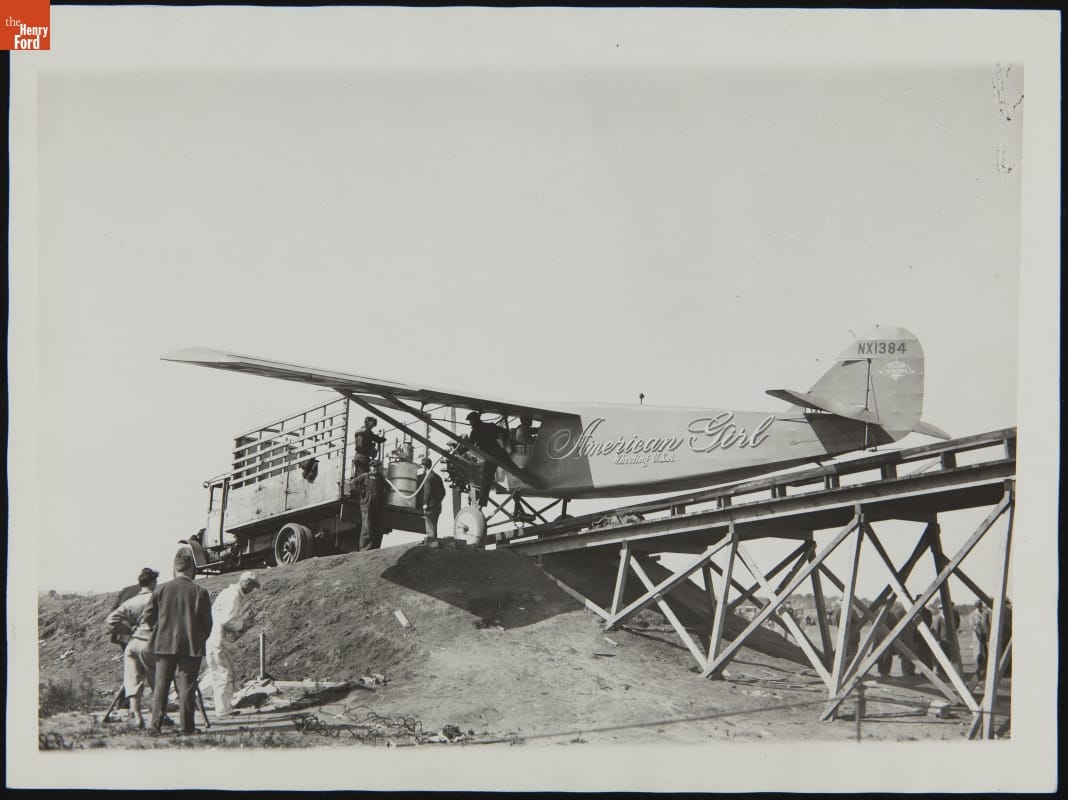
- Ruth Elder's Airplane, the "American Girl," Fueling up before Take-off, October 11, 1927 - Ruth Elder planned to be the first woman to fly across the Atlantic. On October 11, 1927, Elder and co-pilot George Haldeman took off in their Stinson Detroiter <EM>American Girl</EM>. An oil leak forced them to ditch in the ocean some 360 miles short of land. Still, the 2,623 miles Elder covered set a new distance record for a female pilot.
- October 11, 1927
- Collections - Artifact
Ruth Elder's Airplane, the "American Girl," Fueling up before Take-off, October 11, 1927
Ruth Elder planned to be the first woman to fly across the Atlantic. On October 11, 1927, Elder and co-pilot George Haldeman took off in their Stinson Detroiter American Girl. An oil leak forced them to ditch in the ocean some 360 miles short of land. Still, the 2,623 miles Elder covered set a new distance record for a female pilot.
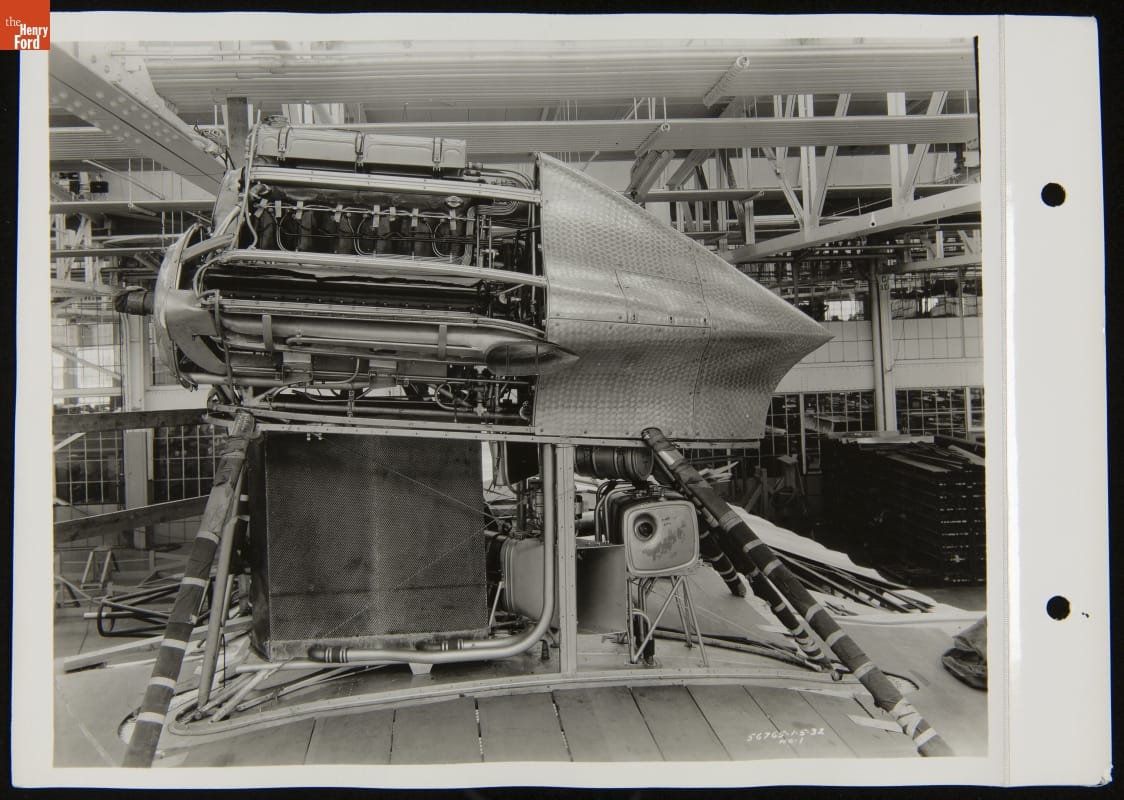
- Construction of Ford Tri-Motor 14-AT Showing Center Hispano Suiza Engine, January 1932 - Ford Motor Company's Tri-Motor, built from 1926-1933, flew in many early American airline fleets. The all-metal airplane was rugged, dependable, and equally adaptable to passenger and freight service. Tri-Motors were built with some of the same mass production techniques used in Ford's automobile plants. This version, the 14-AT, featured three Hispano-Suiza Engines. This photograph reveals the interior of the central engine.
- January 05, 1932
- Collections - Artifact
Construction of Ford Tri-Motor 14-AT Showing Center Hispano Suiza Engine, January 1932
Ford Motor Company's Tri-Motor, built from 1926-1933, flew in many early American airline fleets. The all-metal airplane was rugged, dependable, and equally adaptable to passenger and freight service. Tri-Motors were built with some of the same mass production techniques used in Ford's automobile plants. This version, the 14-AT, featured three Hispano-Suiza Engines. This photograph reveals the interior of the central engine.
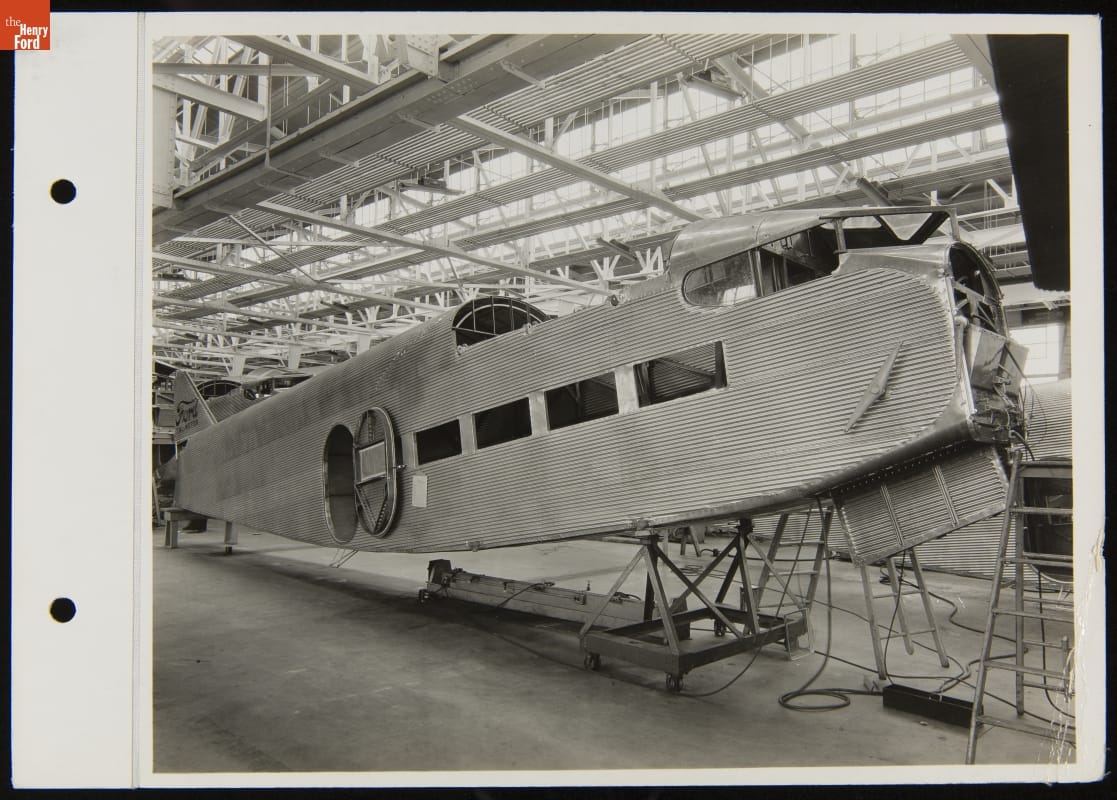
- Ford Tri-Motor Airplane Fuselage Being Constructed at the Stout Factory, Dearborn, Michigan, April 1929 - Ford Motor Company's Tri-Motor, built from 1926-1933, flew in many early American airline fleets. The all-metal airplane was rugged, dependable, and equally adaptable to passenger and freight service. Tri-Motors were built with some of the same mass production techniques used in Ford's automobile plants. The fuselage, or the main body of the airplane, is constructed in this photograph.
- April 30, 1929
- Collections - Artifact
Ford Tri-Motor Airplane Fuselage Being Constructed at the Stout Factory, Dearborn, Michigan, April 1929
Ford Motor Company's Tri-Motor, built from 1926-1933, flew in many early American airline fleets. The all-metal airplane was rugged, dependable, and equally adaptable to passenger and freight service. Tri-Motors were built with some of the same mass production techniques used in Ford's automobile plants. The fuselage, or the main body of the airplane, is constructed in this photograph.
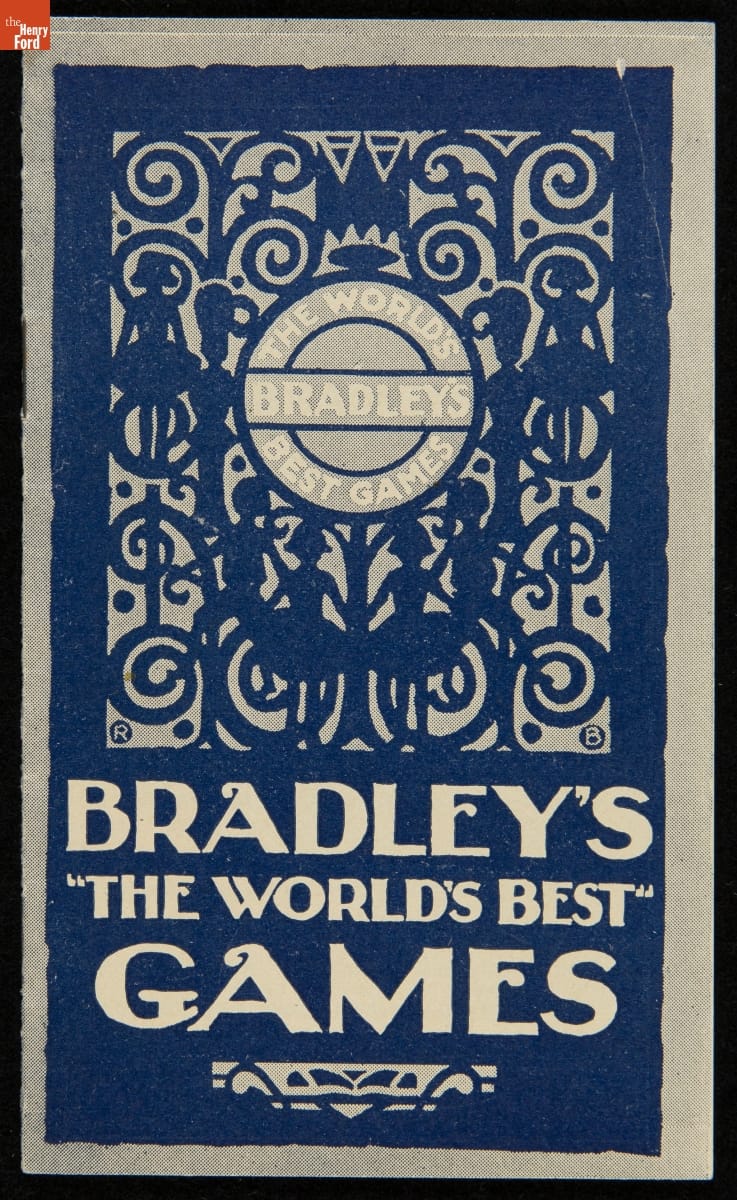
- Milton Bradley Company Trade Catalog, "Bradley's The World's Best Games," 1919-1920 - Milton Bradley, a Springfield, Massachusetts, lithographer, published his first board game in 1860. It was a hit, and Bradley soon became a leader in the growing American game business. By his death in 1911, Bradley's company was one of the nation's best known and most prolific game and toy manufacturers. Milton Bradley products remained popular even after the company's 1984 acquisition by Hasbro, Inc.
- 1919-1920
- Collections - Artifact
Milton Bradley Company Trade Catalog, "Bradley's The World's Best Games," 1919-1920
Milton Bradley, a Springfield, Massachusetts, lithographer, published his first board game in 1860. It was a hit, and Bradley soon became a leader in the growing American game business. By his death in 1911, Bradley's company was one of the nation's best known and most prolific game and toy manufacturers. Milton Bradley products remained popular even after the company's 1984 acquisition by Hasbro, Inc.
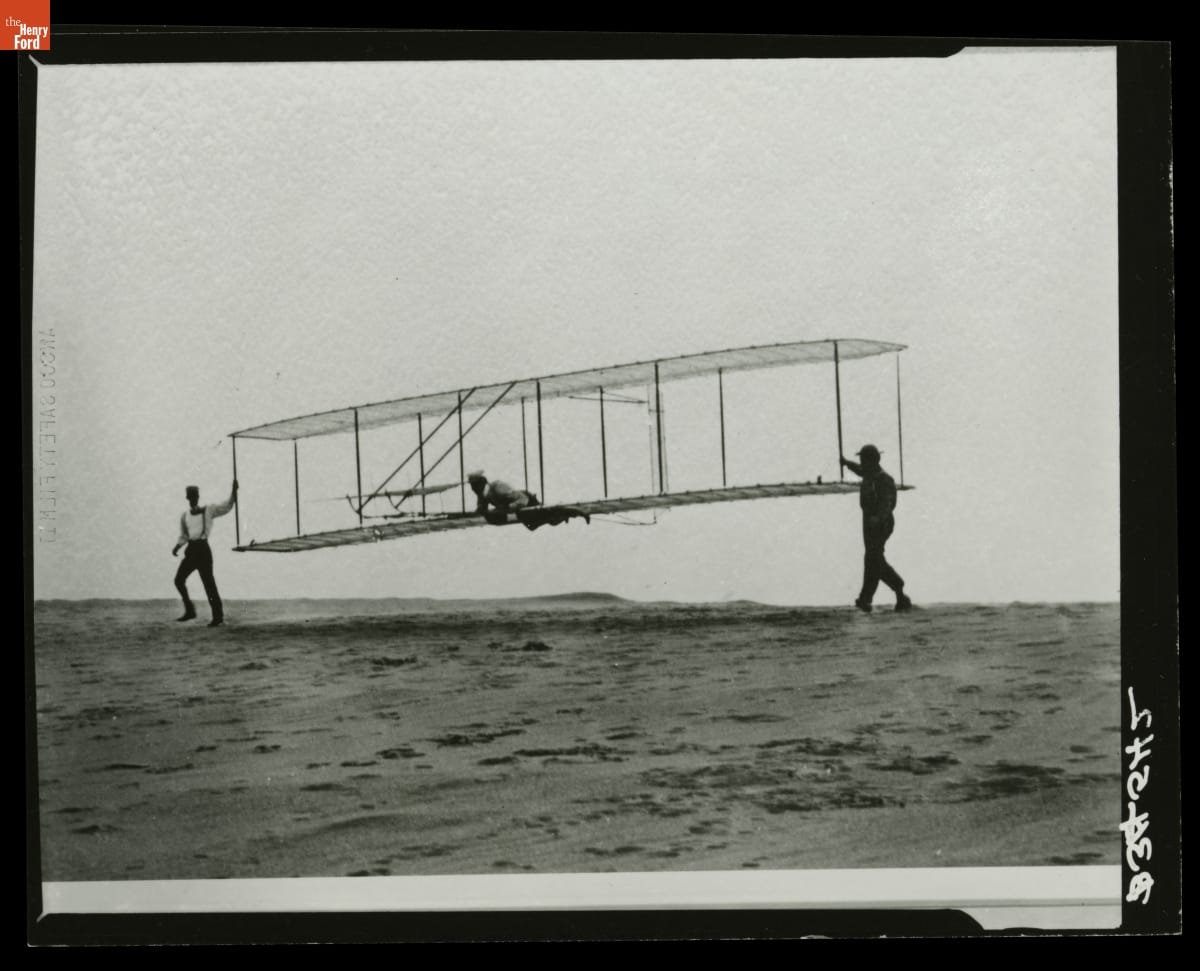
- Launching the 1902 Glider with Orville Wright Piloting, Kill Devil Hills, North Carolina - The Wright brothers' 1902 glider was their third aircraft tested at Kill Devil Hills in as many years. It was also the first built with aerodynamic calculations based on the Wrights' own wind tunnel tests. The improvements in performance were stunning. The brothers made more than 700 glides in 1902. Many were over 500 feet long, and some exceeded 600 feet.
- October 01, 1902
- Collections - Artifact
Launching the 1902 Glider with Orville Wright Piloting, Kill Devil Hills, North Carolina
The Wright brothers' 1902 glider was their third aircraft tested at Kill Devil Hills in as many years. It was also the first built with aerodynamic calculations based on the Wrights' own wind tunnel tests. The improvements in performance were stunning. The brothers made more than 700 glides in 1902. Many were over 500 feet long, and some exceeded 600 feet.
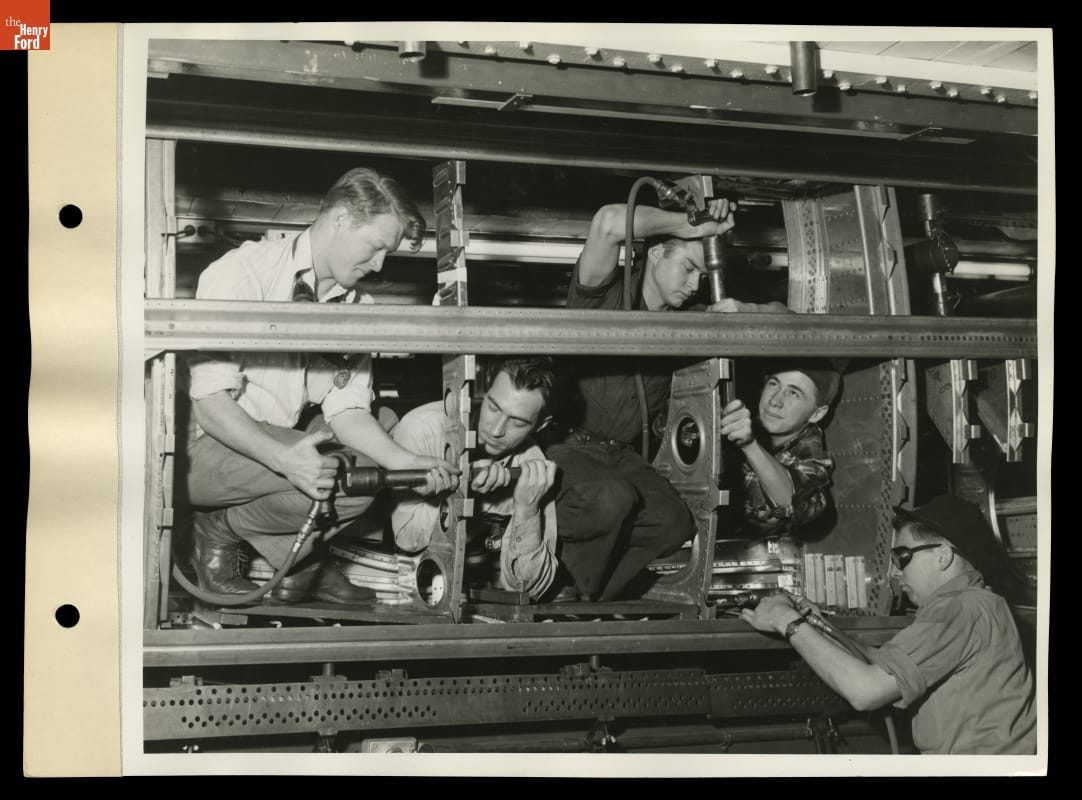
- Building the B-24 Center Wing in Record Time, Willow Run Bomber Plant, 1942 - At Willow Run, Ford Motor Company built B-24 bomber planes for World War II using automobile mass production techniques. Airplanes were much more complex than cars. They required constant design changes poorly suited to a standardized assembly line. Ford overcame these difficulties and, at the plant's peak, Willow Run crews produced an average of one bomber every 63 minutes.
- November 30, 1942
- Collections - Artifact
Building the B-24 Center Wing in Record Time, Willow Run Bomber Plant, 1942
At Willow Run, Ford Motor Company built B-24 bomber planes for World War II using automobile mass production techniques. Airplanes were much more complex than cars. They required constant design changes poorly suited to a standardized assembly line. Ford overcame these difficulties and, at the plant's peak, Willow Run crews produced an average of one bomber every 63 minutes.
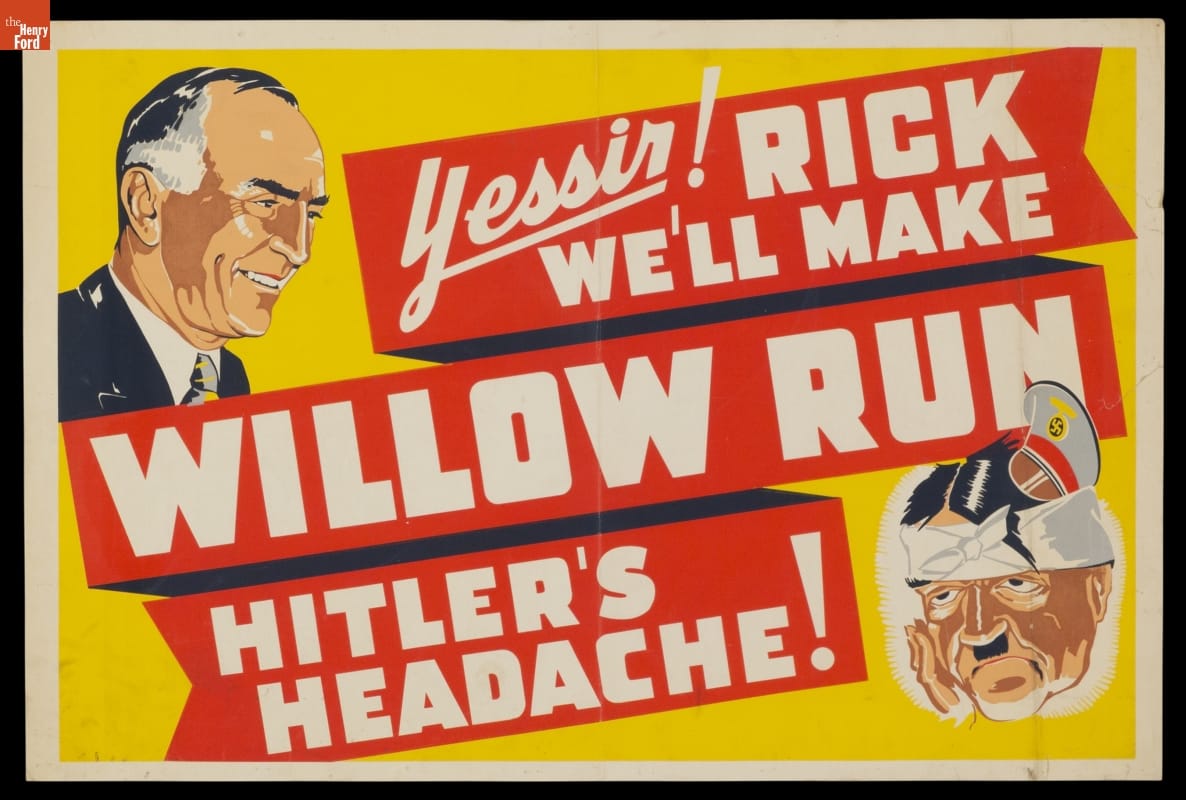
- World War II Poster, "Yessir! Rick We'll Make Willow Run Hitler's Headache!," circa 1943 - The people of Ford Motor Company's Willow Run plant felt -- justifiably -- that their efforts were crucial to Allied victory in World War II. The B-24 Liberator airplanes they built formed the backbone of the Allies' strategic bombing campaign against Germany. Posters like this reinforced the idea that the harder Willow Run's employees worked, the weaker the enemy became.
- circa 1943
- Collections - Artifact
World War II Poster, "Yessir! Rick We'll Make Willow Run Hitler's Headache!," circa 1943
The people of Ford Motor Company's Willow Run plant felt -- justifiably -- that their efforts were crucial to Allied victory in World War II. The B-24 Liberator airplanes they built formed the backbone of the Allies' strategic bombing campaign against Germany. Posters like this reinforced the idea that the harder Willow Run's employees worked, the weaker the enemy became.
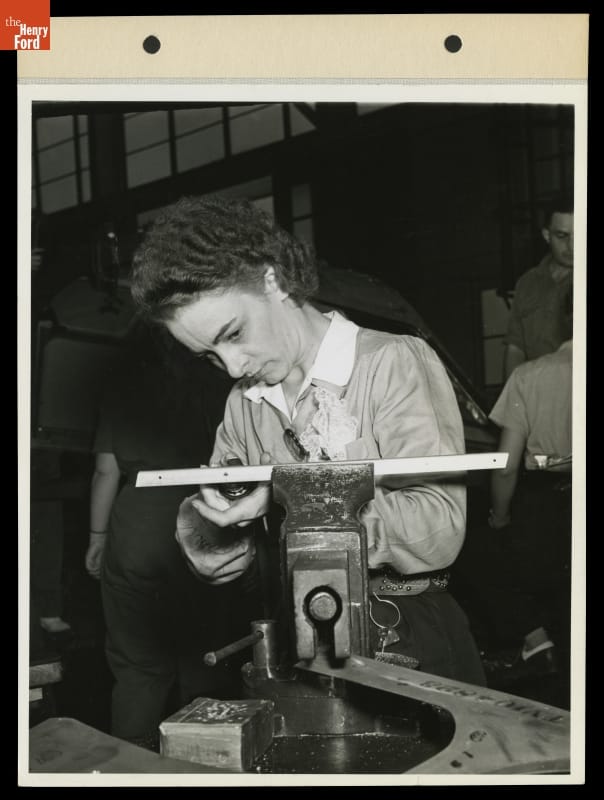
- Employee Florence Nightingale Working at Willow Run Bomber Plant, 1942 - At Willow Run, Ford Motor Company built B-24 bomber planes for World War II using automobile mass production techniques. Airplanes were much more complex than cars. They required constant design changes poorly suited to a standardized assembly line. Ford overcame these difficulties and, at the plant's peak, Willow Run crews produced an average of one bomber every 63 minutes.
- July 25, 1942
- Collections - Artifact
Employee Florence Nightingale Working at Willow Run Bomber Plant, 1942
At Willow Run, Ford Motor Company built B-24 bomber planes for World War II using automobile mass production techniques. Airplanes were much more complex than cars. They required constant design changes poorly suited to a standardized assembly line. Ford overcame these difficulties and, at the plant's peak, Willow Run crews produced an average of one bomber every 63 minutes.