
Search
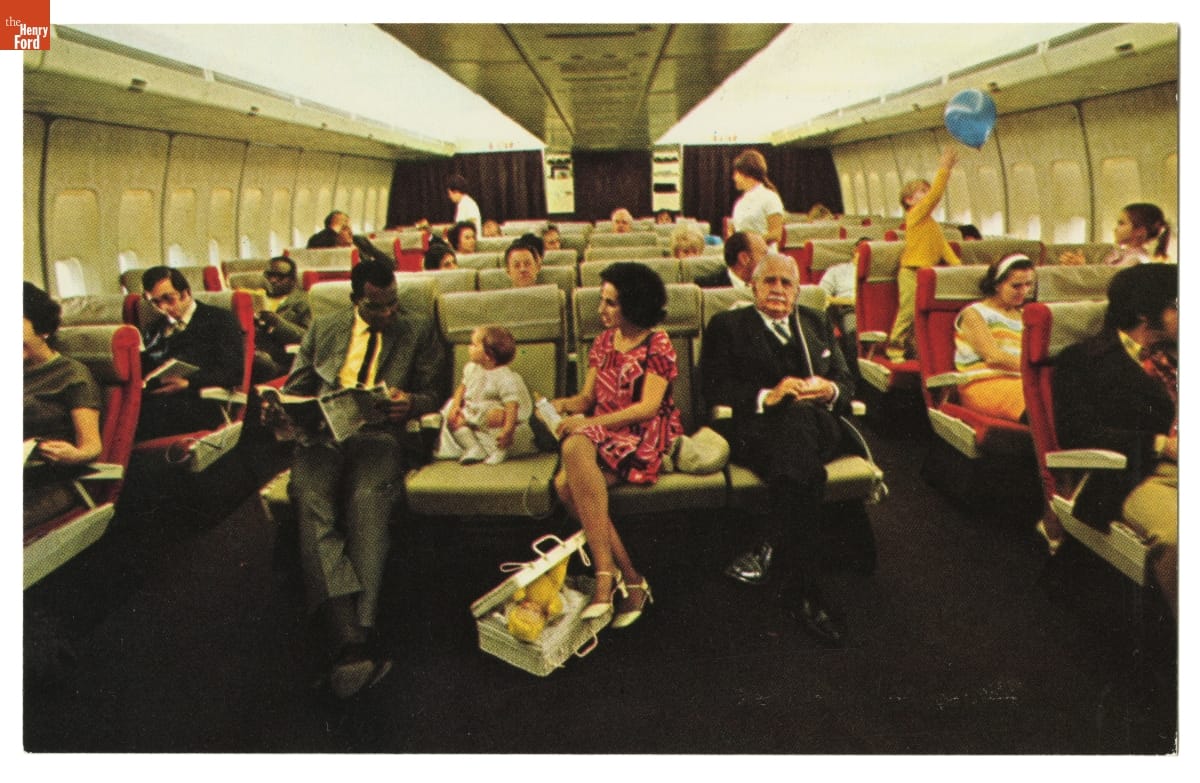
- Advertising Postcard for Pan American Airlines, circa 1970, "The Plane with All the Room in the World" - For much of the 20th century, Pan American World Airways exemplified innovation in air travel. The carrier pioneered the use of wide-body jumbo jets, like the Boeing 747 featured on this postcard, in the 1970s. But rising fuel costs and difficulty establishing domestic U.S. routes strained the company in the 1980s. Pan Am ended operations in 1991.
- circa 1970
- Collections - Artifact
Advertising Postcard for Pan American Airlines, circa 1970, "The Plane with All the Room in the World"
For much of the 20th century, Pan American World Airways exemplified innovation in air travel. The carrier pioneered the use of wide-body jumbo jets, like the Boeing 747 featured on this postcard, in the 1970s. But rising fuel costs and difficulty establishing domestic U.S. routes strained the company in the 1980s. Pan Am ended operations in 1991.
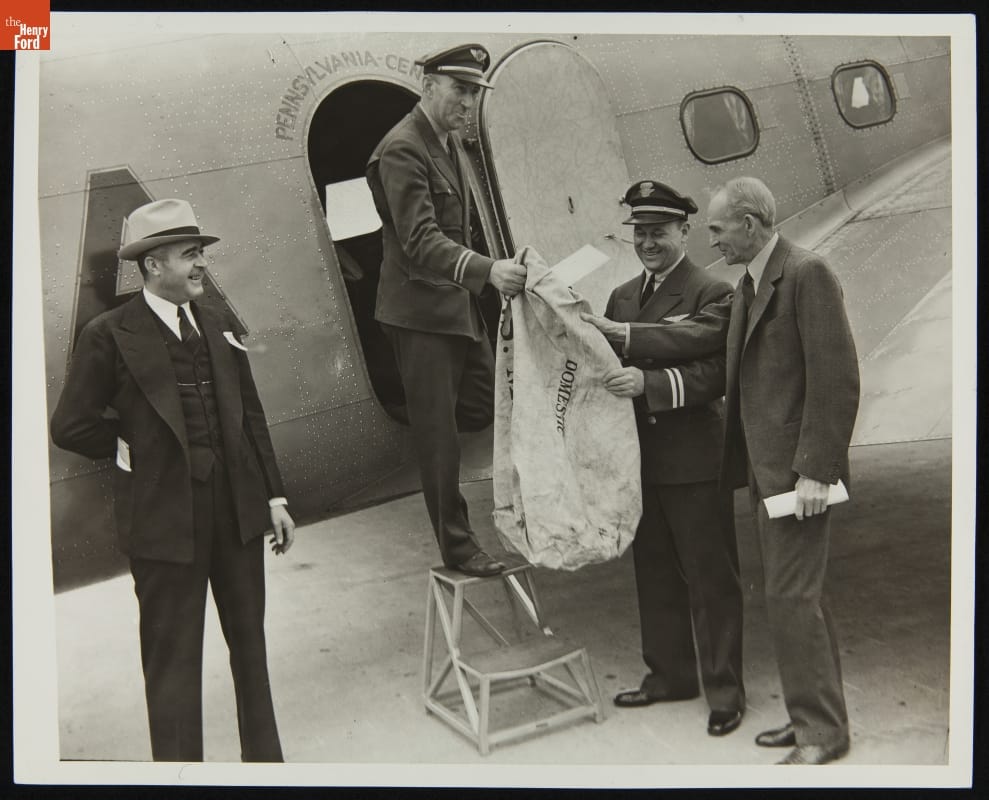
- Henry Ford Commemorating Early Air Mail Flights during National Air Mail Week, May 18, 1938 - Twenty years after the first regularly scheduled U.S. air mail service was established, President Franklin D. Roosevelt and Postmaster General James A. Farley sponsored National Air Mail Week in 1938. Part celebration and part advertising, the event promoted the pricier service during the Great Depression. Cities throughout the country created their own special mail cachets and cancellations to mark the occasion.
- May 18, 1938
- Collections - Artifact
Henry Ford Commemorating Early Air Mail Flights during National Air Mail Week, May 18, 1938
Twenty years after the first regularly scheduled U.S. air mail service was established, President Franklin D. Roosevelt and Postmaster General James A. Farley sponsored National Air Mail Week in 1938. Part celebration and part advertising, the event promoted the pricier service during the Great Depression. Cities throughout the country created their own special mail cachets and cancellations to mark the occasion.
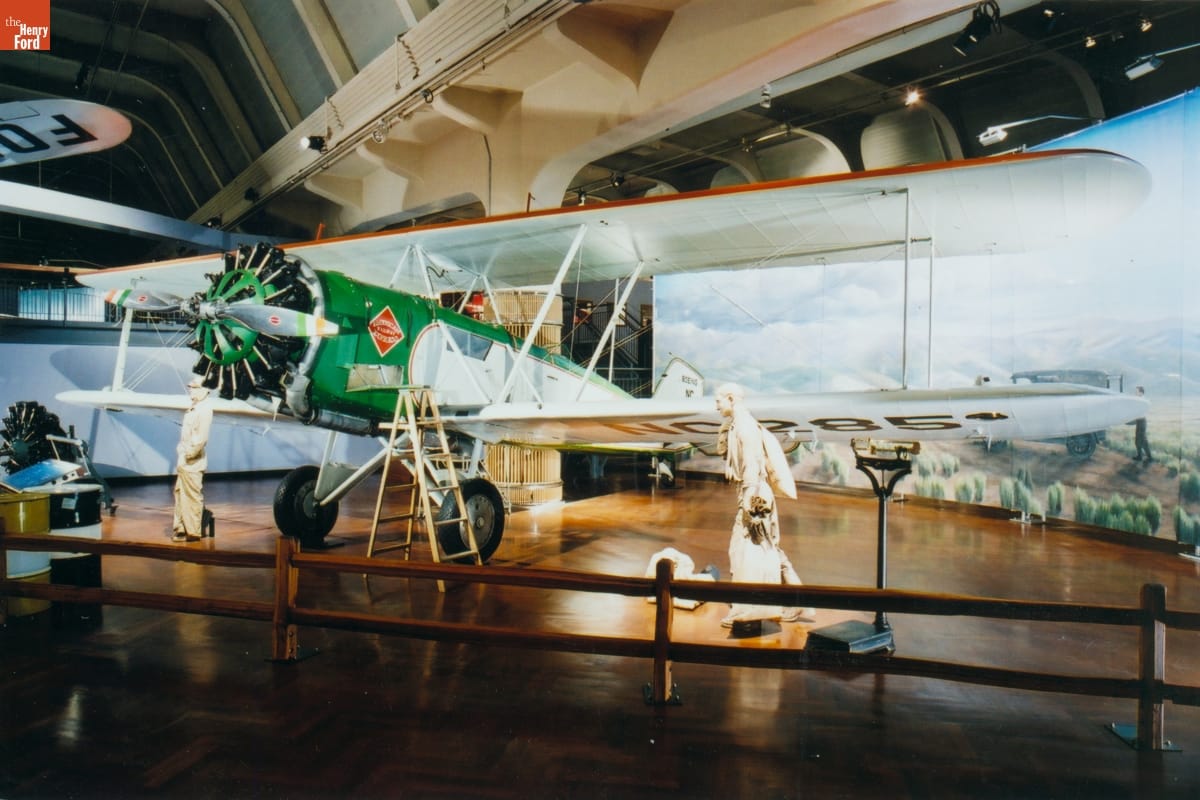
- 1927 Boeing Model 40-B2 Biplane - Subsidies from the federal government for air mail encouraged the development of improved long-distance aircraft like the Boeing 40. The key to the Boeing's success was the use of a lightweight air-cooled radial engine which allowed it to carry the mail and two paying passengers. This plane flew between Chicago and San Francisco, making 12 fuel stops along the way.
- 1927
- Collections - Artifact
1927 Boeing Model 40-B2 Biplane
Subsidies from the federal government for air mail encouraged the development of improved long-distance aircraft like the Boeing 40. The key to the Boeing's success was the use of a lightweight air-cooled radial engine which allowed it to carry the mail and two paying passengers. This plane flew between Chicago and San Francisco, making 12 fuel stops along the way.
- 1939 Douglas DC-3 Airplane - The Douglas DC-3, introduced in 1936, carried 21 passengers -- enough to fly profitably without relying on subsidies from air mail contracts. While the DC-3's economy appealed to airlines, its rugged construction and comfortable cabin attracted passengers. More than any other aircraft, the DC-3 ushered in the era of dependable, long-distance air travel in the United States.

- 1939
- Collections - Artifact
1939 Douglas DC-3 Airplane
The Douglas DC-3, introduced in 1936, carried 21 passengers -- enough to fly profitably without relying on subsidies from air mail contracts. While the DC-3's economy appealed to airlines, its rugged construction and comfortable cabin attracted passengers. More than any other aircraft, the DC-3 ushered in the era of dependable, long-distance air travel in the United States.
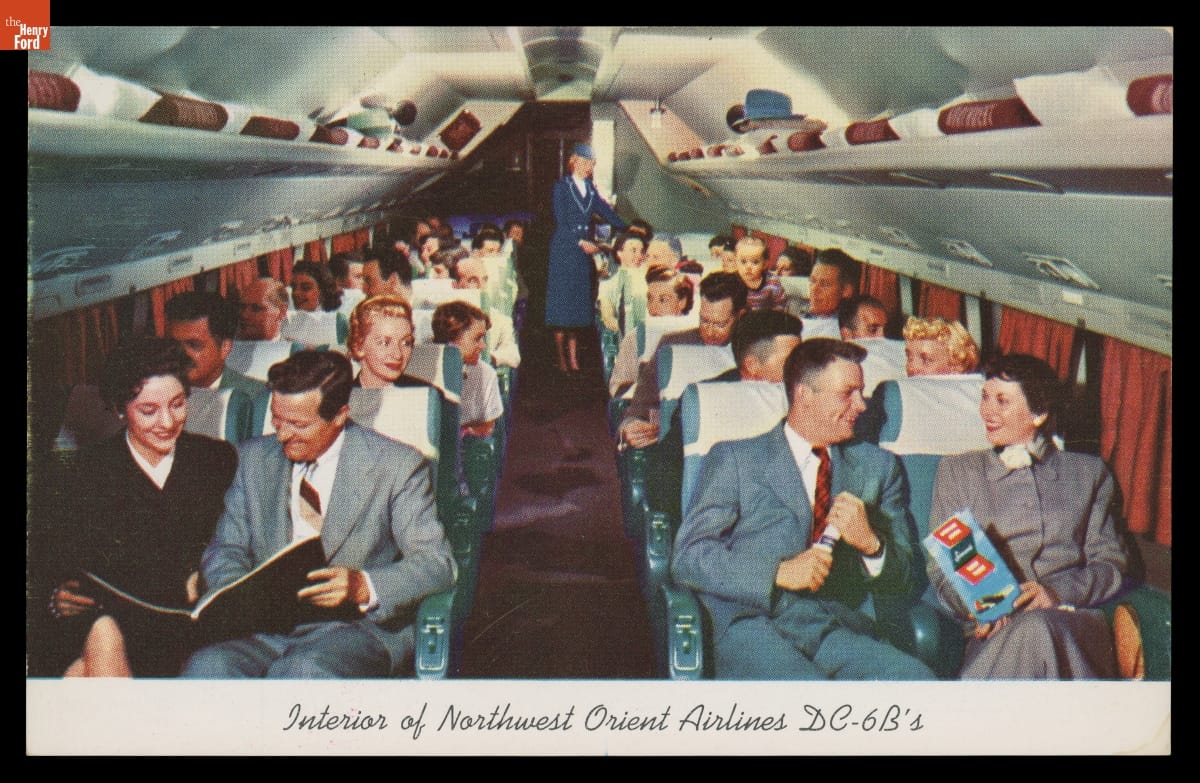
- "Interior of Northwest Orient Airlines DC-6B's," circa 1955 - Northwest Airlines was established in Detroit in 1926 and relocated to the Minneapolis-St. Paul area in 1933. The company grew to serve destinations around the world, especially through transpacific flights via a hub in Japan -- emphasized with "Northwest Orient" branding. Northwest merged with Delta Airlines in 2008 but continued to operate under its own name until 2010.
- circa 1955
- Collections - Artifact
"Interior of Northwest Orient Airlines DC-6B's," circa 1955
Northwest Airlines was established in Detroit in 1926 and relocated to the Minneapolis-St. Paul area in 1933. The company grew to serve destinations around the world, especially through transpacific flights via a hub in Japan -- emphasized with "Northwest Orient" branding. Northwest merged with Delta Airlines in 2008 but continued to operate under its own name until 2010.
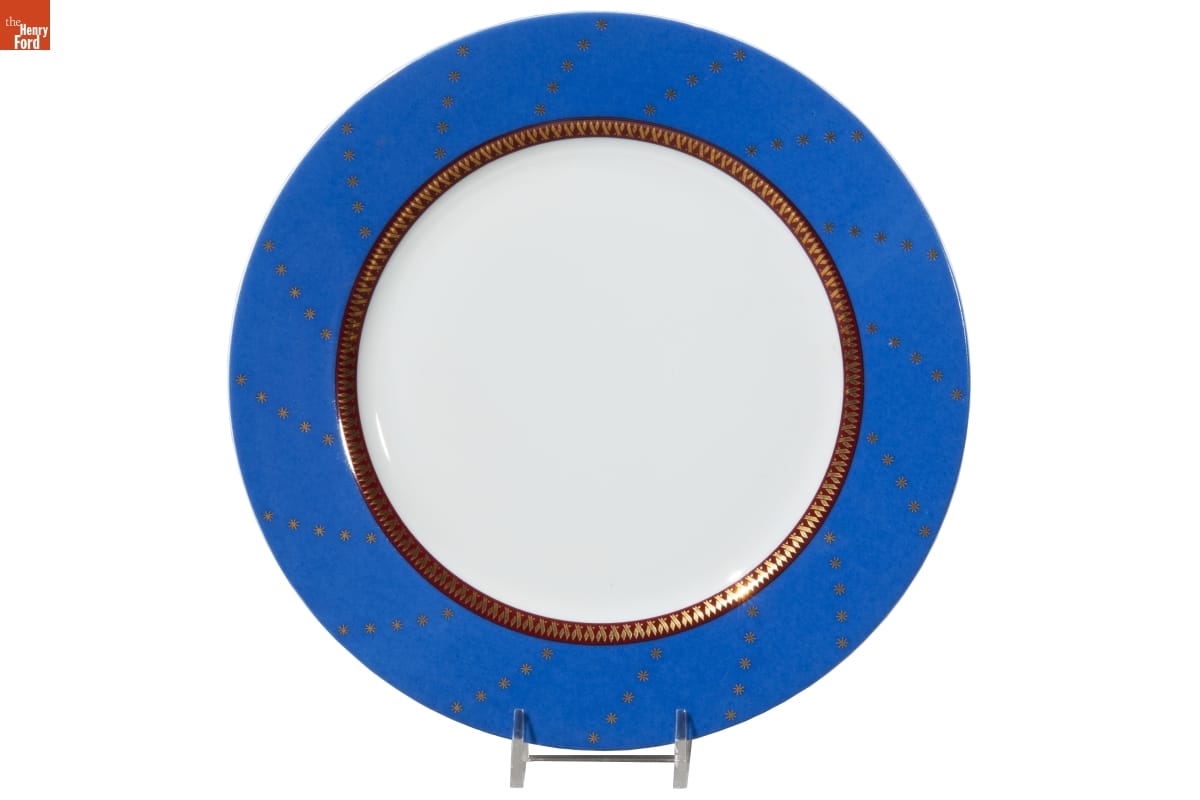
- American Airlines Plate, 1988 - Starting in the early 1980s--and already established as an internationally recognized architect--Michael Graves began to pursue a parallel career as a product designer. Over the following three and a half decades he and his collaborators designed everything from humble household goods to limited edition luxury items for clients as diverse as Steuben, Alessi, Target, J. C. Penney, and Disney.
- 1988
- Collections - Artifact
American Airlines Plate, 1988
Starting in the early 1980s--and already established as an internationally recognized architect--Michael Graves began to pursue a parallel career as a product designer. Over the following three and a half decades he and his collaborators designed everything from humble household goods to limited edition luxury items for clients as diverse as Steuben, Alessi, Target, J. C. Penney, and Disney.
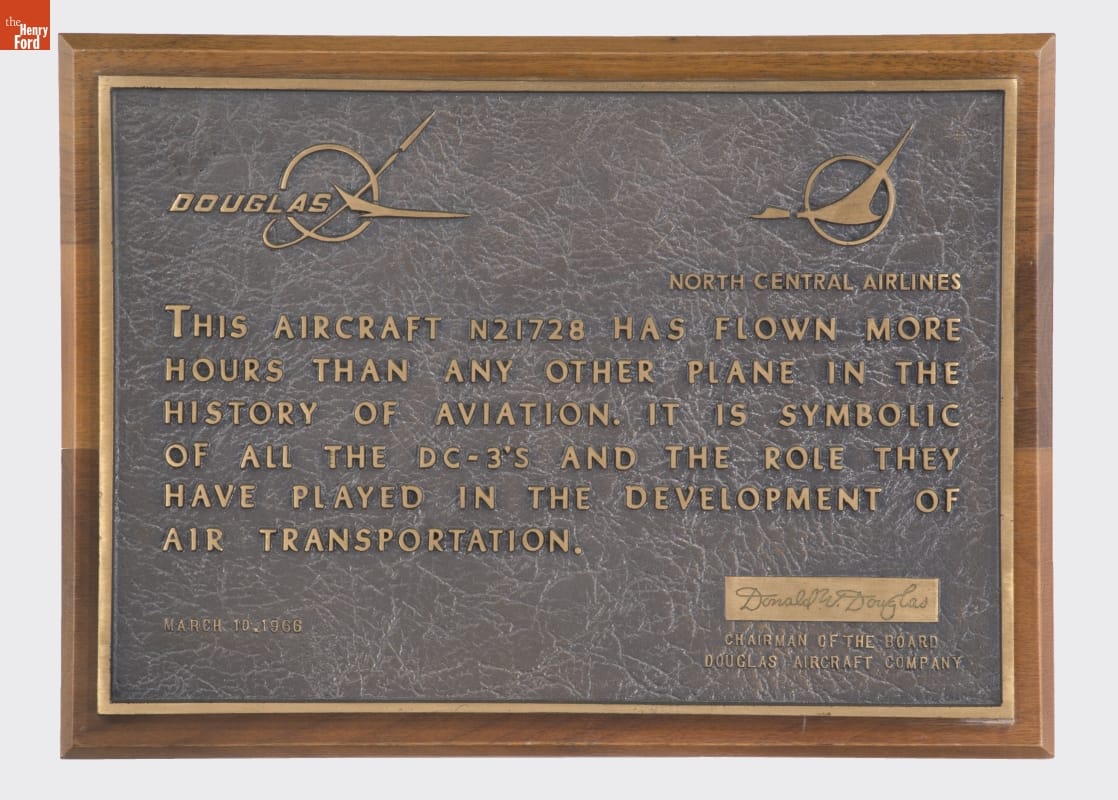
- Plaque Commemorating the Record Number of Hours Flown by the Douglas DC-3 - The Douglas DC-3 is one of history's most significant aircraft, with important achievements in civil and military applications. DC-3 N21728, operated by Eastern Airlines and North Central Airlines from 1939 to 1975, is a special example. The airplane logged 84,875 flight hours before being retired to The Henry Ford. It was a record for a commercial aircraft at that time.
- March 10, 1966
- Collections - Artifact
Plaque Commemorating the Record Number of Hours Flown by the Douglas DC-3
The Douglas DC-3 is one of history's most significant aircraft, with important achievements in civil and military applications. DC-3 N21728, operated by Eastern Airlines and North Central Airlines from 1939 to 1975, is a special example. The airplane logged 84,875 flight hours before being retired to The Henry Ford. It was a record for a commercial aircraft at that time.
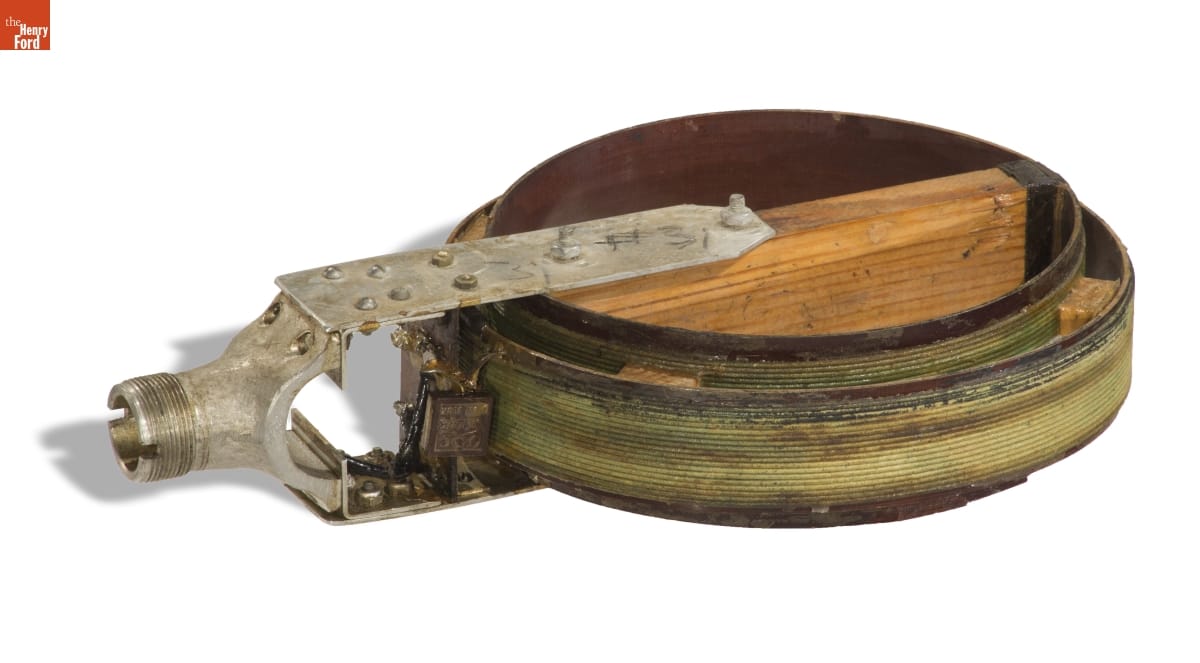
- TWA Experimental Anti-Snow Static Loop Antenna, 1937 - Airport radio navigation beacons required pilots to listen for Morse code patterns to hold the correct course--notoriously difficult during storms. In 1936, Transcontinental & Western Air introduced an anti-snow directional antenna which could be used, in high-static situations, to "home in" on airport radio signals. This loop was housed in a sleek metal enclosure, protecting it from the elements.
- 1937-1938
- Collections - Artifact
TWA Experimental Anti-Snow Static Loop Antenna, 1937
Airport radio navigation beacons required pilots to listen for Morse code patterns to hold the correct course--notoriously difficult during storms. In 1936, Transcontinental & Western Air introduced an anti-snow directional antenna which could be used, in high-static situations, to "home in" on airport radio signals. This loop was housed in a sleek metal enclosure, protecting it from the elements.
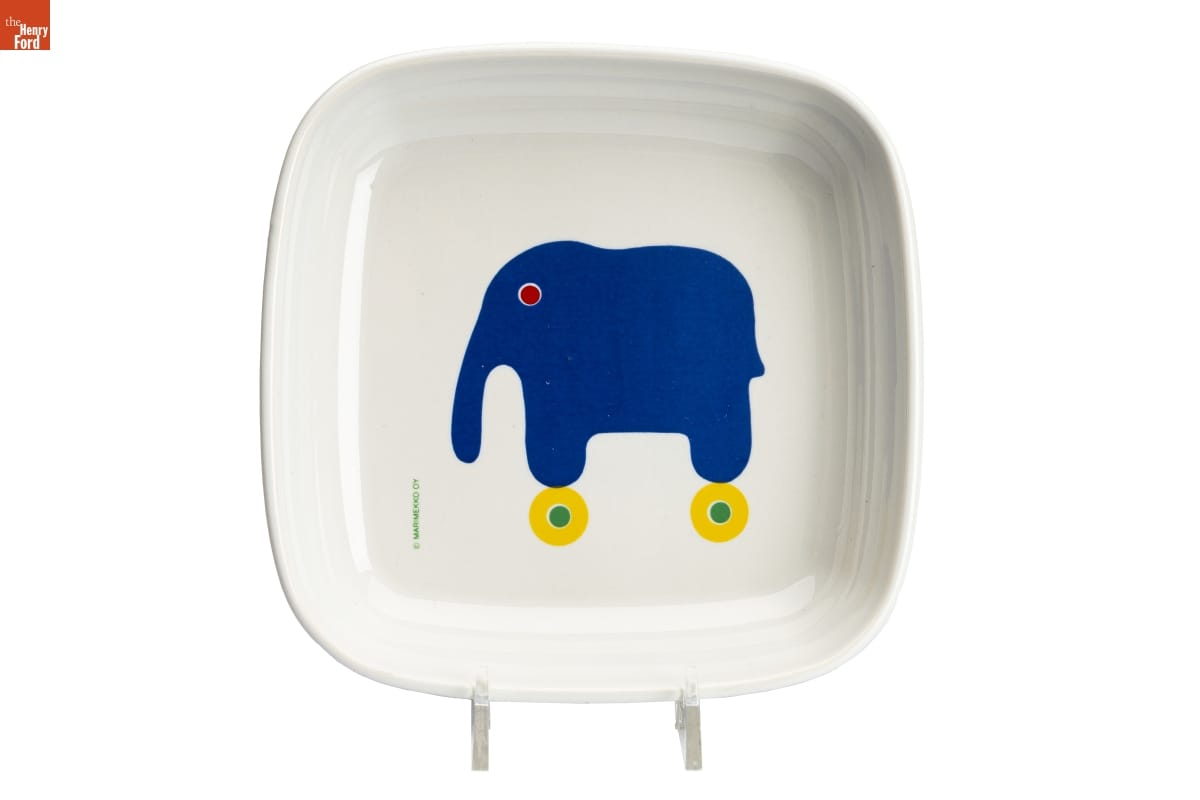
- Marimekko Elephant Plate Made for American Airlines, 1975-1980 -
- 1975-1980
- Collections - Artifact
Marimekko Elephant Plate Made for American Airlines, 1975-1980
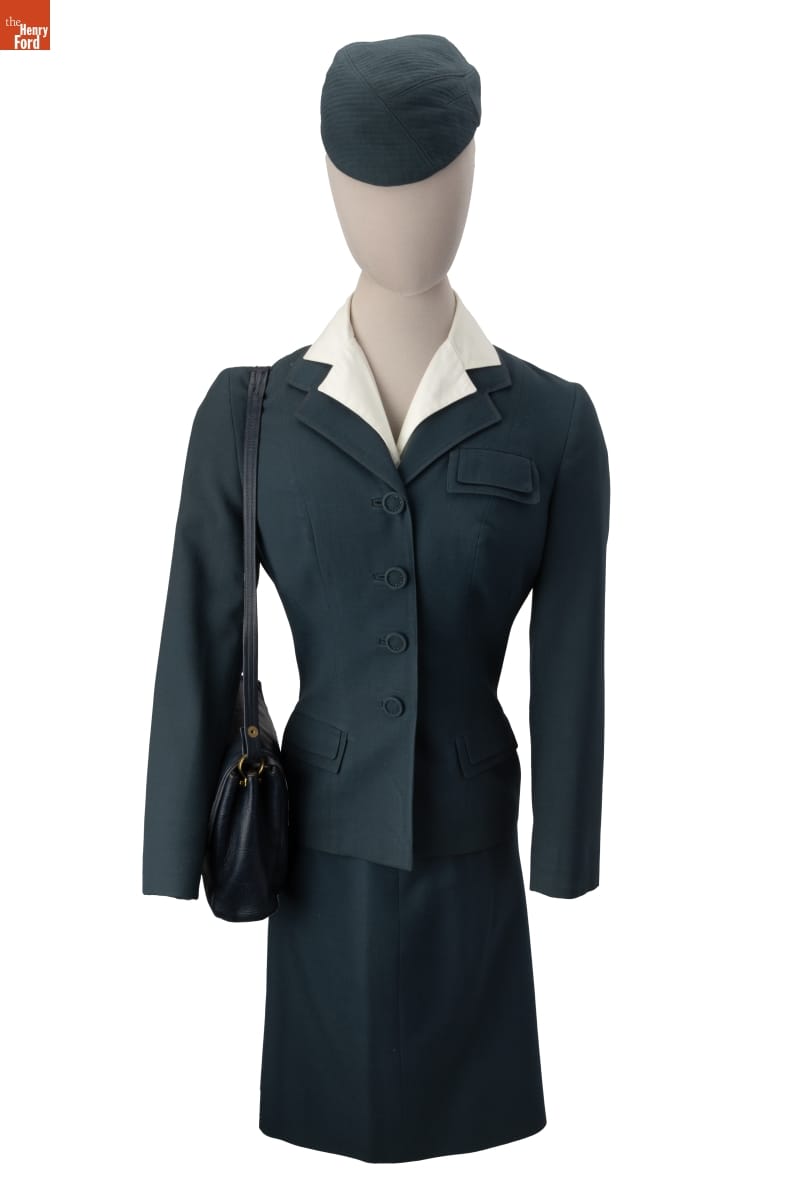
- Handbag Carried by Northwest Orient Airlines Stewardess Judith Zeller, 1962 -
- 1962
- Collections - Artifact
Handbag Carried by Northwest Orient Airlines Stewardess Judith Zeller, 1962