
Search
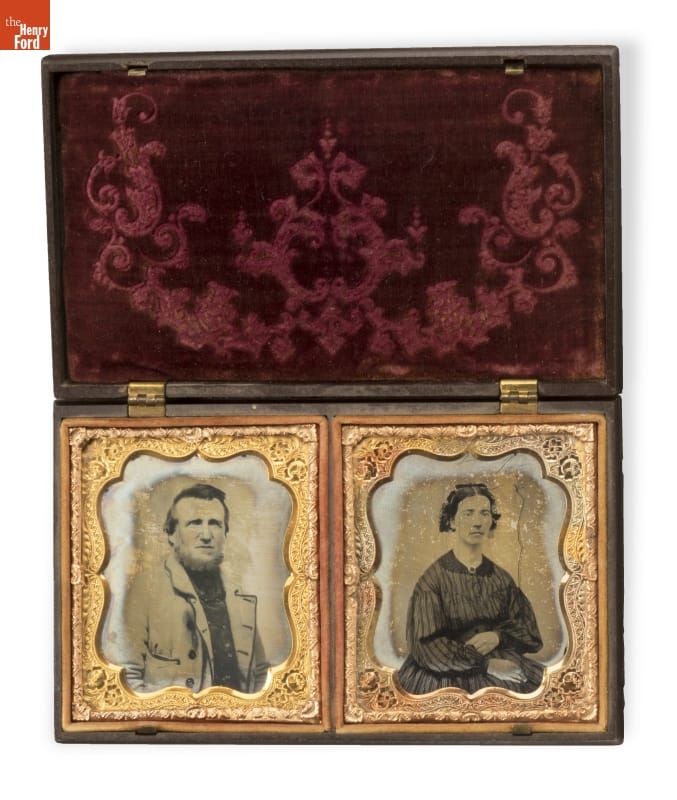
- Portraits of Dr. Alonson B. Howard, circa 1865-1866 and Cynthia Coryell Edmunds Howard, circa 1858-1860 - Alonson Howard, Jr., a doctor practicing medicine in Tekonsha Township, Michigan, married his second wife, Cynthia Coryell Edmunds, in August 1858. Dr. Howard's first wife had passed away a year earlier. Cynthia became a caring stepmother to Alonson's two sons, and the couple would have four children of their own.
- circa 1858-circa 1865
- Collections - Artifact
Portraits of Dr. Alonson B. Howard, circa 1865-1866 and Cynthia Coryell Edmunds Howard, circa 1858-1860
Alonson Howard, Jr., a doctor practicing medicine in Tekonsha Township, Michigan, married his second wife, Cynthia Coryell Edmunds, in August 1858. Dr. Howard's first wife had passed away a year earlier. Cynthia became a caring stepmother to Alonson's two sons, and the couple would have four children of their own.
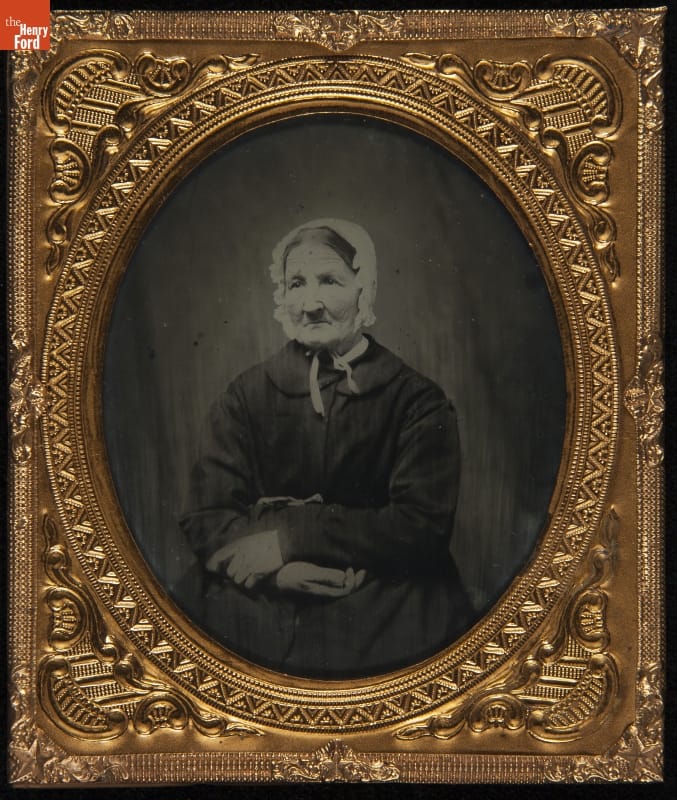
- Older Woman in Plain Dress and Day Cap, circa 1865 - Ambrotypes (meaning, "imperishable pictures") were popular in the mid-1850s through the 1860s. Glass plates coated with photosensitive collodion were exposed in cameras while wet. The resulting image on glass, backed with black material, appeared as a photographic positive. Ambrotypes replaced daguerrotypes as an affordable and convenient alternative; however, improvements in photographic processes soon led to widespread adoption of the tintype.
- circa 1860
- Collections - Artifact
Older Woman in Plain Dress and Day Cap, circa 1865
Ambrotypes (meaning, "imperishable pictures") were popular in the mid-1850s through the 1860s. Glass plates coated with photosensitive collodion were exposed in cameras while wet. The resulting image on glass, backed with black material, appeared as a photographic positive. Ambrotypes replaced daguerrotypes as an affordable and convenient alternative; however, improvements in photographic processes soon led to widespread adoption of the tintype.
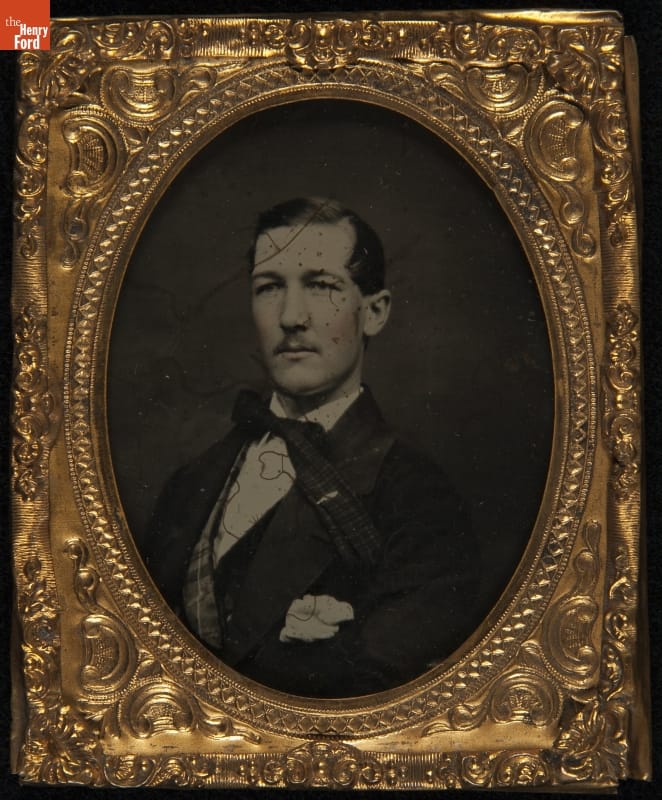
- Portrait of a Man, circa 1860 - Ambrotypes (meaning, "imperishable pictures") were popular in the mid-1850s through the 1860s. Glass plates coated with photosensitive collodion were exposed in cameras while wet. The resulting image on glass, backed with black material, appeared as a photographic positive. Ambrotypes replaced daguerrotypes as an affordable and convenient alternative; however, improvements in photographic processes soon led to widespread adoption of the tintype.
- circa 1860
- Collections - Artifact
Portrait of a Man, circa 1860
Ambrotypes (meaning, "imperishable pictures") were popular in the mid-1850s through the 1860s. Glass plates coated with photosensitive collodion were exposed in cameras while wet. The resulting image on glass, backed with black material, appeared as a photographic positive. Ambrotypes replaced daguerrotypes as an affordable and convenient alternative; however, improvements in photographic processes soon led to widespread adoption of the tintype.
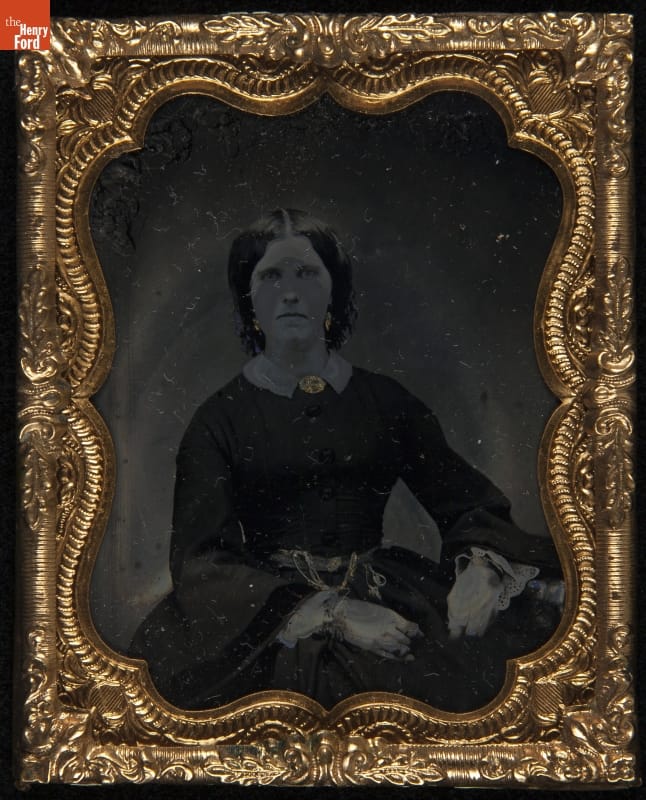
- Portrait of a Woman, circa 1860 - Ambrotypes (meaning, "imperishable pictures") were popular in the mid-1850s through the 1860s. Glass plates coated with photosensitive collodion were exposed in cameras while wet. The resulting image on glass, backed with black material, appeared as a photographic positive. Ambrotypes replaced daguerrotypes as an affordable and convenient alternative; however, improvements in photographic processes soon led to widespread adoption of the tintype.
- circa 1860
- Collections - Artifact
Portrait of a Woman, circa 1860
Ambrotypes (meaning, "imperishable pictures") were popular in the mid-1850s through the 1860s. Glass plates coated with photosensitive collodion were exposed in cameras while wet. The resulting image on glass, backed with black material, appeared as a photographic positive. Ambrotypes replaced daguerrotypes as an affordable and convenient alternative; however, improvements in photographic processes soon led to widespread adoption of the tintype.
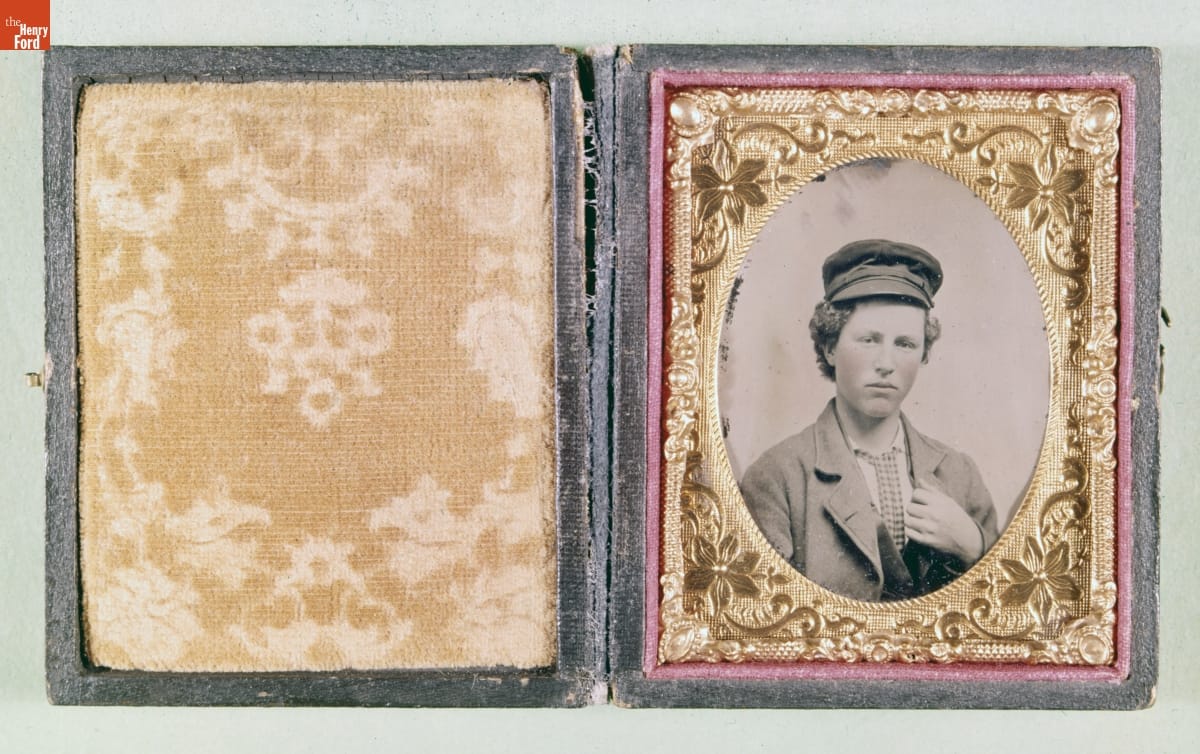
- Portrait of Thomas Edison While Working on the Grand Trunk Railroad, 1859-1862 - Ambrotypes (meaning, "imperishable pictures") were popular in the mid-1850s through the 1860s. Glass plates coated with photosensitive collodion were exposed in cameras while wet. The resulting image on glass, backed with black material, appeared as a photographic positive. Ambrotypes replaced daguerrotypes as an affordable and convenient alternative; however, improvements in photographic processes soon led to widespread adoption of the tintype.
- 1859-1862
- Collections - Artifact
Portrait of Thomas Edison While Working on the Grand Trunk Railroad, 1859-1862
Ambrotypes (meaning, "imperishable pictures") were popular in the mid-1850s through the 1860s. Glass plates coated with photosensitive collodion were exposed in cameras while wet. The resulting image on glass, backed with black material, appeared as a photographic positive. Ambrotypes replaced daguerrotypes as an affordable and convenient alternative; however, improvements in photographic processes soon led to widespread adoption of the tintype.
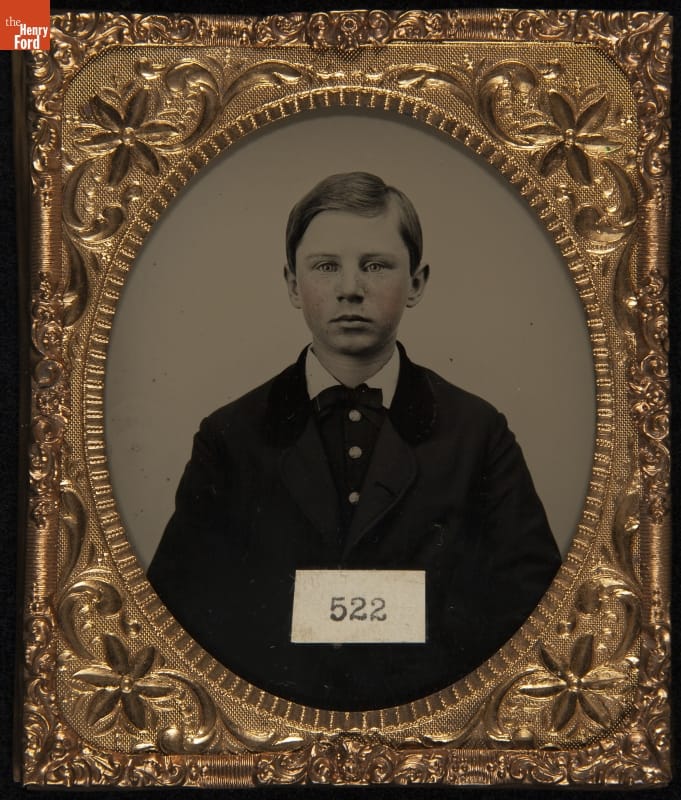
- Portrait of a Young Man, circa 1860 - Ambrotypes (meaning, "imperishable pictures") were popular in the mid-1850s through the 1860s. Glass plates coated with photosensitive collodion were exposed in cameras while wet. The resulting image on glass, backed with black material, appeared as a photographic positive. Ambrotypes replaced daguerrotypes as an affordable and convenient alternative; however, improvements in photographic processes soon led to widespread adoption of the tintype.
- circa 1860
- Collections - Artifact
Portrait of a Young Man, circa 1860
Ambrotypes (meaning, "imperishable pictures") were popular in the mid-1850s through the 1860s. Glass plates coated with photosensitive collodion were exposed in cameras while wet. The resulting image on glass, backed with black material, appeared as a photographic positive. Ambrotypes replaced daguerrotypes as an affordable and convenient alternative; however, improvements in photographic processes soon led to widespread adoption of the tintype.
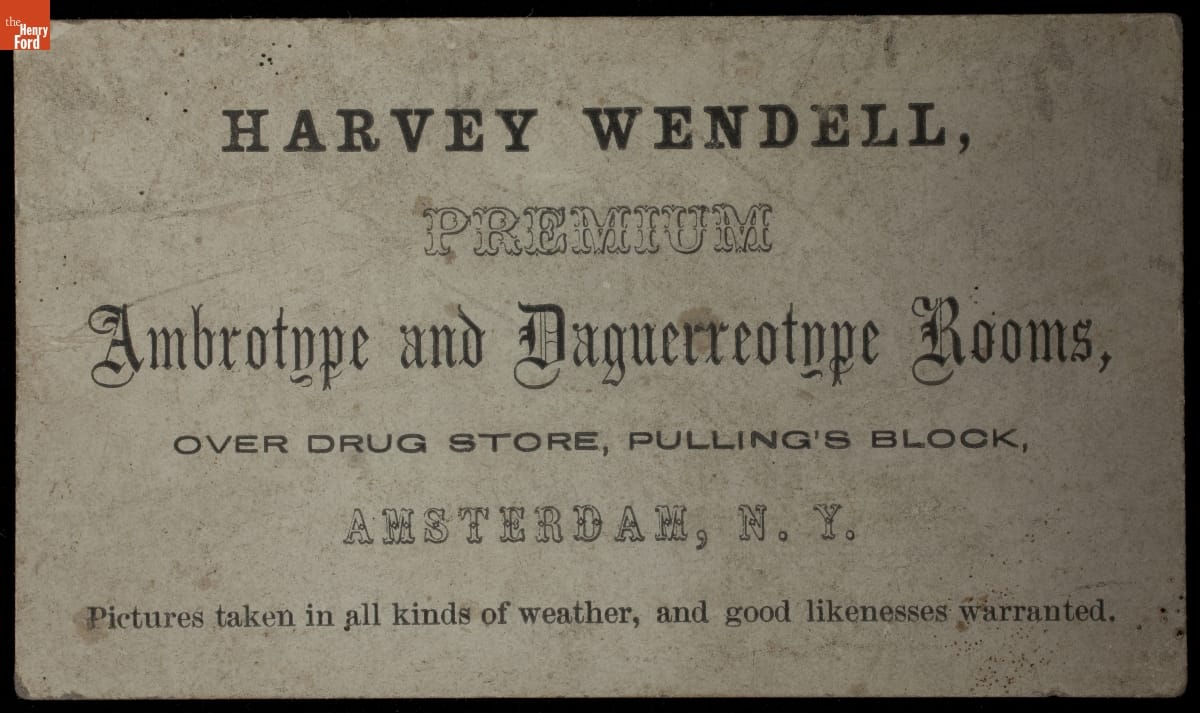
- Trade Card for Harvey Wendell, Ambrotype and Daguerreotype Rooms, 1855-1870 - In the last third of the nineteenth century, an unprecedented variety of consumer goods and services flooded the American market. Advertisers bombarded potential customers with trade cards. Americans often saved the informative little advertisements found in product packages or distributed by local merchants. Many survive as historical records of commercialism in the United States.
- 1855-1870
- Collections - Artifact
Trade Card for Harvey Wendell, Ambrotype and Daguerreotype Rooms, 1855-1870
In the last third of the nineteenth century, an unprecedented variety of consumer goods and services flooded the American market. Advertisers bombarded potential customers with trade cards. Americans often saved the informative little advertisements found in product packages or distributed by local merchants. Many survive as historical records of commercialism in the United States.
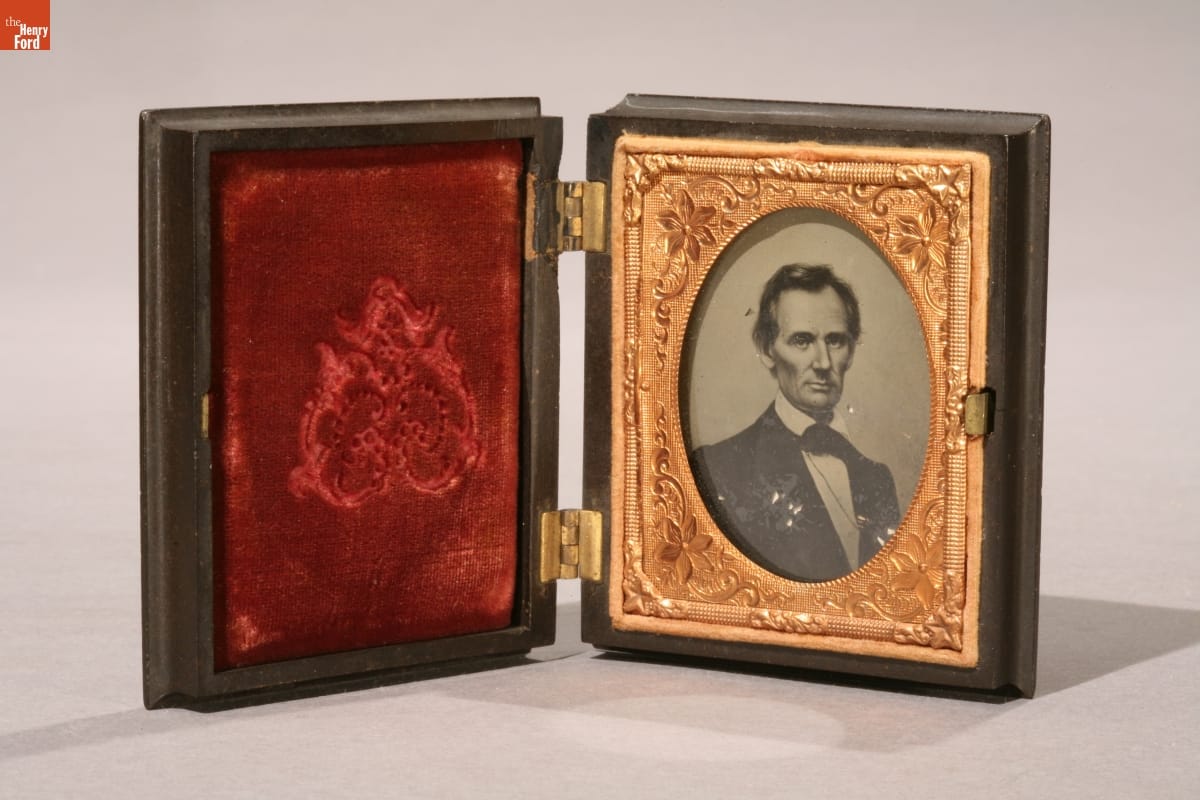
- Abraham Lincoln Ambrotype Portrait and Presidential Election Campaign Badge, 1860 - This portrait of Abraham Lincoln was used as a campaign badge during the 1860 presidential election. It was originally housed in an oval brass frame and pinned to one's clothing. The ambrotype is based on a photograph of Lincoln taken by Mathew B. Brady on February 27, 1860. Lincoln was in New York City to give a speech at Cooper Union.
- 1860
- Collections - Artifact
Abraham Lincoln Ambrotype Portrait and Presidential Election Campaign Badge, 1860
This portrait of Abraham Lincoln was used as a campaign badge during the 1860 presidential election. It was originally housed in an oval brass frame and pinned to one's clothing. The ambrotype is based on a photograph of Lincoln taken by Mathew B. Brady on February 27, 1860. Lincoln was in New York City to give a speech at Cooper Union.
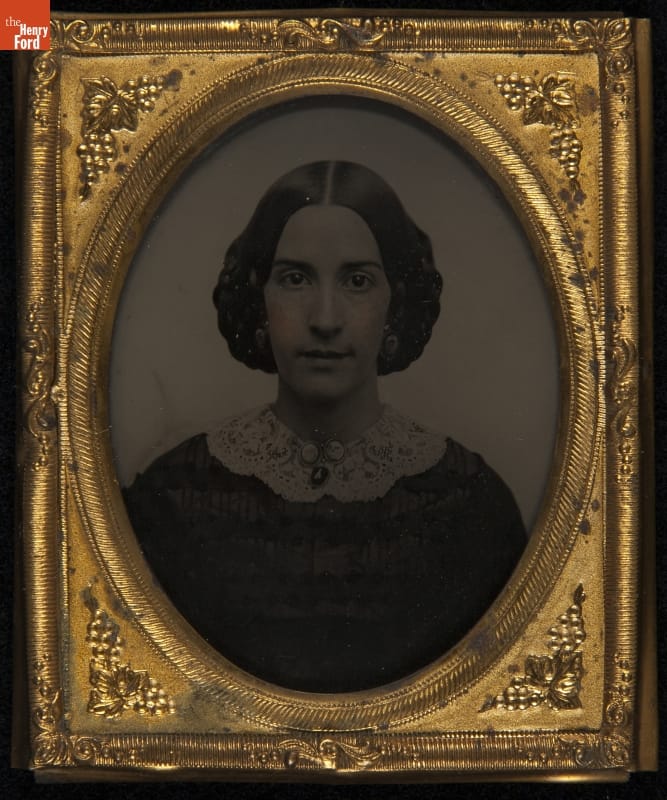
- Portrait of a Woman, 1859-1860 - Ambrotypes (meaning, "imperishable pictures") were popular in the mid-1850s through the 1860s. Glass plates coated with photosensitive collodion were exposed in cameras while wet. The resulting image on glass, backed with black material, appeared as a photographic positive. Ambrotypes replaced daguerrotypes as an affordable and convenient alternative; however, improvements in photographic processes soon led to widespread adoption of the tintype.
- 1859-1860
- Collections - Artifact
Portrait of a Woman, 1859-1860
Ambrotypes (meaning, "imperishable pictures") were popular in the mid-1850s through the 1860s. Glass plates coated with photosensitive collodion were exposed in cameras while wet. The resulting image on glass, backed with black material, appeared as a photographic positive. Ambrotypes replaced daguerrotypes as an affordable and convenient alternative; however, improvements in photographic processes soon led to widespread adoption of the tintype.
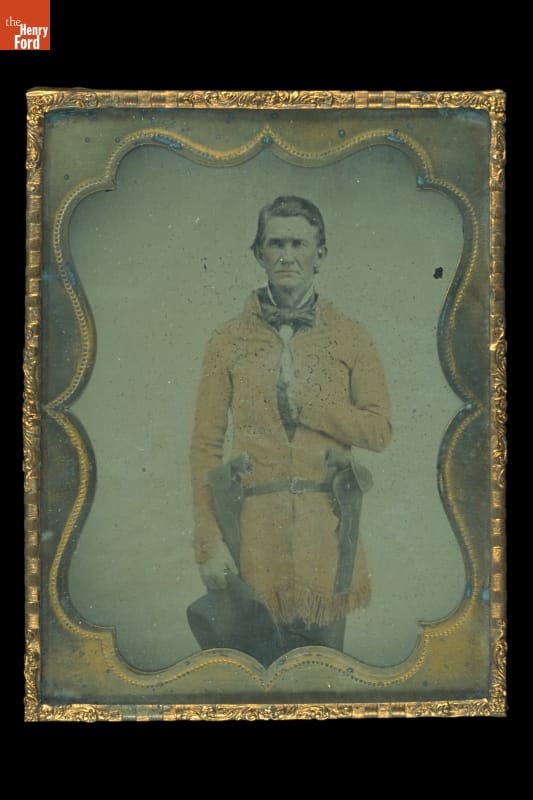
- Handcolored Ambrotype of John Salmon ("Rip") Ford, circa 1856 - John Salmon Ford (1815-1897) posed in a fringed buckskin outfit for this ambrotype sometime in the late 1850s. Around this time, Ford served as a Texas Ranger fighting the Indigenous peoples and quelling border tensions with Mexico. Ford later became a colonel in the Confederate cavalry, leading his forces at the Battle of Palmito Ranch, the last military engagement of the Civil War.
- circa 1856
- Collections - Artifact
Handcolored Ambrotype of John Salmon ("Rip") Ford, circa 1856
John Salmon Ford (1815-1897) posed in a fringed buckskin outfit for this ambrotype sometime in the late 1850s. Around this time, Ford served as a Texas Ranger fighting the Indigenous peoples and quelling border tensions with Mexico. Ford later became a colonel in the Confederate cavalry, leading his forces at the Battle of Palmito Ranch, the last military engagement of the Civil War.