
Search
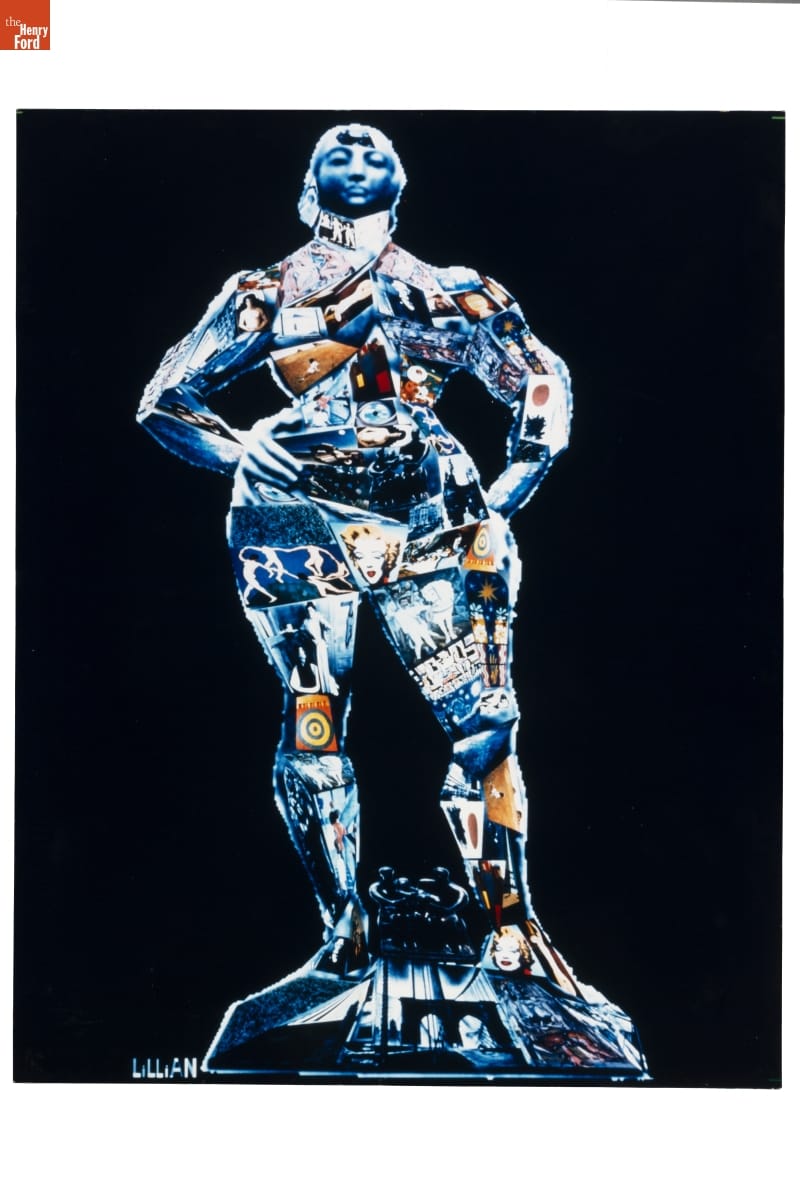
- "BIG MOMA" by Lillian F. Schwartz, 1984 - Lillian Schwartz is a pioneer of computer-generated art. From 1969-2002, she was a "resident visitor" at Bell Laboratories, producing groundbreaking films, videos, and multimedia works. The Schwartz Collection spans Lillian's childhood into her late career, documenting an expansive mindset, mastery over traditional and experimental mediums alike--and above all--an ability to create inspirational connections between science, art, and technology.
- 1984
- Collections - Artifact
"BIG MOMA" by Lillian F. Schwartz, 1984
Lillian Schwartz is a pioneer of computer-generated art. From 1969-2002, she was a "resident visitor" at Bell Laboratories, producing groundbreaking films, videos, and multimedia works. The Schwartz Collection spans Lillian's childhood into her late career, documenting an expansive mindset, mastery over traditional and experimental mediums alike--and above all--an ability to create inspirational connections between science, art, and technology.
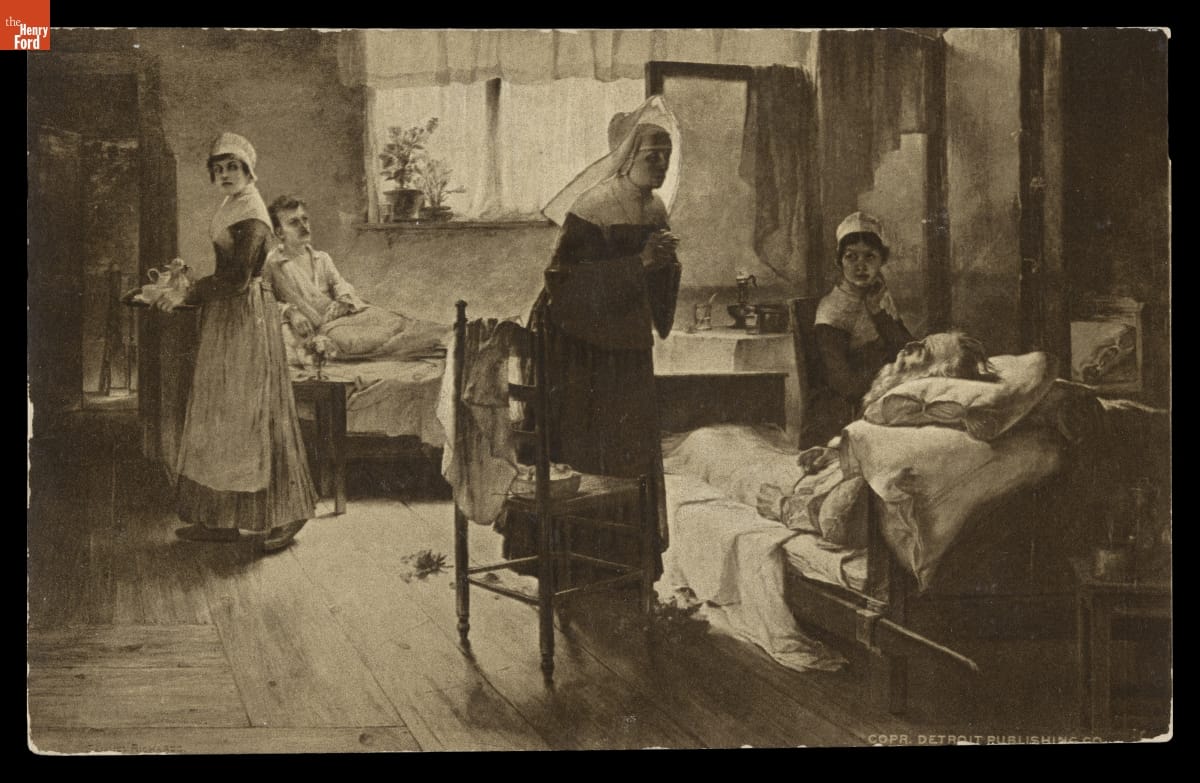
- "Evangeline Discovering Her Affianced in the Hospital," by Samuel Richards, Detroit Museum of Art -
- Collections - Artifact
"Evangeline Discovering Her Affianced in the Hospital," by Samuel Richards, Detroit Museum of Art
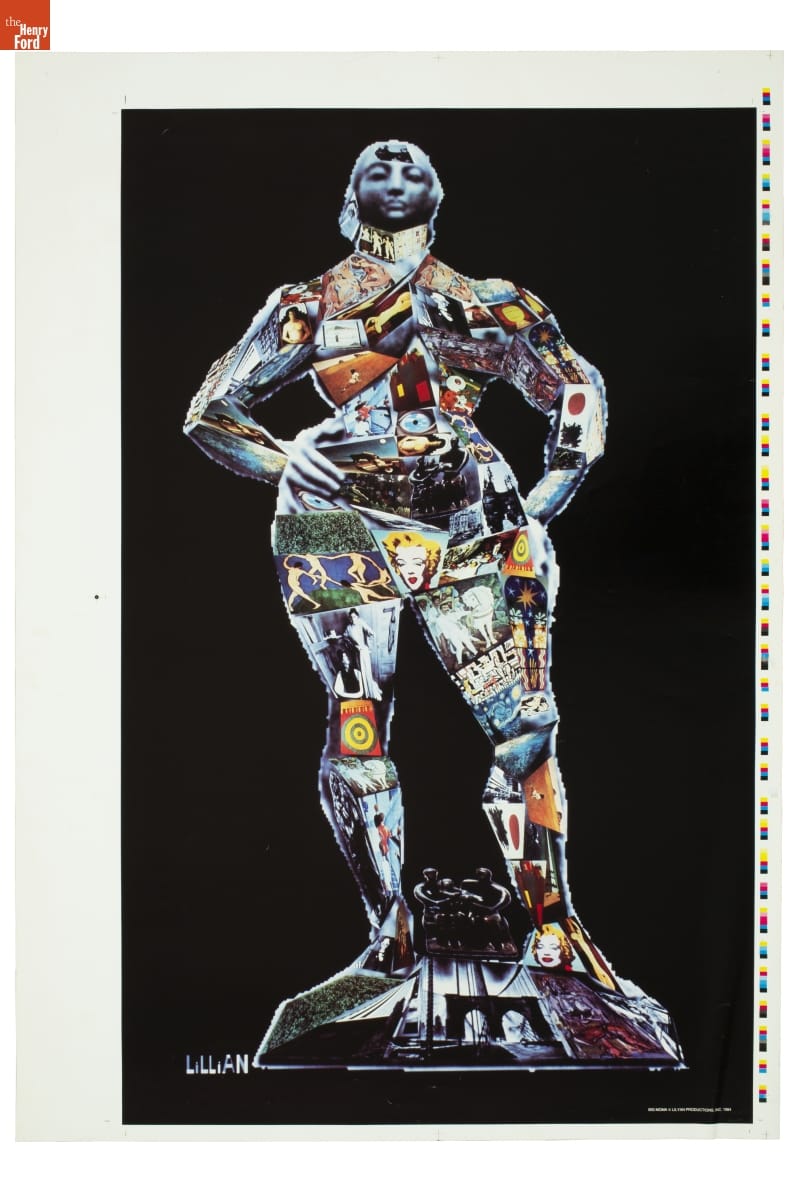
- "BIG MOMA" by Lillian F. Schwartz, 1984 - Lillian Schwartz is a pioneer of computer-generated art. From 1969-2002, she was a "resident visitor" at Bell Laboratories, producing groundbreaking films, videos, and multimedia works. The Schwartz Collection spans Lillian's childhood into her late career, documenting an expansive mindset, mastery over traditional and experimental mediums alike--and above all--an ability to create inspirational connections between science, art, and technology.
- 1984
- Collections - Artifact
"BIG MOMA" by Lillian F. Schwartz, 1984
Lillian Schwartz is a pioneer of computer-generated art. From 1969-2002, she was a "resident visitor" at Bell Laboratories, producing groundbreaking films, videos, and multimedia works. The Schwartz Collection spans Lillian's childhood into her late career, documenting an expansive mindset, mastery over traditional and experimental mediums alike--and above all--an ability to create inspirational connections between science, art, and technology.
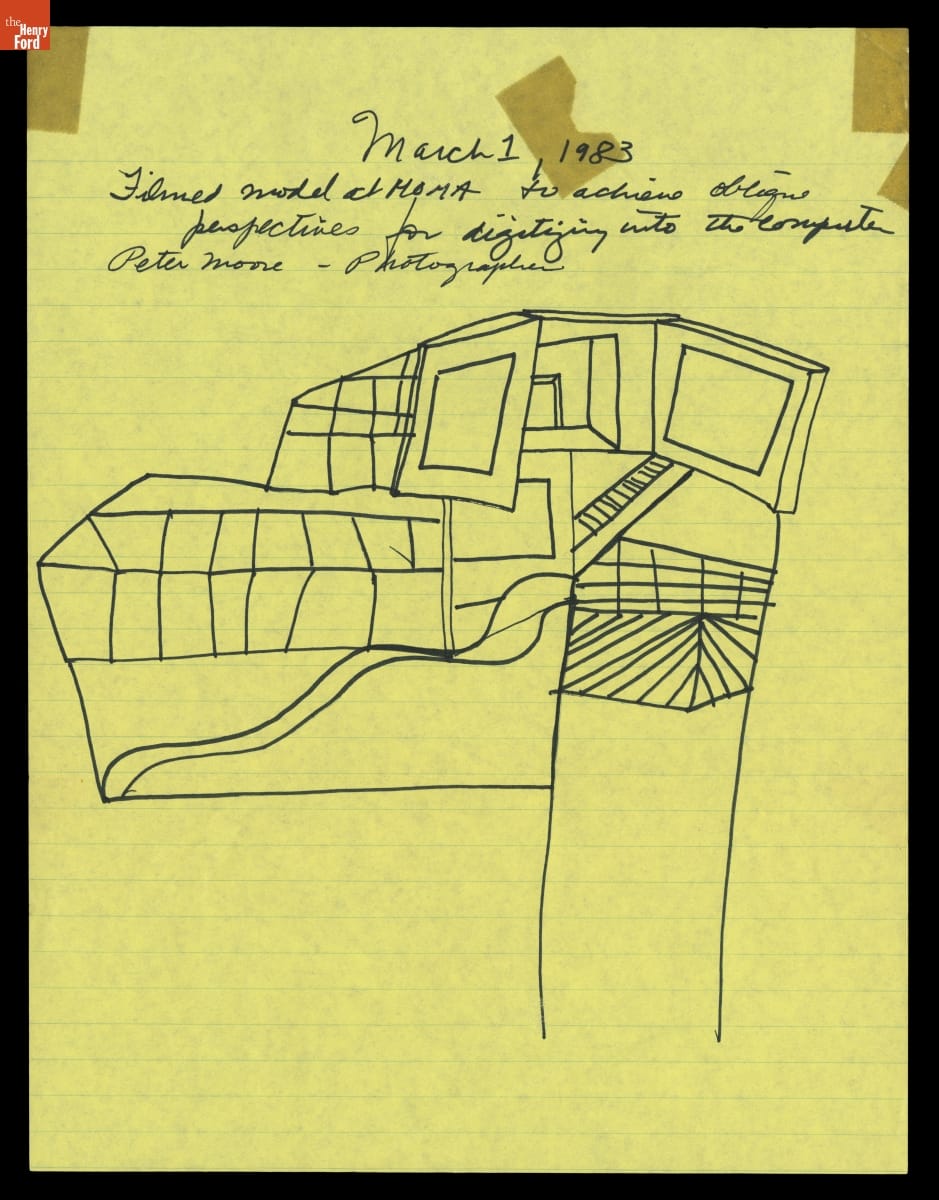
- Oblique Perspective of a Museum Exhibit Gallery, Digital Art Print, March 1, 1983 - Lillian Schwartz is a pioneer of computer-generated art. From 1969-2002, she was a "resident visitor" at Bell Laboratories, producing groundbreaking films, videos, and multimedia works. The Schwartz Collection spans Lillian's childhood into her late career, documenting an expansive mindset, mastery over traditional and experimental mediums alike--and above all--an ability to create inspirational connections between science, art, and technology.
- March 01, 1983
- Collections - Artifact
Oblique Perspective of a Museum Exhibit Gallery, Digital Art Print, March 1, 1983
Lillian Schwartz is a pioneer of computer-generated art. From 1969-2002, she was a "resident visitor" at Bell Laboratories, producing groundbreaking films, videos, and multimedia works. The Schwartz Collection spans Lillian's childhood into her late career, documenting an expansive mindset, mastery over traditional and experimental mediums alike--and above all--an ability to create inspirational connections between science, art, and technology.
- Computer-Generated Image of a MoMA Exhibit Gallery, Digital Art Print, 1984 - Lillian Schwartz is a pioneer of computer-generated art. From 1969-2002, she was a "resident visitor" at Bell Laboratories, producing groundbreaking films, videos, and multimedia works. The Schwartz Collection spans Lillian's childhood into her late career, documenting an expansive mindset, mastery over traditional and experimental mediums alike--and above all--an ability to create inspirational connections between science, art, and technology.
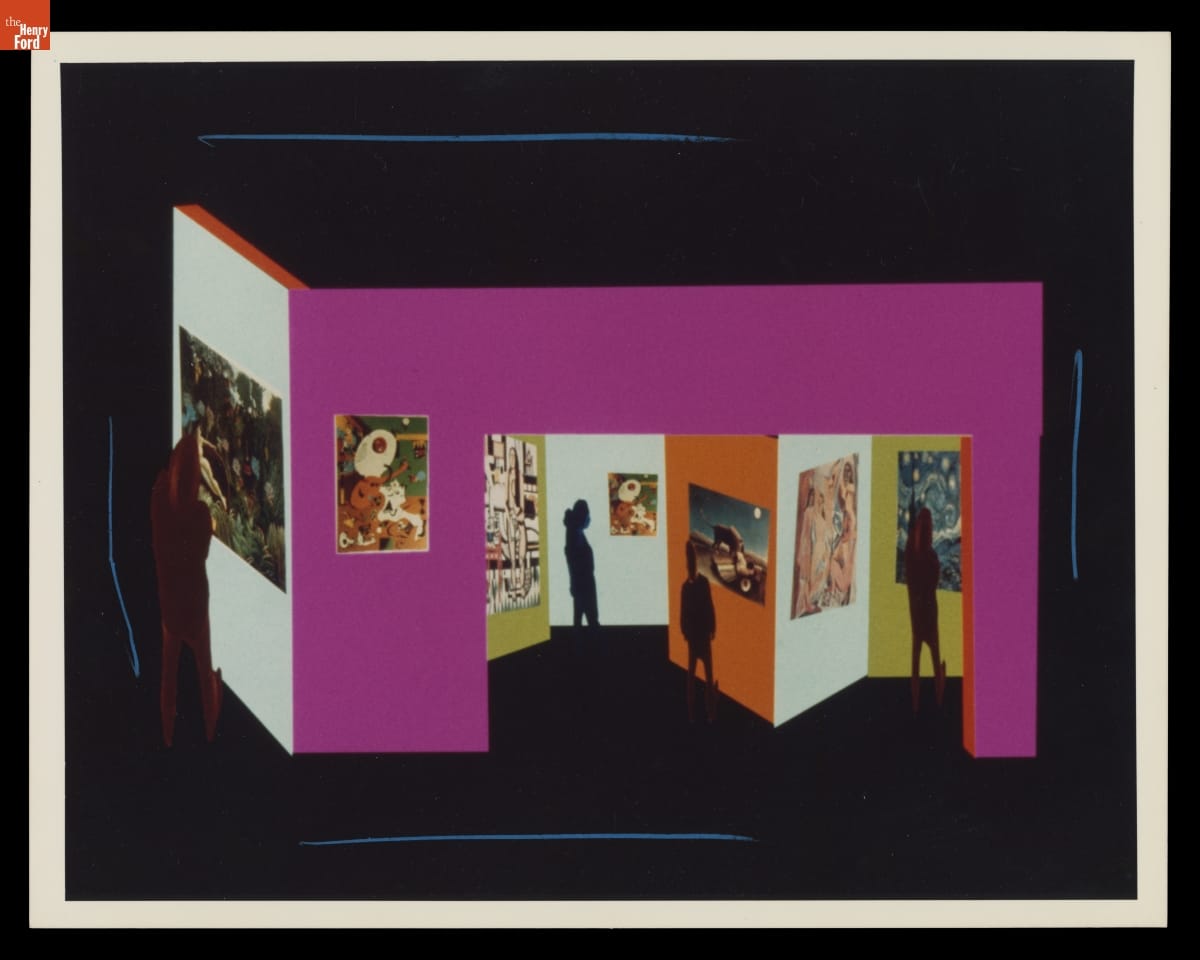
- 1984
- Collections - Artifact
Computer-Generated Image of a MoMA Exhibit Gallery, Digital Art Print, 1984
Lillian Schwartz is a pioneer of computer-generated art. From 1969-2002, she was a "resident visitor" at Bell Laboratories, producing groundbreaking films, videos, and multimedia works. The Schwartz Collection spans Lillian's childhood into her late career, documenting an expansive mindset, mastery over traditional and experimental mediums alike--and above all--an ability to create inspirational connections between science, art, and technology.
- "The Machine as Seen at the End of the Mechanical Age" Poster, 1968 - Lillian Schwartz is a pioneer of computer-generated art. From 1969-2002, she was a "resident visitor" at Bell Laboratories, producing groundbreaking films, videos, and multimedia works. The Schwartz Collection spans Lillian's childhood into her late career, documenting an expansive mindset, mastery over traditional and experimental mediums alike--and above all--an ability to create inspirational connections between science, art, and technology.
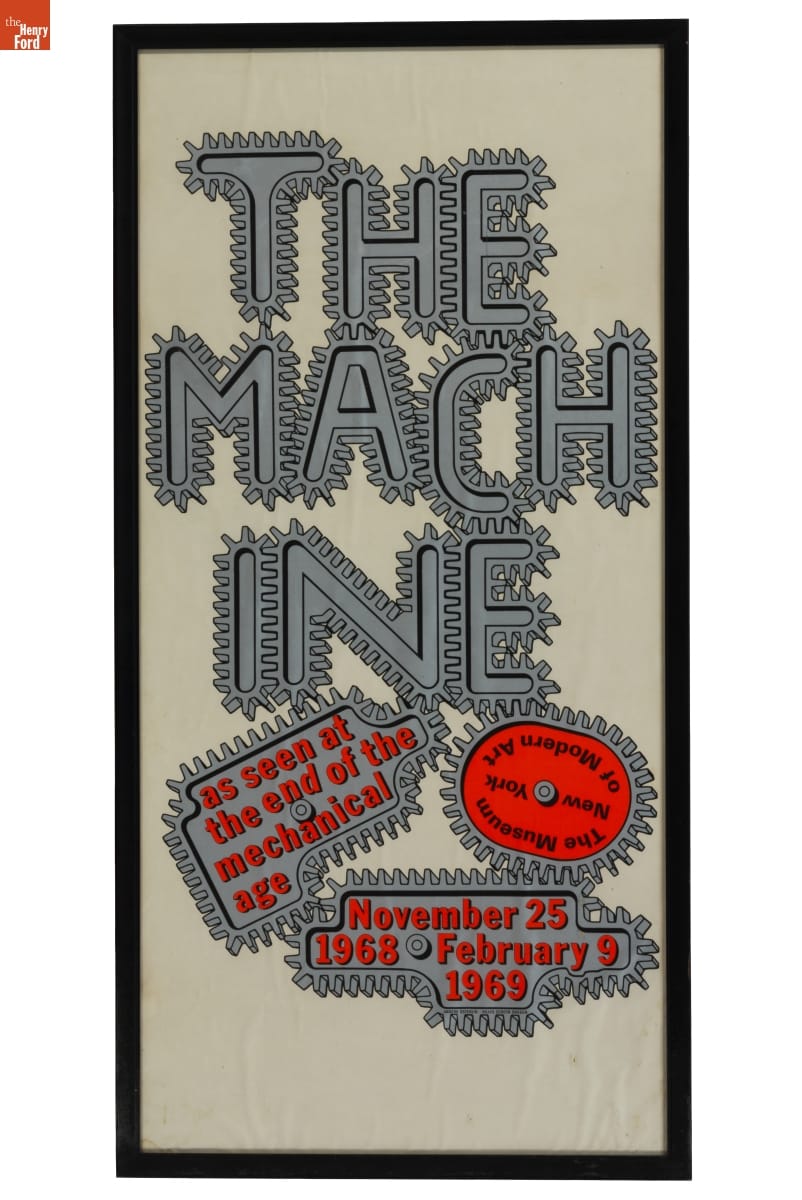
- 1968
- Collections - Artifact
"The Machine as Seen at the End of the Mechanical Age" Poster, 1968
Lillian Schwartz is a pioneer of computer-generated art. From 1969-2002, she was a "resident visitor" at Bell Laboratories, producing groundbreaking films, videos, and multimedia works. The Schwartz Collection spans Lillian's childhood into her late career, documenting an expansive mindset, mastery over traditional and experimental mediums alike--and above all--an ability to create inspirational connections between science, art, and technology.
- "The Every Piece of Art in the Museum of Modern Art Book," 2009 - Jason Polan was a Michigan-born, New York-based illustrator whose visual storytelling sought to elevate the everyday—with humor and care. This collection documents Polan's life and prolific art practice, spanning childhood to adulthood; he was also a convener of creative communities. Inspiration, ideation, and completed projects are represented in preparatory material, printed matter, publications, product design, artwork, and personal collecting.
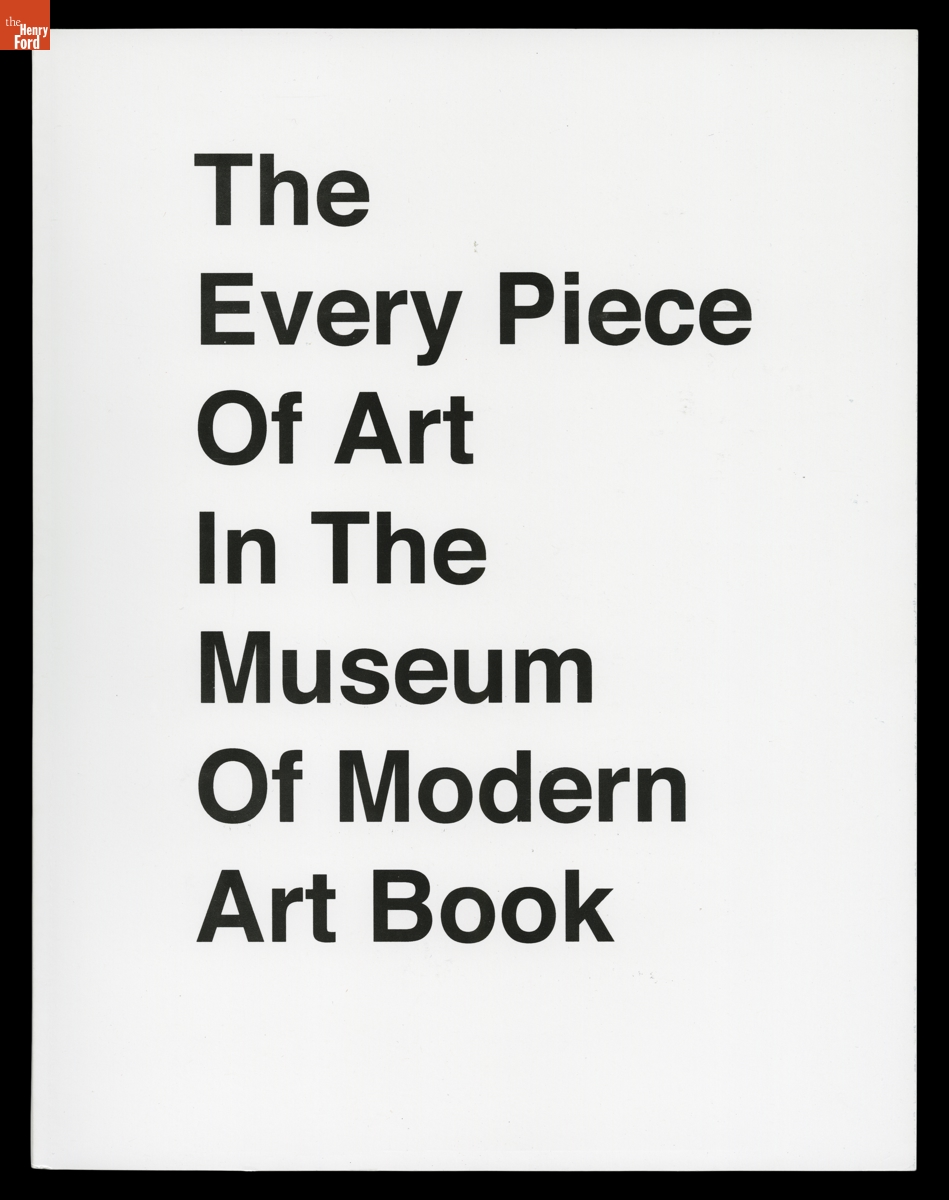
- 2009
- Collections - Artifact
"The Every Piece of Art in the Museum of Modern Art Book," 2009
Jason Polan was a Michigan-born, New York-based illustrator whose visual storytelling sought to elevate the everyday—with humor and care. This collection documents Polan's life and prolific art practice, spanning childhood to adulthood; he was also a convener of creative communities. Inspiration, ideation, and completed projects are represented in preparatory material, printed matter, publications, product design, artwork, and personal collecting.
- Juan Coronel Rivera, Grandson of Diego Rivera, Works on His "Day of the Dead" Exhibit in the Detroit Institute of Arts, 1991 - This photograph shows Juan Coronel Rivera installing an exhibit in the Detroit Institute of Art's Rivera Court -- named for his grandfather, Diego Rivera, who painted its famous murals. The exhibit celebrated Dia de los Muertos, or Day of the Dead. Flowers, candles, and small objects decorate the "graves" in the courtyard, recreating the look of cemeteries during the two-day holiday.
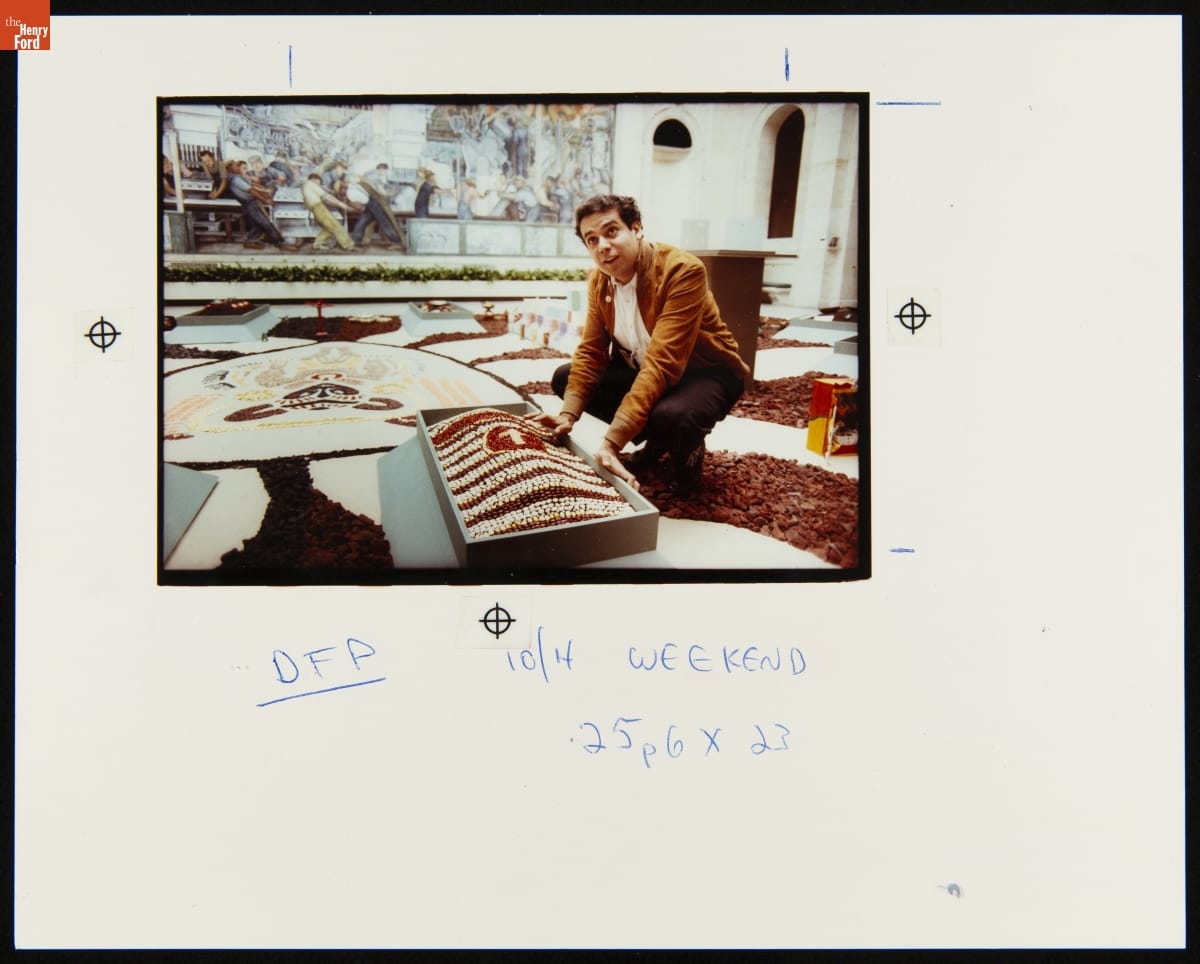
- 1991
- Collections - Artifact
Juan Coronel Rivera, Grandson of Diego Rivera, Works on His "Day of the Dead" Exhibit in the Detroit Institute of Arts, 1991
This photograph shows Juan Coronel Rivera installing an exhibit in the Detroit Institute of Art's Rivera Court -- named for his grandfather, Diego Rivera, who painted its famous murals. The exhibit celebrated Dia de los Muertos, or Day of the Dead. Flowers, candles, and small objects decorate the "graves" in the courtyard, recreating the look of cemeteries during the two-day holiday.
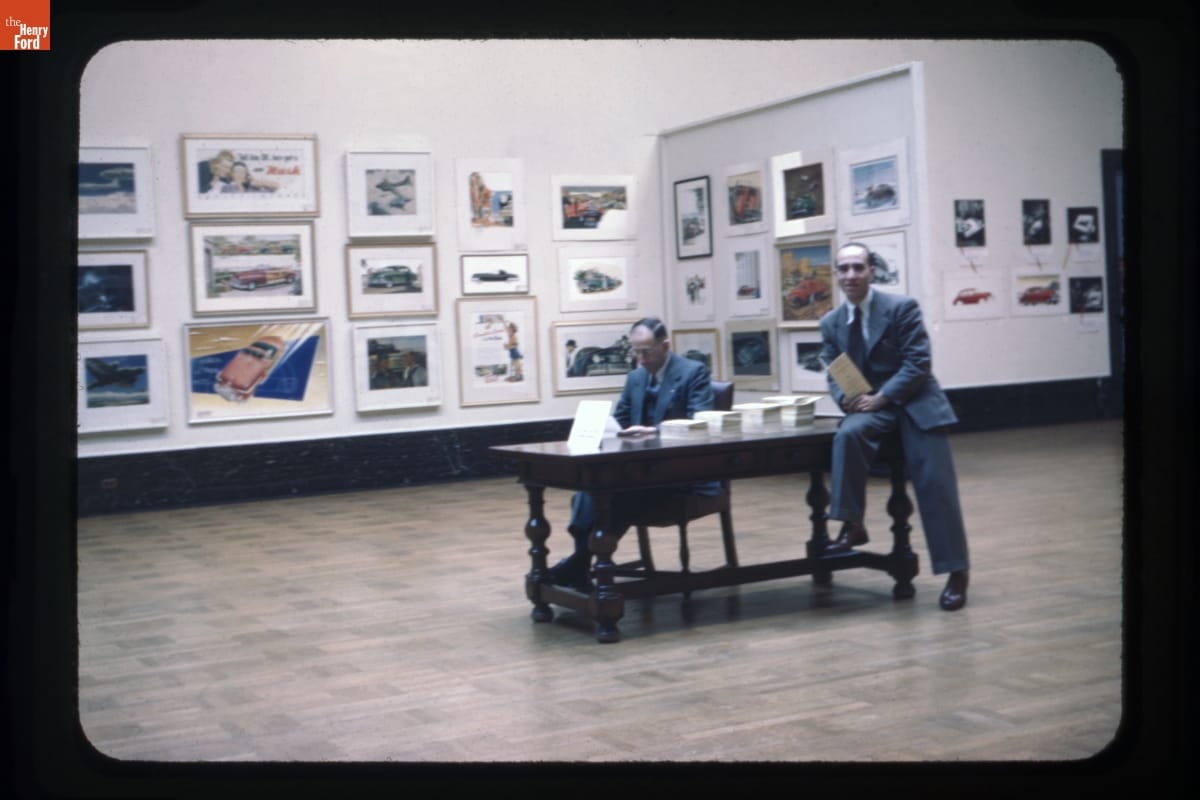
- Ford Motor Company Designers at the Detroit Institute of Arts, January 1947 - Designer John Najjar (right) was photographed with a colleague in January 1947 at the Detroit Institute of Arts, where the two men were surrounded by automotive art and advertisements. Established in 1885, the DIA grew into one of the most important art museums in the United States.
- January 01, 1947
- Collections - Artifact
Ford Motor Company Designers at the Detroit Institute of Arts, January 1947
Designer John Najjar (right) was photographed with a colleague in January 1947 at the Detroit Institute of Arts, where the two men were surrounded by automotive art and advertisements. Established in 1885, the DIA grew into one of the most important art museums in the United States.
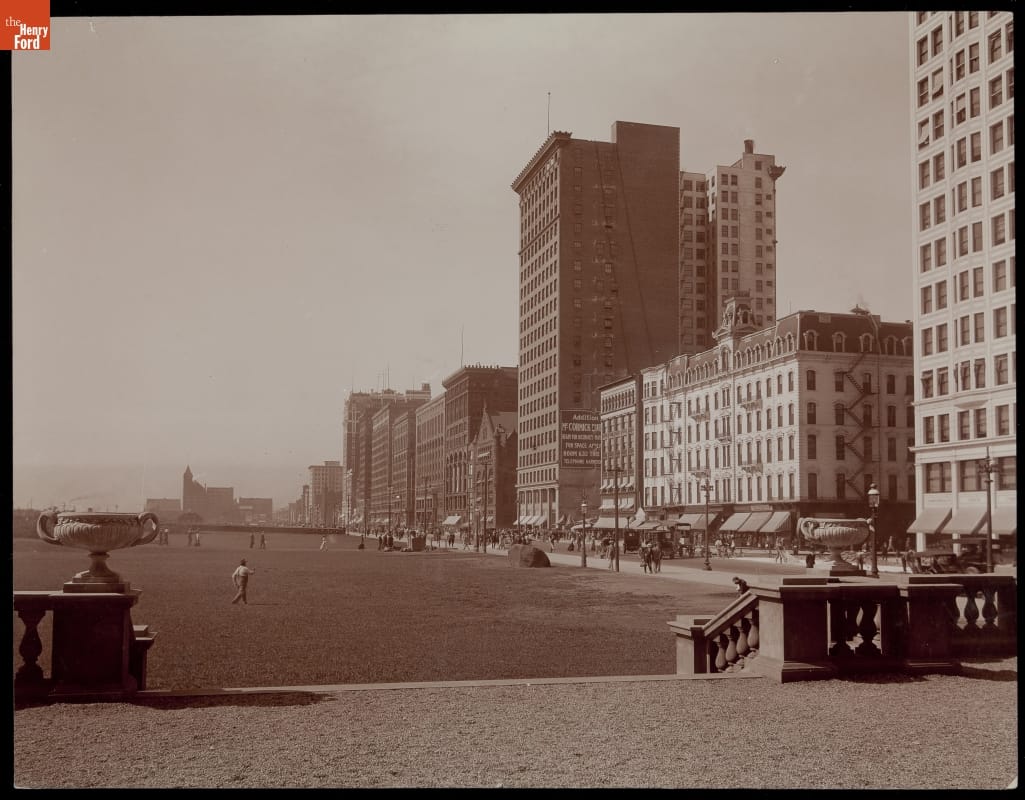
- South from Museum of Art, Chicago, Illinois, 1910-1915 - From 1895 to 1924, the Detroit Publishing Company was one of the world's major image publishers. It had a wide-ranging stock of original photographs, including this image of Chicago's Michigan Avenue. The street was one-sided, except for the Art Institute of Chicago, where this photograph was taken. The other buildings overlooked Grant Park and the street's namesake, Lake Michigan.
- 1900-1915
- Collections - Artifact
South from Museum of Art, Chicago, Illinois, 1910-1915
From 1895 to 1924, the Detroit Publishing Company was one of the world's major image publishers. It had a wide-ranging stock of original photographs, including this image of Chicago's Michigan Avenue. The street was one-sided, except for the Art Institute of Chicago, where this photograph was taken. The other buildings overlooked Grant Park and the street's namesake, Lake Michigan.