
Search
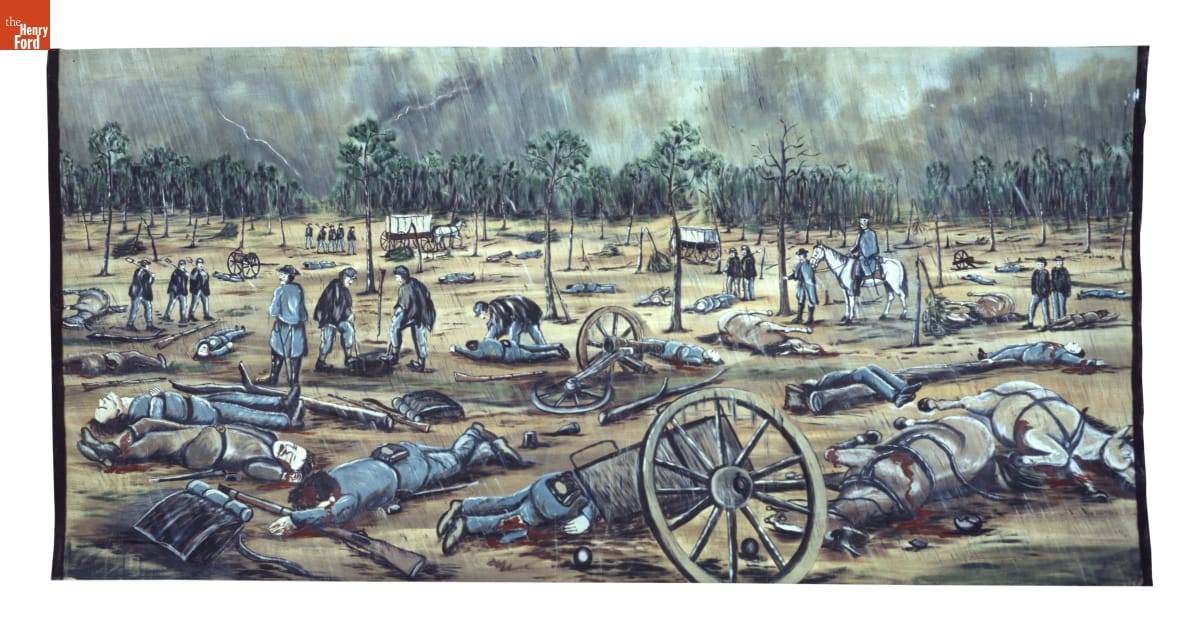
- "Battle Scenes of the Rebellion" Aftermath of Battle, Civil War Panorama - In the 1880s, Thomas Clarkson Gordon, a self-taught artist and Civil War veteran, created a panorama depicting scenes from the Civil War. Gordon stitched together 15 paintings -- each 7 by 14 feet -- into a canvas roll more than 100 feet long. He toured his multi-paneled panorama throughout eastern Indiana, retelling the history of the conflict through his vivid illustrations.
- 1861-1865
- Collections - Artifact
"Battle Scenes of the Rebellion" Aftermath of Battle, Civil War Panorama
In the 1880s, Thomas Clarkson Gordon, a self-taught artist and Civil War veteran, created a panorama depicting scenes from the Civil War. Gordon stitched together 15 paintings -- each 7 by 14 feet -- into a canvas roll more than 100 feet long. He toured his multi-paneled panorama throughout eastern Indiana, retelling the history of the conflict through his vivid illustrations.
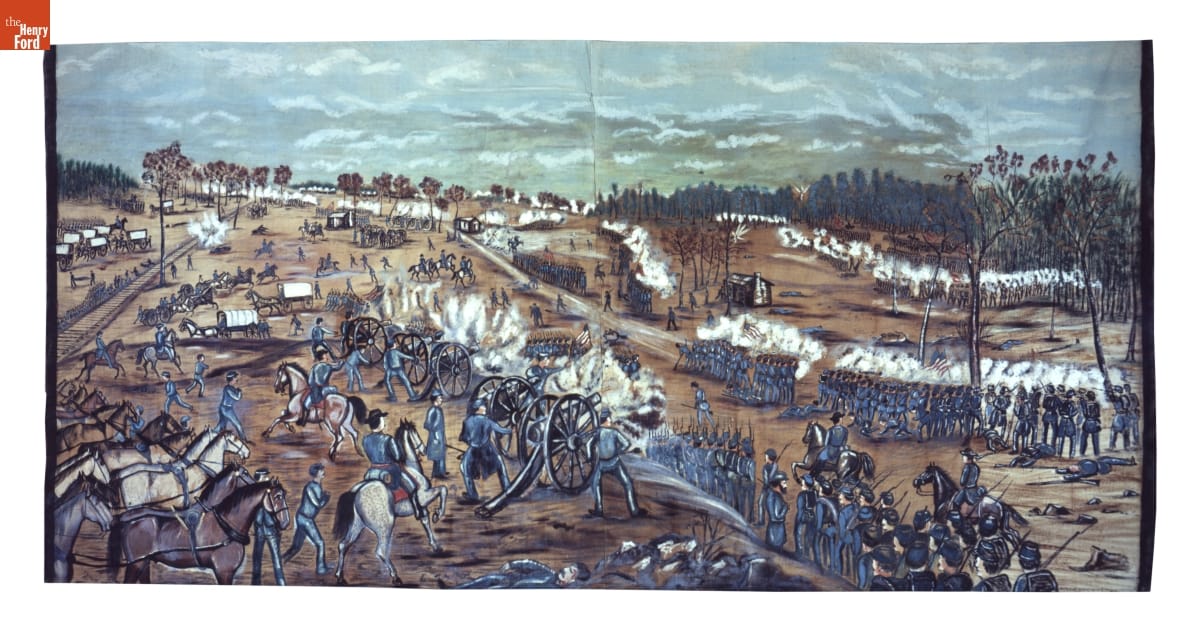
- "Battle Scenes of the Rebellion" Battle of Stones River, Civil War Panorama - In the 1880s, Thomas Clarkson Gordon, a self-taught artist and Civil War veteran, created a panorama depicting scenes from the Civil War. Gordon stitched together 15 paintings -- each 7 by 14 feet -- into a canvas roll more than 100 feet long. He toured his multi-paneled panorama throughout eastern Indiana, retelling the history of the conflict through his vivid illustrations.
- 31 December 1862-02 January 1863
- Collections - Artifact
"Battle Scenes of the Rebellion" Battle of Stones River, Civil War Panorama
In the 1880s, Thomas Clarkson Gordon, a self-taught artist and Civil War veteran, created a panorama depicting scenes from the Civil War. Gordon stitched together 15 paintings -- each 7 by 14 feet -- into a canvas roll more than 100 feet long. He toured his multi-paneled panorama throughout eastern Indiana, retelling the history of the conflict through his vivid illustrations.
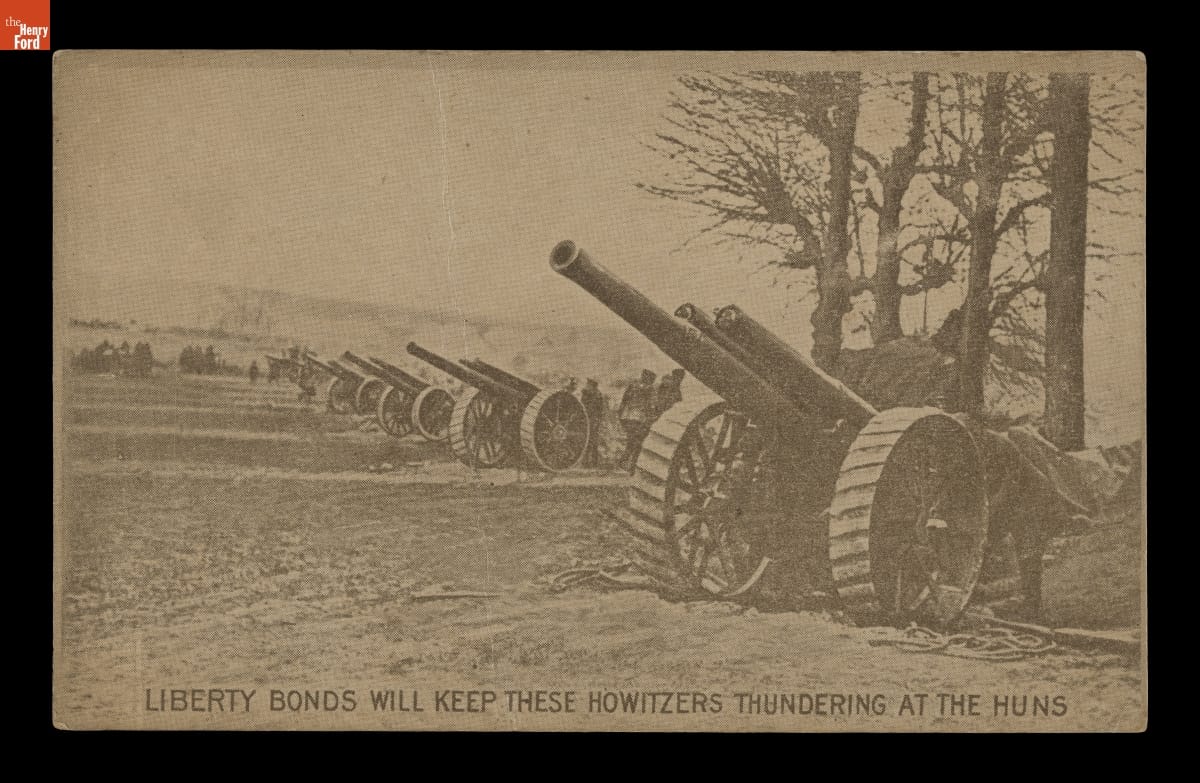
- "Liberty Bonds Will Keep These Howitzers Thundering at the Huns," circa 1918 - Andrew Purnell Jr. (1898-1975) was born in Selma, Alabama. He joined the all-Black 303rd Stevedore Regiment (with later unit designations) in December 1917. Private Purnell was stationed in Bordeaux, France. He returned to the U.S. in 1919, married, and worked as a railroad freight handler. Like many service members, Purnell kept cards, letters, photographs, and souvenirs from his time in the military.
- circa 1918
- Collections - Artifact
"Liberty Bonds Will Keep These Howitzers Thundering at the Huns," circa 1918
Andrew Purnell Jr. (1898-1975) was born in Selma, Alabama. He joined the all-Black 303rd Stevedore Regiment (with later unit designations) in December 1917. Private Purnell was stationed in Bordeaux, France. He returned to the U.S. in 1919, married, and worked as a railroad freight handler. Like many service members, Purnell kept cards, letters, photographs, and souvenirs from his time in the military.
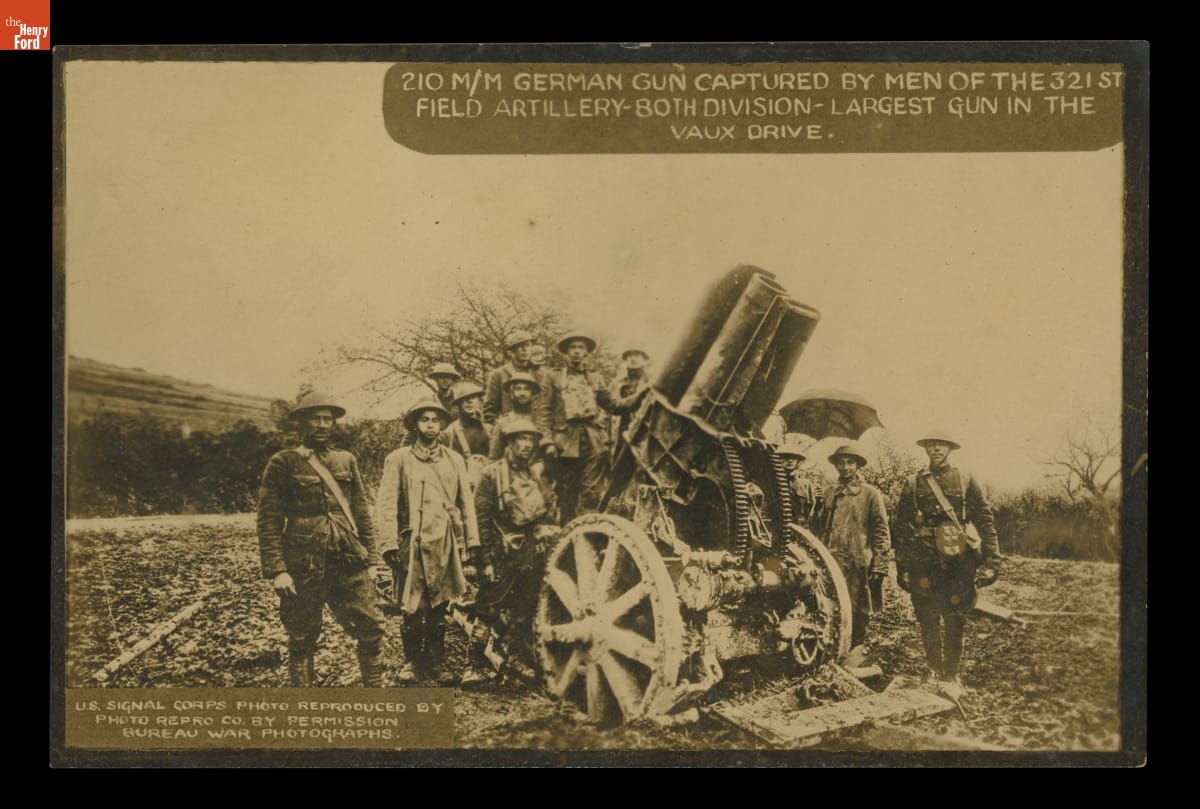
- "210 M/M German Gun Captured by Men of the 321st Field Artillery-8th Division-Largest Gun in the Vaux Drive," 1918 - Andrew Purnell Jr. (1898-1975) was born in Selma, Alabama. He joined the all-Black 303rd Stevedore Regiment (with later unit designations) in December 1917. Private Purnell was stationed in Bordeaux, France. He returned to the U.S. in 1919, married, and worked as a railroad freight handler. Like many service members, Purnell kept cards, letters, photographs, and souvenirs from his time in the military.
- November 15, 1918
- Collections - Artifact
"210 M/M German Gun Captured by Men of the 321st Field Artillery-8th Division-Largest Gun in the Vaux Drive," 1918
Andrew Purnell Jr. (1898-1975) was born in Selma, Alabama. He joined the all-Black 303rd Stevedore Regiment (with later unit designations) in December 1917. Private Purnell was stationed in Bordeaux, France. He returned to the U.S. in 1919, married, and worked as a railroad freight handler. Like many service members, Purnell kept cards, letters, photographs, and souvenirs from his time in the military.
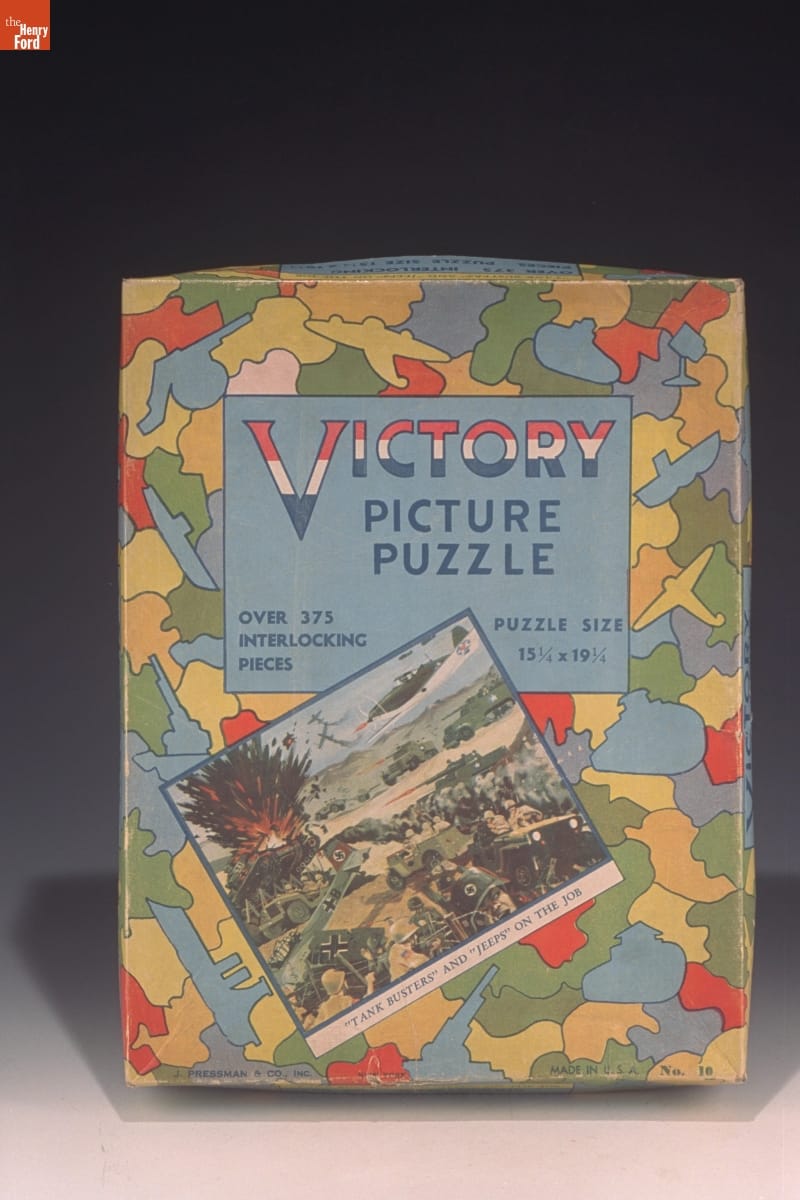
- Jigsaw Puzzle Depicting a World War II Scene, 1942-1945 - During World War II, patriotic symbols and images were found on a variety of common everyday items -- even jigsaw puzzles. When completed, this "Victory picture puzzle" depicts American-made planes and jeeps "on the job" defeating the German army. Several of the interlocking pieces even resemble planes, ships, and weapons used to beat the enemy.
- 1942-1945
- Collections - Artifact
Jigsaw Puzzle Depicting a World War II Scene, 1942-1945
During World War II, patriotic symbols and images were found on a variety of common everyday items -- even jigsaw puzzles. When completed, this "Victory picture puzzle" depicts American-made planes and jeeps "on the job" defeating the German army. Several of the interlocking pieces even resemble planes, ships, and weapons used to beat the enemy.
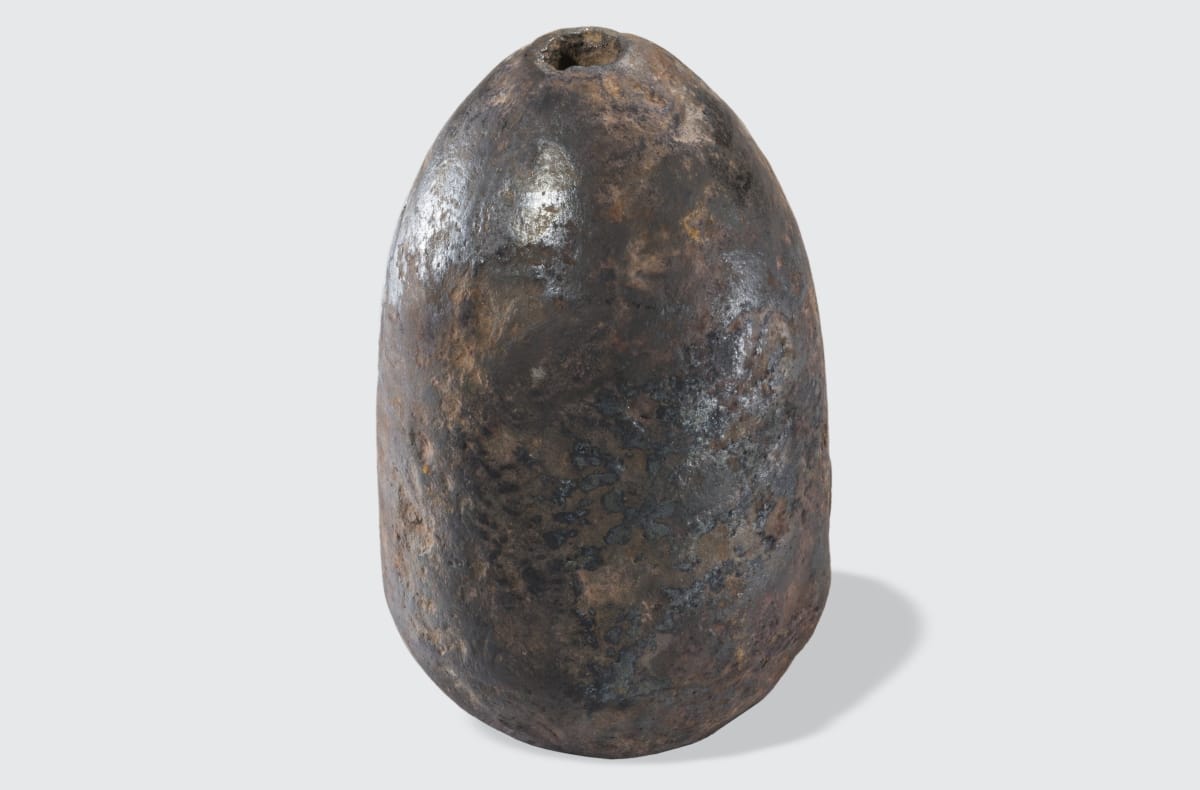
- Artillery Shell -
- Collections - Artifact
Artillery Shell
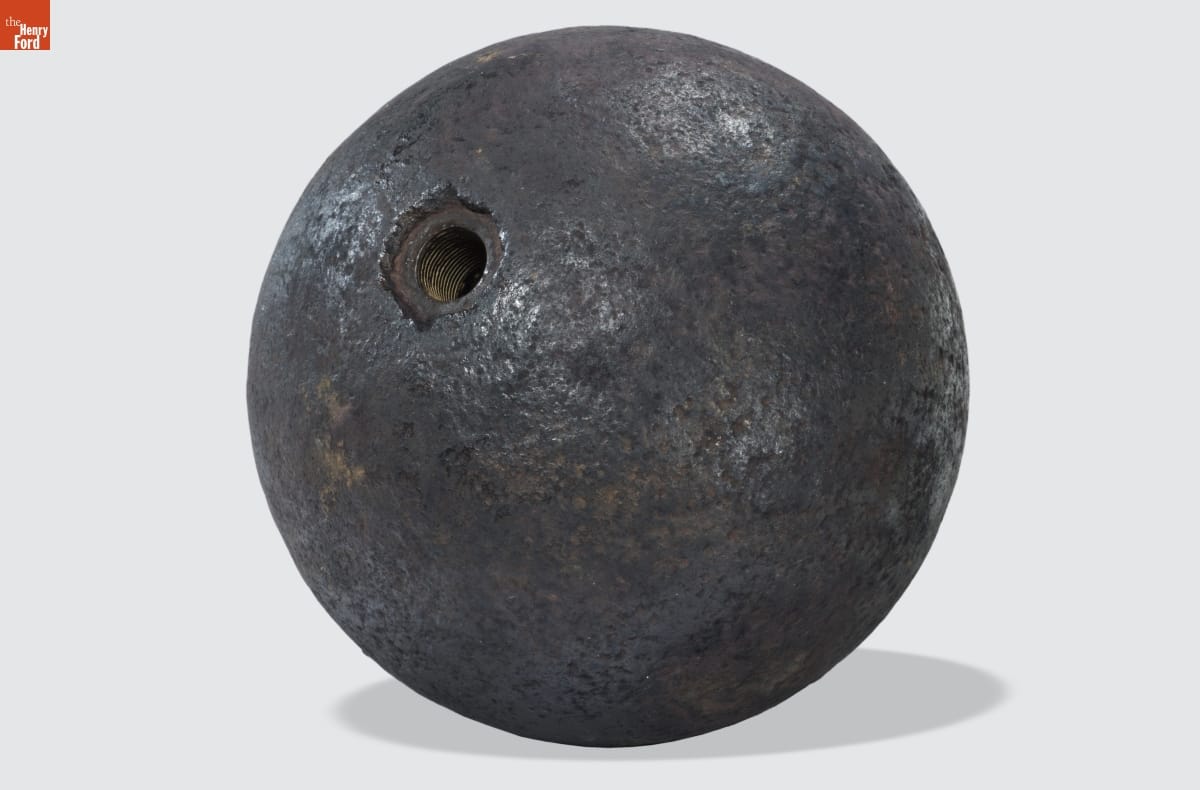
- Cannonball -
- Collections - Artifact
Cannonball
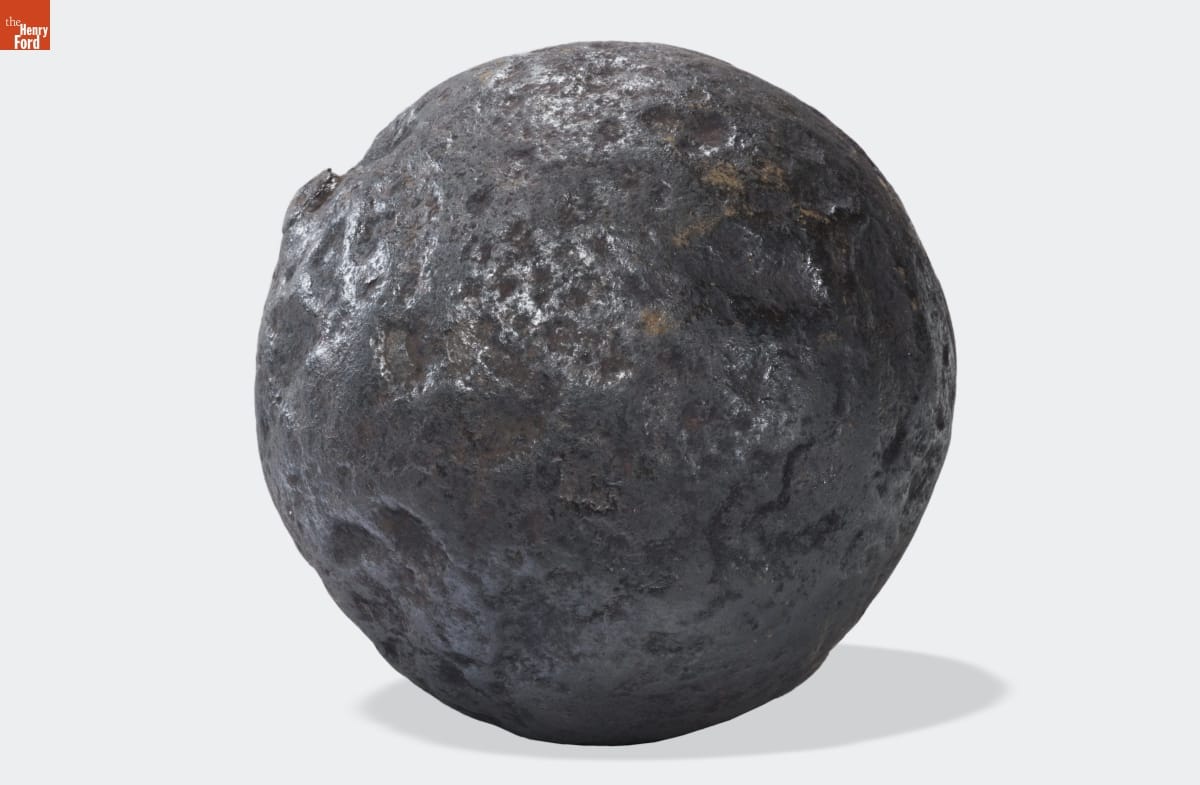
- Cannonball -
- Collections - Artifact
Cannonball
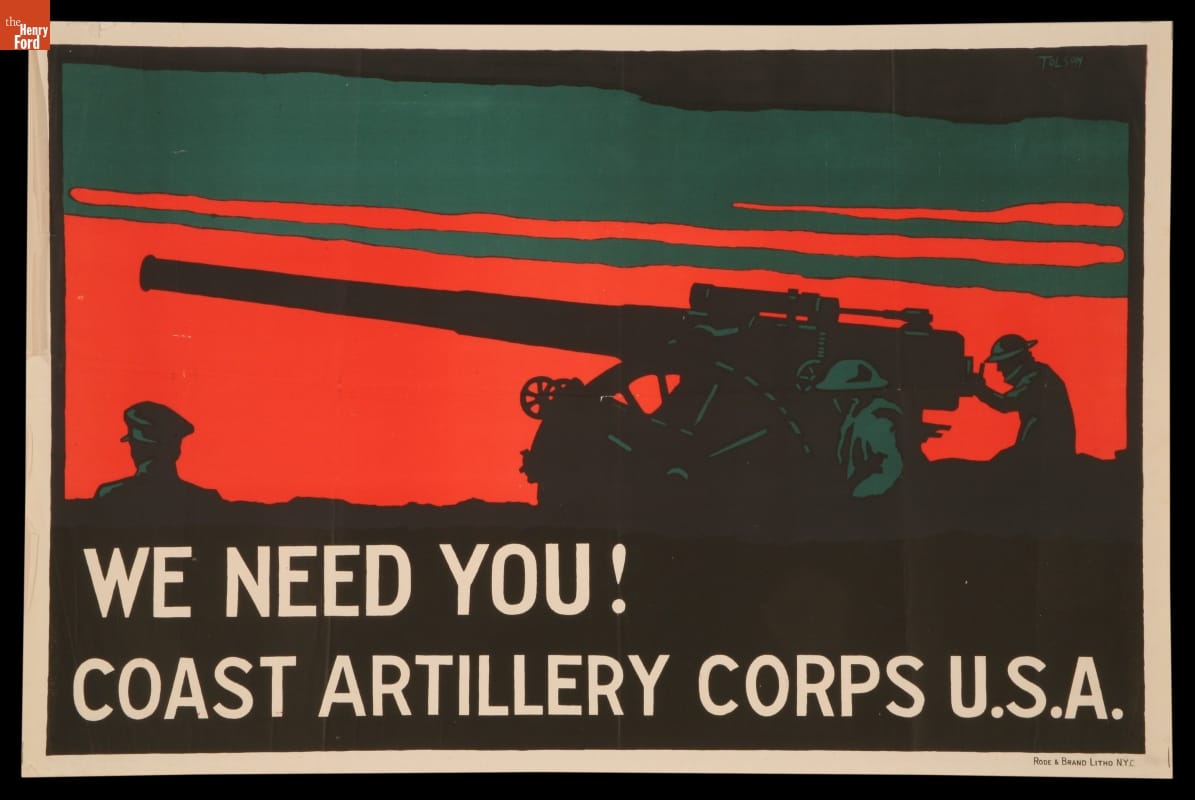
- World War I Recruiting Poster, "We Need You! Artillery Corps, U.S.A.," circa 1917 - During the First World War, governments of all the warring nations used poster campaigns to encourage civilian and military support of the war effort. Artists widely used an innovative advertising technique for these posters that moved away from a factual depiction of a product's material or event's subject to an emphasis on appealing to the viewer's emotions.
- circa 1917
- Collections - Artifact
World War I Recruiting Poster, "We Need You! Artillery Corps, U.S.A.," circa 1917
During the First World War, governments of all the warring nations used poster campaigns to encourage civilian and military support of the war effort. Artists widely used an innovative advertising technique for these posters that moved away from a factual depiction of a product's material or event's subject to an emphasis on appealing to the viewer's emotions.
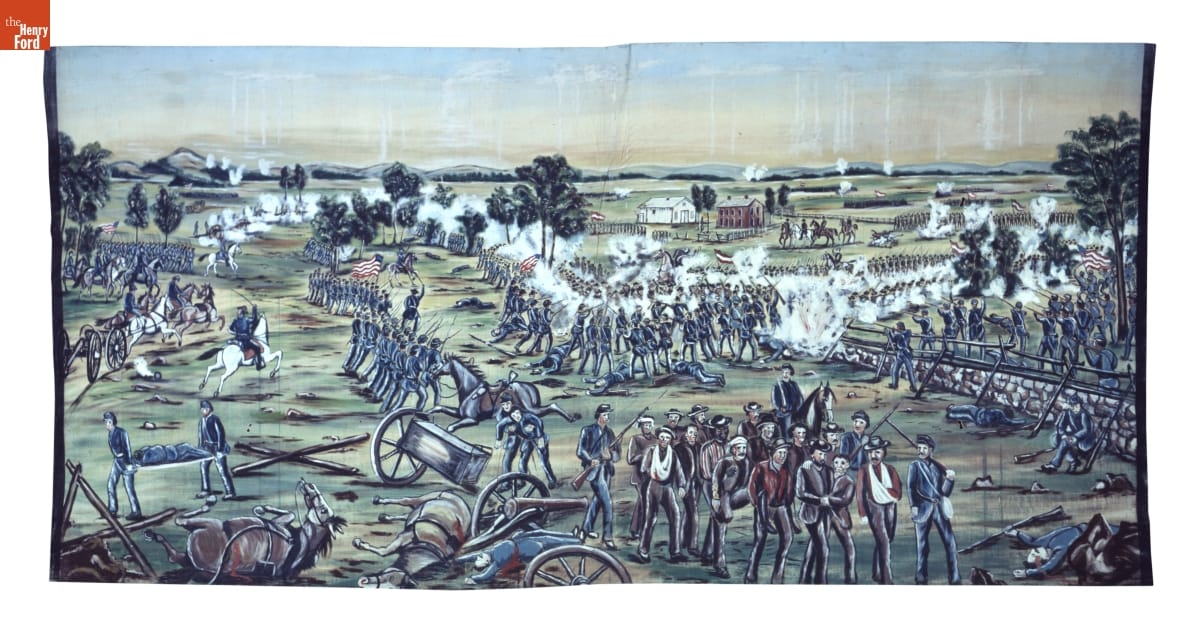
- "Battle Scenes of the Rebellion" Battle of Gettysburg, Civil War Panorama - In the 1880s, Thomas Clarkson Gordon, a self-taught artist and Civil War veteran, created a panorama depicting scenes from the Civil War. Gordon stitched together 15 paintings -- each 7 by 14 feet -- into a canvas roll more than 100 feet long. He toured his multi-paneled panorama throughout eastern Indiana, retelling the history of the conflict through his vivid illustrations.
- 01 July 1863-03 July 1863
- Collections - Artifact
"Battle Scenes of the Rebellion" Battle of Gettysburg, Civil War Panorama
In the 1880s, Thomas Clarkson Gordon, a self-taught artist and Civil War veteran, created a panorama depicting scenes from the Civil War. Gordon stitched together 15 paintings -- each 7 by 14 feet -- into a canvas roll more than 100 feet long. He toured his multi-paneled panorama throughout eastern Indiana, retelling the history of the conflict through his vivid illustrations.