
Search
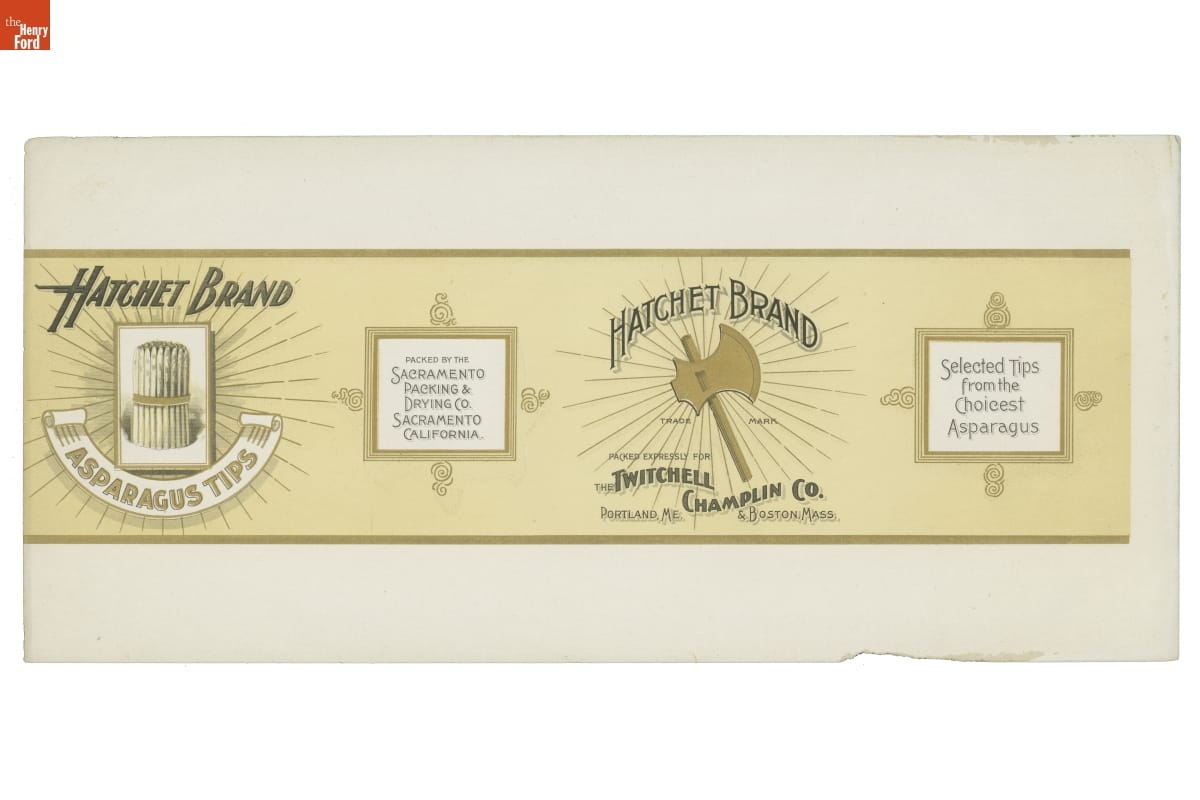
- Can Label, "Hatchet Brand Asparagus Tips," circa 1900 - Manufacturers of similar products sought ways to make their company's goods stand out on store shelves. Attractive labels, like this design for Hatchet Brand Asparagus Tips, helped catch the attention of potential customers, familiarize them with the brand image, and encourage them to purchase the company's product rather than that of a competitor.
- circa 1900
- Collections - Artifact
Can Label, "Hatchet Brand Asparagus Tips," circa 1900
Manufacturers of similar products sought ways to make their company's goods stand out on store shelves. Attractive labels, like this design for Hatchet Brand Asparagus Tips, helped catch the attention of potential customers, familiarize them with the brand image, and encourage them to purchase the company's product rather than that of a competitor.
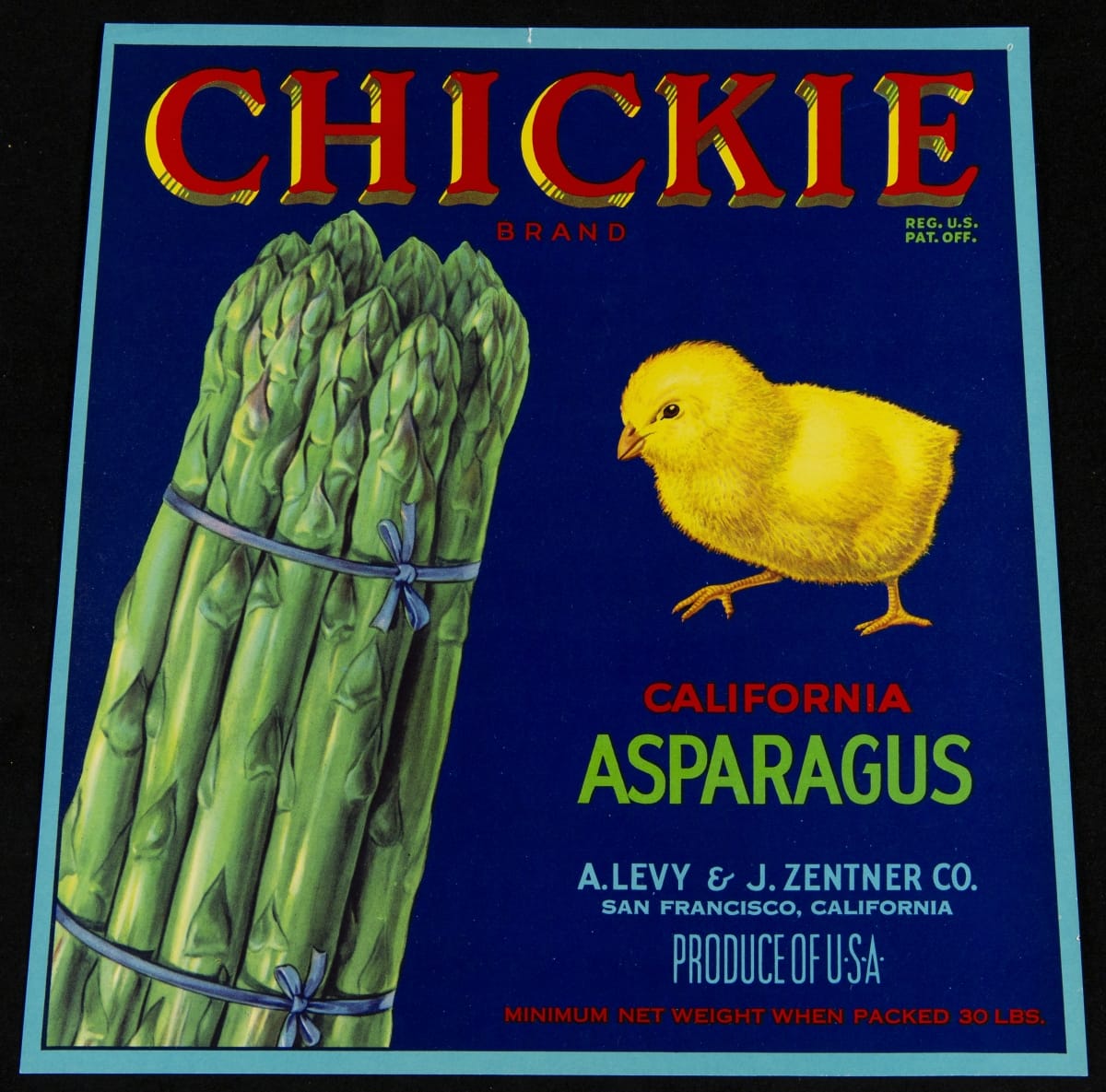
- Crate Label, "Chickie Brand California Asparagus," 1930-1950 - In 1869, the transcontinental railroad opened eastern markets to the West Coast produce industry for the first time. As produce companies shipped crates of fruits and vegetables across the country, they needed a way to distinguish their goods from their competitors'. Colorful, eye-catching labels, like this one for Chickie Brand California Asparagus, were created to attract grocers purchasing goods from wholesale markets.
- 1930-1950
- Collections - Artifact
Crate Label, "Chickie Brand California Asparagus," 1930-1950
In 1869, the transcontinental railroad opened eastern markets to the West Coast produce industry for the first time. As produce companies shipped crates of fruits and vegetables across the country, they needed a way to distinguish their goods from their competitors'. Colorful, eye-catching labels, like this one for Chickie Brand California Asparagus, were created to attract grocers purchasing goods from wholesale markets.
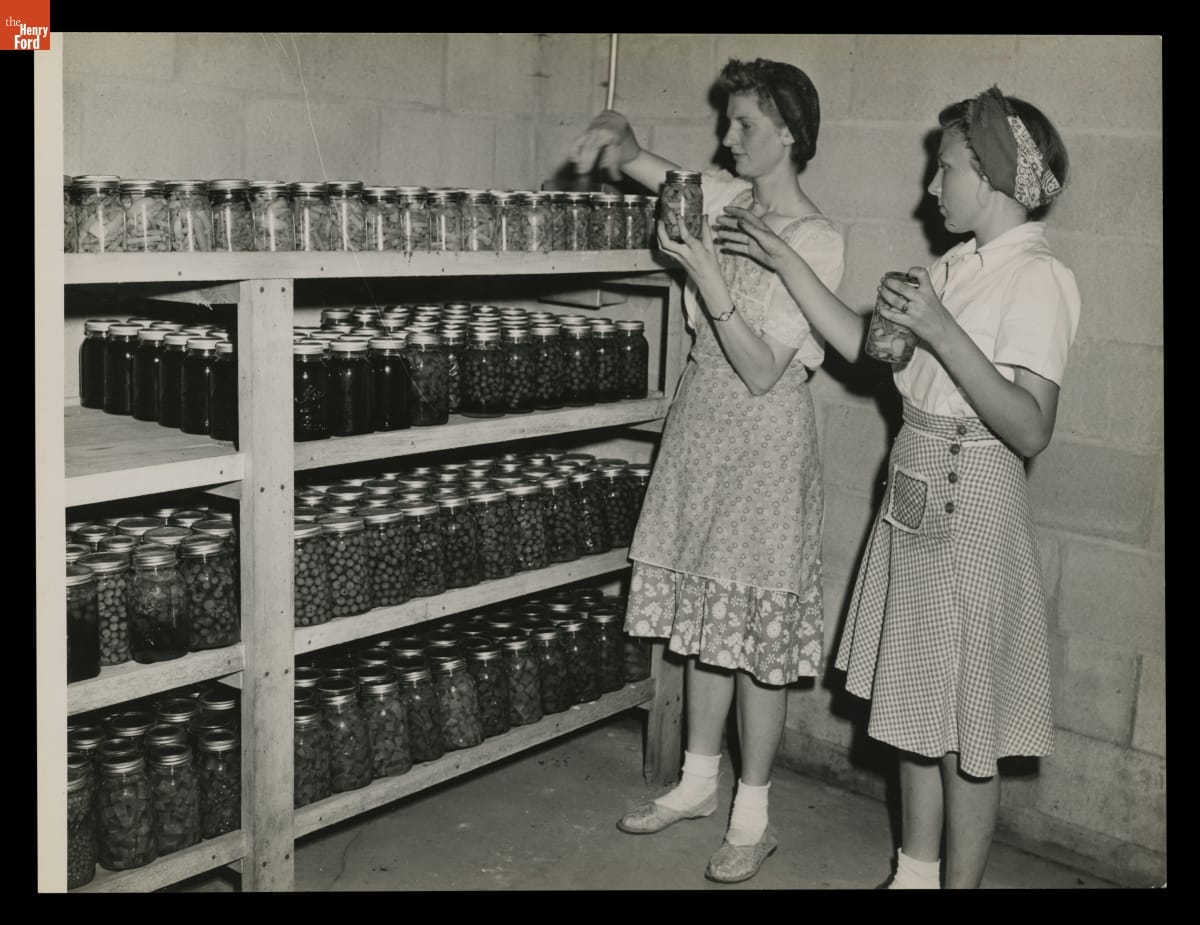
- Macon (Michigan) High School Students Marjorie Korth and Joan Cadmus Organize Jars of Asparagus on Shelves, August 1943 -
- August 23, 1943
- Collections - Artifact
Macon (Michigan) High School Students Marjorie Korth and Joan Cadmus Organize Jars of Asparagus on Shelves, August 1943
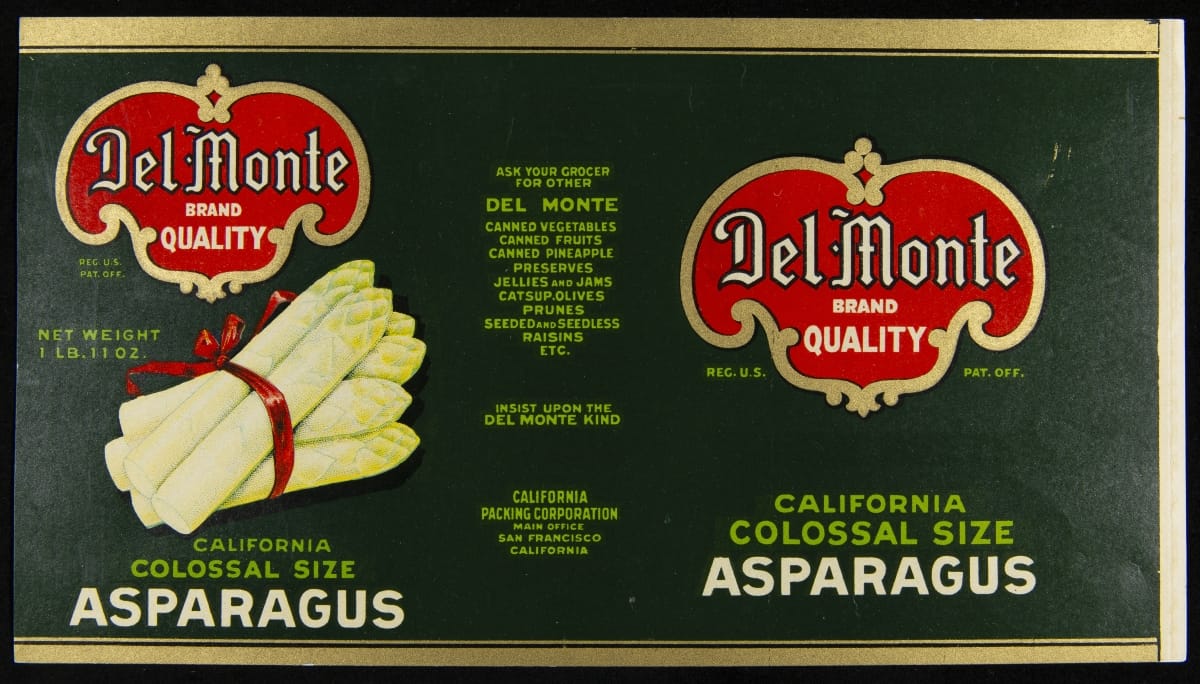
- Can Label, "Del Monte Brand Asparagus," circa 1920 - Manufacturers of similar products sought ways to make their companies' goods stand out on store shelves. Some companies established a uniform label design for their multi-product offerings -- a strategy which helped customers distinguish one brand over another. Del Monte Brand products were identified by the company's characteristic green label and its signature "shield" logo. These design features are still found on Del Monte products today.
- circa 1920
- Collections - Artifact
Can Label, "Del Monte Brand Asparagus," circa 1920
Manufacturers of similar products sought ways to make their companies' goods stand out on store shelves. Some companies established a uniform label design for their multi-product offerings -- a strategy which helped customers distinguish one brand over another. Del Monte Brand products were identified by the company's characteristic green label and its signature "shield" logo. These design features are still found on Del Monte products today.
- Photograph Album, California Packing Corporation Operations, circa 1922 -
- circa 1922
- Collections - Artifact
Photograph Album, California Packing Corporation Operations, circa 1922
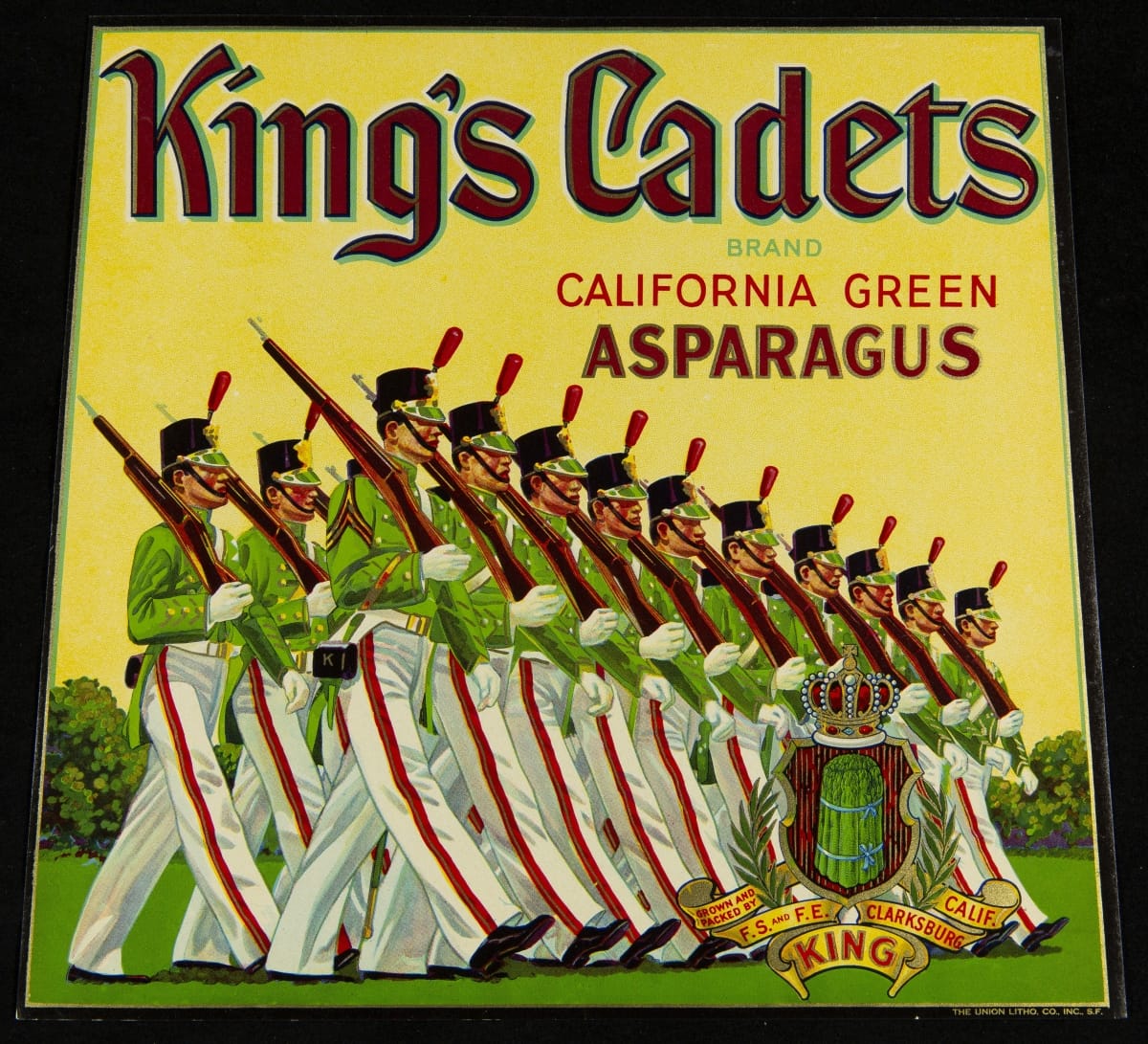
- Crate Label, "King's Cadets Brand Asparagus," circa 1940 - In 1869, the transcontinental railroad opened eastern markets to the West Coast produce industry for the first time. As produce companies shipped crates of fruits and vegetables across the country, they needed a way to distinguish their goods from their competitors'. Colorful, eye-catching labels, like this one for King's Cadets Brand Asparagus, were created to attract grocers purchasing goods from wholesale markets.
- circa 1940
- Collections - Artifact
Crate Label, "King's Cadets Brand Asparagus," circa 1940
In 1869, the transcontinental railroad opened eastern markets to the West Coast produce industry for the first time. As produce companies shipped crates of fruits and vegetables across the country, they needed a way to distinguish their goods from their competitors'. Colorful, eye-catching labels, like this one for King's Cadets Brand Asparagus, were created to attract grocers purchasing goods from wholesale markets.
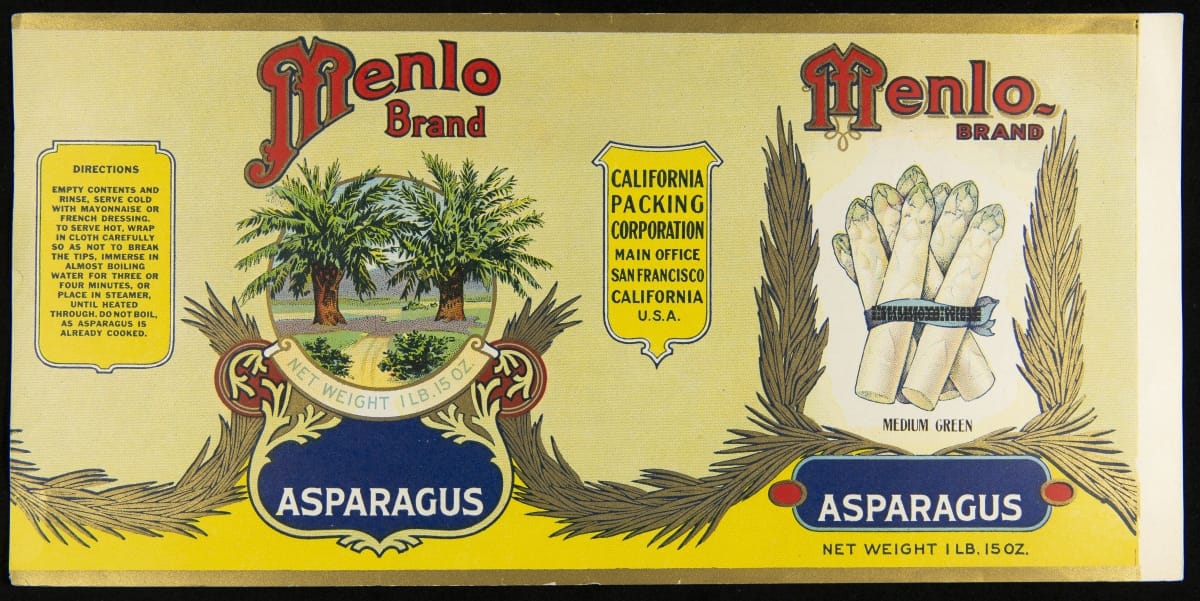
- Can Label, "Menlo Brand Asparagus," circa 1916 - Manufacturers of similar products sought ways to make their company's goods stand out on store shelves. Attractive labels, like this design for Menlo Brand Asparagus, helped catch the attention of potential customers - hopefully encouraging them to purchase the company's product rather than that of a competitor.
- circa 1916
- Collections - Artifact
Can Label, "Menlo Brand Asparagus," circa 1916
Manufacturers of similar products sought ways to make their company's goods stand out on store shelves. Attractive labels, like this design for Menlo Brand Asparagus, helped catch the attention of potential customers - hopefully encouraging them to purchase the company's product rather than that of a competitor.
- Photograph Album, Asparagus Production, California Packing Corporation, circa 1925 -
- circa 1925
- Collections - Artifact
Photograph Album, Asparagus Production, California Packing Corporation, circa 1925
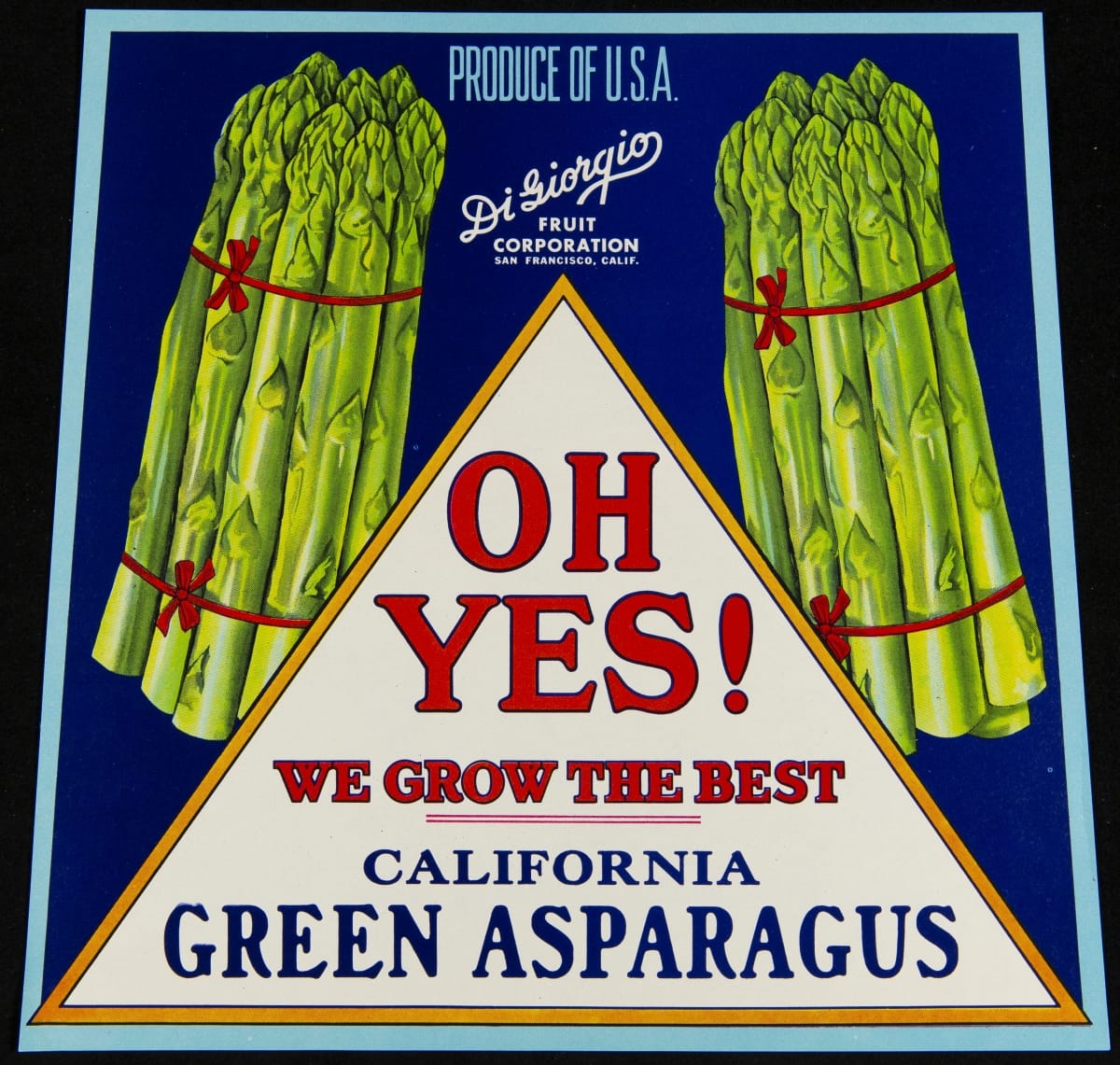
- Crate Label, "Oh Yes! We Grow the Best Brand California Green Asparagus," circa 1940 - In 1869, the transcontinental railroad opened eastern markets to the West Coast produce industry for the first time. As competition among packing companies increased, labels were used to help companies distinguish themselves from their competitors. Colorful labels and catchy brand names, like the "Oh Yes! We Grow the Best" Brand by Di Giorgio Fruit Corporation, attracted the attention of grocers purchasing their goods at wholesale markets.
- circa 1940
- Collections - Artifact
Crate Label, "Oh Yes! We Grow the Best Brand California Green Asparagus," circa 1940
In 1869, the transcontinental railroad opened eastern markets to the West Coast produce industry for the first time. As competition among packing companies increased, labels were used to help companies distinguish themselves from their competitors. Colorful labels and catchy brand names, like the "Oh Yes! We Grow the Best" Brand by Di Giorgio Fruit Corporation, attracted the attention of grocers purchasing their goods at wholesale markets.
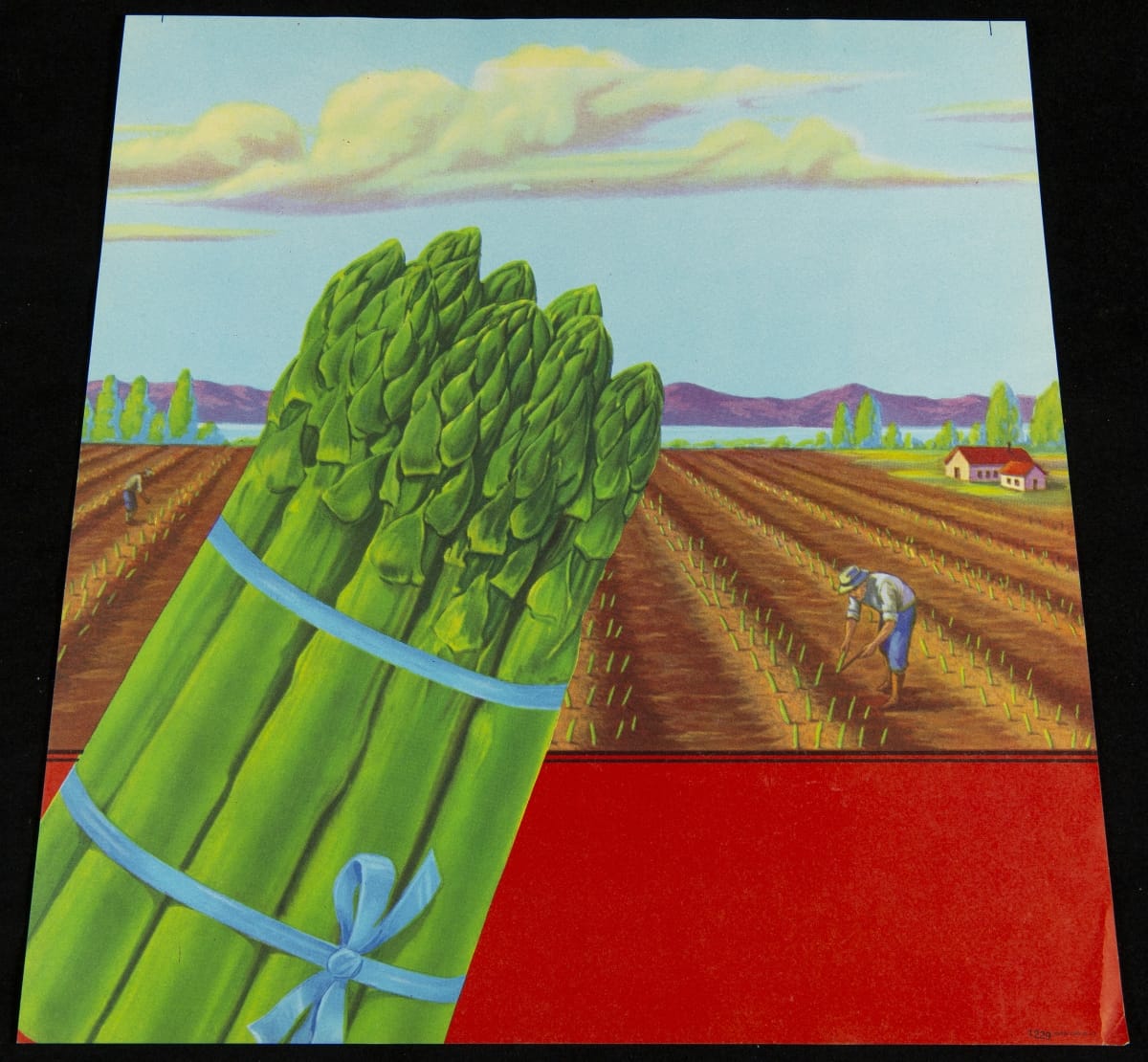
- Stock Crate Label for an Unknown Brand of Asparagus, 1906-1966 - While many lithography firms of the-late 19th to early 20th-centuries created custom labels for companies, they also created stock labels devoid of product or company identification. A cheaper alternative to custom designs, stock labels allowed a generic image to be selected and the brand name to be incorporated into the design. This stock image for asparagus was created by the Schmidt Lithograph Company.
- 1906-1966
- Collections - Artifact
Stock Crate Label for an Unknown Brand of Asparagus, 1906-1966
While many lithography firms of the-late 19th to early 20th-centuries created custom labels for companies, they also created stock labels devoid of product or company identification. A cheaper alternative to custom designs, stock labels allowed a generic image to be selected and the brand name to be incorporated into the design. This stock image for asparagus was created by the Schmidt Lithograph Company.