
Search
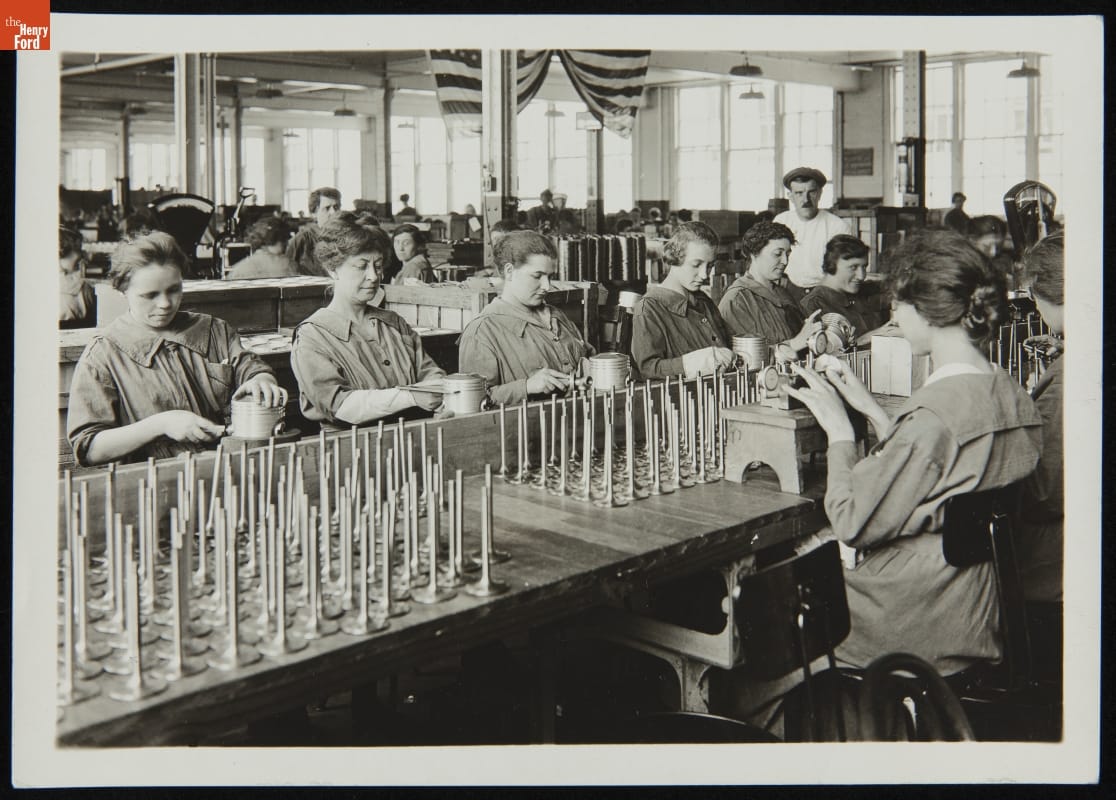
- Women Workers at Lincoln Motor Company Plant, Assembly of Liberty Engines, 1917-1918 - During World War I, American women stepped into jobs traditionally held by men. Women were an important part of the wartime workforce at Lincoln Motor Company. Henry Leland formed Lincoln in 1917 to manufacture Liberty aircraft engines for the Allied Powers. Lincoln employees built 6,500 engines during the war. Packard, Ford, Marmon, Buick, and Cadillac produced Liberty engines too.
- 1917-1918
- Collections - Artifact
Women Workers at Lincoln Motor Company Plant, Assembly of Liberty Engines, 1917-1918
During World War I, American women stepped into jobs traditionally held by men. Women were an important part of the wartime workforce at Lincoln Motor Company. Henry Leland formed Lincoln in 1917 to manufacture Liberty aircraft engines for the Allied Powers. Lincoln employees built 6,500 engines during the war. Packard, Ford, Marmon, Buick, and Cadillac produced Liberty engines too.
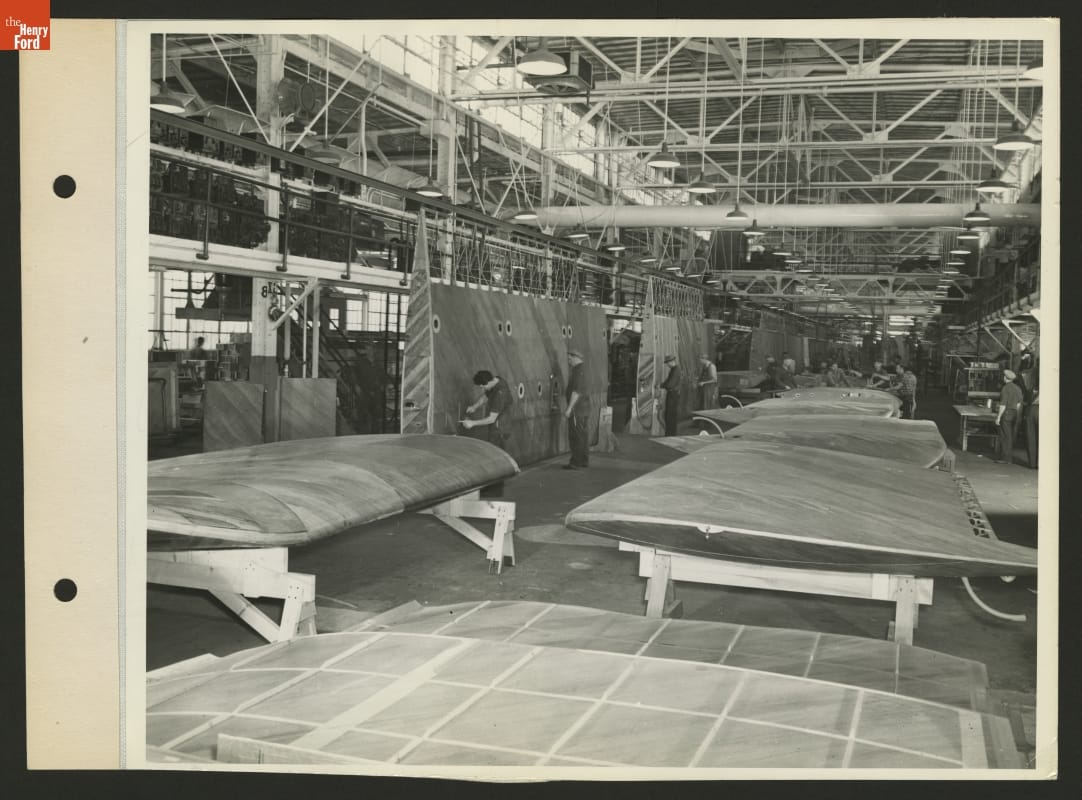
- Workers on Assembly Line for Glider Production, Iron Mountain, Michigan, 1942 - Ford's Iron Mountain plant, part of an extensive sawmill complex in Michigan's Upper Peninsula, was retooled during World War II to produce wooden CG-4A gliders for the U.S. Army. Here, workers assemble the light aircraft, which had no motor or propellers. A pilot and copilot could silently land these gliders to deliver supplies, equipment, or up to 13 additional soldiers.
- December 20, 1942
- Collections - Artifact
Workers on Assembly Line for Glider Production, Iron Mountain, Michigan, 1942
Ford's Iron Mountain plant, part of an extensive sawmill complex in Michigan's Upper Peninsula, was retooled during World War II to produce wooden CG-4A gliders for the U.S. Army. Here, workers assemble the light aircraft, which had no motor or propellers. A pilot and copilot could silently land these gliders to deliver supplies, equipment, or up to 13 additional soldiers.
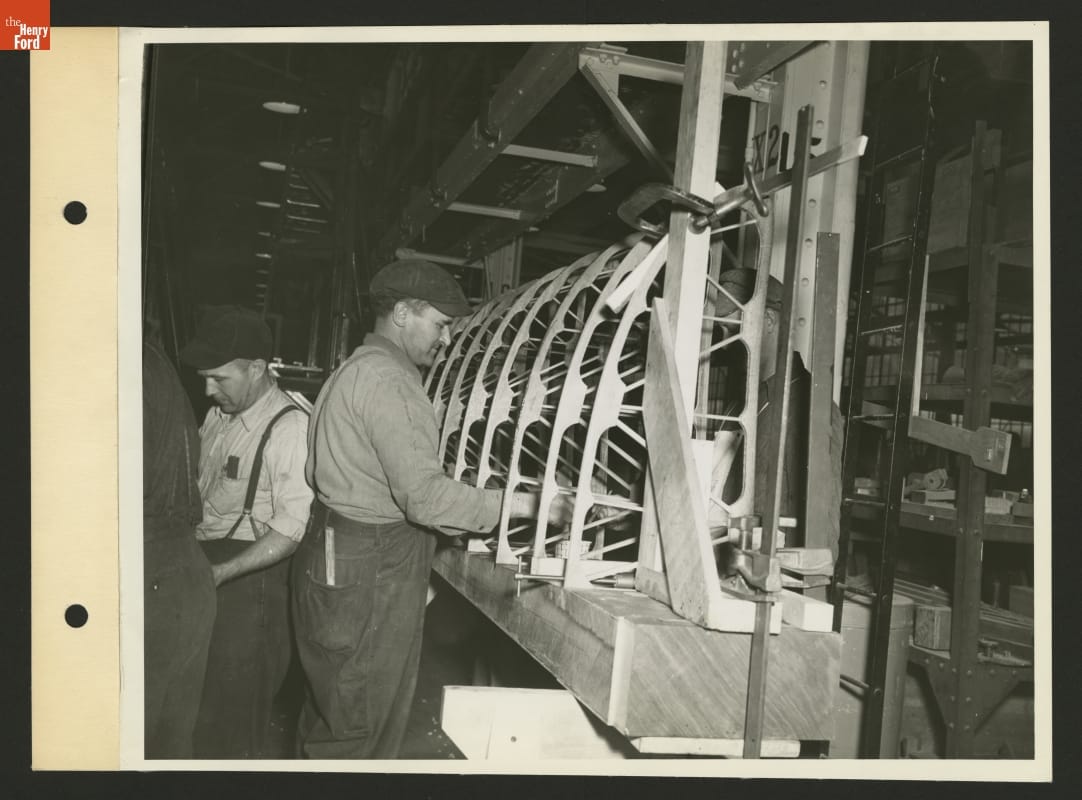
- Workmen Assembling Gliders, Iron Mountain, Michigan, 1942 - Ford's Iron Mountain plant, part of an extensive sawmill complex in Michigan's Upper Peninsula, was retooled during World War II to produce wooden CG-4A gliders for the U.S. Army. Here, workers assemble the light aircraft, which had no motor or propellers. A pilot and copilot could silently land these gliders to deliver supplies, equipment, or up to 13 additional soldiers.
- December 20, 1942
- Collections - Artifact
Workmen Assembling Gliders, Iron Mountain, Michigan, 1942
Ford's Iron Mountain plant, part of an extensive sawmill complex in Michigan's Upper Peninsula, was retooled during World War II to produce wooden CG-4A gliders for the U.S. Army. Here, workers assemble the light aircraft, which had no motor or propellers. A pilot and copilot could silently land these gliders to deliver supplies, equipment, or up to 13 additional soldiers.
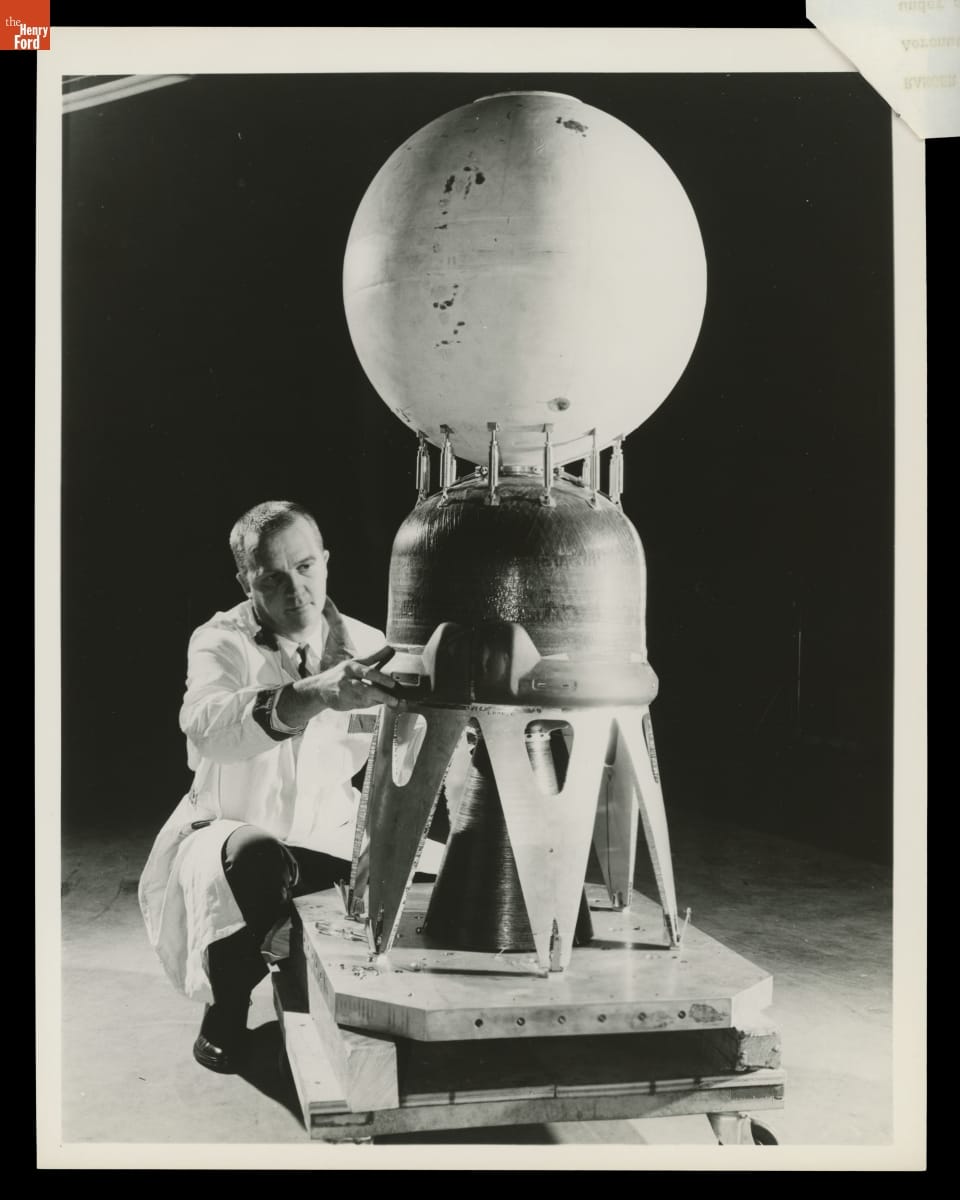
- Lunar Capsule and Retrorocket for NASA Ranger 3 Spacecraft Being Assembled, April 1960 - Ford Motor Company established the core of its aerospace division in 1956. Based in Newport Beach, California, the division and its subsidiaries manufactured satellites, missiles, and defense systems. It also played an important role in developing the Mission Control facility near Houston, Texas, that directed NASA's Gemini and Apollo space missions. Ford sold its aerospace division in 1990.
- April 26, 1960
- Collections - Artifact
Lunar Capsule and Retrorocket for NASA Ranger 3 Spacecraft Being Assembled, April 1960
Ford Motor Company established the core of its aerospace division in 1956. Based in Newport Beach, California, the division and its subsidiaries manufactured satellites, missiles, and defense systems. It also played an important role in developing the Mission Control facility near Houston, Texas, that directed NASA's Gemini and Apollo space missions. Ford sold its aerospace division in 1990.
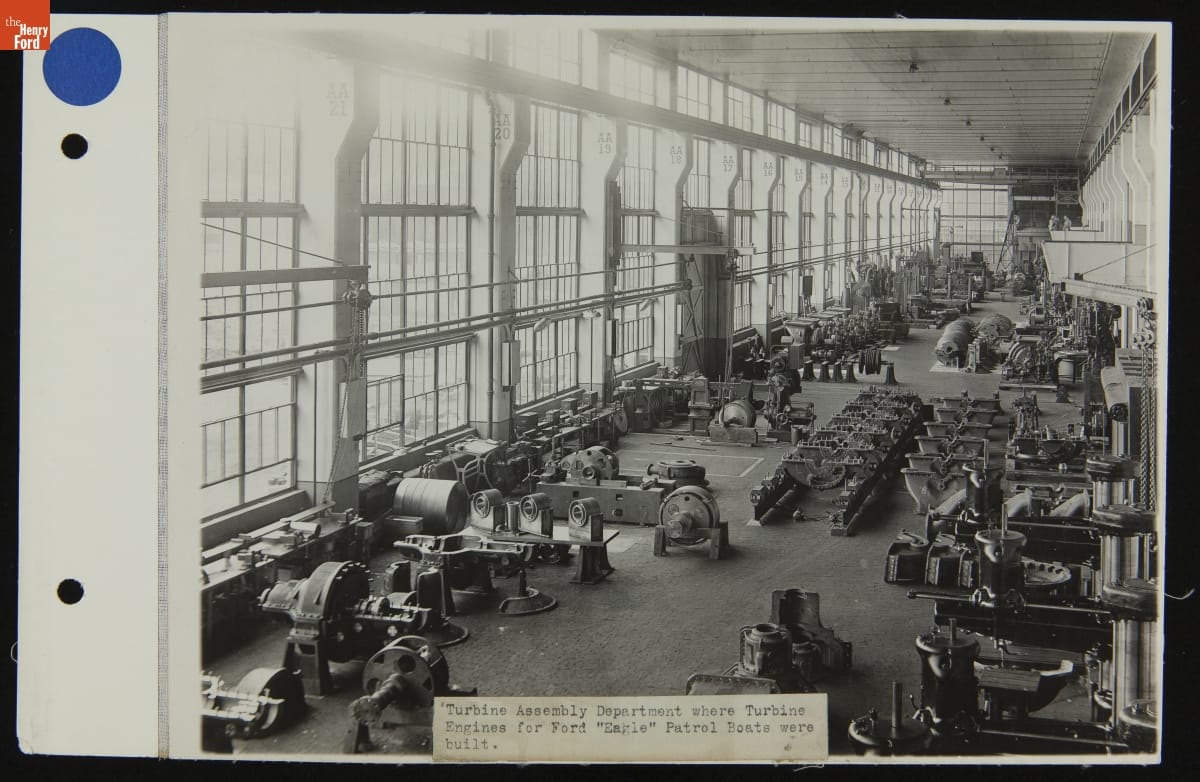
- Eagle Boat Engines Being Built in the Turbine Assembly Department, Ford Highland Park Plant, 1918 - Ford Motor Company built Eagle anti-submarine patrol boats for the U.S. Navy during World War I. While most of the work occurred in new facilities at the mouth of the Rouge River, Ford assembled the boats' turbine engines, boilers and propulsion systems at its Highland Park plant. The war ended before any of the Eagle patrol boats saw combat.
- 1918
- Collections - Artifact
Eagle Boat Engines Being Built in the Turbine Assembly Department, Ford Highland Park Plant, 1918
Ford Motor Company built Eagle anti-submarine patrol boats for the U.S. Navy during World War I. While most of the work occurred in new facilities at the mouth of the Rouge River, Ford assembled the boats' turbine engines, boilers and propulsion systems at its Highland Park plant. The war ended before any of the Eagle patrol boats saw combat.
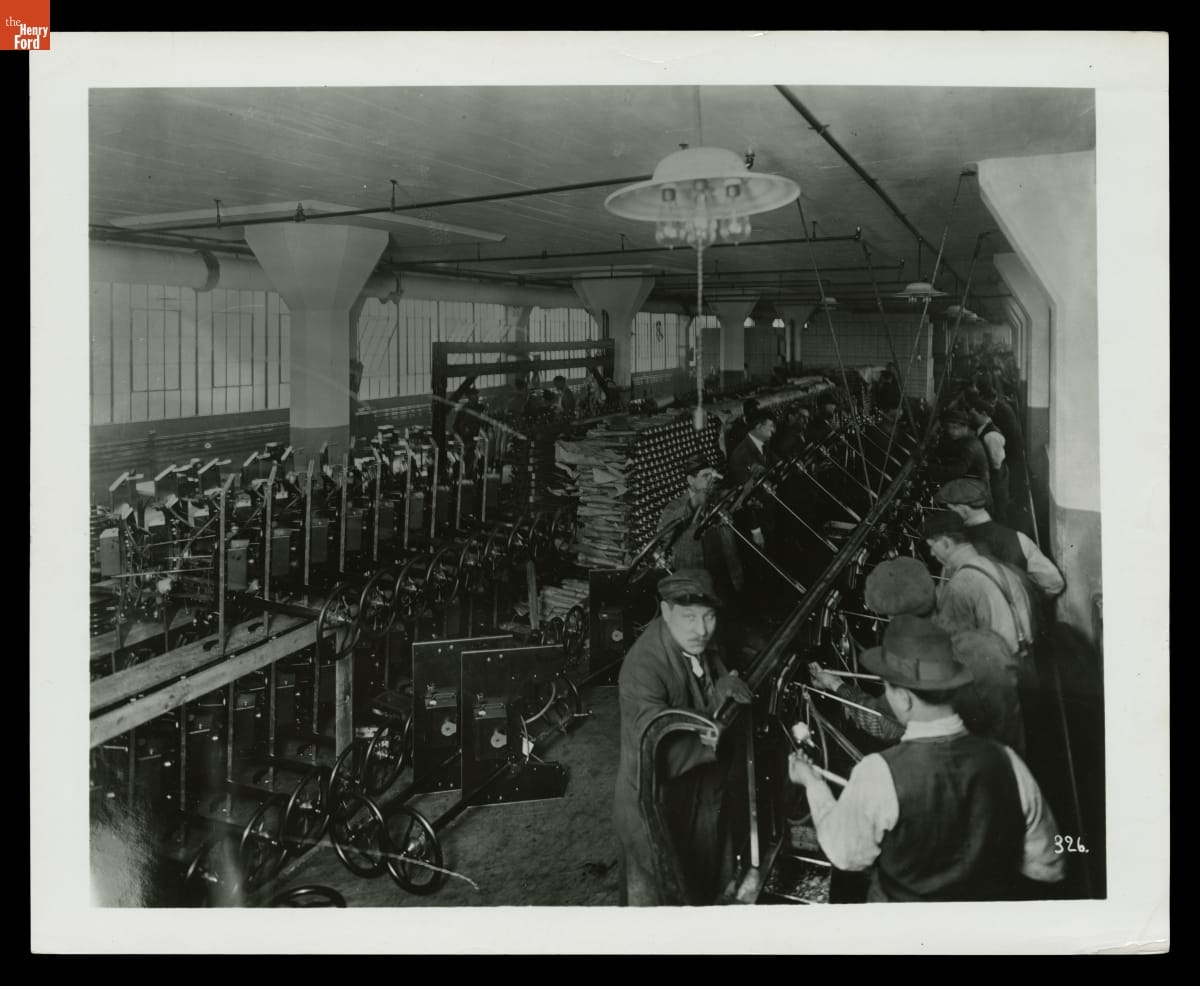
- Workers Assembling Model T Dashboards and Steering Columns at the Ford Motor Company Highland Park Plant, circa 1913 -
- circa 1913
- Collections - Artifact
Workers Assembling Model T Dashboards and Steering Columns at the Ford Motor Company Highland Park Plant, circa 1913
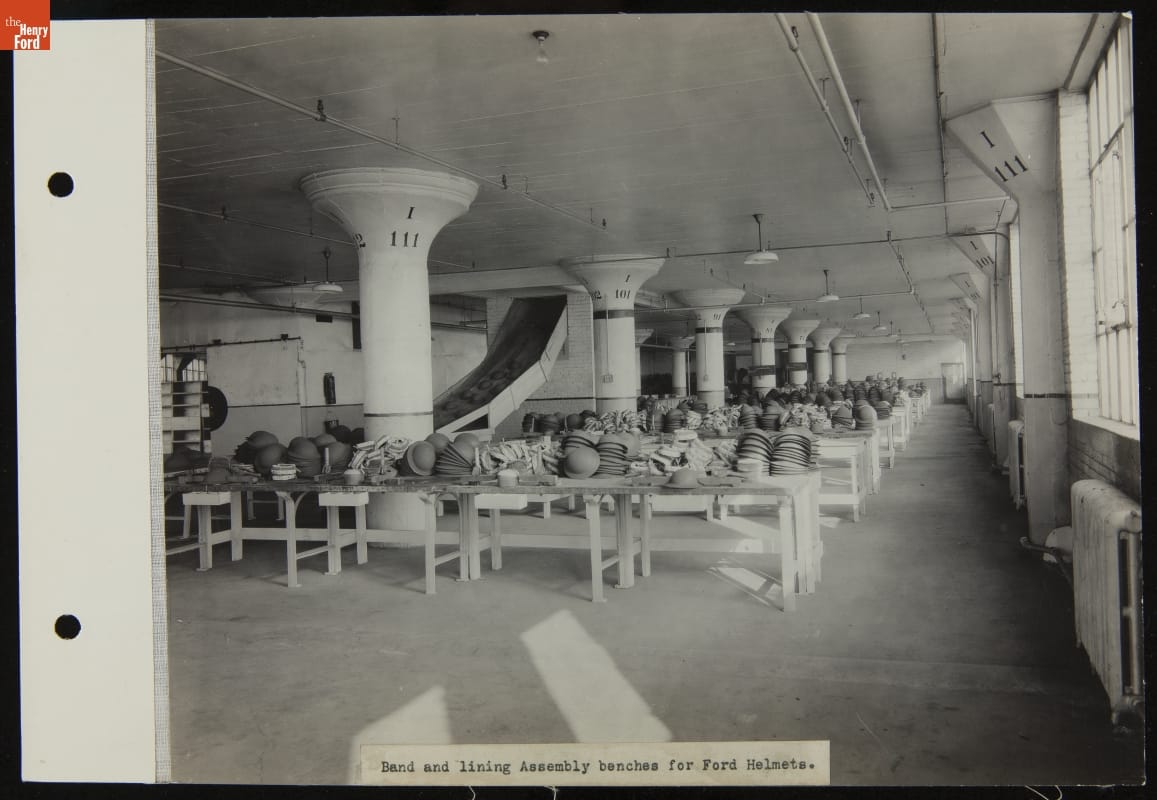
- Band and Lining Assembly Benches for Army Helmets, Ford Motor Company Philadelphia Plant, 1917-1918 - When the United States entered World War I, American automobile companies turned some of their manufacturing capacity to the production of war materiel. Ford Motor Company received a contract to paint, assemble, and crate steel helmets for American soldiers. Altogether, Ford's Philadelphia plant processed more than 2.7 million helmets at a rate as high as 40,000 each day.
- circa 1918
- Collections - Artifact
Band and Lining Assembly Benches for Army Helmets, Ford Motor Company Philadelphia Plant, 1917-1918
When the United States entered World War I, American automobile companies turned some of their manufacturing capacity to the production of war materiel. Ford Motor Company received a contract to paint, assemble, and crate steel helmets for American soldiers. Altogether, Ford's Philadelphia plant processed more than 2.7 million helmets at a rate as high as 40,000 each day.
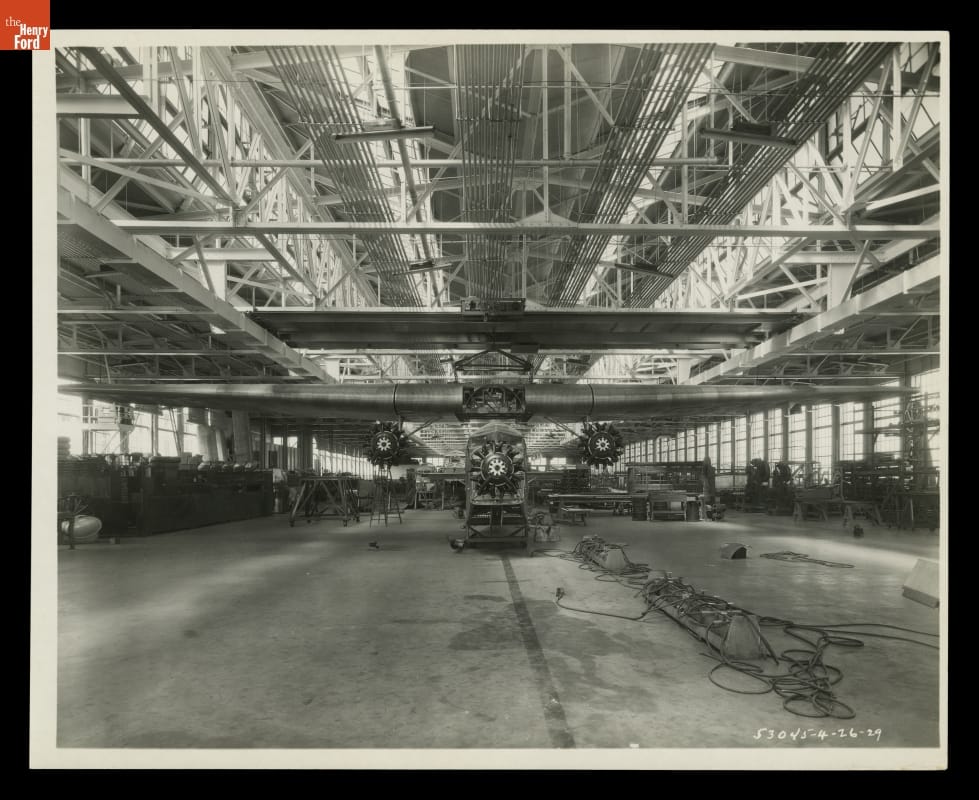
- Ford Tri-Motor Assembly inside Factory, Ford Airport, Dearborn, Michigan, 1929 - Henry Ford attempted to apply automobile assembly line techniques to the manufacture of airplanes, and to build them in large numbers. Monthly production peaked at 25 planes in June 1929. The Great Depression forced Ford to re-focus on his core auto business, and the company's commercial aircraft production ended in May 1933.
- April 26, 1929
- Collections - Artifact
Ford Tri-Motor Assembly inside Factory, Ford Airport, Dearborn, Michigan, 1929
Henry Ford attempted to apply automobile assembly line techniques to the manufacture of airplanes, and to build them in large numbers. Monthly production peaked at 25 planes in June 1929. The Great Depression forced Ford to re-focus on his core auto business, and the company's commercial aircraft production ended in May 1933.
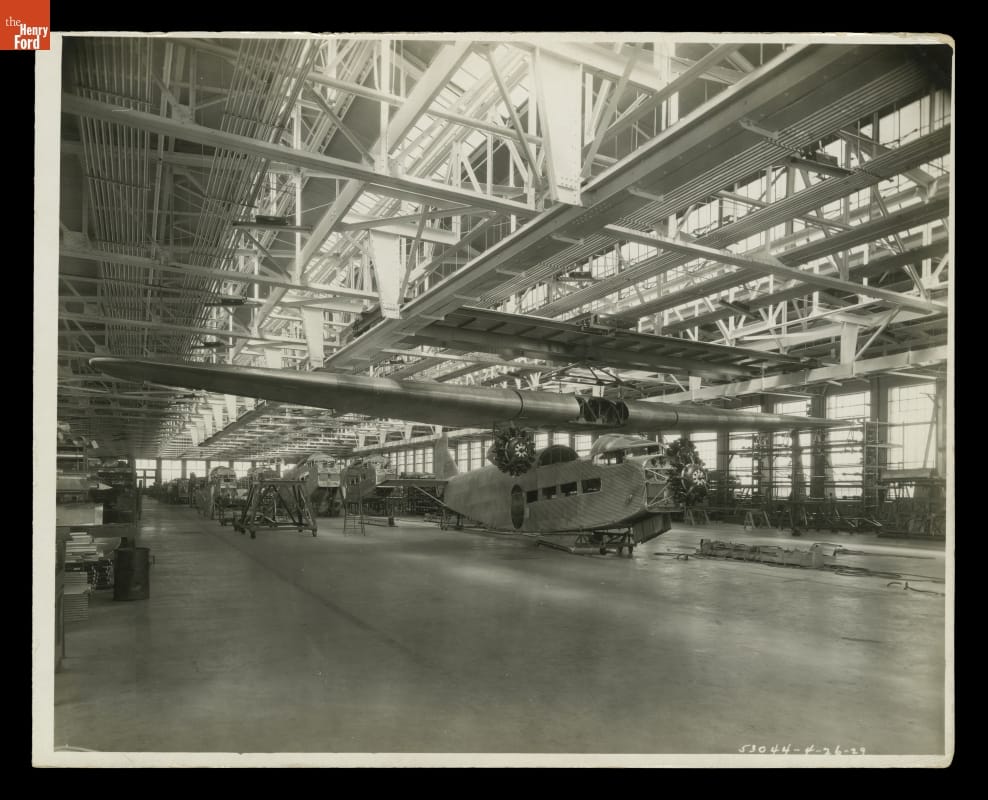
- Ford Tri-Motor Assembly inside Factory, Ford Airport, Dearborn, Michigan, 1929 - Henry Ford attempted to apply automobile assembly line techniques to the manufacture of airplanes, and to build them in large numbers. Monthly production peaked at 25 planes in June 1929. The Great Depression forced Ford to re-focus on his core auto business, and the company's commercial aircraft production ended in May 1933.
- April 30, 1929
- Collections - Artifact
Ford Tri-Motor Assembly inside Factory, Ford Airport, Dearborn, Michigan, 1929
Henry Ford attempted to apply automobile assembly line techniques to the manufacture of airplanes, and to build them in large numbers. Monthly production peaked at 25 planes in June 1929. The Great Depression forced Ford to re-focus on his core auto business, and the company's commercial aircraft production ended in May 1933.
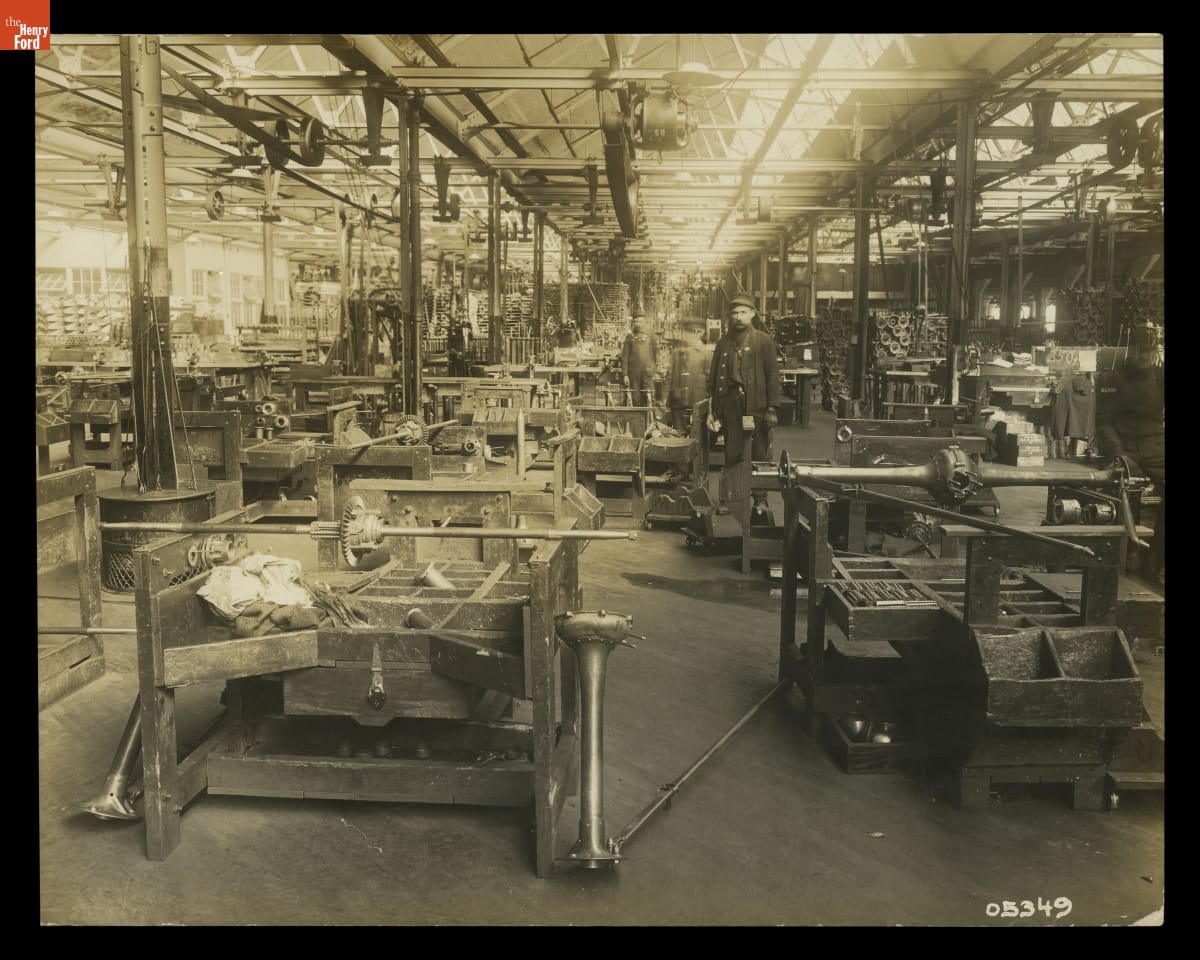
- Static Assembly of Rear Axles at Ford Motor Company Highland Park Plant, circa 1910 -
- circa 1910
- Collections - Artifact
Static Assembly of Rear Axles at Ford Motor Company Highland Park Plant, circa 1910