
Workers on Assembly Line for Glider Production, Iron Mountain, Michigan, 1942
THF103129 / Workers on Assembly Line for Glider Production, Iron Mountain, Michigan, 1942
01
Artifact Overview
Ford's Iron Mountain plant, part of an extensive sawmill complex in Michigan's Upper Peninsula, was retooled during World War II to produce wooden CG-4A gliders for the U.S. Army. Here, workers assemble the light aircraft, which had no motor or propellers. A pilot and copilot could silently land these gliders to deliver supplies, equipment, or up to 13 additional soldiers.
Artifact Details
Artifact
Photographic print
Date Made
20 December 1942
Subject Date
1942
Place of Creation
Collection Title
Location
By Request in the Benson Ford Research Center
Object ID
P.833.77429.27
Credit
From the Collections of The Henry Ford. Gift of Ford Motor Company.
Material
Paper (Fiber product)
Linen (Material)
Technique
Gelatin silver process
Color
Black-and-white (Colors)
Dimensions
Height: 8 in
Width: 11 in
Keywords |
|---|
02
Related Content
 Set
SetBuilding Ford Station Wagons at Iron Mountain
- 14 Artifacts
In pursuit of self-sufficient automobile manufacture, Henry Ford and Ford Motor Company purchased over 313,000 acres of timberland for logging in the Upper Peninsula of Michigan. A massive sawmill complex and powerful hydroelectric plant were constructed at Iron Mountain. Here, sawmill workers produced huge quantities of lumber for wooden automobile framework, floorboards, and wheels.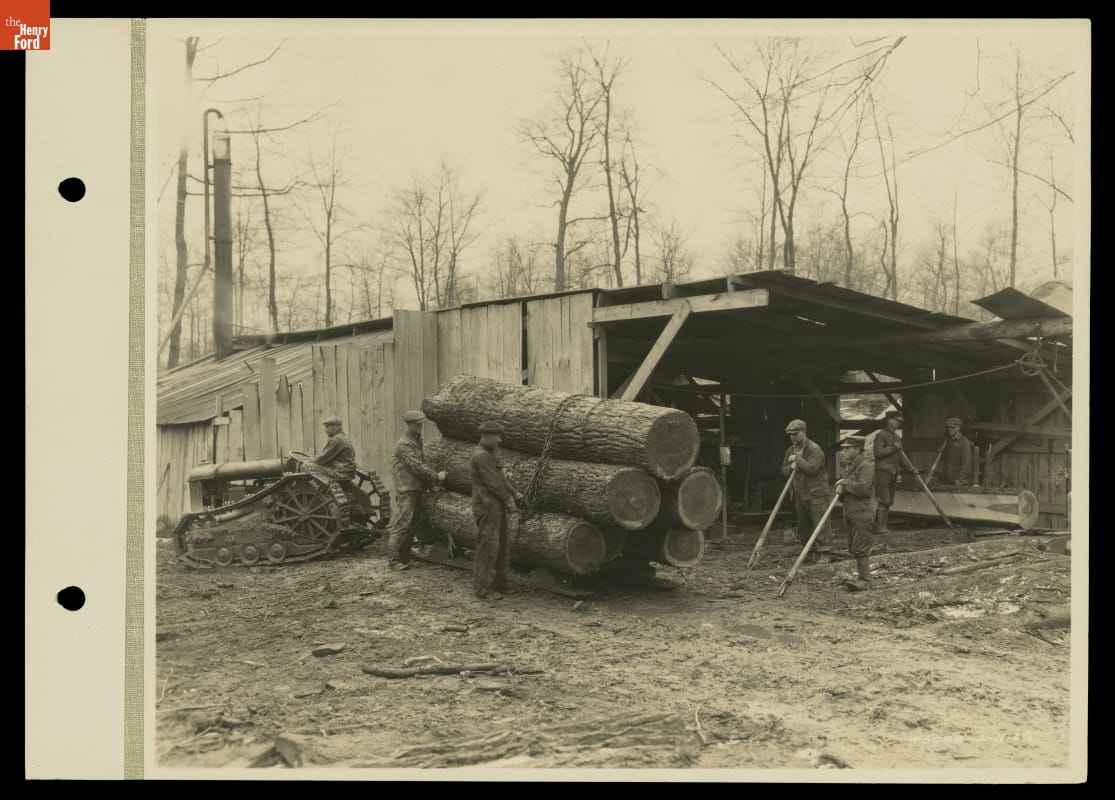 Set
SetFord in Michigan’s Upper Peninsula
- 33 Artifacts
In 1919, Henry Ford began buying vast amounts of forestland in Michigan's Upper Peninsula. These prime hardwood forests supplied the lumber used to create vehicle bodies and parts. Other products such as railroad ties, shipping containers and chemical byproducts were also made -- all to support Ford's automobile operations and his goal of manufacturing self-sufficiency.