
Search
- Bank One ATM Screen Displaying Y2K Readiness Disclosure, December 28, 1999 -
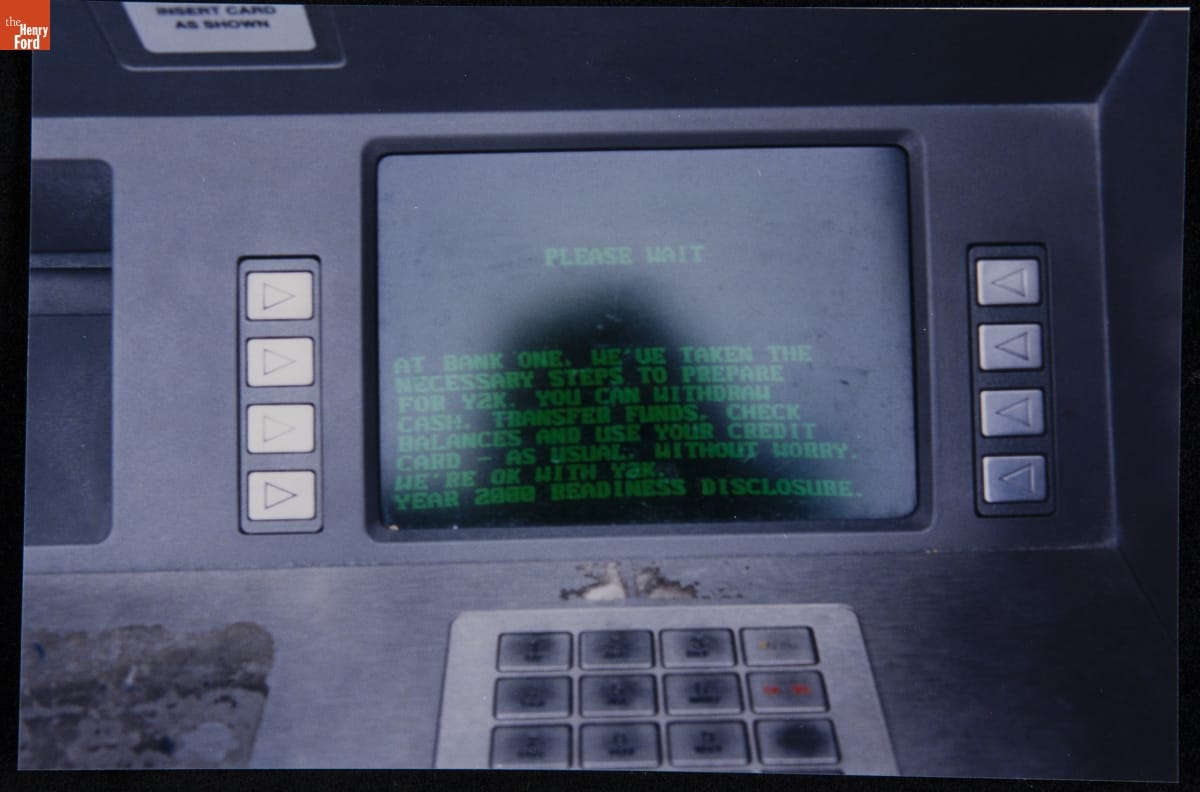
- December 28, 1999
- Collections - Artifact
Bank One ATM Screen Displaying Y2K Readiness Disclosure, December 28, 1999
- AMF Thermatool, Inc. Brochure, "Flexible Automation: AMF Versatran Industrial Robots," 1970 -
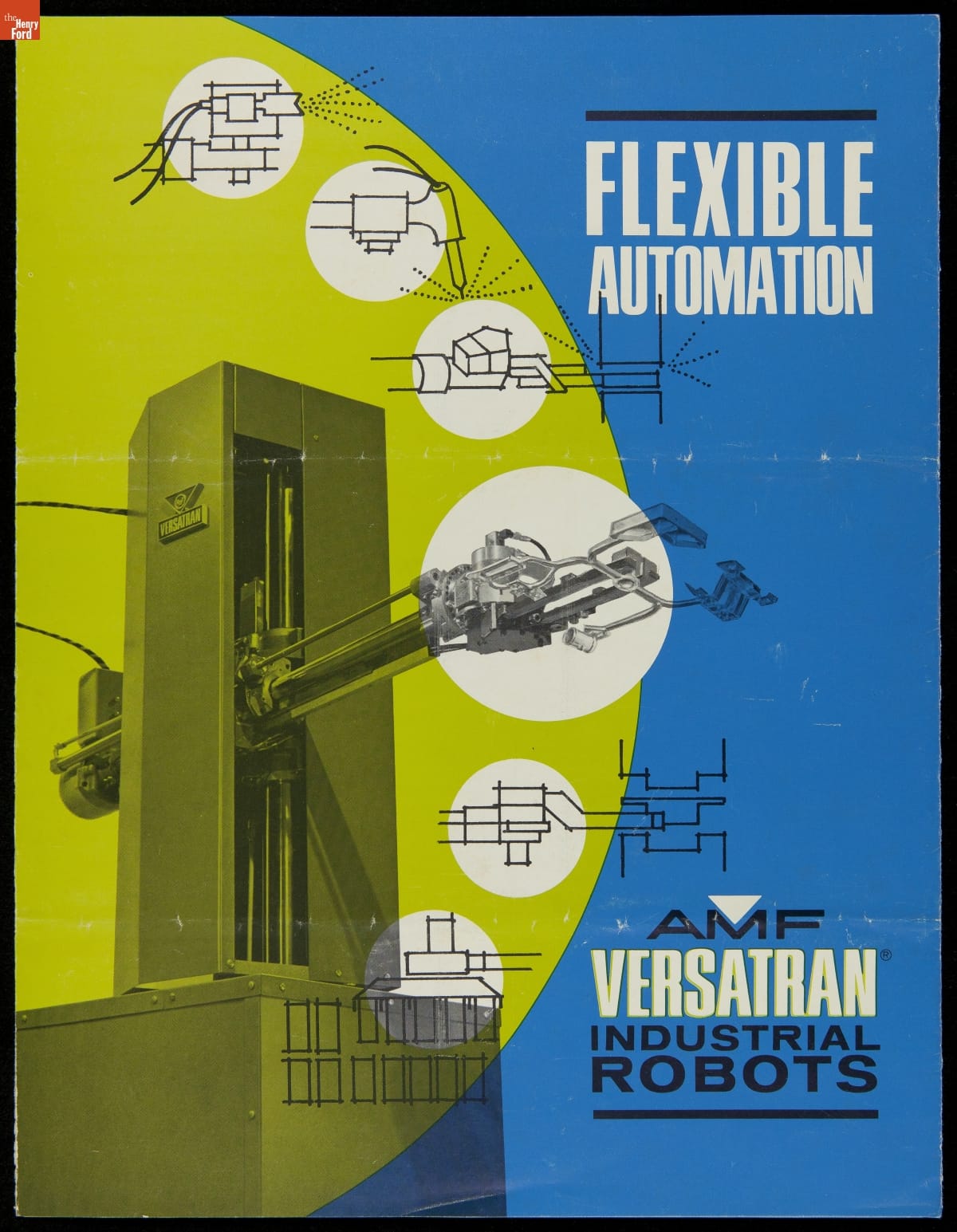
- 1970
- Collections - Artifact
AMF Thermatool, Inc. Brochure, "Flexible Automation: AMF Versatran Industrial Robots," 1970
- Automatic Piston Pin Gauging and Sorting Machine Designed by Claude Harvard, Photographed in Henry Ford Museum, 1942 -
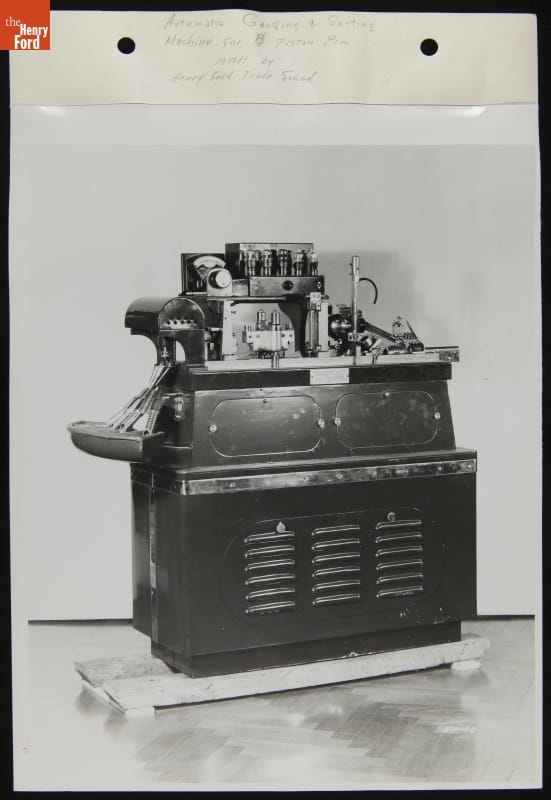
- January 15, 1942
- Collections - Artifact
Automatic Piston Pin Gauging and Sorting Machine Designed by Claude Harvard, Photographed in Henry Ford Museum, 1942
- United Cinephone Corporation, "Marvels of the Electric Eye," 1938 - George Devol was a problem solver and prolific inventor -- particularly in the area of automation. In the 1930s, he formed United Cinephone Corporation. The company made electric and photoelectric controls, switches and timers used to speed up and improve manufacturing. His most important work led to his patent for the first industrial robot.
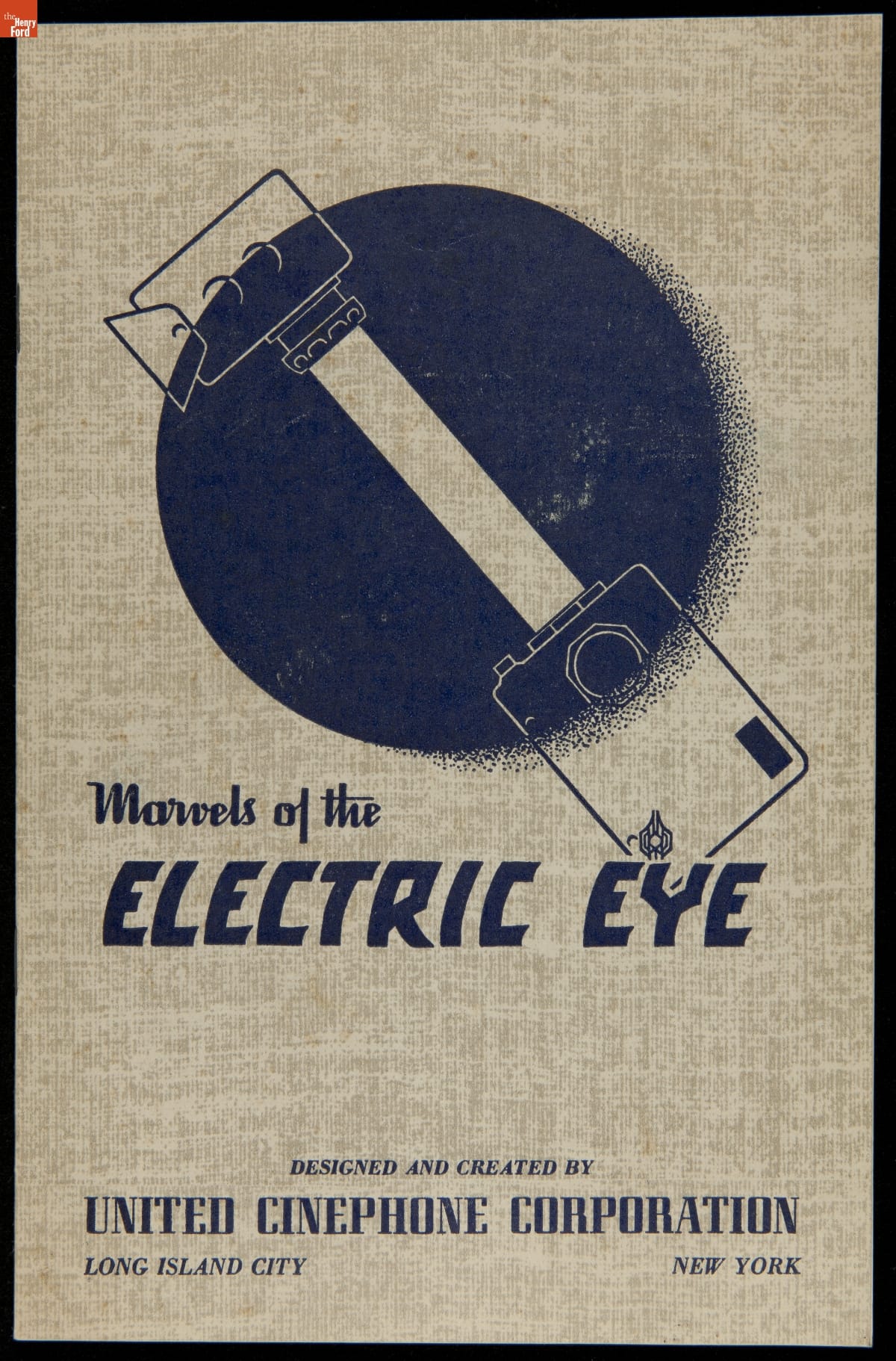
- 1938
- Collections - Artifact
United Cinephone Corporation, "Marvels of the Electric Eye," 1938
George Devol was a problem solver and prolific inventor -- particularly in the area of automation. In the 1930s, he formed United Cinephone Corporation. The company made electric and photoelectric controls, switches and timers used to speed up and improve manufacturing. His most important work led to his patent for the first industrial robot.
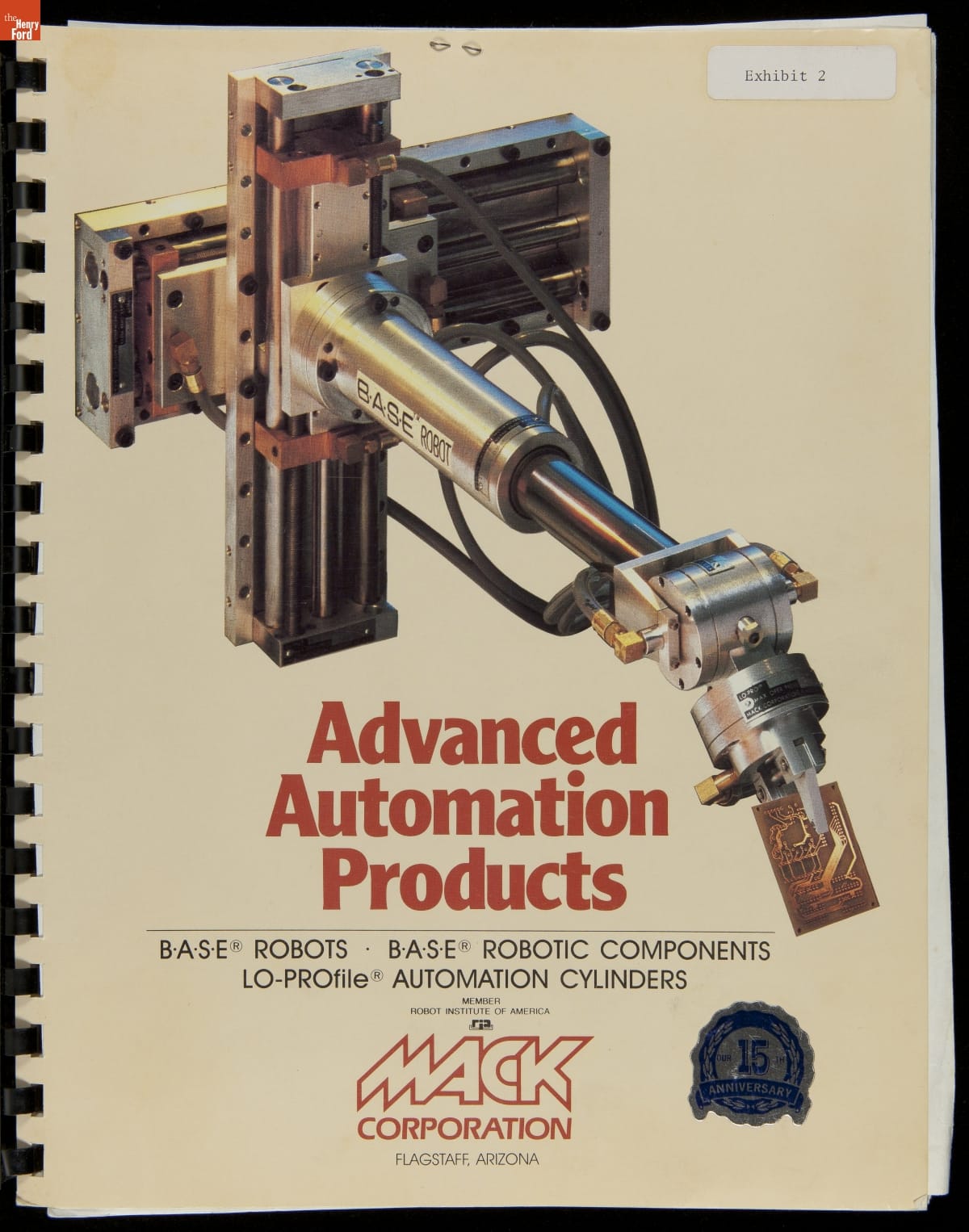
- Mack Corporation Brochure, "Advanced Automation Products," 1983 -
- 1983
- Collections - Artifact
Mack Corporation Brochure, "Advanced Automation Products," 1983
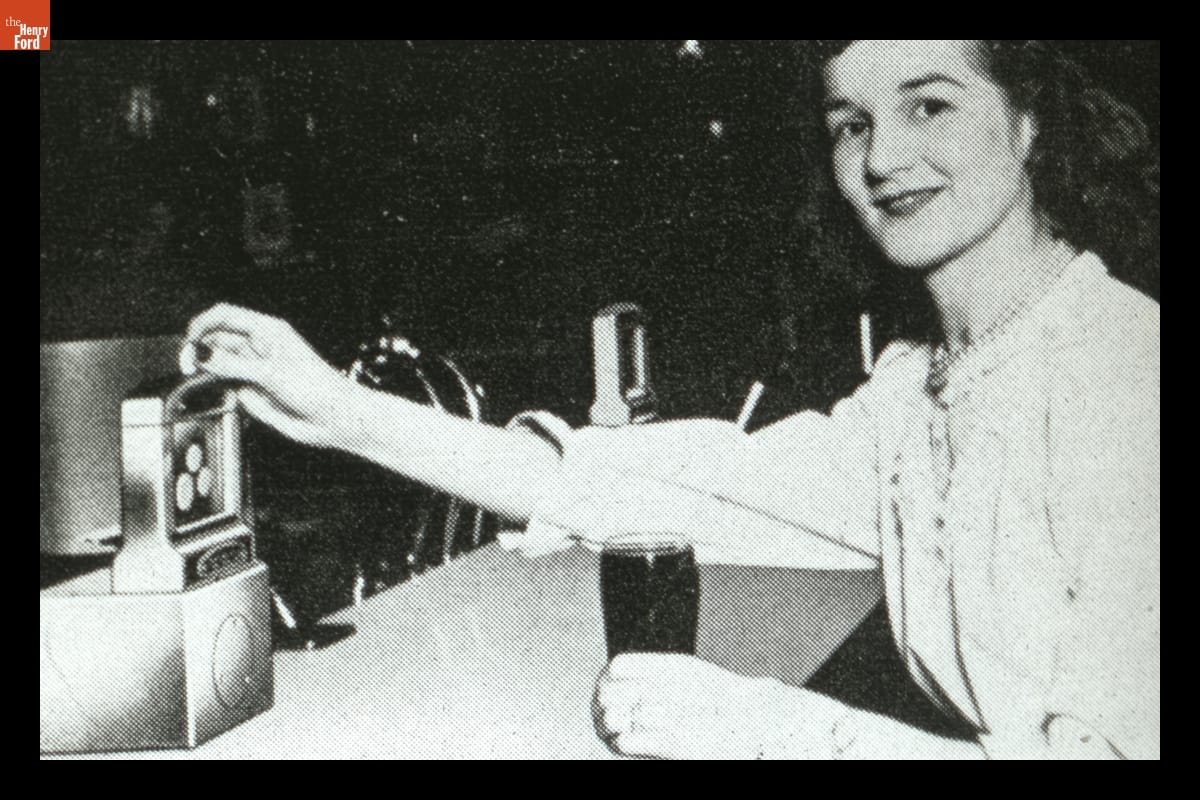
- Robot Cashier Featured in "The Diner" Magazine -
- January 01, 1953
- Collections - Artifact
Robot Cashier Featured in "The Diner" Magazine
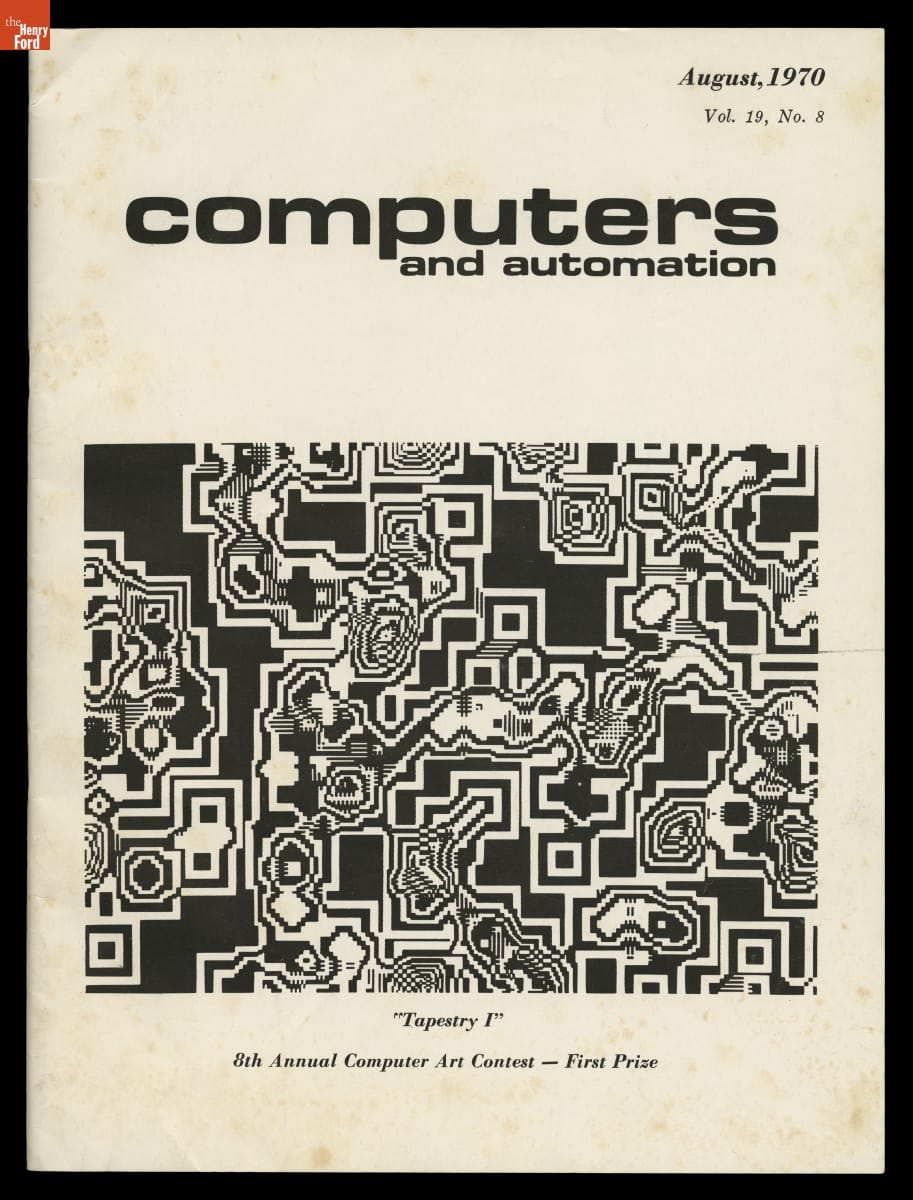
- Computers and Automation, Vol. 19, No. 8, August 1970 - Lillian Schwartz is a pioneer of computer-generated art. From 1969-2002, she was a "resident visitor" at Bell Laboratories, producing groundbreaking films, videos, and multimedia works. The Schwartz Collection spans Lillian's childhood into her late career, documenting an expansive mindset, mastery over traditional and experimental mediums alike--and above all--an ability to create inspirational connections between science, art, and technology.
- August 01, 1970
- Collections - Artifact
Computers and Automation, Vol. 19, No. 8, August 1970
Lillian Schwartz is a pioneer of computer-generated art. From 1969-2002, she was a "resident visitor" at Bell Laboratories, producing groundbreaking films, videos, and multimedia works. The Schwartz Collection spans Lillian's childhood into her late career, documenting an expansive mindset, mastery over traditional and experimental mediums alike--and above all--an ability to create inspirational connections between science, art, and technology.
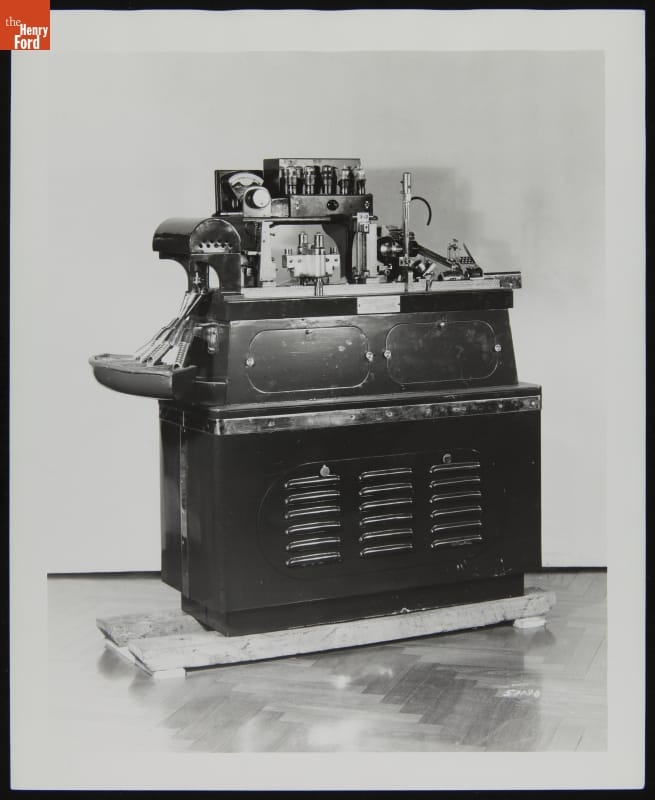
- Automatic Piston Pin Gauging and Sorting Machine Designed by Claude Harvard, Photographed in Henry Ford Museum, 1942 -
- January 15, 1942
- Collections - Artifact
Automatic Piston Pin Gauging and Sorting Machine Designed by Claude Harvard, Photographed in Henry Ford Museum, 1942
- Burroughs CA 7100 Cash Dispensing System, 1984 - William Seward Burroughs and three other co-founders established the American Arithmometer Company in 1886 to produce simple addition and subtraction machines. Over the years, the company--later known as the Burroughs Corporation--innovated and expanded. Mergers with companies such as Moon-Hopkins and Sperry in the 20th century helped Burroughs become a leader in the calculating--and later computing--industry.
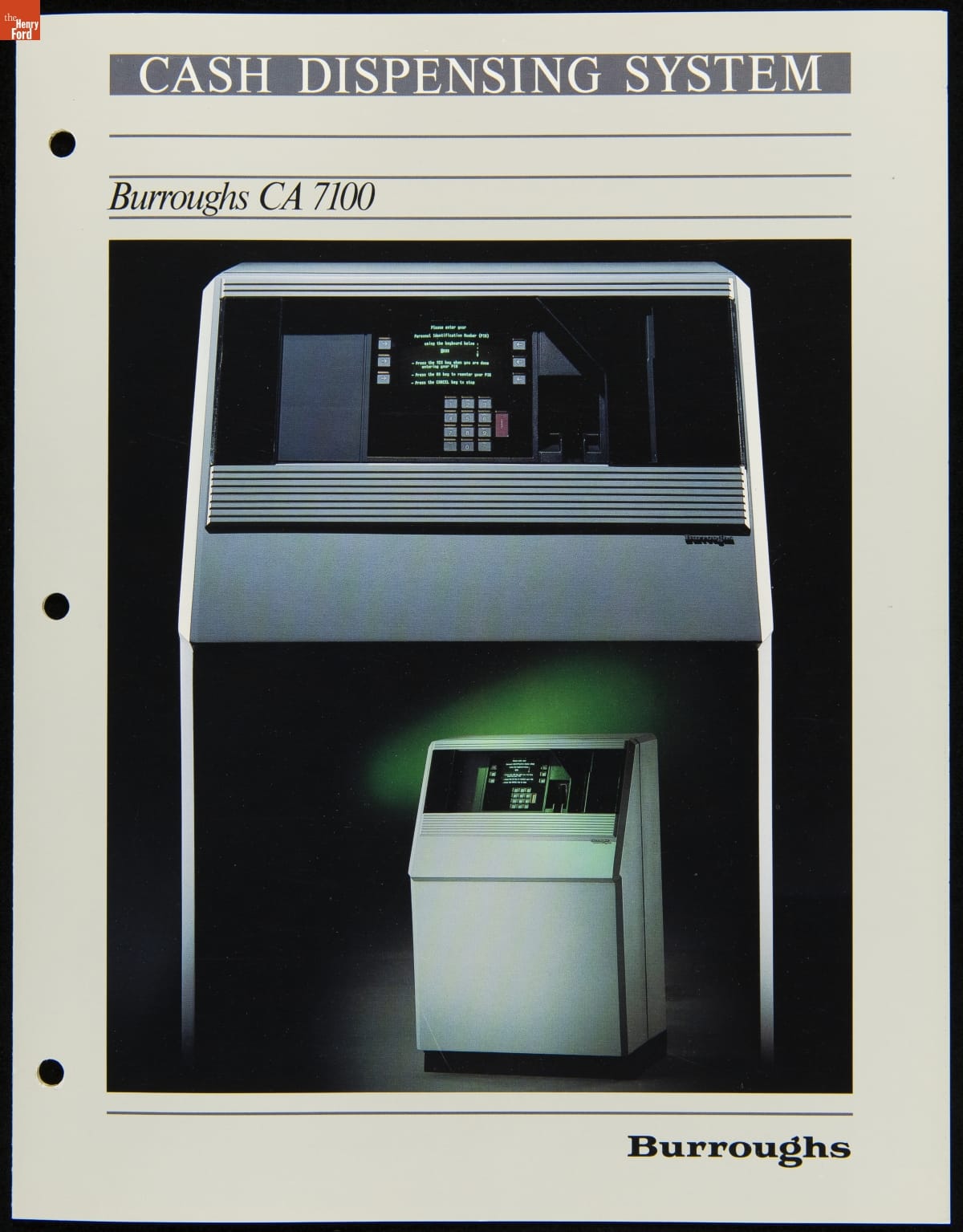
- 1984
- Collections - Artifact
Burroughs CA 7100 Cash Dispensing System, 1984
William Seward Burroughs and three other co-founders established the American Arithmometer Company in 1886 to produce simple addition and subtraction machines. Over the years, the company--later known as the Burroughs Corporation--innovated and expanded. Mergers with companies such as Moon-Hopkins and Sperry in the 20th century helped Burroughs become a leader in the calculating--and later computing--industry.
- Burroughs Creative Solutions in Banking, "Huge Terminal, Concentrator Network Serves Trustee Savings Banks in UK," 1983 - William Seward Burroughs and three other co-founders established the American Arithmometer Company in 1886 to produce simple addition and subtraction machines. Over the years, the company--later known as the Burroughs Corporation--innovated and expanded. Mergers with companies such as Moon-Hopkins and Sperry in the 20th century helped Burroughs become a leader in the calculating--and later computing--industry.

- 1983
- Collections - Artifact
Burroughs Creative Solutions in Banking, "Huge Terminal, Concentrator Network Serves Trustee Savings Banks in UK," 1983
William Seward Burroughs and three other co-founders established the American Arithmometer Company in 1886 to produce simple addition and subtraction machines. Over the years, the company--later known as the Burroughs Corporation--innovated and expanded. Mergers with companies such as Moon-Hopkins and Sperry in the 20th century helped Burroughs become a leader in the calculating--and later computing--industry.