
Search
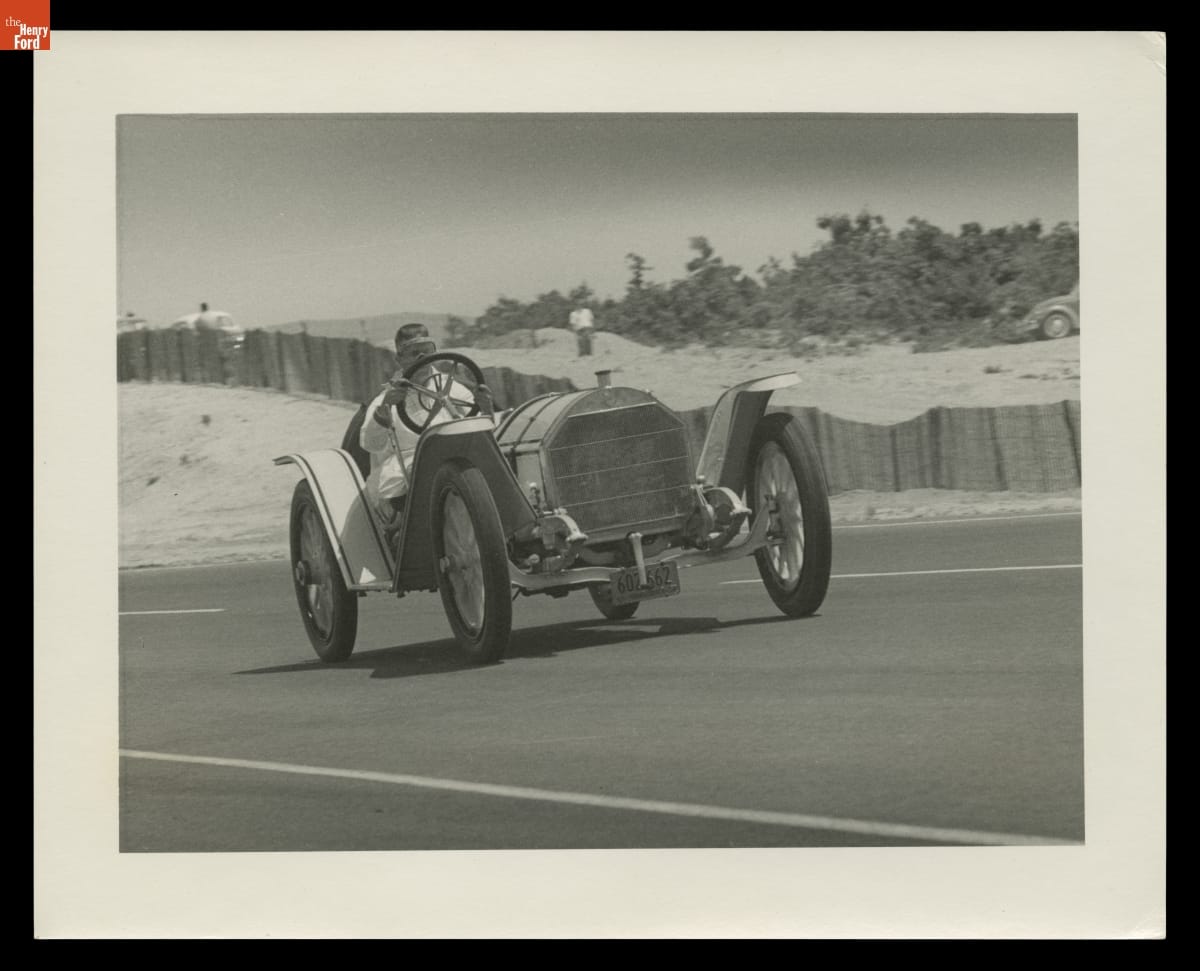
- Raymond Petersen Driving 1911 Mercer Raceabout, Bridgehampton, New York, May 31, 1959 - The Mercer Type 35 Raceabout, designed by Finley R. Porter, was the high-performance sports car of its day. It could top 90 miles per hour. This 1911 example belonged to Henry Austin Clark, Jr., the foremost automotive collector and historian of his day. Clark acquired the Raceabout in 1949, and it remained in his family for the next 65 years.
- May 31, 1959
- Collections - Artifact
Raymond Petersen Driving 1911 Mercer Raceabout, Bridgehampton, New York, May 31, 1959
The Mercer Type 35 Raceabout, designed by Finley R. Porter, was the high-performance sports car of its day. It could top 90 miles per hour. This 1911 example belonged to Henry Austin Clark, Jr., the foremost automotive collector and historian of his day. Clark acquired the Raceabout in 1949, and it remained in his family for the next 65 years.
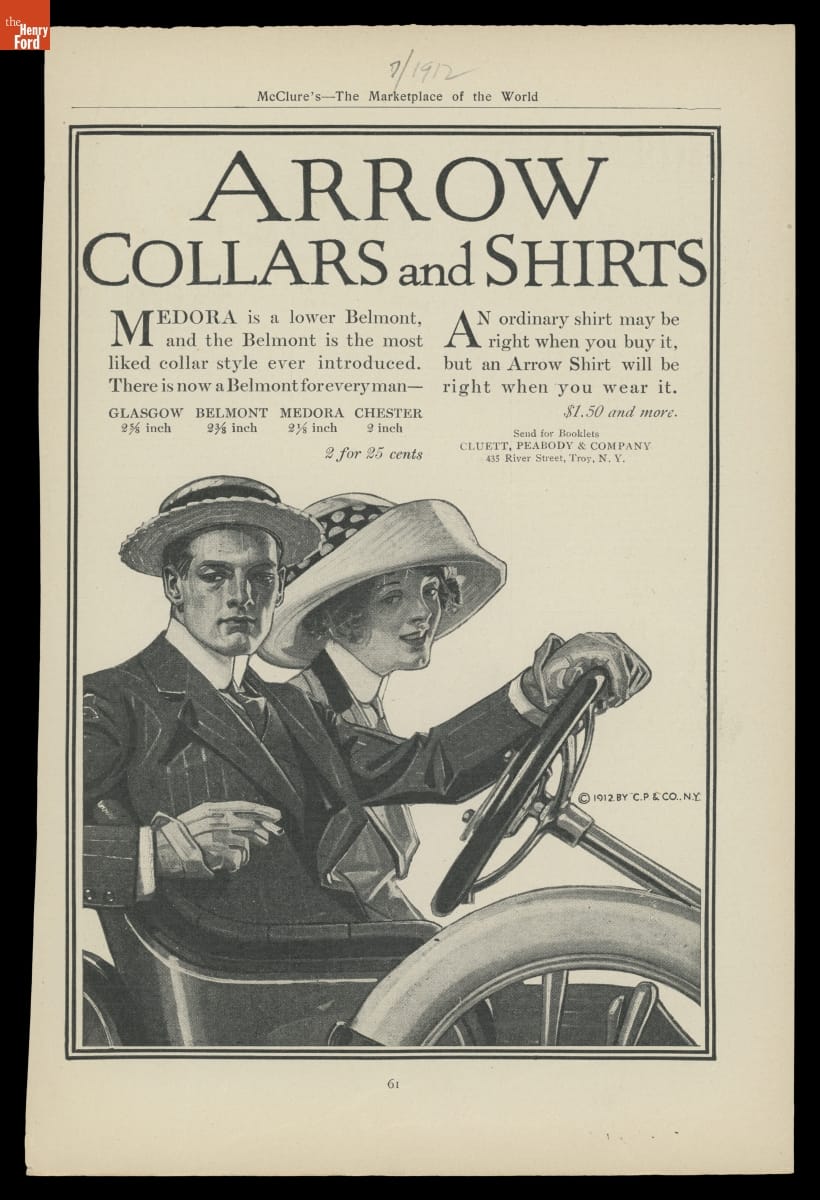
- "Arrow Collars and Shirts," Advertisement from Collier's Magazine, 1912 - Commercial illustrator J.C. Leyendecker (1874-1951) produced illustrations of handsome men who exuded style and sophistication for a long-running campaign advertising Cluett Peabody & Co.'s line of Arrow brand shirts, collars, and cuffs. These popular images, known collectively as the Arrow Collar Man, became a cultural phenomenon that set a new standard for men’s fashion and beauty.
- circa 1912
- Collections - Artifact
"Arrow Collars and Shirts," Advertisement from Collier's Magazine, 1912
Commercial illustrator J.C. Leyendecker (1874-1951) produced illustrations of handsome men who exuded style and sophistication for a long-running campaign advertising Cluett Peabody & Co.'s line of Arrow brand shirts, collars, and cuffs. These popular images, known collectively as the Arrow Collar Man, became a cultural phenomenon that set a new standard for men’s fashion and beauty.
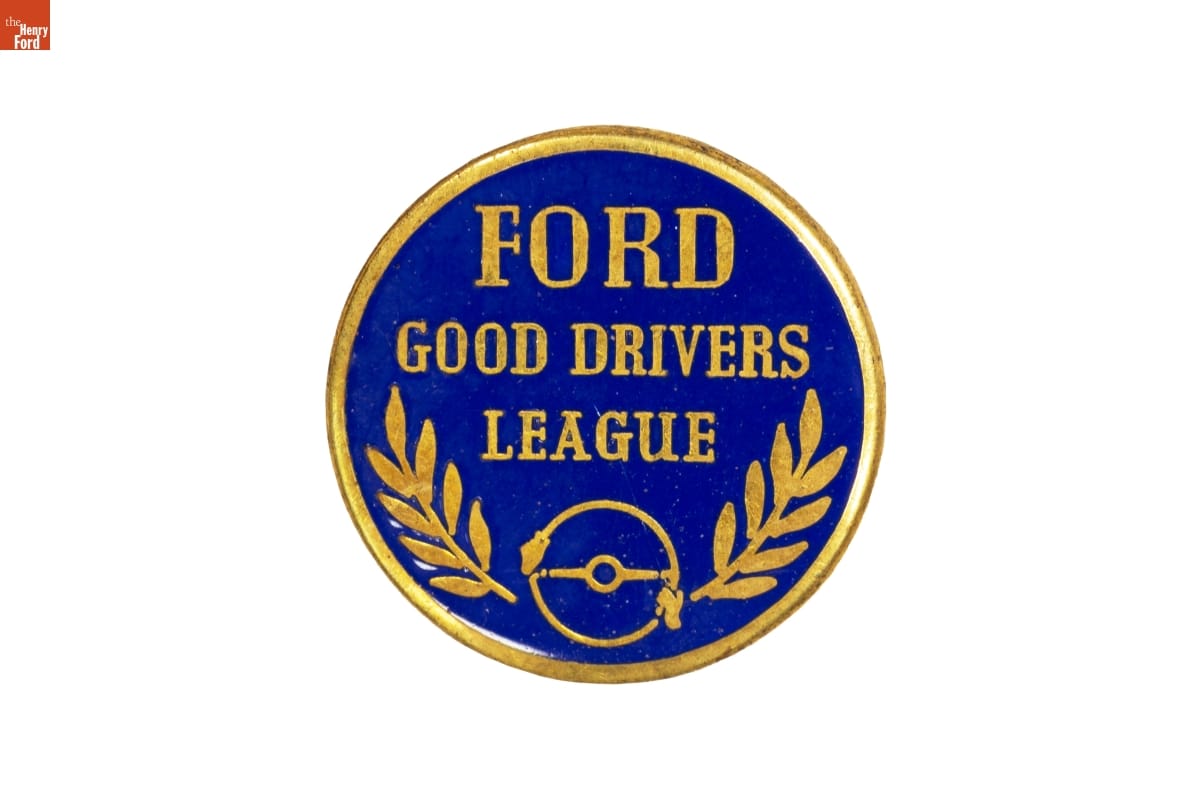
- "Ford Good Drivers League" Pin, 1940-1942 - Ford Motor Company created the Good Drivers League in 1940. Headed by Edsel Ford, the League promoted safe driving habits among high school students. The League initially invited boys to compete in state and national championships--girls would join in 1941. Contestants wrote essays and participated in driving tests. National champions won trophies and scholarships. America's entry into World War II ended the program.
- 1940-1942
- Collections - Artifact
"Ford Good Drivers League" Pin, 1940-1942
Ford Motor Company created the Good Drivers League in 1940. Headed by Edsel Ford, the League promoted safe driving habits among high school students. The League initially invited boys to compete in state and national championships--girls would join in 1941. Contestants wrote essays and participated in driving tests. National champions won trophies and scholarships. America's entry into World War II ended the program.
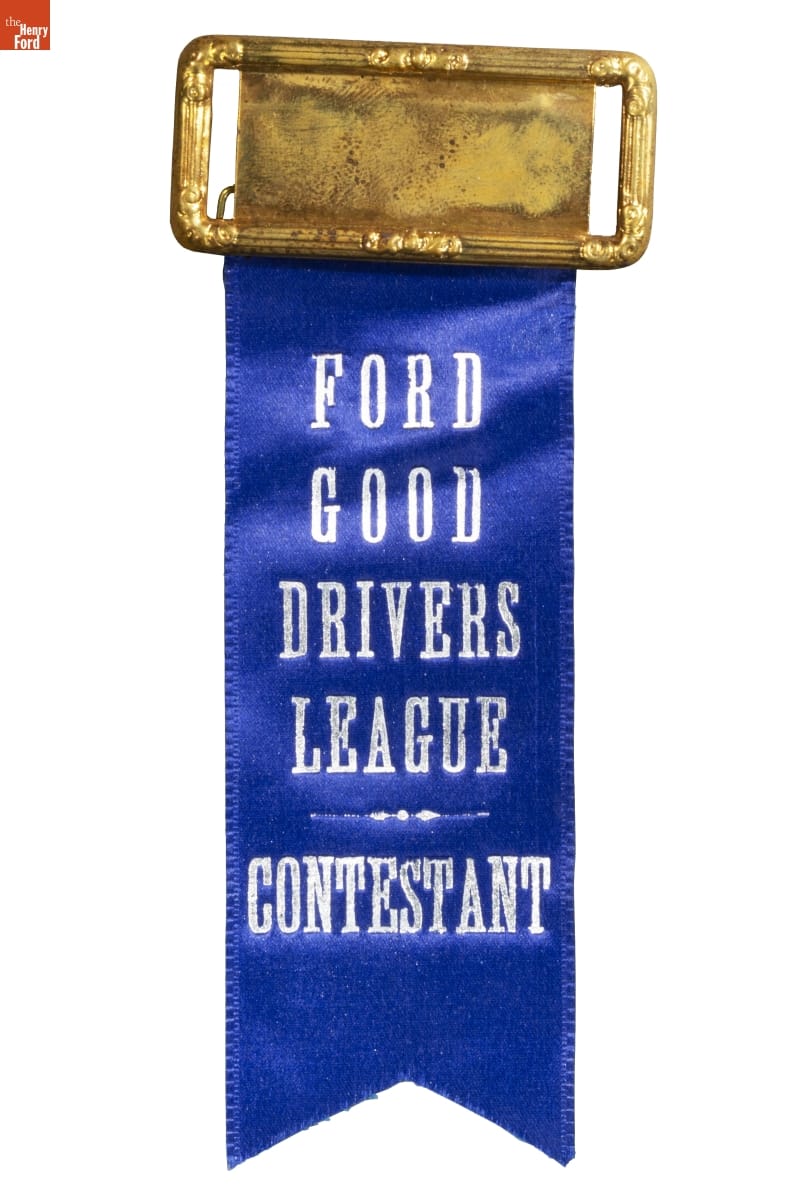
- Ford Good Drivers League "Contestant" Badge, 1940-1942 - Ford Motor Company created the Good Drivers League in 1940. Headed by Edsel Ford, the League promoted safe driving habits among high school students. The League initially invited boys to compete in state and national championships--girls would join in 1941. Contestants wrote essays and participated in driving tests. National champions won trophies and scholarships. America's entry into World War II ended the program.
- 1940-1942
- Collections - Artifact
Ford Good Drivers League "Contestant" Badge, 1940-1942
Ford Motor Company created the Good Drivers League in 1940. Headed by Edsel Ford, the League promoted safe driving habits among high school students. The League initially invited boys to compete in state and national championships--girls would join in 1941. Contestants wrote essays and participated in driving tests. National champions won trophies and scholarships. America's entry into World War II ended the program.
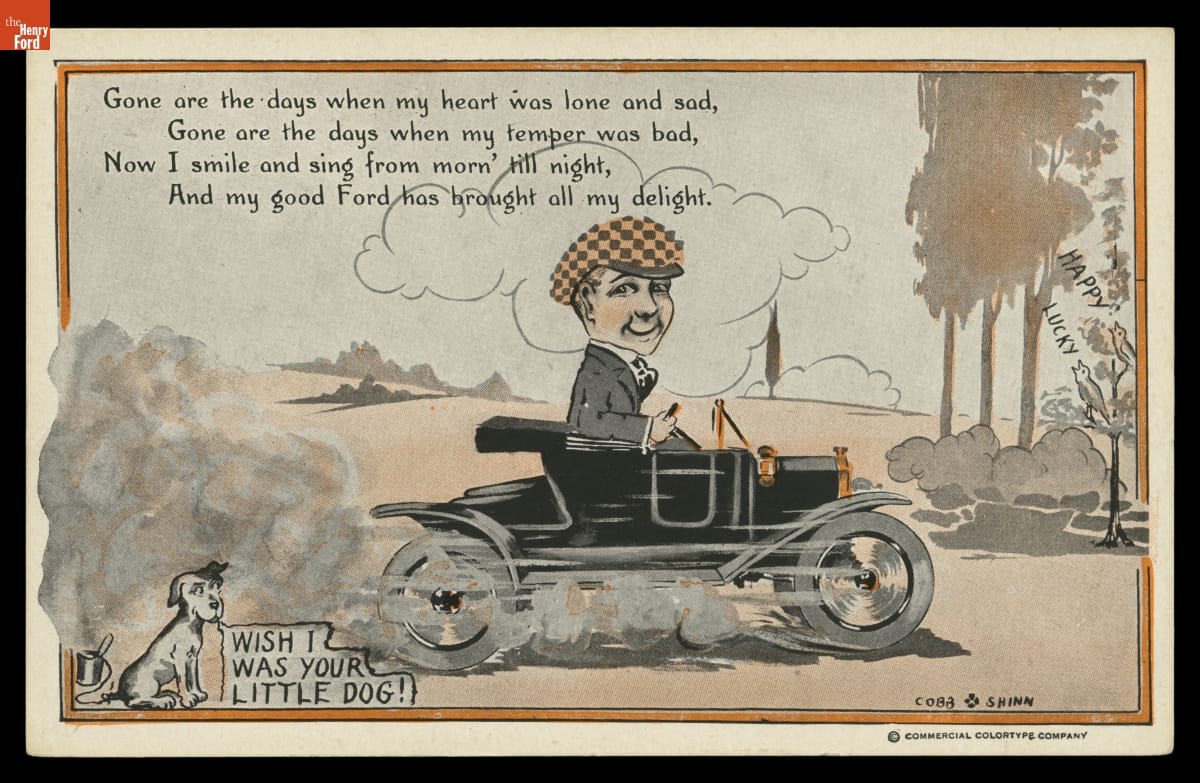
- "...And My Good Ford Has Brought All My Delight," Ford Motor Company, circa 1915 - It's not usual for an advertisement to credit a car for feelings of freedom, pride, or even youth. But this postcard from 1915 goes further, with the owner crediting his Ford Model T for "all my delight."
- circa 1915
- Collections - Artifact
"...And My Good Ford Has Brought All My Delight," Ford Motor Company, circa 1915
It's not usual for an advertisement to credit a car for feelings of freedom, pride, or even youth. But this postcard from 1915 goes further, with the owner crediting his Ford Model T for "all my delight."
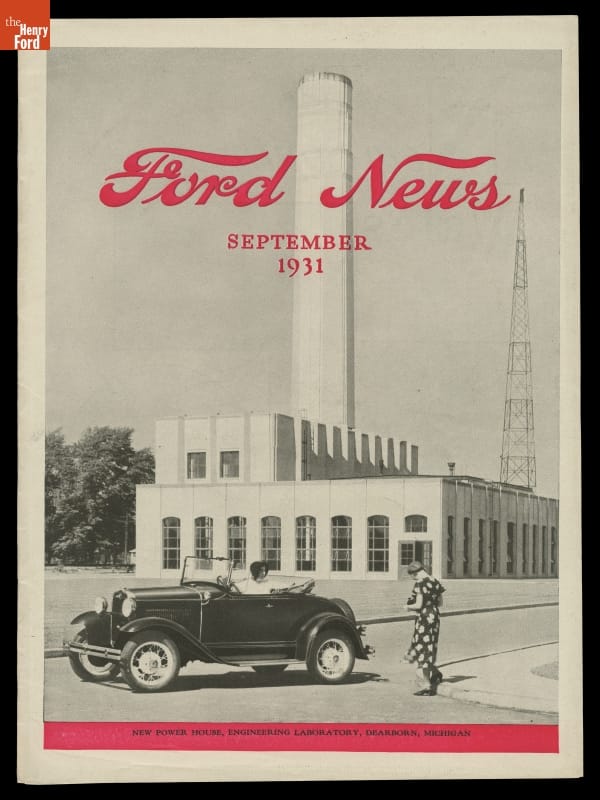
- "Ford News" Issue for September 1931 - Ford Motor Company published <em>Ford News</em> from 1920 to 1942. The magazine kept employees and dealers informed on the automaker's products and activities. Each issue contained general-interest stories as well. The September 1931 cover featured a Model A roadster posed by the new powerhouse at Ford's Engineering Laboratory in Dearborn, Michigan.
- September 01, 1931
- Collections - Artifact
"Ford News" Issue for September 1931
Ford Motor Company published Ford News from 1920 to 1942. The magazine kept employees and dealers informed on the automaker's products and activities. Each issue contained general-interest stories as well. The September 1931 cover featured a Model A roadster posed by the new powerhouse at Ford's Engineering Laboratory in Dearborn, Michigan.
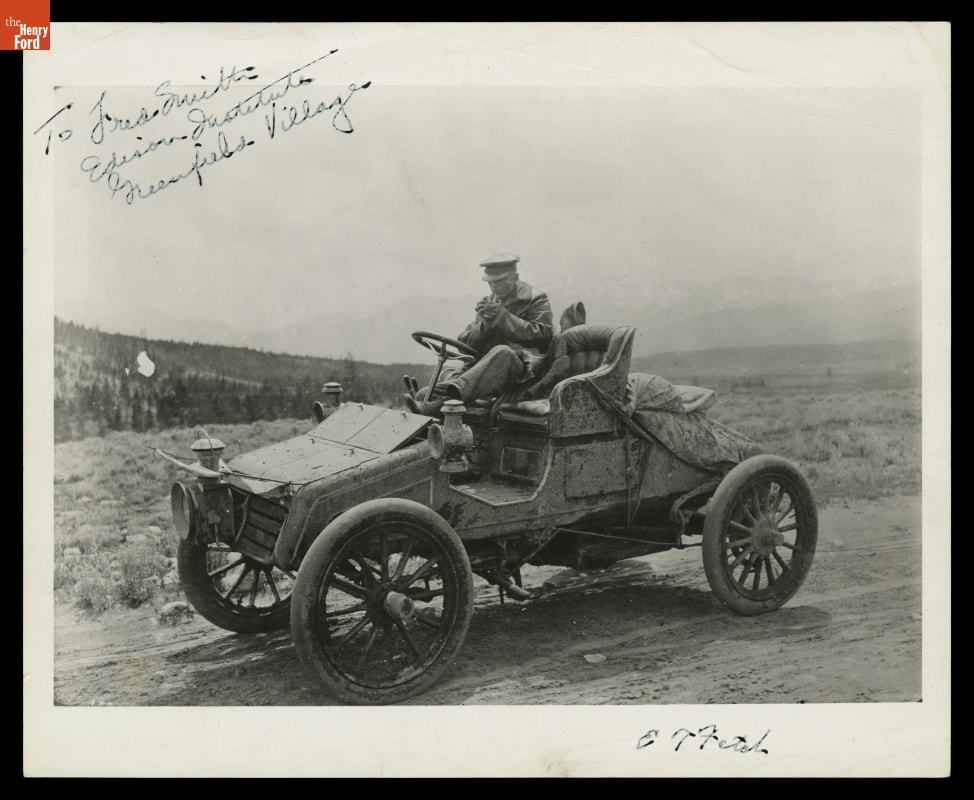
- Driver Tom Fetch in "Old Pacific" on the Cross-Country Trip Sponsored by Packard Motor Car Company, 1903 - In 1903, two men drove a Packard Model F nicknamed "Old Pacific" from San Francisco to New York. It was the second automobile to complete the epic journey. Few roads stretched west of the Mississippi, and if the men encountered a problem, they had to solve it themselves. This photograph shows a desolate landscape, the dust-covered Packard, and E.T. "Tom" Fetch.
- 1903
- Collections - Artifact
Driver Tom Fetch in "Old Pacific" on the Cross-Country Trip Sponsored by Packard Motor Car Company, 1903
In 1903, two men drove a Packard Model F nicknamed "Old Pacific" from San Francisco to New York. It was the second automobile to complete the epic journey. Few roads stretched west of the Mississippi, and if the men encountered a problem, they had to solve it themselves. This photograph shows a desolate landscape, the dust-covered Packard, and E.T. "Tom" Fetch.
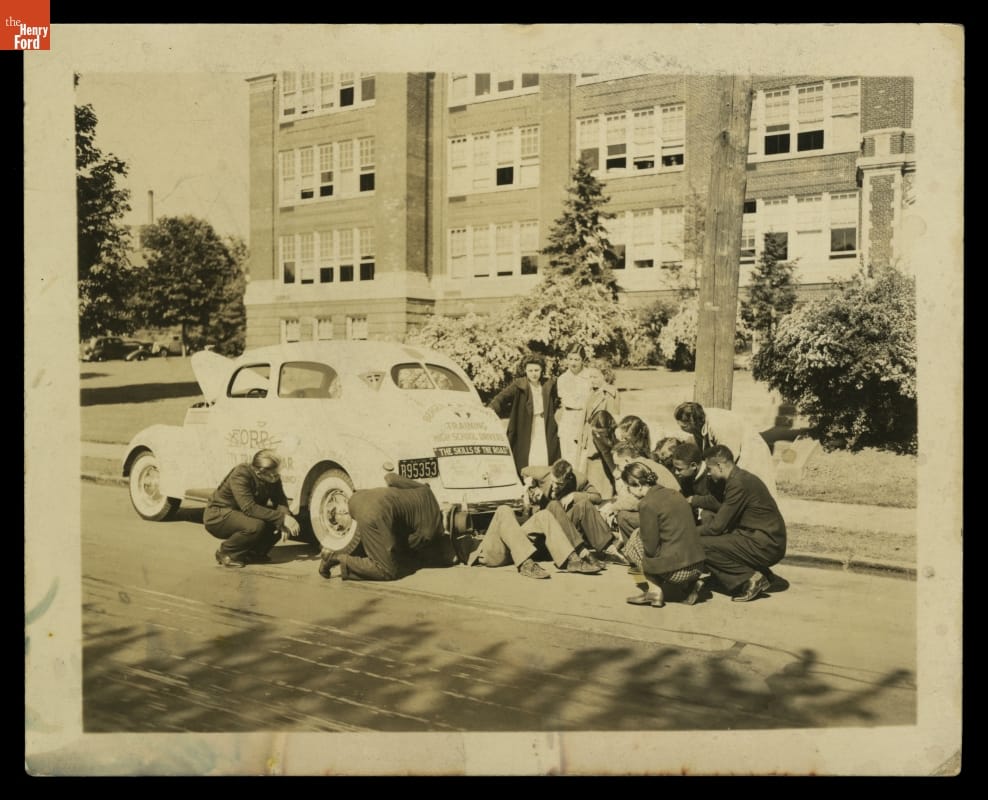
- Driver Training Class Watching Automobile Repairs, 1937 - Driver education programs emerged out of a national movement to improve driver safety during the 1930s. The students in this 1937 photograph are learning about repairing an automobile as part of a high school program.
- 1937
- Collections - Artifact
Driver Training Class Watching Automobile Repairs, 1937
Driver education programs emerged out of a national movement to improve driver safety during the 1930s. The students in this 1937 photograph are learning about repairing an automobile as part of a high school program.
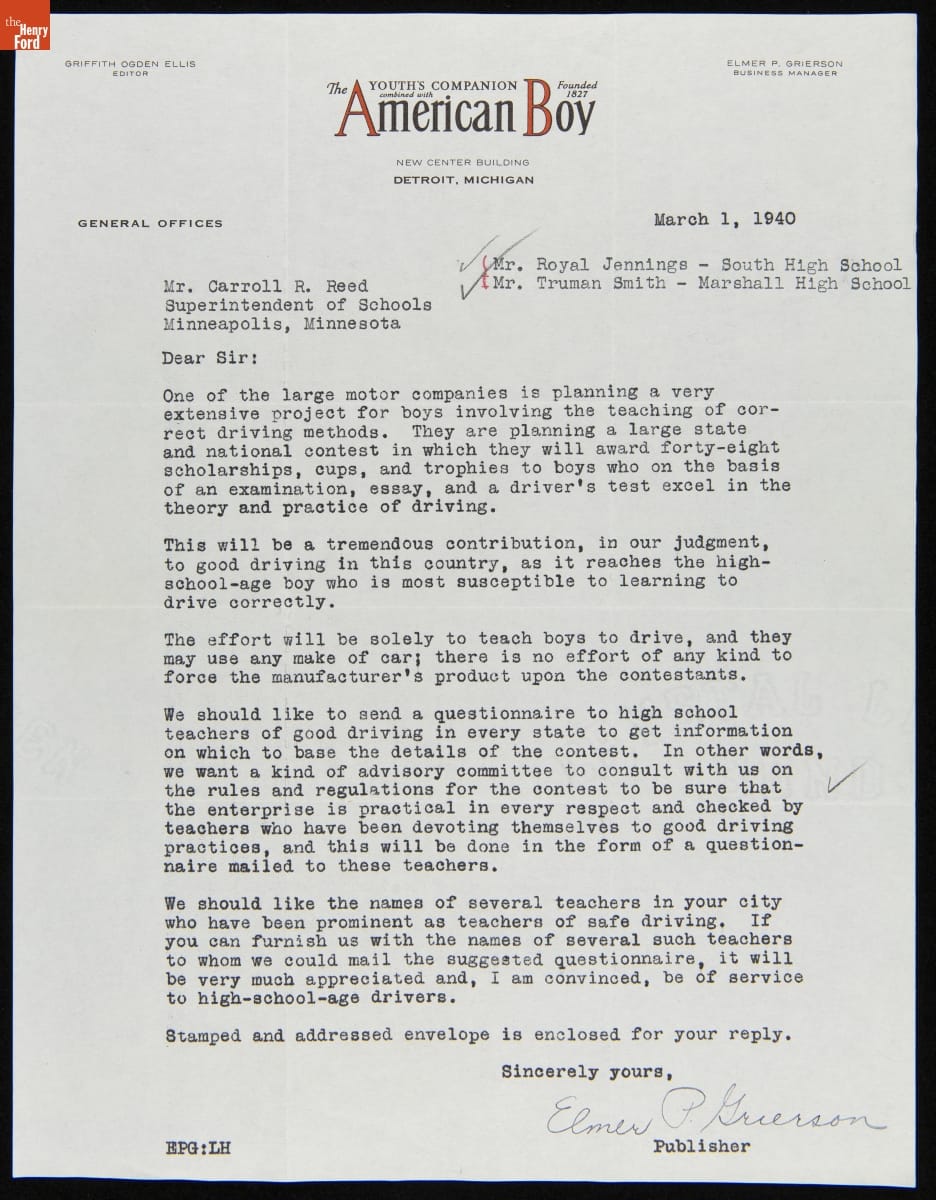
- Letter from Elmer Grierson, Publisher of The American Boy, to Carroll R. Reed, March 1, 1940 - Ford Motor Company created the Ford Good Drivers League in 1940 to promote safe driving habits among high school students. Young drivers would compete in state and national championships, which included a driving test. Elmer Grierson, the publisher of <em>The American Boy</em> magazine, was among the organization's supporters. Grierson reached out to state school systems for advice on structuring the League's driving contests.
- March 01, 1940
- Collections - Artifact
Letter from Elmer Grierson, Publisher of The American Boy, to Carroll R. Reed, March 1, 1940
Ford Motor Company created the Ford Good Drivers League in 1940 to promote safe driving habits among high school students. Young drivers would compete in state and national championships, which included a driving test. Elmer Grierson, the publisher of The American Boy magazine, was among the organization's supporters. Grierson reached out to state school systems for advice on structuring the League's driving contests.
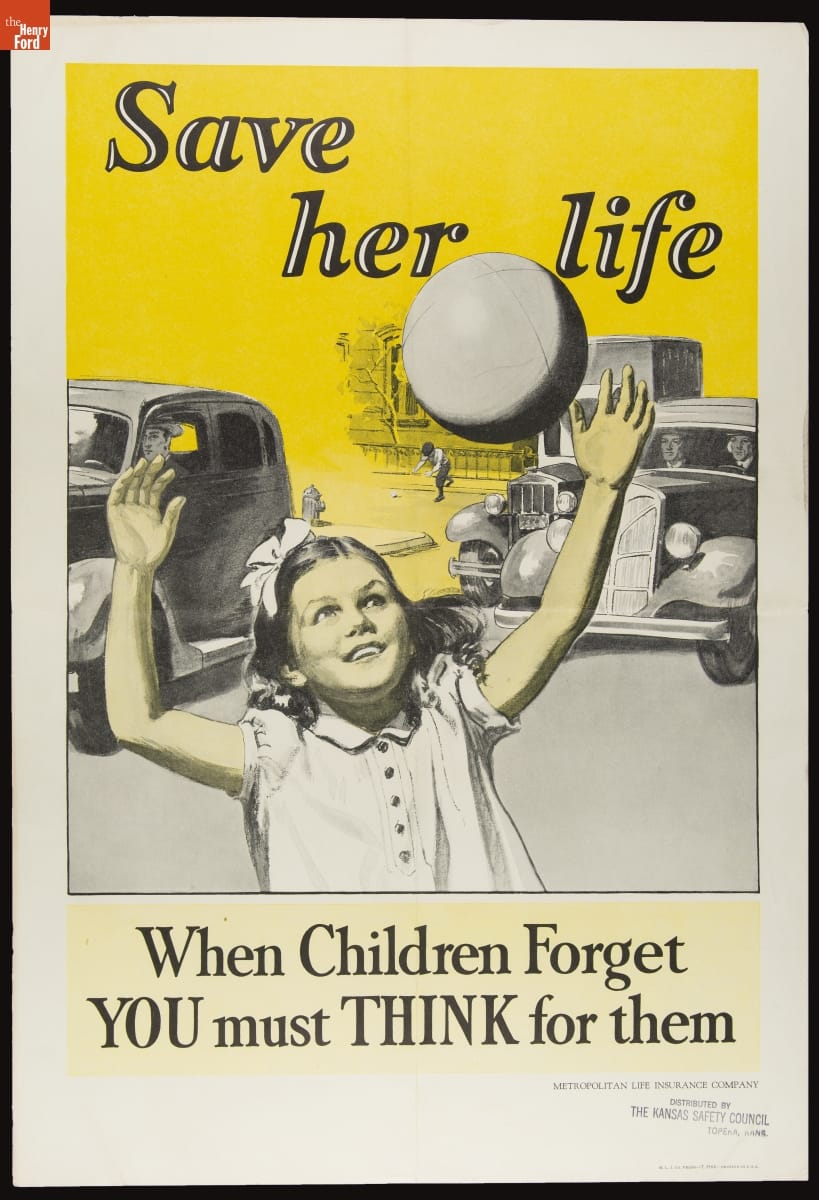
- Save Her Life, 1940-1942 - Automobile accidents and fatalities continued to climb in the 1930s. Insurance companies and other safety advocates searched for ways to make driving safer. The Metropolitan Life Insurance Company distributed this poster urging drivers to think, slow down, and drive carefully in areas where children play.
- 1940-1942
- Collections - Artifact
Save Her Life, 1940-1942
Automobile accidents and fatalities continued to climb in the 1930s. Insurance companies and other safety advocates searched for ways to make driving safer. The Metropolitan Life Insurance Company distributed this poster urging drivers to think, slow down, and drive carefully in areas where children play.