
Search
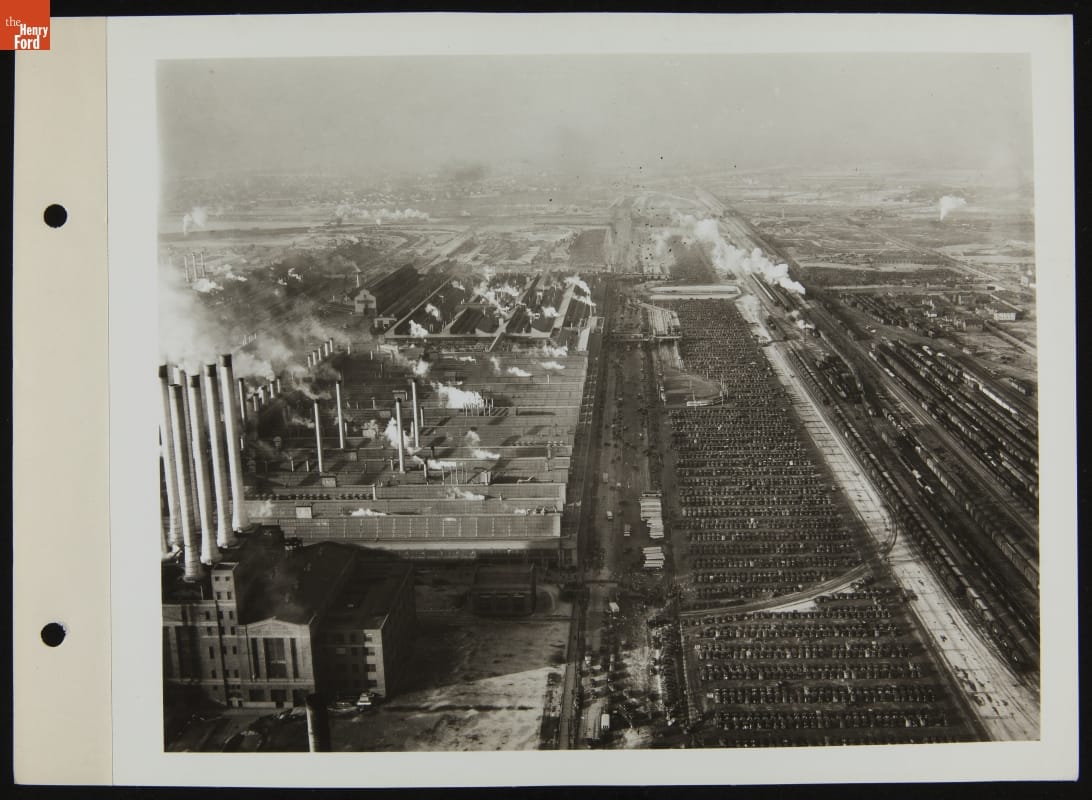
- Aerial View of Rouge Plant Showing UAW Activists, December 23, 1937 - The struggle to unionize Ford Motor Company workers was long and--at times--violent. This aerial photograph shows a United Auto Workers (UAW) demonstration at Ford's Rouge Plant in December 1937. Three and a half years later, following a turbulent ten-day strike in April 1941, Ford became the last major automotive manufacturer to recognize the UAW and agree to a union contract.
- December 23, 1937
- Collections - Artifact
Aerial View of Rouge Plant Showing UAW Activists, December 23, 1937
The struggle to unionize Ford Motor Company workers was long and--at times--violent. This aerial photograph shows a United Auto Workers (UAW) demonstration at Ford's Rouge Plant in December 1937. Three and a half years later, following a turbulent ten-day strike in April 1941, Ford became the last major automotive manufacturer to recognize the UAW and agree to a union contract.
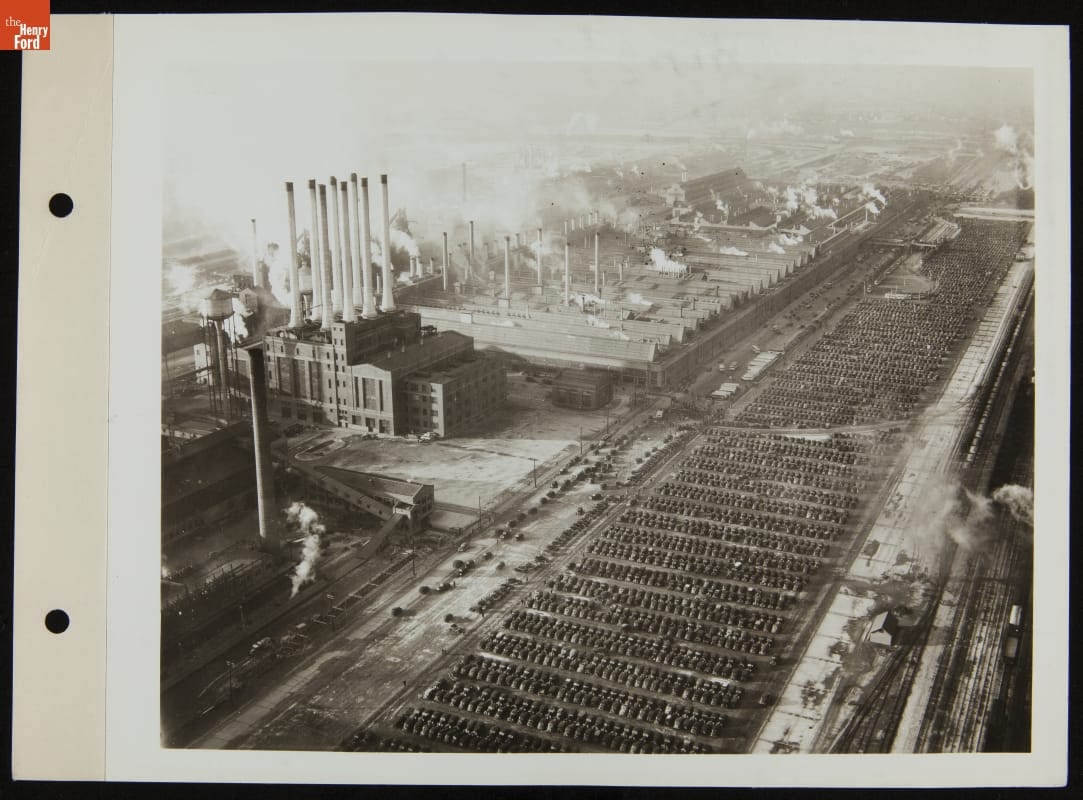
- Aerial View of Rouge Plant Showing UAW Activists, December 23, 1937 - The struggle to unionize Ford Motor Company workers was long and--at times--violent. This aerial photograph shows a United Auto Workers (UAW) demonstration at Ford's Rouge Plant in December 1937. Three and a half years later, following a turbulent ten-day strike in April 1941, Ford became the last major automotive manufacturer to recognize the UAW and agree to a union contract.
- December 23, 1937
- Collections - Artifact
Aerial View of Rouge Plant Showing UAW Activists, December 23, 1937
The struggle to unionize Ford Motor Company workers was long and--at times--violent. This aerial photograph shows a United Auto Workers (UAW) demonstration at Ford's Rouge Plant in December 1937. Three and a half years later, following a turbulent ten-day strike in April 1941, Ford became the last major automotive manufacturer to recognize the UAW and agree to a union contract.
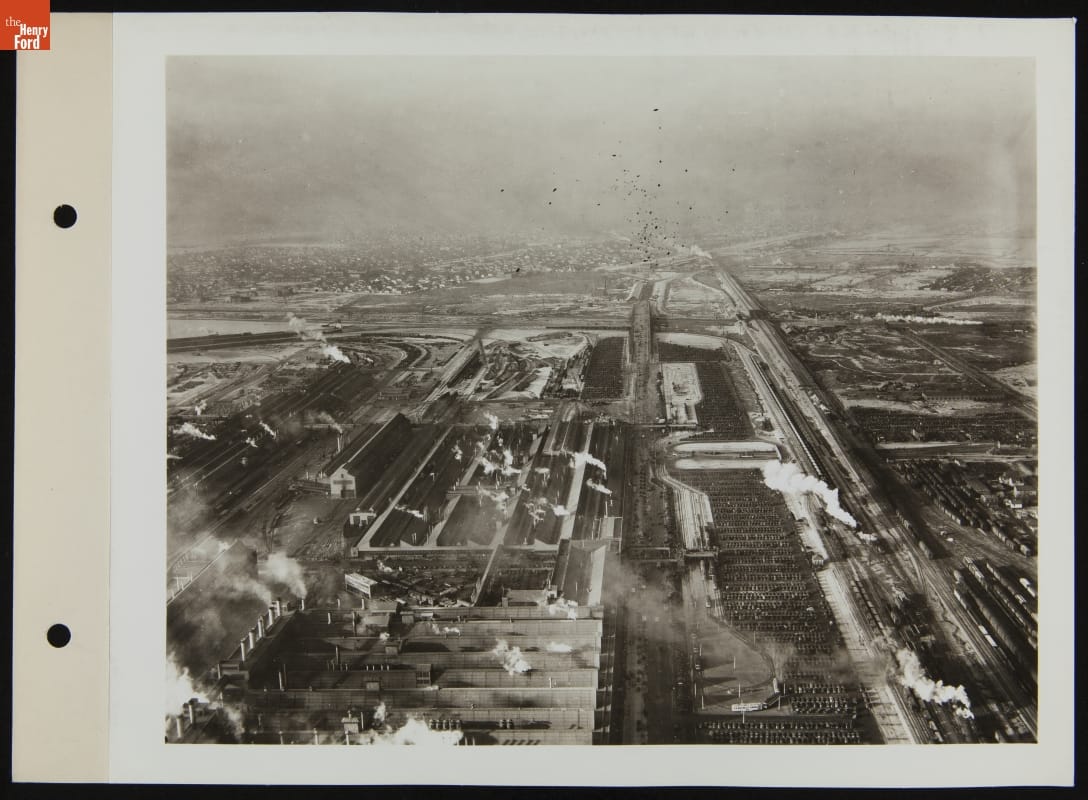
- Aerial View of Rouge Plant and Surrounding Area, December 23, 1937 - The struggle to unionize Ford Motor Company workers was long and--at times--violent. This aerial photograph shows Ford's Rouge Plant during a United Auto Workers (UAW) demonstration in December 1937. Three and a half years later, following a turbulent ten-day strike in April 1941, Ford became the last major automotive manufacturer to recognize the UAW and agree to a union contract.
- December 23, 1937
- Collections - Artifact
Aerial View of Rouge Plant and Surrounding Area, December 23, 1937
The struggle to unionize Ford Motor Company workers was long and--at times--violent. This aerial photograph shows Ford's Rouge Plant during a United Auto Workers (UAW) demonstration in December 1937. Three and a half years later, following a turbulent ten-day strike in April 1941, Ford became the last major automotive manufacturer to recognize the UAW and agree to a union contract.
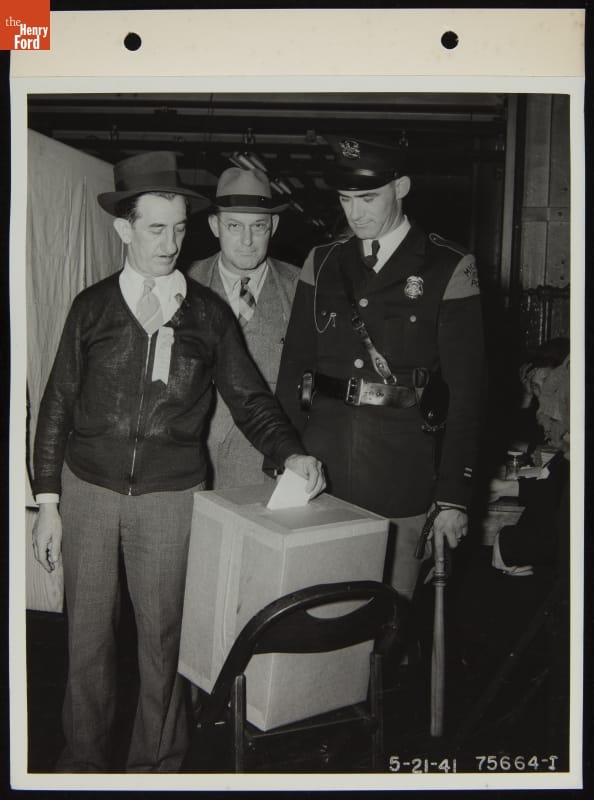
- Men Voting in NLRB Election, Ford Rouge Plant, May 1941 - Ford Motor Company, and Henry Ford in particular, long refused to recognize the United Auto Workers labor union. General Motors and Chrysler unionized in 1937, but Ford stubbornly held out against workers' wishes. Finally, Ford agreed to a National Labor Relations Board vote on unionization held May 21, 1941. Seventy percent of Ford's employees voted in favor of the UAW.
- May 21, 1941
- Collections - Artifact
Men Voting in NLRB Election, Ford Rouge Plant, May 1941
Ford Motor Company, and Henry Ford in particular, long refused to recognize the United Auto Workers labor union. General Motors and Chrysler unionized in 1937, but Ford stubbornly held out against workers' wishes. Finally, Ford agreed to a National Labor Relations Board vote on unionization held May 21, 1941. Seventy percent of Ford's employees voted in favor of the UAW.
- Strikers Booing, Ford Rouge Plant, April 1941 - Ford Motor Company was the last major auto manufacturer to be organized by the United Auto Workers (UAW). On April 1, 1941, workers at Ford's Rouge plant in Dearborn, Michigan, shut down the factory in reaction to anti-union firings and violence. After a turbulent ten-day strike, Ford agreed to the union's demands.
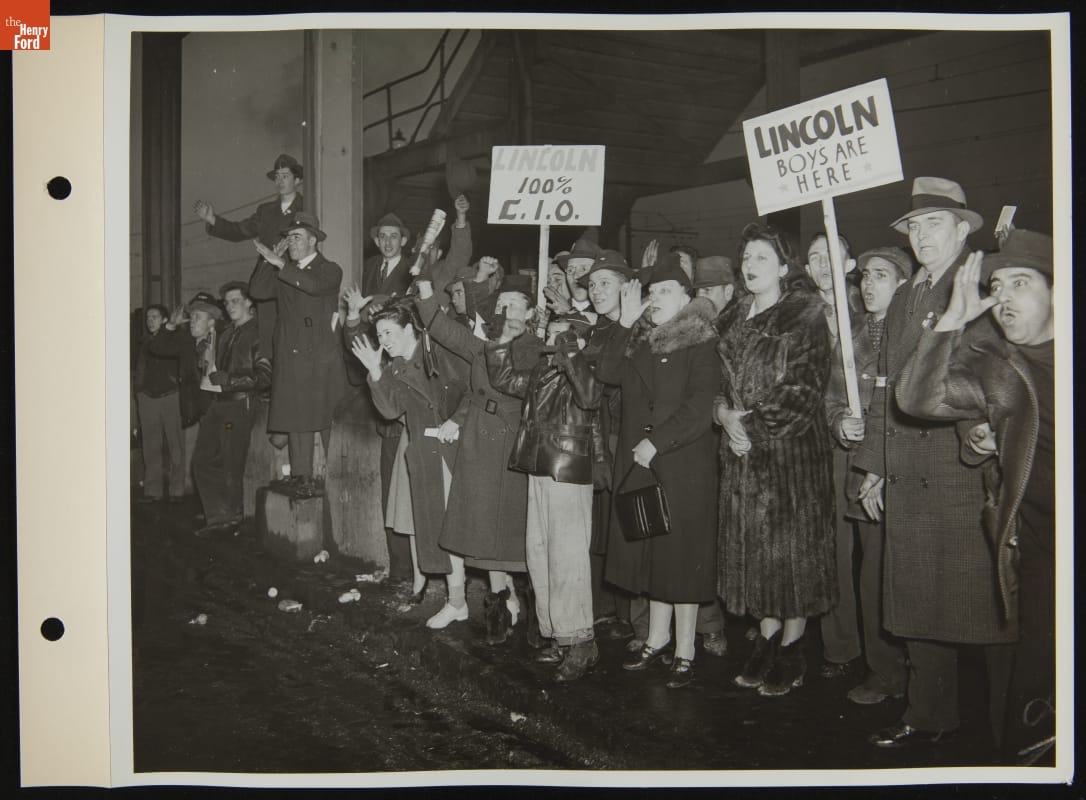
- April 01, 1941
- Collections - Artifact
Strikers Booing, Ford Rouge Plant, April 1941
Ford Motor Company was the last major auto manufacturer to be organized by the United Auto Workers (UAW). On April 1, 1941, workers at Ford's Rouge plant in Dearborn, Michigan, shut down the factory in reaction to anti-union firings and violence. After a turbulent ten-day strike, Ford agreed to the union's demands.
- Ford Service Department Men Confront UAW Organizers during the Battle of the Overpass, May 26, 1937 - Ford Motor Company refused to recognize the United Auto Workers (UAW) labor union. On May 26, 1937, men from Ford's Service Department (left) attacked labor organizers (right) Robert Kanter, Walter Reuther, Richard Frankensteen, and J.J. Kennedy on a pedestrian overpass at Ford's Rouge Plant. This "Battle of the Overpass" came to symbolize the struggle to unionize Ford. The UAW ultimately succeeded in 1941.
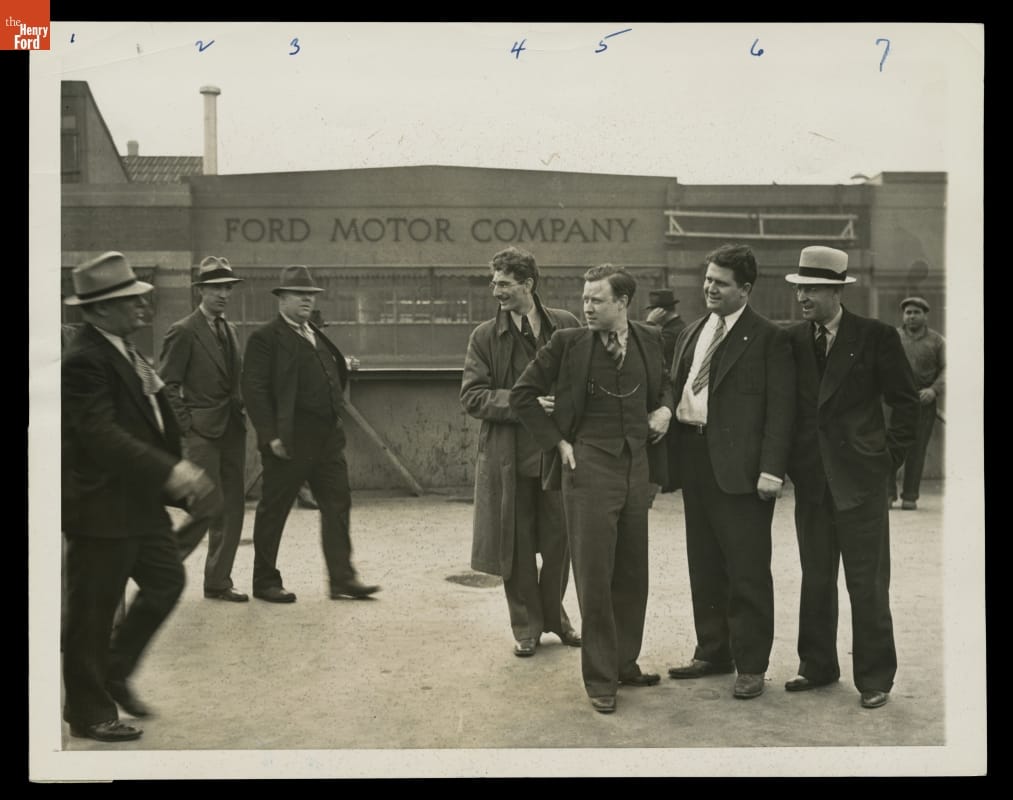
- May 26, 1937
- Collections - Artifact
Ford Service Department Men Confront UAW Organizers during the Battle of the Overpass, May 26, 1937
Ford Motor Company refused to recognize the United Auto Workers (UAW) labor union. On May 26, 1937, men from Ford's Service Department (left) attacked labor organizers (right) Robert Kanter, Walter Reuther, Richard Frankensteen, and J.J. Kennedy on a pedestrian overpass at Ford's Rouge Plant. This "Battle of the Overpass" came to symbolize the struggle to unionize Ford. The UAW ultimately succeeded in 1941.
- "UAW Ford Agreement," October 2023 - In fall 2023, United Auto Workers staged successful strikes against Ford, General Motors and Stellantis -- the union's first simultaneous actions against the Detroit Three. Workers struck for better pay and protection from job losses in the shift to electric vehicles. This booklet explained the UAW's tentative agreement with Ford, reached on October 25.
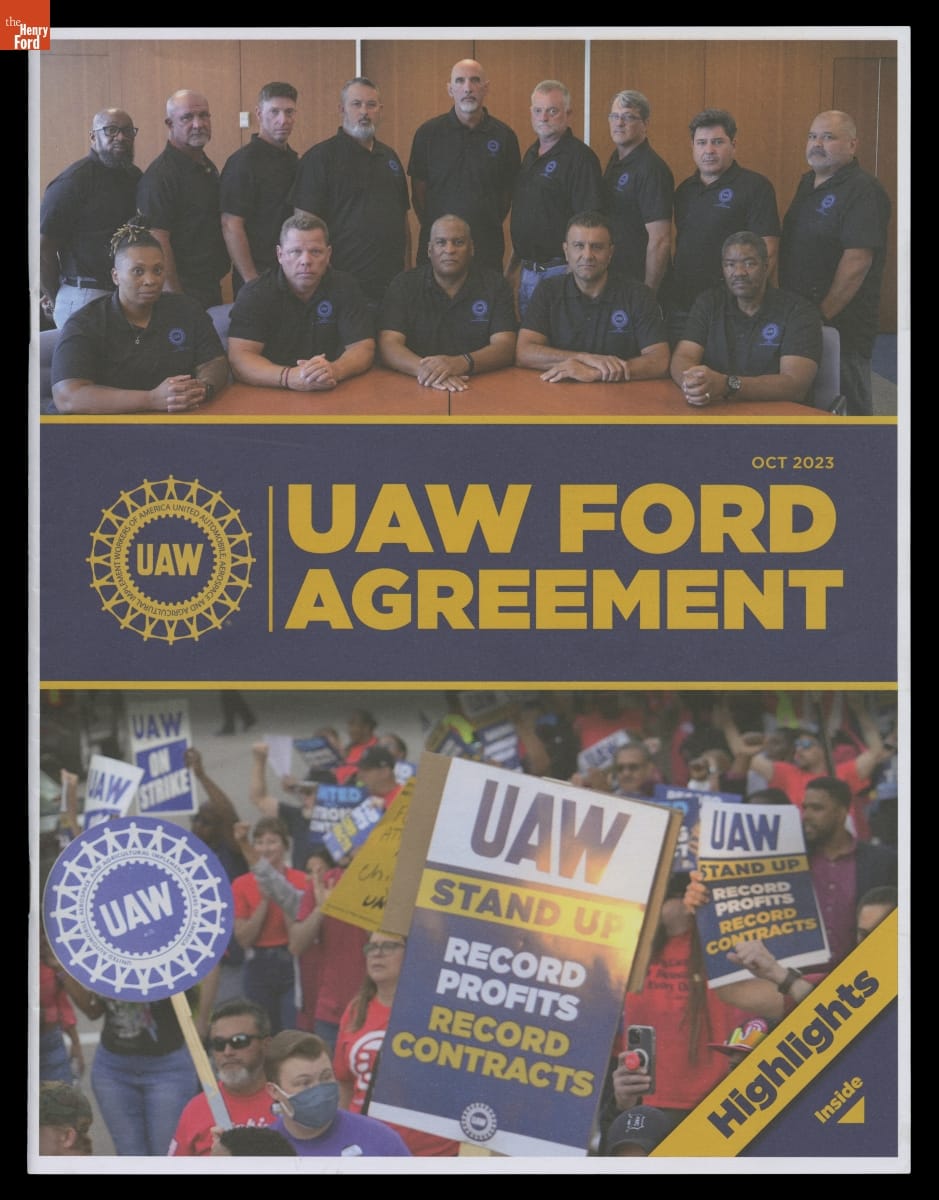
- October 01, 2023
- Collections - Artifact
"UAW Ford Agreement," October 2023
In fall 2023, United Auto Workers staged successful strikes against Ford, General Motors and Stellantis -- the union's first simultaneous actions against the Detroit Three. Workers struck for better pay and protection from job losses in the shift to electric vehicles. This booklet explained the UAW's tentative agreement with Ford, reached on October 25.
- Picketers and Workers Fighting, Ford Rouge Plant, April 1941 - Ford Motor Company was the last major auto manufacturer to be organized by the United Auto Workers (UAW). On April 1, 1941, workers at Ford's Rouge plant in Dearborn, Michigan, shut down the factory in reaction to anti-union firings and violence. After a turbulent ten-day strike, Ford agreed to the union's demands.
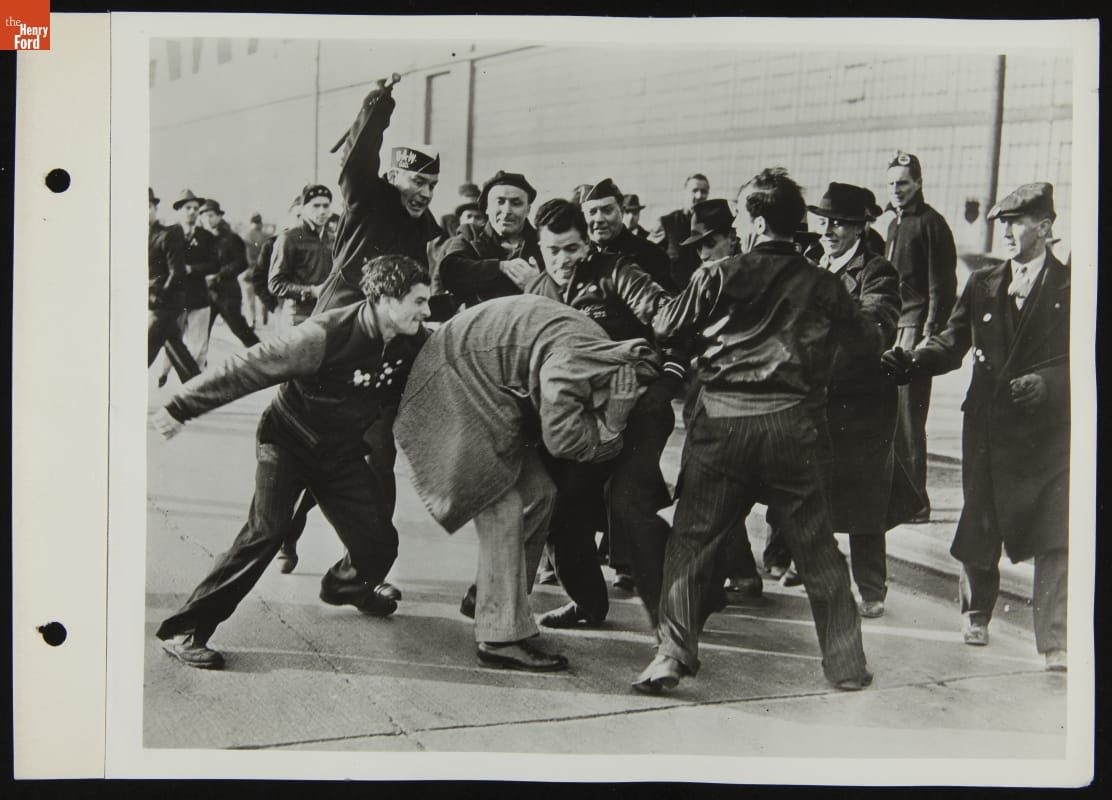
- April 02, 1941
- Collections - Artifact
Picketers and Workers Fighting, Ford Rouge Plant, April 1941
Ford Motor Company was the last major auto manufacturer to be organized by the United Auto Workers (UAW). On April 1, 1941, workers at Ford's Rouge plant in Dearborn, Michigan, shut down the factory in reaction to anti-union firings and violence. After a turbulent ten-day strike, Ford agreed to the union's demands.
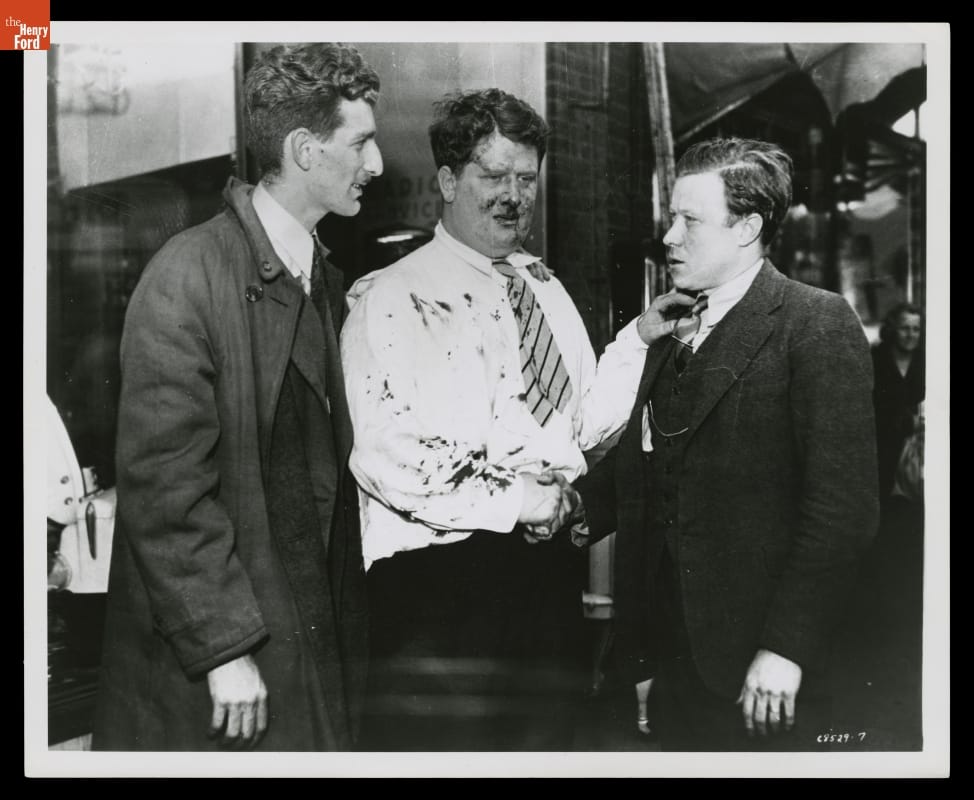
- Robert Kanter, Richard Frankensteen and Walter Reuther after the Battle of the Overpass, May 26, 1937 - Ford Motor Company refused to recognize the United Auto Workers labor union and hired guards to resist unionization among Ford employees. In May 1937, men from Ford's Service Department attacked labor organizers (including Kanter, Frankensteen and Reuther) on a pedestrian overpass at Ford's Rouge Plant. This bloody "Battle of the Overpass" became a lasting symbol of the American labor struggle.
- May 26, 1937
- Collections - Artifact
Robert Kanter, Richard Frankensteen and Walter Reuther after the Battle of the Overpass, May 26, 1937
Ford Motor Company refused to recognize the United Auto Workers labor union and hired guards to resist unionization among Ford employees. In May 1937, men from Ford's Service Department attacked labor organizers (including Kanter, Frankensteen and Reuther) on a pedestrian overpass at Ford's Rouge Plant. This bloody "Battle of the Overpass" became a lasting symbol of the American labor struggle.
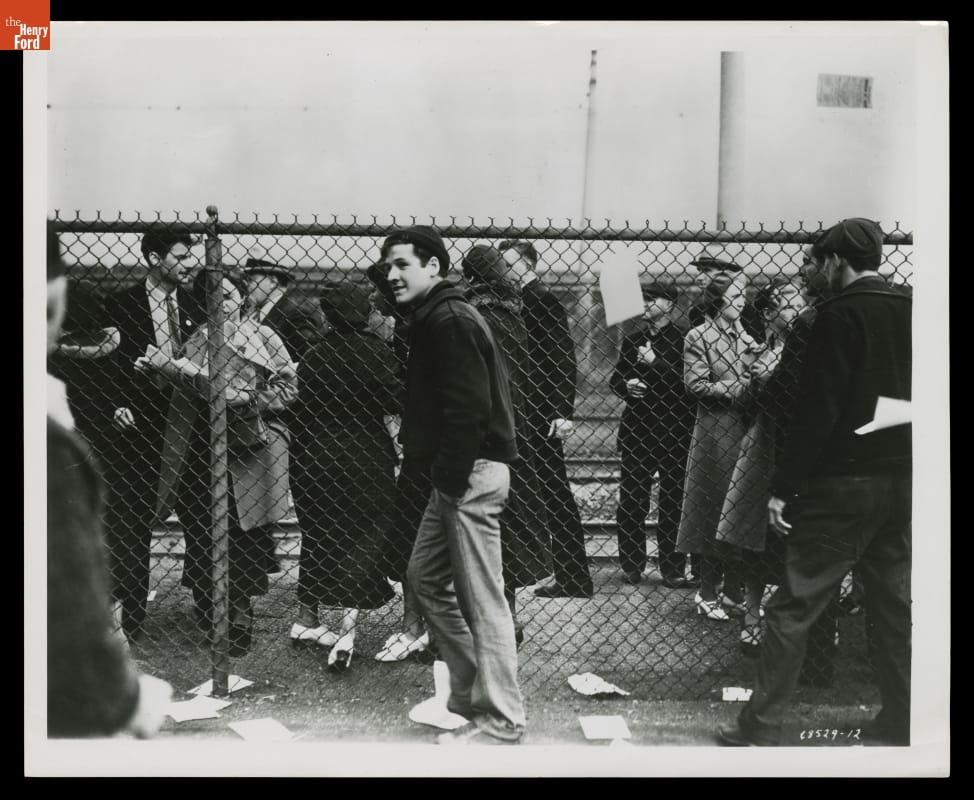
- UAW Organizers Forced Back from the Ford Rouge Plant during the Battle of the Overpass, May 26, 1937 - Ford Motor Company refused to recognize the United Auto Workers labor union and hired guards to resist unionization among Ford employees. In May 1937, men from Ford's Service Department attacked labor organizers on a pedestrian overpass at Ford's Rouge Plant, beating several men and women. This bloody "Battle of the Overpass" became a lasting symbol of the American labor struggle.
- May 26, 1937
- Collections - Artifact
UAW Organizers Forced Back from the Ford Rouge Plant during the Battle of the Overpass, May 26, 1937
Ford Motor Company refused to recognize the United Auto Workers labor union and hired guards to resist unionization among Ford employees. In May 1937, men from Ford's Service Department attacked labor organizers on a pedestrian overpass at Ford's Rouge Plant, beating several men and women. This bloody "Battle of the Overpass" became a lasting symbol of the American labor struggle.