
Search
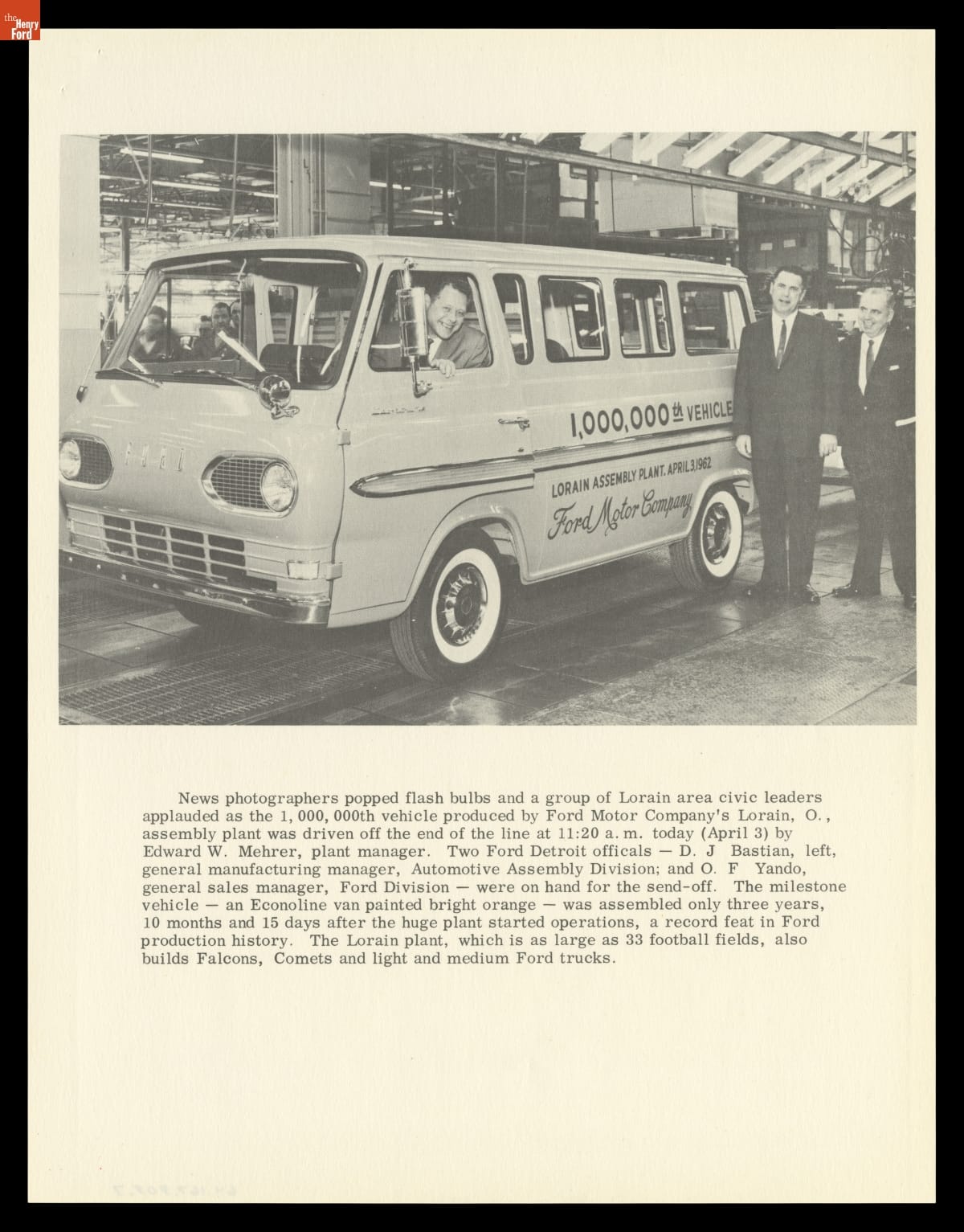
- 1,000,000th Vehicle Built at Ford Motor Company Assembly Plant, Lorain, Ohio, April 3, 1962 - Ford Motor Company opened an assembly plant in Lorain, Ohio, in 1958. Over the years, the factory manufactured various Ford and Mercury models. On April 3, 1962, employees celebrated production of the plant's one millionth vehicle: a Ford Econoline van. Workers at Lorain built another seven million vehicles before the plant closed in 2005.
- April 03, 1962
- Collections - Artifact
1,000,000th Vehicle Built at Ford Motor Company Assembly Plant, Lorain, Ohio, April 3, 1962
Ford Motor Company opened an assembly plant in Lorain, Ohio, in 1958. Over the years, the factory manufactured various Ford and Mercury models. On April 3, 1962, employees celebrated production of the plant's one millionth vehicle: a Ford Econoline van. Workers at Lorain built another seven million vehicles before the plant closed in 2005.
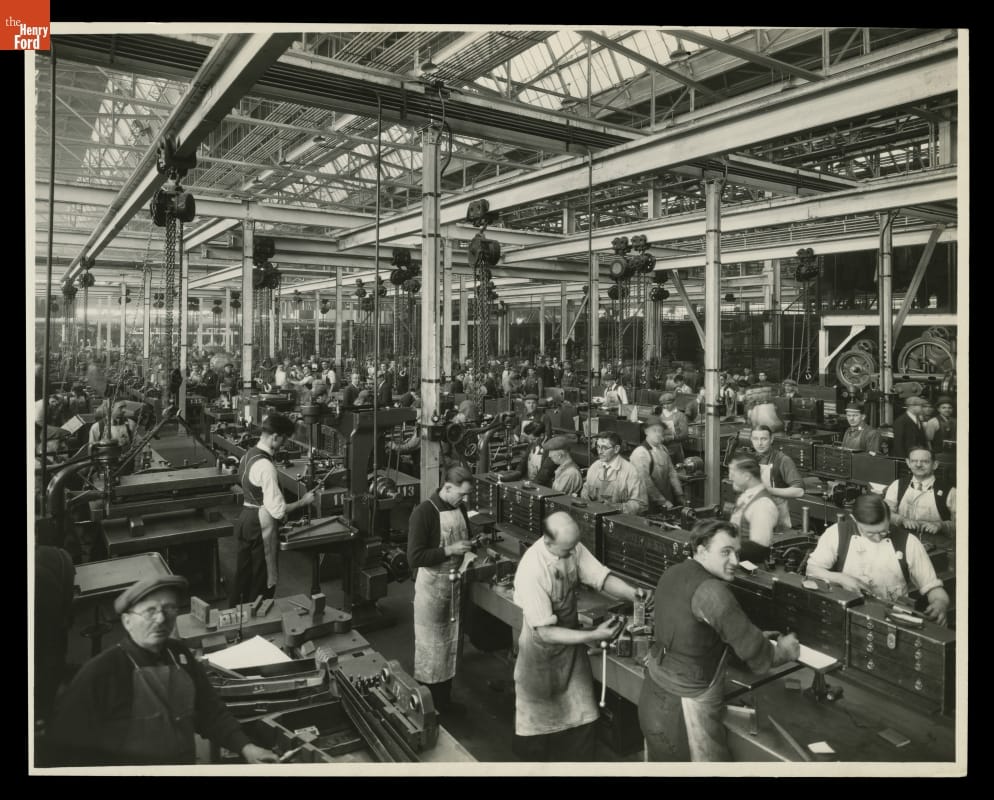
- Tool and Die Department in Pressed Steel Building, Ford Motor Company Rouge Plant, Dearborn, Michigan, 1928 - The pressed-steel building at Ford Motor Company's Rouge plant produced steel components like automobile fenders, body panels, and roof sections. In the late 1930s, the building had more than 4,000 presses, and 10,000 workers turned out more than 2,000 different parts. Some of those parts were used at the Rouge, and some were shipped to other Ford assembly plants.
- February 01, 1928
- Collections - Artifact
Tool and Die Department in Pressed Steel Building, Ford Motor Company Rouge Plant, Dearborn, Michigan, 1928
The pressed-steel building at Ford Motor Company's Rouge plant produced steel components like automobile fenders, body panels, and roof sections. In the late 1930s, the building had more than 4,000 presses, and 10,000 workers turned out more than 2,000 different parts. Some of those parts were used at the Rouge, and some were shipped to other Ford assembly plants.
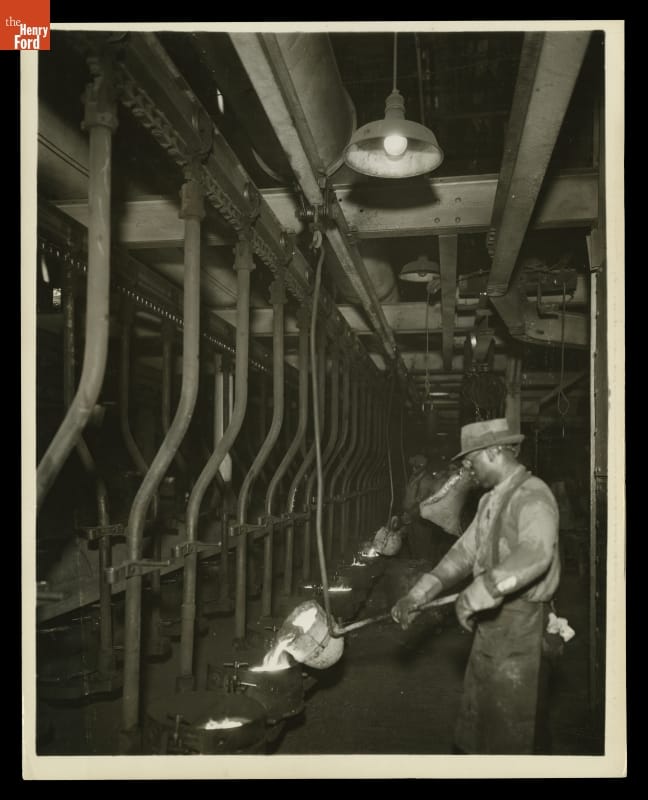
- Foundry Workers at the Ford Rouge Plant, 1934 - Workers at the Ford Rouge plant's foundry poured a molten mixture of metal, coke, and limestone into molds to create cast-metal engine blocks and parts. Once "shaken out" of their molds, castings were roughly machined before heading elsewhere for finishing and assembly. The Rouge foundry set an industry benchmark in 1932 by successfully casting Ford's intricate, single-piece V-8 engine block.
- 1934
- Collections - Artifact
Foundry Workers at the Ford Rouge Plant, 1934
Workers at the Ford Rouge plant's foundry poured a molten mixture of metal, coke, and limestone into molds to create cast-metal engine blocks and parts. Once "shaken out" of their molds, castings were roughly machined before heading elsewhere for finishing and assembly. The Rouge foundry set an industry benchmark in 1932 by successfully casting Ford's intricate, single-piece V-8 engine block.
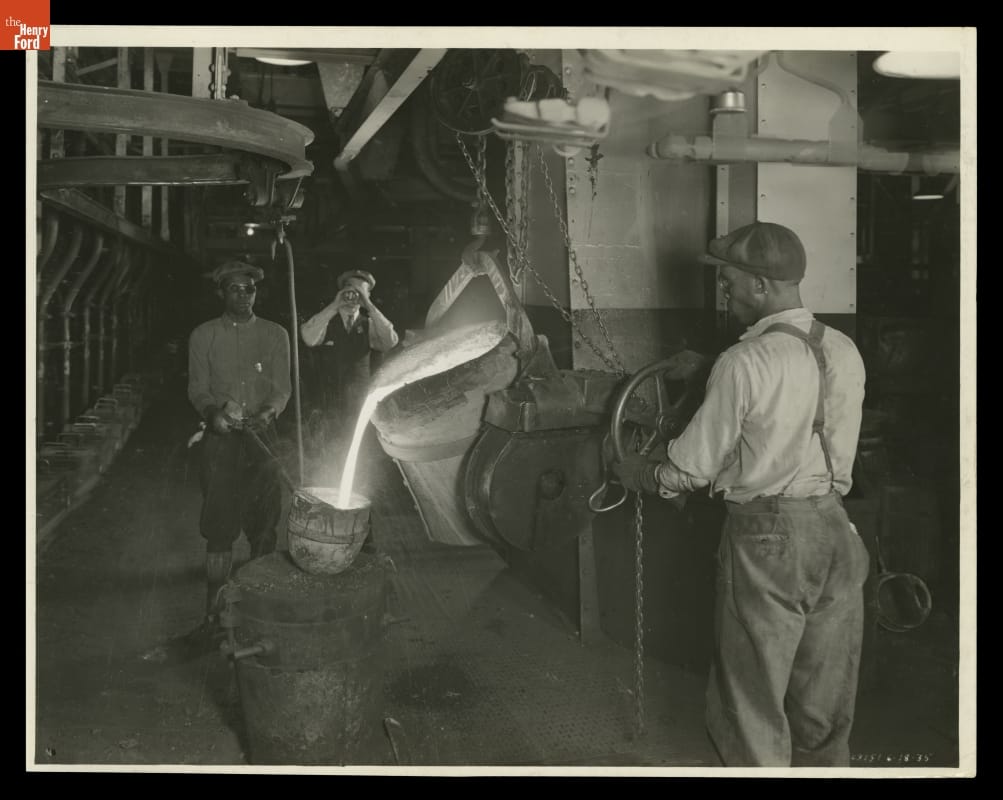
- Camshaft Casting by Foundry Workers, Ford Rouge Plant, 1935 - Workers at the Ford Rouge plant's foundry poured a molten mixture of metal, coke, and limestone into molds to create cast-metal engine blocks and parts. Once "shaken out" of their molds, castings were roughly machined before heading elsewhere for finishing and assembly. The Rouge foundry set an industry benchmark in 1932 by successfully casting Ford's intricate, single-piece V-8 engine block.
- June 18, 1935
- Collections - Artifact
Camshaft Casting by Foundry Workers, Ford Rouge Plant, 1935
Workers at the Ford Rouge plant's foundry poured a molten mixture of metal, coke, and limestone into molds to create cast-metal engine blocks and parts. Once "shaken out" of their molds, castings were roughly machined before heading elsewhere for finishing and assembly. The Rouge foundry set an industry benchmark in 1932 by successfully casting Ford's intricate, single-piece V-8 engine block.
- Worker Operating a Press in the Salvage Department at the Ford Motor Company Rouge Plant, November 1926 - In 1925, Ford Motor Company purchased 199 surplus World War I merchant ships from the U.S. government. The vessels were towed by tugs to the Rouge, where most were cut into scrap metal used in the plant's steel-making facilities. Serviceable parts were salvaged. Here, a worker straightens a pipe from one of the ships for use elsewhere.
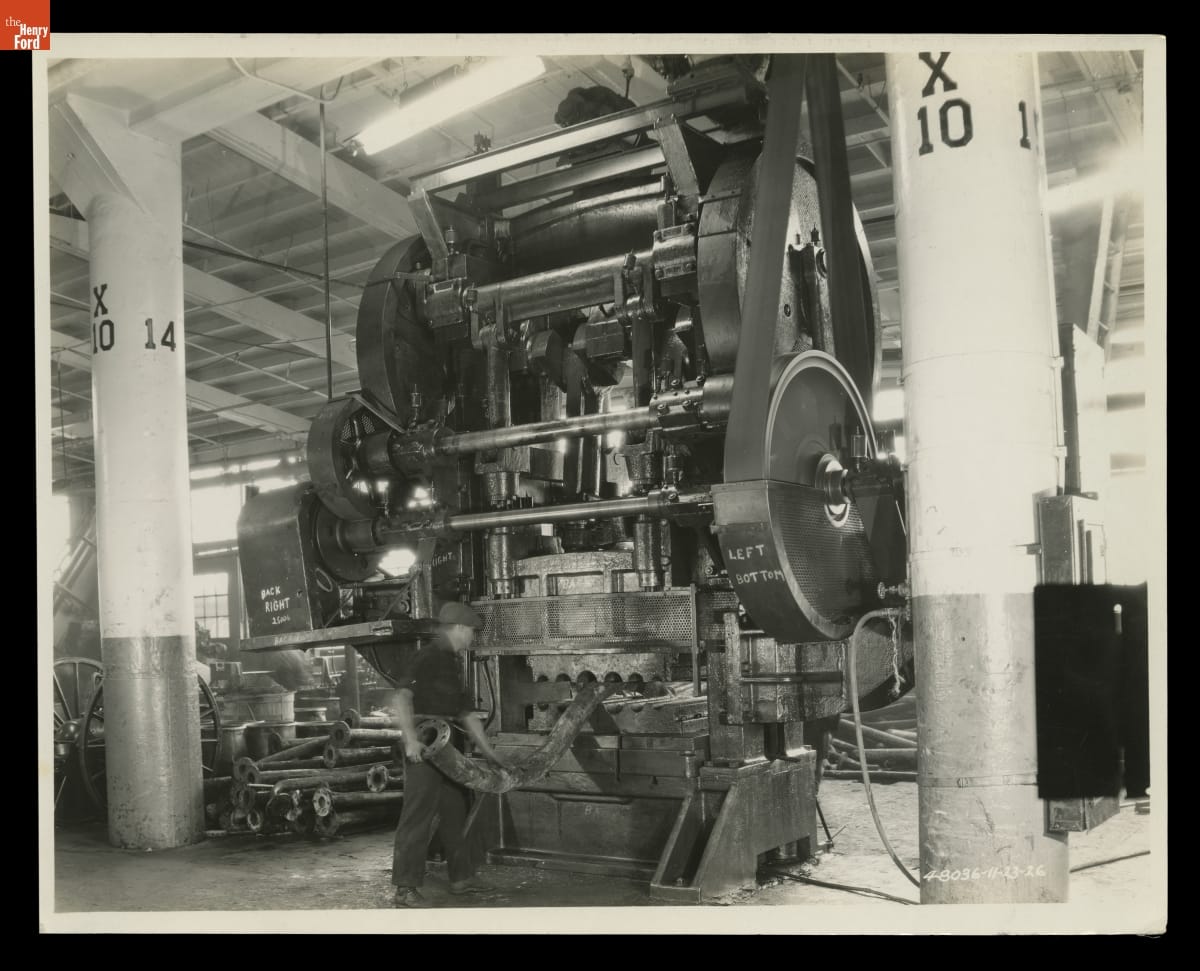
- November 23, 1926
- Collections - Artifact
Worker Operating a Press in the Salvage Department at the Ford Motor Company Rouge Plant, November 1926
In 1925, Ford Motor Company purchased 199 surplus World War I merchant ships from the U.S. government. The vessels were towed by tugs to the Rouge, where most were cut into scrap metal used in the plant's steel-making facilities. Serviceable parts were salvaged. Here, a worker straightens a pipe from one of the ships for use elsewhere.
- Painting Automobile Bodies in the Ford Motor Company Rouge Plant B Building, November 1932 - Ford Motor Company's system of mass production depended on the smooth flow of parts and materials to workers. Ford engineers designed the buildings and facilities at the company's massive Rouge plant with this in mind. The "B" Building, where vehicle assembly took place, included extensive conveyer systems to accommodate the continuous movement of parts and processes.
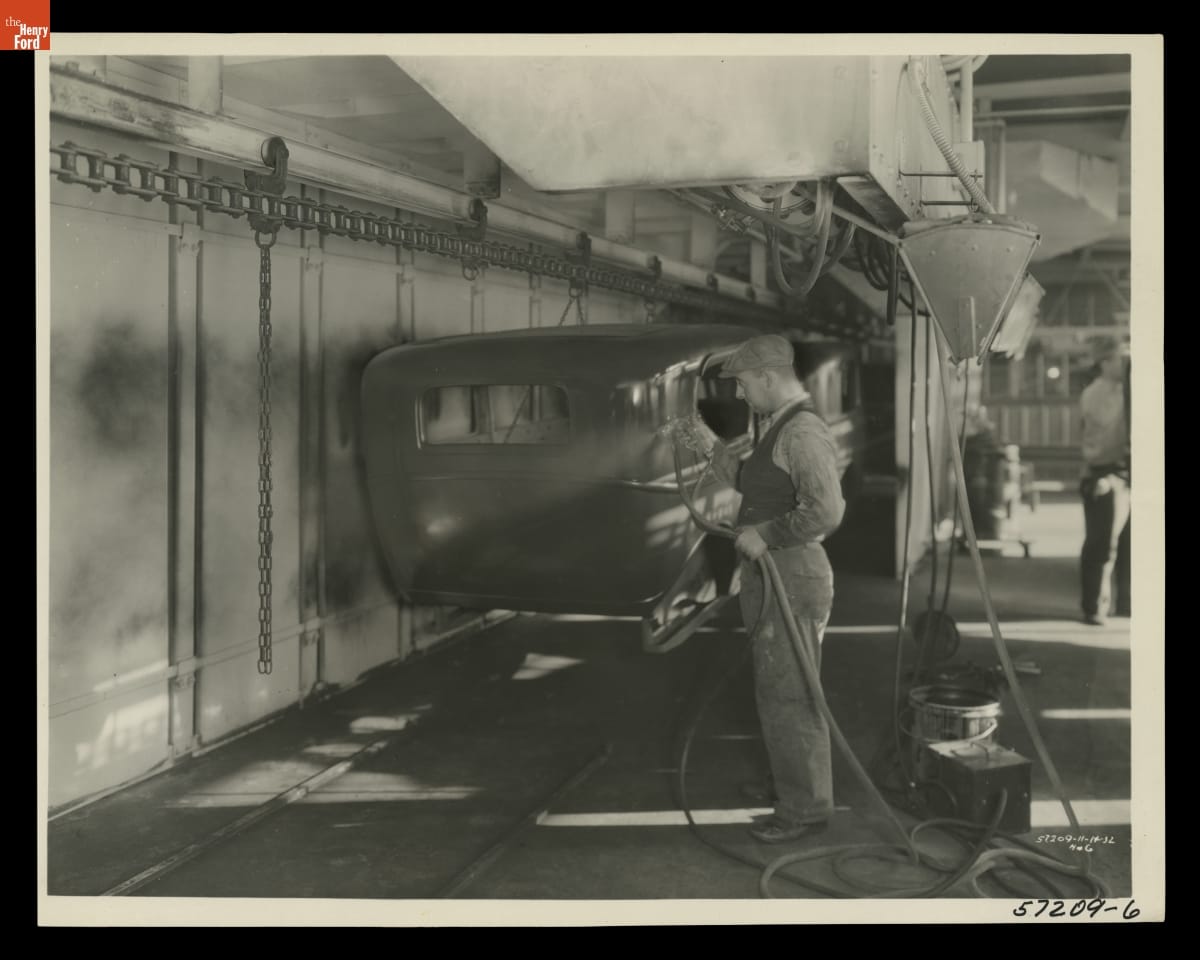
- November 14, 1932
- Collections - Artifact
Painting Automobile Bodies in the Ford Motor Company Rouge Plant B Building, November 1932
Ford Motor Company's system of mass production depended on the smooth flow of parts and materials to workers. Ford engineers designed the buildings and facilities at the company's massive Rouge plant with this in mind. The "B" Building, where vehicle assembly took place, included extensive conveyer systems to accommodate the continuous movement of parts and processes.
- Workers Pouring Molten Metal in the Foundry at the Ford Motor Company Rouge Plant, November 10, 1941 - Workers at the Ford Rouge plant's foundry poured a molten mixture of metal, coke, and limestone into molds to create cast-metal engine blocks and parts. Once "shaken out" of their molds, castings were roughly machined before heading elsewhere for finishing and assembly. The Rouge foundry set an industry benchmark in 1932 by successfully casting Ford's intricate, single-piece V-8 engine block.
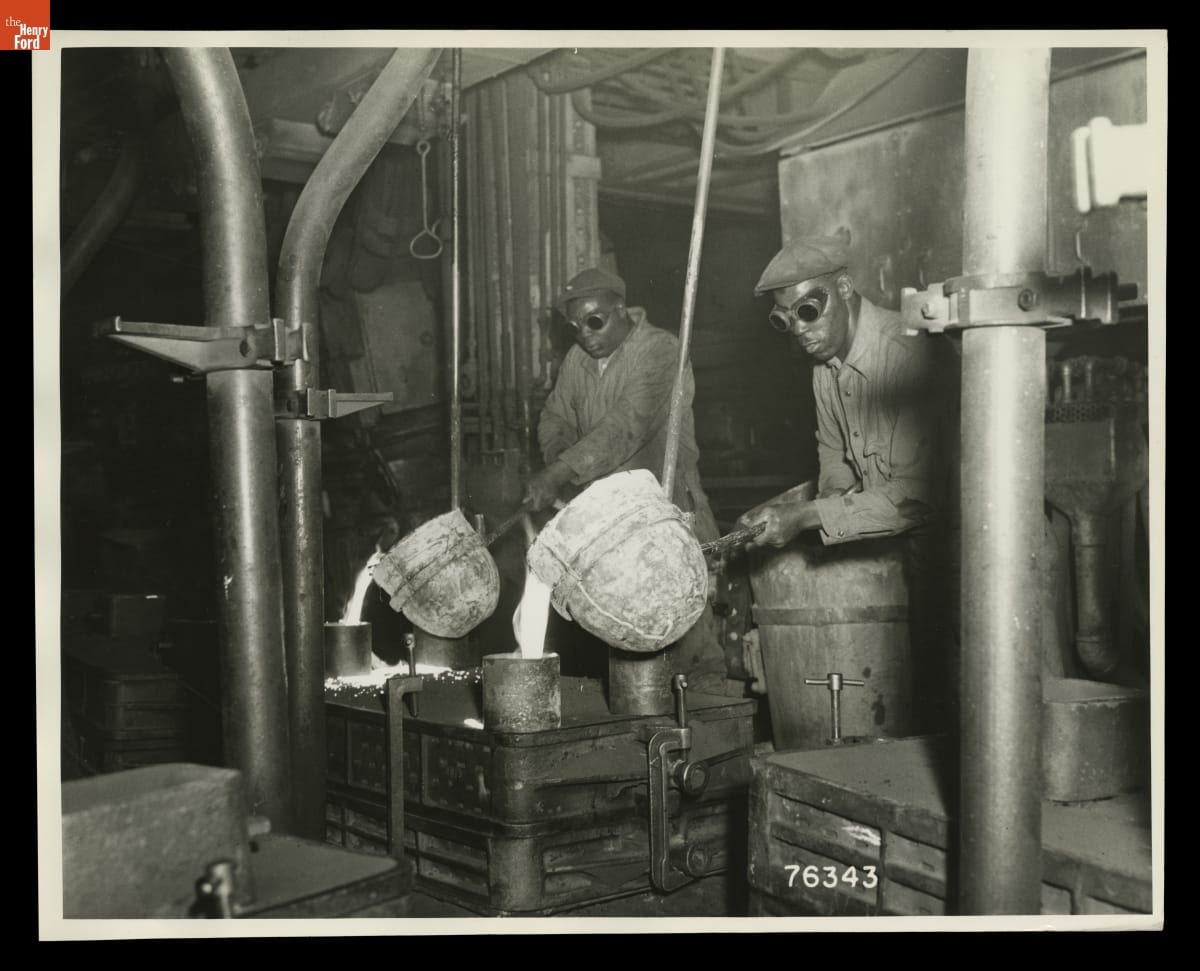
- November 10, 1941
- Collections - Artifact
Workers Pouring Molten Metal in the Foundry at the Ford Motor Company Rouge Plant, November 10, 1941
Workers at the Ford Rouge plant's foundry poured a molten mixture of metal, coke, and limestone into molds to create cast-metal engine blocks and parts. Once "shaken out" of their molds, castings were roughly machined before heading elsewhere for finishing and assembly. The Rouge foundry set an industry benchmark in 1932 by successfully casting Ford's intricate, single-piece V-8 engine block.
- Workers Making Cylinder Blocks in the Foundry at the Ford Motor Company Rouge Plant, 1930 - Workers at the Ford Rouge plant's foundry poured a molten mixture of metal, coke, and limestone into molds to create cast-metal engine blocks and parts. Once "shaken out" of their molds, castings were roughly machined before heading elsewhere for finishing and assembly. The Rouge foundry set an industry benchmark in 1932 by successfully casting Ford's intricate, single-piece V-8 engine block.
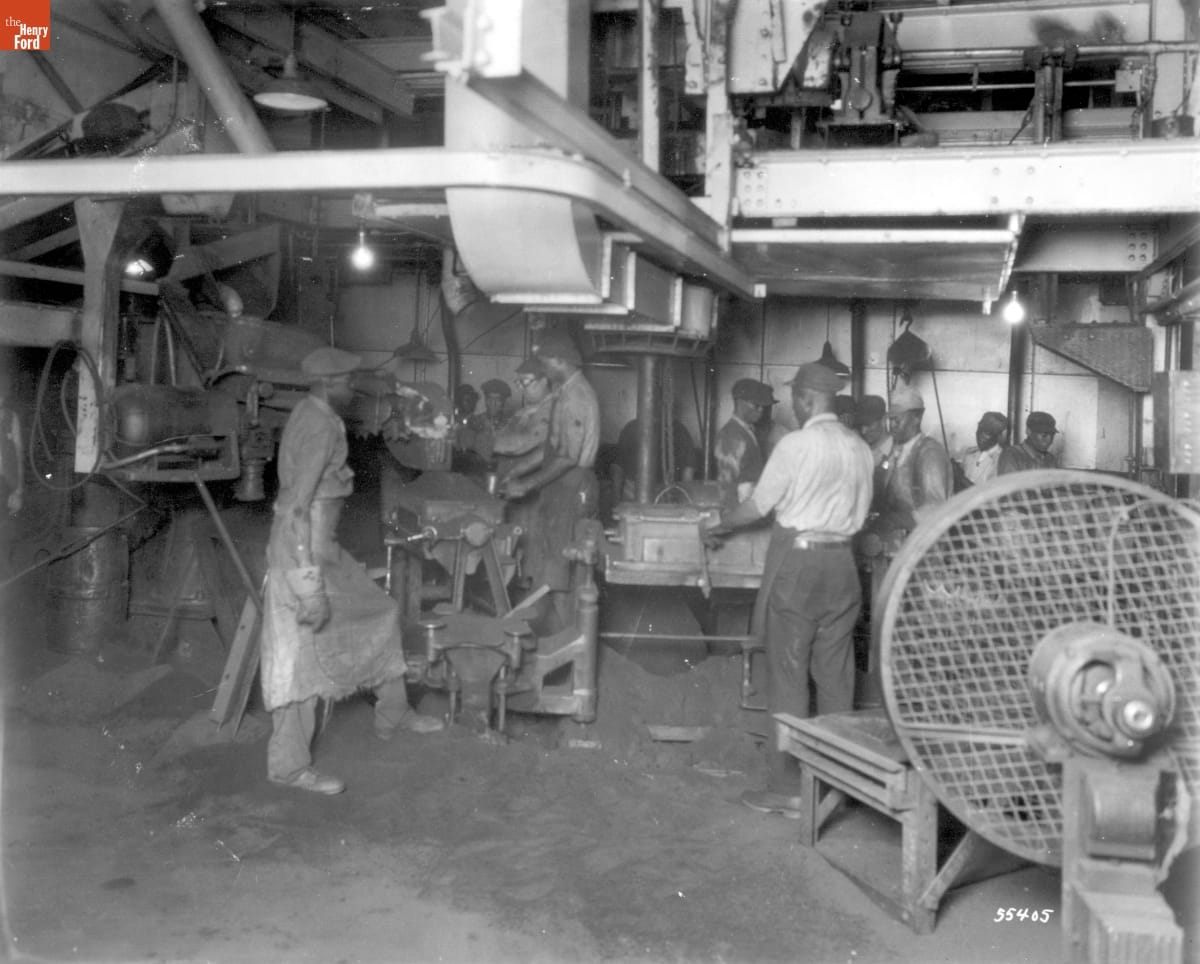
- 1930
- Collections - Artifact
Workers Making Cylinder Blocks in the Foundry at the Ford Motor Company Rouge Plant, 1930
Workers at the Ford Rouge plant's foundry poured a molten mixture of metal, coke, and limestone into molds to create cast-metal engine blocks and parts. Once "shaken out" of their molds, castings were roughly machined before heading elsewhere for finishing and assembly. The Rouge foundry set an industry benchmark in 1932 by successfully casting Ford's intricate, single-piece V-8 engine block.
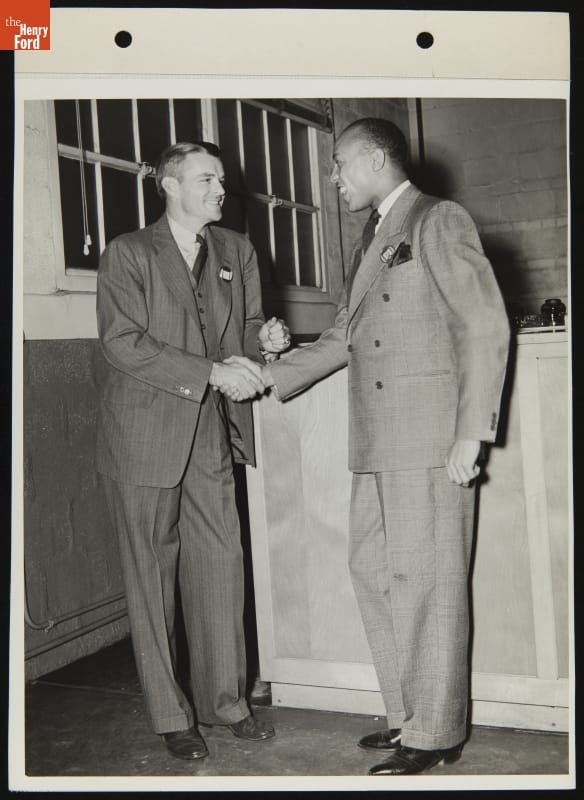
- Tommy Bridges Welcomes Jesse Owens to Work at Ford Motor Company, November 23, 1942 - Jesse Owens won four gold medals in track and field events at the 1936 Olympic Games in Berlin, Germany. In 1942, his friend Willis Ward encouraged Owens to join Ford Motor Company and ultimately succeed Ward as director of its personnel department for African American employees. Owens later worked in public relations at the company. He remained with Ford until 1946.
- November 23, 1942
- Collections - Artifact
Tommy Bridges Welcomes Jesse Owens to Work at Ford Motor Company, November 23, 1942
Jesse Owens won four gold medals in track and field events at the 1936 Olympic Games in Berlin, Germany. In 1942, his friend Willis Ward encouraged Owens to join Ford Motor Company and ultimately succeed Ward as director of its personnel department for African American employees. Owens later worked in public relations at the company. He remained with Ford until 1946.
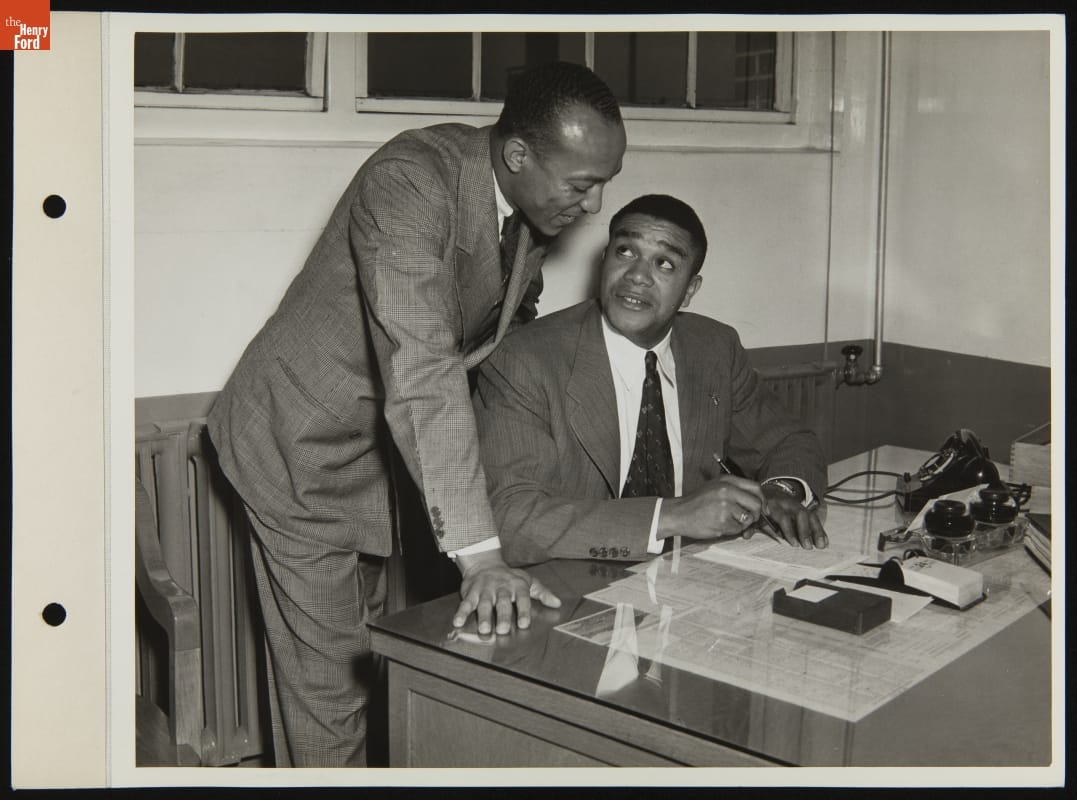
- Jesse Owens and Willis Ward, Ford Motor Company, November 23, 1942 - Jesse Owens won four gold medals in track and field events at the 1936 Olympic Games in Berlin, Germany. In 1942, his friend Willis Ward encouraged Owens to join Ford Motor Company and ultimately succeed Ward as director of its personnel department for African American employees. Owens later worked in public relations at the company. He remained with Ford until 1946.
- November 23, 1942
- Collections - Artifact
Jesse Owens and Willis Ward, Ford Motor Company, November 23, 1942
Jesse Owens won four gold medals in track and field events at the 1936 Olympic Games in Berlin, Germany. In 1942, his friend Willis Ward encouraged Owens to join Ford Motor Company and ultimately succeed Ward as director of its personnel department for African American employees. Owens later worked in public relations at the company. He remained with Ford until 1946.