
Search
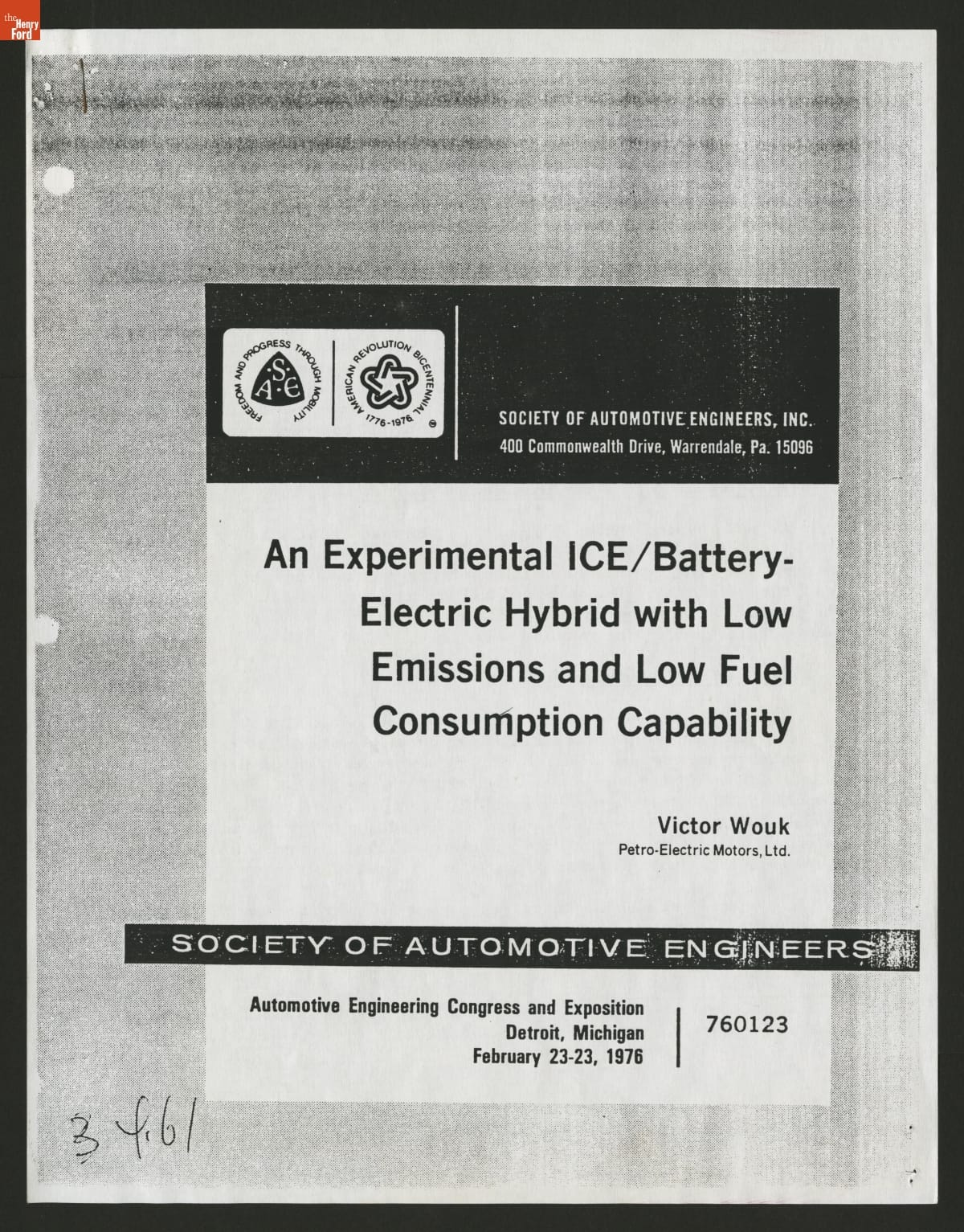
- An Experimental ICE/Battery-Electric Hybrid with Low Emissions and Low Fuel Consumption Capability, February 23, 1976 - In 1974, electrical engineer Victor Wouk entered a gasoline-electric hybrid in an Environmental Protection Agency competition to encourage development of low-polluting cars. It was the only vehicle to meet the emissions requirements. This 1976 paper on gasoline-electric hybrids is one of more than 100 Wouk wrote between 1974 and 2000.
- February 23, 1976
- Collections - Artifact
An Experimental ICE/Battery-Electric Hybrid with Low Emissions and Low Fuel Consumption Capability, February 23, 1976
In 1974, electrical engineer Victor Wouk entered a gasoline-electric hybrid in an Environmental Protection Agency competition to encourage development of low-polluting cars. It was the only vehicle to meet the emissions requirements. This 1976 paper on gasoline-electric hybrids is one of more than 100 Wouk wrote between 1974 and 2000.
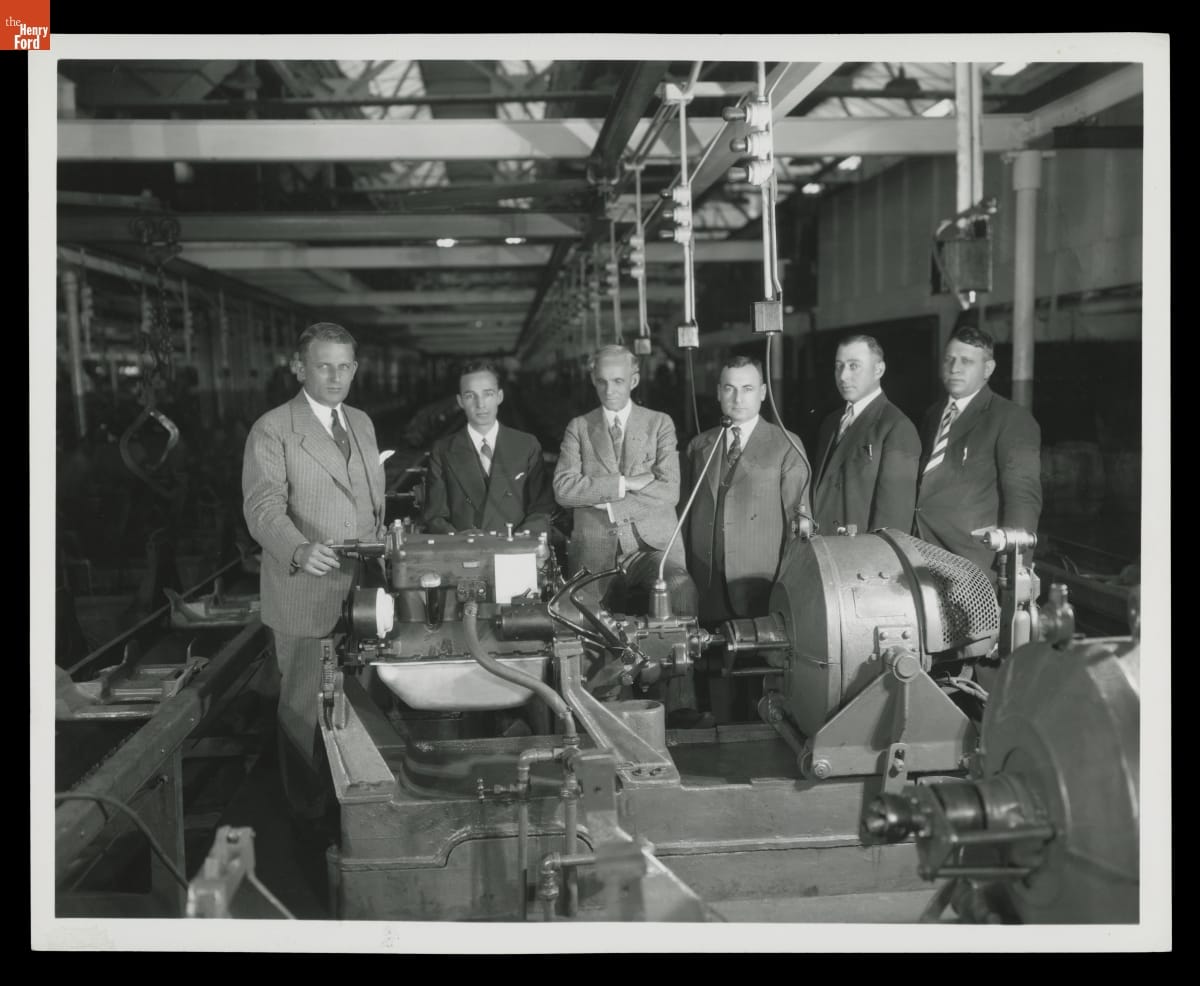
- Henry Ford, Edsel Ford, and Ford Motor Company Executives with Model A Engine, October 1927 - Henry Ford (center) and Edsel Ford (second from left) posed at the Rouge in 1927 with Model A engine number one, and with some of their most trusted lieutenants. Charles Sorensen (far left) and P.E. Martin (third from right) headed production at the factory. Gus Degener (second from right) supervised vehicle assembly and inspection. Charles Hartner (far right) oversaw machine operations at the Rouge.
- October 21, 1927
- Collections - Artifact
Henry Ford, Edsel Ford, and Ford Motor Company Executives with Model A Engine, October 1927
Henry Ford (center) and Edsel Ford (second from left) posed at the Rouge in 1927 with Model A engine number one, and with some of their most trusted lieutenants. Charles Sorensen (far left) and P.E. Martin (third from right) headed production at the factory. Gus Degener (second from right) supervised vehicle assembly and inspection. Charles Hartner (far right) oversaw machine operations at the Rouge.
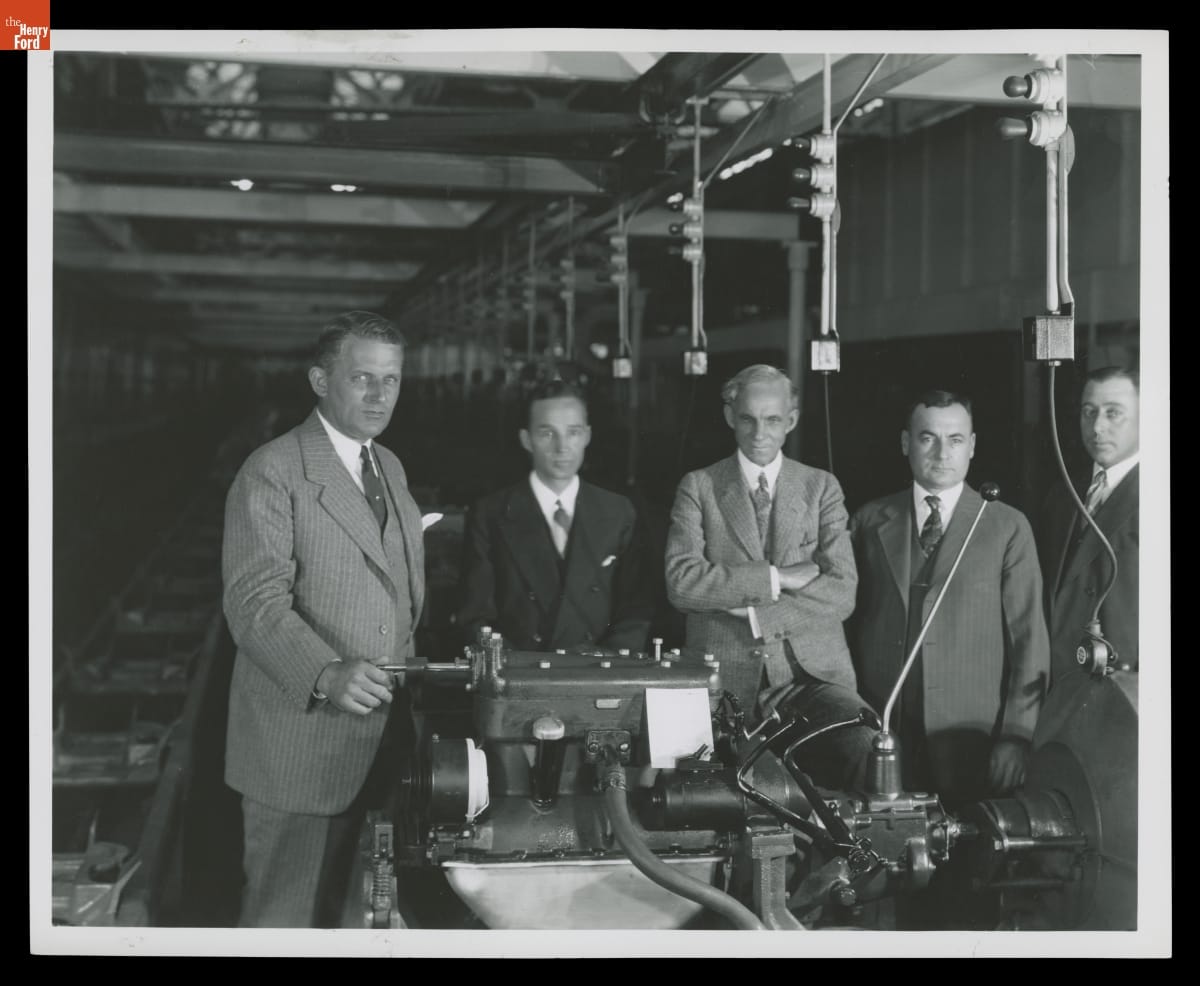
- Henry Ford, Edsel Ford, and Ford Motor Company Executives with Model A Engine, October 1927 - Henry Ford (center) posed at the Rouge plant in October 1927 with Model A engine number one, and with some of his most trusted lieutenants. Charles Sorensen (left) and P.E. Martin (second from right) headed production at the factory. Edsel Ford (second from left), Henry Ford's only child, was president of Ford Motor Company. Gus Degener (right) supervised vehicle assembly and inspection.
- October 21, 1927
- Collections - Artifact
Henry Ford, Edsel Ford, and Ford Motor Company Executives with Model A Engine, October 1927
Henry Ford (center) posed at the Rouge plant in October 1927 with Model A engine number one, and with some of his most trusted lieutenants. Charles Sorensen (left) and P.E. Martin (second from right) headed production at the factory. Edsel Ford (second from left), Henry Ford's only child, was president of Ford Motor Company. Gus Degener (right) supervised vehicle assembly and inspection.
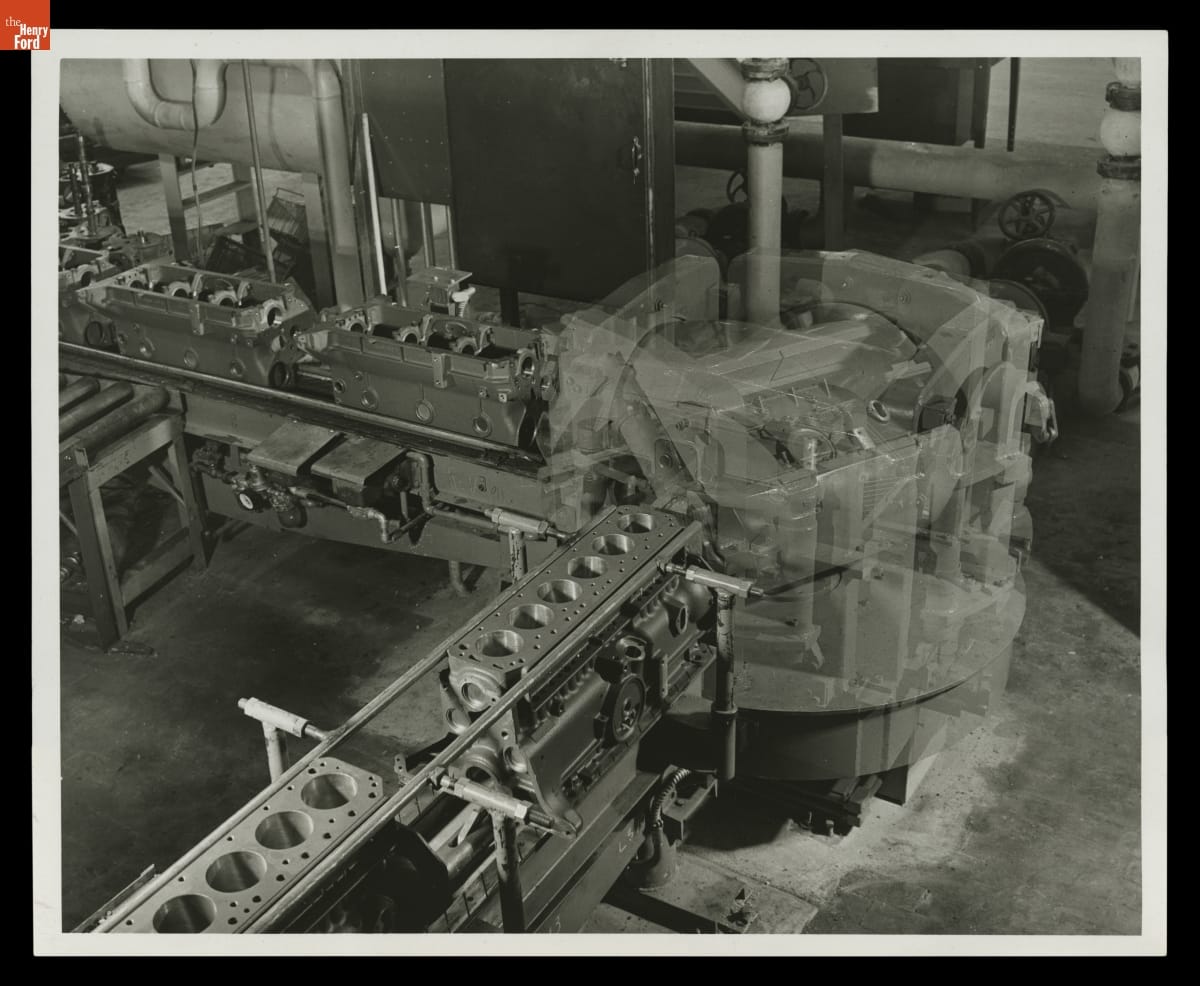
- Two-Directional Automation Device at the Ford Motor Company Cleveland Engine Plant, January 1952 - Ford Motor Company built its Cleveland Engine Plant 1 at Brook Park, Ohio, in suburban Cleveland, in 1951. A second factory, Cleveland Engine Plant 2, opened there four years later. The site was well suited to manufacturing, with direct access to railroads and near Cleveland's busy port on Lake Erie. Engine Plant 2 closed in 2012.
- January 28, 1952
- Collections - Artifact
Two-Directional Automation Device at the Ford Motor Company Cleveland Engine Plant, January 1952
Ford Motor Company built its Cleveland Engine Plant 1 at Brook Park, Ohio, in suburban Cleveland, in 1951. A second factory, Cleveland Engine Plant 2, opened there four years later. The site was well suited to manufacturing, with direct access to railroads and near Cleveland's busy port on Lake Erie. Engine Plant 2 closed in 2012.
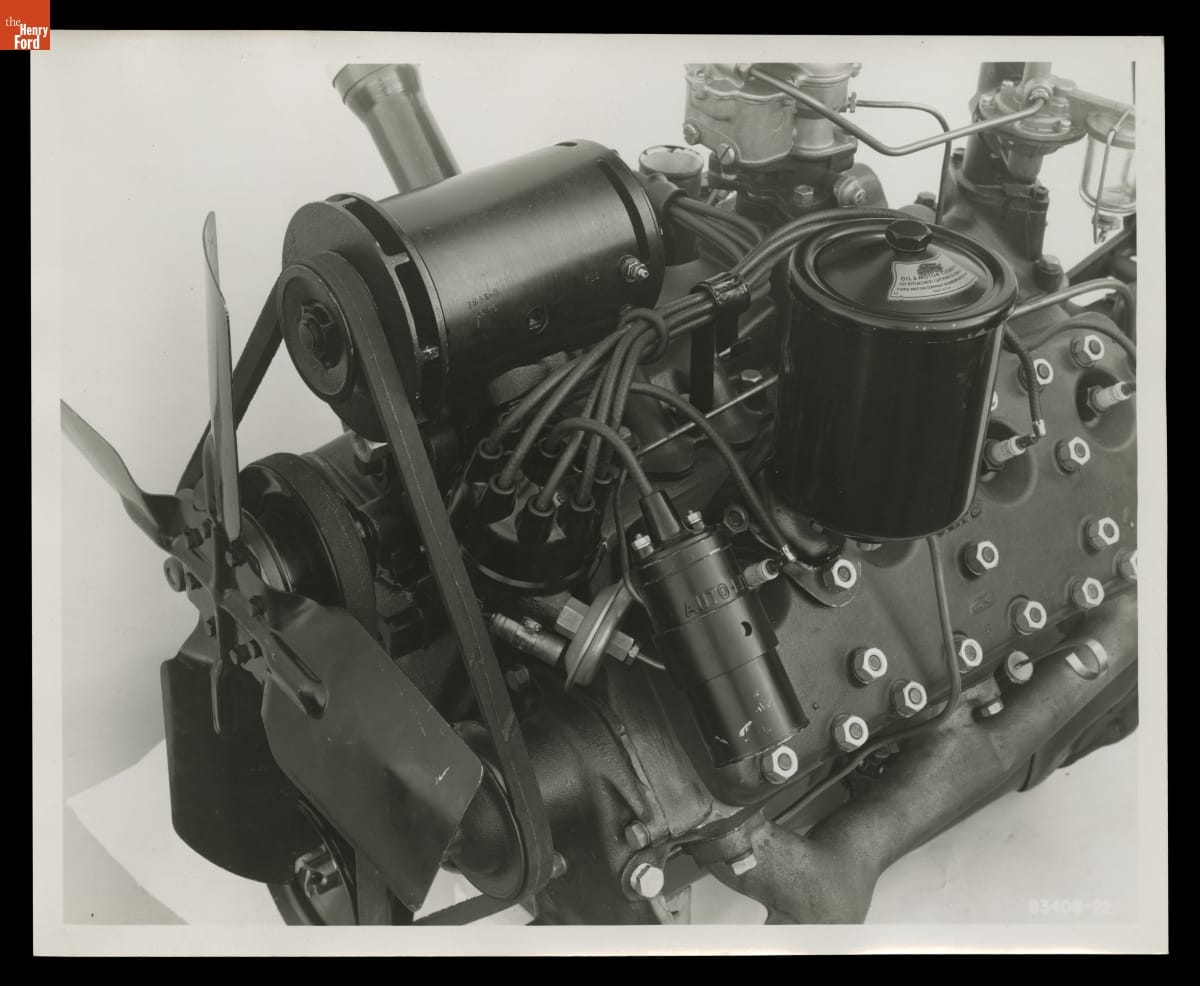
- Engine for 1947 Ford Truck, October 1946 - Ford's light-duty trucks for 1947 were available with two different engines. The 226-cubic-inch six-cylinder version was rated at 95 horsepower. The 239-cubic-inch flathead V-8, seen here, produced 100 horsepower, thanks in part to its two-barrel carburetor. Prices for the half-ton V-8 pickup started at $1,143.
- October 22, 1946
- Collections - Artifact
Engine for 1947 Ford Truck, October 1946
Ford's light-duty trucks for 1947 were available with two different engines. The 226-cubic-inch six-cylinder version was rated at 95 horsepower. The 239-cubic-inch flathead V-8, seen here, produced 100 horsepower, thanks in part to its two-barrel carburetor. Prices for the half-ton V-8 pickup started at $1,143.
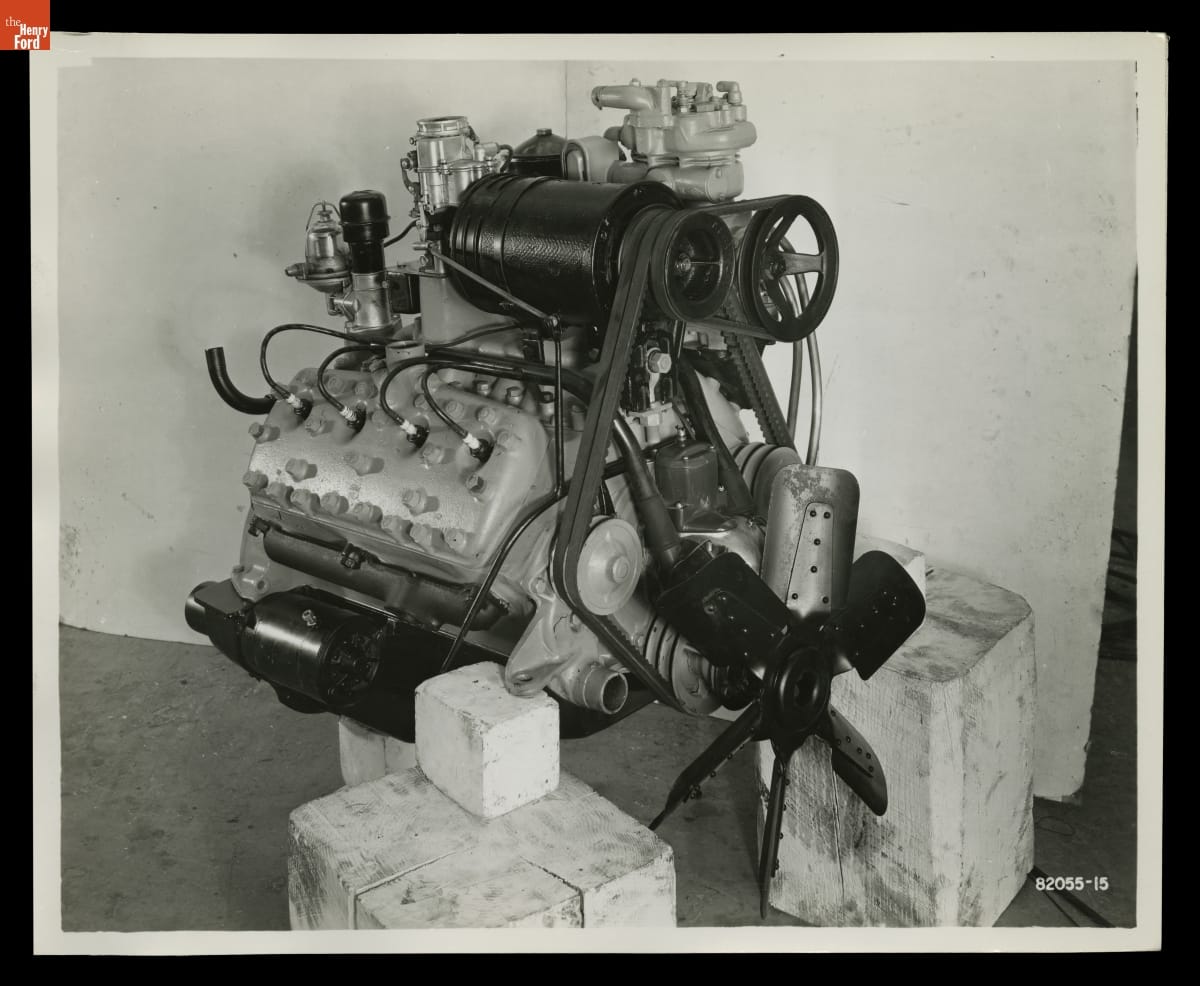
- Engine for 1946 Ford Transit Bus, October 1945 - Ford Motor Company's mid-1940s transit buses were powered by a version of the same V-8 engine found in its passenger cars. Typically, transit bus engines were mounted at the rear, which improved forward visibility for the driver. Ford continued building transit buses during World War II -- public transportation was essential -- but sales climbed after peace returned.
- October 02, 1945
- Collections - Artifact
Engine for 1946 Ford Transit Bus, October 1945
Ford Motor Company's mid-1940s transit buses were powered by a version of the same V-8 engine found in its passenger cars. Typically, transit bus engines were mounted at the rear, which improved forward visibility for the driver. Ford continued building transit buses during World War II -- public transportation was essential -- but sales climbed after peace returned.
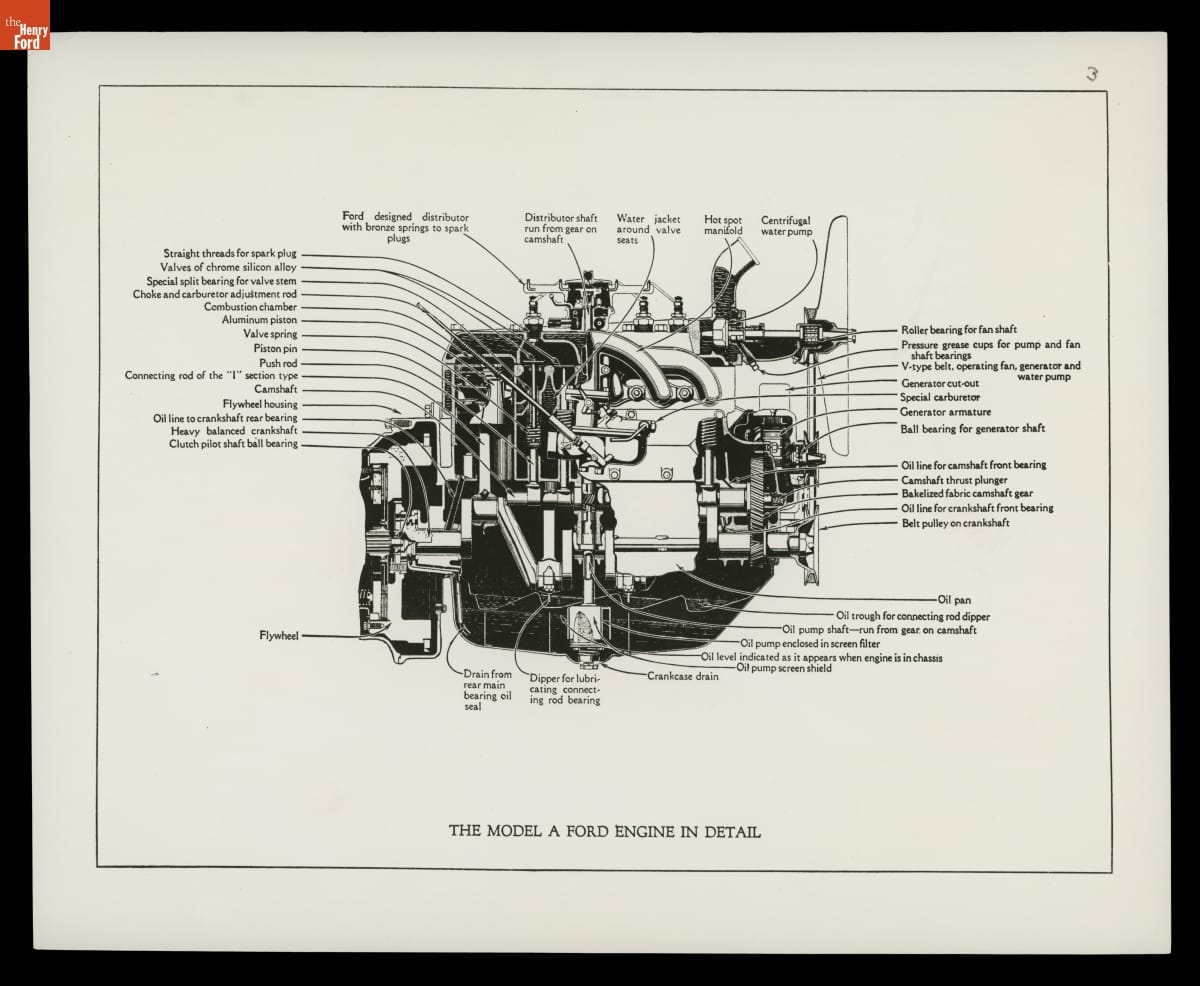
- The Model A Ford Engine in Detail, 1929 - Like everything else about the Ford Model A, the car's engine was completely different from what had been used in the Ford Model T. The Model A's inline four-cylinder engine had a displacement of 201 cubic inches, and it was rated at 40 horsepower. The engine's basic design remained unchanged throughout the car's production run over the 1928-1931 model years.
- 1929
- Collections - Artifact
The Model A Ford Engine in Detail, 1929
Like everything else about the Ford Model A, the car's engine was completely different from what had been used in the Ford Model T. The Model A's inline four-cylinder engine had a displacement of 201 cubic inches, and it was rated at 40 horsepower. The engine's basic design remained unchanged throughout the car's production run over the 1928-1931 model years.
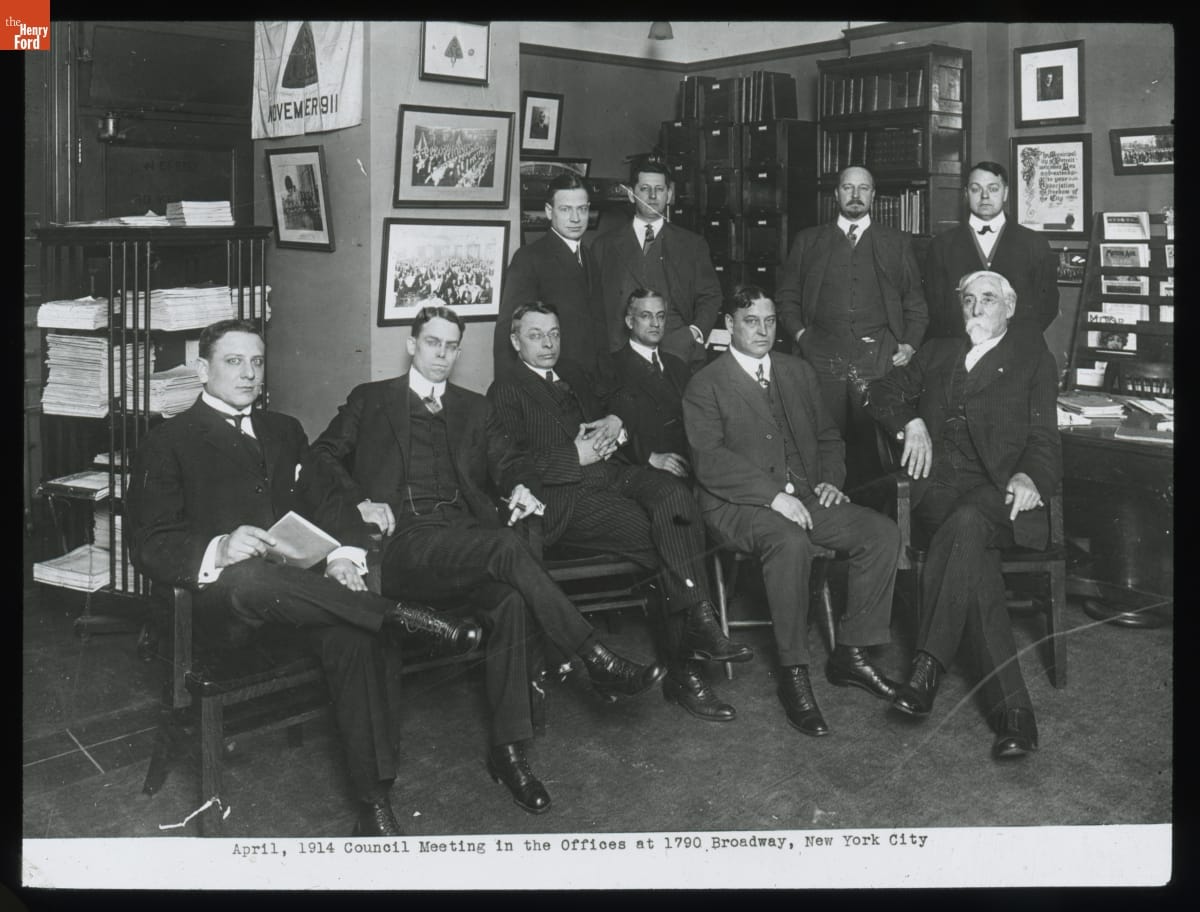
- Council Meeting in the Society of Automobile Engineers Offices, 1790 Broadway, New York City, April 1914 - The Society of Automobile (later, Automotive) Engineers was formed in 1905 to establish and encourage standards and best practices in the automotive industry. The organization grew quickly, hiring full-time staff and setting up headquarters in New York City. Among the members in this 1914 photograph is Cadillac head Henry Leland (seated, far right), whose precision manufacturing inspired other industry leaders.
- April 01, 1914
- Collections - Artifact
Council Meeting in the Society of Automobile Engineers Offices, 1790 Broadway, New York City, April 1914
The Society of Automobile (later, Automotive) Engineers was formed in 1905 to establish and encourage standards and best practices in the automotive industry. The organization grew quickly, hiring full-time staff and setting up headquarters in New York City. Among the members in this 1914 photograph is Cadillac head Henry Leland (seated, far right), whose precision manufacturing inspired other industry leaders.
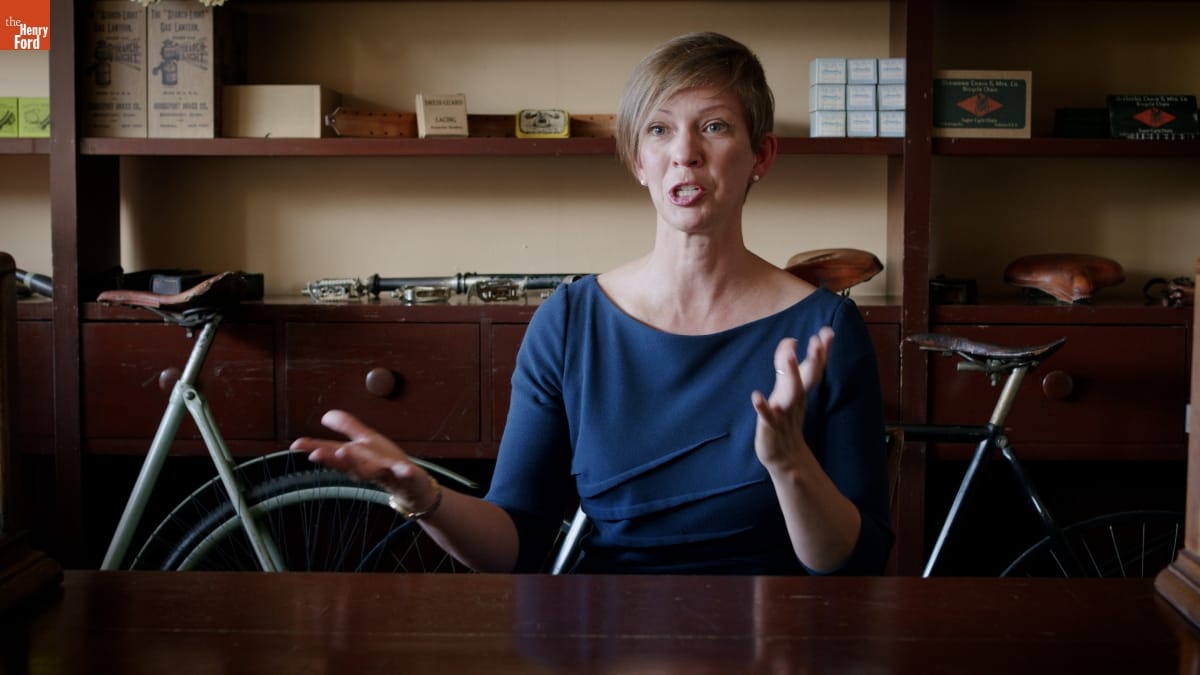
- "Residency Projects," Clip for Interview with Jessica Robinson, August 28, 2020 - Jessica Robinson, co-founder of Detroit Mobility Lab, Michigan Mobility Institute, and Assembly Ventures, was the Spring 2020 Entrepreneur-in-Residence at The Henry Ford, funded by the William Davidson Foundation Initiative for Entrepreneurship. During her interview, Robinson describes how her organizations -- and her residency projects -- encourage technological education in the midst of dramatic new transportation technologies.
- August 28, 2020
- Collections - Artifact
"Residency Projects," Clip for Interview with Jessica Robinson, August 28, 2020
Jessica Robinson, co-founder of Detroit Mobility Lab, Michigan Mobility Institute, and Assembly Ventures, was the Spring 2020 Entrepreneur-in-Residence at The Henry Ford, funded by the William Davidson Foundation Initiative for Entrepreneurship. During her interview, Robinson describes how her organizations -- and her residency projects -- encourage technological education in the midst of dramatic new transportation technologies.