
Search
- Overhead View of Tool and Die Department, Willow Run Bomber Plant, August 1943 - At Willow Run, Ford Motor Company built B-24 bomber planes for World War II using automobile mass production techniques. Airplanes were much more complex than cars. They required constant design changes poorly suited to a standardized assembly line. Ford overcame these difficulties and, at the plant's peak, Willow Run crews produced an average of one bomber every 63 minutes.
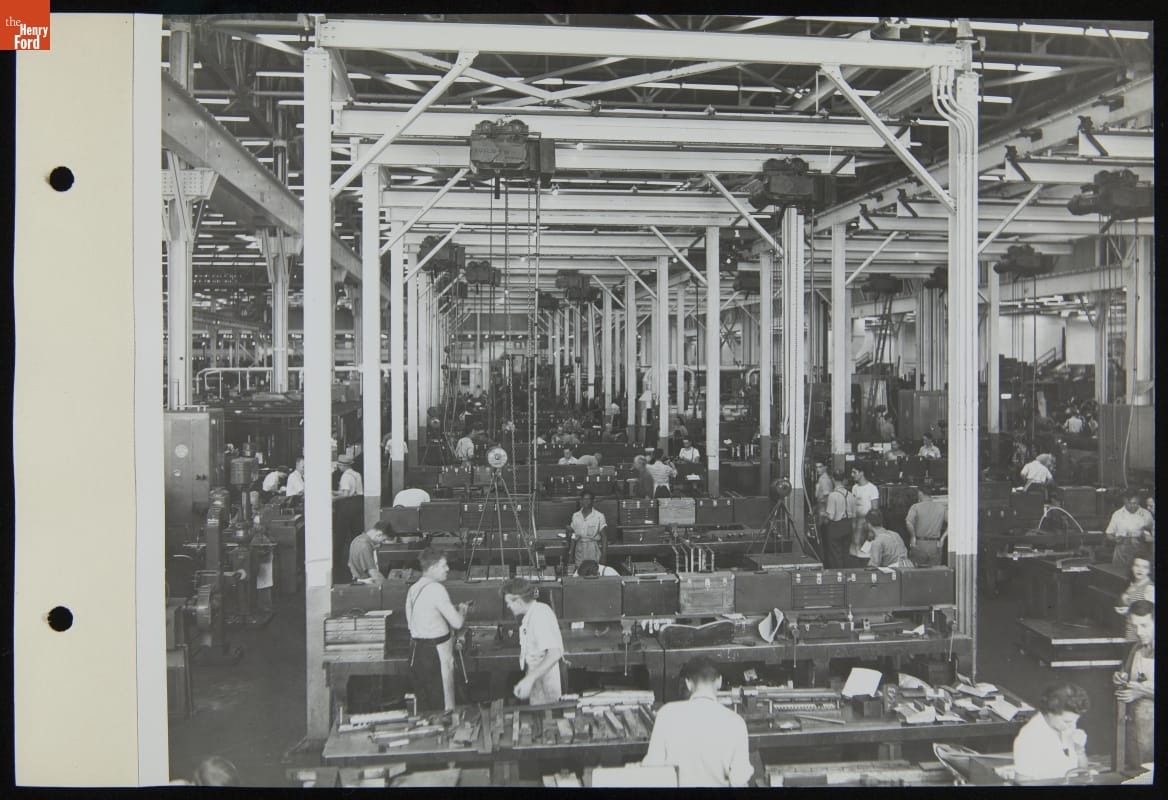
- August 27, 1943
- Collections - Artifact
Overhead View of Tool and Die Department, Willow Run Bomber Plant, August 1943
At Willow Run, Ford Motor Company built B-24 bomber planes for World War II using automobile mass production techniques. Airplanes were much more complex than cars. They required constant design changes poorly suited to a standardized assembly line. Ford overcame these difficulties and, at the plant's peak, Willow Run crews produced an average of one bomber every 63 minutes.
- Women Making Electric Harnesses for B-24 Bombers at Phoenix Mills, September 1944 - In the early 1920s, Henry Ford began locating small hydroelectrically powered plants in rural southeast Michigan. These "Village Industries" employed local people who could maintain farms while working at the factory. Women represented most of the workforce at Phoenix Mill. During World War II, they manufactured electrical harnesses for B-24 bomber airplanes assembled at Ford's nearby Willow Run plant.
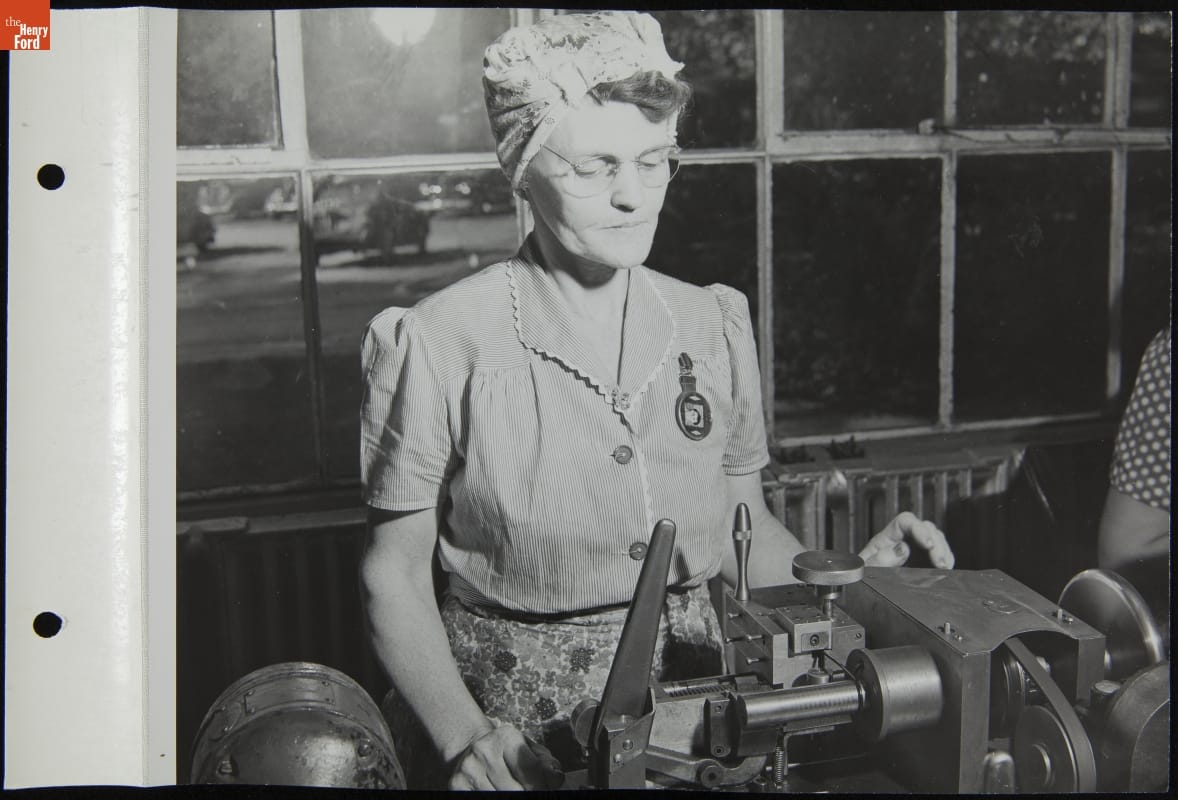
- September 25, 1944
- Collections - Artifact
Women Making Electric Harnesses for B-24 Bombers at Phoenix Mills, September 1944
In the early 1920s, Henry Ford began locating small hydroelectrically powered plants in rural southeast Michigan. These "Village Industries" employed local people who could maintain farms while working at the factory. Women represented most of the workforce at Phoenix Mill. During World War II, they manufactured electrical harnesses for B-24 bomber airplanes assembled at Ford's nearby Willow Run plant.
- Women Making Electric Harnesses for B-24 Bombers at Phoenix Mills, September 1944 - In the early 1920s, Henry Ford began locating small hydroelectrically powered plants in rural southeast Michigan. These "Village Industries" employed local people who could maintain farms while working at the factory. Women represented most of the workforce at Phoenix Mill. During World War II, they manufactured electrical harnesses for B-24 bomber airplanes assembled at Ford's nearby Willow Run plant.
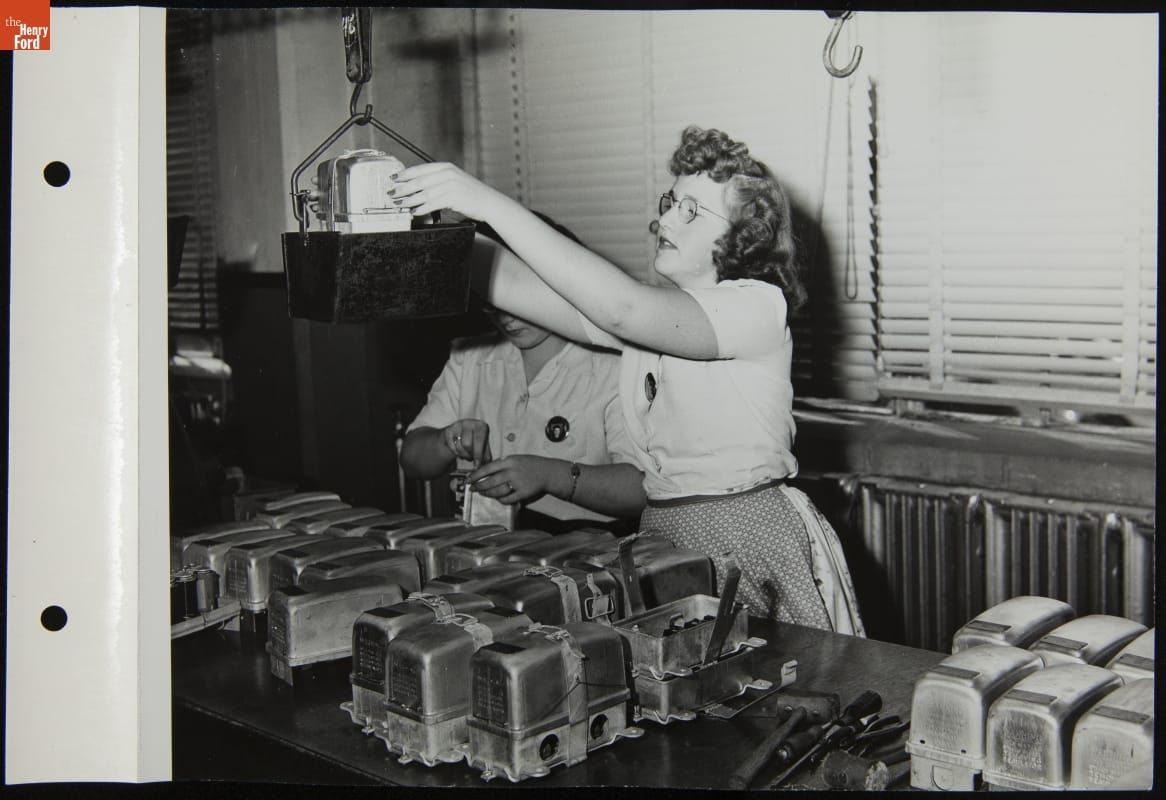
- September 25, 1944
- Collections - Artifact
Women Making Electric Harnesses for B-24 Bombers at Phoenix Mills, September 1944
In the early 1920s, Henry Ford began locating small hydroelectrically powered plants in rural southeast Michigan. These "Village Industries" employed local people who could maintain farms while working at the factory. Women represented most of the workforce at Phoenix Mill. During World War II, they manufactured electrical harnesses for B-24 bomber airplanes assembled at Ford's nearby Willow Run plant.
- Building the B-24 Center Wing in Record Time, Willow Run Bomber Plant, 1942 - At Willow Run, Ford Motor Company built B-24 bomber planes for World War II using automobile mass production techniques. Airplanes were much more complex than cars. They required constant design changes poorly suited to a standardized assembly line. Ford overcame these difficulties and, at the plant's peak, Willow Run crews produced an average of one bomber every 63 minutes.
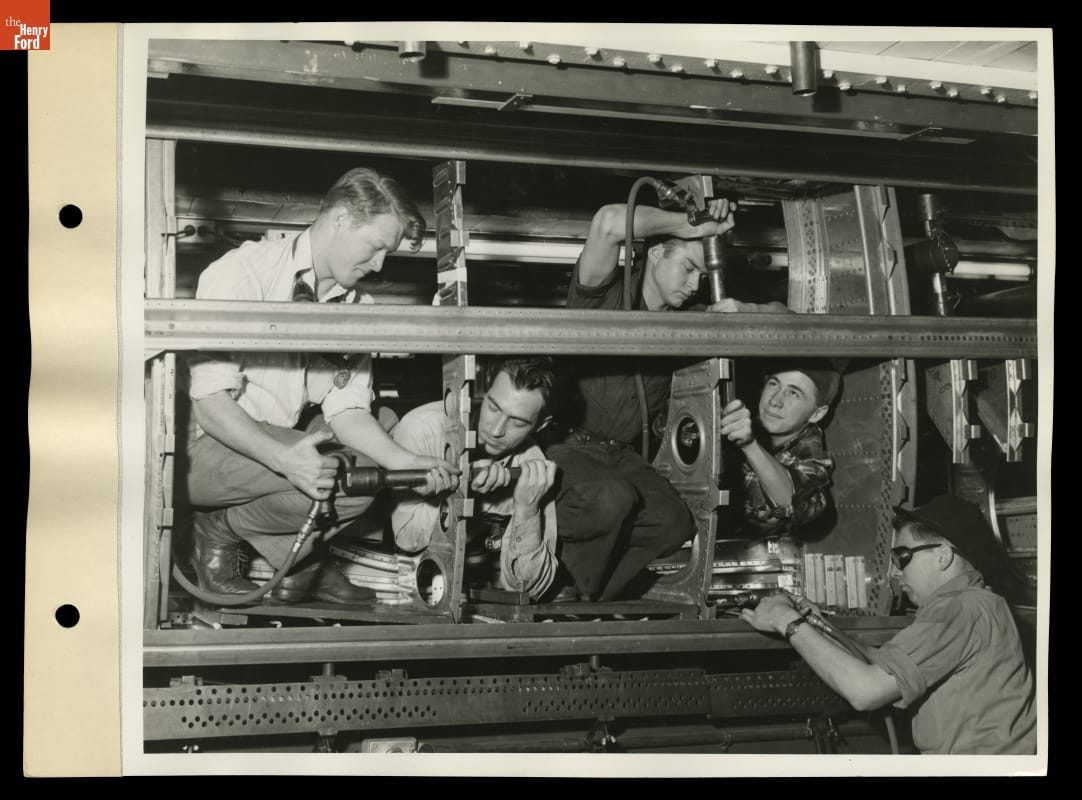
- November 30, 1942
- Collections - Artifact
Building the B-24 Center Wing in Record Time, Willow Run Bomber Plant, 1942
At Willow Run, Ford Motor Company built B-24 bomber planes for World War II using automobile mass production techniques. Airplanes were much more complex than cars. They required constant design changes poorly suited to a standardized assembly line. Ford overcame these difficulties and, at the plant's peak, Willow Run crews produced an average of one bomber every 63 minutes.
- Employee Florence Nightingale Working at Willow Run Bomber Plant, 1942 - At Willow Run, Ford Motor Company built B-24 bomber planes for World War II using automobile mass production techniques. Airplanes were much more complex than cars. They required constant design changes poorly suited to a standardized assembly line. Ford overcame these difficulties and, at the plant's peak, Willow Run crews produced an average of one bomber every 63 minutes.
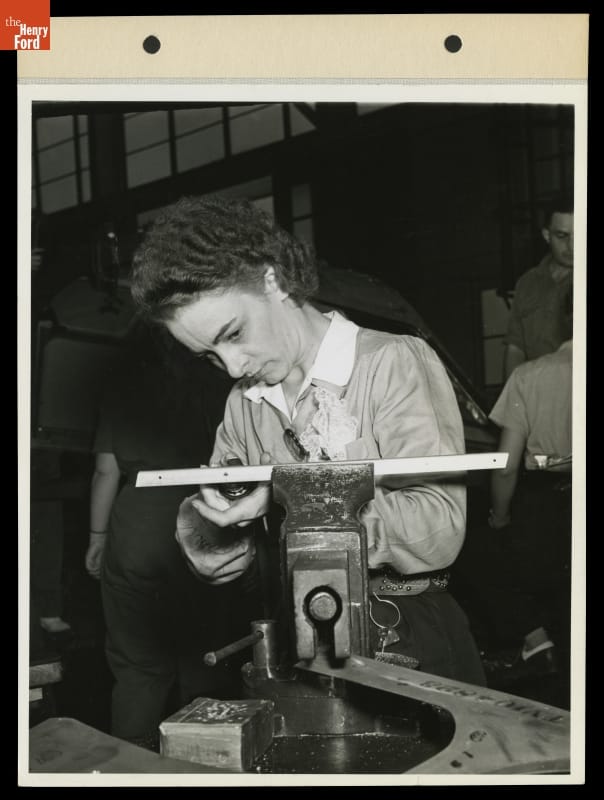
- July 25, 1942
- Collections - Artifact
Employee Florence Nightingale Working at Willow Run Bomber Plant, 1942
At Willow Run, Ford Motor Company built B-24 bomber planes for World War II using automobile mass production techniques. Airplanes were much more complex than cars. They required constant design changes poorly suited to a standardized assembly line. Ford overcame these difficulties and, at the plant's peak, Willow Run crews produced an average of one bomber every 63 minutes.
- Henry Ford Watching Workers Riveting Center Wing Section at the Willow Run Bomber Plant, 1942 - At Willow Run, Ford Motor Company built B-24 bomber planes for World War II using automobile mass production techniques. Airplanes were much more complex than cars. They required constant design changes poorly suited to a standardized assembly line. Ford overcame these difficulties and, at the plant's peak, Willow Run crews produced an average of one bomber every 63 minutes.
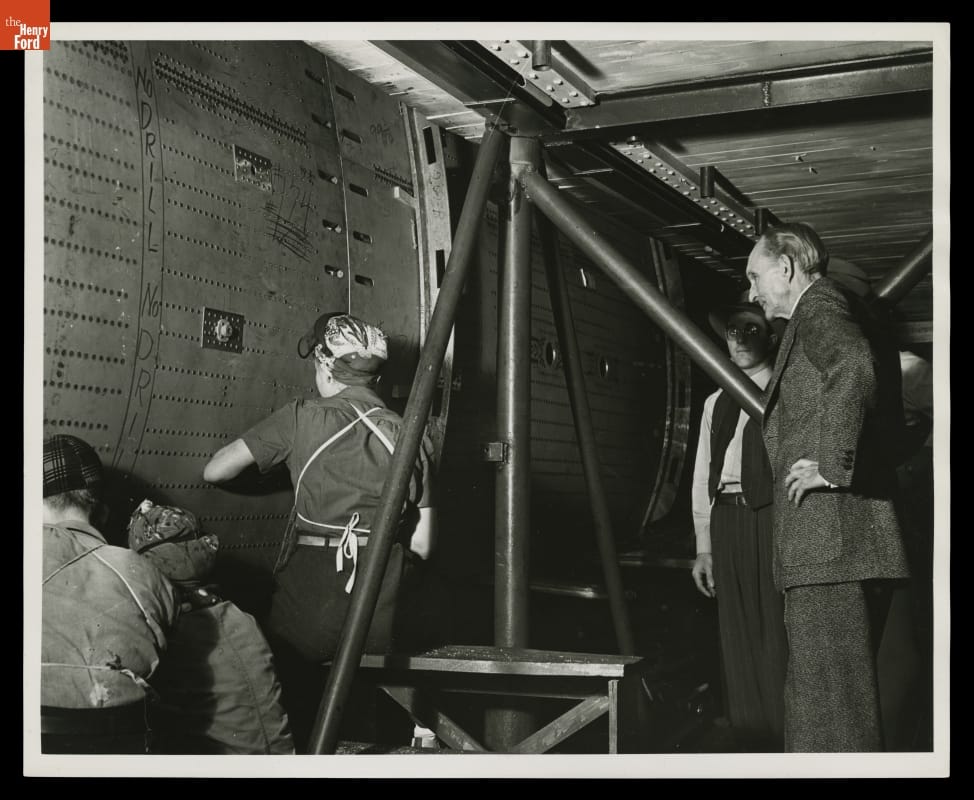
- December 21, 1942
- Collections - Artifact
Henry Ford Watching Workers Riveting Center Wing Section at the Willow Run Bomber Plant, 1942
At Willow Run, Ford Motor Company built B-24 bomber planes for World War II using automobile mass production techniques. Airplanes were much more complex than cars. They required constant design changes poorly suited to a standardized assembly line. Ford overcame these difficulties and, at the plant's peak, Willow Run crews produced an average of one bomber every 63 minutes.
- Women Making Castings at Hayden Mills, Tecumseh, Michigan, September 1944 - In the 1920s and '30s, Henry Ford set up small-scale factories throughout southeast Michigan. These "Village Industries" supplied Ford with tools and vehicle parts, and they employed local people who could maintain farms while working at the factory. At Hayden Mills in Tecumseh, employees cleaned and packed Ford-grown soybeans. During World War II, they built parts for B-24 bomber airplanes.
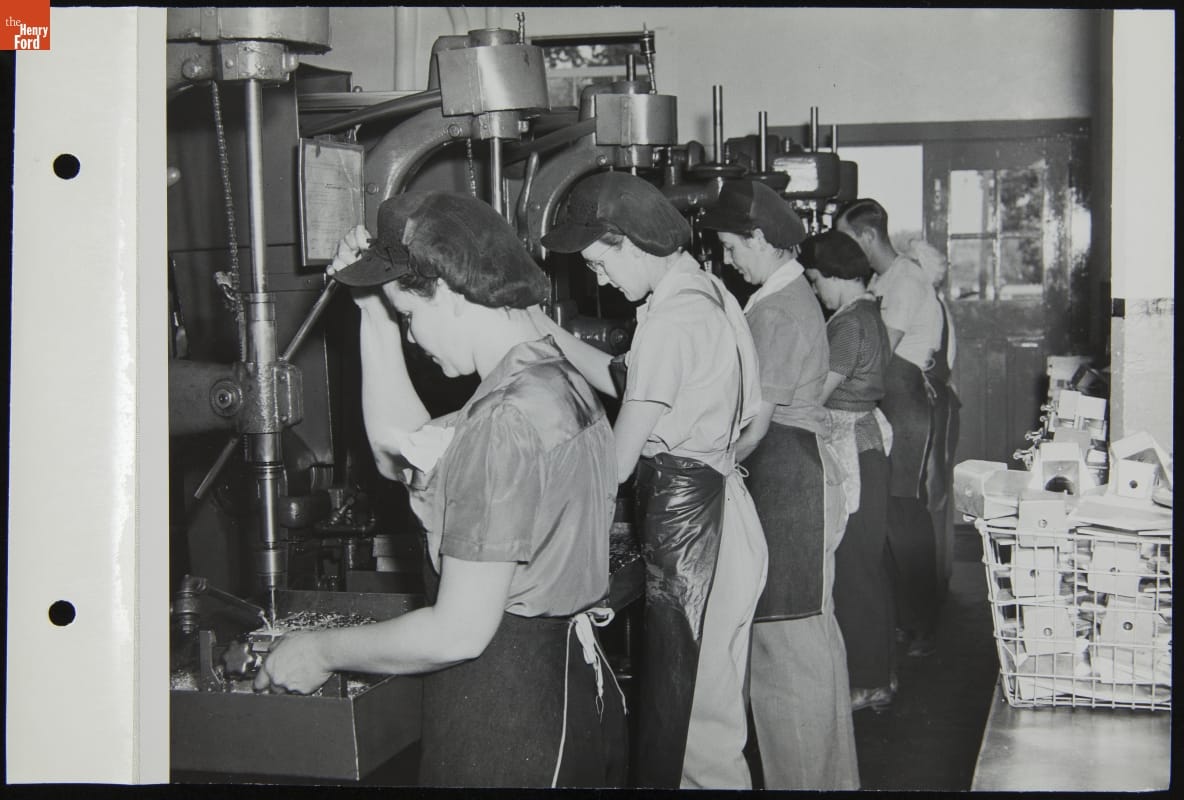
- September 12, 1944
- Collections - Artifact
Women Making Castings at Hayden Mills, Tecumseh, Michigan, September 1944
In the 1920s and '30s, Henry Ford set up small-scale factories throughout southeast Michigan. These "Village Industries" supplied Ford with tools and vehicle parts, and they employed local people who could maintain farms while working at the factory. At Hayden Mills in Tecumseh, employees cleaned and packed Ford-grown soybeans. During World War II, they built parts for B-24 bomber airplanes.
- Aerial View, B-24 Liberators Outside Hangar/Gas House at Ford Motor Company Willow Run Bomber Plant, September 1945 - During World War II, Ford Motor Company built 8,685 B-24 Liberator bomber airplanes at its Willow Run plant. The massive Willow Run complex included a seven million square-foot main building, a hospital, worker housing, an airport, and numerous support structures like this hangar in which planes were fueled.
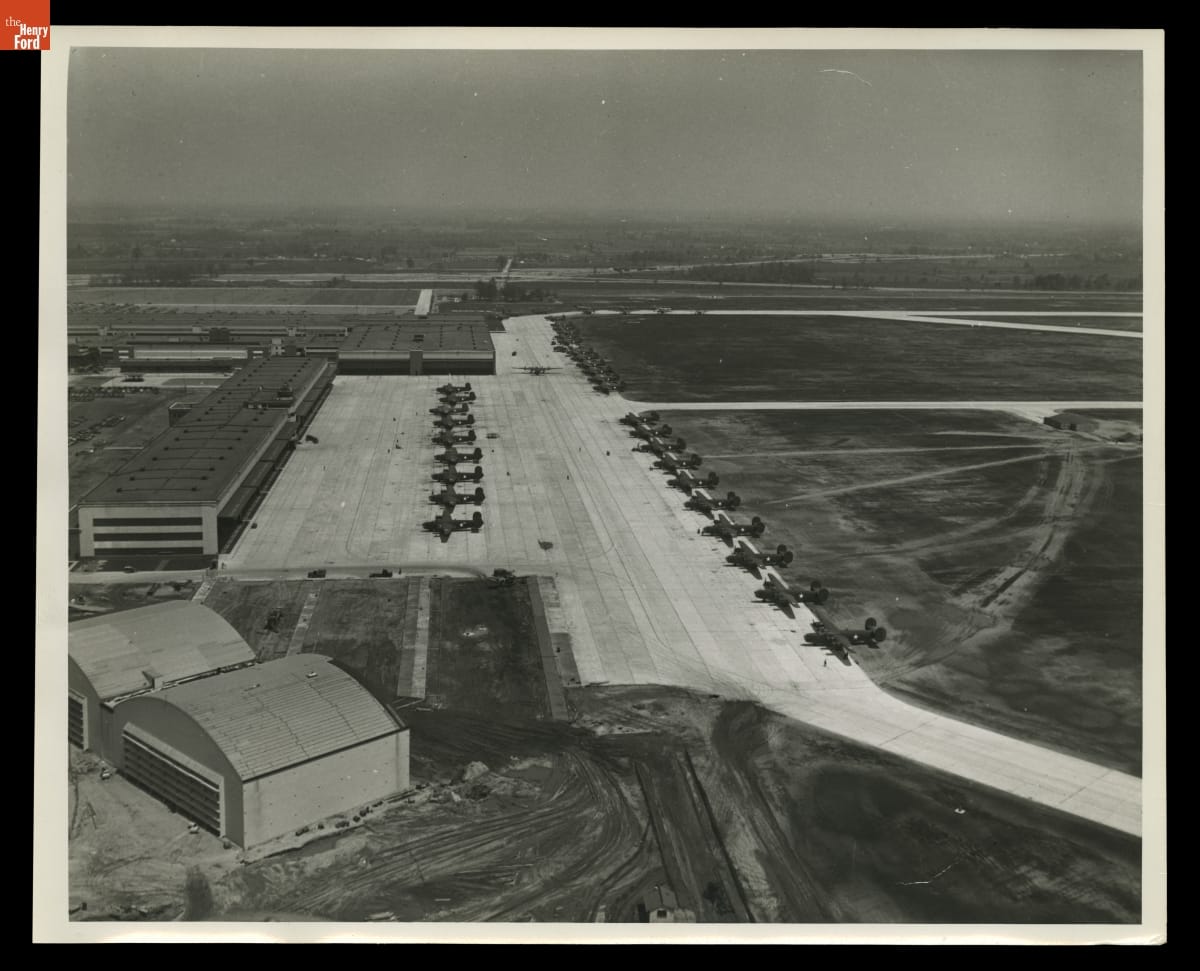
- September 01, 1945
- Collections - Artifact
Aerial View, B-24 Liberators Outside Hangar/Gas House at Ford Motor Company Willow Run Bomber Plant, September 1945
During World War II, Ford Motor Company built 8,685 B-24 Liberator bomber airplanes at its Willow Run plant. The massive Willow Run complex included a seven million square-foot main building, a hospital, worker housing, an airport, and numerous support structures like this hangar in which planes were fueled.
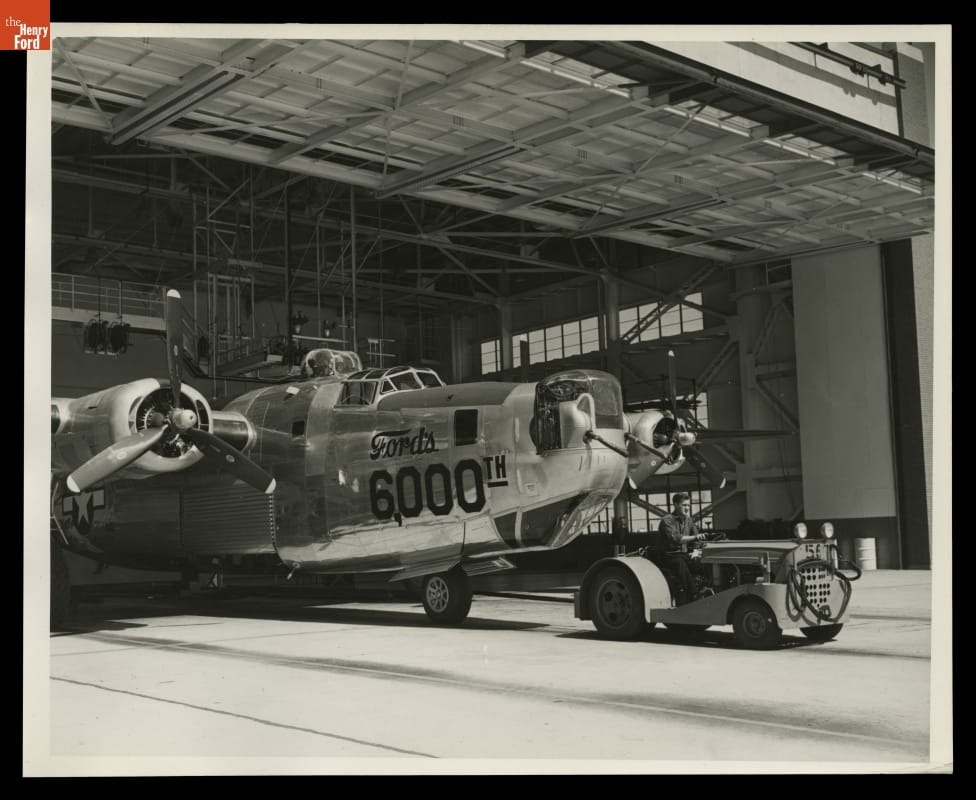
- 6,000th B-24 Bomber at Ford Motor Company Willow Run Plant, September 9, 1944 - Mass producing B-24 bombers during World War II was no easy feat -- not even for the company that invented modern mass production. But Ford Motor Company was building one airplane every 63 minutes at its Willow Run plant by March 1944. Ford produced its 6,000th B-24 that September. Another 2,685 were built before production ended in May 1945.
- September 09, 1944
- Collections - Artifact
6,000th B-24 Bomber at Ford Motor Company Willow Run Plant, September 9, 1944
Mass producing B-24 bombers during World War II was no easy feat -- not even for the company that invented modern mass production. But Ford Motor Company was building one airplane every 63 minutes at its Willow Run plant by March 1944. Ford produced its 6,000th B-24 that September. Another 2,685 were built before production ended in May 1945.
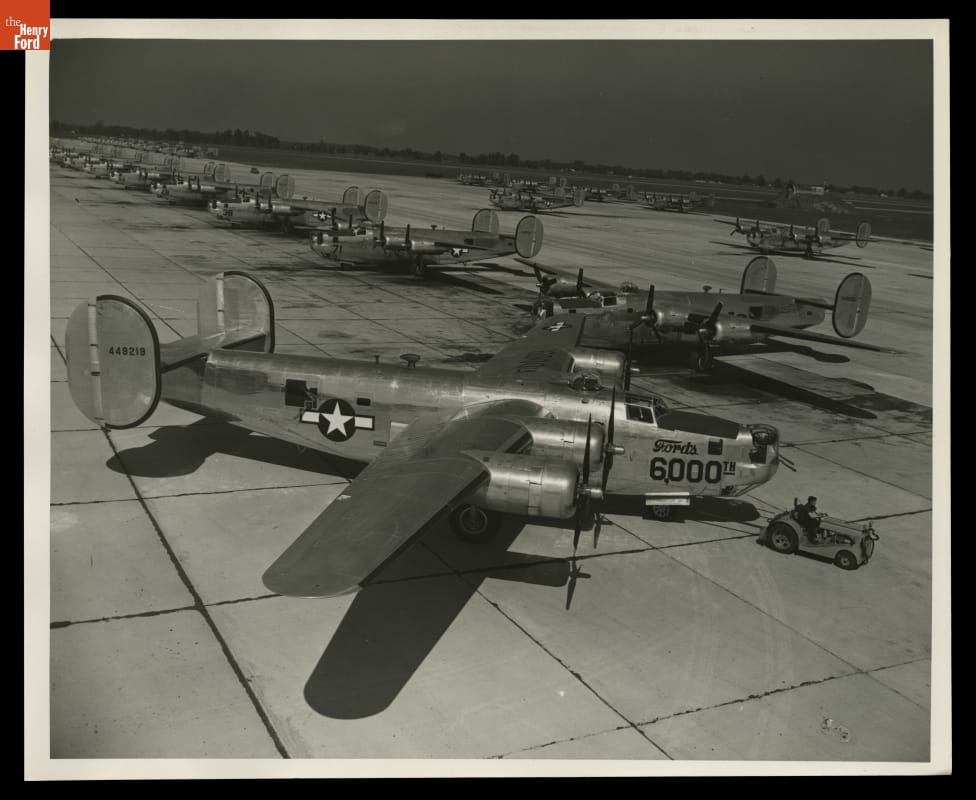
- 6,000th B-24 Bomber at Ford Motor Company Willow Run Plant, September 9, 1944 - Mass producing B-24 bombers during World War II was no easy feat -- not even for the company that invented modern mass production. But Ford Motor Company was building one airplane every 63 minutes at its Willow Run plant by March 1944. Ford produced its 6,000th B-24 that September. Another 2,685 were built before production ended in May 1945.
- September 09, 1944
- Collections - Artifact
6,000th B-24 Bomber at Ford Motor Company Willow Run Plant, September 9, 1944
Mass producing B-24 bombers during World War II was no easy feat -- not even for the company that invented modern mass production. But Ford Motor Company was building one airplane every 63 minutes at its Willow Run plant by March 1944. Ford produced its 6,000th B-24 that September. Another 2,685 were built before production ended in May 1945.