
Search
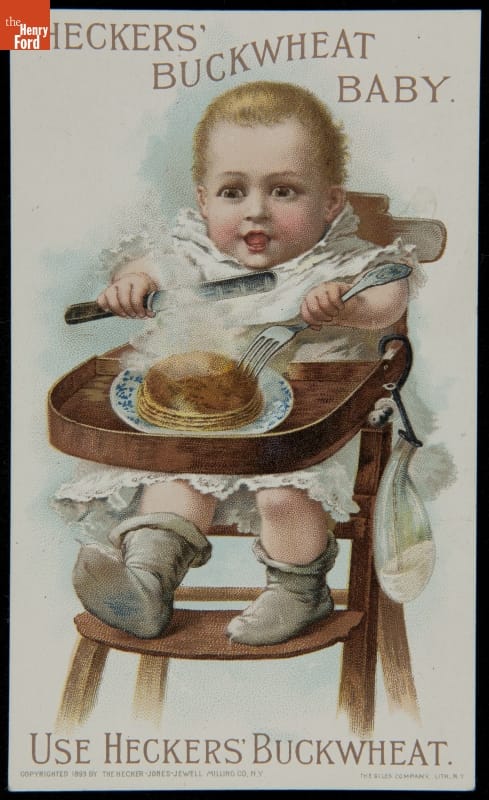
- Trade Card for Hecker's Buckwheat, Hecker-Jones-Jewell Milling Co., 1893 - In the last third of the nineteenth century, an unprecedented variety of consumer goods and services flooded the American market. Advertisers, armed with new methods of color printing, bombarded potential customers with trade cards. Americans enjoyed and often saved the vibrant little advertisements found in product packages or distributed by local merchants. Many survive as historical records of commercialism in the United States.
- 1893
- Collections - Artifact
Trade Card for Hecker's Buckwheat, Hecker-Jones-Jewell Milling Co., 1893
In the last third of the nineteenth century, an unprecedented variety of consumer goods and services flooded the American market. Advertisers, armed with new methods of color printing, bombarded potential customers with trade cards. Americans enjoyed and often saved the vibrant little advertisements found in product packages or distributed by local merchants. Many survive as historical records of commercialism in the United States.
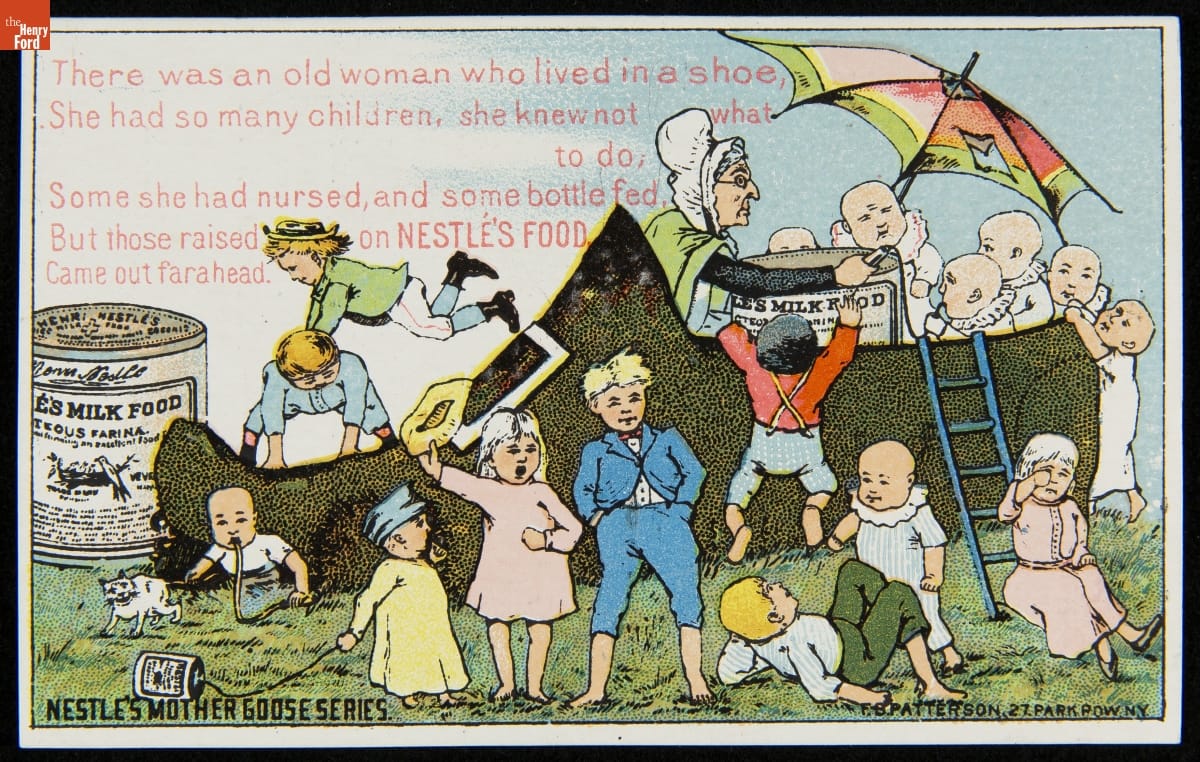
- Trade Card for Nestle's Milk Food, from Nestle Company's Mother Goose Series, 1880-1900 - In the last third of the nineteenth century, an unprecedented variety of consumer goods and services flooded the American market. Advertisers, armed with new methods of color printing, bombarded potential customers with trade cards. Americans enjoyed and often saved the vibrant little advertisements found in product packages or distributed by local merchants. Many survive as historical records of commercialism in the United States.
- 1880-1900
- Collections - Artifact
Trade Card for Nestle's Milk Food, from Nestle Company's Mother Goose Series, 1880-1900
In the last third of the nineteenth century, an unprecedented variety of consumer goods and services flooded the American market. Advertisers, armed with new methods of color printing, bombarded potential customers with trade cards. Americans enjoyed and often saved the vibrant little advertisements found in product packages or distributed by local merchants. Many survive as historical records of commercialism in the United States.
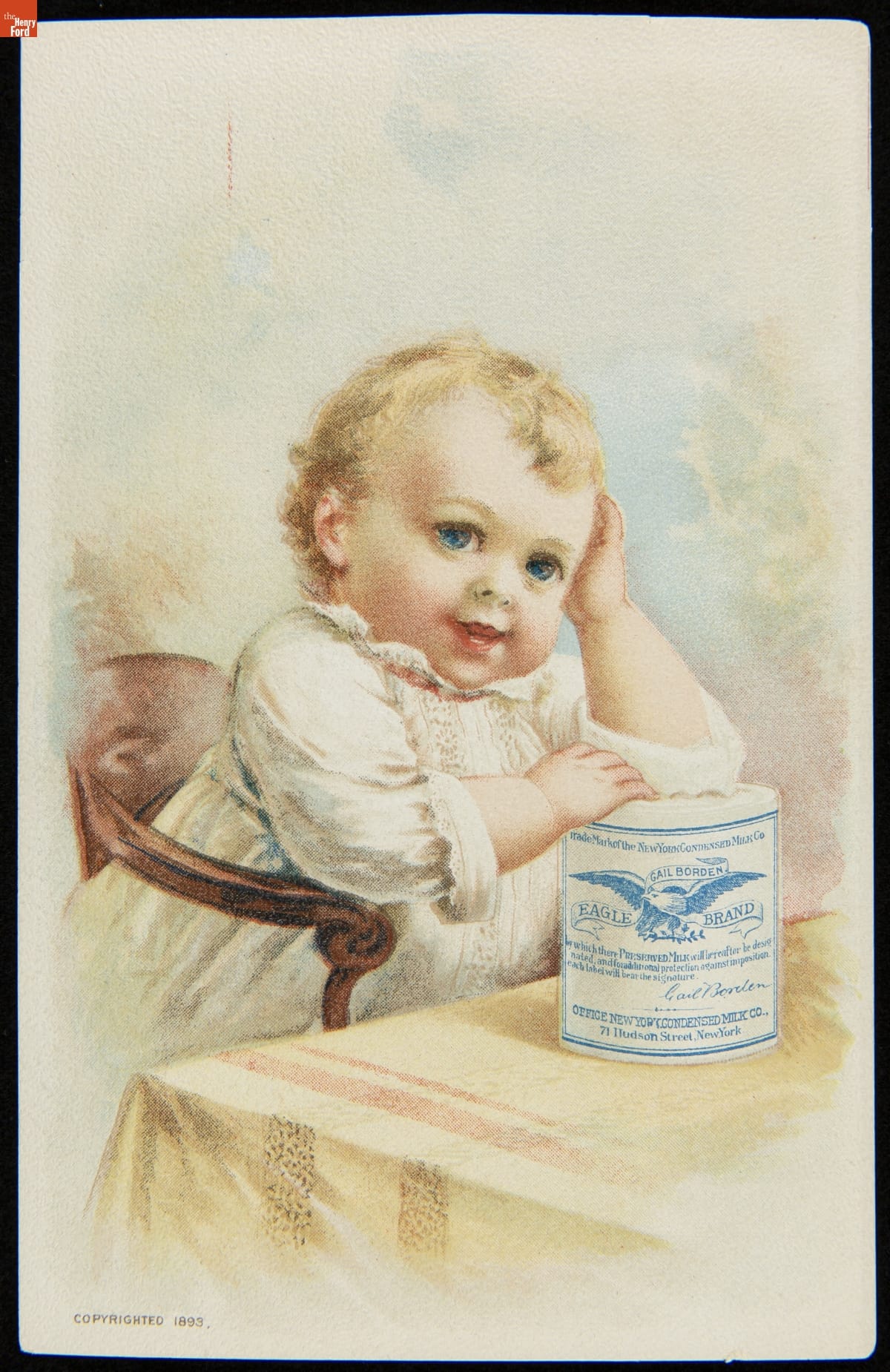
- Trade Card for Gail Borden Eagle Brand Condensed Milk, New York Condensed Milk Co., 1893 - Feeding infants tainted cow's milk was a common cause of infant mortality. In 1856, Gail Borden introduced Eagle Brand Condensed Milk to combat this. This product became so popular for soldiers during the Civil War that, by the end of the war, it had gained a reputation for being safe, wholesome, and nourishing -- a trusted food for infants and children.
- circa 1893
- Collections - Artifact
Trade Card for Gail Borden Eagle Brand Condensed Milk, New York Condensed Milk Co., 1893
Feeding infants tainted cow's milk was a common cause of infant mortality. In 1856, Gail Borden introduced Eagle Brand Condensed Milk to combat this. This product became so popular for soldiers during the Civil War that, by the end of the war, it had gained a reputation for being safe, wholesome, and nourishing -- a trusted food for infants and children.
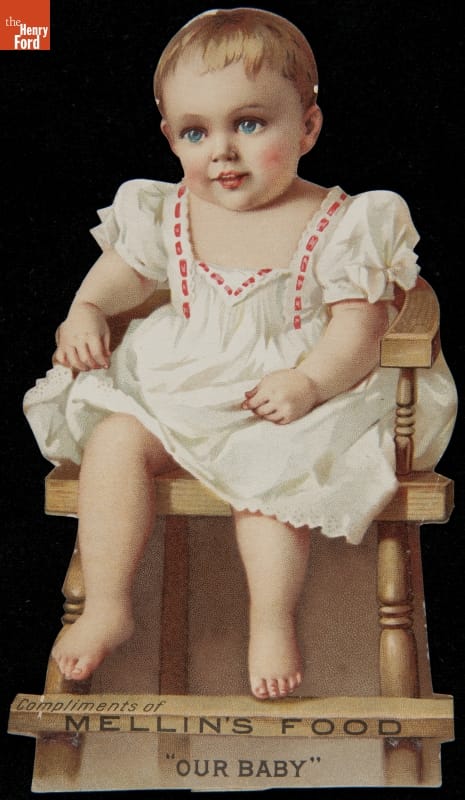
- Trade Card for Mellin's Food, 1897 - In the last third of the nineteenth century, an unprecedented variety of consumer goods and services flooded the American market. Advertisers, armed with new methods of color printing, bombarded potential customers with trade cards. Americans enjoyed and often saved the vibrant little advertisements found in product packages or distributed by local merchants. Many survive as historical records of commercialism in the United States.
- 1897
- Collections - Artifact
Trade Card for Mellin's Food, 1897
In the last third of the nineteenth century, an unprecedented variety of consumer goods and services flooded the American market. Advertisers, armed with new methods of color printing, bombarded potential customers with trade cards. Americans enjoyed and often saved the vibrant little advertisements found in product packages or distributed by local merchants. Many survive as historical records of commercialism in the United States.
- Trade Card for Mellin's Food, Doliber-Goodale Co., 1885 - In the last third of the nineteenth century, an unprecedented variety of consumer goods and services flooded the American market. Advertisers, armed with new methods of color printing, bombarded potential customers with trade cards. Americans enjoyed and often saved the vibrant little advertisements found in product packages or distributed by local merchants. Many survive as historical records of commercialism in the United States.
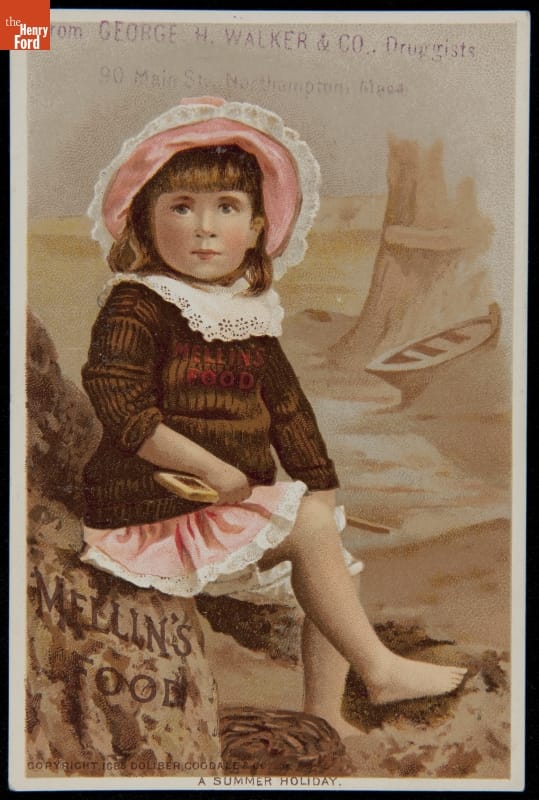
- 1885
- Collections - Artifact
Trade Card for Mellin's Food, Doliber-Goodale Co., 1885
In the last third of the nineteenth century, an unprecedented variety of consumer goods and services flooded the American market. Advertisers, armed with new methods of color printing, bombarded potential customers with trade cards. Americans enjoyed and often saved the vibrant little advertisements found in product packages or distributed by local merchants. Many survive as historical records of commercialism in the United States.
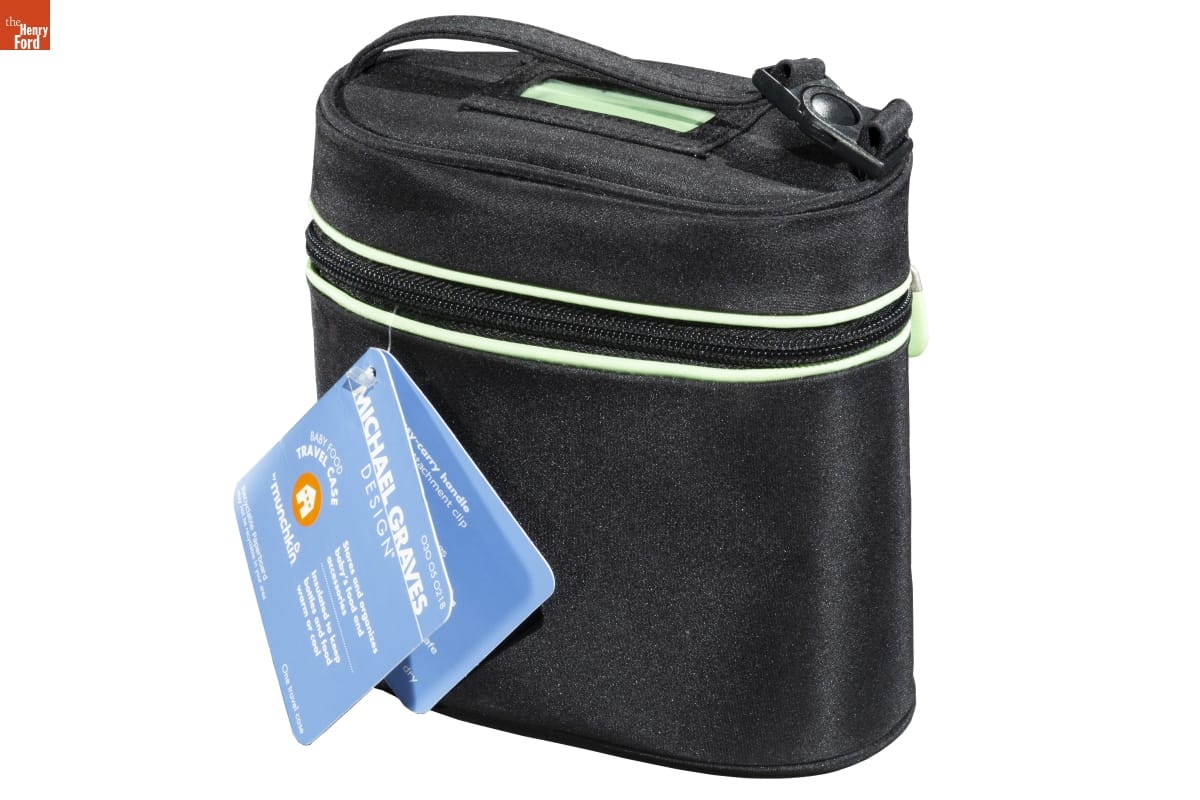
- Munchkin Baby Food Travel Case, 2009 - Starting in the early 1980s--and already established as an internationally recognized architect--Michael Graves began to pursue a parallel career as a product designer. Over the following three and a half decades he and his collaborators designed everything from humble household goods to limited edition luxury items for clients as diverse as Steuben, Alessi, Target, J. C. Penney, and Disney.
- 2009
- Collections - Artifact
Munchkin Baby Food Travel Case, 2009
Starting in the early 1980s--and already established as an internationally recognized architect--Michael Graves began to pursue a parallel career as a product designer. Over the following three and a half decades he and his collaborators designed everything from humble household goods to limited edition luxury items for clients as diverse as Steuben, Alessi, Target, J. C. Penney, and Disney.
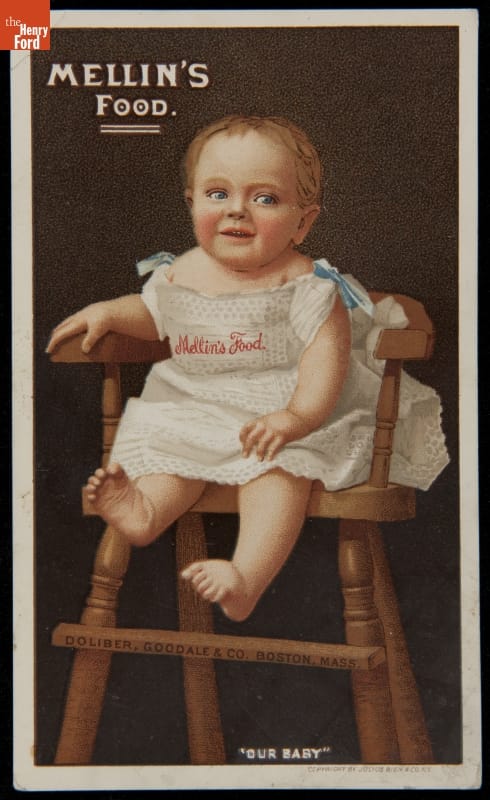
- Trade Card for Mellin's Food, 1883-1899 - In the last third of the nineteenth century, an unprecedented variety of consumer goods and services flooded the American market. Advertisers, armed with new methods of color printing, bombarded potential customers with trade cards. Americans enjoyed and often saved the vibrant little advertisements found in product packages or distributed by local merchants. Many survive as historical records of commercialism in the United States.
- 1883-1899
- Collections - Artifact
Trade Card for Mellin's Food, 1883-1899
In the last third of the nineteenth century, an unprecedented variety of consumer goods and services flooded the American market. Advertisers, armed with new methods of color printing, bombarded potential customers with trade cards. Americans enjoyed and often saved the vibrant little advertisements found in product packages or distributed by local merchants. Many survive as historical records of commercialism in the United States.
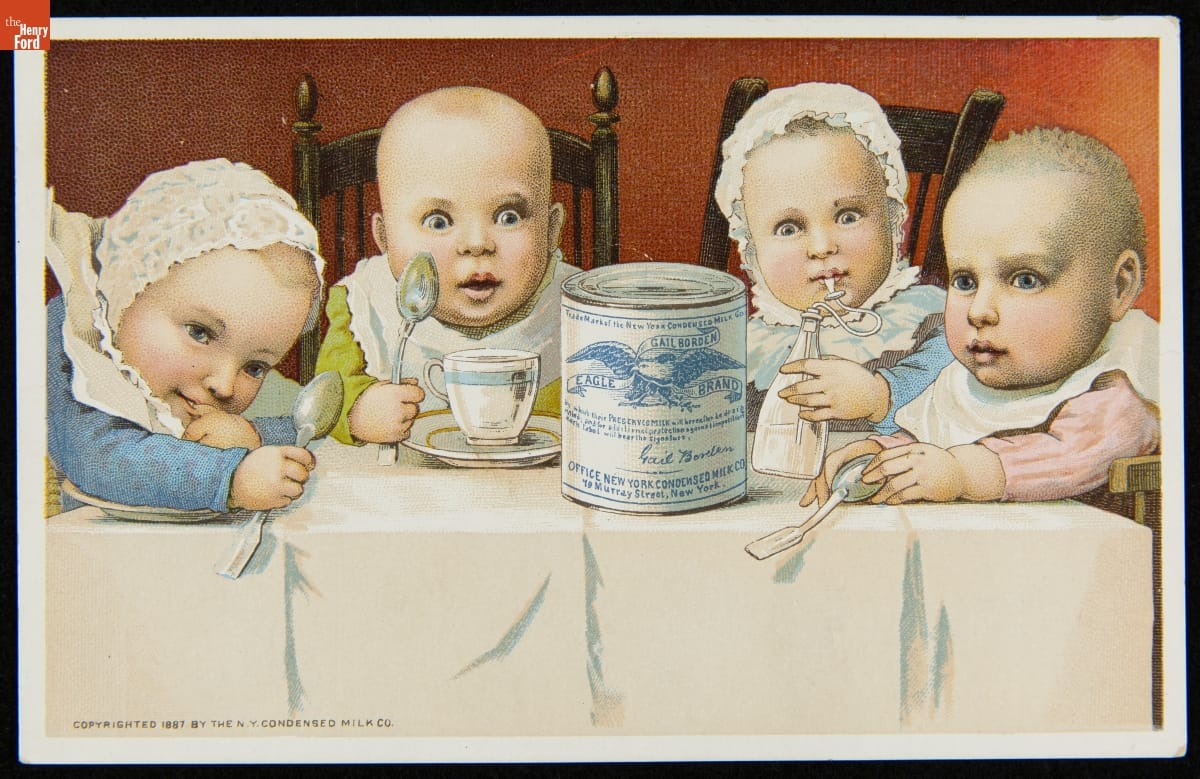
- Trade Card for Gail Borden Eagle Brand Condensed Milk, New York Condensed Milk Co., 1887 - Feeding infants tainted cow's milk was a common cause of infant mortality. In 1856, Gail Borden introduced Eagle Brand Condensed Milk to combat this. This product became so popular for soldiers during the Civil War that, by the end of the war, it had gained a reputation for being safe, wholesome, and nourishing -- a trusted food for infants and children.
- circa 1887
- Collections - Artifact
Trade Card for Gail Borden Eagle Brand Condensed Milk, New York Condensed Milk Co., 1887
Feeding infants tainted cow's milk was a common cause of infant mortality. In 1856, Gail Borden introduced Eagle Brand Condensed Milk to combat this. This product became so popular for soldiers during the Civil War that, by the end of the war, it had gained a reputation for being safe, wholesome, and nourishing -- a trusted food for infants and children.
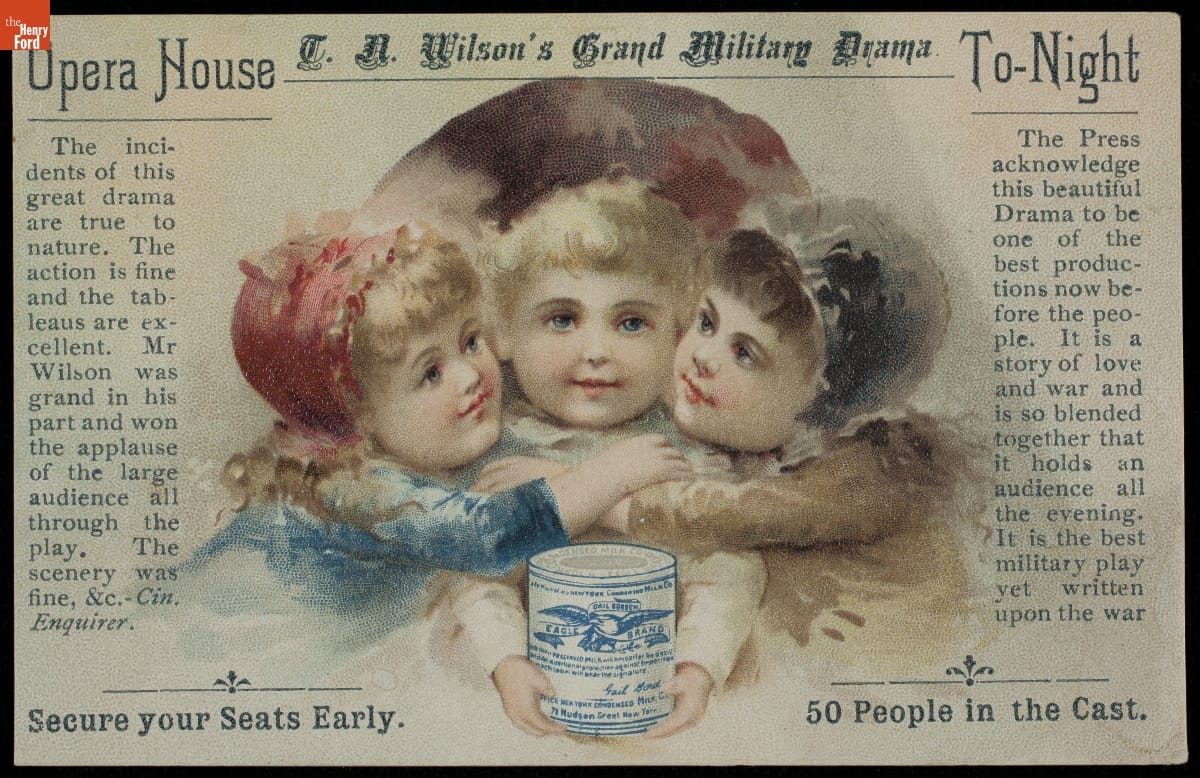
- Trade Card for Gail Borden Eagle Brand Condensed Milk, New York Condensed Milk Co., 1889-1899 - Feeding infants tainted cow's milk was a common cause of infant mortality. In 1856, Gail Borden introduced Eagle Brand Condensed Milk to combat this. This product became so popular for soldiers during the Civil War that, by the end of the war, it had gained a reputation for being safe, wholesome, and nourishing -- a trusted food for infants and children.
- 1889-1899
- Collections - Artifact
Trade Card for Gail Borden Eagle Brand Condensed Milk, New York Condensed Milk Co., 1889-1899
Feeding infants tainted cow's milk was a common cause of infant mortality. In 1856, Gail Borden introduced Eagle Brand Condensed Milk to combat this. This product became so popular for soldiers during the Civil War that, by the end of the war, it had gained a reputation for being safe, wholesome, and nourishing -- a trusted food for infants and children.
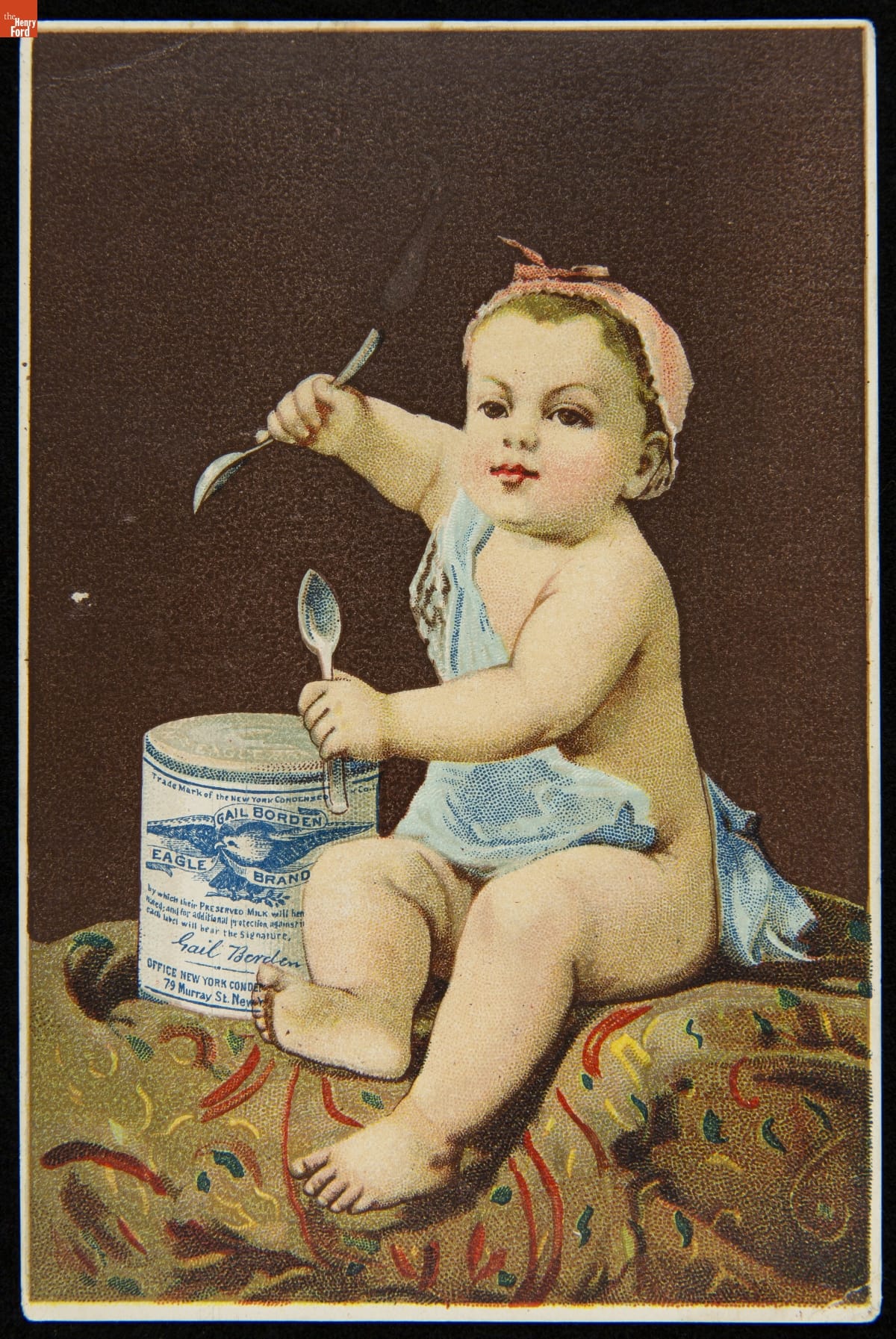
- Trade Card for Gail Borden Eagle Brand Condensed Milk, New York Condensed Milk Co., 1886 - Feeding infants tainted cow's milk was a common cause of infant mortality. In 1856, Gail Borden introduced Eagle Brand Condensed Milk to combat this. This product became so popular for soldiers during the Civil War that, by the end of the war, it had gained a reputation for being safe, wholesome, and nourishing -- a trusted food for infants and children.
- circa 1886
- Collections - Artifact
Trade Card for Gail Borden Eagle Brand Condensed Milk, New York Condensed Milk Co., 1886
Feeding infants tainted cow's milk was a common cause of infant mortality. In 1856, Gail Borden introduced Eagle Brand Condensed Milk to combat this. This product became so popular for soldiers during the Civil War that, by the end of the war, it had gained a reputation for being safe, wholesome, and nourishing -- a trusted food for infants and children.