
Search
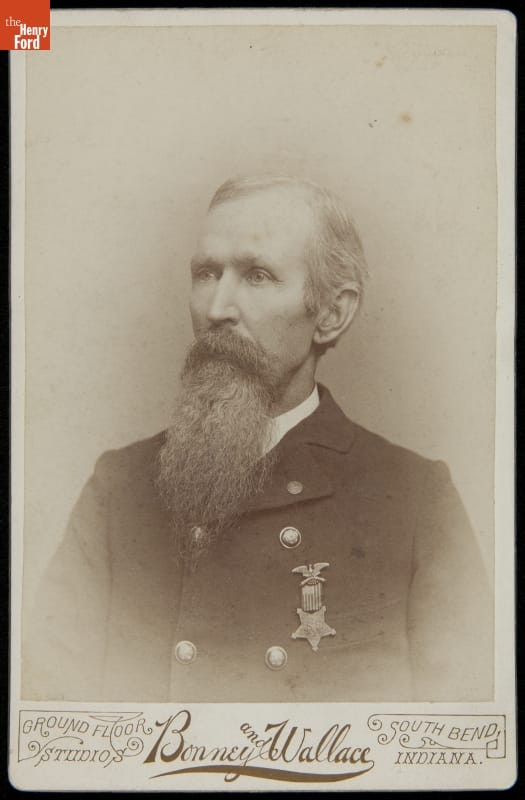
- Portrait of an American Civil War Veteran, circa 1890 -
- circa 1890
- Collections - Artifact
Portrait of an American Civil War Veteran, circa 1890
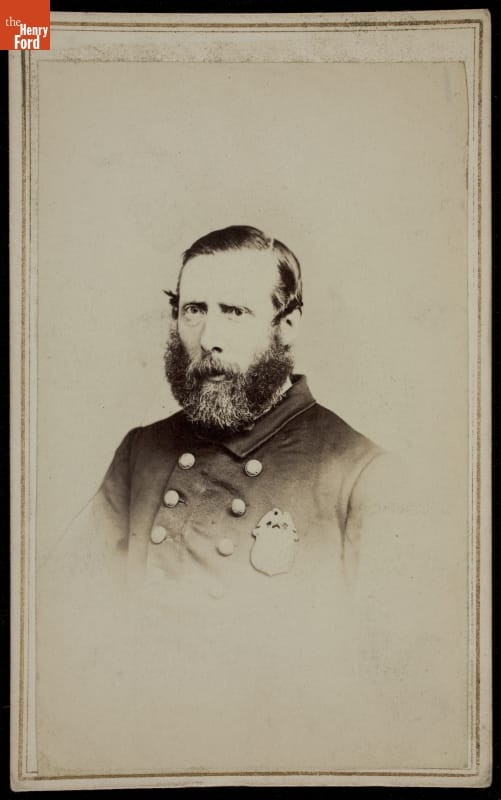
- Portrait of Man Wearing Uniform and Badge, 1860-1870 - The carte-de-visite was a small photographic print on cardboard stock made by professional photographers. Popular in the United States from the 1860s through the 1880s, people exchanged and collected them to help them remember family and friends. This CdV shows a man with a badge -- perhaps a police officer. In the late 1800s, most police officers wore badges and military-type uniforms to help citizens identify them.
- 1860-1870
- Collections - Artifact
Portrait of Man Wearing Uniform and Badge, 1860-1870
The carte-de-visite was a small photographic print on cardboard stock made by professional photographers. Popular in the United States from the 1860s through the 1880s, people exchanged and collected them to help them remember family and friends. This CdV shows a man with a badge -- perhaps a police officer. In the late 1800s, most police officers wore badges and military-type uniforms to help citizens identify them.
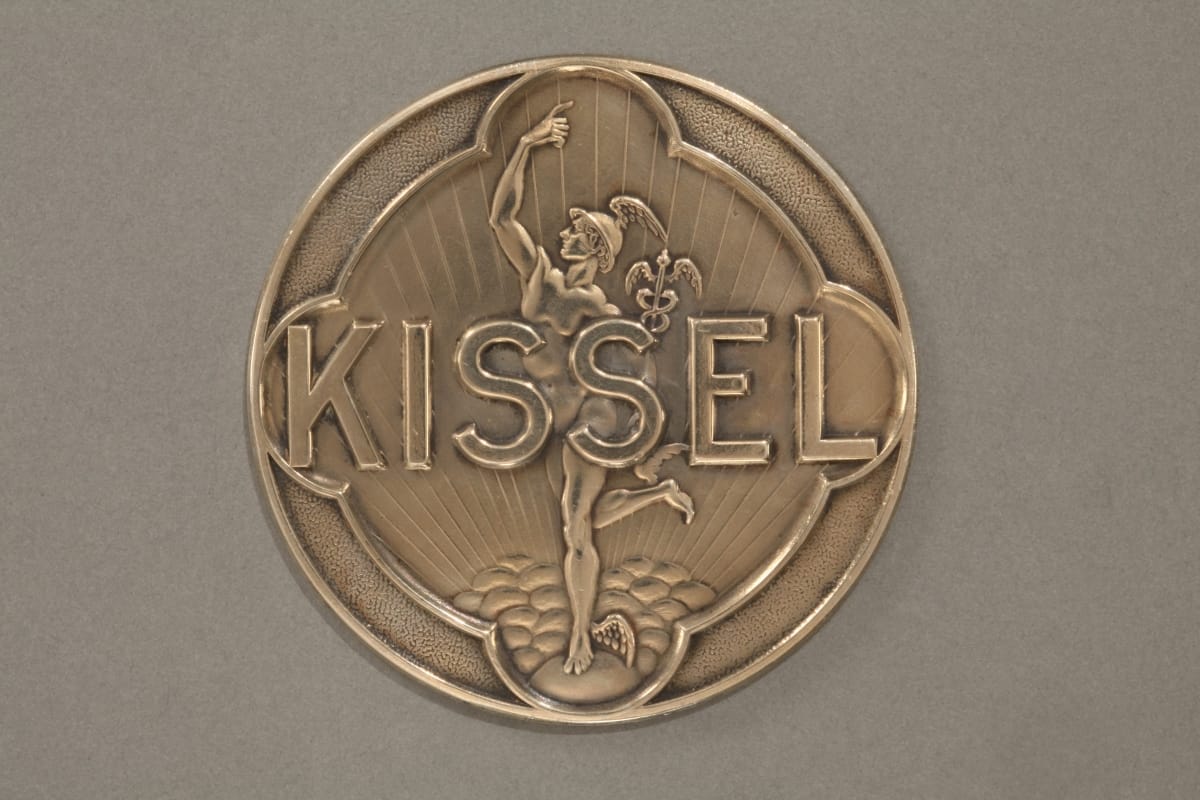
- Kissel Radiator Emblem, circa 1920 - Louis Kissel and his two sons formed Kissel Motor Car Company in Hartford, Wisconsin, in 1906. It was one of a number of businesses run by the family. Rather than assemble vehicles from purchased parts, Kissel manufactured nearly the entire car. The start of the Great Depression caused financial problems for the automobile company and car manufacturing ceased soon after.
- circa 1920
- Collections - Artifact
Kissel Radiator Emblem, circa 1920
Louis Kissel and his two sons formed Kissel Motor Car Company in Hartford, Wisconsin, in 1906. It was one of a number of businesses run by the family. Rather than assemble vehicles from purchased parts, Kissel manufactured nearly the entire car. The start of the Great Depression caused financial problems for the automobile company and car manufacturing ceased soon after.
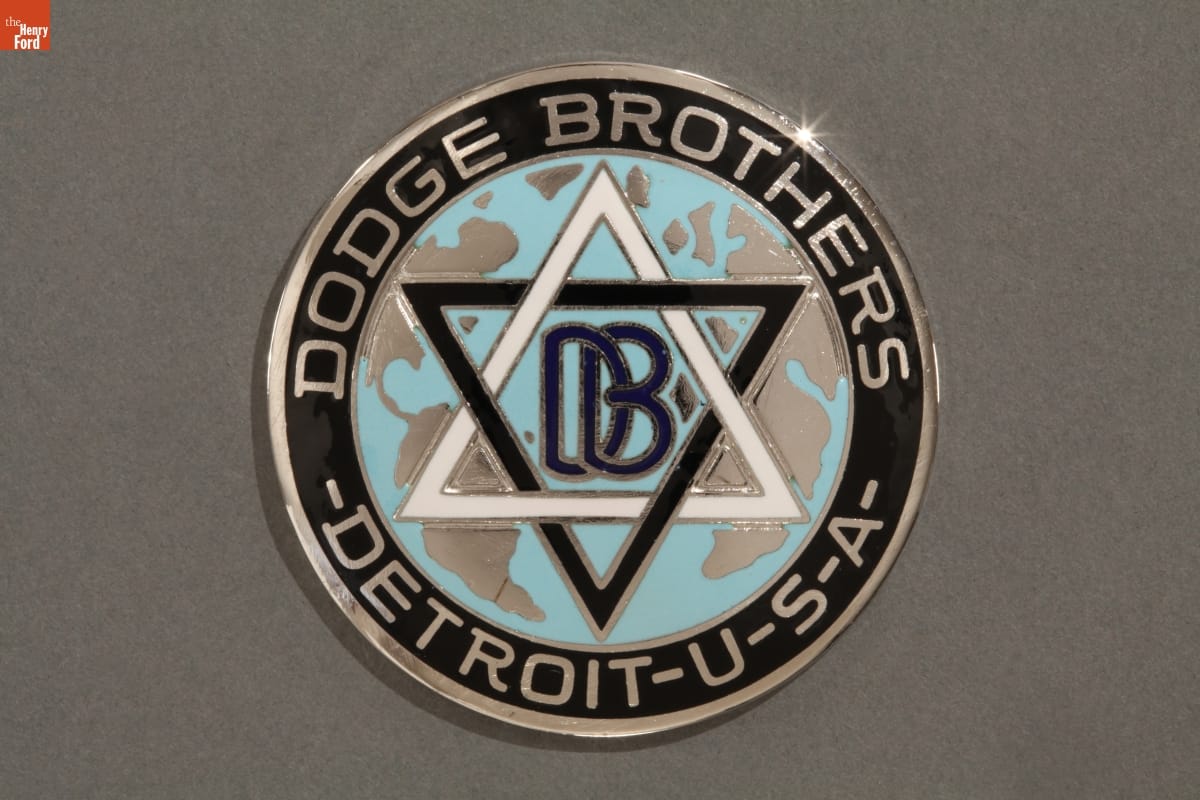
- Dodge Brothers Automobile Emblem, circa 1925 - After several years as suppliers to Ford Motor Company, brothers John and Horace Dodge formed their own automobile company in 1914. They selected a logo with two interlocking triangles to represent the brothers' close collaboration. Although their logo resembles the Jewish Star of David, John and Horace Dodge were Presbyterians. Chrysler purchased the Dodge Brothers company in 1928.
- circa 1925
- Collections - Artifact
Dodge Brothers Automobile Emblem, circa 1925
After several years as suppliers to Ford Motor Company, brothers John and Horace Dodge formed their own automobile company in 1914. They selected a logo with two interlocking triangles to represent the brothers' close collaboration. Although their logo resembles the Jewish Star of David, John and Horace Dodge were Presbyterians. Chrysler purchased the Dodge Brothers company in 1928.
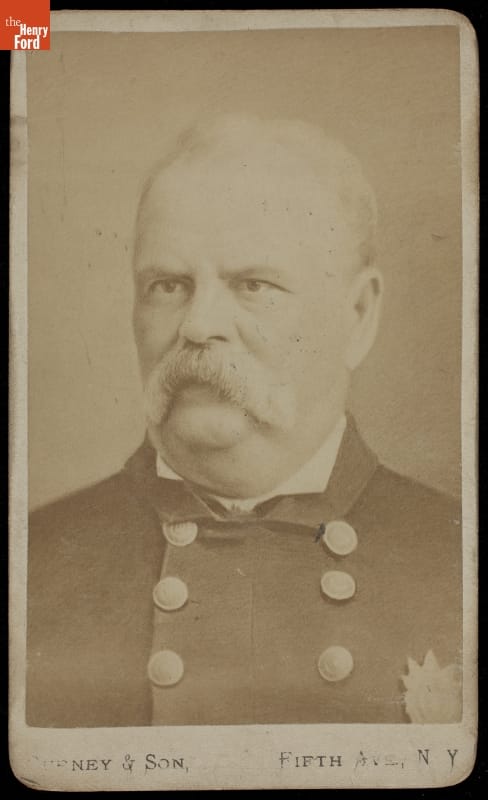
- Portrait of Man Wearing Uniform and Badge, 1860-1874 - The carte-de-visite was a small photographic print on cardboard stock made by professional photographers. Popular in the United States from the 1860s through the 1880s, people exchanged and collected them to help them remember family and friends. This CdV shows a man with a badge -- perhaps a police officer. In the late 1800s, most police officers wore badges and military-type uniforms to help citizens identify them.
- 1860-1874
- Collections - Artifact
Portrait of Man Wearing Uniform and Badge, 1860-1874
The carte-de-visite was a small photographic print on cardboard stock made by professional photographers. Popular in the United States from the 1860s through the 1880s, people exchanged and collected them to help them remember family and friends. This CdV shows a man with a badge -- perhaps a police officer. In the late 1800s, most police officers wore badges and military-type uniforms to help citizens identify them.
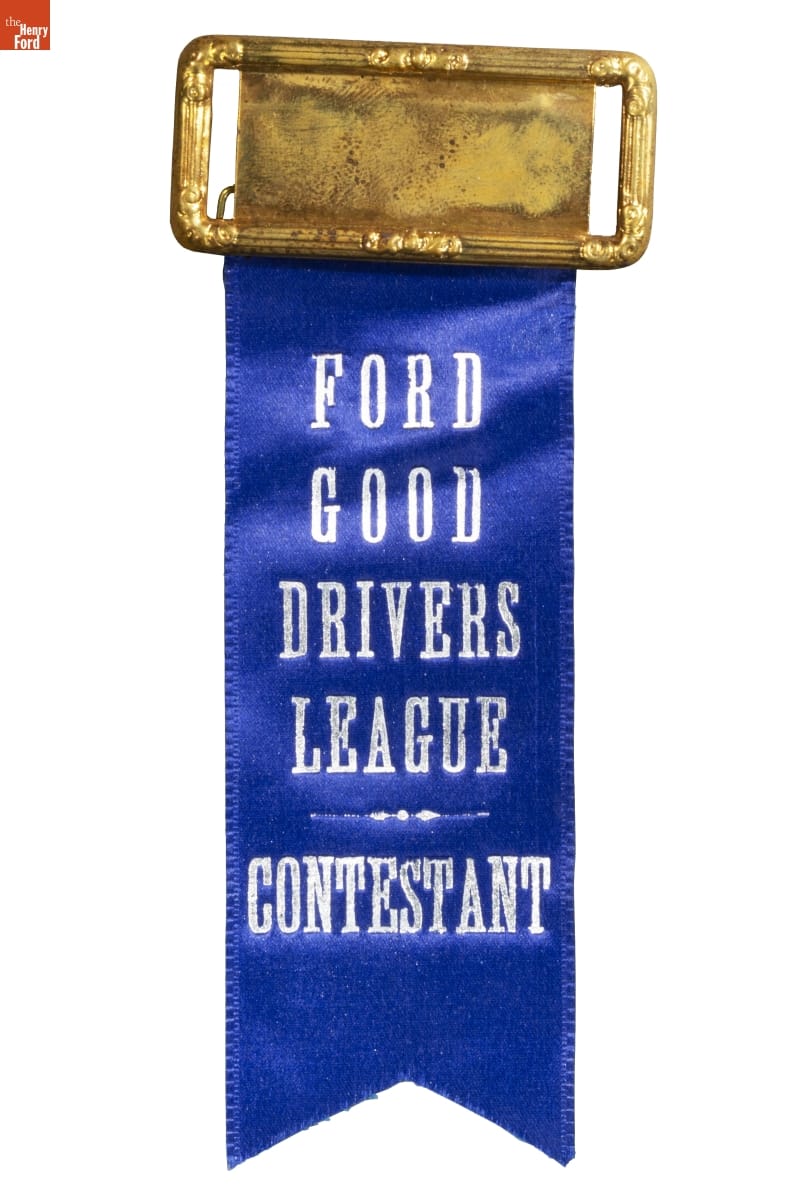
- Ford Good Drivers League "Contestant" Badge, 1940-1942 - Ford Motor Company created the Good Drivers League in 1940. Headed by Edsel Ford, the League promoted safe driving habits among high school students. The League initially invited boys to compete in state and national championships--girls would join in 1941. Contestants wrote essays and participated in driving tests. National champions won trophies and scholarships. America's entry into World War II ended the program.
- 1940-1942
- Collections - Artifact
Ford Good Drivers League "Contestant" Badge, 1940-1942
Ford Motor Company created the Good Drivers League in 1940. Headed by Edsel Ford, the League promoted safe driving habits among high school students. The League initially invited boys to compete in state and national championships--girls would join in 1941. Contestants wrote essays and participated in driving tests. National champions won trophies and scholarships. America's entry into World War II ended the program.
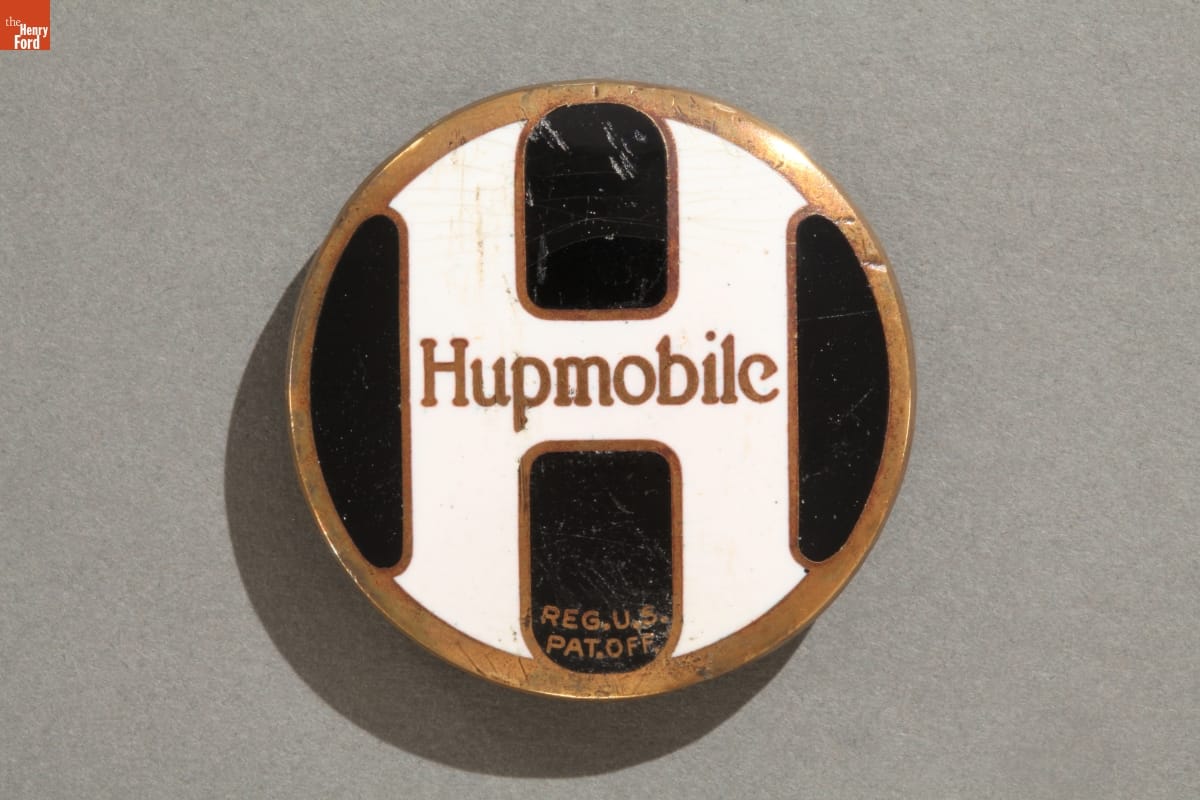
- Hupmobile Automobile Emblem, circa 1925 - Robert Hupp and his brother Louis started Hupp Motor Car Company in 1908. Robert sold his interest in 1911, but the company kept the name. Hupp produced low and medium-priced reliable cars over the next decades. During the Great Depression, the company, like many other automobile manufacturers, struggled. Production of the Hupmobile ceased in 1940.
- circa 1925
- Collections - Artifact
Hupmobile Automobile Emblem, circa 1925
Robert Hupp and his brother Louis started Hupp Motor Car Company in 1908. Robert sold his interest in 1911, but the company kept the name. Hupp produced low and medium-priced reliable cars over the next decades. During the Great Depression, the company, like many other automobile manufacturers, struggled. Production of the Hupmobile ceased in 1940.
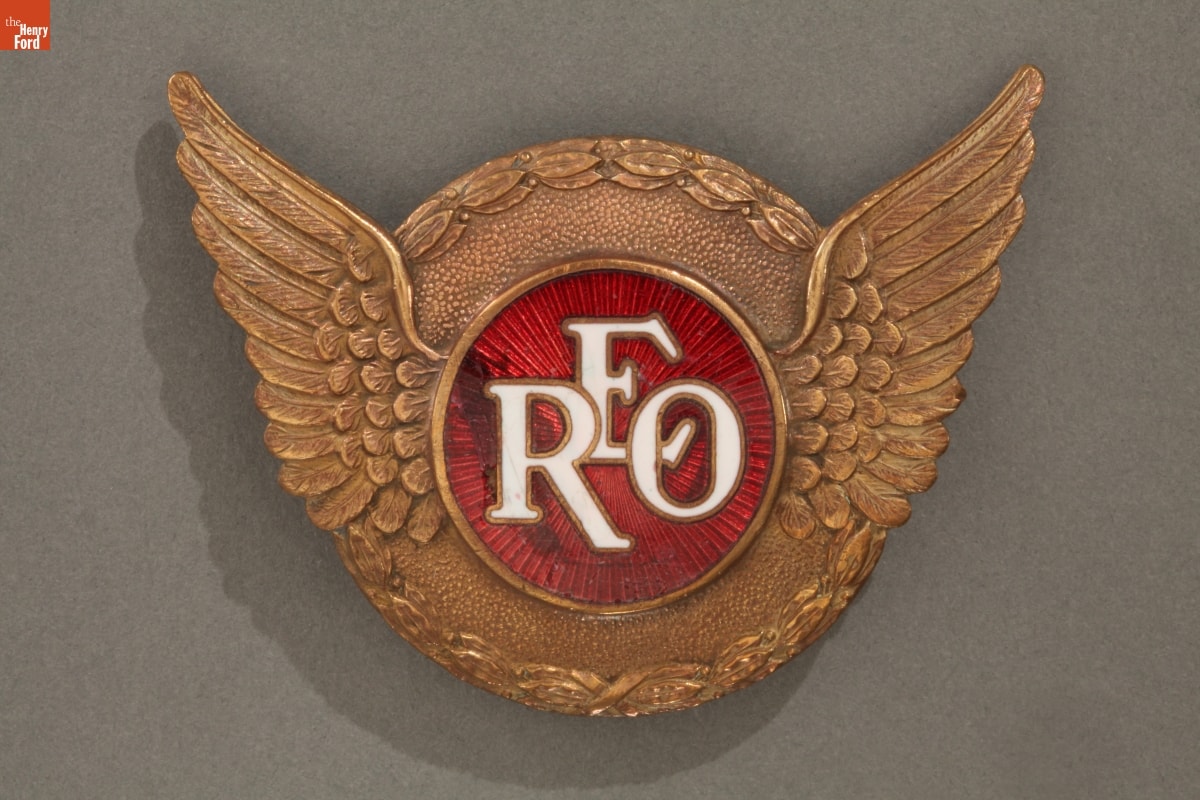
- REO Automobile Emblem, 1920-1930 - REO took its name from the initials of its founder, Ransom Eli Olds, previously founder of Oldsmobile. REO made cars and trucks that were steady sellers up through the Depression. Its last car was manufactured in 1936. The name continued in a truck division of one of its succeeding owners, White Motors. The REO brand lasted into the 1970s.
- 1920-1930
- Collections - Artifact
REO Automobile Emblem, 1920-1930
REO took its name from the initials of its founder, Ransom Eli Olds, previously founder of Oldsmobile. REO made cars and trucks that were steady sellers up through the Depression. Its last car was manufactured in 1936. The name continued in a truck division of one of its succeeding owners, White Motors. The REO brand lasted into the 1970s.
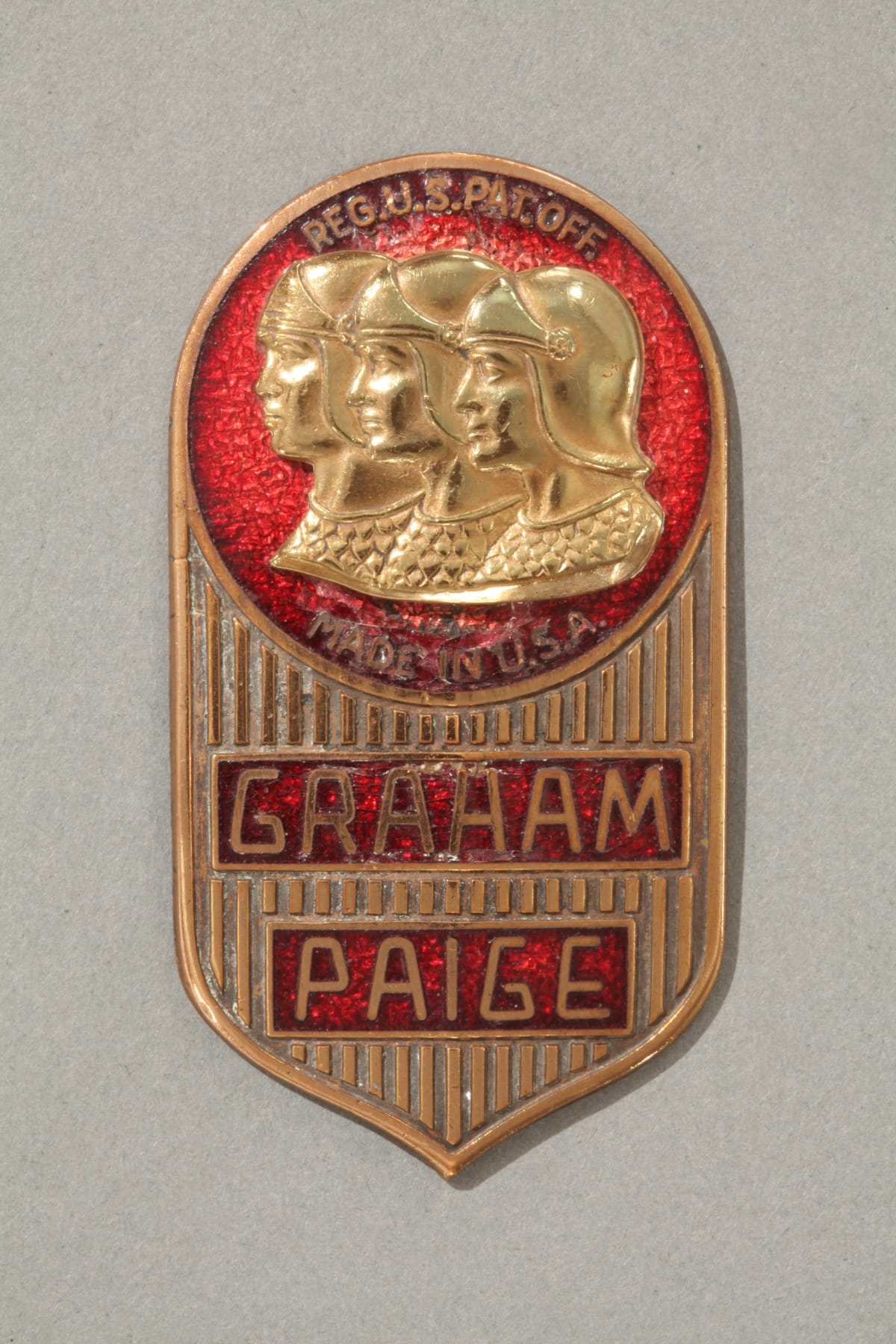
- Graham-Paige Automobile Emblem, 1930 - Truck-building brothers Joseph, Robert and Ray Graham purchased Paige-Detroit Motor Car Company in 1927 and rebranded it Graham-Paige. The brothers' new automobile, introduced in January 1928, sold more than 73,000 units in its first year. But the Great Depression devastated Graham-Paige. The company's last cars appeared in 1940, and its assets went to Kaiser-Frazer in 1947.
- 1930
- Collections - Artifact
Graham-Paige Automobile Emblem, 1930
Truck-building brothers Joseph, Robert and Ray Graham purchased Paige-Detroit Motor Car Company in 1927 and rebranded it Graham-Paige. The brothers' new automobile, introduced in January 1928, sold more than 73,000 units in its first year. But the Great Depression devastated Graham-Paige. The company's last cars appeared in 1940, and its assets went to Kaiser-Frazer in 1947.
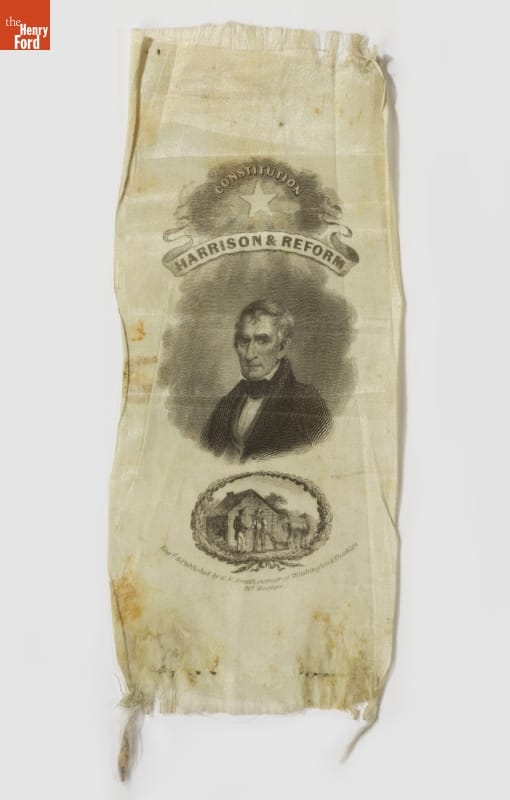
- William Henry Harrison Campaign Ribbon, 1836-1840 - Sixty-seven-year-old retired military general William Henry Harrison took advantage of a wildly popular campaign staged by Whig Party leaders, who capitalized on the false perception that Harrison was a common frontier farmer living in a log cabin. Cheering crowds lined Pennsylvania Avenue for his inauguration on March 4, 1841. He performed nominal duties before falling ill and dying of pneumonia a month into his presidency.
- 1836-1840
- Collections - Artifact
William Henry Harrison Campaign Ribbon, 1836-1840
Sixty-seven-year-old retired military general William Henry Harrison took advantage of a wildly popular campaign staged by Whig Party leaders, who capitalized on the false perception that Harrison was a common frontier farmer living in a log cabin. Cheering crowds lined Pennsylvania Avenue for his inauguration on March 4, 1841. He performed nominal duties before falling ill and dying of pneumonia a month into his presidency.