
Search
- Macon (Michigan) High School Students Working on a Farm, Pitching Straw into a Baler, August 1943 -
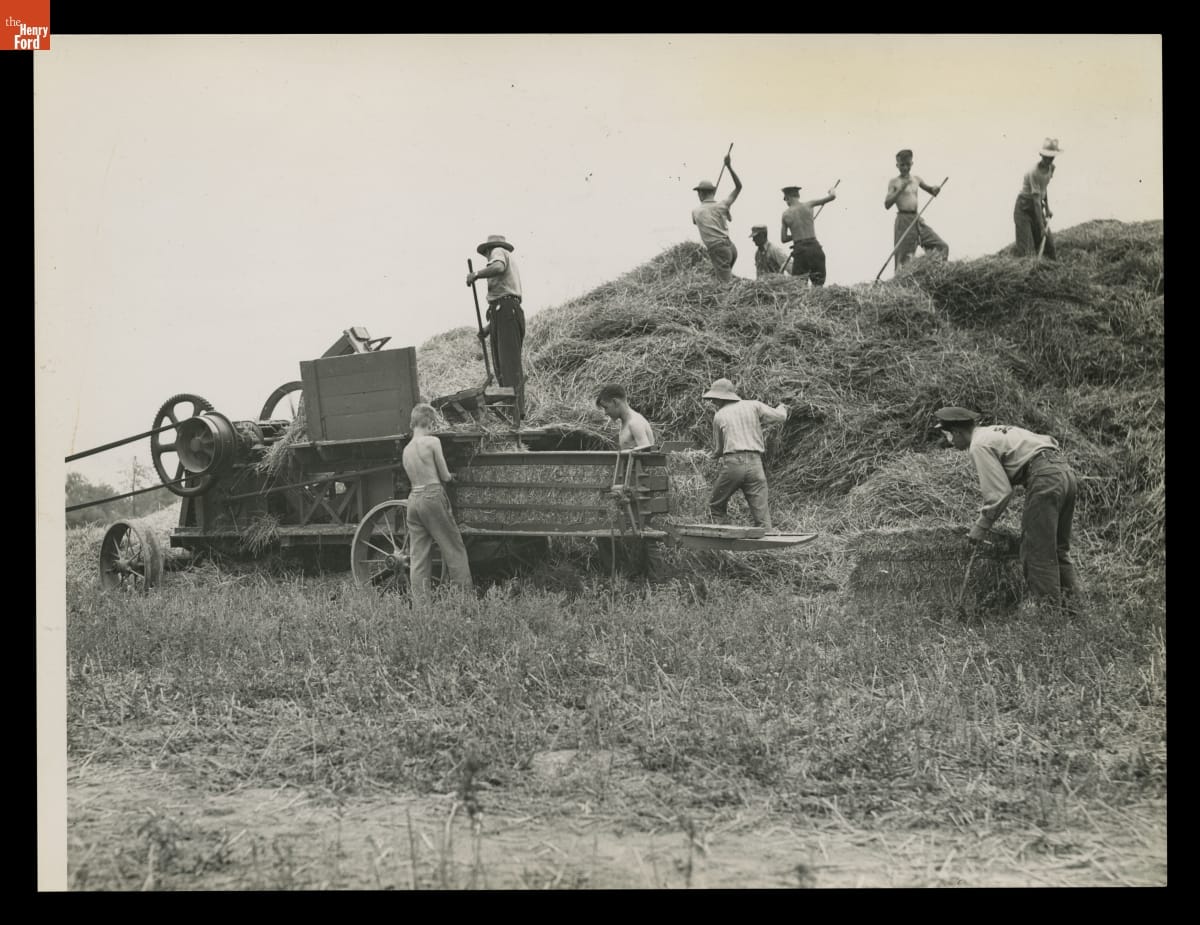
- August 23, 1943
- Collections - Artifact
Macon (Michigan) High School Students Working on a Farm, Pitching Straw into a Baler, August 1943
- Photograph, "Hay Press and Work Crew," 1915-1925 -
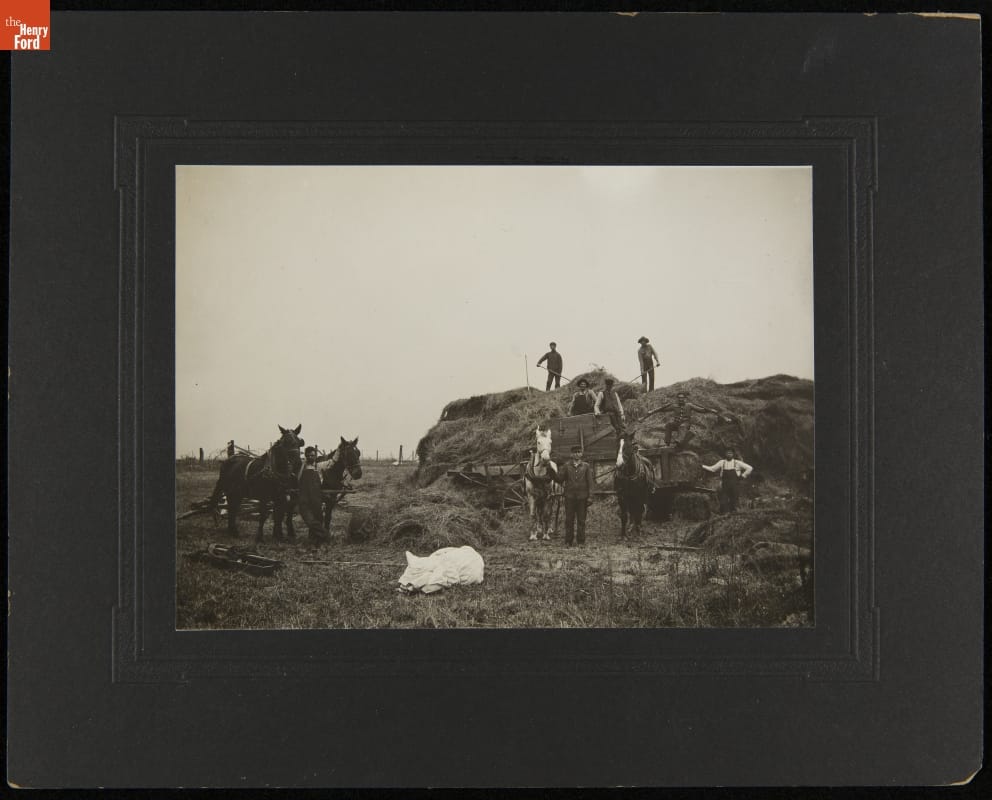
- 1915-1925
- Collections - Artifact
Photograph, "Hay Press and Work Crew," 1915-1925
- 1960 Advertisement for the Ford 981 Diesel Tractor and Ford 250 Hay Baler, "Up To 10 Tons Per Hour...That's Making Hay the Ford Way!" -
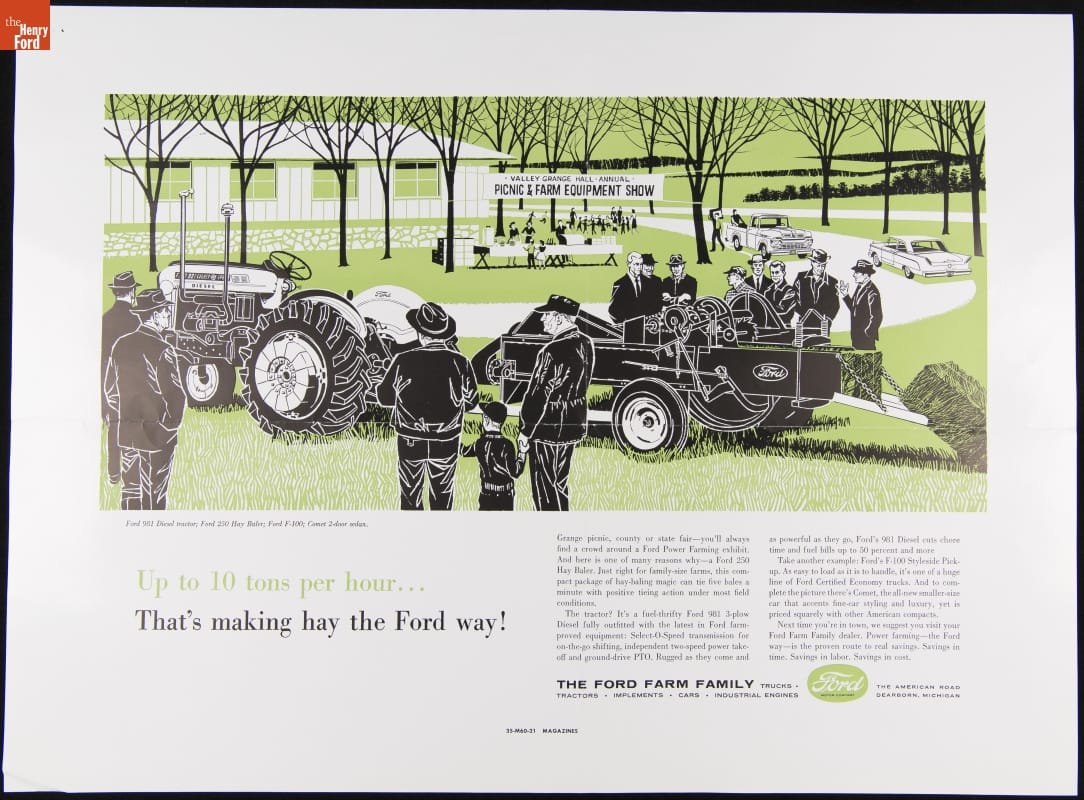
- 1960
- Collections - Artifact
1960 Advertisement for the Ford 981 Diesel Tractor and Ford 250 Hay Baler, "Up To 10 Tons Per Hour...That's Making Hay the Ford Way!"
- Automatic Pick-Up Baler, circa 1943 - This tractor-drawn baler changed the way farmers made hay. Before pick-up balers, farmers hauled hay to the stationary baler. This baler went to the hayfield where it picked up cured grass, pressed it into rectangular bales, and automatically tied the compressed grasses into a hay bale. Farmers could pick up and move these bales, and they had a higher market value as fresh hay.
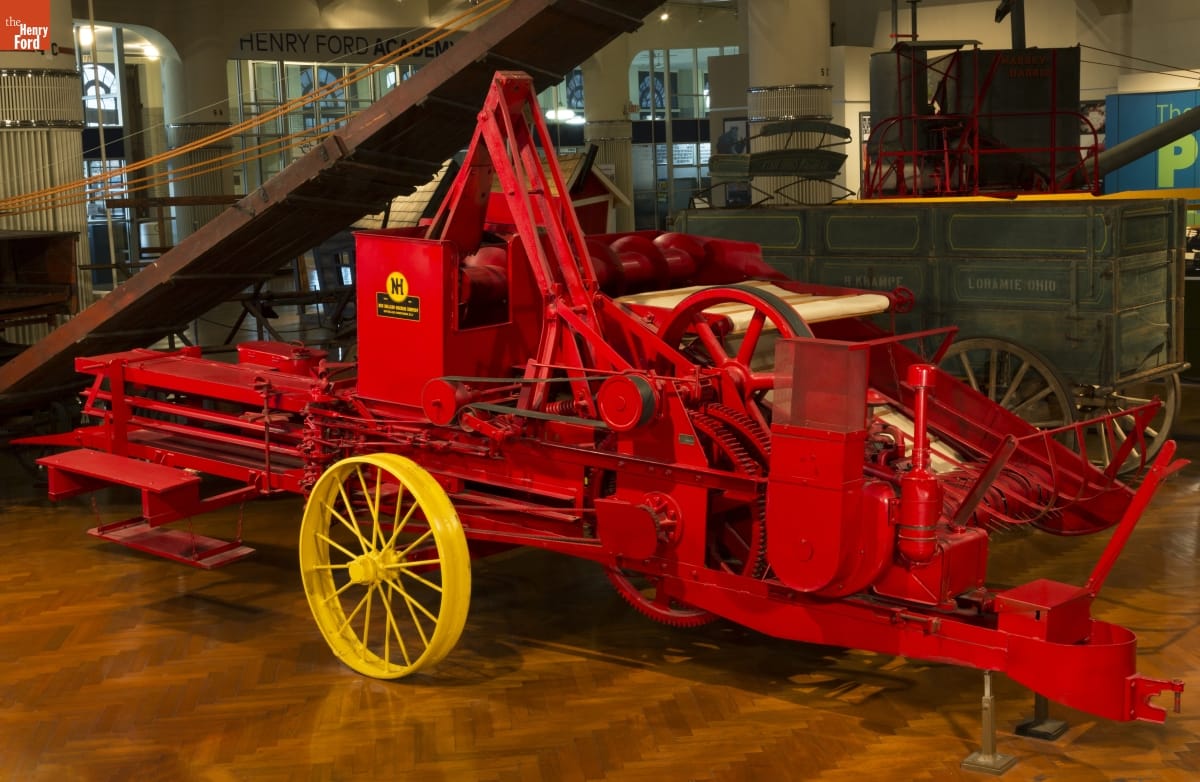
- circa 1943
- Collections - Artifact
Automatic Pick-Up Baler, circa 1943
This tractor-drawn baler changed the way farmers made hay. Before pick-up balers, farmers hauled hay to the stationary baler. This baler went to the hayfield where it picked up cured grass, pressed it into rectangular bales, and automatically tied the compressed grasses into a hay bale. Farmers could pick up and move these bales, and they had a higher market value as fresh hay.
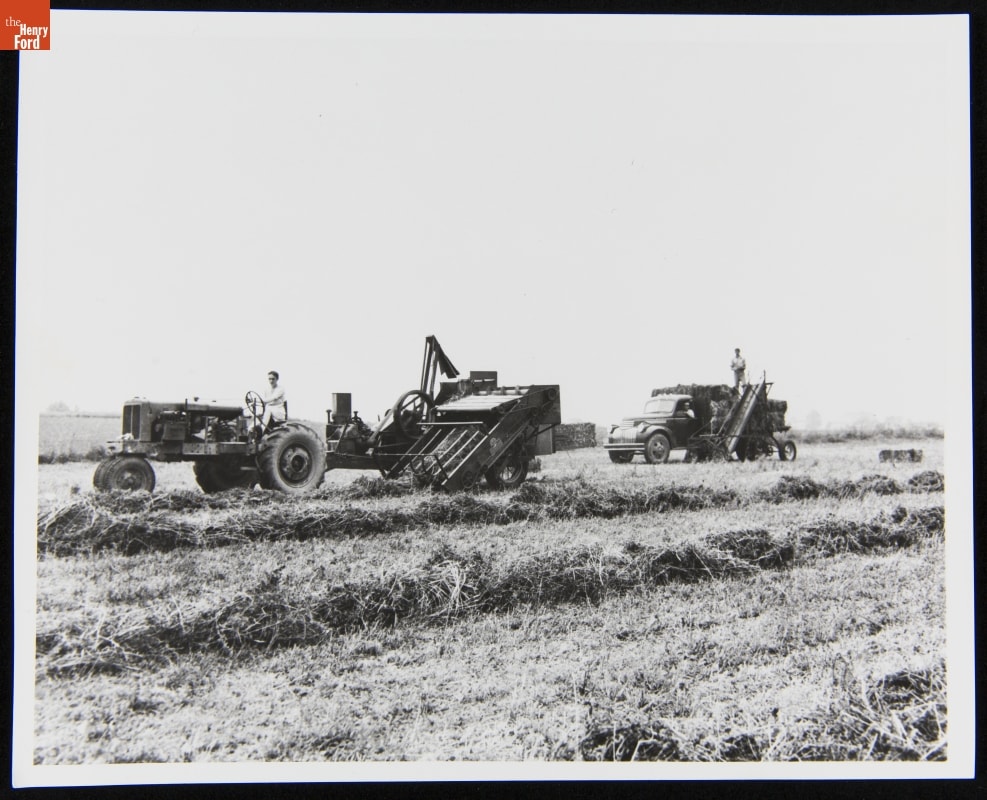
- 1943 New Holland Automatic Pick-Up Baler in Use - This tractor-drawn baler changed the way farmers made hay. Before pick-up balers, farmers hauled hay to the stationary baler. This baler went to the hayfield where it picked up cured grass, pressed it into rectangular bales, and automatically tied the compressed grasses into a hay bale. Farmers could pick up and move these bales, and they had a higher market value as fresh hay.
- 1978
- Collections - Artifact
1943 New Holland Automatic Pick-Up Baler in Use
This tractor-drawn baler changed the way farmers made hay. Before pick-up balers, farmers hauled hay to the stationary baler. This baler went to the hayfield where it picked up cured grass, pressed it into rectangular bales, and automatically tied the compressed grasses into a hay bale. Farmers could pick up and move these bales, and they had a higher market value as fresh hay.
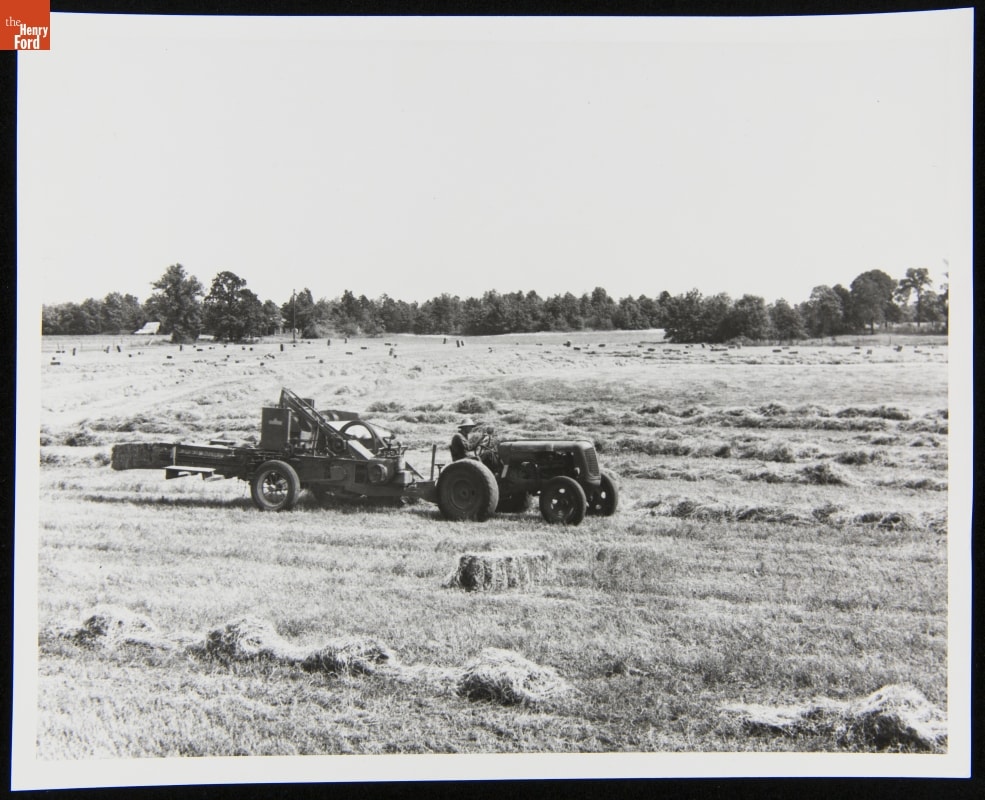
- 1943 New Holland Automatic Pick-Up Baler in Use - This tractor-drawn baler changed the way farmers made hay. Before pick-up balers, farmers hauled hay to the stationary baler. This baler went to the hayfield where it picked up cured grass, pressed it into rectangular bales, and automatically tied the compressed grasses into a hay bale. Farmers could pick up and move these bales, and they had a higher market value as fresh hay.
- 1978
- Collections - Artifact
1943 New Holland Automatic Pick-Up Baler in Use
This tractor-drawn baler changed the way farmers made hay. Before pick-up balers, farmers hauled hay to the stationary baler. This baler went to the hayfield where it picked up cured grass, pressed it into rectangular bales, and automatically tied the compressed grasses into a hay bale. Farmers could pick up and move these bales, and they had a higher market value as fresh hay.
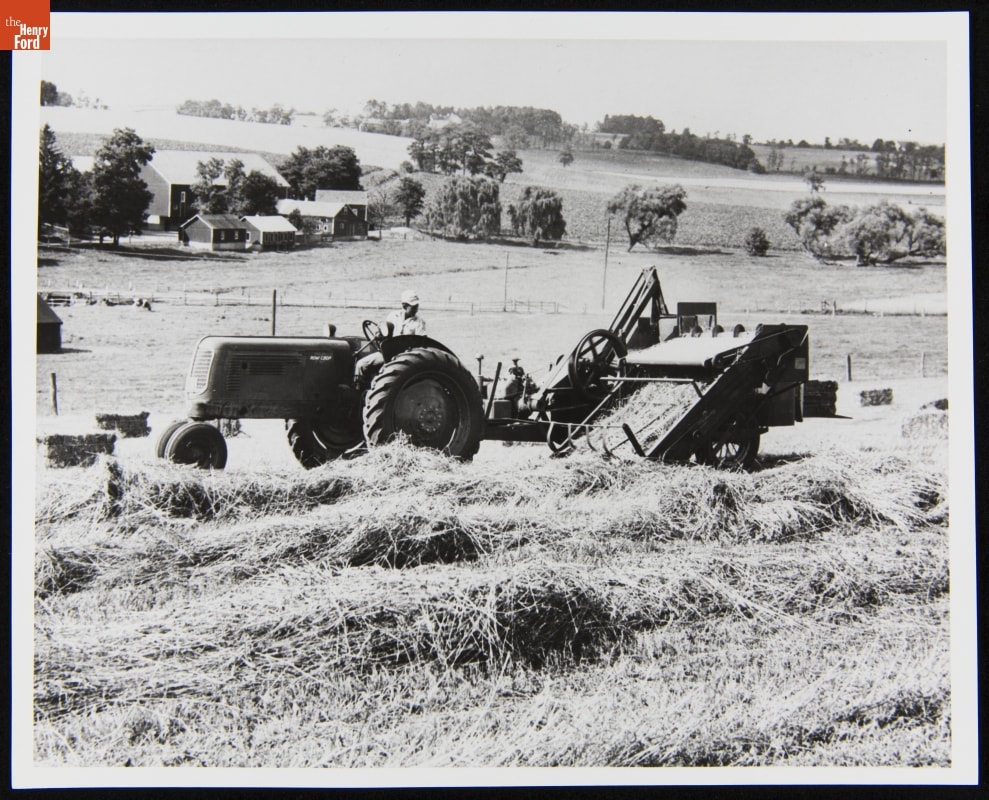
- 1943 New Holland Automatic Pick-Up Baler in Use - This tractor-drawn baler changed the way farmers made hay. Before pick-up balers, farmers hauled hay to the stationary baler. This baler went to the hayfield where it picked up cured grass, pressed it into rectangular bales, and automatically tied the compressed grasses into a hay bale. Farmers could pick up and move these bales, and they had a higher market value as fresh hay.
- 1978
- Collections - Artifact
1943 New Holland Automatic Pick-Up Baler in Use
This tractor-drawn baler changed the way farmers made hay. Before pick-up balers, farmers hauled hay to the stationary baler. This baler went to the hayfield where it picked up cured grass, pressed it into rectangular bales, and automatically tied the compressed grasses into a hay bale. Farmers could pick up and move these bales, and they had a higher market value as fresh hay.