
Search
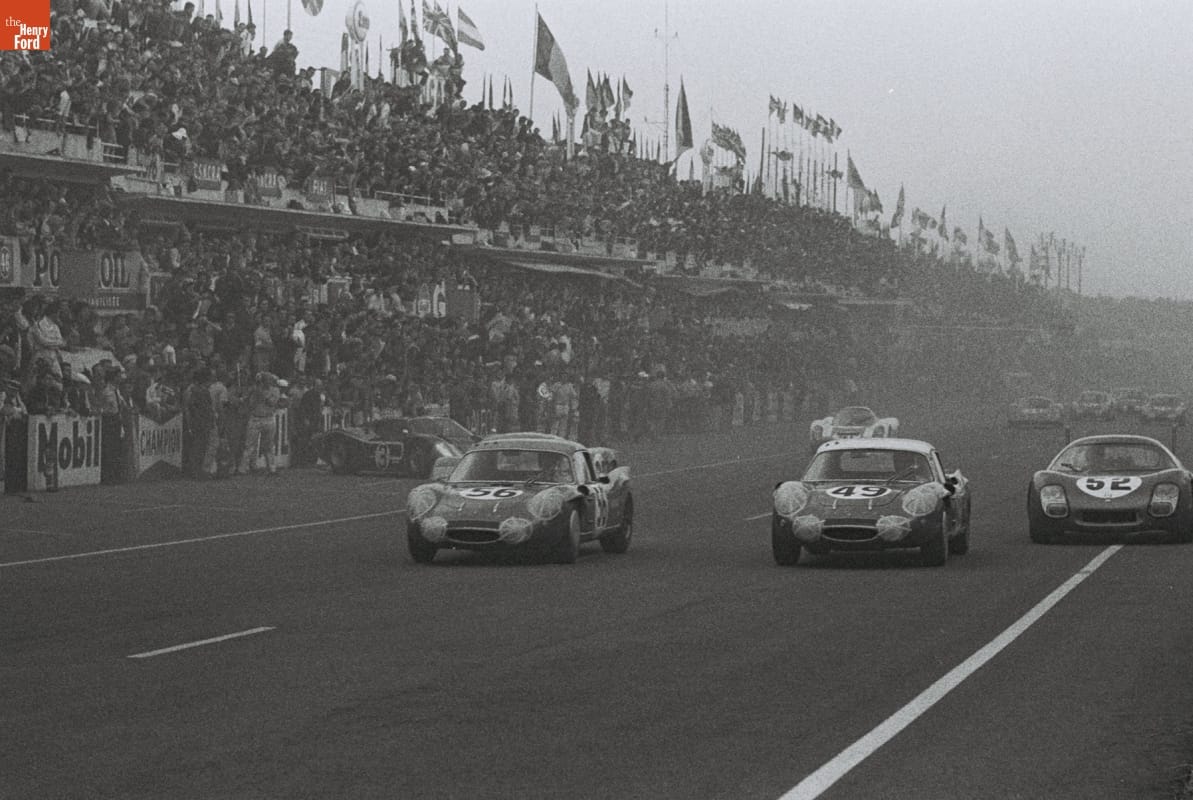
- Start of the 24 Heures du Mans (24 Hours of Le Mans) Race, June 1967 - The "Le Mans start" was one of the French endurance race's more unusual customs. Drivers started on their feet, across the track from their respective cars. When the flag dropped, they ran to their vehicles, scrambled inside, and started the cars -- often not bothering to strap in until they were underway. Safety concerns ended the Le Mans start after 1969.
- 10 June 1967 - 11 June 1967
- Collections - Artifact
Start of the 24 Heures du Mans (24 Hours of Le Mans) Race, June 1967
The "Le Mans start" was one of the French endurance race's more unusual customs. Drivers started on their feet, across the track from their respective cars. When the flag dropped, they ran to their vehicles, scrambled inside, and started the cars -- often not bothering to strap in until they were underway. Safety concerns ended the Le Mans start after 1969.
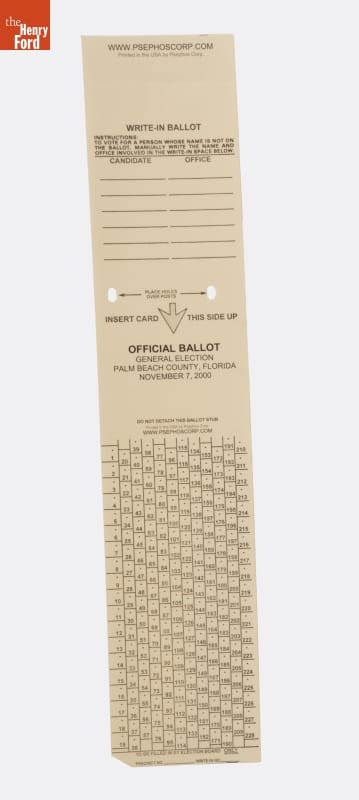
- Copy of a 2000 Presidential Election Ballot for Palm Beach County, Florida - Paper "butterfly ballots" are pierced with a "punch needle"--reminiscent of computer punch cards. Leftover confetti fragments of the punched paper are called "chads." If ballots are not fully punched, partially attached "hanging chads" invalidate the vote. During the 2000 Presidential election, this infamous system caused confusion among voters in Palm Beach County, Florida, forcing a recount of spoiled ballots.
- circa 1995
- Collections - Artifact
Copy of a 2000 Presidential Election Ballot for Palm Beach County, Florida
Paper "butterfly ballots" are pierced with a "punch needle"--reminiscent of computer punch cards. Leftover confetti fragments of the punched paper are called "chads." If ballots are not fully punched, partially attached "hanging chads" invalidate the vote. During the 2000 Presidential election, this infamous system caused confusion among voters in Palm Beach County, Florida, forcing a recount of spoiled ballots.
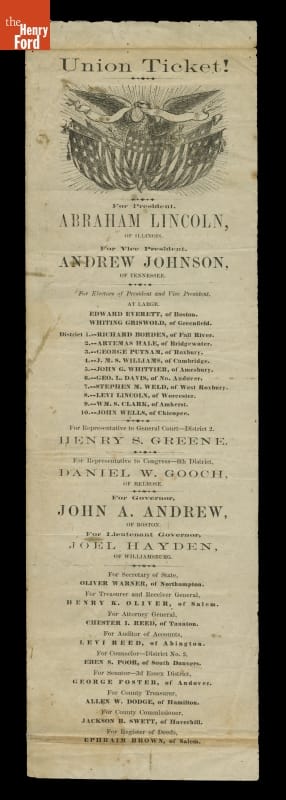
- Abraham Lincoln and Andrew Johnson Presidential Election Ballot, 1864 - During the mid-1800s, Americans used preprinted ballots to vote. Political parties printed and distributed these ballots, sometimes through local partisan newspapers. These ballots listed candidates only from a single party -- so everyone knew who you voted for. Bold voters could scratch out or paste over names. This ballot was used in 1864 by Massachusetts Republicans to vote for Abraham Lincoln.
- 1864
- Collections - Artifact
Abraham Lincoln and Andrew Johnson Presidential Election Ballot, 1864
During the mid-1800s, Americans used preprinted ballots to vote. Political parties printed and distributed these ballots, sometimes through local partisan newspapers. These ballots listed candidates only from a single party -- so everyone knew who you voted for. Bold voters could scratch out or paste over names. This ballot was used in 1864 by Massachusetts Republicans to vote for Abraham Lincoln.
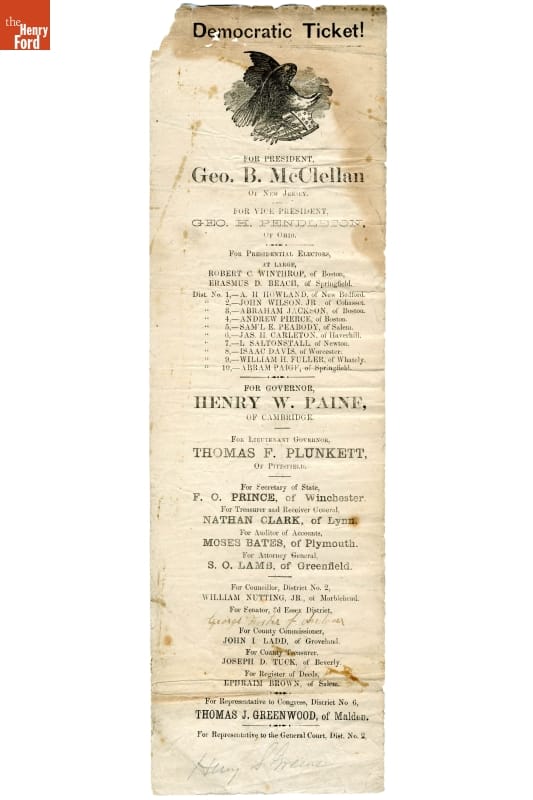
- Democratic Party Presidential Election Ballot, Massachusetts, 1864 - During the mid-1800s, Americans used preprinted ballots to vote. Political parties printed and distributed these ballots, sometimes through local partisan newspapers. These ballots listed candidates only from a single party -- so everyone knew who you voted for. Bold voters could scratch out or paste over names. This ballot had blank spaces when no party candidate ran -- voters had to fill it in themselves.
- 1864
- Collections - Artifact
Democratic Party Presidential Election Ballot, Massachusetts, 1864
During the mid-1800s, Americans used preprinted ballots to vote. Political parties printed and distributed these ballots, sometimes through local partisan newspapers. These ballots listed candidates only from a single party -- so everyone knew who you voted for. Bold voters could scratch out or paste over names. This ballot had blank spaces when no party candidate ran -- voters had to fill it in themselves.
- Ohio National Union Party Ticket for the 1864 Presidential Election - After a gloomy summer of Union defeats and casualty lists, President Lincoln's re-election hopes seemed slim. But finally, several Union victories gave him the needed public support to win the 1864 election by a landslide. The phrase "Rally round the Flag, Boys!" was part of a Lincoln-Johnson campaign song modified from the 1862 patriotic song, "The Battle Cry of Freedom."
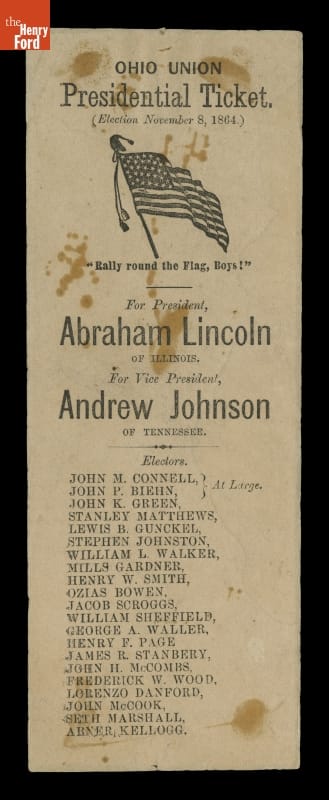
- November 08, 1864
- Collections - Artifact
Ohio National Union Party Ticket for the 1864 Presidential Election
After a gloomy summer of Union defeats and casualty lists, President Lincoln's re-election hopes seemed slim. But finally, several Union victories gave him the needed public support to win the 1864 election by a landslide. The phrase "Rally round the Flag, Boys!" was part of a Lincoln-Johnson campaign song modified from the 1862 patriotic song, "The Battle Cry of Freedom."
- Valentine Card, "I'm a Suffragette and I Don't Care Who Knows It," circa 1910 - The custom of sending messages of affection on February 14 dates back to Roman times, when mid-February was a time to meet and court prospective mates. The earliest American valentines were labors of love, handmade by the sender. The spread of commercially produced valentines in the second half of the nineteenth century made sending and receiving Valentine's Day cards a more lighthearted activity.
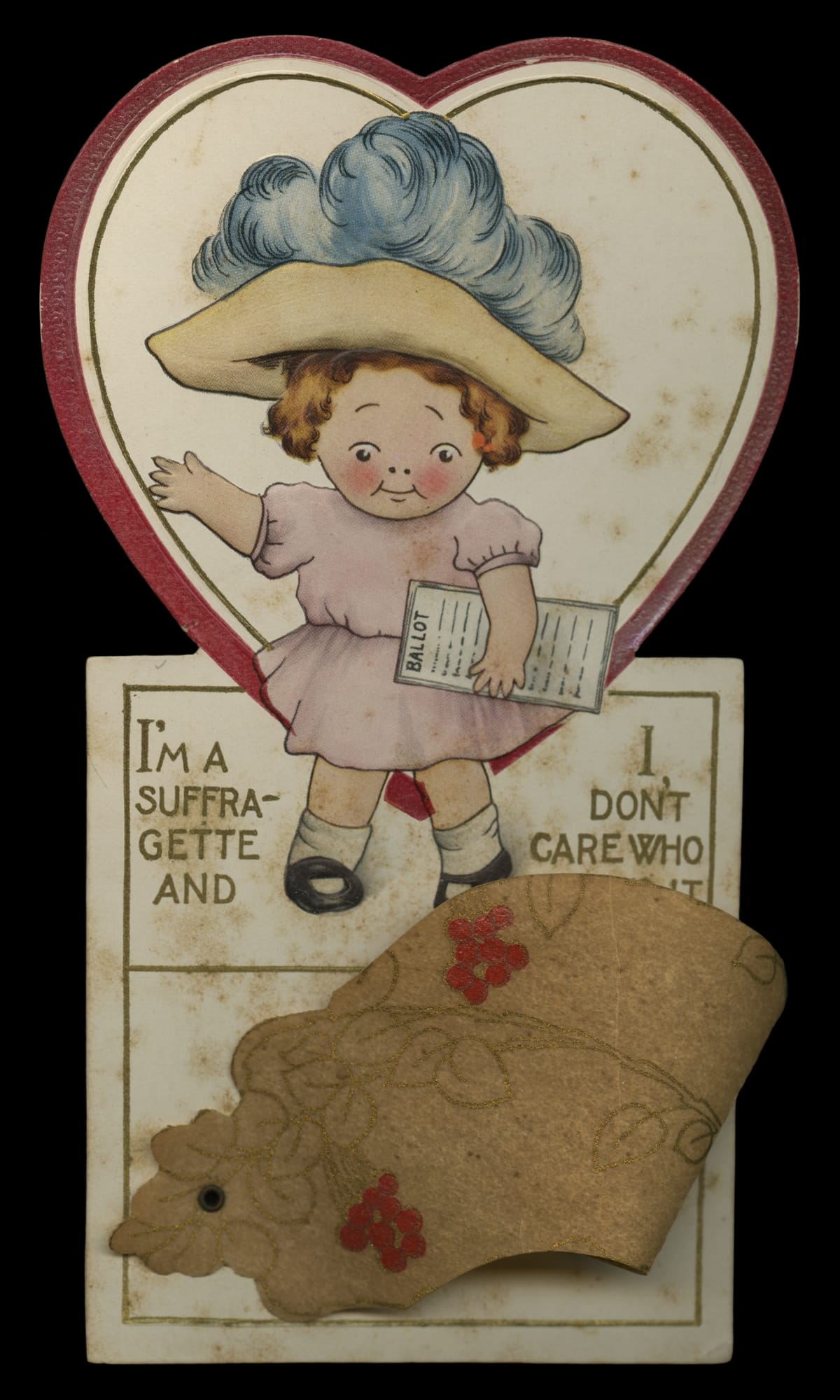
- circa 1910
- Collections - Artifact
Valentine Card, "I'm a Suffragette and I Don't Care Who Knows It," circa 1910
The custom of sending messages of affection on February 14 dates back to Roman times, when mid-February was a time to meet and court prospective mates. The earliest American valentines were labors of love, handmade by the sender. The spread of commercially produced valentines in the second half of the nineteenth century made sending and receiving Valentine's Day cards a more lighthearted activity.
- "Natives Vote" Tote Bag, 2020 - This bag was created to drive participation of Native American voting in the 2020 US Presidential election. It depicts a family dressed in regalia, placing ballots into a USPS mailbox, wearing COVID-19 facemasks. Created by artist Steven Paul Judd (Kiowa-Choctaw), it was produced in partnership with the Illuminatives organization and distributed through Native-owned fashion business, B.Yellowtail (Northern Cheyenne / Crow).

- 2020
- Collections - Artifact
"Natives Vote" Tote Bag, 2020
This bag was created to drive participation of Native American voting in the 2020 US Presidential election. It depicts a family dressed in regalia, placing ballots into a USPS mailbox, wearing COVID-19 facemasks. Created by artist Steven Paul Judd (Kiowa-Choctaw), it was produced in partnership with the Illuminatives organization and distributed through Native-owned fashion business, B.Yellowtail (Northern Cheyenne / Crow).
- Robert Dunderstadt, a Wyandotte County, Kansas Farmer, Voting on the 1964 Wheat Referendum, May 21, 1963 -
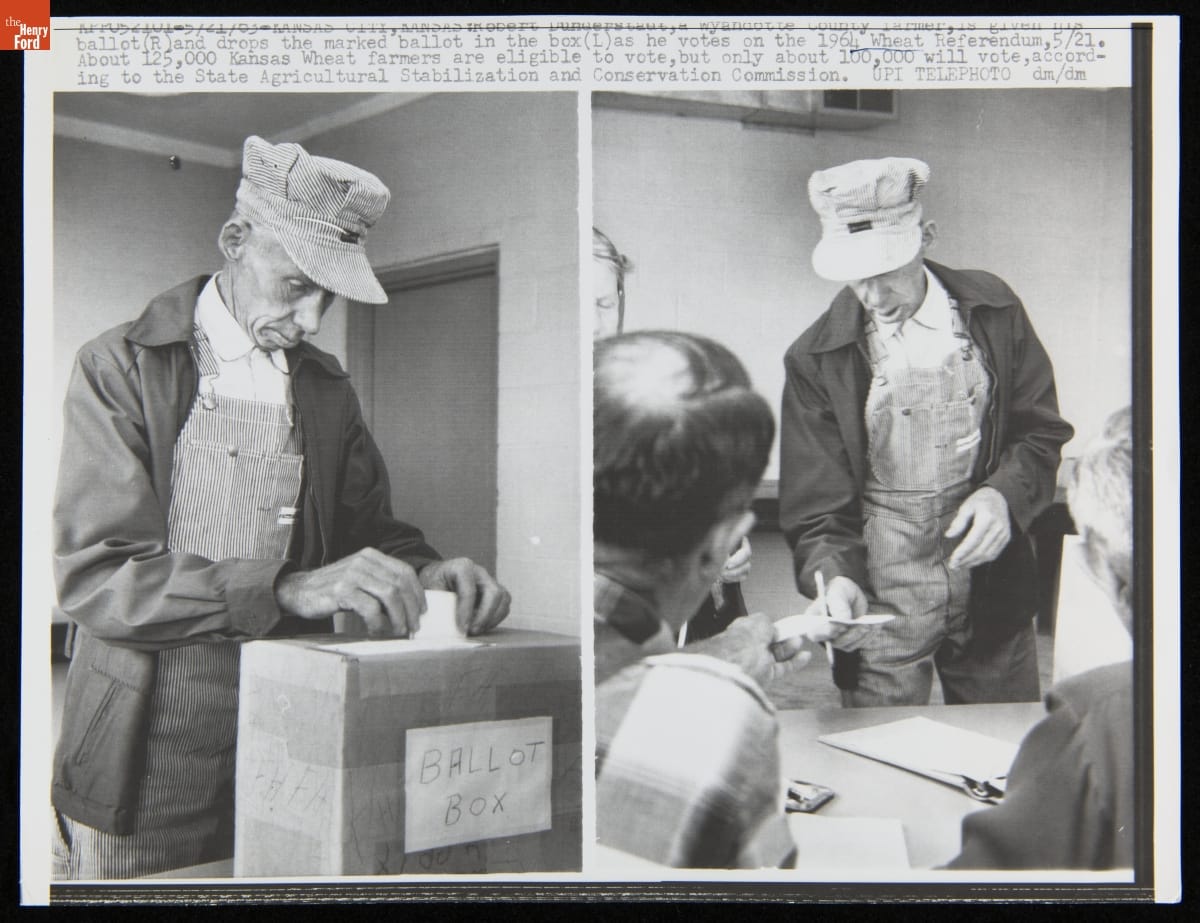
- May 21, 1963
- Collections - Artifact
Robert Dunderstadt, a Wyandotte County, Kansas Farmer, Voting on the 1964 Wheat Referendum, May 21, 1963
- Election Ballot Printing Plate, circa 1920 -
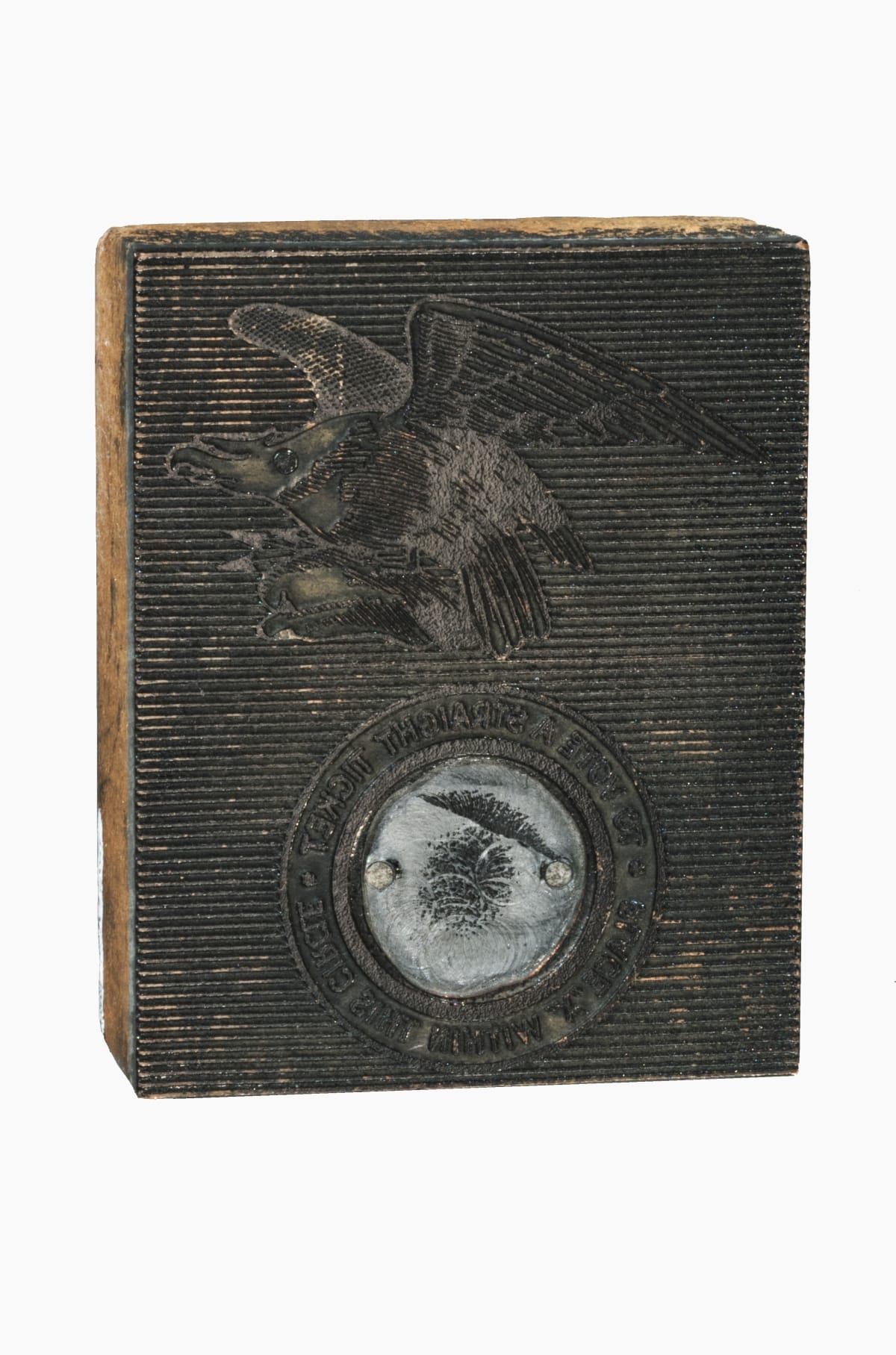
- circa 1920
- Collections - Artifact
Election Ballot Printing Plate, circa 1920
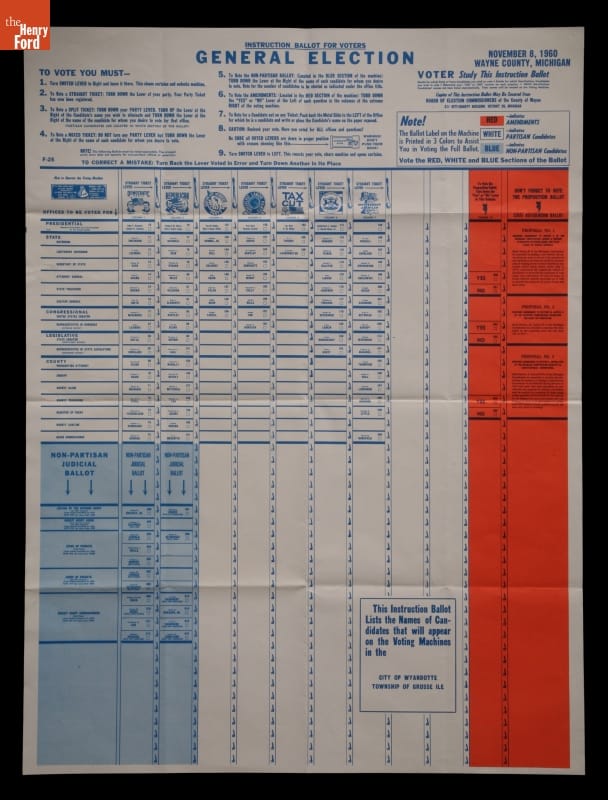
- Instruction Ballot for Voters, General Election, November 8, 1960 - This instructional ballot informed or reminded voters of the Township of Grosse Ile and Wyandotte, Michigan, of the candidates running for national, state and local offices in the national election of 1960. The instructions also provided information about how to use a lever-type voting machine which was the standard way to cast a vote in the 1960s.
- November 08, 1960
- Collections - Artifact
Instruction Ballot for Voters, General Election, November 8, 1960
This instructional ballot informed or reminded voters of the Township of Grosse Ile and Wyandotte, Michigan, of the candidates running for national, state and local offices in the national election of 1960. The instructions also provided information about how to use a lever-type voting machine which was the standard way to cast a vote in the 1960s.