
Search
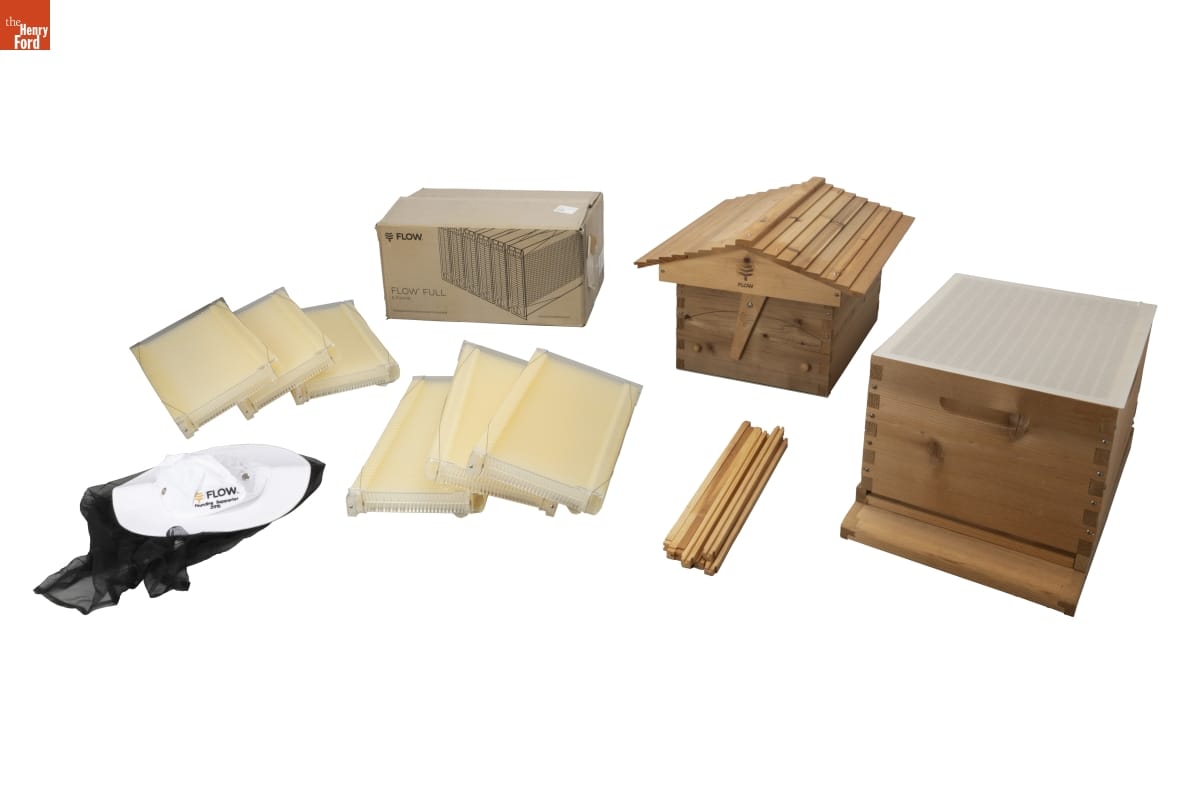
- "Flow Hive" Frame Kit, 2015 -
- 2015
- Collections - Artifact
"Flow Hive" Frame Kit, 2015
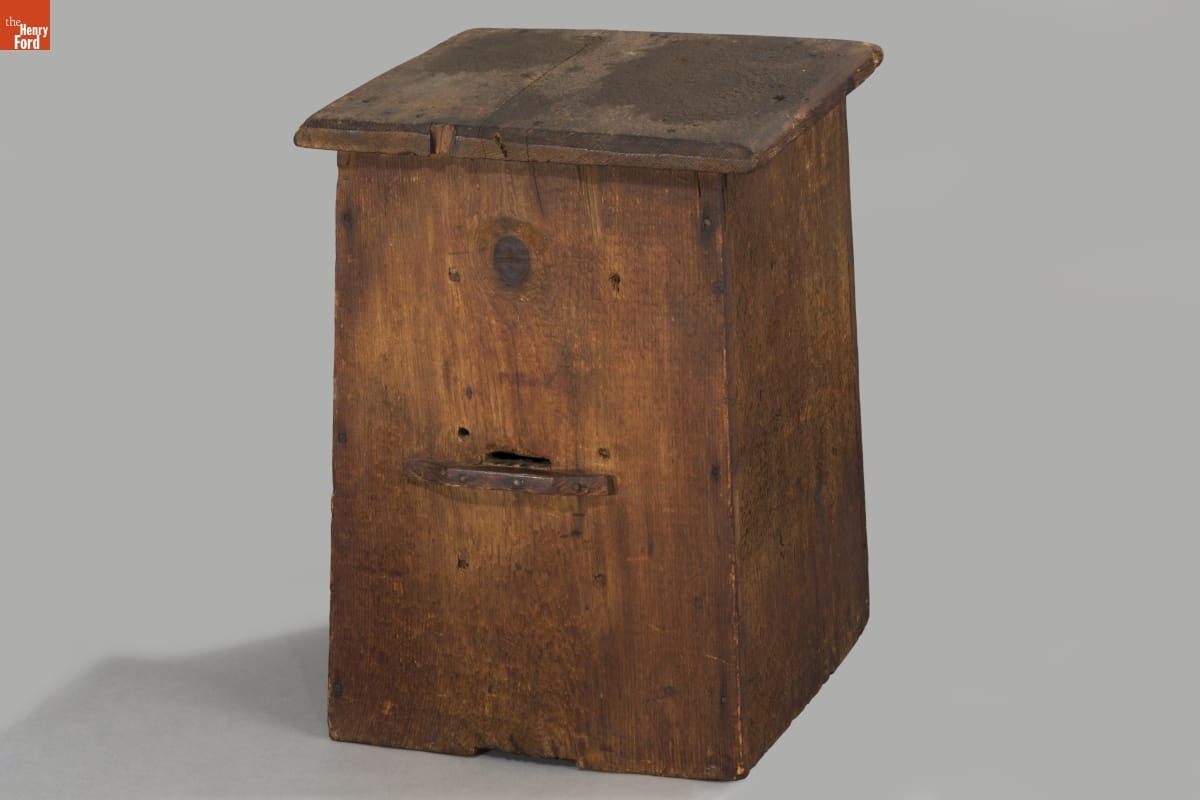
- Box Beehive, 1820-1880 -
- 1820-1880
- Collections - Artifact
Box Beehive, 1820-1880
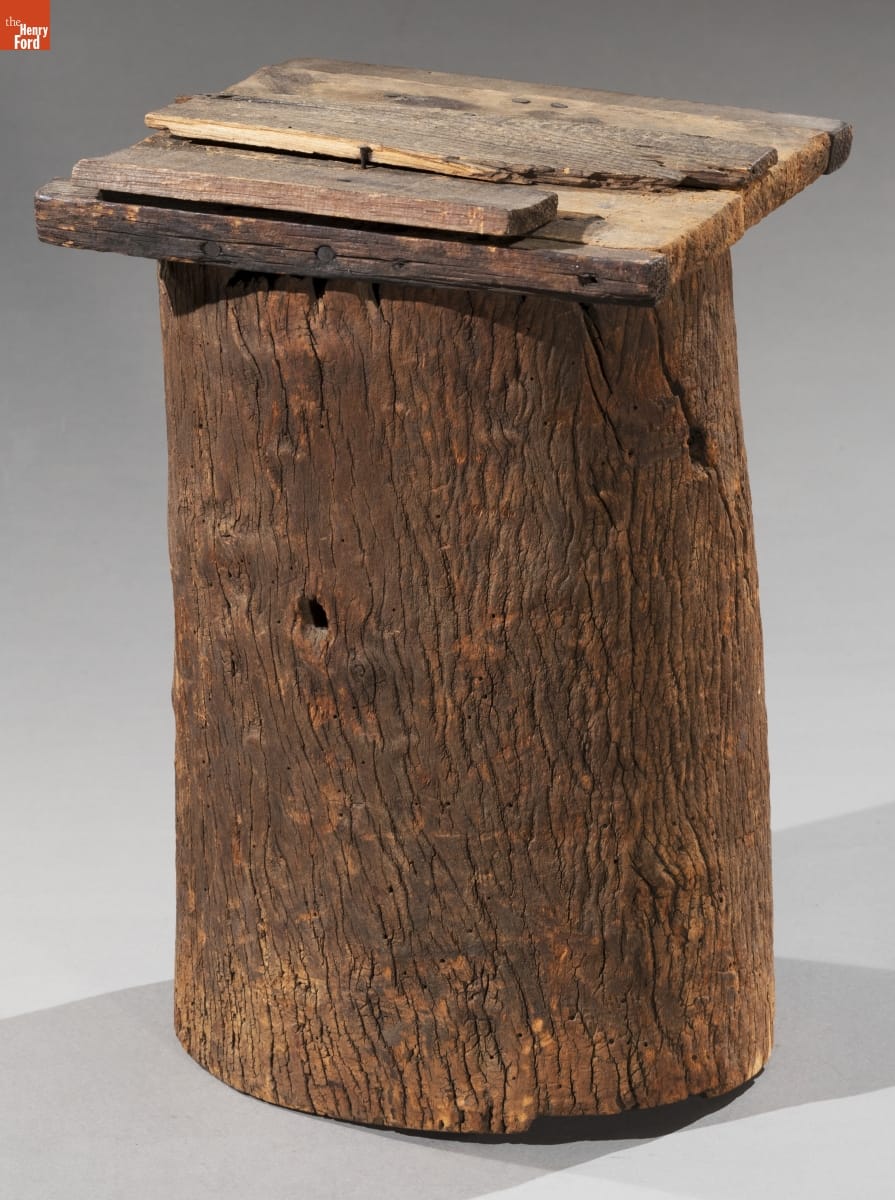
- Beehive Created from a Hollow Log, 1850-1900 - Colonists who relocated from European countries and settled in North America imported <em>Apis mellifera</em> to ensure access to honey and to sustain crops that they moved with their bees. When honeybees swarmed into hollow trees, colonists sometimes cut out the tree and moved it closer to their gardens, orchards, and clover fields to keep honey close to the kitchen table.
- 1850-1900
- Collections - Artifact
Beehive Created from a Hollow Log, 1850-1900
Colonists who relocated from European countries and settled in North America imported Apis mellifera to ensure access to honey and to sustain crops that they moved with their bees. When honeybees swarmed into hollow trees, colonists sometimes cut out the tree and moved it closer to their gardens, orchards, and clover fields to keep honey close to the kitchen table.
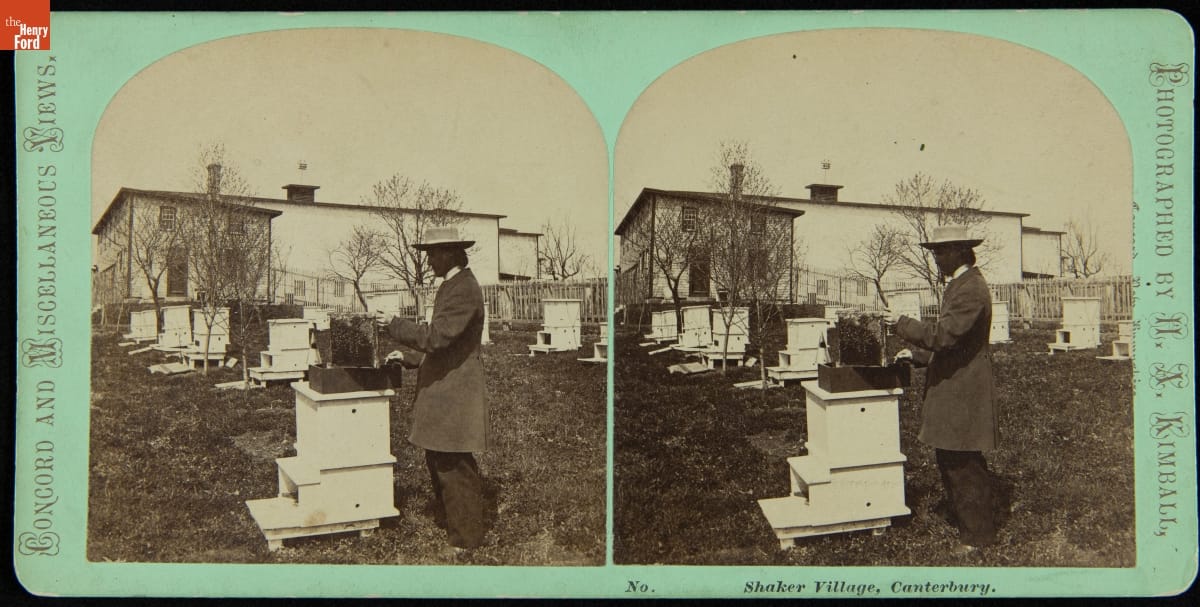
- Elder Henry Clay Blinn with Beehives, Shaker Village, Canterbury, New Hampshire, circa 1875 - Henry C. Blinn joined the Canterbury, New Hampshire, Shaker Community in 1838. He served as an elder and as official historian for the Shaker community for most of the rest of his life. His writings included at least two articles in the <em>American Bee Journal</em> (April and September 1870). Elder Blinn learned by doing, as this stereograph of his work with bees in the Canterbury apiary indicates.
- circa 1875
- Collections - Artifact
Elder Henry Clay Blinn with Beehives, Shaker Village, Canterbury, New Hampshire, circa 1875
Henry C. Blinn joined the Canterbury, New Hampshire, Shaker Community in 1838. He served as an elder and as official historian for the Shaker community for most of the rest of his life. His writings included at least two articles in the American Bee Journal (April and September 1870). Elder Blinn learned by doing, as this stereograph of his work with bees in the Canterbury apiary indicates.
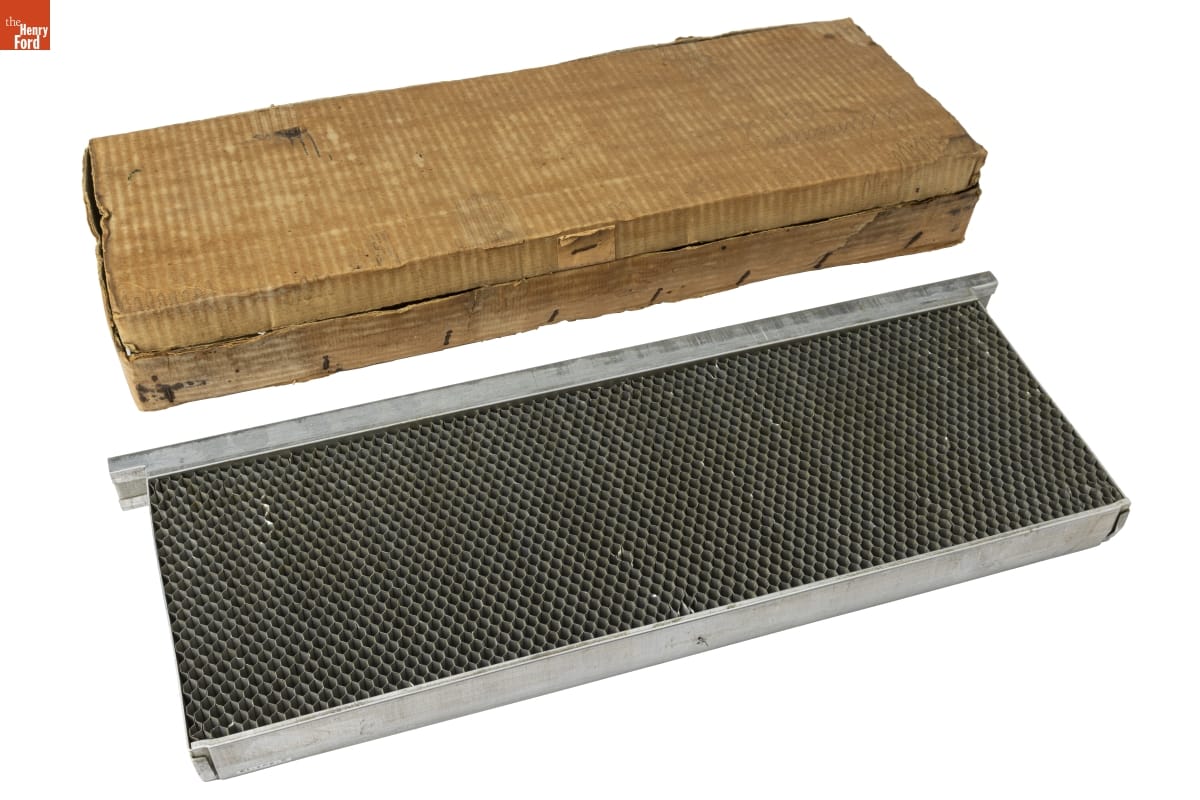
- Honeycomb Grid Core in Packaging, circa 1920 -
- circa 1920
- Collections - Artifact
Honeycomb Grid Core in Packaging, circa 1920
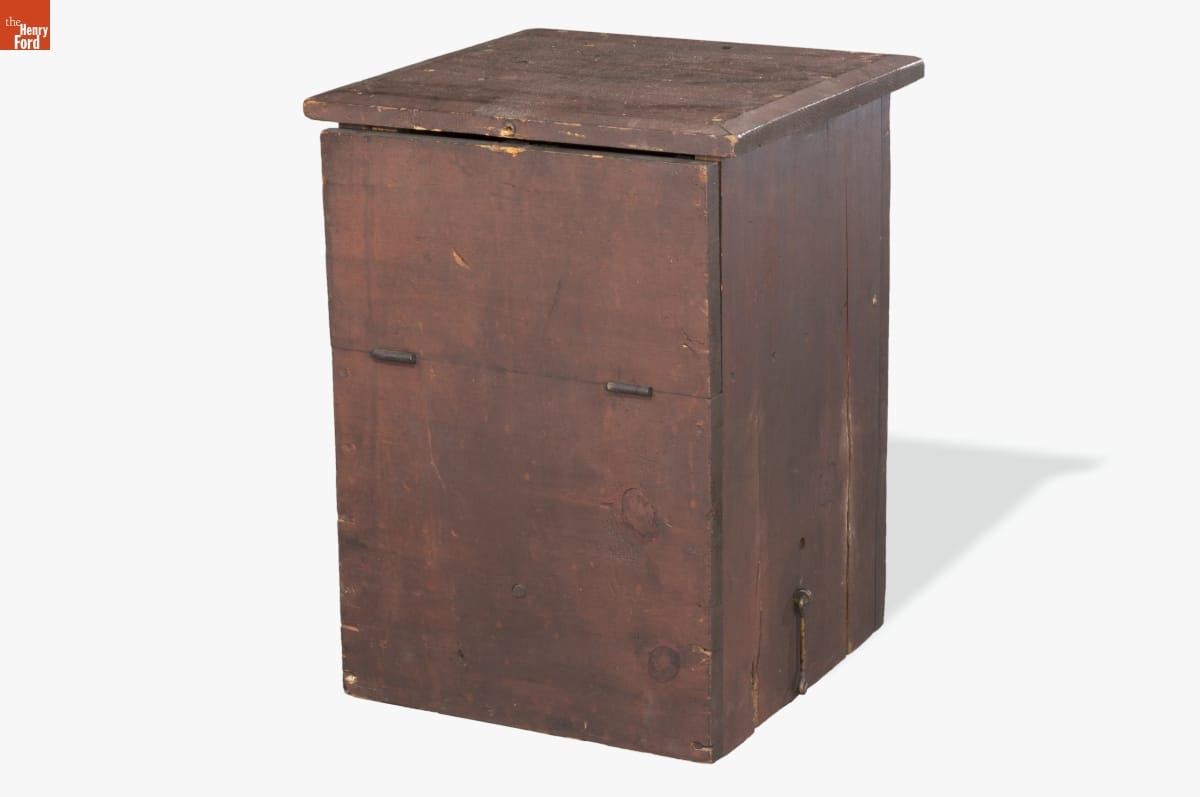
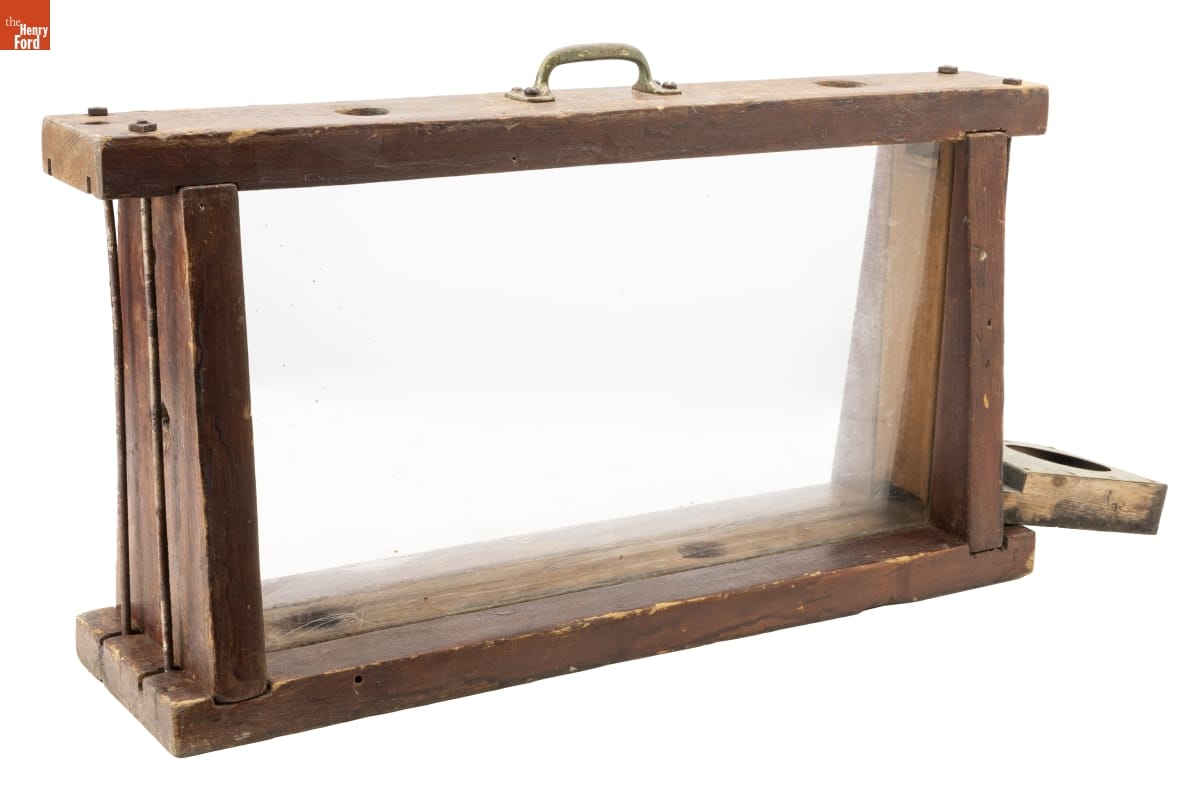
- Observation Beehive, 1910-1915 - Beehives entered classrooms during the early 1900s. <em>The Handbook of Nature Study</em> (1911) instructed teachers to set the hive in a window. Bees entered through the small holes in the lower back and moved between levels through small holes. The front of the hive was sealed, but teachers could fold down the upper door so students could watch bees at work on the honeycomb, visible through glass panels.
- 1910-1915
- Collections - Artifact
Observation Beehive, 1910-1915
Beehives entered classrooms during the early 1900s. The Handbook of Nature Study (1911) instructed teachers to set the hive in a window. Bees entered through the small holes in the lower back and moved between levels through small holes. The front of the hive was sealed, but teachers could fold down the upper door so students could watch bees at work on the honeycomb, visible through glass panels.
- Observation Hive -
- Collections - Artifact
Observation Hive
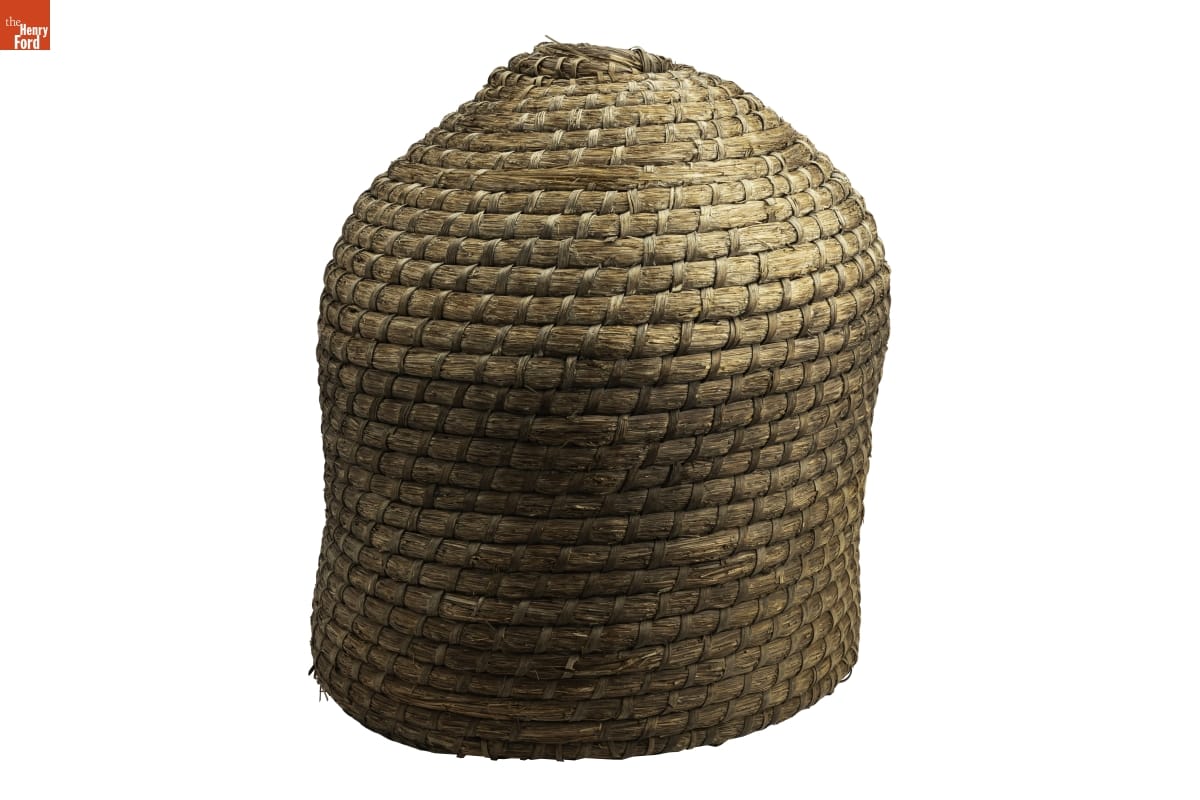
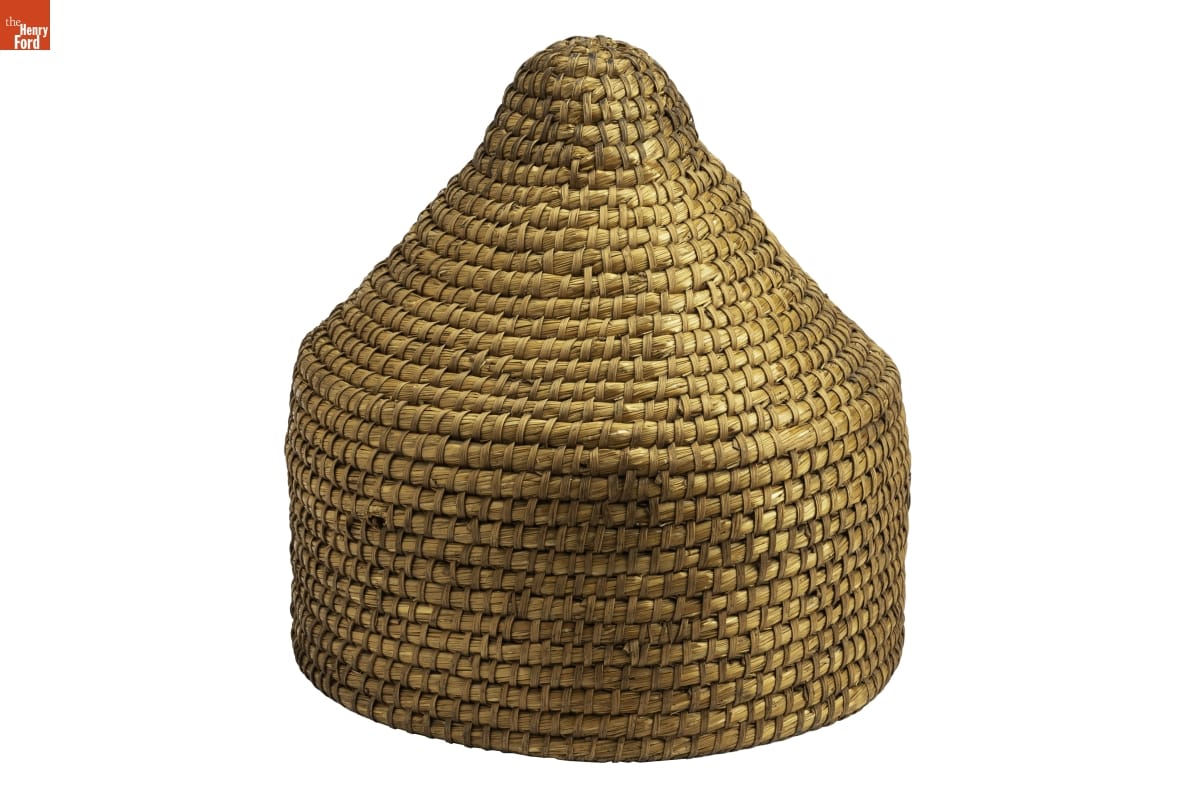
- Bee Skep - A bee skep provided shelter to domesticated honeybees. A skep consisted of coiled grain straw bound with wood splints. The small opening allowed bees to enter and make their honeycomb to store food to sustain the hive's bee larvae. Beekeepers put skeps near orchards, gardens, and fields with plants needing pollination and harvested the excess honey and beeswax.
- Collections - Artifact
Bee Skep
A bee skep provided shelter to domesticated honeybees. A skep consisted of coiled grain straw bound with wood splints. The small opening allowed bees to enter and make their honeycomb to store food to sustain the hive's bee larvae. Beekeepers put skeps near orchards, gardens, and fields with plants needing pollination and harvested the excess honey and beeswax.
- Bee Skep - A bee skep provided shelter to domesticated honeybees. A skep consisted of coiled grain straw bound with wood splints. The small opening allowed bees to enter and make their honeycomb to store food to sustain the hive's bee larvae. Beekeepers put skeps near orchards, gardens, and fields with plants needing pollination and harvested the excess honey and beeswax.
- Collections - Artifact
Bee Skep
A bee skep provided shelter to domesticated honeybees. A skep consisted of coiled grain straw bound with wood splints. The small opening allowed bees to enter and make their honeycomb to store food to sustain the hive's bee larvae. Beekeepers put skeps near orchards, gardens, and fields with plants needing pollination and harvested the excess honey and beeswax.
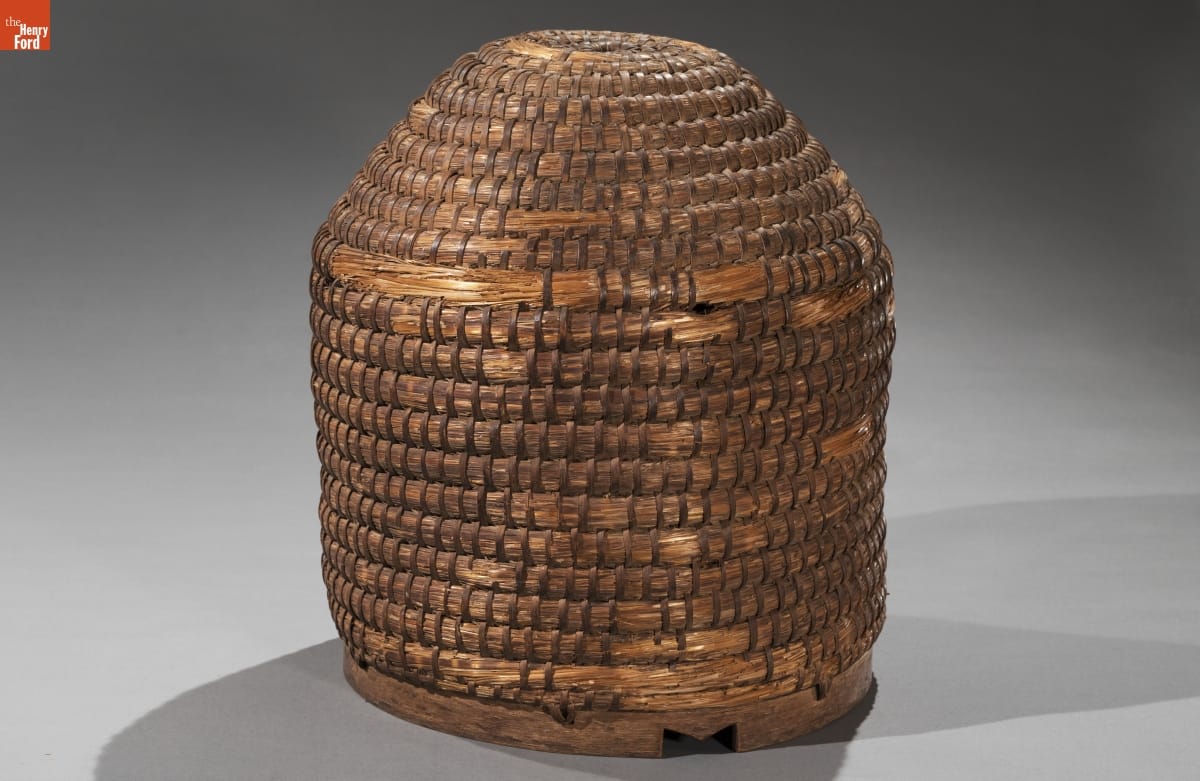
- Moravian Bee Skep, 1850-1900 - The Moravia colony of Bethabera, North Carolina, sold a bee skep for 10 shillings in 1762. That skep likely consisted of rye straw (a long and durable grain straw), coiled into a hollow vessel, bound with ash or hickory splint. Bees entered through the M-shaped opening and made comb in irregular shapes within the structure from which beekeepers harvested honey and bee wax.
- Collections - Artifact
Moravian Bee Skep, 1850-1900
The Moravia colony of Bethabera, North Carolina, sold a bee skep for 10 shillings in 1762. That skep likely consisted of rye straw (a long and durable grain straw), coiled into a hollow vessel, bound with ash or hickory splint. Bees entered through the M-shaped opening and made comb in irregular shapes within the structure from which beekeepers harvested honey and bee wax.