
Search
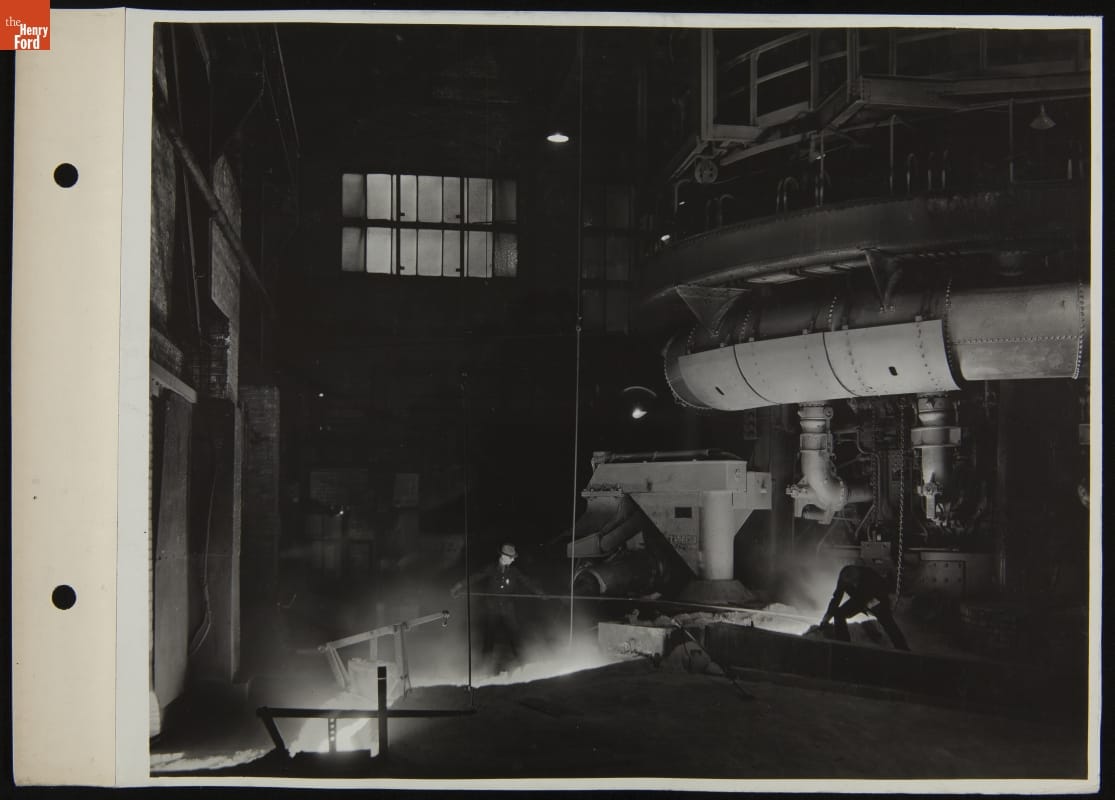
- Ford Motor Company Rouge Plant Blast Furnace, 1936 - In the 1930s, two blast furnaces at Ford Motor Company's Rouge plant converted raw iron oxide ore into metallic iron. The furnaces operated 24 hours a day, and each one produced 1,200 tons of metallic iron per day. This photograph captured the glow of molten iron as it flowed from a blast furnace toward a railcar-mounted ladle below.
- 1936
- Collections - Artifact
Ford Motor Company Rouge Plant Blast Furnace, 1936
In the 1930s, two blast furnaces at Ford Motor Company's Rouge plant converted raw iron oxide ore into metallic iron. The furnaces operated 24 hours a day, and each one produced 1,200 tons of metallic iron per day. This photograph captured the glow of molten iron as it flowed from a blast furnace toward a railcar-mounted ladle below.
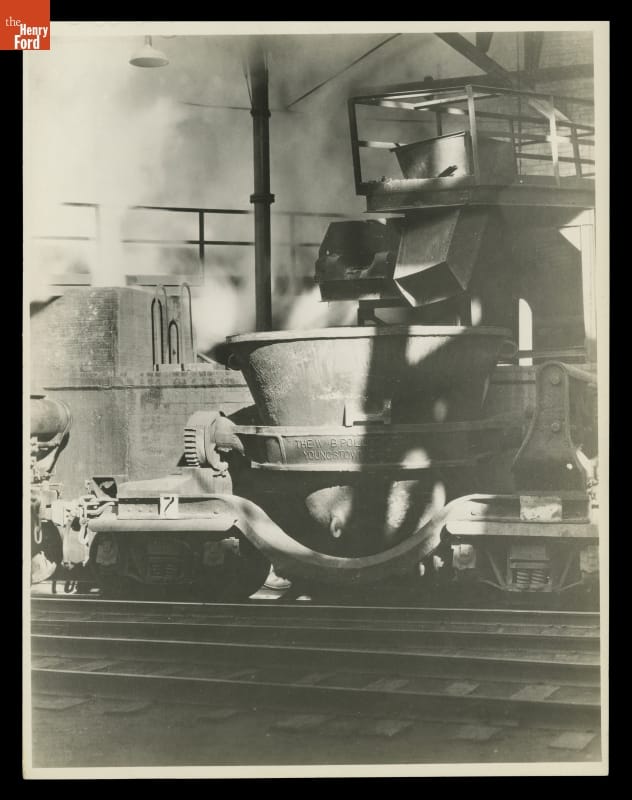
- Blast Furnace at Ford Rouge Plant, 1927 - Steel production at Ford's Rouge Plant encompassed every step from start to finish. Two massive blast furnaces operated 24 hours a day to feed a unique process that rarely allowed molten iron to cool before steelmaking or casting. Instead, ladles on railroad tracks waited below the furnaces to be filled with up to 75 tons of the lava-like metal for transport.
- 1927
- Collections - Artifact
Blast Furnace at Ford Rouge Plant, 1927
Steel production at Ford's Rouge Plant encompassed every step from start to finish. Two massive blast furnaces operated 24 hours a day to feed a unique process that rarely allowed molten iron to cool before steelmaking or casting. Instead, ladles on railroad tracks waited below the furnaces to be filled with up to 75 tons of the lava-like metal for transport.
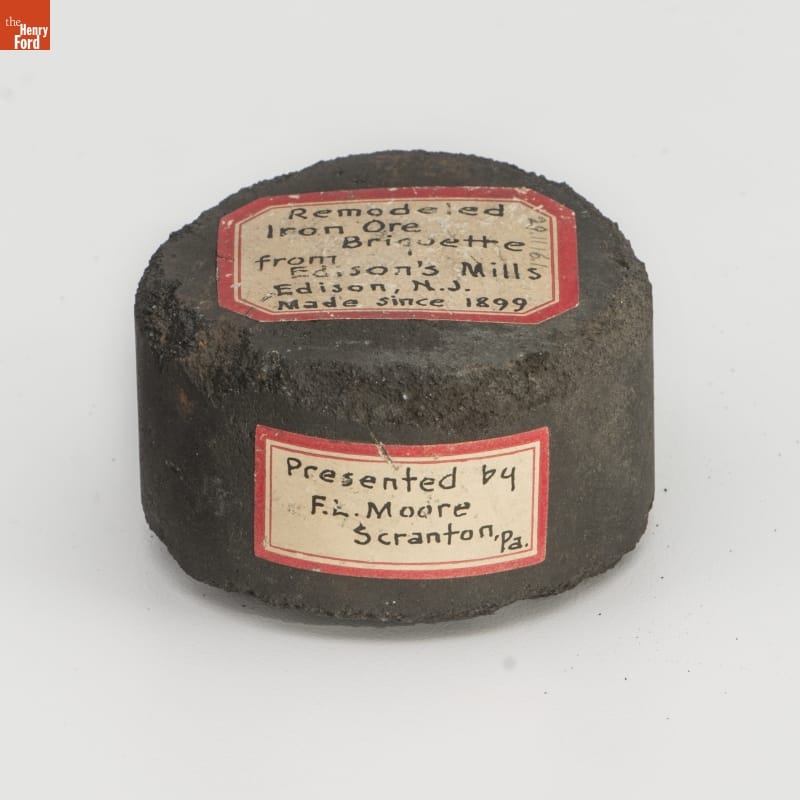
- Iron Ore Briquette from Edison Mines, New Jersey, 1899-1900 - During the 1890s, Thomas Edison launched a New Jersey mining operation to address an iron ore shortage. He designed rock-crushing technology and an electromagnetic ore separator to extract low-grade ore from crushed boulders. The final product -- a briquette made of powdered iron ore -- didn't do well commercially, especially after high-grade ore was discovered around Lake Superior. In 1899, Edison left the industry.
- 1899-1900
- Collections - Artifact
Iron Ore Briquette from Edison Mines, New Jersey, 1899-1900
During the 1890s, Thomas Edison launched a New Jersey mining operation to address an iron ore shortage. He designed rock-crushing technology and an electromagnetic ore separator to extract low-grade ore from crushed boulders. The final product -- a briquette made of powdered iron ore -- didn't do well commercially, especially after high-grade ore was discovered around Lake Superior. In 1899, Edison left the industry.
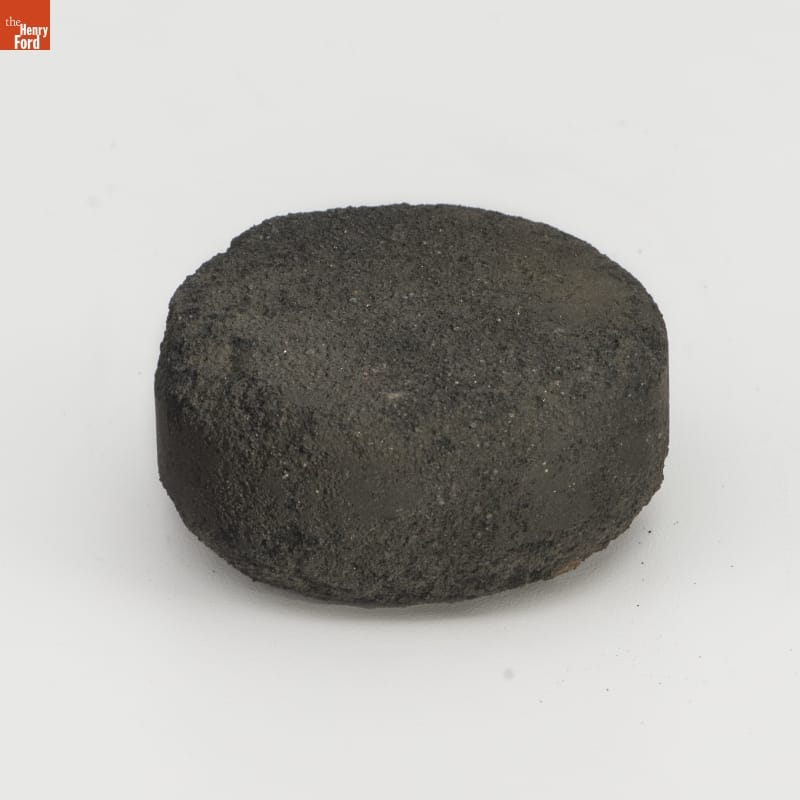
- Iron Ore Briquette from Edison Mines, New Jersey, 1890-1899 - During the 1890s, Thomas Edison launched a New Jersey mining operation to address an iron ore shortage. He designed rock-crushing technology and an electromagnetic ore separator to extract low-grade ore from crushed boulders. The final product -- a briquette made of powdered iron ore -- didn't do well commercially, especially after high-grade ore was discovered around Lake Superior. In 1899, Edison left the industry.
- 1890-1899
- Collections - Artifact
Iron Ore Briquette from Edison Mines, New Jersey, 1890-1899
During the 1890s, Thomas Edison launched a New Jersey mining operation to address an iron ore shortage. He designed rock-crushing technology and an electromagnetic ore separator to extract low-grade ore from crushed boulders. The final product -- a briquette made of powdered iron ore -- didn't do well commercially, especially after high-grade ore was discovered around Lake Superior. In 1899, Edison left the industry.
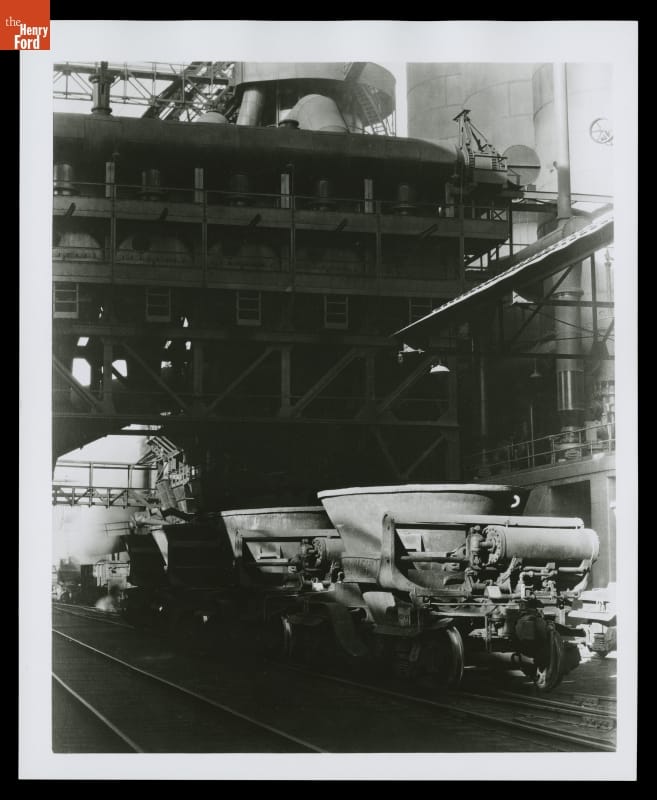
- Slag Buggies at Ford Rouge Plant, 1927 - These slag pots transported white-hot slag to cooling pits at Ford's River Rouge Plant. Slag is a by-product of the iron-making process. It was skimmed from the blast furnaces and caught in the buggies waiting below. After it cooled, workers recovered the slag to produce cement for plant use and sale to the public.
- 1927
- Collections - Artifact
Slag Buggies at Ford Rouge Plant, 1927
These slag pots transported white-hot slag to cooling pits at Ford's River Rouge Plant. Slag is a by-product of the iron-making process. It was skimmed from the blast furnaces and caught in the buggies waiting below. After it cooled, workers recovered the slag to produce cement for plant use and sale to the public.
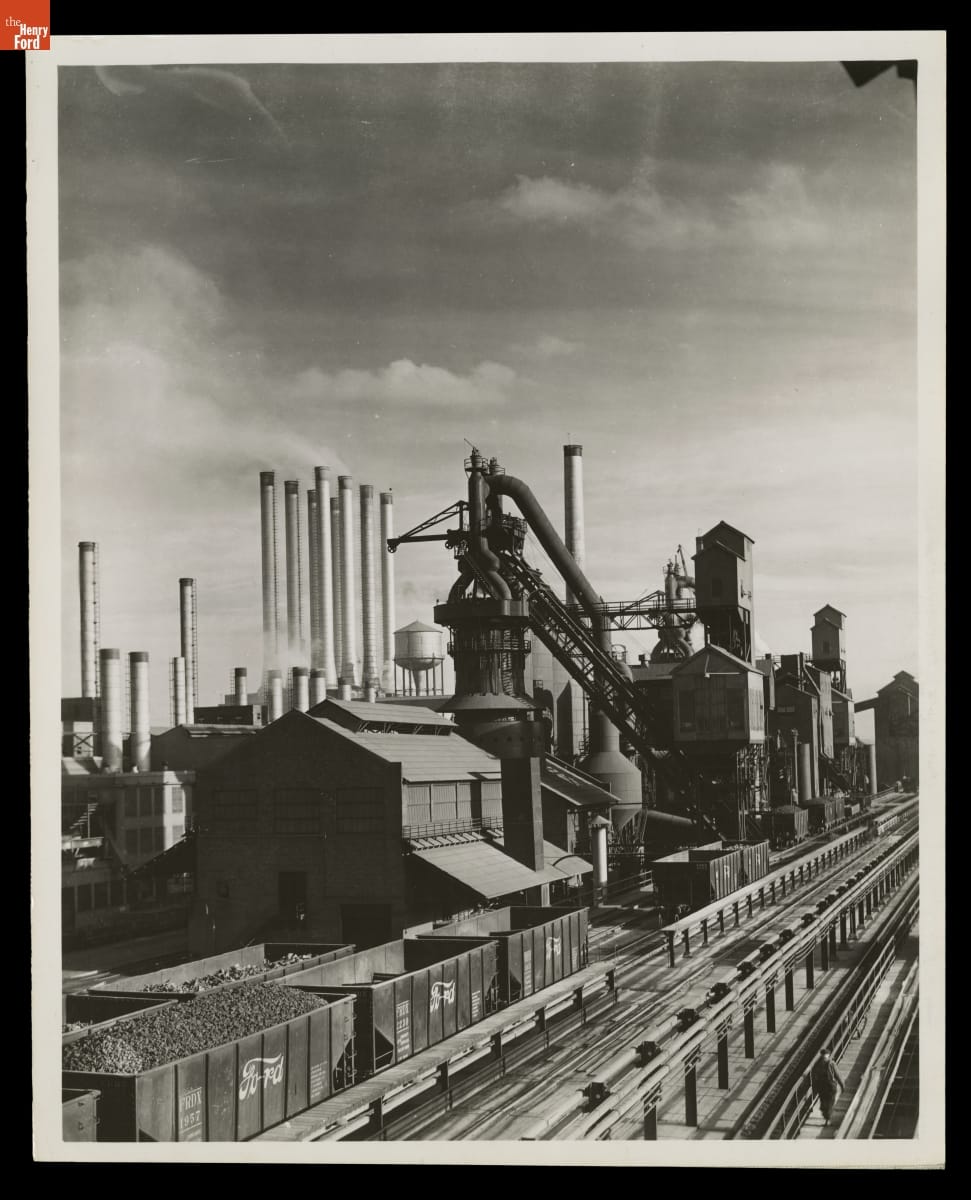
- Blast Furnace Buildings and Powerhouse Stacks at the Ford Rouge Plant, March 1936 - In the 1930s, two blast furnaces at Ford's Rouge plant converted raw iron oxide ore into metallic iron. The furnaces operated 24 hours a day, and each one produced 1,200 tons of iron per day. Ore arrived via Great Lakes freighters, while coke used in the iron-making process moved to the furnaces in hopper cars on an elevated railroad line.
- March 04, 1936
- Collections - Artifact
Blast Furnace Buildings and Powerhouse Stacks at the Ford Rouge Plant, March 1936
In the 1930s, two blast furnaces at Ford's Rouge plant converted raw iron oxide ore into metallic iron. The furnaces operated 24 hours a day, and each one produced 1,200 tons of iron per day. Ore arrived via Great Lakes freighters, while coke used in the iron-making process moved to the furnaces in hopper cars on an elevated railroad line.
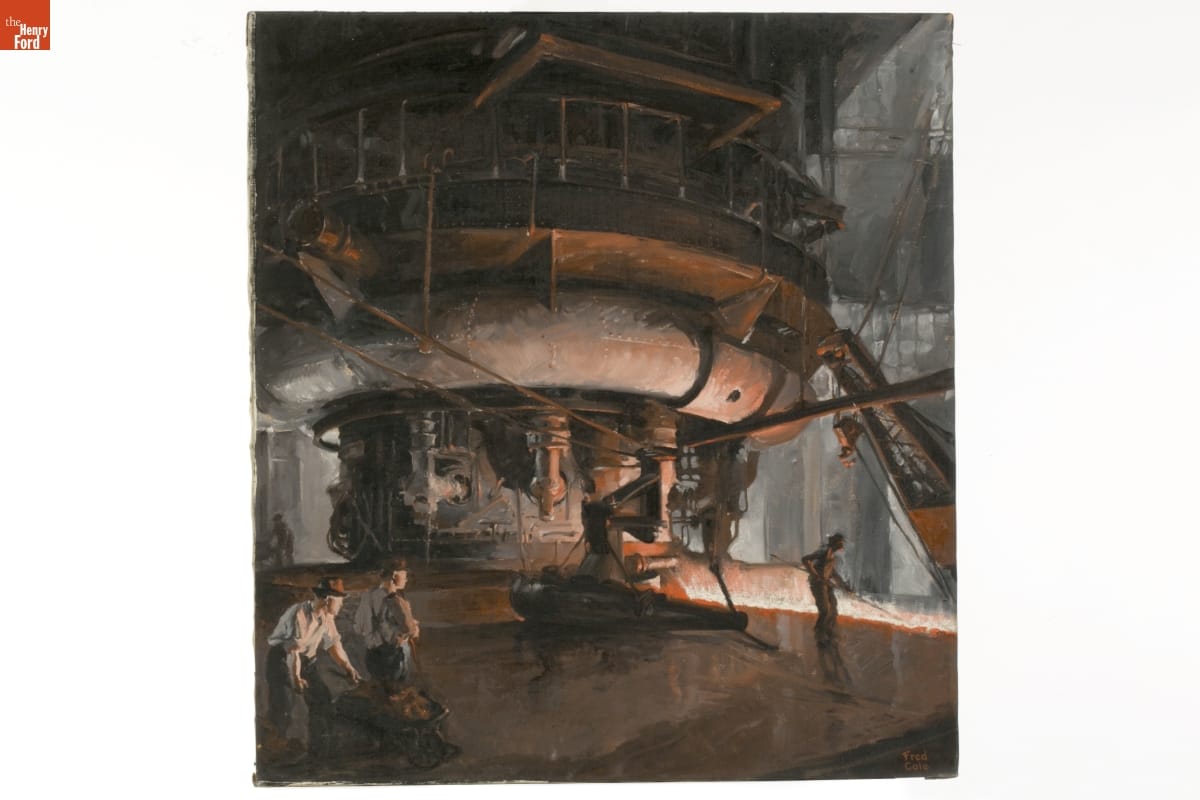
- Blast Furnace, 1924 - In 1924-25 the Ford Motor Company ran a series of sixteen dramatic advertisements in the <EM>Saturday Evening Post</EM> and <EM>Country Gentleman</EM> magazines. The effectiveness of the ads was due in large part to the specially commissioned artwork that accompanied the descriptive text. This painting, one of two created for the 11th ad, conveys the heat and scale of the Rouge blast furnace operation.
- 1924
- Collections - Artifact
Blast Furnace, 1924
In 1924-25 the Ford Motor Company ran a series of sixteen dramatic advertisements in the Saturday Evening Post and Country Gentleman magazines. The effectiveness of the ads was due in large part to the specially commissioned artwork that accompanied the descriptive text. This painting, one of two created for the 11th ad, conveys the heat and scale of the Rouge blast furnace operation.
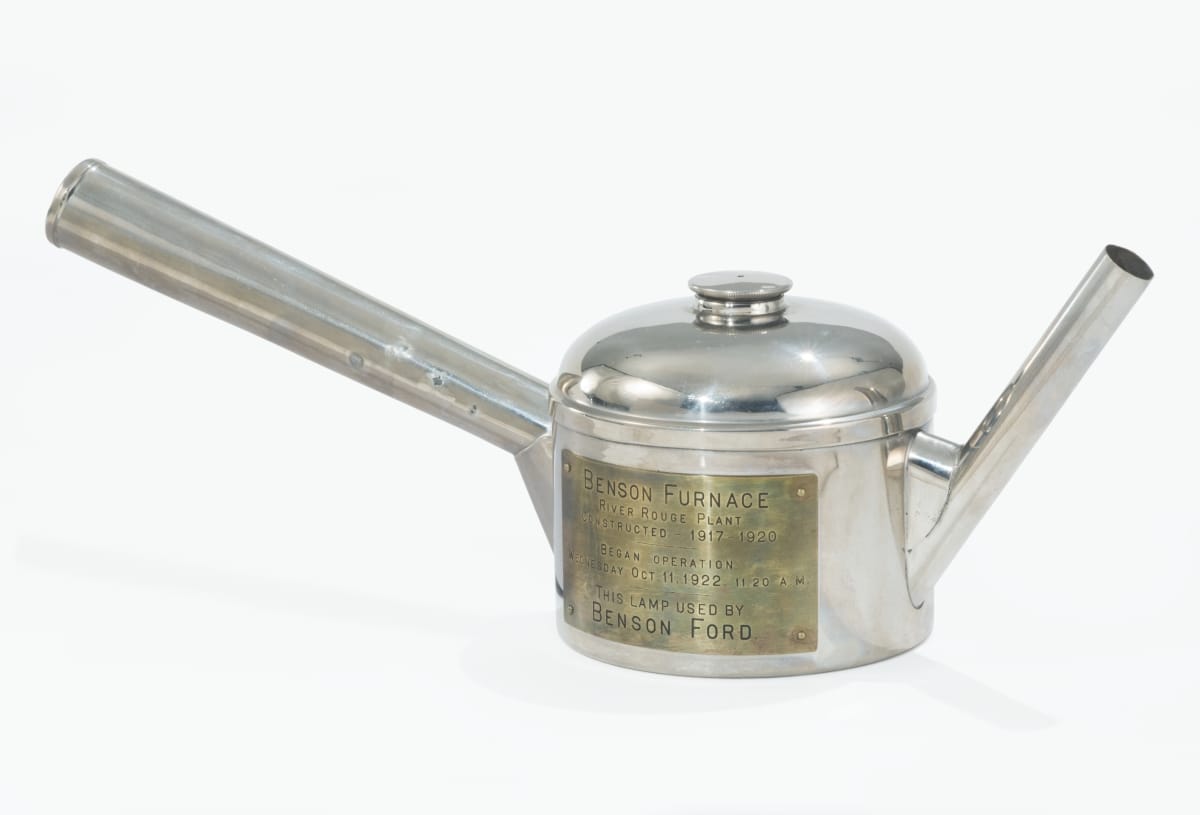
- Torch Used at the Dedication of the "Henry" and "Benson" Blast Furnaces, Ford Motor Company Rouge Plant, 1920 and 1922 - With help from his grandfather, two-year-old Henry Ford II used this torch to light the first blast furnace at Ford Motor Company's Rouge factory in 1920. Two years later, his younger brother Benson Ford, three years old at the time, lit the Rouge's second furnace with the same torch. Each of the furnaces, nicknamed "Henry" and "Benson," produced 1,200 tons of iron a day.
- 1920-1922
- Collections - Artifact
Torch Used at the Dedication of the "Henry" and "Benson" Blast Furnaces, Ford Motor Company Rouge Plant, 1920 and 1922
With help from his grandfather, two-year-old Henry Ford II used this torch to light the first blast furnace at Ford Motor Company's Rouge factory in 1920. Two years later, his younger brother Benson Ford, three years old at the time, lit the Rouge's second furnace with the same torch. Each of the furnaces, nicknamed "Henry" and "Benson," produced 1,200 tons of iron a day.
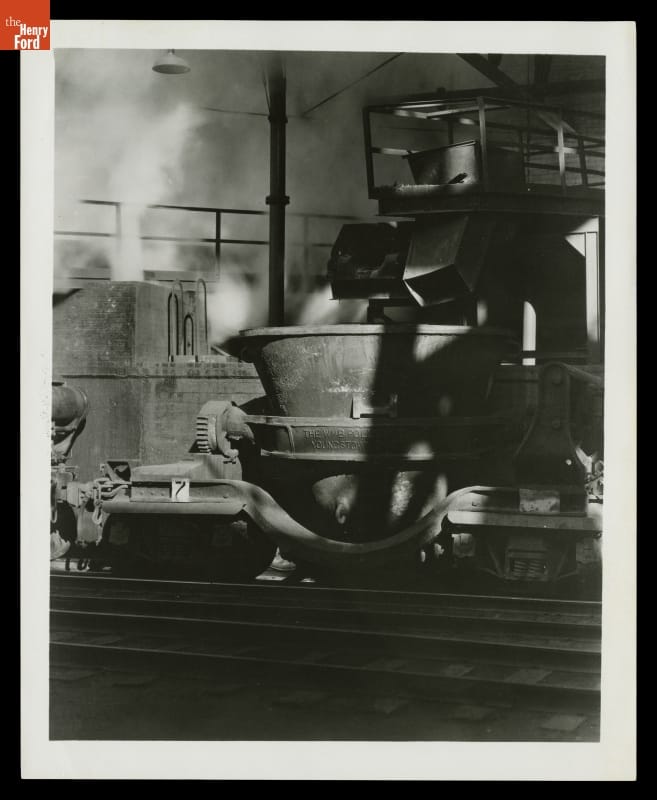
- Blast Furnace at Ford Rouge Plant, 1927 - Steel production at Ford's Rouge Plant encompassed every step from start to finish. Two massive blast furnaces operated 24 hours a day to feed a unique process that rarely allowed molten iron to cool before steelmaking or casting. Instead, ladles on railroad tracks waited below the furnaces to be filled with up to 75 tons of the lava-like metal for transport.
- 1927
- Collections - Artifact
Blast Furnace at Ford Rouge Plant, 1927
Steel production at Ford's Rouge Plant encompassed every step from start to finish. Two massive blast furnaces operated 24 hours a day to feed a unique process that rarely allowed molten iron to cool before steelmaking or casting. Instead, ladles on railroad tracks waited below the furnaces to be filled with up to 75 tons of the lava-like metal for transport.
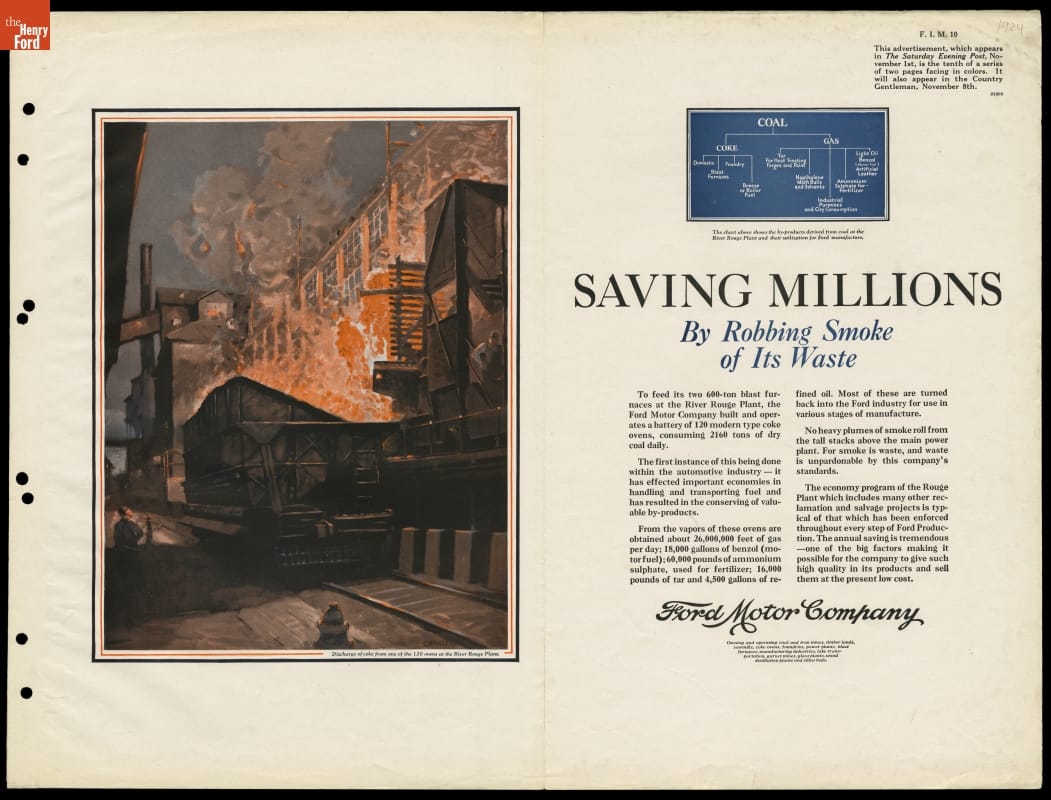
- 1924 Ford Motor Company Institutional Message Advertising Campaign, "Saving Millions by Robbing Smoke of its Waste" - In 1924-25 the Ford Motor Company ran a series of sixteen dramatic advertisements in the <EM>Saturday Evening Post</EM> and <EM>Country Gentleman</EM> magazines. Rather than promoting the Model T specifically, the ads aimed to convey the company's scale and philosophy. By combining an apocalyptic industrial scene and orderly flowchart this ad suggests the extreme range of activities fundamental to the Rouge plant.
- 1924
- Collections - Artifact
1924 Ford Motor Company Institutional Message Advertising Campaign, "Saving Millions by Robbing Smoke of its Waste"
In 1924-25 the Ford Motor Company ran a series of sixteen dramatic advertisements in the Saturday Evening Post and Country Gentleman magazines. Rather than promoting the Model T specifically, the ads aimed to convey the company's scale and philosophy. By combining an apocalyptic industrial scene and orderly flowchart this ad suggests the extreme range of activities fundamental to the Rouge plant.