
Search
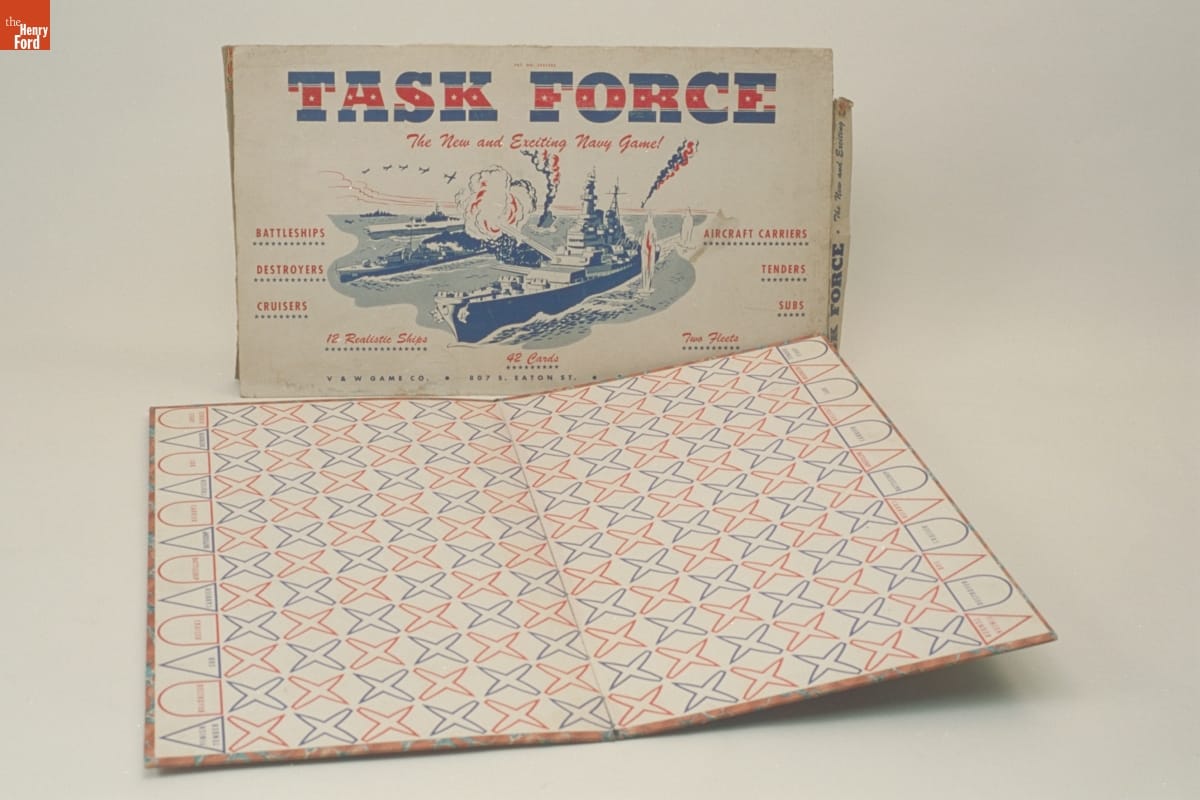
- Game, Task Force, circa 1951 - Guy W. Vitale, a World War II U. S. Navy veteran, patented this game in 1951. Players move ships across the board to their home ports. Along the way, players attack and try to destroy the enemy's (the opposing player's) fleet. The game was produced by a little-known game company in Albion, Michigan.
- circa 1951
- Collections - Artifact
Game, Task Force, circa 1951
Guy W. Vitale, a World War II U. S. Navy veteran, patented this game in 1951. Players move ships across the board to their home ports. Along the way, players attack and try to destroy the enemy's (the opposing player's) fleet. The game was produced by a little-known game company in Albion, Michigan.
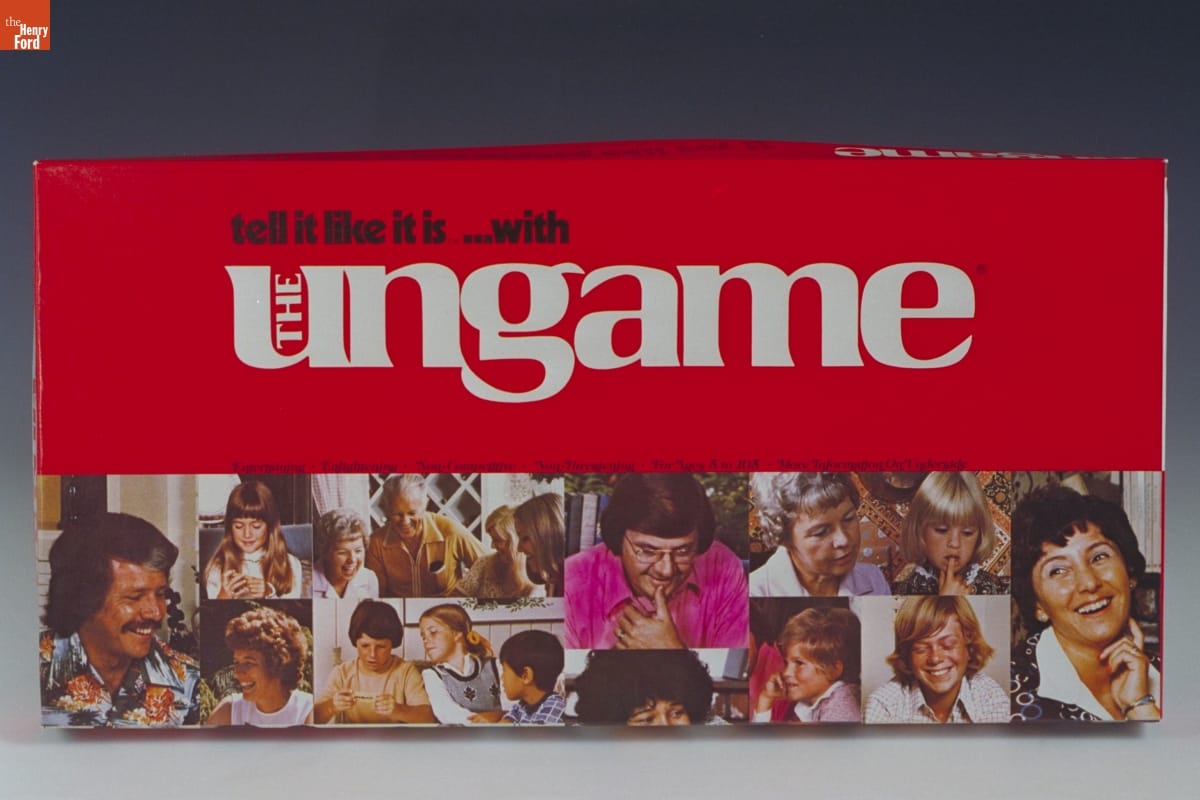
- The Ungame Game, 1975 - An unusual "non-competitive," "non-threatening" board game, the Ungame encouraged adults and children to improve their communication skills by providing personal questions for the players to answer. The game board included spaces called "tell it like it is" and "do your own thing." Parents undoubtedly liked the game more than kids did.
- 1975
- Collections - Artifact
The Ungame Game, 1975
An unusual "non-competitive," "non-threatening" board game, the Ungame encouraged adults and children to improve their communication skills by providing personal questions for the players to answer. The game board included spaces called "tell it like it is" and "do your own thing." Parents undoubtedly liked the game more than kids did.
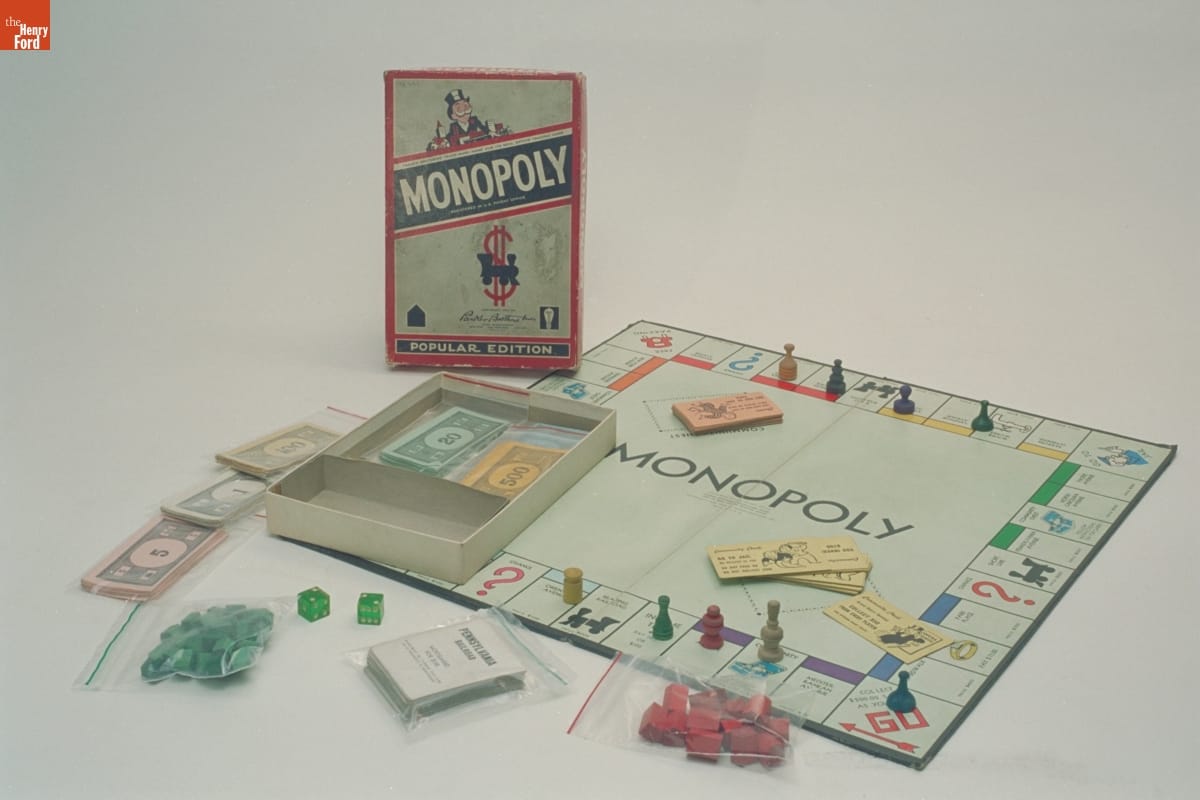
- Monopoly Game, 1954-1960 - Buy property. Build hotels. Charge rent. Make money. Monopoly derived from The Landlord's Game created in 1904 -- a game with the objective to point out the <EM>inequities</EM> of wealth. Monopoly's fun and popularity, however, came from amassing piles of play money and winning it all. Parker Brothers secured the game's rights in 1935 and it became the most popular board game in history.
- 1954-1960
- Collections - Artifact
Monopoly Game, 1954-1960
Buy property. Build hotels. Charge rent. Make money. Monopoly derived from The Landlord's Game created in 1904 -- a game with the objective to point out the inequities of wealth. Monopoly's fun and popularity, however, came from amassing piles of play money and winning it all. Parker Brothers secured the game's rights in 1935 and it became the most popular board game in history.
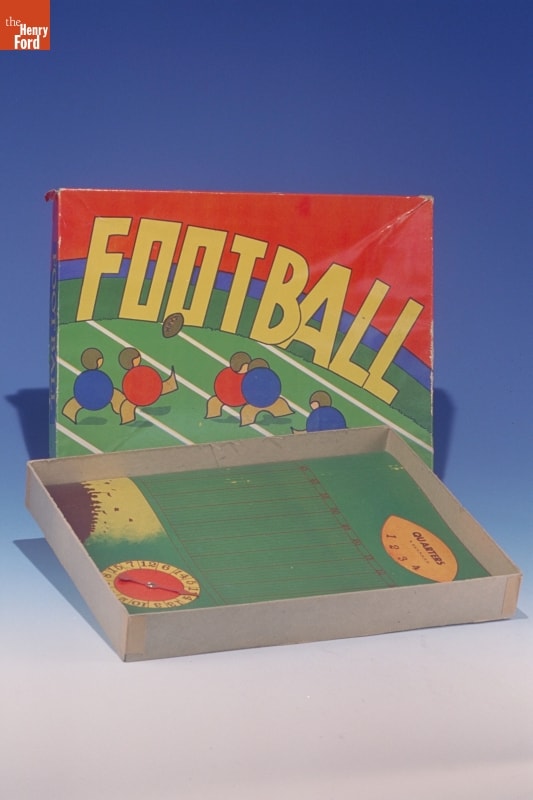
- Football Game, 1937-1946 - J. Pressman and Company structured this game after a regular football game. A player's team runs, passes, punts and scores. A team has four downs to make ten yards and there are four quarters. The player on offense chooses a play from a list and spins the spinner. The corresponding number in the playlist's column tells the outcome of the play.
- 1937-1946
- Collections - Artifact
Football Game, 1937-1946
J. Pressman and Company structured this game after a regular football game. A player's team runs, passes, punts and scores. A team has four downs to make ten yards and there are four quarters. The player on offense chooses a play from a list and spins the spinner. The corresponding number in the playlist's column tells the outcome of the play.
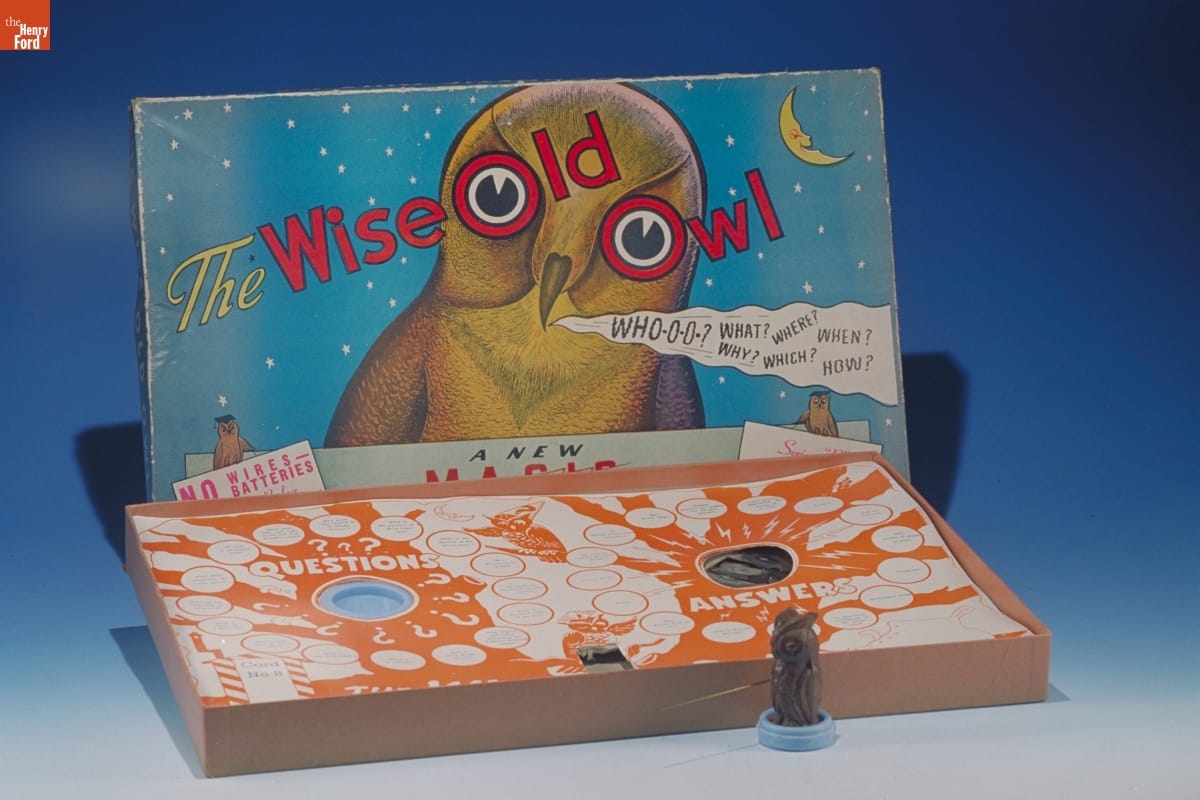
- The Wise Old Owl Game, 1937-1946 - In this quiz game from the Novel Toy Company, the wise old owl points to a question that players must answer. But who knows the correct answer? The wise old owl does! Place the owl-shaped pointer on the circle of answers and magically -- or magnetically -- the owl will give you the correct response.
- 1937-1946
- Collections - Artifact
The Wise Old Owl Game, 1937-1946
In this quiz game from the Novel Toy Company, the wise old owl points to a question that players must answer. But who knows the correct answer? The wise old owl does! Place the owl-shaped pointer on the circle of answers and magically -- or magnetically -- the owl will give you the correct response.
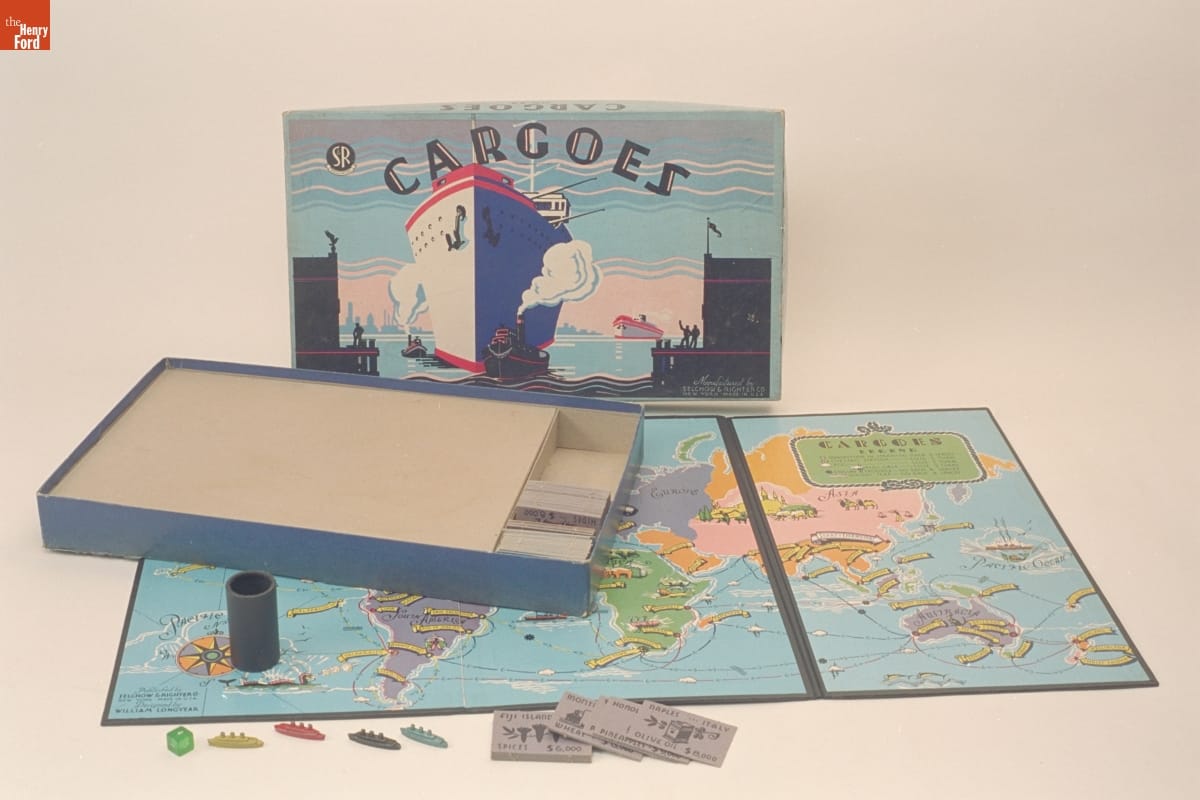
- Cargoes Game, 1934-1963 - Future sea captains travel from port to port picking up and delivering goods in Cargoes, a game by Selchow and Righter. Players earn money for their cargo and for returning safely home. Ships, however, may encounter rough seas, fog or engine trouble along the way. The player with the most money wins.
- 1934-1963
- Collections - Artifact
Cargoes Game, 1934-1963
Future sea captains travel from port to port picking up and delivering goods in Cargoes, a game by Selchow and Righter. Players earn money for their cargo and for returning safely home. Ships, however, may encounter rough seas, fog or engine trouble along the way. The player with the most money wins.
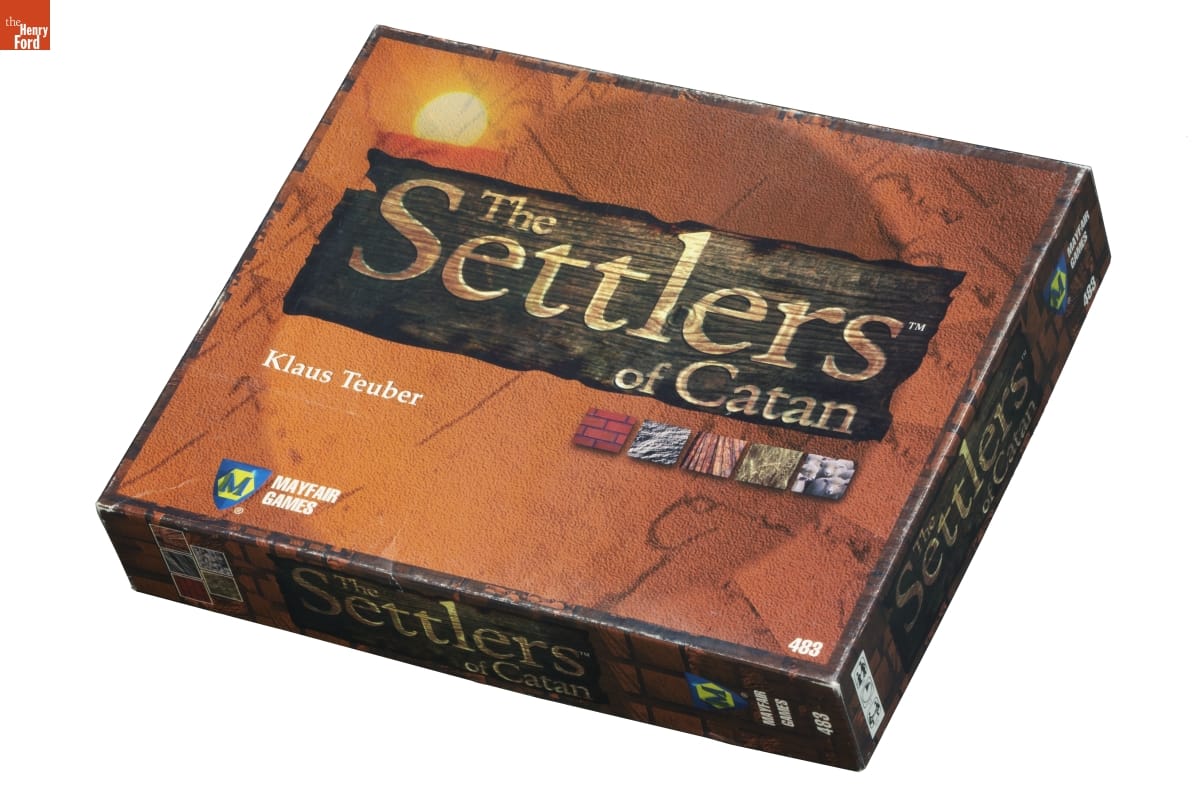
- The Settlers of Catan Board Game, circa 1996 - In Settlers of Catan, players trade resources and build settlements across a remote, uncharted island. Quick play, clear rules, and an ever-changing experience contributed to the game's popularity. Introduced in Germany in 1995, Settlers of Catan won every major German gaming award and sold 400,000 copies its first year. The game was released in the United States to high acclaim in 1996.
- circa 1996
- Collections - Artifact
The Settlers of Catan Board Game, circa 1996
In Settlers of Catan, players trade resources and build settlements across a remote, uncharted island. Quick play, clear rules, and an ever-changing experience contributed to the game's popularity. Introduced in Germany in 1995, Settlers of Catan won every major German gaming award and sold 400,000 copies its first year. The game was released in the United States to high acclaim in 1996.
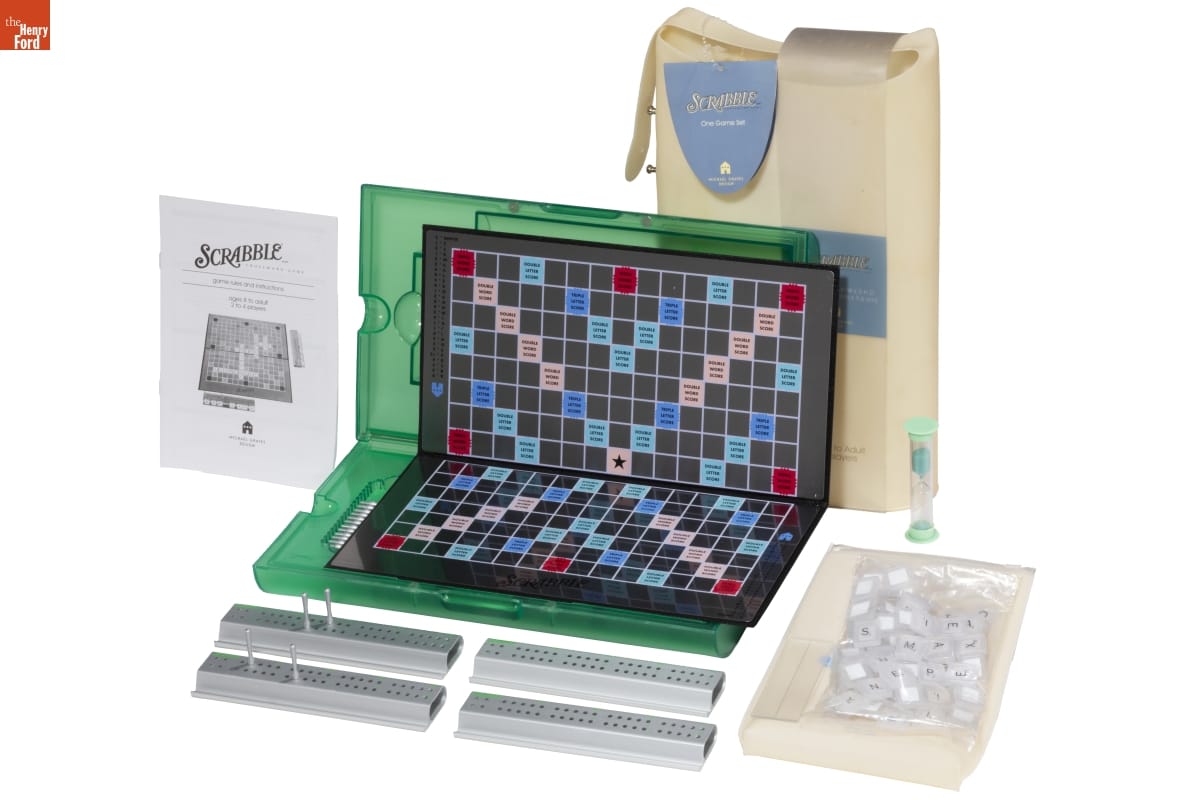
- Scrabble Game, 2006 - Starting in the early 1980s--and already established as an internationally recognized architect--Michael Graves began to pursue a parallel career as a product designer. Over the following three and a half decades he and his collaborators designed everything from humble household goods to limited edition luxury items for clients as diverse as Steuben, Alessi, Target, J. C. Penney, and Disney.
- 2006
- Collections - Artifact
Scrabble Game, 2006
Starting in the early 1980s--and already established as an internationally recognized architect--Michael Graves began to pursue a parallel career as a product designer. Over the following three and a half decades he and his collaborators designed everything from humble household goods to limited edition luxury items for clients as diverse as Steuben, Alessi, Target, J. C. Penney, and Disney.
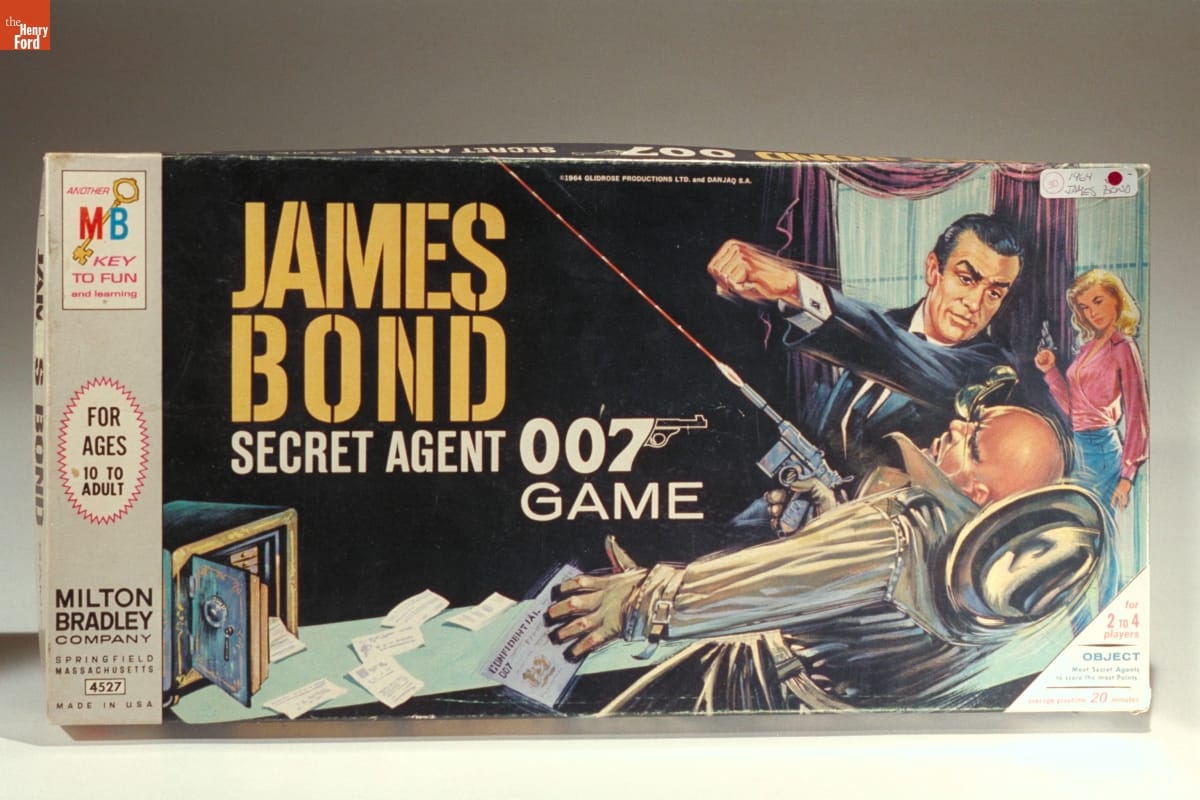
- James Bond: Secret Agent 007 Game, 1964-1970 - In 1953, author Ian Fleming created the fictional character James Bond -- an agent in the British Secret Service code-named 007. The success of the Bond films in the early 1960s led Milton Bradley to capitalize on this popular-culture icon. Players maneuver their spies around the board to gain points and win the game.
- 1964-1970
- Collections - Artifact
James Bond: Secret Agent 007 Game, 1964-1970
In 1953, author Ian Fleming created the fictional character James Bond -- an agent in the British Secret Service code-named 007. The success of the Bond films in the early 1960s led Milton Bradley to capitalize on this popular-culture icon. Players maneuver their spies around the board to gain points and win the game.
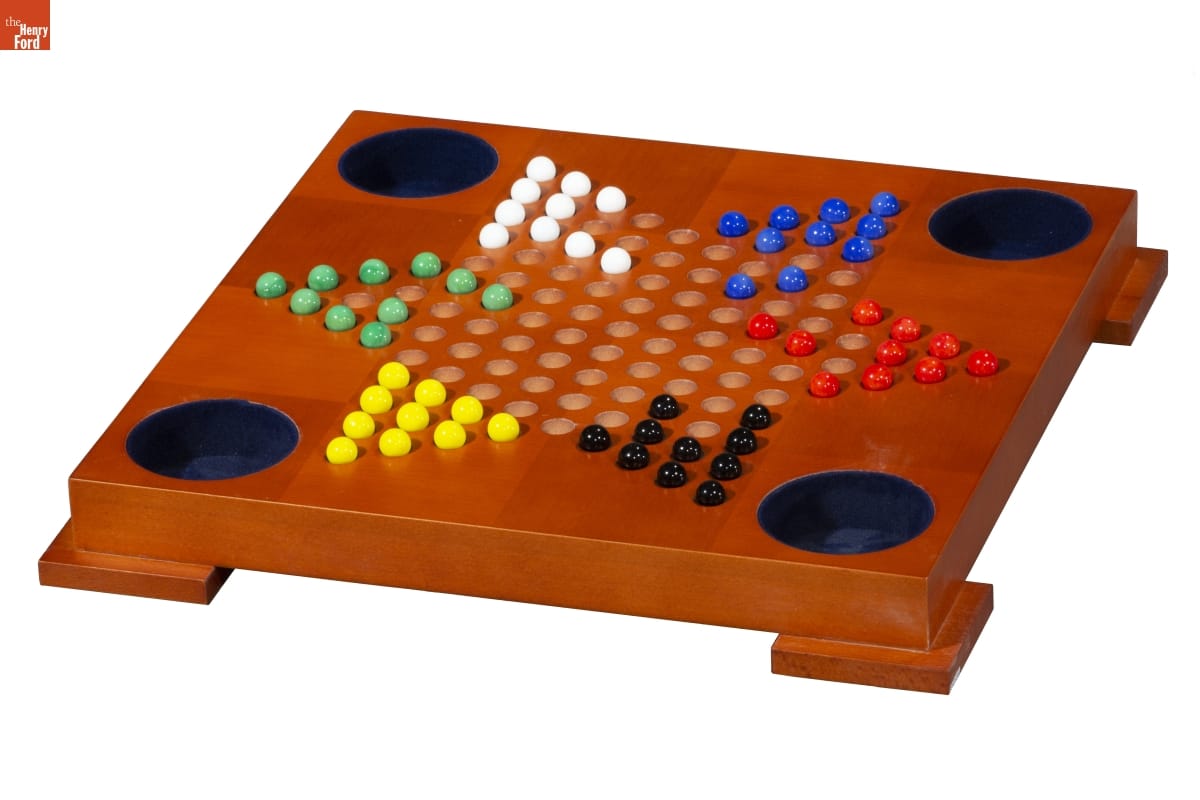
- Chinese Checkers, 2003 - Starting in the early 1980s--and already established as an internationally recognized architect--Michael Graves began to pursue a parallel career as a product designer. Over the following three and a half decades he and his collaborators designed everything from humble household goods to limited edition luxury items for clients as diverse as Steuben, Alessi, Target, J. C. Penney, and Disney.
- 2003
- Collections - Artifact
Chinese Checkers, 2003
Starting in the early 1980s--and already established as an internationally recognized architect--Michael Graves began to pursue a parallel career as a product designer. Over the following three and a half decades he and his collaborators designed everything from humble household goods to limited edition luxury items for clients as diverse as Steuben, Alessi, Target, J. C. Penney, and Disney.