
Search
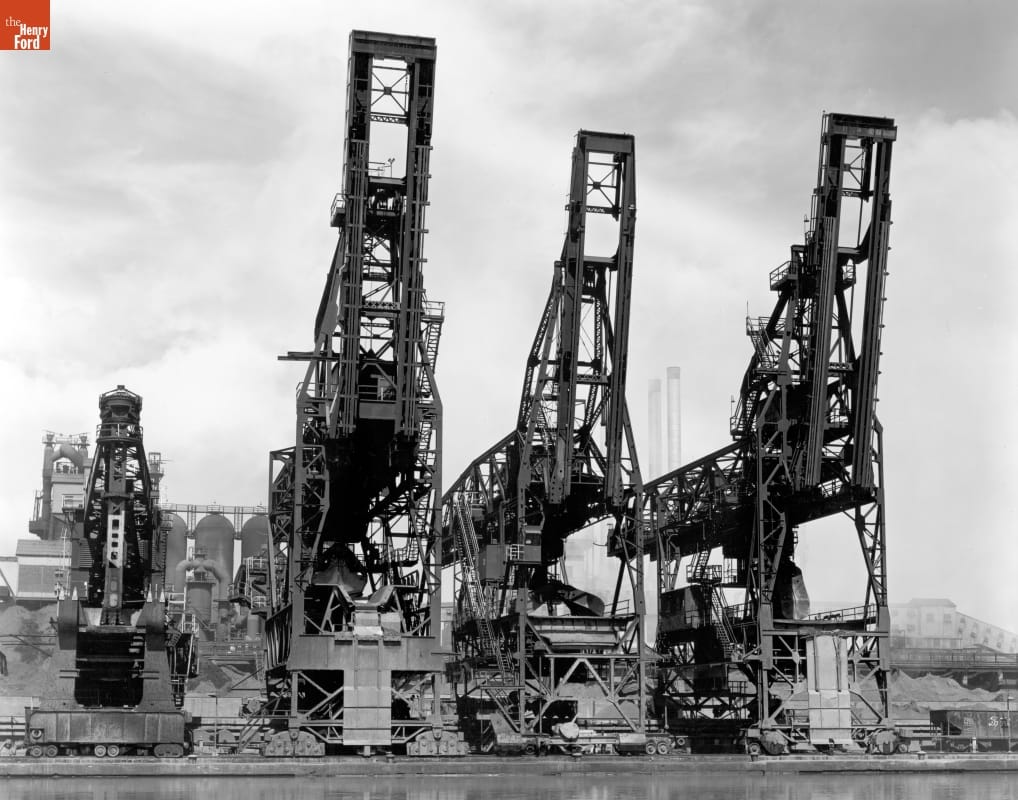
- Ore Bridge Cranes at Ford Rouge Plant, Dearborn, Michigan, 1951 - The mile-long docks at the Ford Rouge Plant were a vision of efficiency. Freighters loaded down with coal, iron ore, or limestone from Ford-owned mines throughout the Midwest entered a canal slip. Enormous cranes lining the shore unloaded raw material from the docked ships into storage bins. Workers and machinery at the Rouge docks could handle several incoming freighters at once.
- June 11, 1951
- Collections - Artifact
Ore Bridge Cranes at Ford Rouge Plant, Dearborn, Michigan, 1951
The mile-long docks at the Ford Rouge Plant were a vision of efficiency. Freighters loaded down with coal, iron ore, or limestone from Ford-owned mines throughout the Midwest entered a canal slip. Enormous cranes lining the shore unloaded raw material from the docked ships into storage bins. Workers and machinery at the Rouge docks could handle several incoming freighters at once.
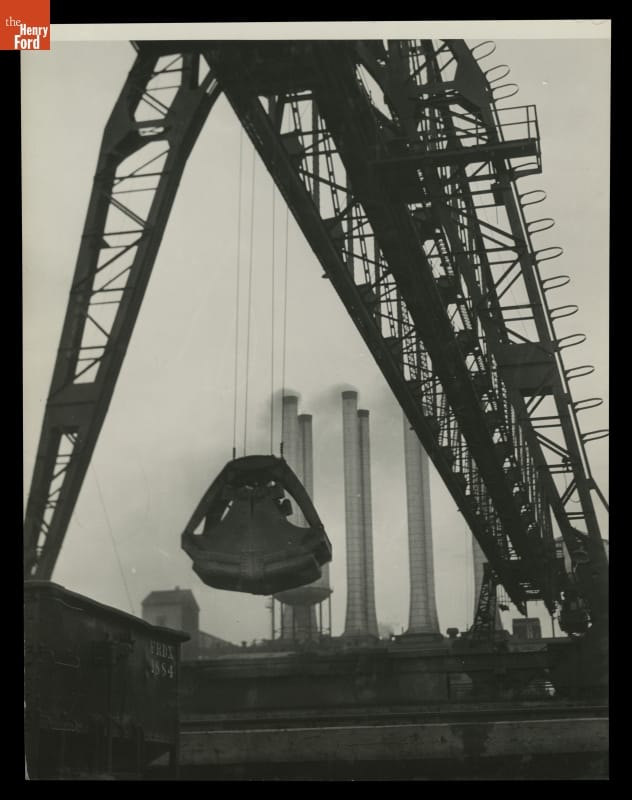
- Ore Bridge Crane at Ford Rouge Plant, 1932 - The suspended bucket in this photograph is an ore unloader. Workers at docks on the River Rouge scooped iron ore from the holds of freighters into the jaws of these unloaders. The large aerial shovels carried their loads along transfer cranes and deposited them into concrete-walled storage bins. Workers at Ford's Rouge Plant used the ore to produce steel.
- June 22, 1932
- Collections - Artifact
Ore Bridge Crane at Ford Rouge Plant, 1932
The suspended bucket in this photograph is an ore unloader. Workers at docks on the River Rouge scooped iron ore from the holds of freighters into the jaws of these unloaders. The large aerial shovels carried their loads along transfer cranes and deposited them into concrete-walled storage bins. Workers at Ford's Rouge Plant used the ore to produce steel.
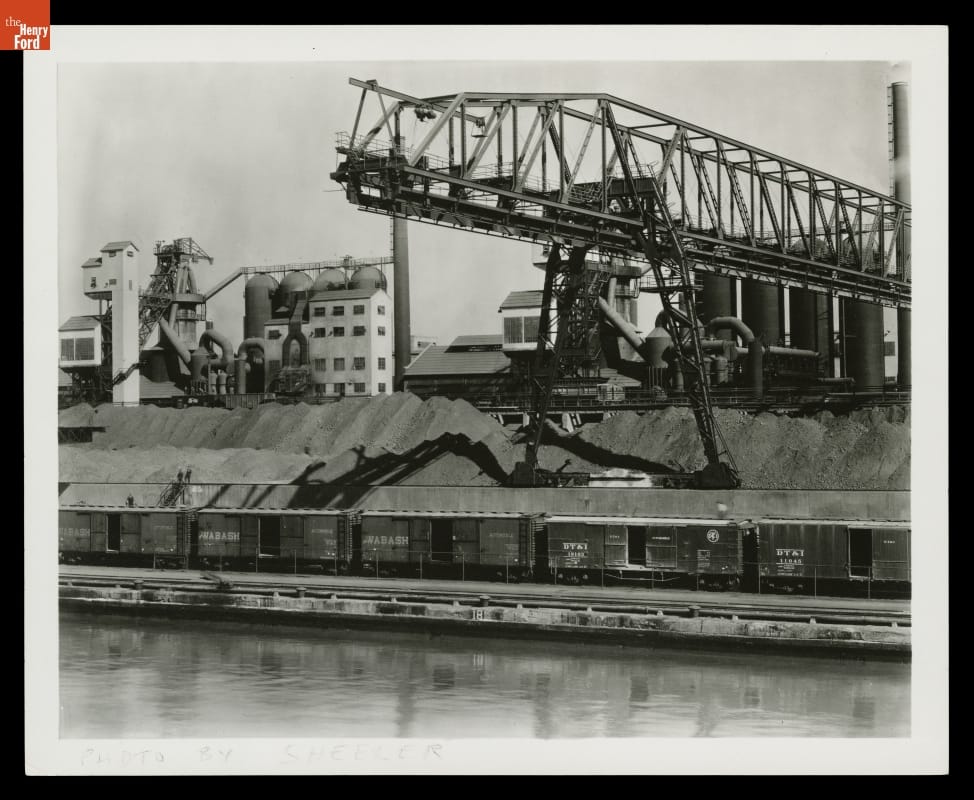
- Boat Slip at Ford Rouge Plant, 1927 - In 1927 Ford Motor Company commissioned Charles Sheeler to do a series of documentary photographs of its River Rouge industrial complex near Dearborn, Michigan. The enormous traveling bridge crane dominates this photograph of the storage bins next to the boat slip. It unloads iron ore, limestone, and coal from ships and trains. The railroad cars in front contrast with the background architectural elements.
- 1927
- Collections - Artifact
Boat Slip at Ford Rouge Plant, 1927
In 1927 Ford Motor Company commissioned Charles Sheeler to do a series of documentary photographs of its River Rouge industrial complex near Dearborn, Michigan. The enormous traveling bridge crane dominates this photograph of the storage bins next to the boat slip. It unloads iron ore, limestone, and coal from ships and trains. The railroad cars in front contrast with the background architectural elements.
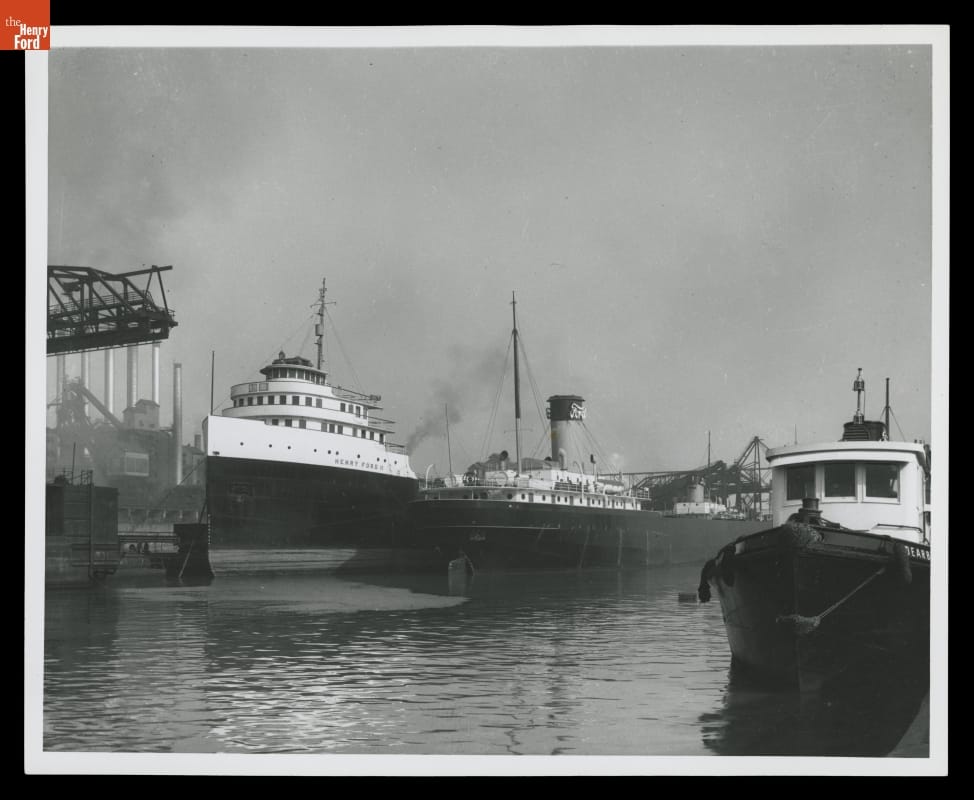
- Freighter HENRY FORD II at Ford Rouge Plant, 1935 - Henry Ford sited his new manufacturing complex on the newly dredged River Rouge to accommodate ships bringing in raw materials or taking on finished product for delivery. Desiring complete self-sufficiency at the Rouge, Ford ordered his own cargo carriers, purchased ocean freighters and barges, and added tugboats and canal boats. At its climax, the plant's fleet totaled 29 vessels.
- April 26, 1935
- Collections - Artifact
Freighter HENRY FORD II at Ford Rouge Plant, 1935
Henry Ford sited his new manufacturing complex on the newly dredged River Rouge to accommodate ships bringing in raw materials or taking on finished product for delivery. Desiring complete self-sufficiency at the Rouge, Ford ordered his own cargo carriers, purchased ocean freighters and barges, and added tugboats and canal boats. At its climax, the plant's fleet totaled 29 vessels.
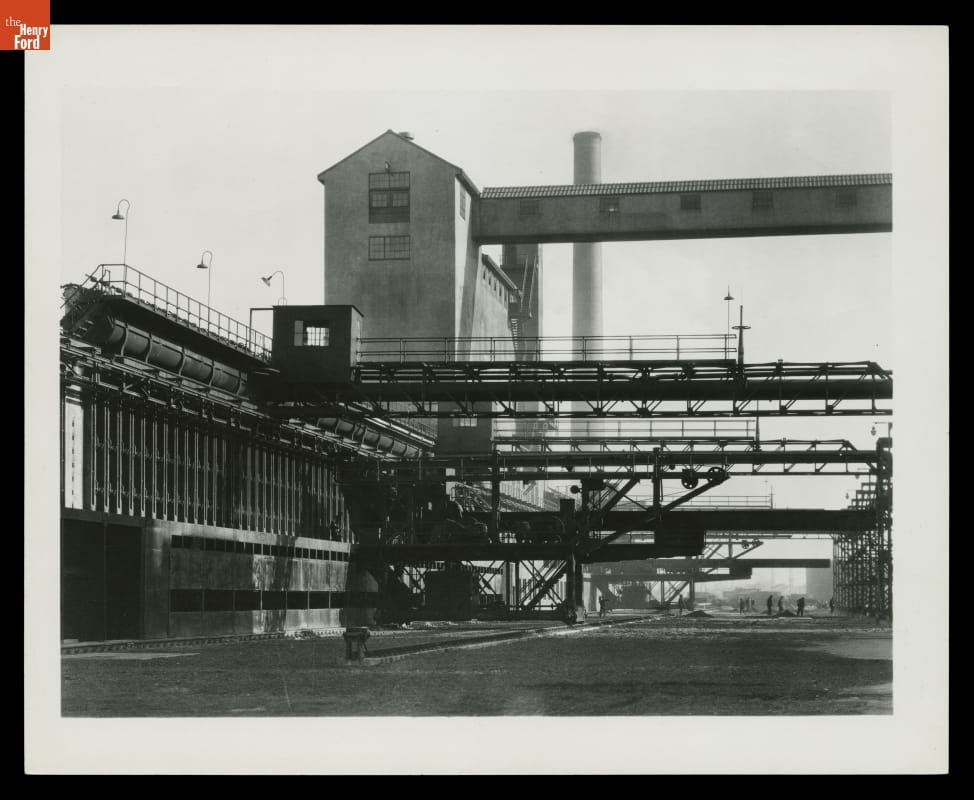
- Coke Ovens at Ford Motor Company Rouge Plant, 1927 - To fuel the Rouge Plant's blast furnaces, Ford purchased several bituminous coal mines. Because bituminous coal was relatively impure, coking ovens were constructed at the Rouge complex within reach of dockside coal bins. The ovens coked the coal, releasing gases and removing impurities. Products of the process included coke for the furnaces, gas, and a number of other useful by-products.
- 1927
- Collections - Artifact
Coke Ovens at Ford Motor Company Rouge Plant, 1927
To fuel the Rouge Plant's blast furnaces, Ford purchased several bituminous coal mines. Because bituminous coal was relatively impure, coking ovens were constructed at the Rouge complex within reach of dockside coal bins. The ovens coked the coal, releasing gases and removing impurities. Products of the process included coke for the furnaces, gas, and a number of other useful by-products.