
Search
- How to Grow the Peanut and 105 Ways of Preparing it for Human Consumption, May 1917 - George Washington Carver directed the agricultural Experiment Station at Tuskegee Institute in Alabama. As part of his work, Carver wrote what he called "threefold" agricultural bulletins: they included information for the farmer, for the teacher, and for the housewife. This bulletin on growing and cooking peanuts, along with Carver's other advocacy work, helped popularize the peanut as a useful and nutritious crop for Southern farmers.

- May 01, 1917
- Collections - Artifact
How to Grow the Peanut and 105 Ways of Preparing it for Human Consumption, May 1917
George Washington Carver directed the agricultural Experiment Station at Tuskegee Institute in Alabama. As part of his work, Carver wrote what he called "threefold" agricultural bulletins: they included information for the farmer, for the teacher, and for the housewife. This bulletin on growing and cooking peanuts, along with Carver's other advocacy work, helped popularize the peanut as a useful and nutritious crop for Southern farmers.
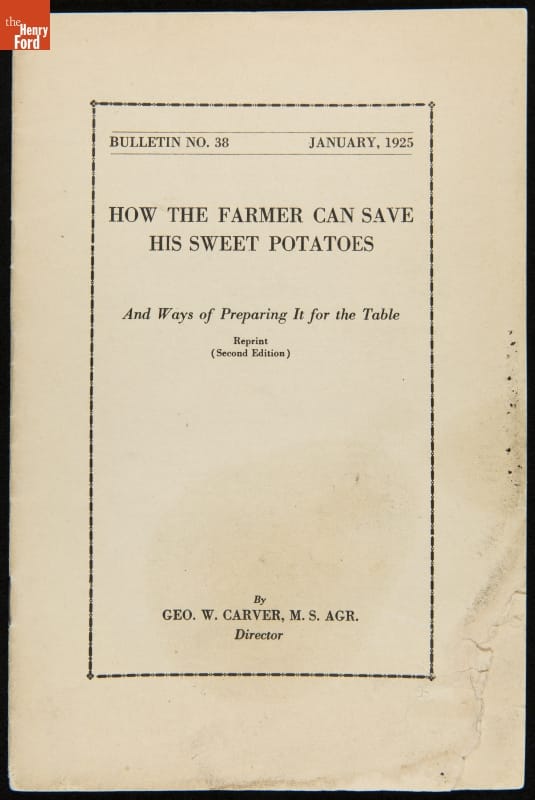
- How the Farmer Can Save His Sweet Potatoes and Ways of Preparing It for the Table, January 1925 (2nd ed.) -
- January 01, 1925
- Collections - Artifact
How the Farmer Can Save His Sweet Potatoes and Ways of Preparing It for the Table, January 1925 (2nd ed.)
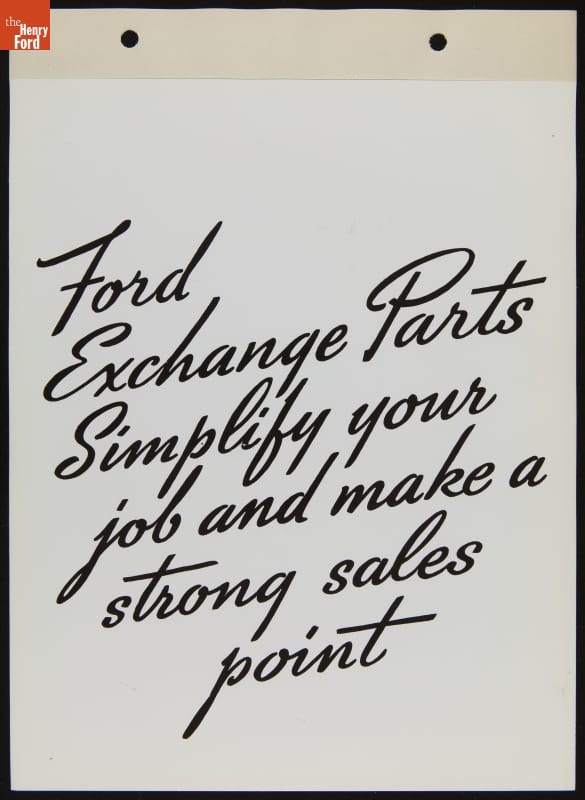
- Slogan from Ford Merchandising Bulletin, June 1938 - Ford Motor Company published regular merchandising bulletins to ensure consistent branding, marketing and service throughout its dealer network. Each bulletin provided guidance on topics like showroom displays, sales techniques and strategies, and updates to Ford, Mercury and Lincoln vehicles and accessories. General sales figures were often published, as were profiles of successful dealerships.
- June 09, 1938
- Collections - Artifact
Slogan from Ford Merchandising Bulletin, June 1938
Ford Motor Company published regular merchandising bulletins to ensure consistent branding, marketing and service throughout its dealer network. Each bulletin provided guidance on topics like showroom displays, sales techniques and strategies, and updates to Ford, Mercury and Lincoln vehicles and accessories. General sales figures were often published, as were profiles of successful dealerships.
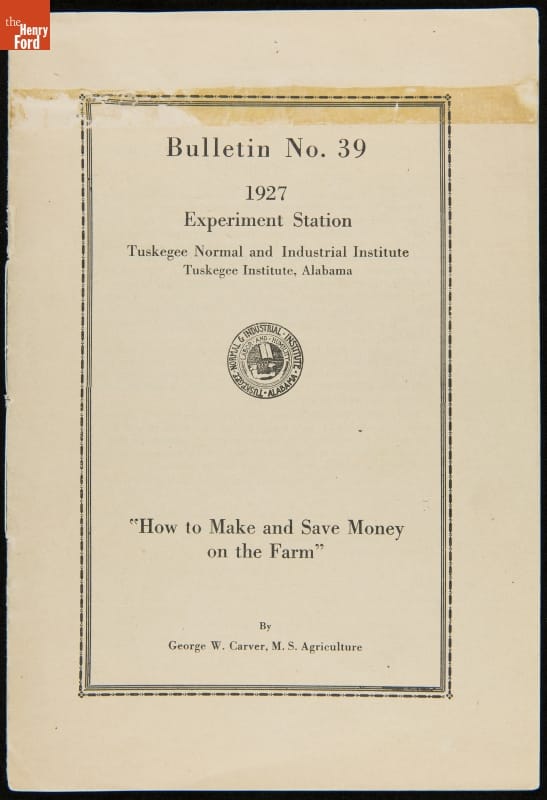
- How to Make and Save Money on the Farm, Bulletin No. 39, 1927 -
- 1927
- Collections - Artifact
How to Make and Save Money on the Farm, Bulletin No. 39, 1927
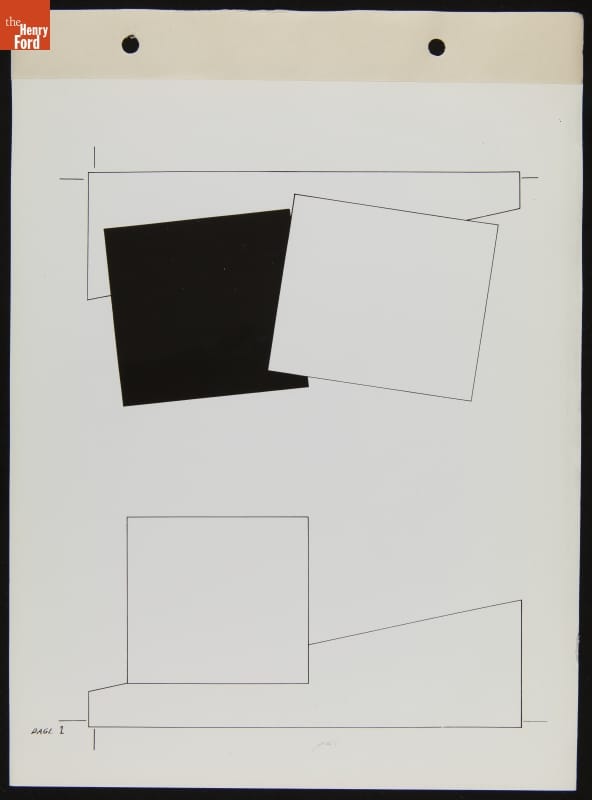
- Floor Plan from Ford Merchandising Bulletin, June 1938 - Ford Motor Company published regular merchandising bulletins to ensure consistent branding, marketing and service throughout its dealer network. Each bulletin provided guidance on topics like showroom displays, sales techniques and strategies, and updates to Ford, Mercury and Lincoln vehicles and accessories. General sales figures were often published, as were profiles of successful dealerships.
- June 09, 1938
- Collections - Artifact
Floor Plan from Ford Merchandising Bulletin, June 1938
Ford Motor Company published regular merchandising bulletins to ensure consistent branding, marketing and service throughout its dealer network. Each bulletin provided guidance on topics like showroom displays, sales techniques and strategies, and updates to Ford, Mercury and Lincoln vehicles and accessories. General sales figures were often published, as were profiles of successful dealerships.
- Gordon Job Press, circa 1865 - The Gordon Franklin was a popular platen job press in the 19th century, celebrated for its innovative ink distribution. Its inventor, George P. Gordon, a Spiritualist, claimed that Benjamin Franklin described the press to him in a dream. J.H. Crouse of Chicago used this press for small jobs, printing patent medicine labels and church bulletins to cover college expenses.
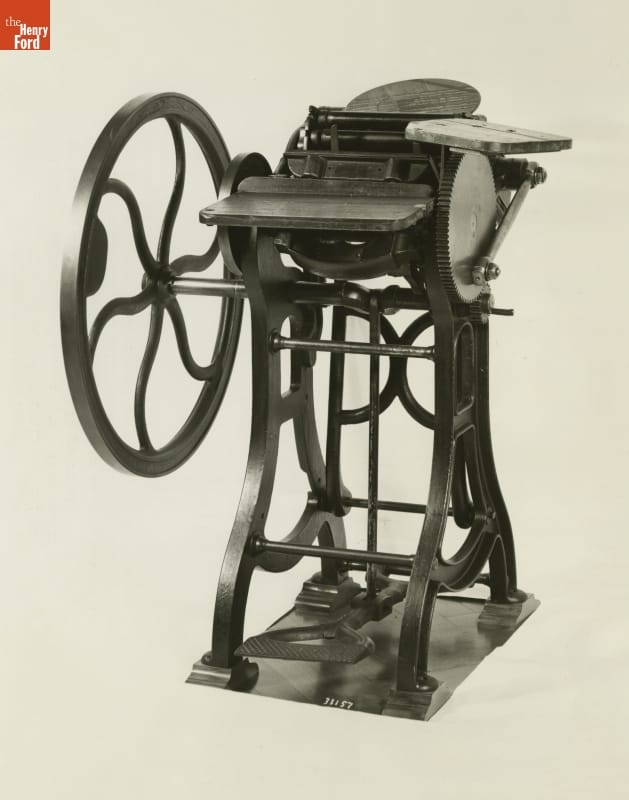
- circa 1865
- Collections - Artifact
Gordon Job Press, circa 1865
The Gordon Franklin was a popular platen job press in the 19th century, celebrated for its innovative ink distribution. Its inventor, George P. Gordon, a Spiritualist, claimed that Benjamin Franklin described the press to him in a dream. J.H. Crouse of Chicago used this press for small jobs, printing patent medicine labels and church bulletins to cover college expenses.
- Teacher's Leaflet No. 2, Nature Study and Children's Gardens, 1904 - Among George Washington Carver's contributions were the bulletins he issued from the Agricultural Experiment Station at the Tuskegee Institute. This pamphlet, written for teachers, treats the popular topic of "nature study," the early 20th century's version of environmental education. It was a guide for educators wanting to involve school children in gardening to help prepare them for successful farming careers. Carver's nature study bulletins emphasized both aesthetic and scientific understandings of nature and were popular across the country.
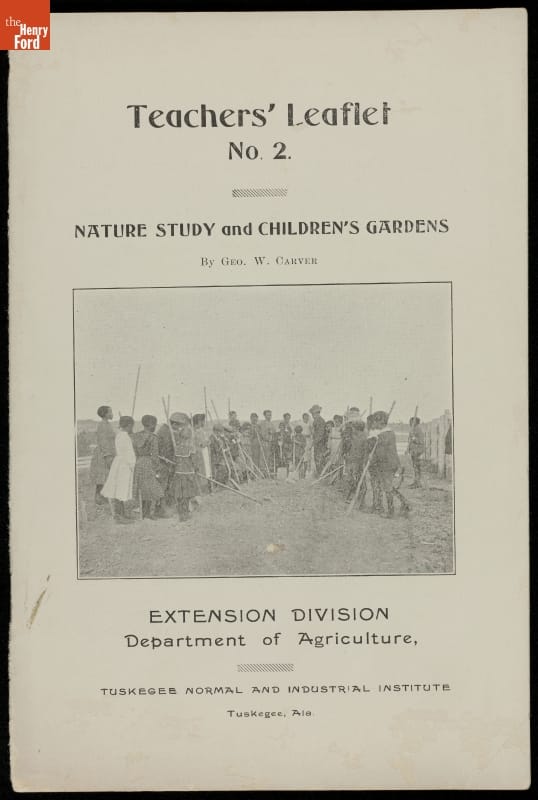
- 1904
- Collections - Artifact
Teacher's Leaflet No. 2, Nature Study and Children's Gardens, 1904
Among George Washington Carver's contributions were the bulletins he issued from the Agricultural Experiment Station at the Tuskegee Institute. This pamphlet, written for teachers, treats the popular topic of "nature study," the early 20th century's version of environmental education. It was a guide for educators wanting to involve school children in gardening to help prepare them for successful farming careers. Carver's nature study bulletins emphasized both aesthetic and scientific understandings of nature and were popular across the country.
- Floor Plan from Ford Merchandising Bulletin, June 1938 - Ford Motor Company published regular merchandising bulletins to ensure consistent branding, marketing and service throughout its dealer network. Each bulletin provided guidance on topics like showroom displays, sales techniques and strategies, and updates to Ford, Mercury and Lincoln vehicles and accessories. General sales figures were often published, as were profiles of successful dealerships.
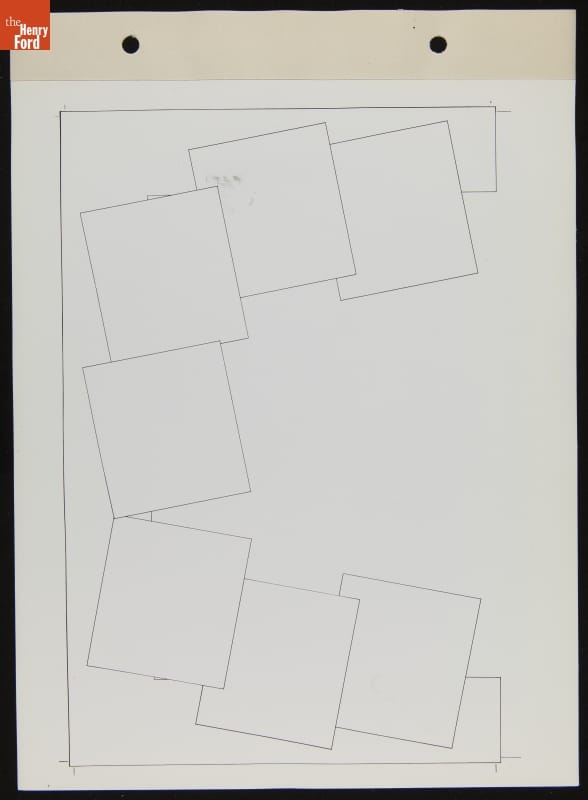
- June 09, 1938
- Collections - Artifact
Floor Plan from Ford Merchandising Bulletin, June 1938
Ford Motor Company published regular merchandising bulletins to ensure consistent branding, marketing and service throughout its dealer network. Each bulletin provided guidance on topics like showroom displays, sales techniques and strategies, and updates to Ford, Mercury and Lincoln vehicles and accessories. General sales figures were often published, as were profiles of successful dealerships.
- Slogan from Ford Merchandising Bulletin, June 1938 - Ford Motor Company published regular merchandising bulletins to ensure consistent branding, marketing and service throughout its dealer network. Each bulletin provided guidance on topics like showroom displays, sales techniques and strategies, and updates to Ford, Mercury and Lincoln vehicles and accessories. General sales figures were often published, as were profiles of successful dealerships.
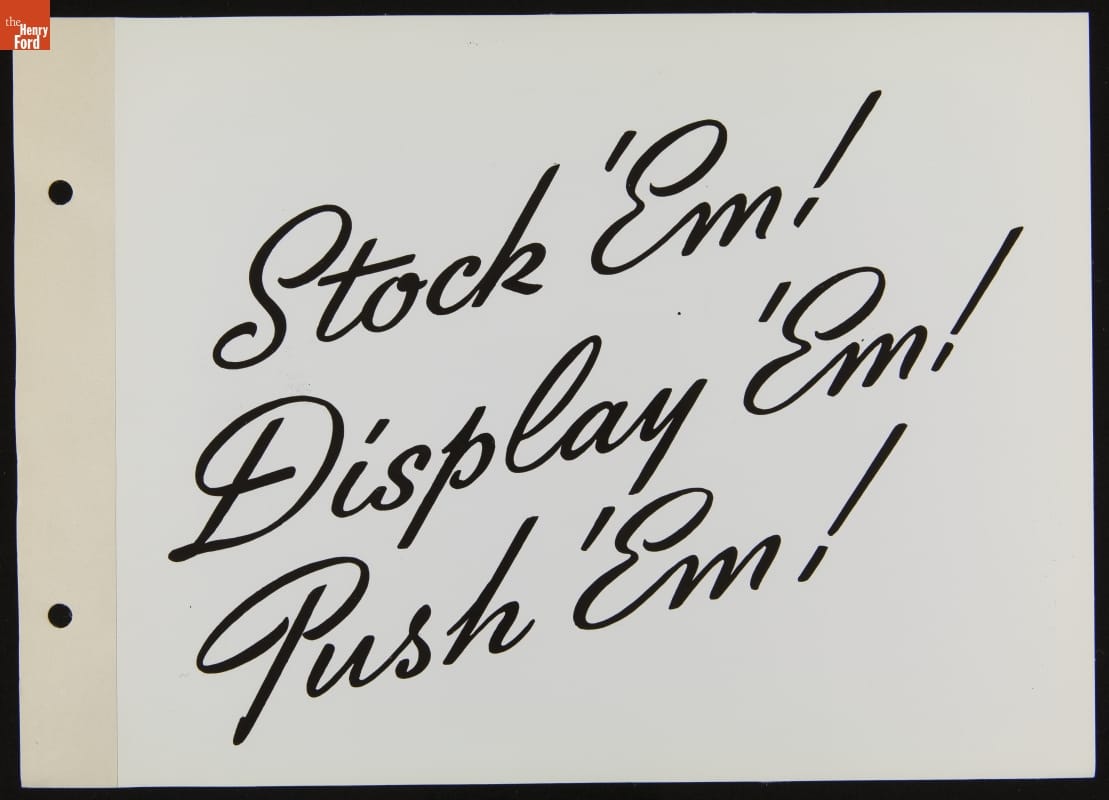
- June 09, 1938
- Collections - Artifact
Slogan from Ford Merchandising Bulletin, June 1938
Ford Motor Company published regular merchandising bulletins to ensure consistent branding, marketing and service throughout its dealer network. Each bulletin provided guidance on topics like showroom displays, sales techniques and strategies, and updates to Ford, Mercury and Lincoln vehicles and accessories. General sales figures were often published, as were profiles of successful dealerships.
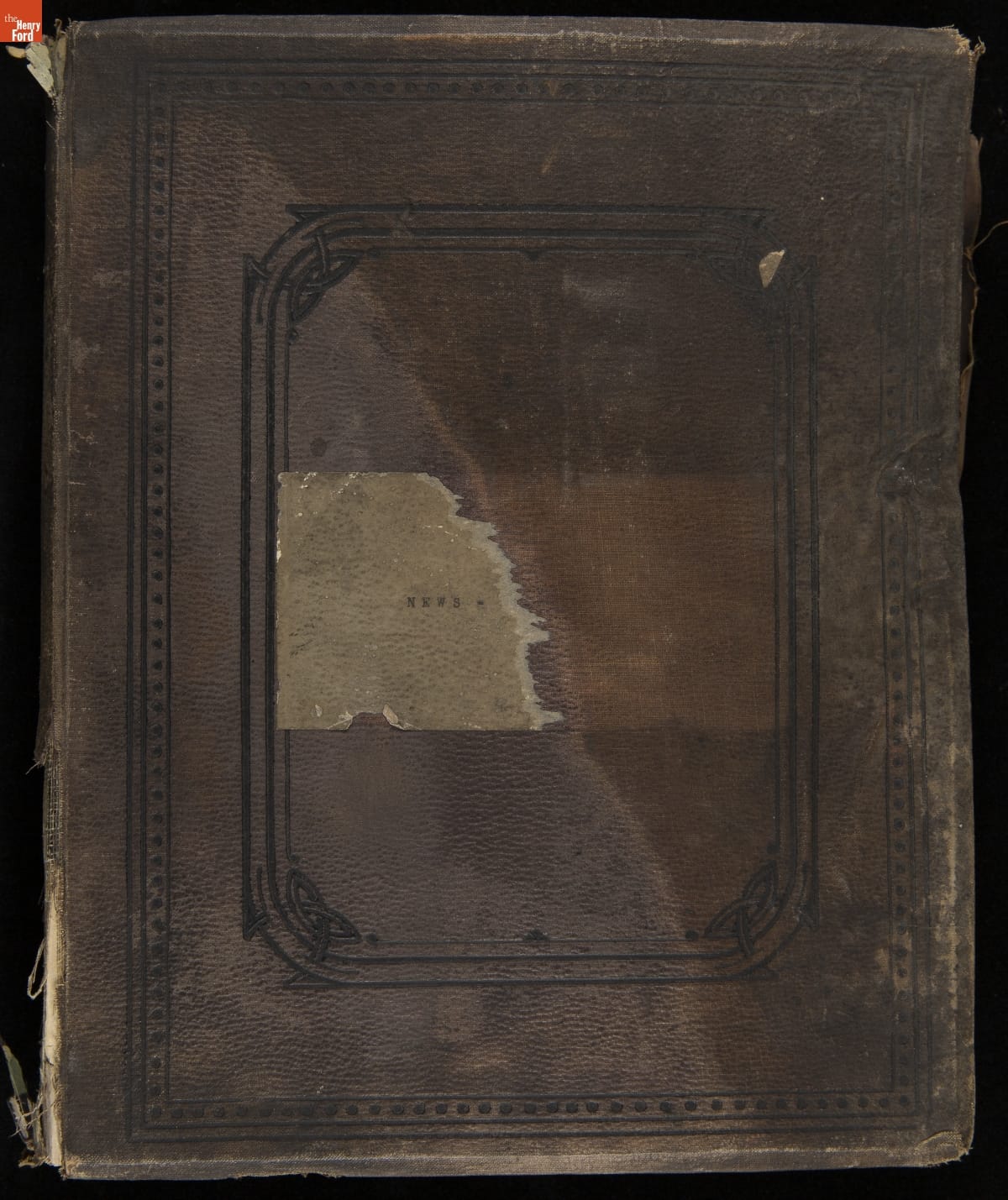
- Clippings of Heinz Company Sales Personnel Conventions and Other Food Industry News, 1901-1916 - Company scrapbook albums are often reminders of the company's history, significant moments in time, and the employees who worked there. This album, compiled by the H. J. Heinz Company, includes newspaper clippings related to company salesmen and conventions, the passage of the Pure Food and Drug Act in 1906, agricultural news, and Heinz advertisements.
- 1901-1916
- Collections - Artifact
Clippings of Heinz Company Sales Personnel Conventions and Other Food Industry News, 1901-1916
Company scrapbook albums are often reminders of the company's history, significant moments in time, and the employees who worked there. This album, compiled by the H. J. Heinz Company, includes newspaper clippings related to company salesmen and conventions, the passage of the Pure Food and Drug Act in 1906, agricultural news, and Heinz advertisements.