
Search
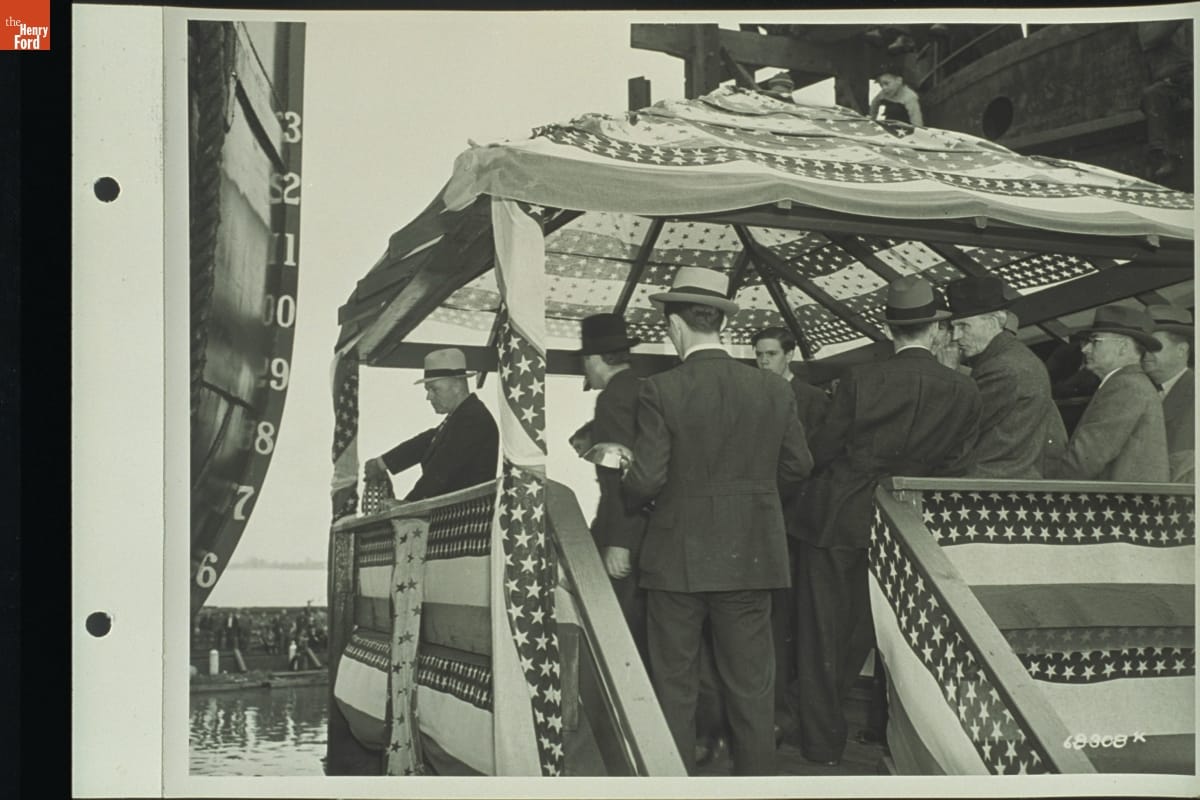
- Launching the Green Island Freighter at the Great Lakes Engineering Works, Ecorse, Michigan, May 1937 - Ford Motor Company launched the MS <EM>Green Island</EM> in 1937. The 300-foot vessel was part of a fleet that carried raw material, auto parts and other goods to and from Ford's mines, mills and factories. <EM>Green Island</EM>, with its low twelve-foot draft, was one of the longest ships to move through the New York State Barge Canal system.
- May 15, 1937
- Collections - Artifact
Launching the Green Island Freighter at the Great Lakes Engineering Works, Ecorse, Michigan, May 1937
Ford Motor Company launched the MS Green Island in 1937. The 300-foot vessel was part of a fleet that carried raw material, auto parts and other goods to and from Ford's mines, mills and factories. Green Island, with its low twelve-foot draft, was one of the longest ships to move through the New York State Barge Canal system.
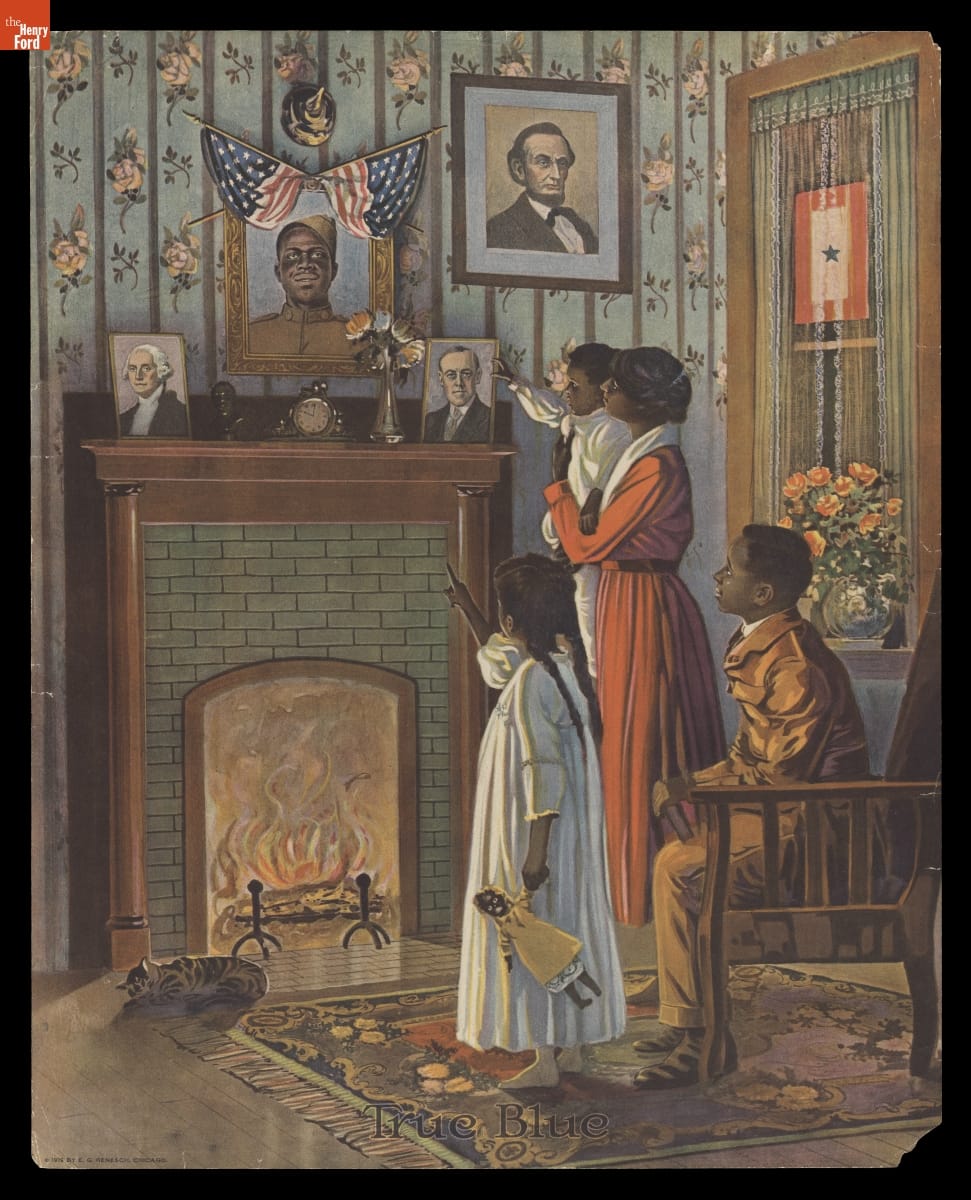
- World War I Poster, "True Blue," 1919 - During World War I, Abraham Lincoln's image was revived as a symbol of wisdom, courage, and sacrifice both at home and abroad. Posters like this were certainly propaganda but they succeeded in motivating the American public to support the war effort. African Americans' loyalty to Lincoln inspired thousands to enlist and bravely serve their country--though largely in segregated units.
- 1919
- Collections - Artifact
World War I Poster, "True Blue," 1919
During World War I, Abraham Lincoln's image was revived as a symbol of wisdom, courage, and sacrifice both at home and abroad. Posters like this were certainly propaganda but they succeeded in motivating the American public to support the war effort. African Americans' loyalty to Lincoln inspired thousands to enlist and bravely serve their country--though largely in segregated units.
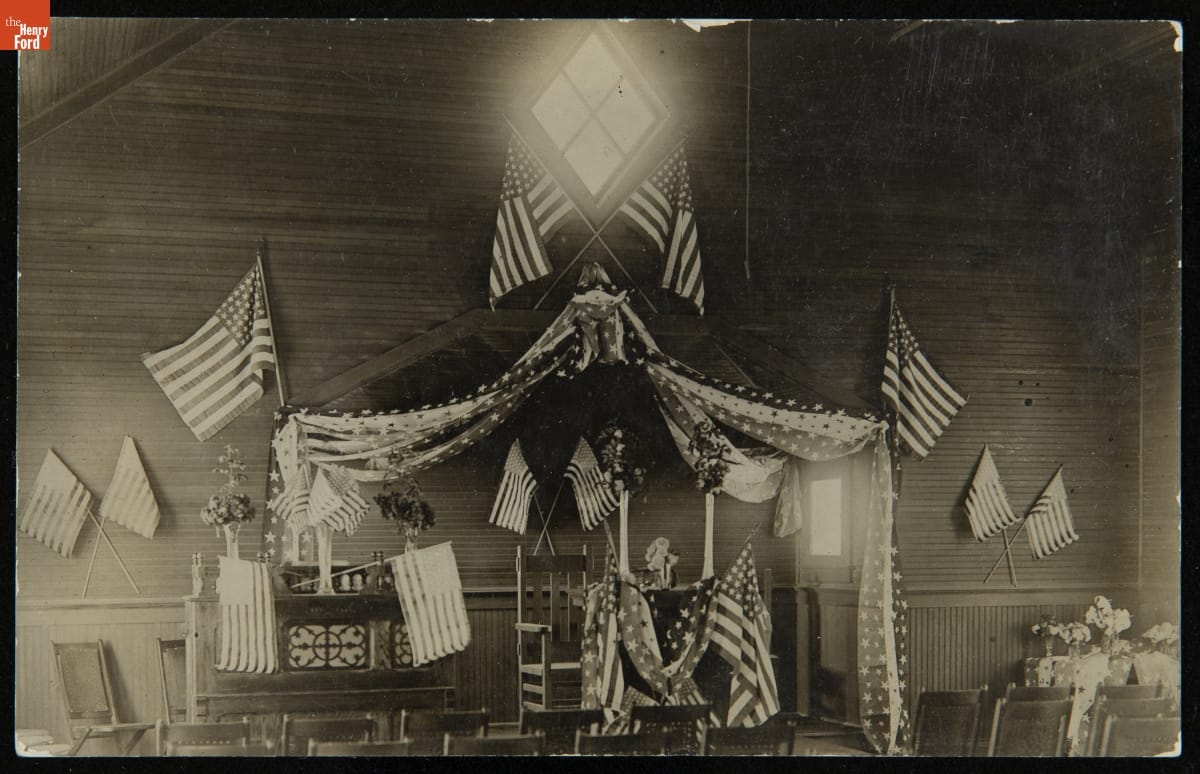
- Memorial Day Decorations in a White Bluffs, Washington Church, June 24, 1910 - Beginning in 1868, May 30 was adopted as "Decoration Day," a time to honor the Civil War dead by decorating their graves with flowers. Over the years, Americans gathered at churches, fraternal organization halls, and cemeteries to observe the holiday--today, better known as Memorial Day. This postcard from 1910 shows a church in White Bluffs, Washington, decorated for the holiday.
- June 24, 1910
- Collections - Artifact
Memorial Day Decorations in a White Bluffs, Washington Church, June 24, 1910
Beginning in 1868, May 30 was adopted as "Decoration Day," a time to honor the Civil War dead by decorating their graves with flowers. Over the years, Americans gathered at churches, fraternal organization halls, and cemeteries to observe the holiday--today, better known as Memorial Day. This postcard from 1910 shows a church in White Bluffs, Washington, decorated for the holiday.
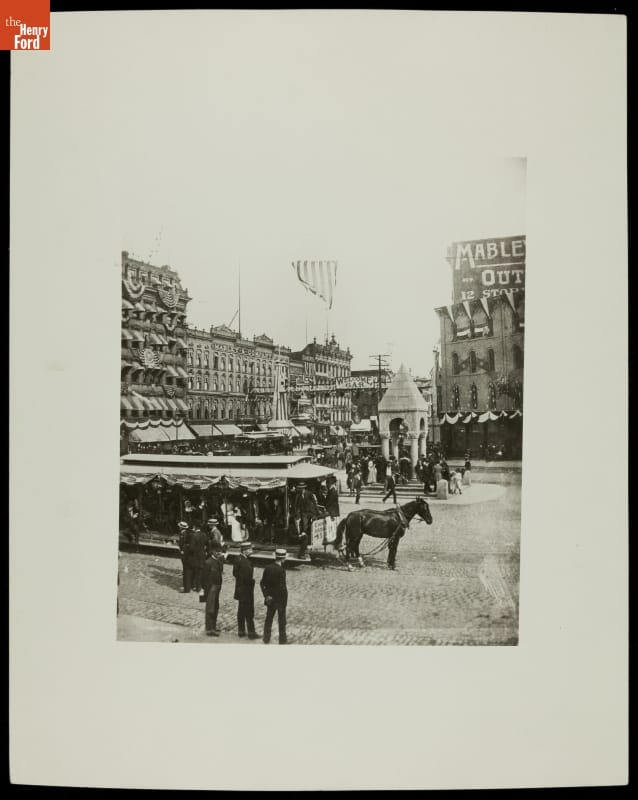
- Bagley Memorial Fountain, Woodward Avenue and Fort Street, Detroit, Michigan, 1891 - Detroit's Bagley Memorial Fountain stands amidst a banner and festive decorations in its original location at Woodward Avenue and Fort Street. This photograph may have been taken during a Grand Army of the Republic (G.A.R.) Memorial Day celebration. A society for Union Civil War veterans, the G.A.R. began observing the holiday -- originally called Decoration Day -- in 1868.
- 1891
- Collections - Artifact
Bagley Memorial Fountain, Woodward Avenue and Fort Street, Detroit, Michigan, 1891
Detroit's Bagley Memorial Fountain stands amidst a banner and festive decorations in its original location at Woodward Avenue and Fort Street. This photograph may have been taken during a Grand Army of the Republic (G.A.R.) Memorial Day celebration. A society for Union Civil War veterans, the G.A.R. began observing the holiday -- originally called Decoration Day -- in 1868.
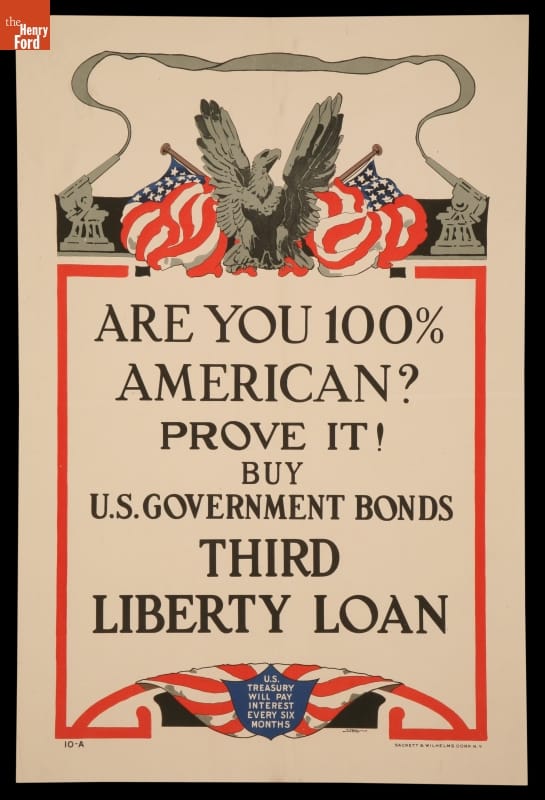
- World War I Poster, "Are you 100% American? Prove It!," circa 1918 - During the First World War, governments of all the warring nations used poster campaigns to encourage civilian and military support of the war effort. Artists widely used an innovative advertising technique for these posters that moved away from a factual depiction of a product's material or event's subject to an emphasis on appealing to the viewer's emotions.
- circa 1918
- Collections - Artifact
World War I Poster, "Are you 100% American? Prove It!," circa 1918
During the First World War, governments of all the warring nations used poster campaigns to encourage civilian and military support of the war effort. Artists widely used an innovative advertising technique for these posters that moved away from a factual depiction of a product's material or event's subject to an emphasis on appealing to the viewer's emotions.
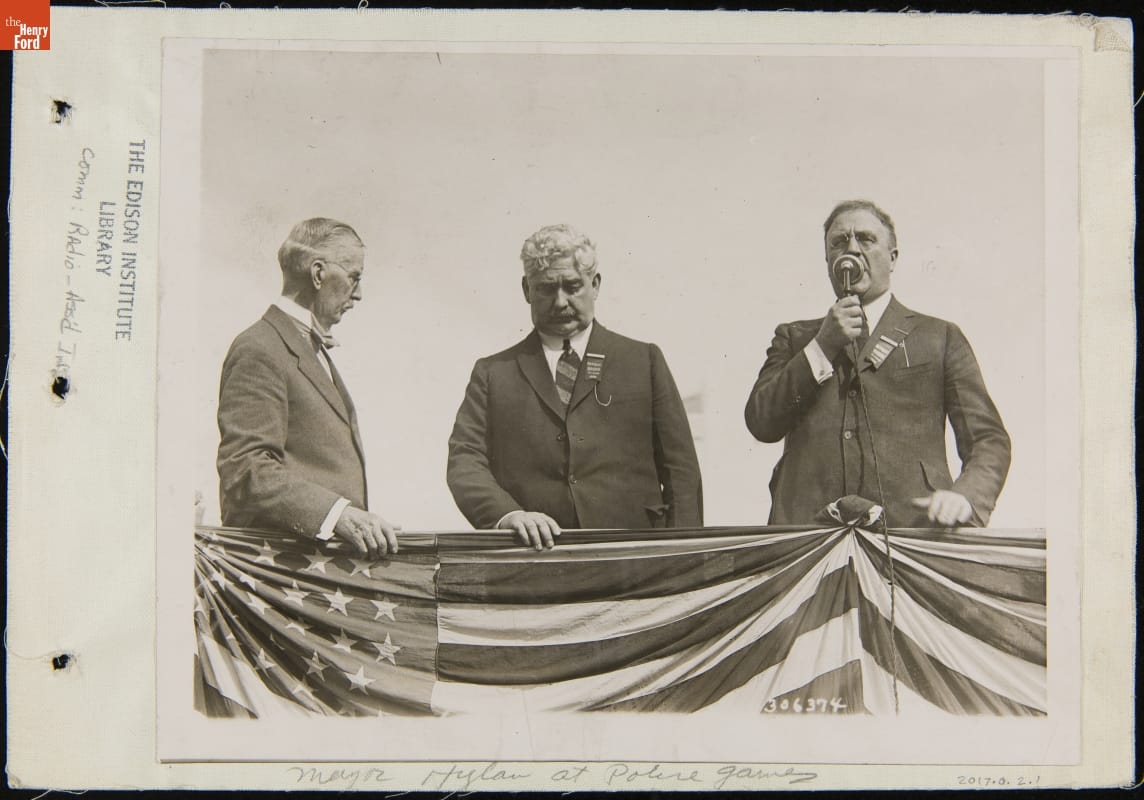
- Mayor John Hylan and Police Commissioner Richard Enright at the New York Police Field Day Games, 1920-1925 -
- 1920-1925
- Collections - Artifact
Mayor John Hylan and Police Commissioner Richard Enright at the New York Police Field Day Games, 1920-1925
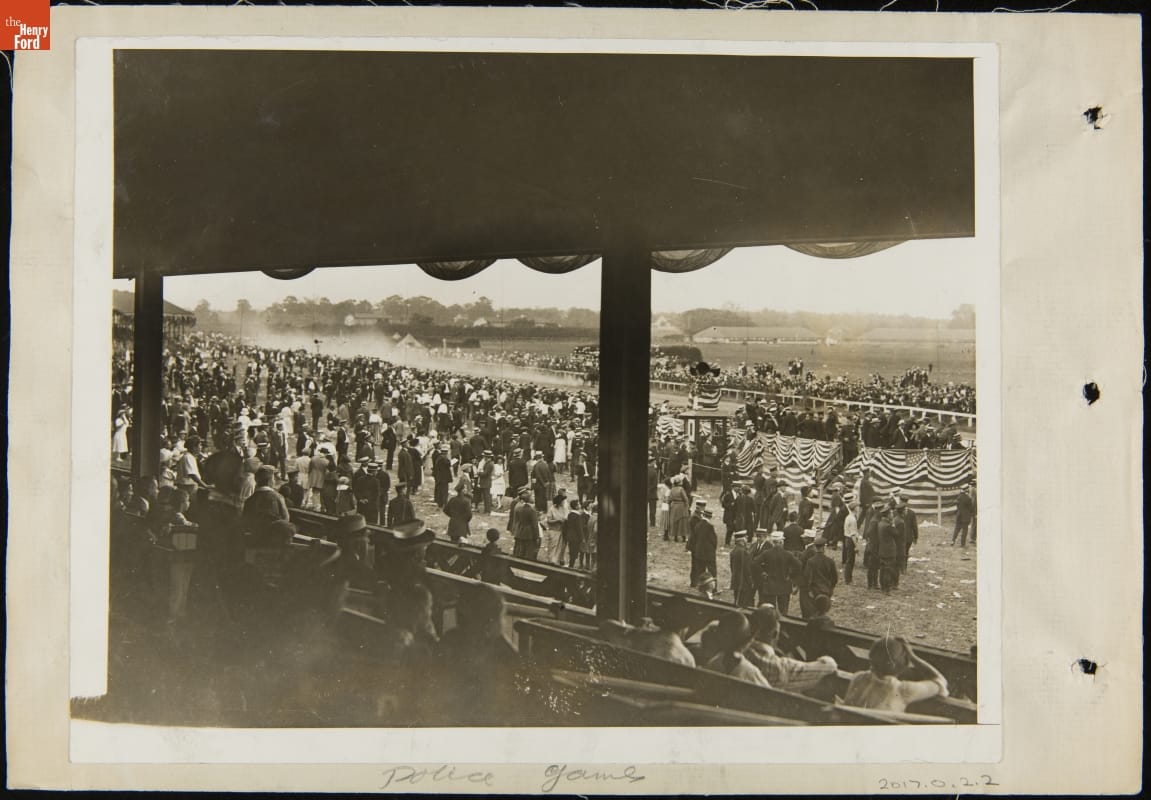
- Crowd Viewing Mounted Competitions at New York Police Field Day Games, 1920-1925 -
- 1920-1925
- Collections - Artifact
Crowd Viewing Mounted Competitions at New York Police Field Day Games, 1920-1925
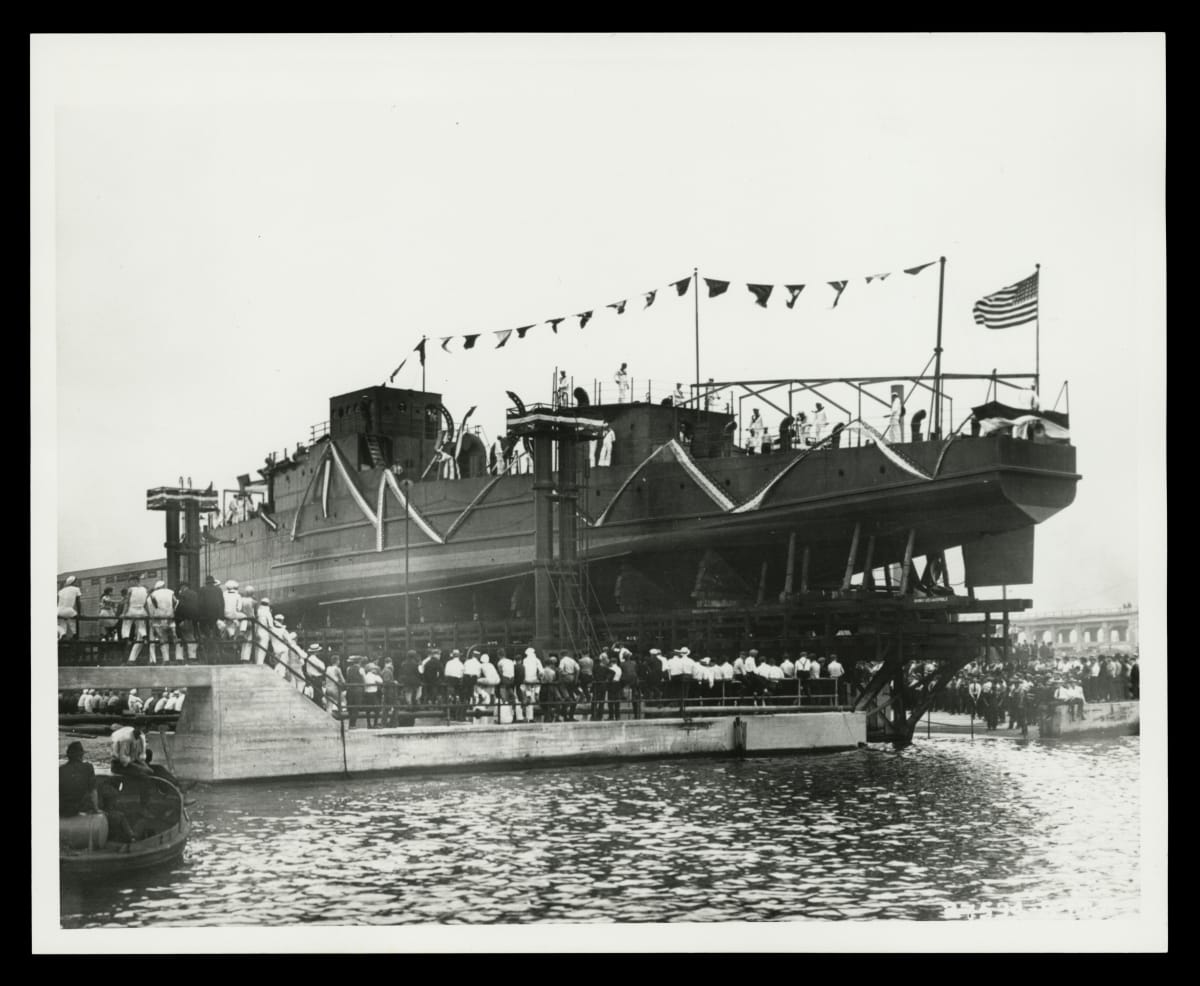
- Launching of Last Eagle Boat at Ford Motor Company Rouge Plant, August 1919 - Ford Motor Company built Eagle anti-submarine boats during World War I. The company launched its first Eagle on July 11, 1918, but the war ended exactly four months later -- before any of the boats saw action. The Navy cut its initial order of 100 Eagles to 60, and Ford launched the last of them in the summer of 1919.
- August 15, 1919
- Collections - Artifact
Launching of Last Eagle Boat at Ford Motor Company Rouge Plant, August 1919
Ford Motor Company built Eagle anti-submarine boats during World War I. The company launched its first Eagle on July 11, 1918, but the war ended exactly four months later -- before any of the boats saw action. The Navy cut its initial order of 100 Eagles to 60, and Ford launched the last of them in the summer of 1919.
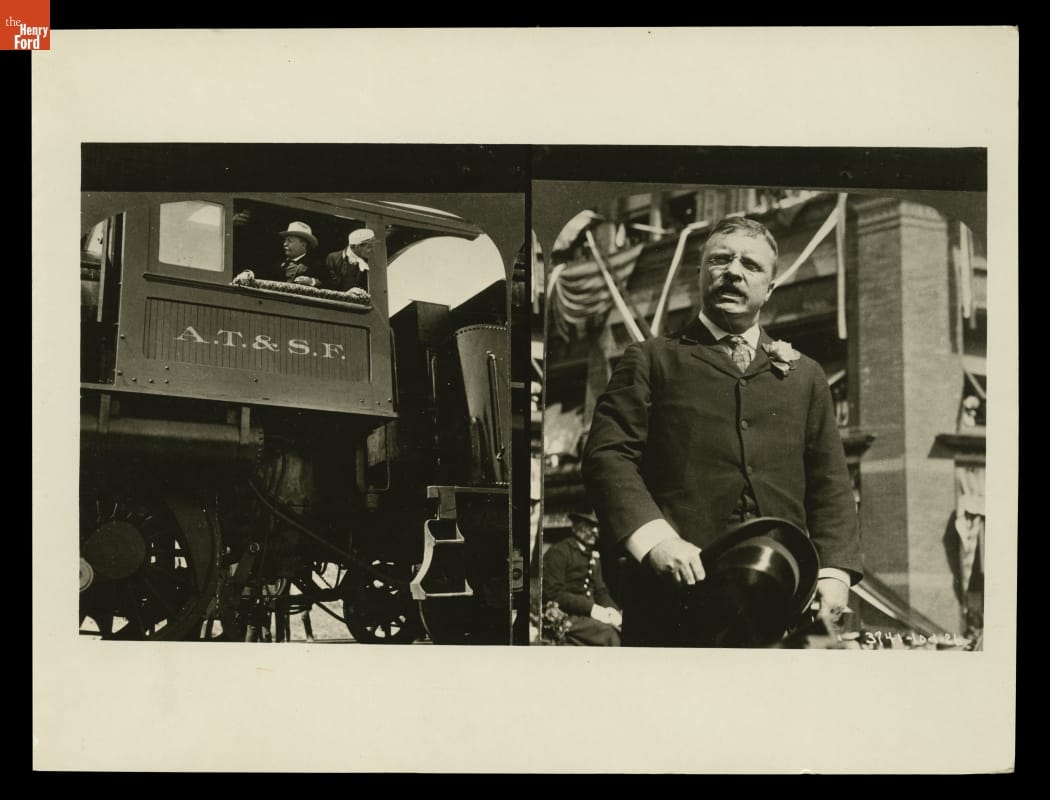
- Two Views of Theodore Roosevelt: Riding in a Railroad Locomotive and Giving a Speech, likely 1903 - During the late 19th century, campaigning politicians might charter tour trains to quickly get from town to town to make brief appearances or speeches. These were sometimes called "whistle-stop" tours. Theodore Roosevelt was a ferocious "whistle-stopper" -- in 1899 while running for New York governor, in 1900 as McKinley's running mate, and in 1903 and 1912 for his own Presidential campaigns.
- 1903
- Collections - Artifact
Two Views of Theodore Roosevelt: Riding in a Railroad Locomotive and Giving a Speech, likely 1903
During the late 19th century, campaigning politicians might charter tour trains to quickly get from town to town to make brief appearances or speeches. These were sometimes called "whistle-stop" tours. Theodore Roosevelt was a ferocious "whistle-stopper" -- in 1899 while running for New York governor, in 1900 as McKinley's running mate, and in 1903 and 1912 for his own Presidential campaigns.
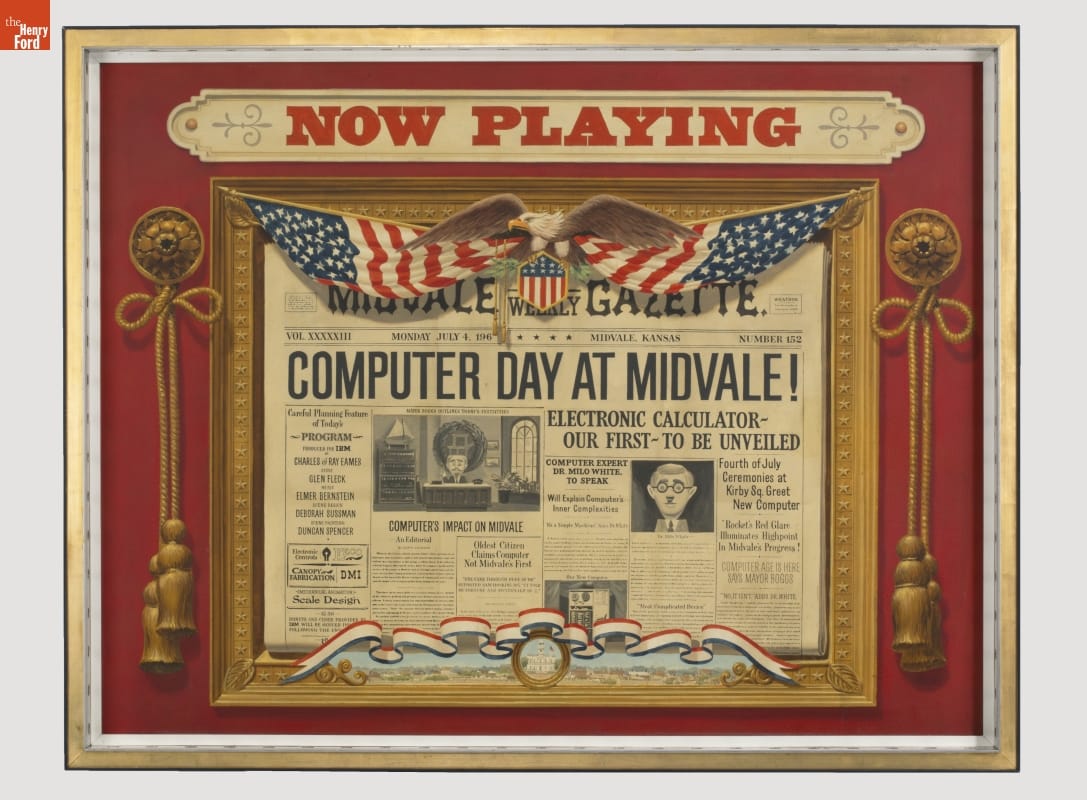
- "Computer Day at Midvale" Panel Designed by the Eames Office for the IBM Pavilion, 1964-65 New York World's Fair - This hand-painted panel, produced by the Eames Office, was displayed in the IBM Pavilion at the 1964 New York World's Fair. The panel advertises a mechanical puppet show called "Computer Day at Midvale," which told a story about the fictional town's first computer. The IBM Pavilion tried to humanize computers--the Eameses' playful, refined communication and design skills provided the solution.
- 1964
- Collections - Artifact
"Computer Day at Midvale" Panel Designed by the Eames Office for the IBM Pavilion, 1964-65 New York World's Fair
This hand-painted panel, produced by the Eames Office, was displayed in the IBM Pavilion at the 1964 New York World's Fair. The panel advertises a mechanical puppet show called "Computer Day at Midvale," which told a story about the fictional town's first computer. The IBM Pavilion tried to humanize computers--the Eameses' playful, refined communication and design skills provided the solution.