
Search
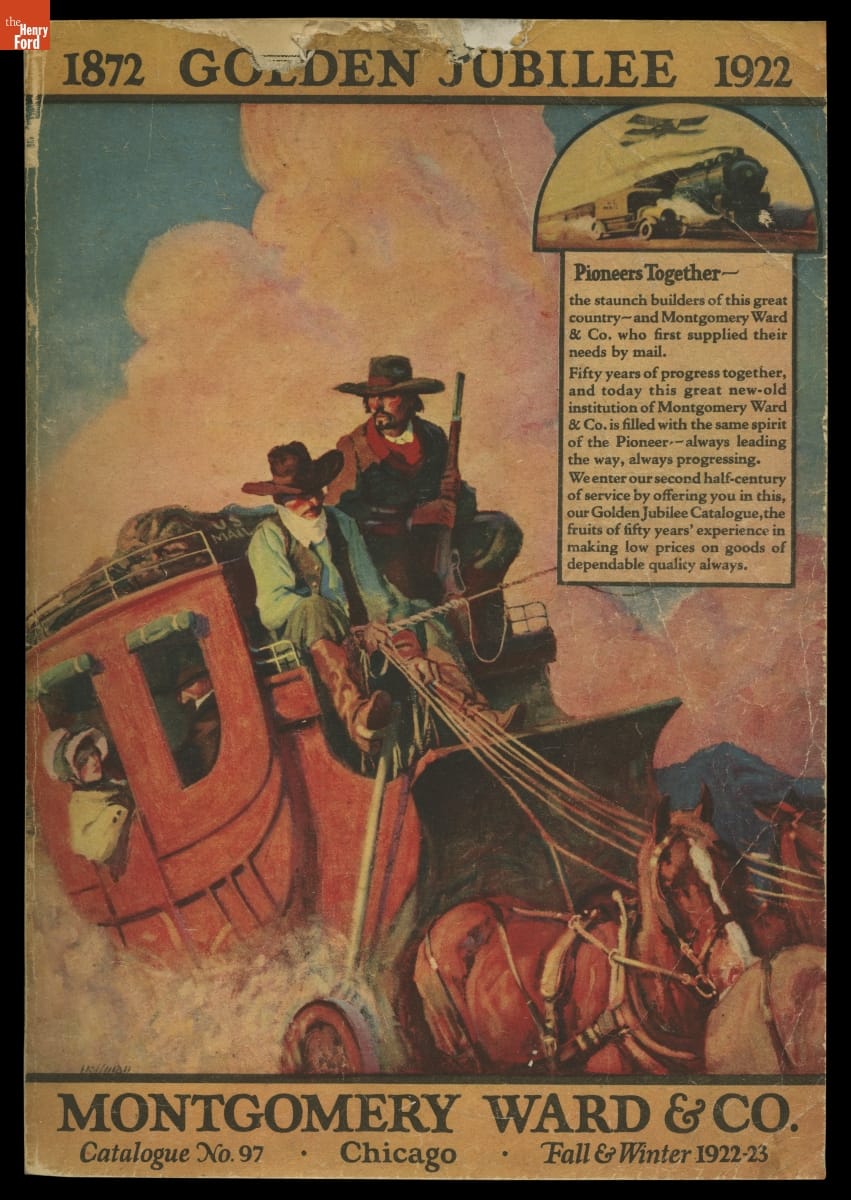
- Montgomery Ward & Co. Catalog, "Golden Jubilee," Fall-Winter 1922-1923 - In 1872, Montgomery Ward & Company launched America's first general mail order company. Through their catalogs, the company offered a broad selection of goods at affordable prices. Other retailers would follow. Montgomery Ward and Company issued this catalog in 1922, the company's 50th anniversary, touting the company's pioneering services.
- 1922-1923
- Collections - Artifact
Montgomery Ward & Co. Catalog, "Golden Jubilee," Fall-Winter 1922-1923
In 1872, Montgomery Ward & Company launched America's first general mail order company. Through their catalogs, the company offered a broad selection of goods at affordable prices. Other retailers would follow. Montgomery Ward and Company issued this catalog in 1922, the company's 50th anniversary, touting the company's pioneering services.
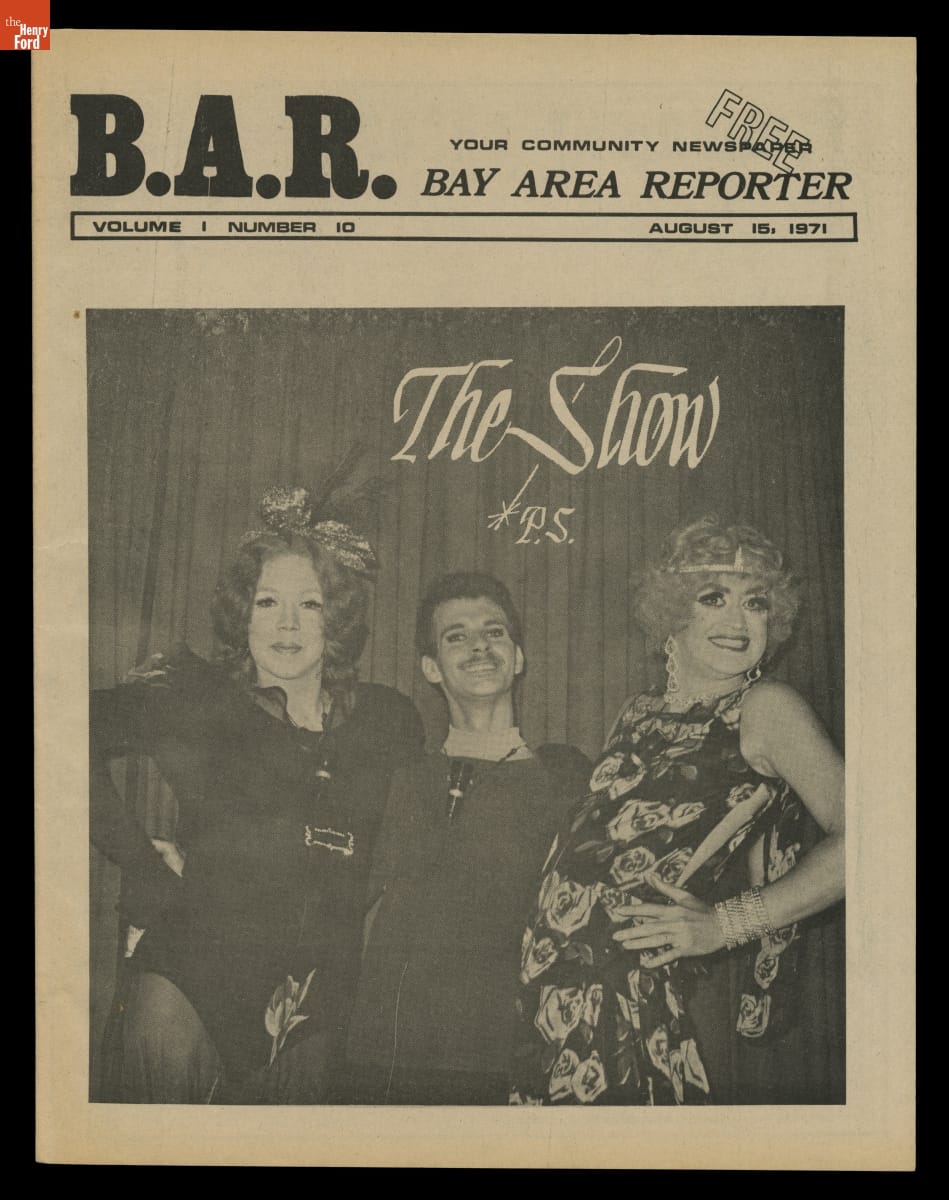
- "B.A.R.: Bay Area Reporter," Volume 1, Number 10, August 15, 1971 -
- August 15, 1971
- Collections - Artifact
"B.A.R.: Bay Area Reporter," Volume 1, Number 10, August 15, 1971
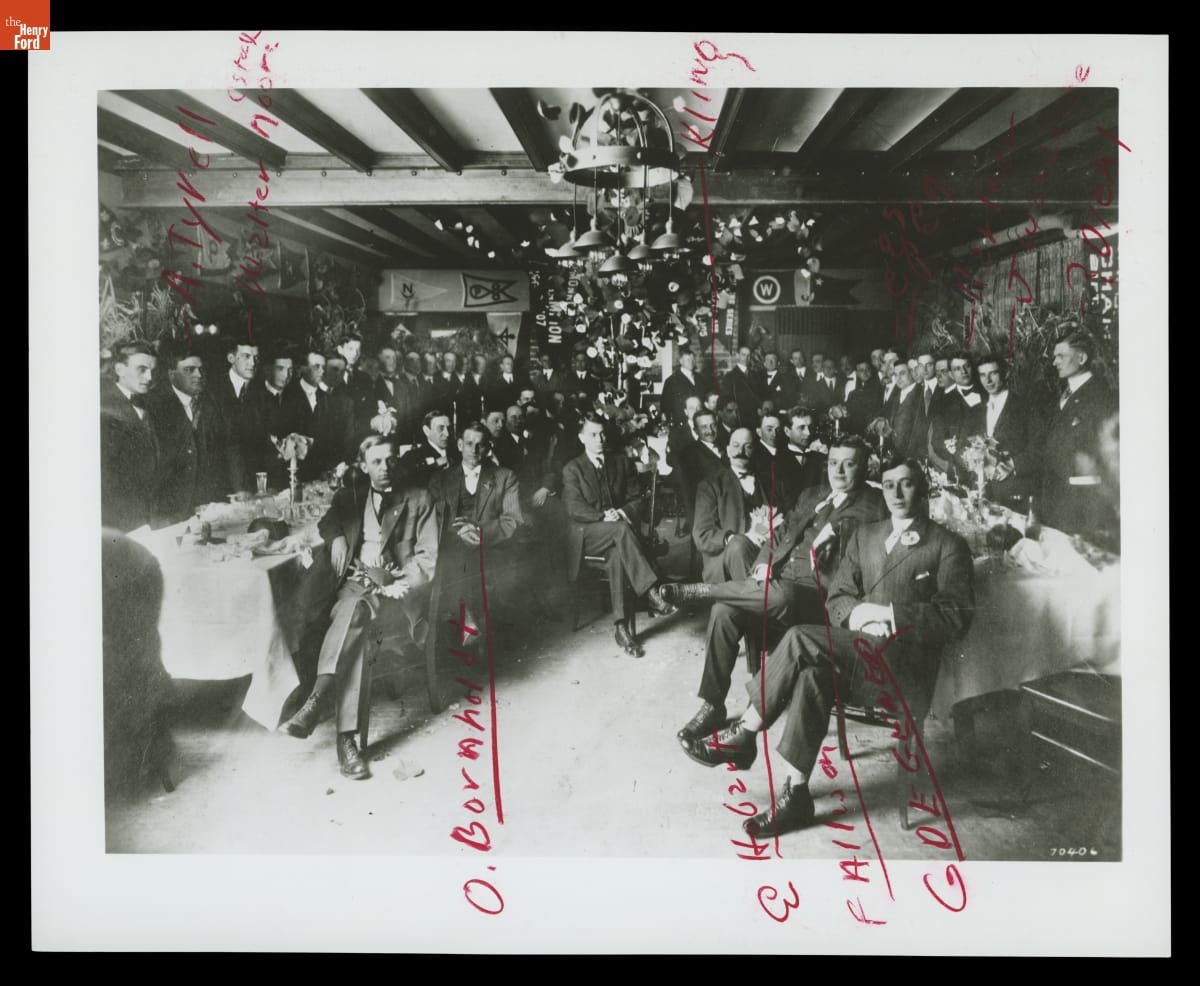
- Ford Motor Company Branch Managers Meeting, 1909 - Ford Motor Company distributed its vehicles around the country -- ultimately around the world -- through a network of branch houses in major cities. These branches, in turn, supplied vehicles to dealers. This allowed Ford to maintain consistent prices and service everywhere. Ford hosted its branch managers at regular meetings in Detroit, where they were updated on the company's latest activities.
- June 17, 1942
- Collections - Artifact
Ford Motor Company Branch Managers Meeting, 1909
Ford Motor Company distributed its vehicles around the country -- ultimately around the world -- through a network of branch houses in major cities. These branches, in turn, supplied vehicles to dealers. This allowed Ford to maintain consistent prices and service everywhere. Ford hosted its branch managers at regular meetings in Detroit, where they were updated on the company's latest activities.
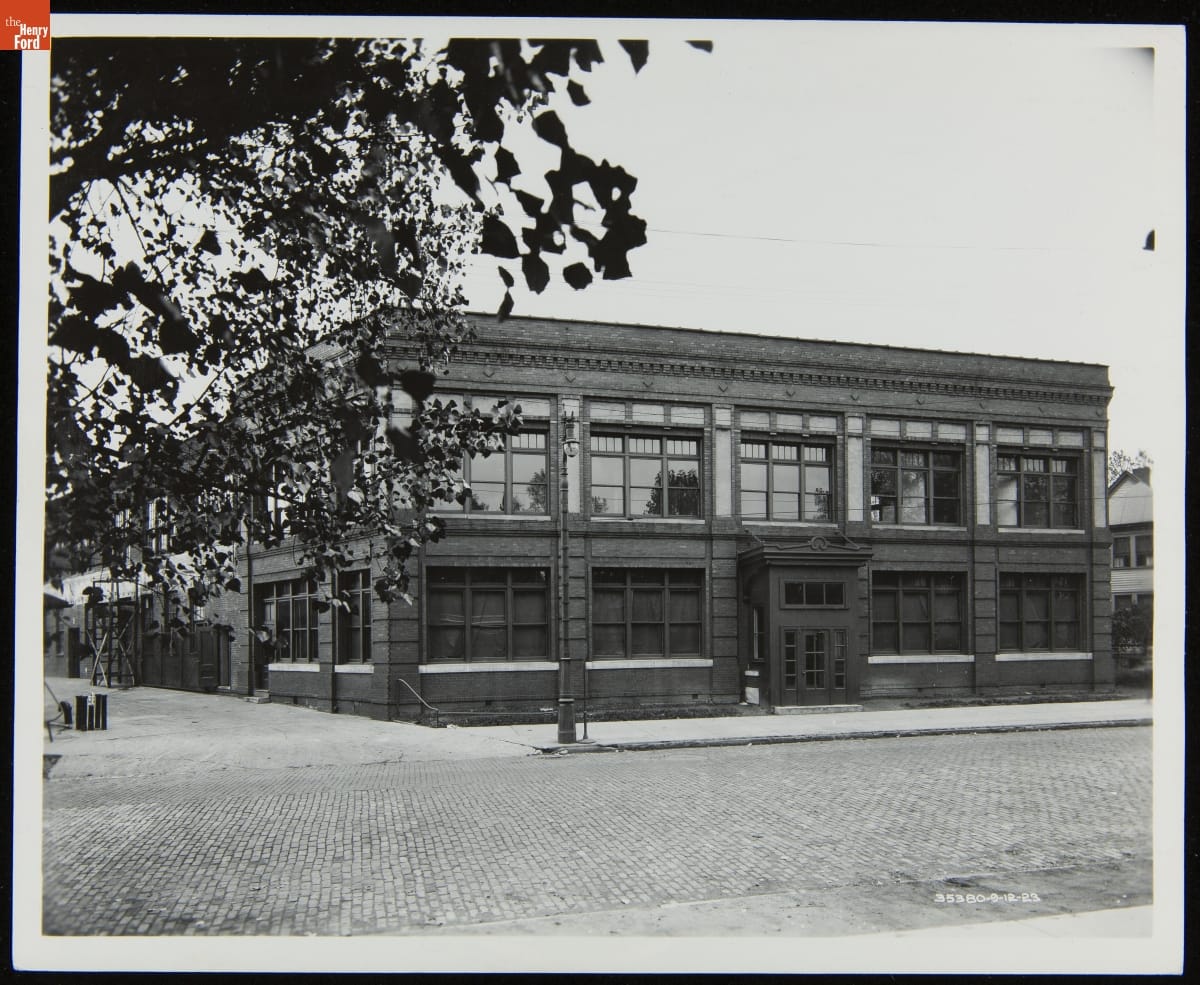
- Ford Motor Company Holden Avenue Branch in Detroit, Michigan, September 12, 1923 - Ford Motor Company's plant on Holden Avenue in Detroit had an interesting history. Warren Motor Car Company built it in 1910. After Warren's bankruptcy in 1913, it was used by Lozier Motor Company, which itself quickly went bankrupt. In 1917, the newly formed Lincoln Motor Company purchased the complex. Ford inherited the facility when it bought Lincoln in 1922.
- September 12, 1923
- Collections - Artifact
Ford Motor Company Holden Avenue Branch in Detroit, Michigan, September 12, 1923
Ford Motor Company's plant on Holden Avenue in Detroit had an interesting history. Warren Motor Car Company built it in 1910. After Warren's bankruptcy in 1913, it was used by Lozier Motor Company, which itself quickly went bankrupt. In 1917, the newly formed Lincoln Motor Company purchased the complex. Ford inherited the facility when it bought Lincoln in 1922.
- Letter from Richard Trotter to Edsel Ford, Offering to Sell Drawings, March 20, 1924 -
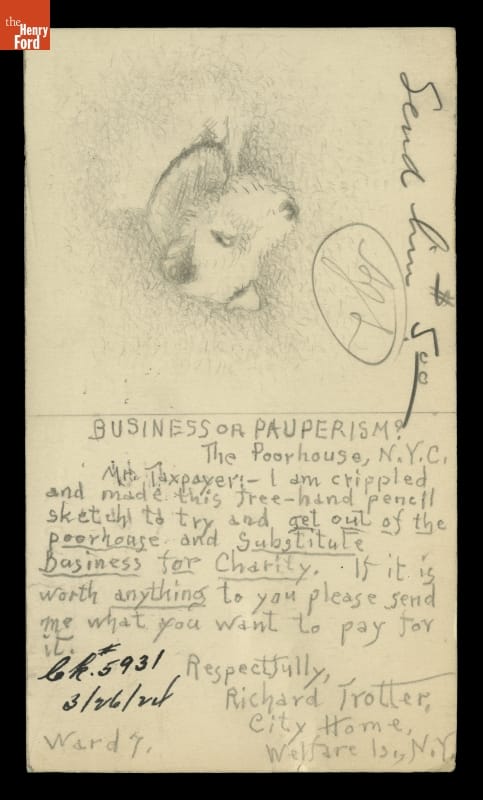
- March 20, 1924
- Collections - Artifact
Letter from Richard Trotter to Edsel Ford, Offering to Sell Drawings, March 20, 1924
- Letter from Richard Trotter to Edsel Ford, Offering to Sell Drawings, December 18, 1924 -
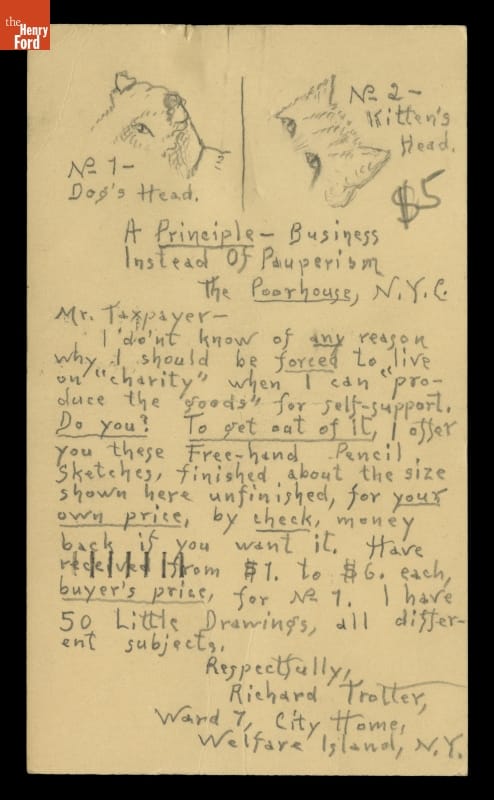
- December 18, 1924
- Collections - Artifact
Letter from Richard Trotter to Edsel Ford, Offering to Sell Drawings, December 18, 1924
- Letter from John Trumbull to A. C. de Poggi, August 12, 1788 - American artist John Trumbull met Antonio Cesare Poggi while studying in Europe in the late 1700s. Poggi was an artist, art dealer and print publisher. The two became business associates and friends. In this letter from 1788, Trumbull is happy to hear that Poggi has entered an agreement with an engraver to create printing plates of Trumbull's paintings.
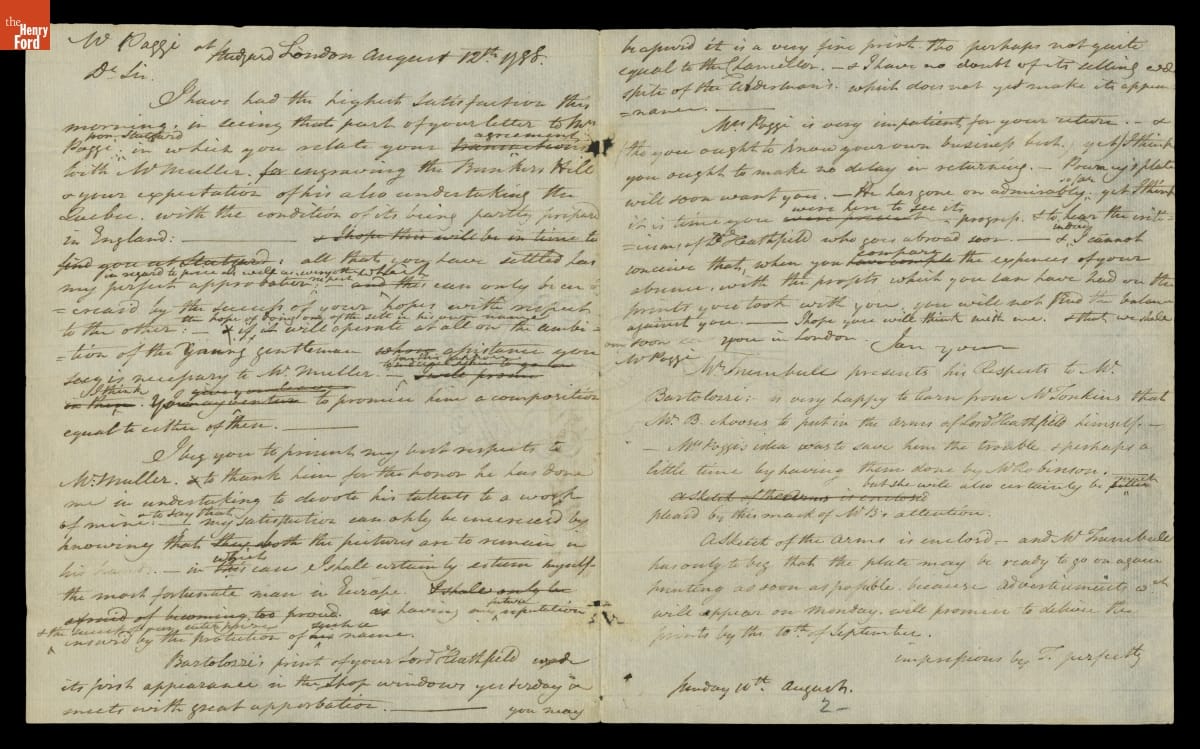
- August 12, 1788
- Collections - Artifact
Letter from John Trumbull to A. C. de Poggi, August 12, 1788
American artist John Trumbull met Antonio Cesare Poggi while studying in Europe in the late 1700s. Poggi was an artist, art dealer and print publisher. The two became business associates and friends. In this letter from 1788, Trumbull is happy to hear that Poggi has entered an agreement with an engraver to create printing plates of Trumbull's paintings.
- Meeting of Members of the Board of Directors of H. J. Heinz Company In the Presidents Office, May 21, 1909 - The H.J. Heinz company had humble beginnings with its founder producing horseradish out of his parent's home in 1869. With a rapidly expanding line of high-quality products and a flair for marketing, Heinz quickly became a household name. This photograph of the Board of Directors was taken in 1909, with H.J. Heinz himself seen here as the front figure on the right.
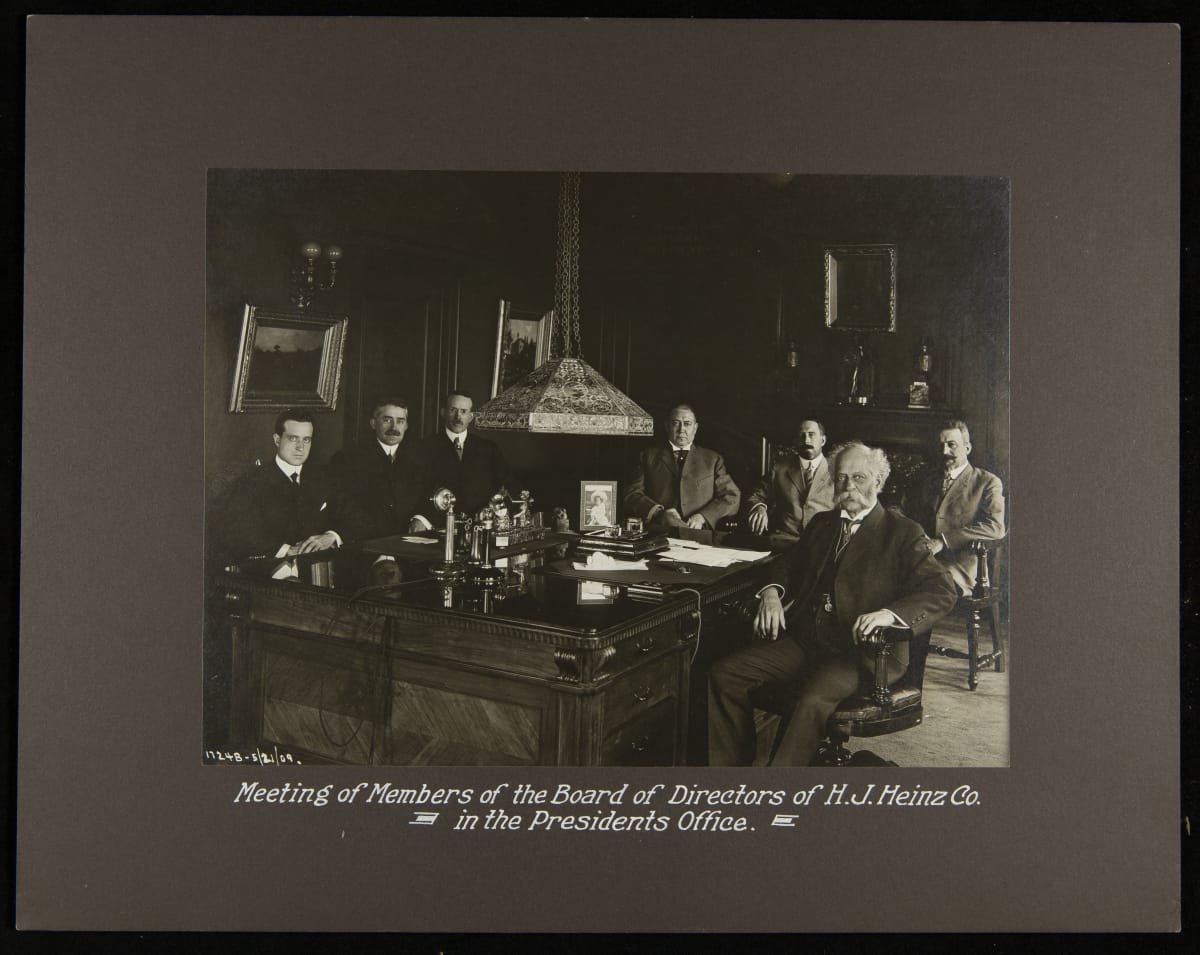
- May 21, 1909
- Collections - Artifact
Meeting of Members of the Board of Directors of H. J. Heinz Company In the Presidents Office, May 21, 1909
The H.J. Heinz company had humble beginnings with its founder producing horseradish out of his parent's home in 1869. With a rapidly expanding line of high-quality products and a flair for marketing, Heinz quickly became a household name. This photograph of the Board of Directors was taken in 1909, with H.J. Heinz himself seen here as the front figure on the right.
- Larkin Company Trade Catalog, "Product and Premium List," January 1908 (58th Edition) - John D. Larkin established a soap manufacturing company in 1875. He hired his brother-in-law, Elbert Hubbard, as a salesman. Hubbard developed "The Larkin Idea," a plan that sold goods directly to consumers through mail-order catalogs and offered incentivizing giveaways. It was a success. By the early 1900s, Larkin's catalogs contained pages of products and even more pages of premiums from which customers could choose.
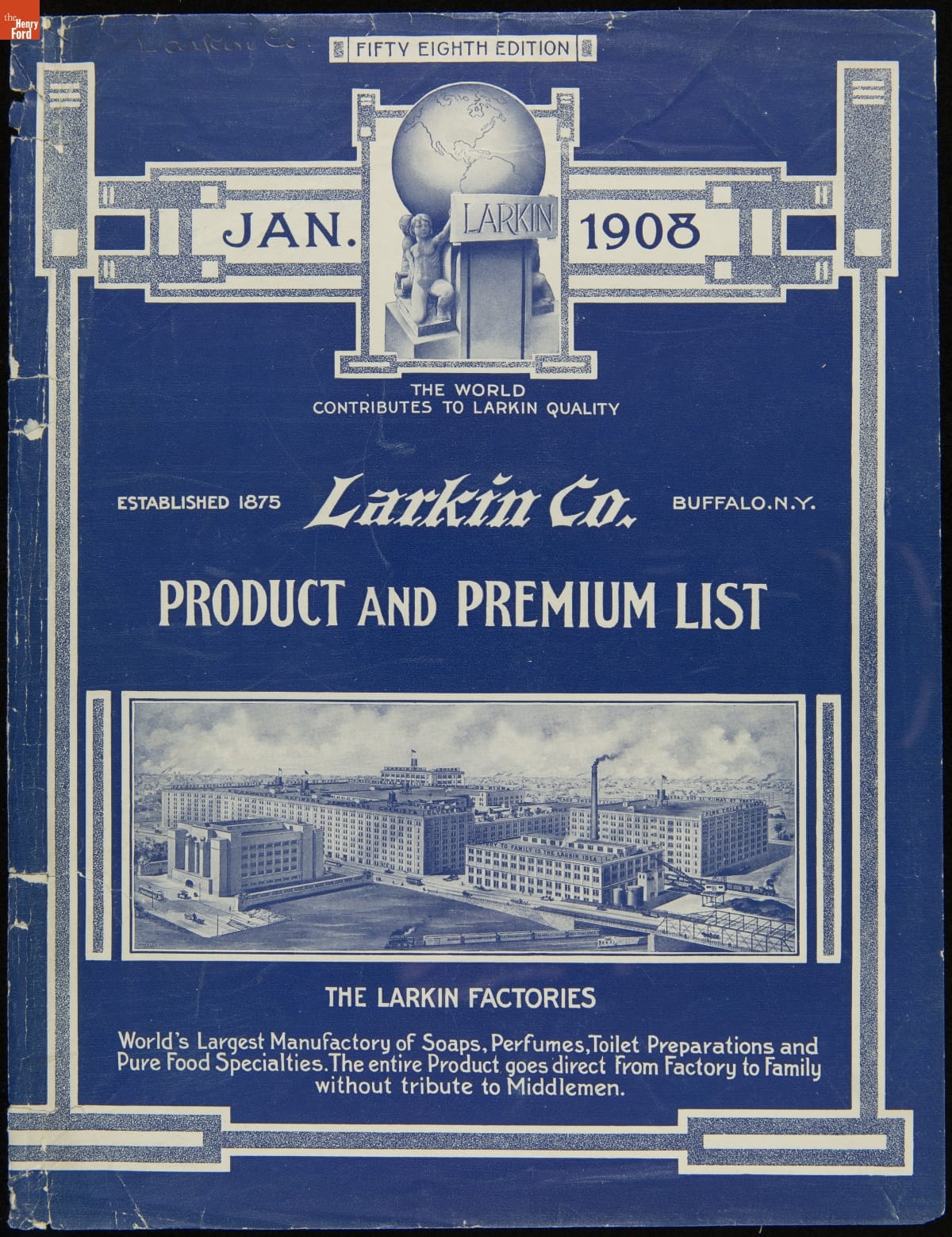
- January 01, 1908
- Collections - Artifact
Larkin Company Trade Catalog, "Product and Premium List," January 1908 (58th Edition)
John D. Larkin established a soap manufacturing company in 1875. He hired his brother-in-law, Elbert Hubbard, as a salesman. Hubbard developed "The Larkin Idea," a plan that sold goods directly to consumers through mail-order catalogs and offered incentivizing giveaways. It was a success. By the early 1900s, Larkin's catalogs contained pages of products and even more pages of premiums from which customers could choose.
- Larkin Company Trade Catalog, "A Stunning Foulard Gown Which Won't Cost You a Cent," circa 1910 - John D. Larkin established a soap manufacturing company in 1875. He hired his brother-in-law, Elbert Hubbard, as a salesman. Hubbard developed "The Larkin Idea," a plan that sold goods directly to consumers through mail-order catalogs and offered incentivizing giveaways. It was a success. By the early 1900s, Larkin's catalogs contained pages of products and even more pages of premiums from which customers could choose.
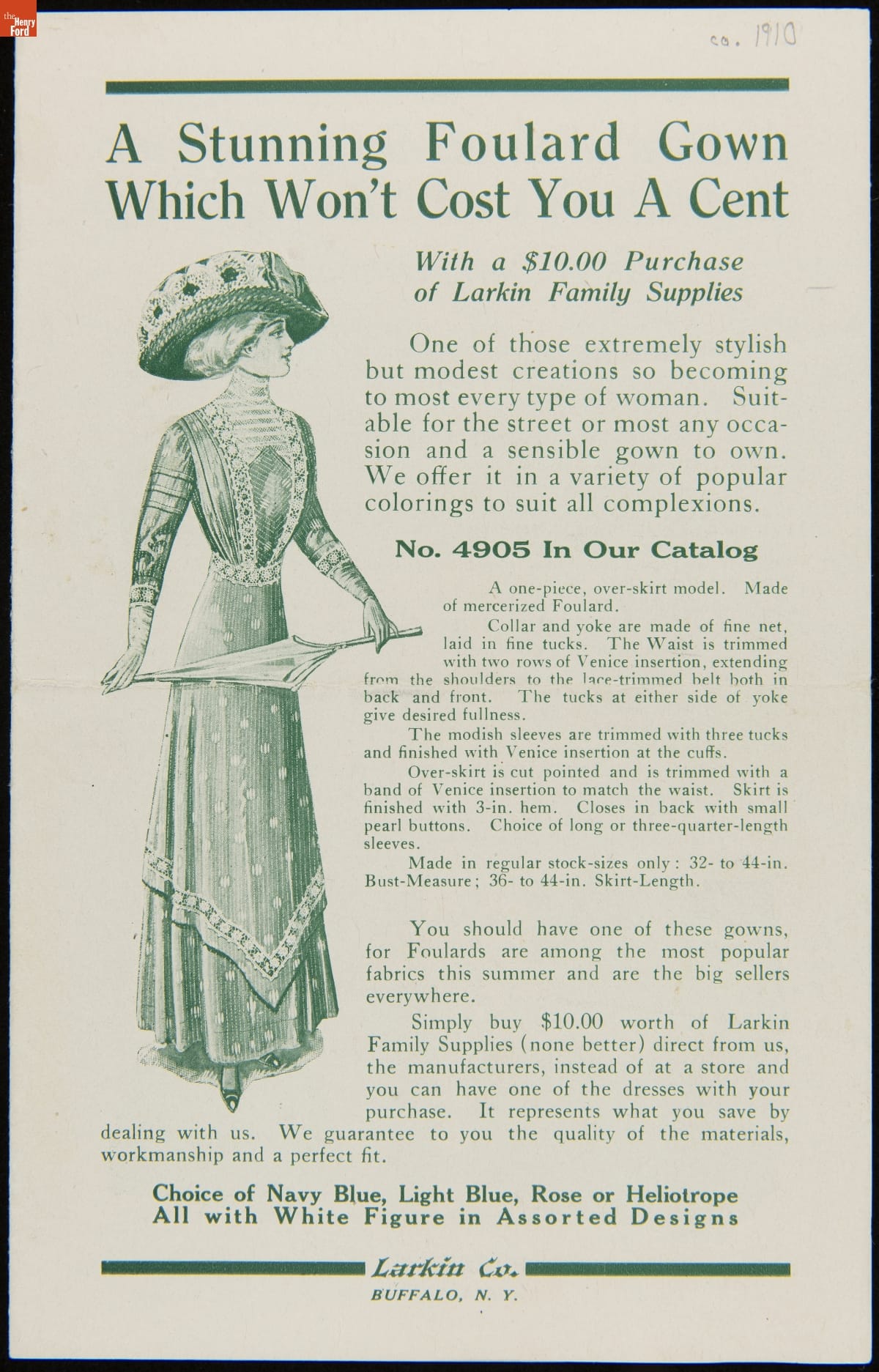
- circa 1910
- Collections - Artifact
Larkin Company Trade Catalog, "A Stunning Foulard Gown Which Won't Cost You a Cent," circa 1910
John D. Larkin established a soap manufacturing company in 1875. He hired his brother-in-law, Elbert Hubbard, as a salesman. Hubbard developed "The Larkin Idea," a plan that sold goods directly to consumers through mail-order catalogs and offered incentivizing giveaways. It was a success. By the early 1900s, Larkin's catalogs contained pages of products and even more pages of premiums from which customers could choose.