
Search
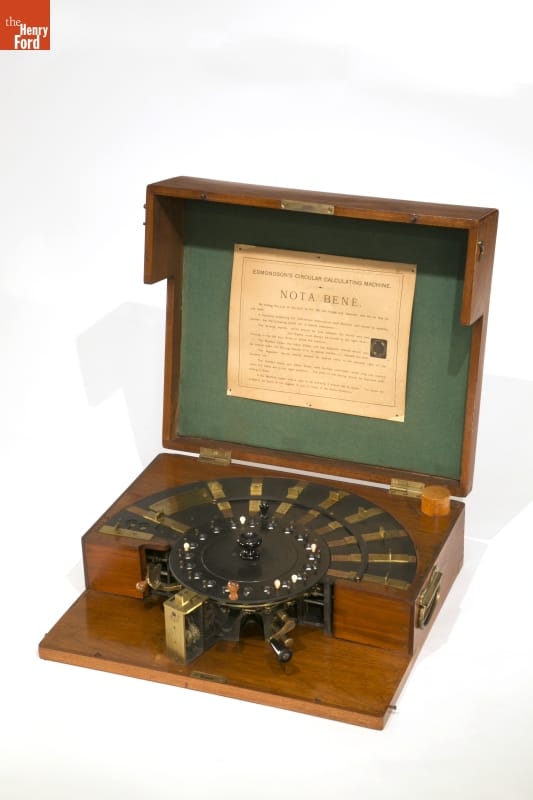
- Patent Model of Edmondson's Circular Calculating Machine, 1883 - Mechanical calculators used gears, cogs, levers, and rotating drums to solve mathematical problems indirectly. While Edmondson's Circular Calculator was rugged and reliable, its "stepped drum" system required people to slide plates and levers, making it difficult to master and time-consuming to operate. By the late 19th century, improved adding machines became popular, helping to reduce the common errors of human calculation.
- 1883
- Collections - Artifact
Patent Model of Edmondson's Circular Calculating Machine, 1883
Mechanical calculators used gears, cogs, levers, and rotating drums to solve mathematical problems indirectly. While Edmondson's Circular Calculator was rugged and reliable, its "stepped drum" system required people to slide plates and levers, making it difficult to master and time-consuming to operate. By the late 19th century, improved adding machines became popular, helping to reduce the common errors of human calculation.
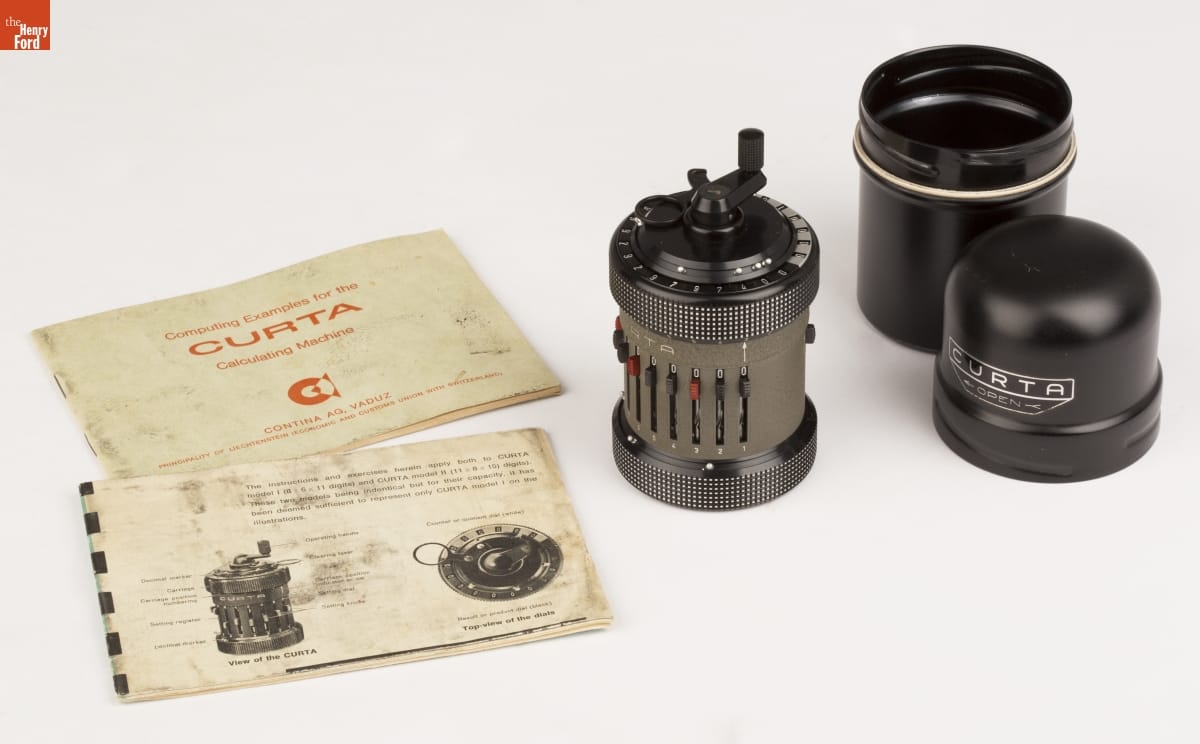
- Curta Mechanical Calculator, Model II, 1954-1973 -
- 1954-1973
- Collections - Artifact
Curta Mechanical Calculator, Model II, 1954-1973
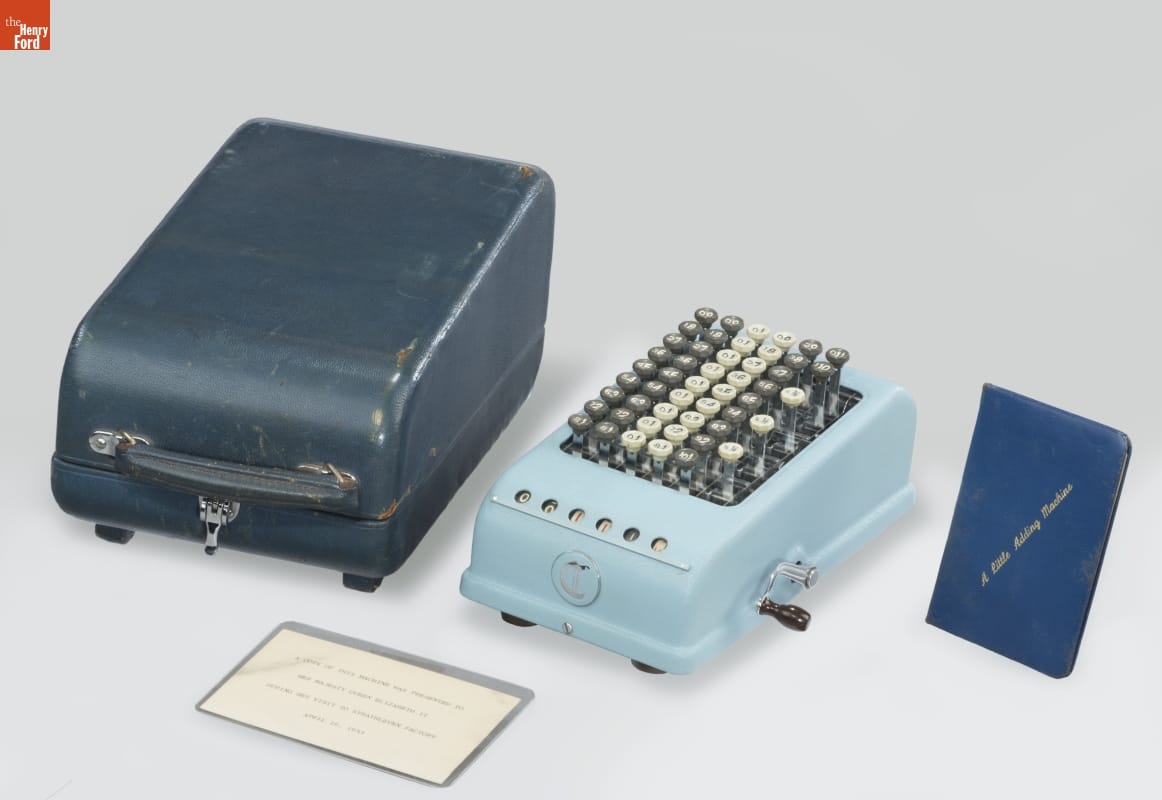
- Copy of a Custom "Baby Calculator" Presented to Queen Elizabeth II for Prince Charles, 1953 -
- 1953
- Collections - Artifact
Copy of a Custom "Baby Calculator" Presented to Queen Elizabeth II for Prince Charles, 1953
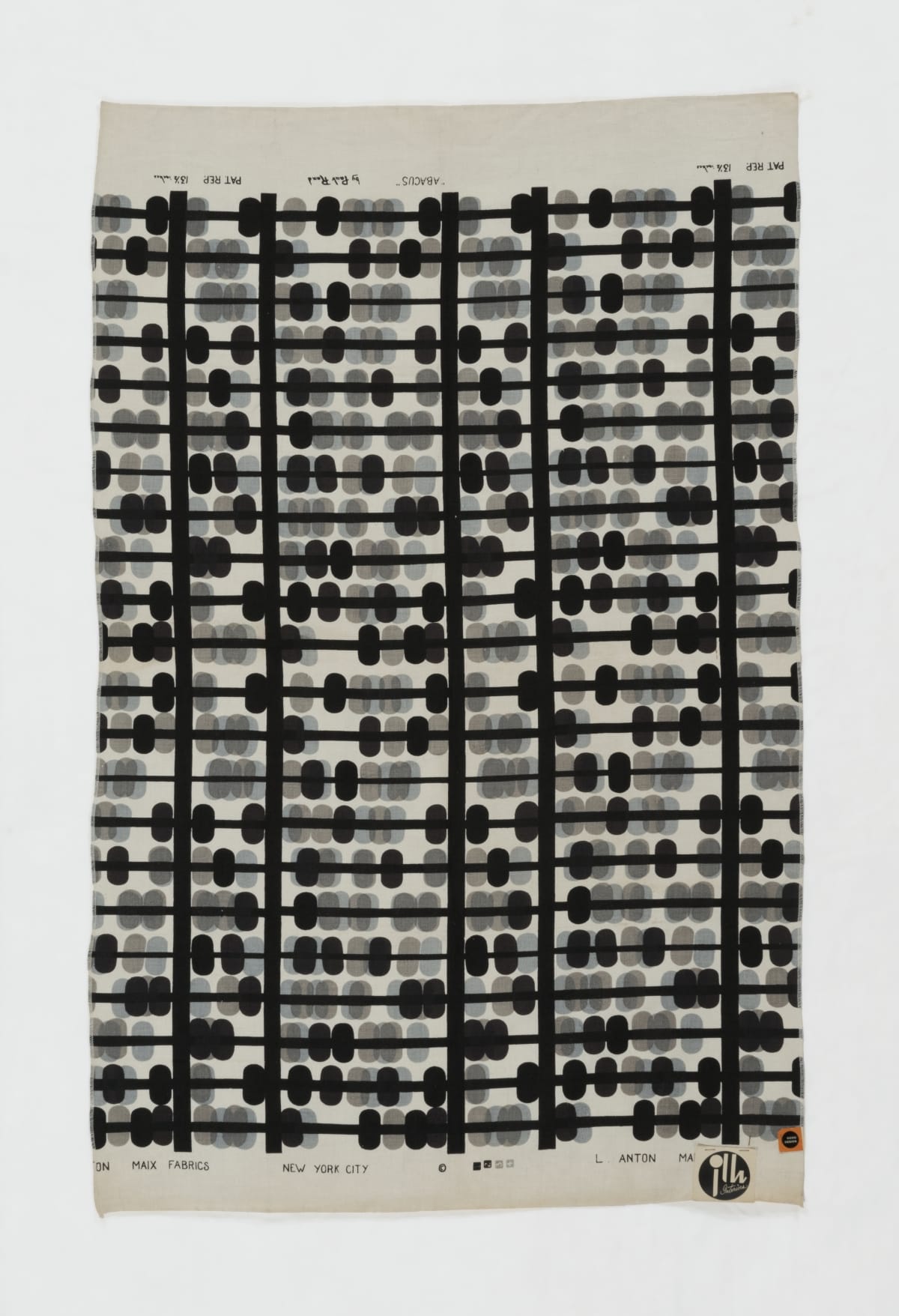
- "Abacus" Textile, Designed by Paul Rand for Maix Fabrics, 1949 -
- 1949
- Collections - Artifact
"Abacus" Textile, Designed by Paul Rand for Maix Fabrics, 1949
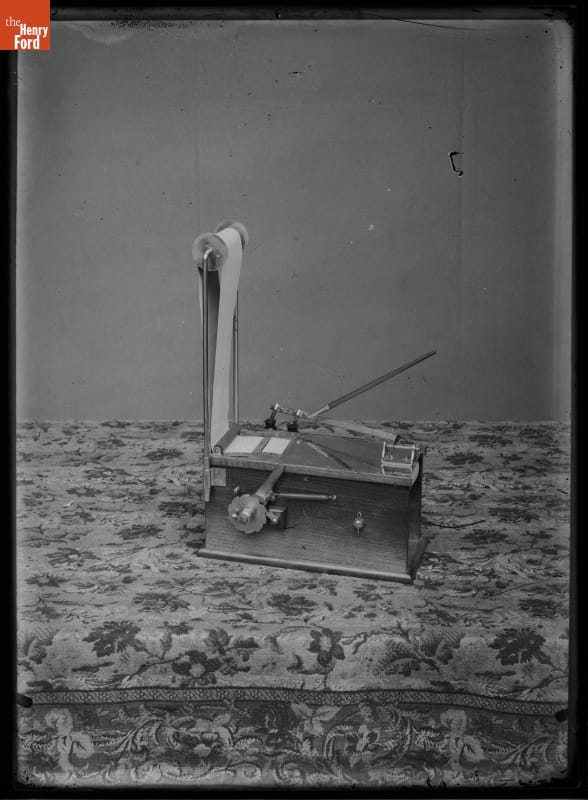
- Calculating and Printing Machine, Made by Leon Bollee, France, circa 1900 - Leon Bollee manufactured automobiles in France from 1895 until his death in 1913. He also invented a series of mechanical calculating machines -- forerunners of the electric calculator. Bollee made an important contribution to aviation when he provided Wilbur Wright with workspace and a crew of mechanics for Wright's successful airplane demonstrations at Le Mans, France, in 1908.
- circa 1900
- Collections - Artifact
Calculating and Printing Machine, Made by Leon Bollee, France, circa 1900
Leon Bollee manufactured automobiles in France from 1895 until his death in 1913. He also invented a series of mechanical calculating machines -- forerunners of the electric calculator. Bollee made an important contribution to aviation when he provided Wilbur Wright with workspace and a crew of mechanics for Wright's successful airplane demonstrations at Le Mans, France, in 1908.
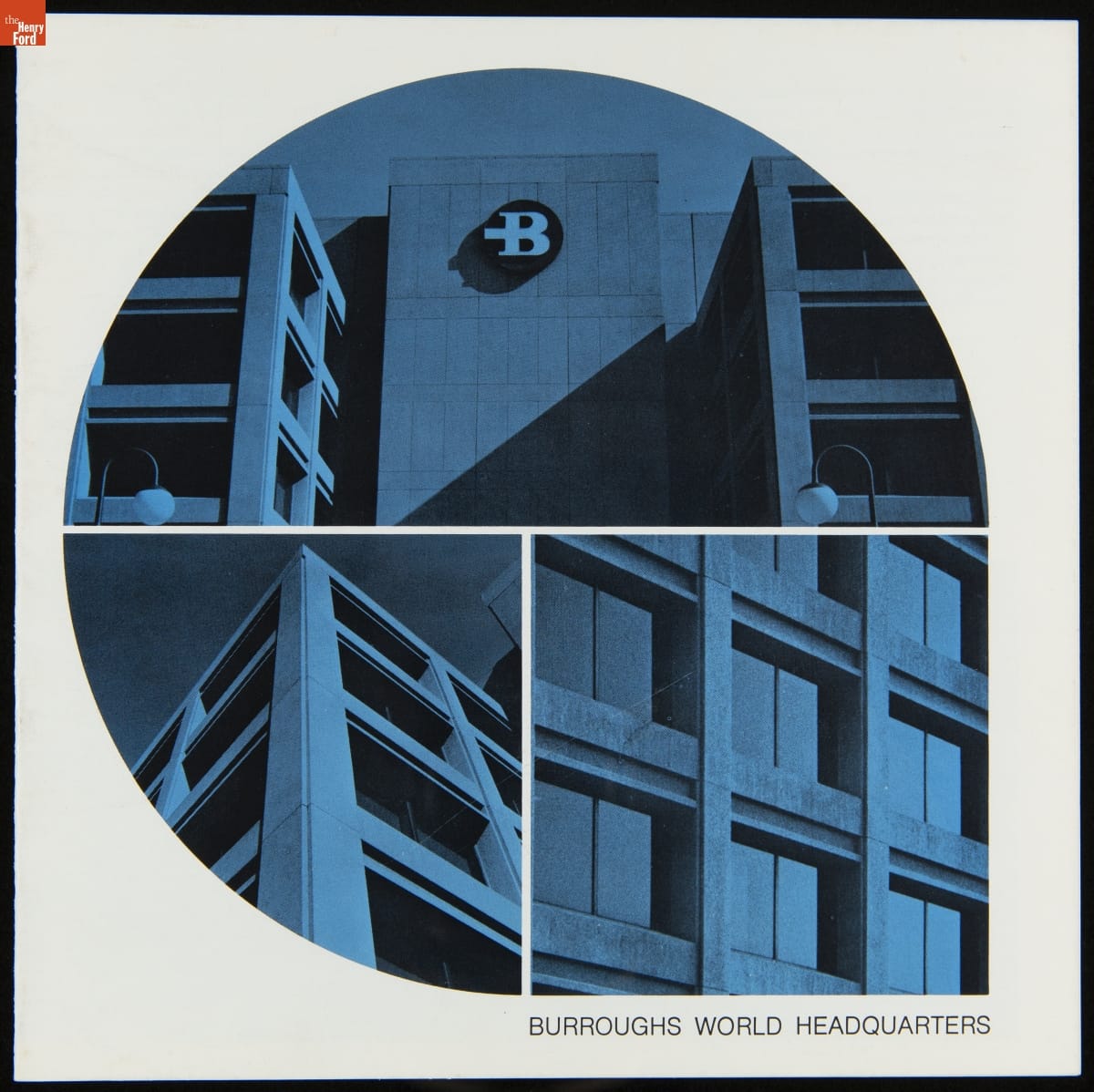
- Burroughs World Headquarters, circa 1971 - William Seward Burroughs and three other co-founders established the American Arithmometer Company in 1886 to produce simple addition and subtraction machines. Over the years, the company--later known as the Burroughs Corporation--innovated and expanded. Mergers with companies such as Moon-Hopkins and Sperry in the 20th century helped Burroughs become a leader in the calculating--and later computing--industry.
- circa 1971
- Collections - Artifact
Burroughs World Headquarters, circa 1971
William Seward Burroughs and three other co-founders established the American Arithmometer Company in 1886 to produce simple addition and subtraction machines. Over the years, the company--later known as the Burroughs Corporation--innovated and expanded. Mergers with companies such as Moon-Hopkins and Sperry in the 20th century helped Burroughs become a leader in the calculating--and later computing--industry.
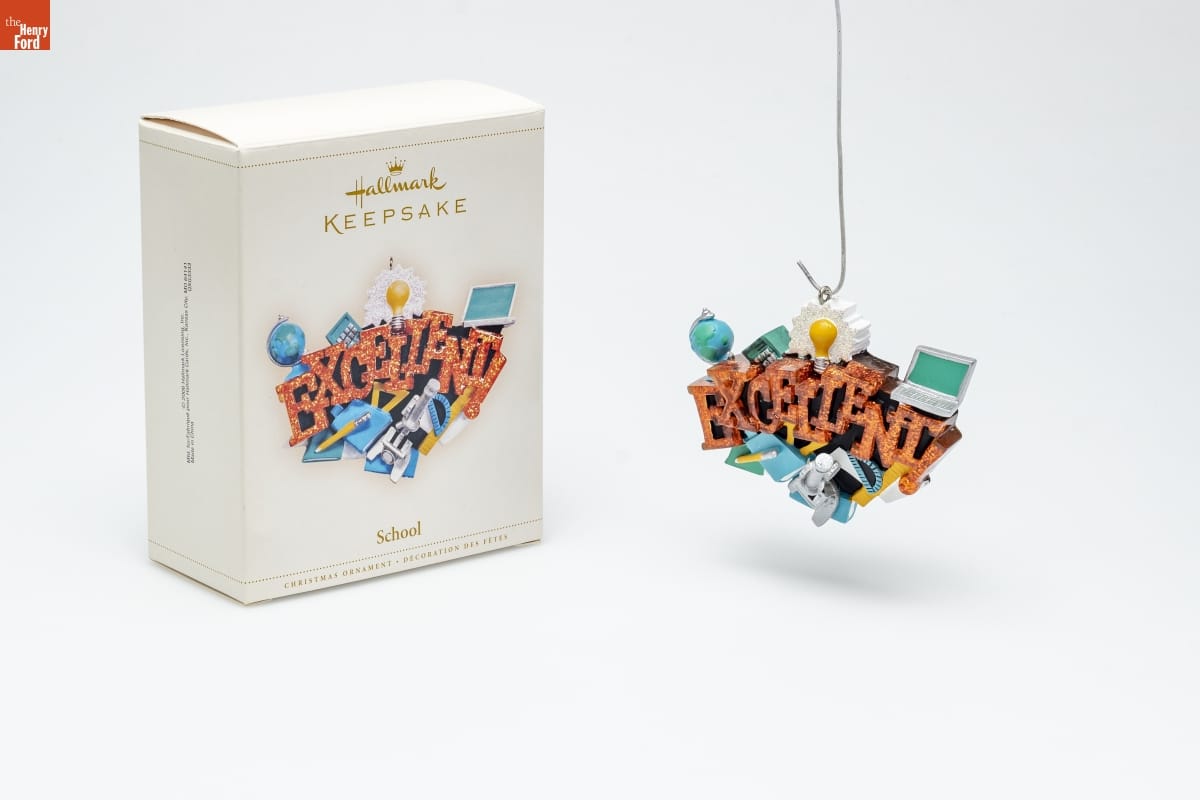
- Hallmark "School" Christmas Ornament, 2006 - Already known for greeting cards, Hallmark introduced a line of Christmas ornaments in 1973. The company's annual release of an increasing array of ornaments revolutionized Christmas decorating, appealing to customers' interest in marking memories and milestones as well as expressing one's personality and unique tastes.
- 2006
- Collections - Artifact
Hallmark "School" Christmas Ornament, 2006
Already known for greeting cards, Hallmark introduced a line of Christmas ornaments in 1973. The company's annual release of an increasing array of ornaments revolutionized Christmas decorating, appealing to customers' interest in marking memories and milestones as well as expressing one's personality and unique tastes.
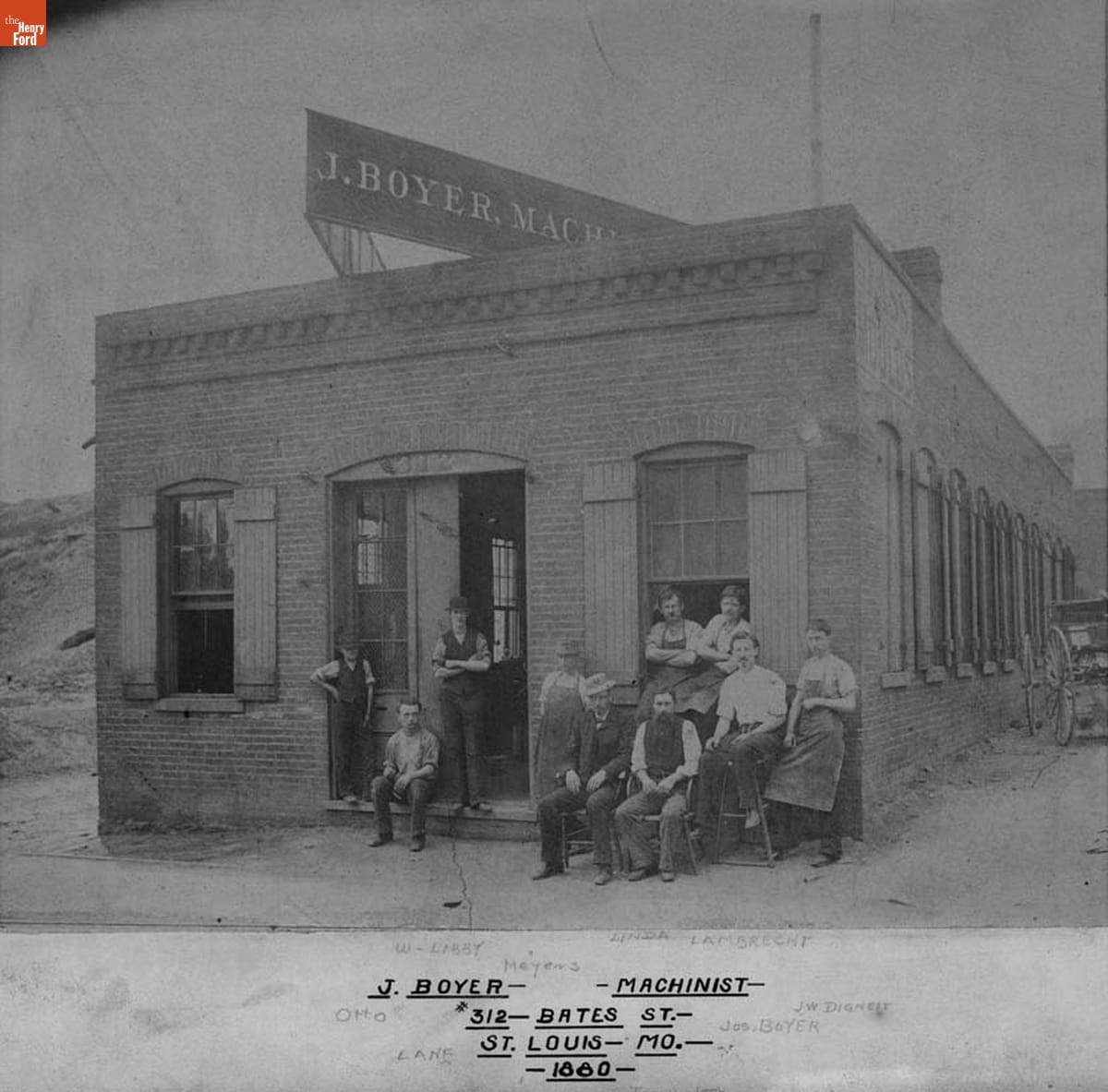
- Joesph Boyer and Company Machinists, 1880 -
- 1880
- Collections - Artifact
Joesph Boyer and Company Machinists, 1880
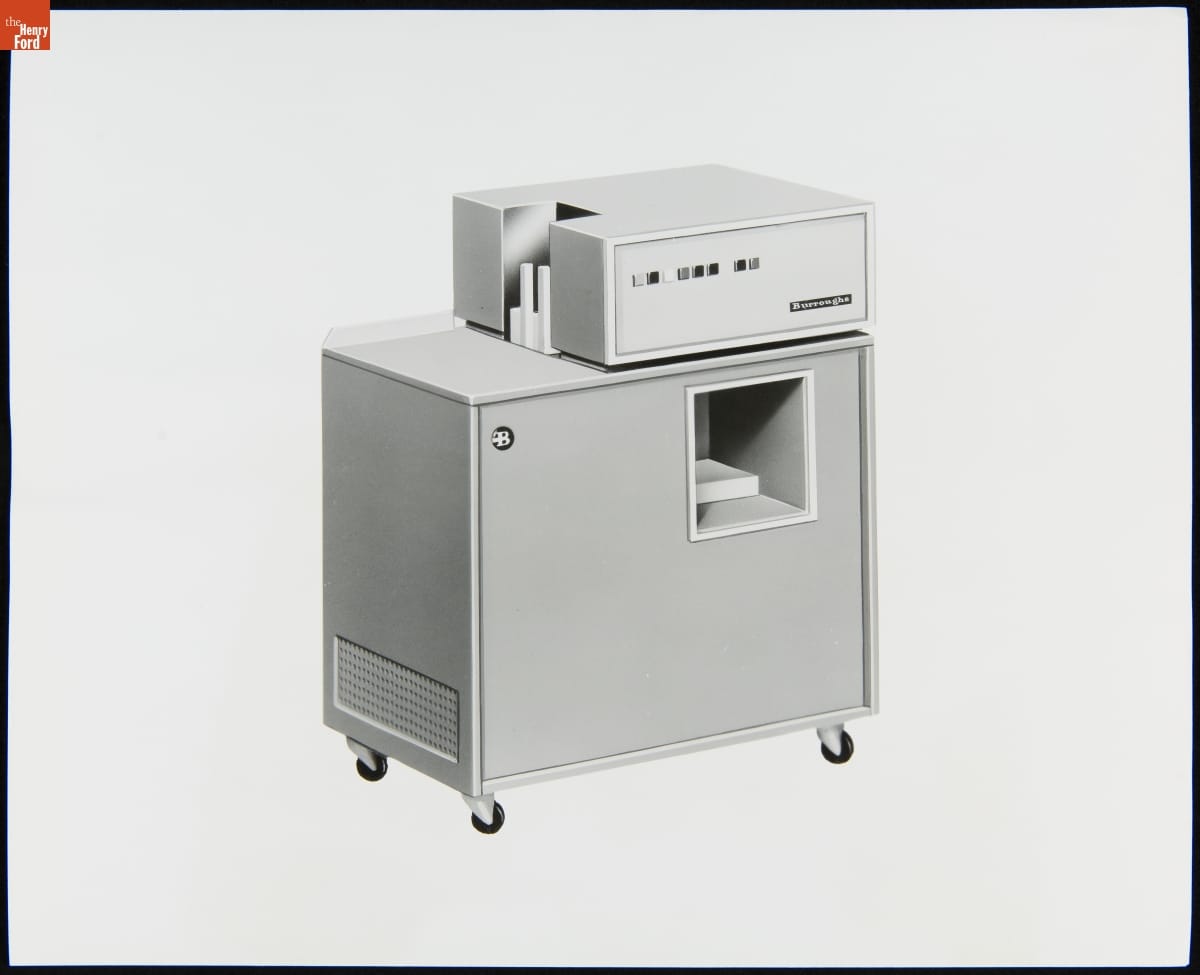
- Burroughs Equipment, 1950-1960 -
- 1950-1960
- Collections - Artifact
Burroughs Equipment, 1950-1960
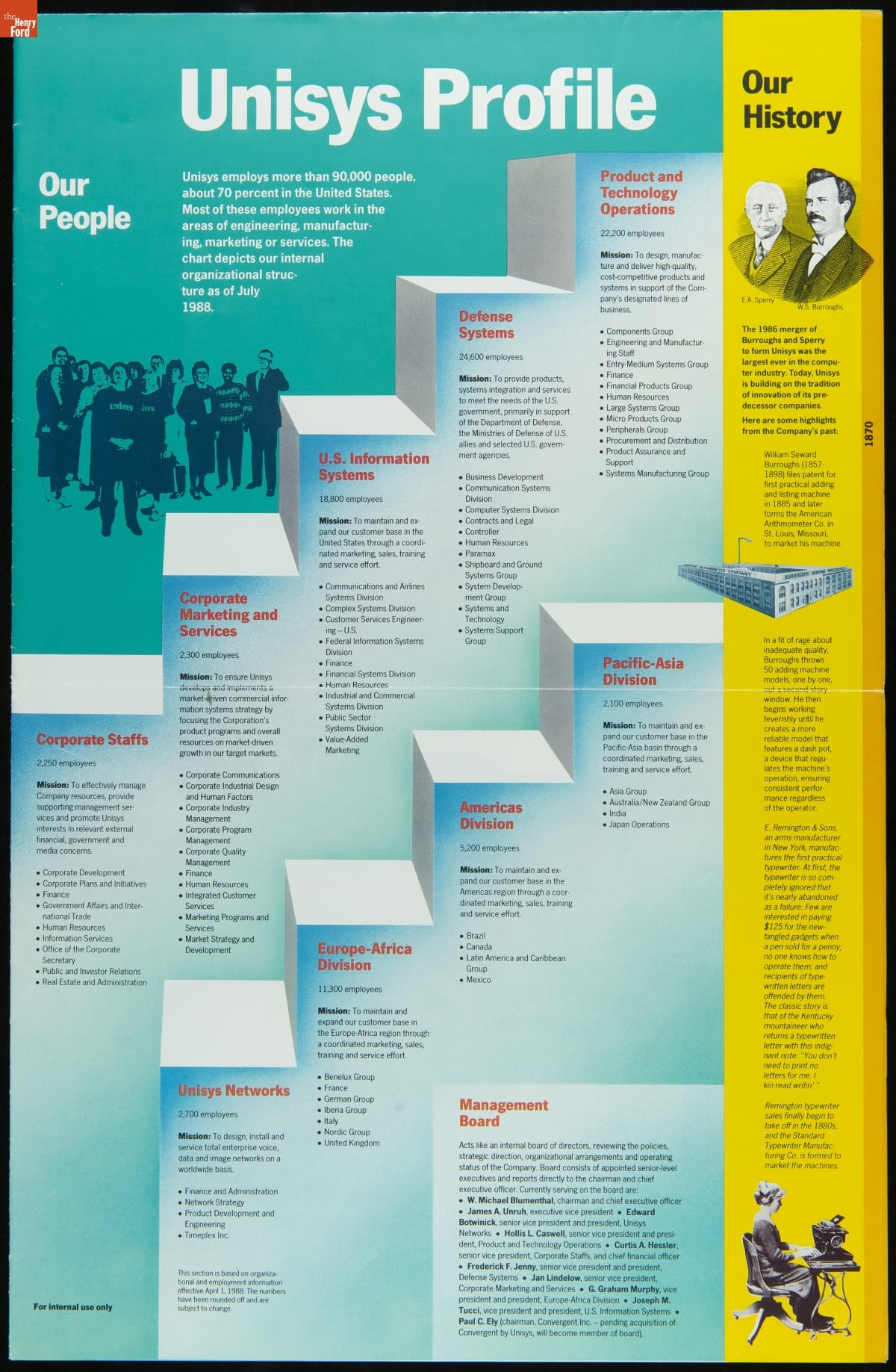
- Unisys Profile and Facilities World Map, 1988 - In 1986, the Burroughs and Sperry corporations merged to create Unisys. It was one of the largest mergers in the computer and information technology industry. Both companies had a long lineage of developing cutting-edge computing technology. Burroughs started in the late 1800s producing calculating machines, and Sperry formed in the early 1900s making navigation equipment and later built UNIVAC computers.
- 1870-1986
- Collections - Artifact
Unisys Profile and Facilities World Map, 1988
In 1986, the Burroughs and Sperry corporations merged to create Unisys. It was one of the largest mergers in the computer and information technology industry. Both companies had a long lineage of developing cutting-edge computing technology. Burroughs started in the late 1800s producing calculating machines, and Sperry formed in the early 1900s making navigation equipment and later built UNIVAC computers.