
Search
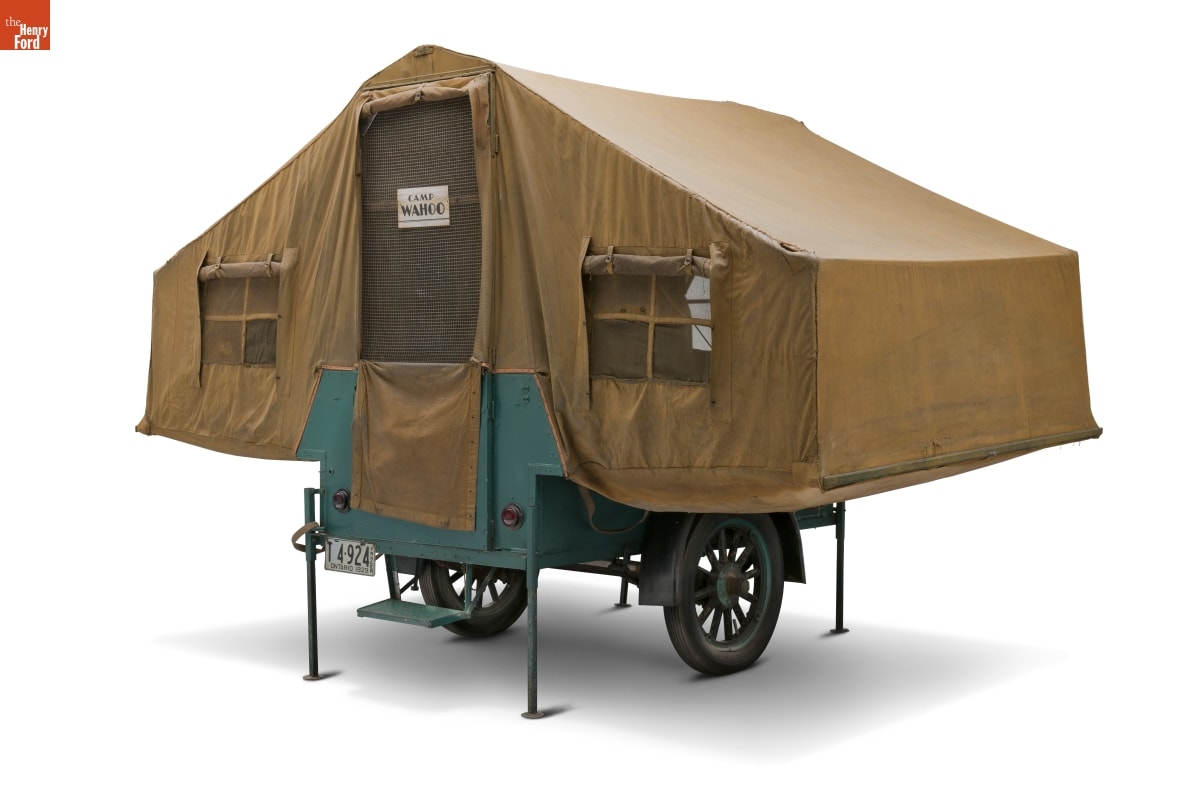
- Gilkie Tent Trailer, circa 1927 - Campers who wanted to get close to nature -- but not too close -- loved fold-out tent trailers. These two-wheelers folded down for easy towing by day and then mushroomed into miniature homes at night. Story has it that Warren and Ray Gilkison designed and built their first tent trailer in their father's machine shop for a family camping trip.
- circa 1927
- Collections - Artifact
Gilkie Tent Trailer, circa 1927
Campers who wanted to get close to nature -- but not too close -- loved fold-out tent trailers. These two-wheelers folded down for easy towing by day and then mushroomed into miniature homes at night. Story has it that Warren and Ray Gilkison designed and built their first tent trailer in their father's machine shop for a family camping trip.
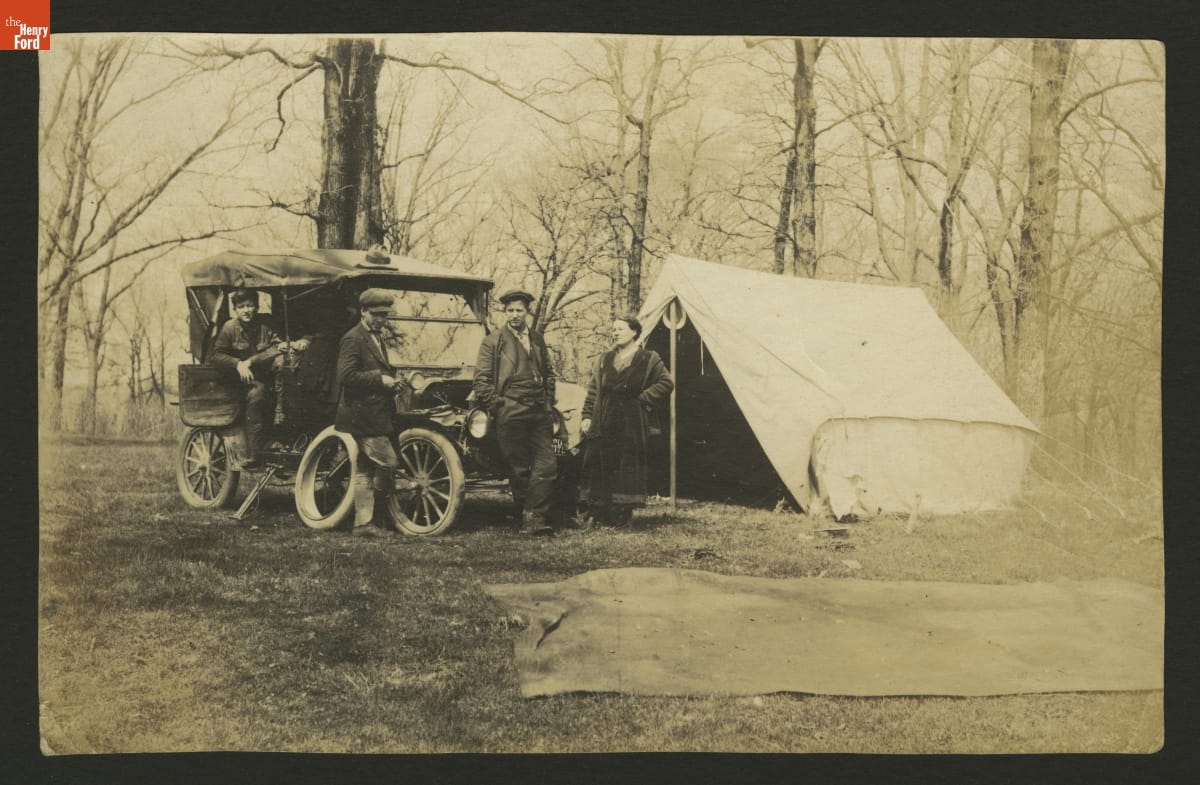
- Auto Campers with Ford Model T Touring Car and Tent, Cedar Rapids, Iowa, circa 1919 - During the late teens and 1920s, hordes of middle-class motorists were answering the call of the open road. But overnight lodgings were hard to find, so many people packed a tent, cots, and food, and enjoyed the freedom of autocamping. Setting up camp for the night provided the opportunity to make much-needed repairs before heading out the next day.
- circa 1919
- Collections - Artifact
Auto Campers with Ford Model T Touring Car and Tent, Cedar Rapids, Iowa, circa 1919
During the late teens and 1920s, hordes of middle-class motorists were answering the call of the open road. But overnight lodgings were hard to find, so many people packed a tent, cots, and food, and enjoyed the freedom of autocamping. Setting up camp for the night provided the opportunity to make much-needed repairs before heading out the next day.
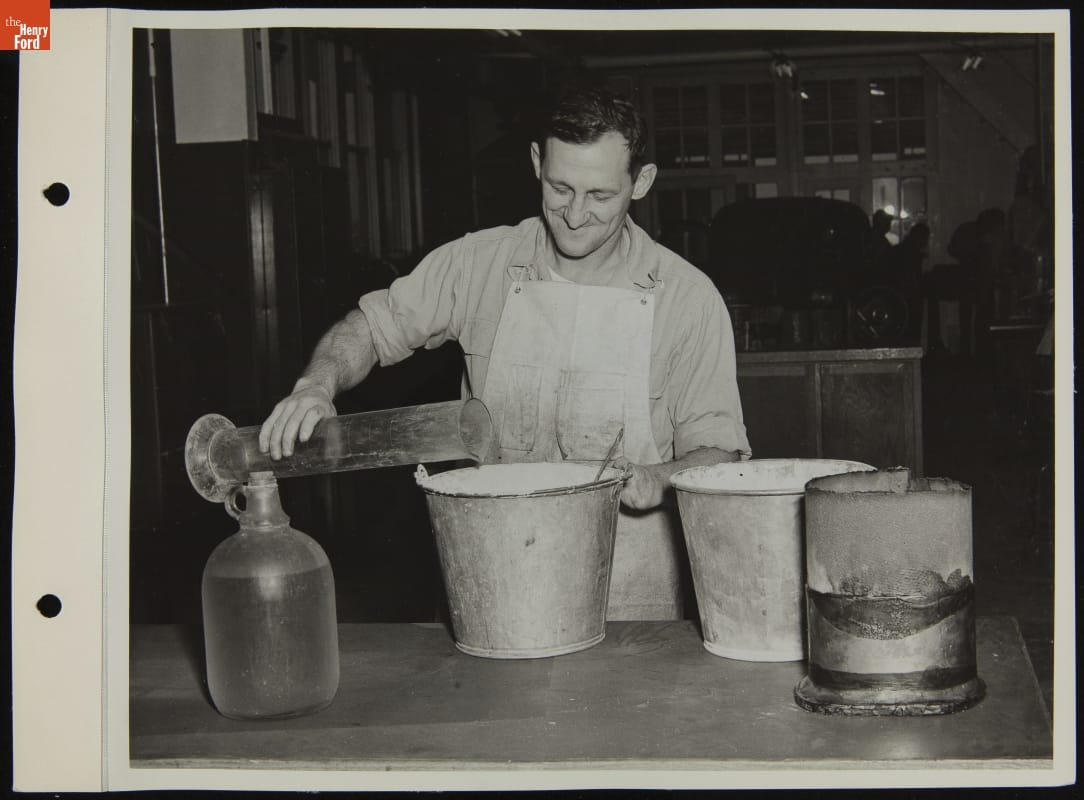
- Disabled Veteran Learning Precision Casting Work, Camp Legion Vocational School, November 1944 - Henry Ford opened Camp Legion, near Dearborn, Michigan, in 1938 for sons of dead or disabled World War I veterans. The young men earned steady wages working there seasonally from April-November. The camp's mission was modified in 1944 to include rehabilitation of World War II veterans with disabilities. Veterans learned new skills to help them reenter the workforce.
- November 28, 1944
- Collections - Artifact
Disabled Veteran Learning Precision Casting Work, Camp Legion Vocational School, November 1944
Henry Ford opened Camp Legion, near Dearborn, Michigan, in 1938 for sons of dead or disabled World War I veterans. The young men earned steady wages working there seasonally from April-November. The camp's mission was modified in 1944 to include rehabilitation of World War II veterans with disabilities. Veterans learned new skills to help them reenter the workforce.
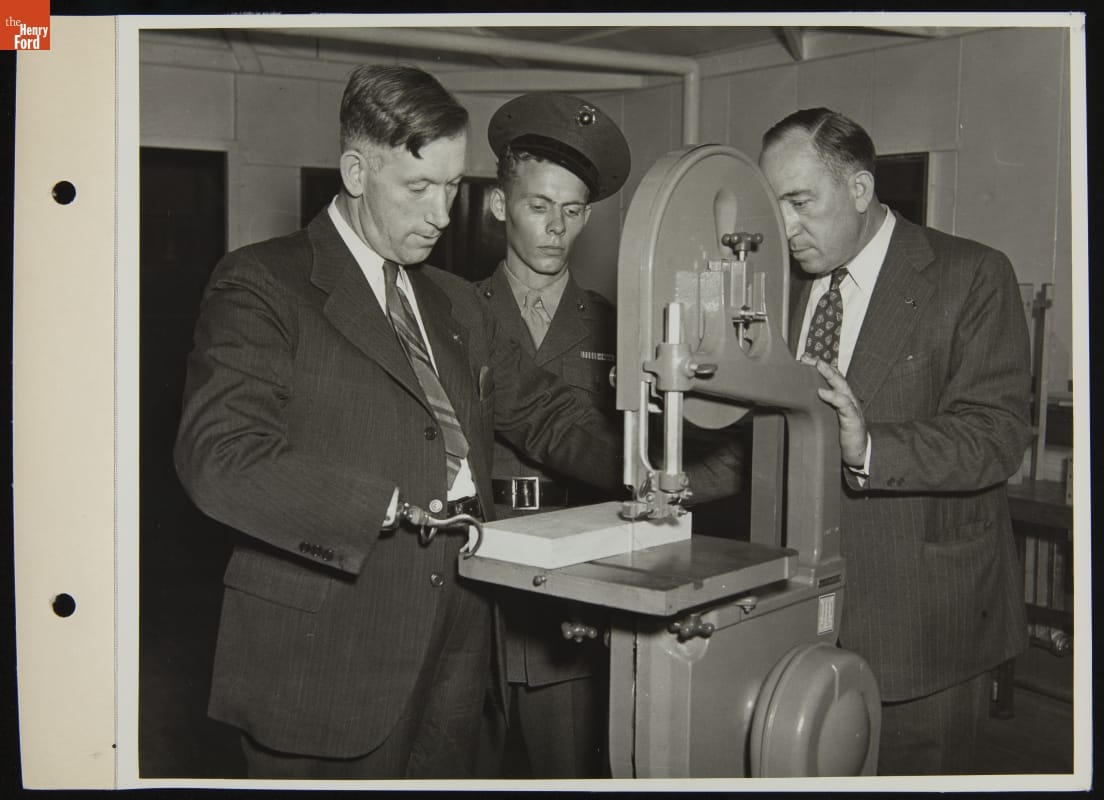
- World War I Veterans Demonstrate Use of Their Artificial Limbs to World War II Veterans at Camp Legion, July 1944 - Henry Ford opened Camp Legion, near Dearborn, Michigan, in 1938 for sons of dead or disabled World War I veterans. The young men earned steady wages working there seasonally from April-November. The camp's mission was modified in 1944 to include rehabilitation of World War II veterans with disabilities. Veterans learned new skills to help them reenter the workforce.
- July 18, 1944
- Collections - Artifact
World War I Veterans Demonstrate Use of Their Artificial Limbs to World War II Veterans at Camp Legion, July 1944
Henry Ford opened Camp Legion, near Dearborn, Michigan, in 1938 for sons of dead or disabled World War I veterans. The young men earned steady wages working there seasonally from April-November. The camp's mission was modified in 1944 to include rehabilitation of World War II veterans with disabilities. Veterans learned new skills to help them reenter the workforce.
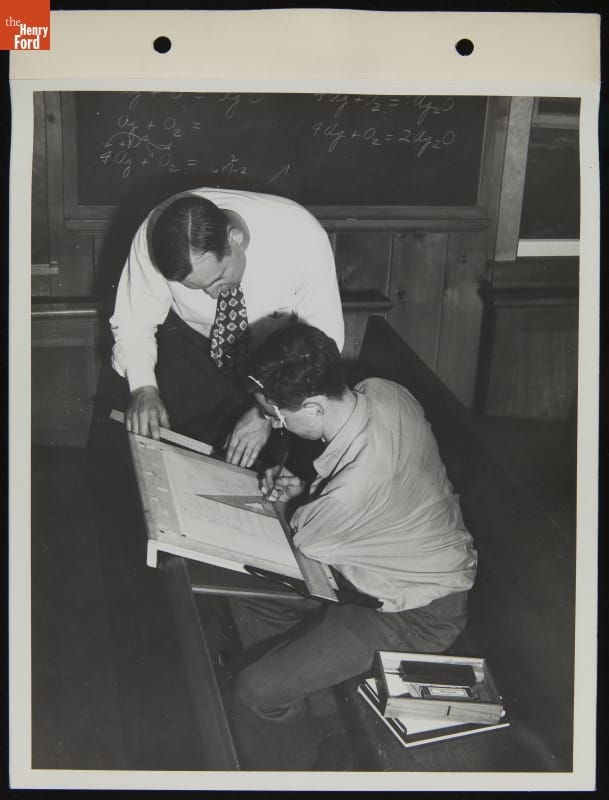
- Disabled Veteran in Class at Camp Legion Vocational School, August 1944 - Henry Ford opened Camp Legion, near Dearborn, Michigan, in 1938 for sons of dead or disabled World War I veterans. The young men earned steady wages working there seasonally from April-November. The camp's mission was modified in 1944 to include rehabilitation of World War II veterans with disabilities. Veterans learned new skills to help them reenter the workforce.
- August 12, 1944
- Collections - Artifact
Disabled Veteran in Class at Camp Legion Vocational School, August 1944
Henry Ford opened Camp Legion, near Dearborn, Michigan, in 1938 for sons of dead or disabled World War I veterans. The young men earned steady wages working there seasonally from April-November. The camp's mission was modified in 1944 to include rehabilitation of World War II veterans with disabilities. Veterans learned new skills to help them reenter the workforce.
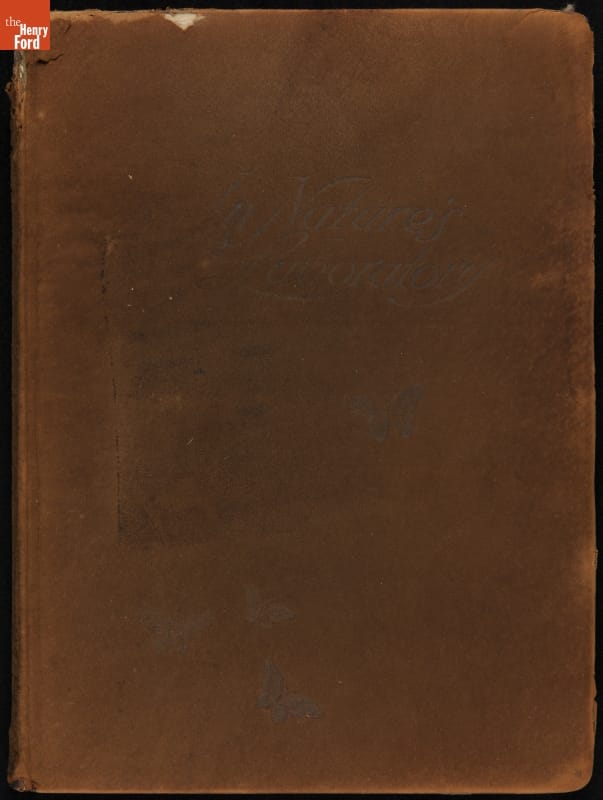
- "In Nature's Laboratory : Commemorating Our Vacation Trip of 1916, August 28th to September 9th" - The Vagabonds -- Henry Ford, Thomas Edison, Harvey Firestone, and John Burroughs -- enjoyed their annual camping trips taken from 1916 to 1924. Burroughs chronicled the group's 1916 journey in the elaborate scrapbook <em>In Nature's Laboratory</em>. Burroughs, Edison, and Firestone traveled through the Adirondack Mountains and Vermont. Ford couldn't make the trip that year.
- 28 August 1916-09 September 1916
- Collections - Artifact
"In Nature's Laboratory : Commemorating Our Vacation Trip of 1916, August 28th to September 9th"
The Vagabonds -- Henry Ford, Thomas Edison, Harvey Firestone, and John Burroughs -- enjoyed their annual camping trips taken from 1916 to 1924. Burroughs chronicled the group's 1916 journey in the elaborate scrapbook In Nature's Laboratory. Burroughs, Edison, and Firestone traveled through the Adirondack Mountains and Vermont. Ford couldn't make the trip that year.
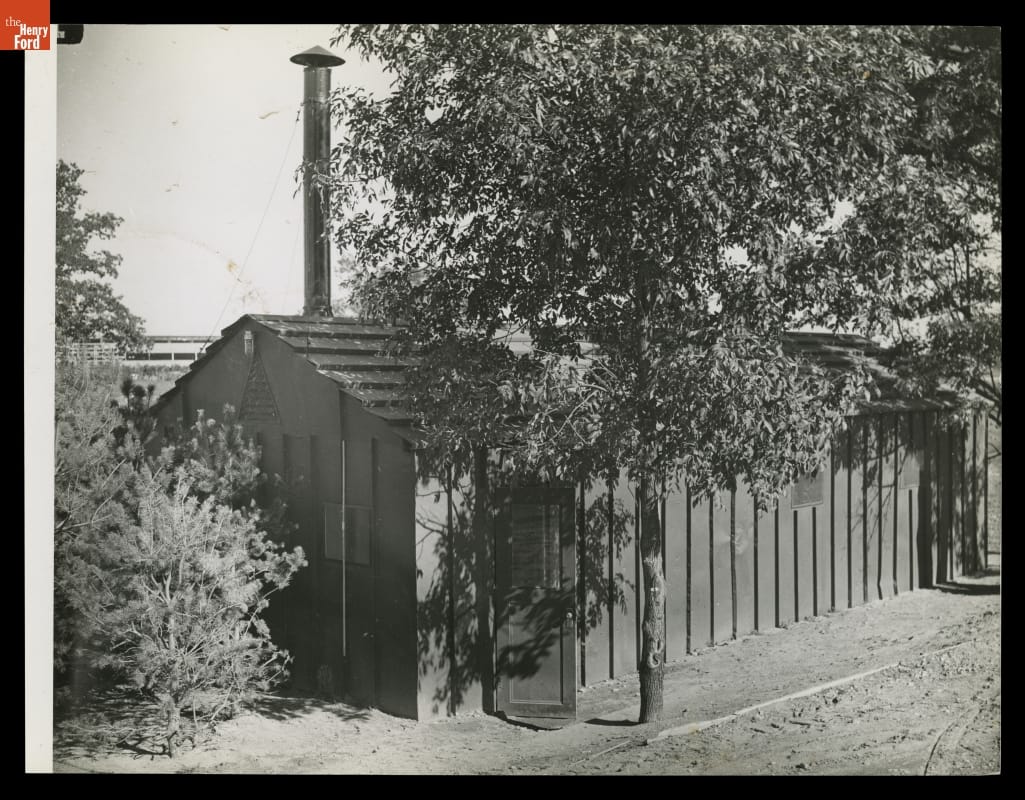
- Camp Legion, Dearborn, Michigan, September 1941 - In 1938, Henry Ford opened Camp Legion for the sons of World War I veterans. Groups of young men lived and worked here from April until November, sleeping in tents and earning $2 for each eight-hour workday. The camp was designed to provide income to otherwise unemployed teenagers while teaching vocational skills, instilling a strong work ethic, and fostering good health.
- September 17, 1941
- Collections - Artifact
Camp Legion, Dearborn, Michigan, September 1941
In 1938, Henry Ford opened Camp Legion for the sons of World War I veterans. Groups of young men lived and worked here from April until November, sleeping in tents and earning $2 for each eight-hour workday. The camp was designed to provide income to otherwise unemployed teenagers while teaching vocational skills, instilling a strong work ethic, and fostering good health.
- Dinner Plate in Tudor Rose Pattern, 1912-1919 - Henry Ford, Thomas Edison, Harvey Firestone and naturalist John Burroughs embarked on a series of camping trips between 1916 and 1924. These self-proclaimed Vagabonds loved to explore nature and the pre-industrial landscape, but they also camped in style. This group of well-to-do adventurers brought along service staff and all needed amenities including a set of durable, Art and Crafts-patterned china.

- 1912-1919
- Collections - Artifact
Dinner Plate in Tudor Rose Pattern, 1912-1919
Henry Ford, Thomas Edison, Harvey Firestone and naturalist John Burroughs embarked on a series of camping trips between 1916 and 1924. These self-proclaimed Vagabonds loved to explore nature and the pre-industrial landscape, but they also camped in style. This group of well-to-do adventurers brought along service staff and all needed amenities including a set of durable, Art and Crafts-patterned china.
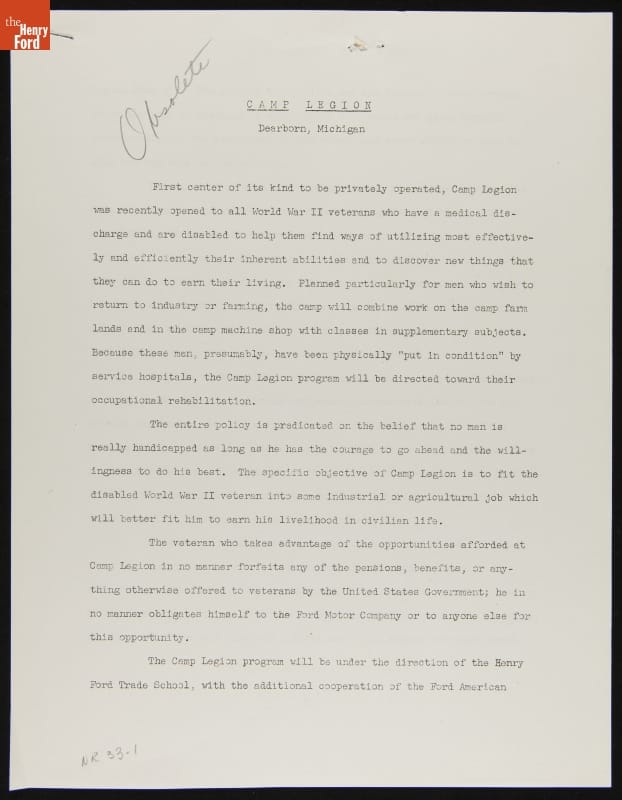
- Camp Legion Opened to Give Occupational Rehabilitation to Disabled Veterans, Ford Press Release, 1944 - Henry Ford opened Camp Legion, near Dearborn, Michigan, in 1938 for sons of dead or disabled World War I veterans. The young men earned steady wages working there seasonally from April-November. The camp's mission was modified in 1944 to include rehabilitation of World War II veterans with disabilities. Veterans learned new skills to help them reenter the workforce.
- 1944
- Collections - Artifact
Camp Legion Opened to Give Occupational Rehabilitation to Disabled Veterans, Ford Press Release, 1944
Henry Ford opened Camp Legion, near Dearborn, Michigan, in 1938 for sons of dead or disabled World War I veterans. The young men earned steady wages working there seasonally from April-November. The camp's mission was modified in 1944 to include rehabilitation of World War II veterans with disabilities. Veterans learned new skills to help them reenter the workforce.
- Disabled Veteran Operating Machinery at Camp Legion Vocational School, July 1945 - Henry Ford opened Camp Legion, near Dearborn, Michigan, in 1938 for sons of dead or disabled World War I veterans. The young men earned steady wages working there seasonally from April-November. The camp's mission was modified in 1944 to include rehabilitation of World War II veterans with disabilities. Veterans learned new skills to help them reenter the workforce.
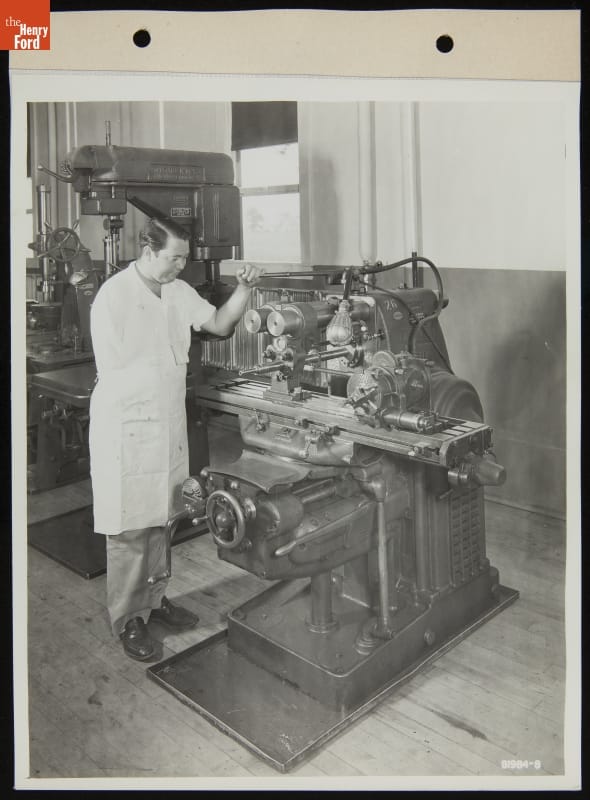
- July 24, 1945
- Collections - Artifact
Disabled Veteran Operating Machinery at Camp Legion Vocational School, July 1945
Henry Ford opened Camp Legion, near Dearborn, Michigan, in 1938 for sons of dead or disabled World War I veterans. The young men earned steady wages working there seasonally from April-November. The camp's mission was modified in 1944 to include rehabilitation of World War II veterans with disabilities. Veterans learned new skills to help them reenter the workforce.