
Gilkie Tent Trailer, circa 1927

THF90965 / Gilkie Tent Trailer, circa 1927
01
Artifact Overview
Campers who wanted to get close to nature -- but not too close -- loved fold-out tent trailers. These two-wheelers folded down for easy towing by day and then mushroomed into miniature homes at night. Story has it that Warren and Ray Gilkison designed and built their first tent trailer in their father's machine shop for a family camping trip.
Artifact Details
Artifact
Camping trailer
Date Made
circa 1927
Creators
Place of Creation
Location
at Henry Ford Museum in Driving America
Object ID
86.128.1
Credit
From the Collections of The Henry Ford. Gift in Memory of Lucien F. Bauduc, Sr.
Material
Canvas
Wood (Plant Material)
Metal
Rubber (Material)
Color
Green
Brown
Inscriptions
On sign attached to front: CAMP WAHOO
Specifications
Make & Model: Gilkie tent trailer, about 1927
Maker: E.P. Gilkison & Sons Company, Terre Haute, Indiana
Features: extra-wide 28 inch door, 82 square feet, full-size beds, standing height inside, electric lights, steel kitchenette, icebox, screens, water- and mildew-proof army-cotton-duck tent
Height: 53.5 inches
Width: 13 feet
Wheelbase: 8 feet 6 inches
Overall length: 9 feet 9 inches
Keywords |
|---|
02
Related Content
 Set
SetVehicle Viewer
- 99 Artifacts
Americans didn't invent the automobile, but we embraced it and quickly made it our own. Cars cruise through our music, movies, and dreams. They drive innovation and create frustration. They are objects of beauty and sources of blight. The vehicles in the "Driving America" exhibit reveal how the car reshaped our culture and landscape. The decisions we make now, individually and collectively, will define our automotive future.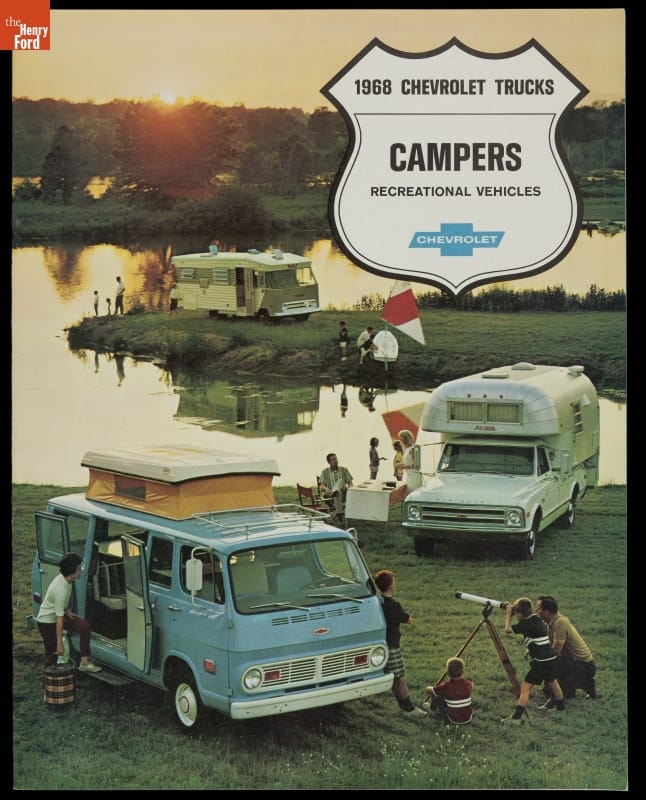 Set
SetRecreational Vehicles
- 22 Artifacts
Auto manufacturers embraced the market potential of campers and motorhomes in the 1960s, creating their own versions. This 1968 Chevrolet recreational vehicle catalog provided potential buyers with needed information and a variety of available choices.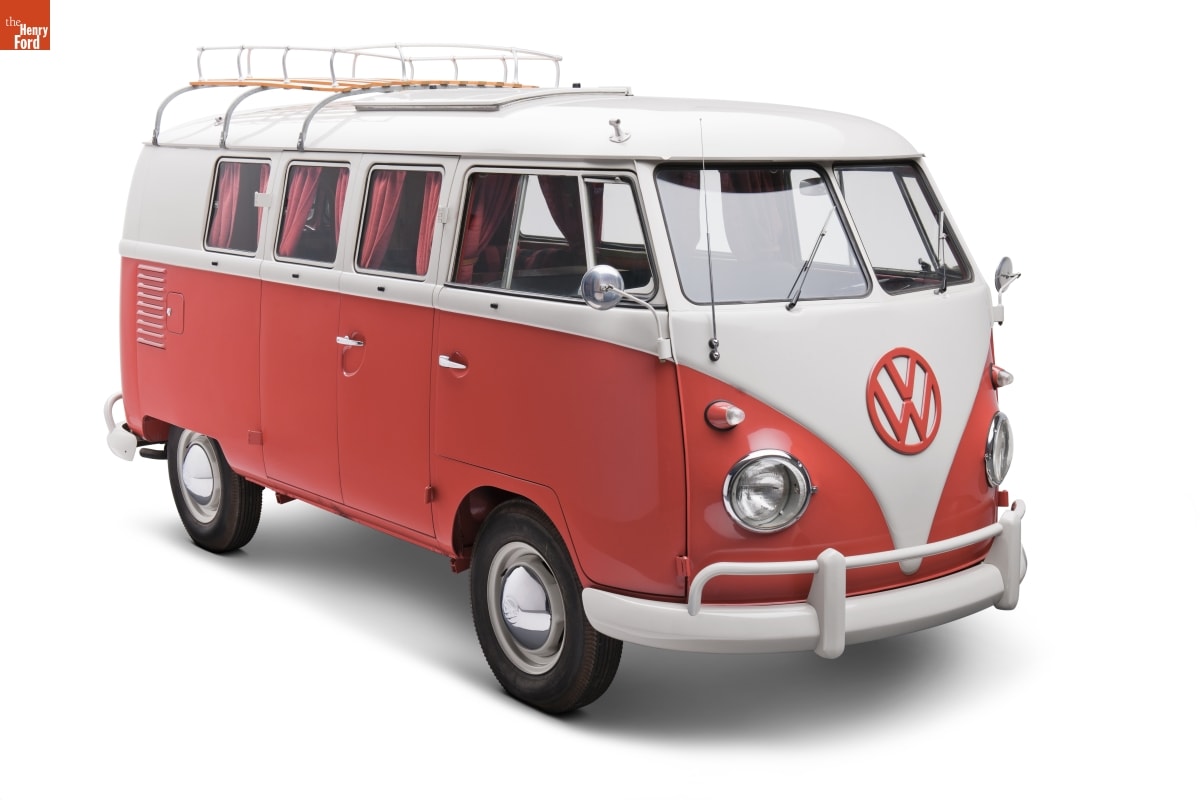 Set
SetFeatured on The Henry Ford's Innovation Nation: Season 2
- 26 Artifacts
Volkswagen introduced its "box on wheels," the VW Type 2 Bus, in 1949. A few years later, VW contracted with Westfalia and introduced converted campers. First exported to the U.S. in 1956, Westfalia campers provided home-like camping comfort and created a postwar recreational-vehicle lifestyle. This soon-to-be cultural icon transported Americans down highways and byways and into the great outdoors. article
The Evolution of Auto Touring in America
Learn more about the vehicles you'll see at Old Car Festival the year, demonstrating the evolution of auto touring in the early years of the 20th century, from 1914 to 1930.