
Search
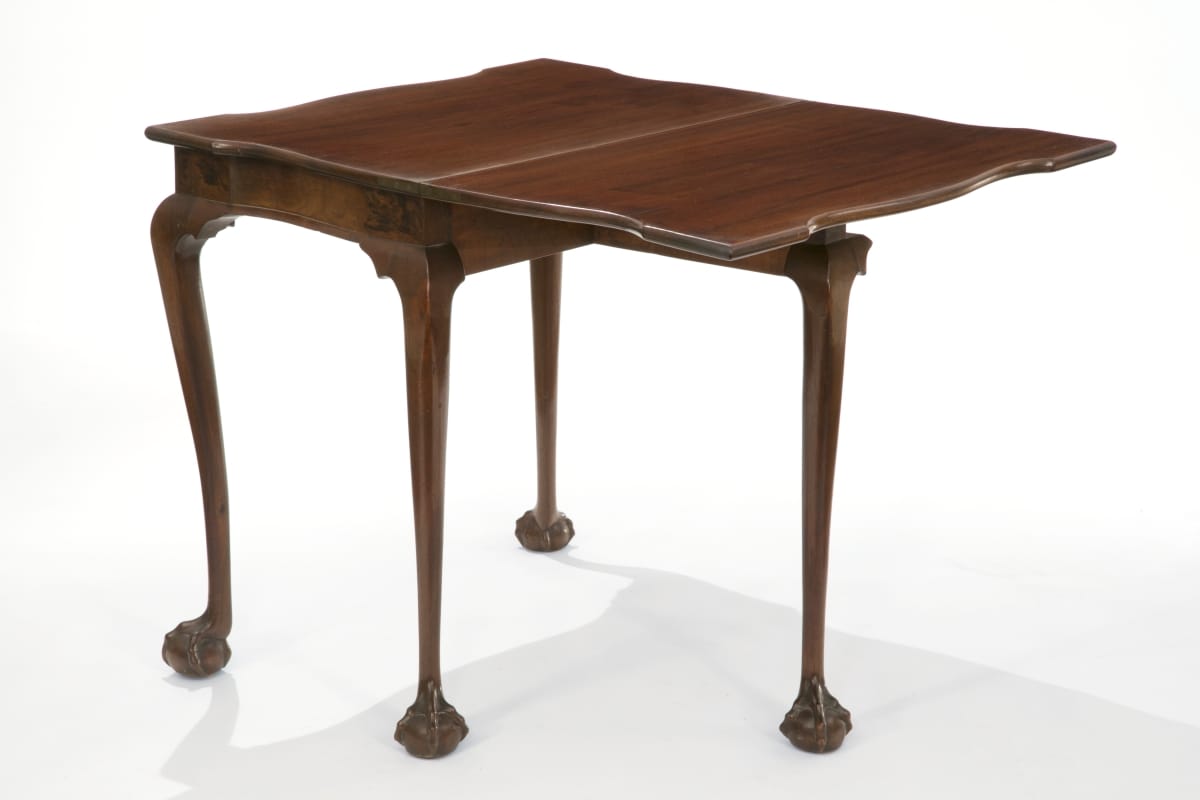
- Card Table, Owned by John Hancock, 1760-1790 - This card table belonged to John Hancock -- Revolutionary War patriot, statesman, merchant and one of the wealthiest people in America. Hancock inherited an elegant mansion overlooking the Boston Common; and like other wealthy gentlemen of this time, he delighted in playing cards. He could well afford to purchase this fine table to enjoy a game of cards with friends and political associates.
- 1760-1790
- Collections - Artifact
Card Table, Owned by John Hancock, 1760-1790
This card table belonged to John Hancock -- Revolutionary War patriot, statesman, merchant and one of the wealthiest people in America. Hancock inherited an elegant mansion overlooking the Boston Common; and like other wealthy gentlemen of this time, he delighted in playing cards. He could well afford to purchase this fine table to enjoy a game of cards with friends and political associates.
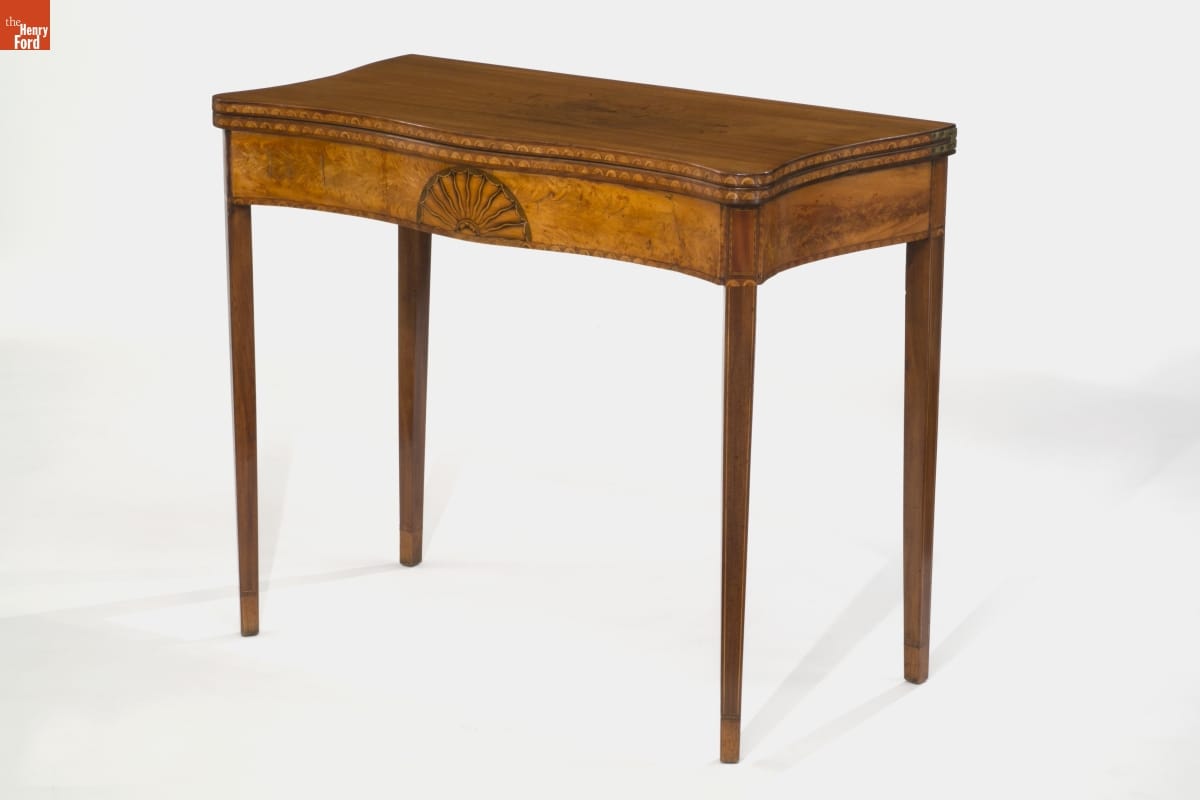
- Card Table, Attributed to John and Thomas Seymour, 1790-1815 - Card tables provided 18th and 19th century Americans with the space to play cards and other games. For the well-to-do, elegant and fashionable tables also demonstrated their wealth and social status. Craftsmen John and Thomas Seymour made furniture in the highest style for affluent, turn-of-the-19th-century Bostonians. This stylish, expensive-to-make table is attributed to the famous father and son furniture makers.
- 1790-1815
- Collections - Artifact
Card Table, Attributed to John and Thomas Seymour, 1790-1815
Card tables provided 18th and 19th century Americans with the space to play cards and other games. For the well-to-do, elegant and fashionable tables also demonstrated their wealth and social status. Craftsmen John and Thomas Seymour made furniture in the highest style for affluent, turn-of-the-19th-century Bostonians. This stylish, expensive-to-make table is attributed to the famous father and son furniture makers.
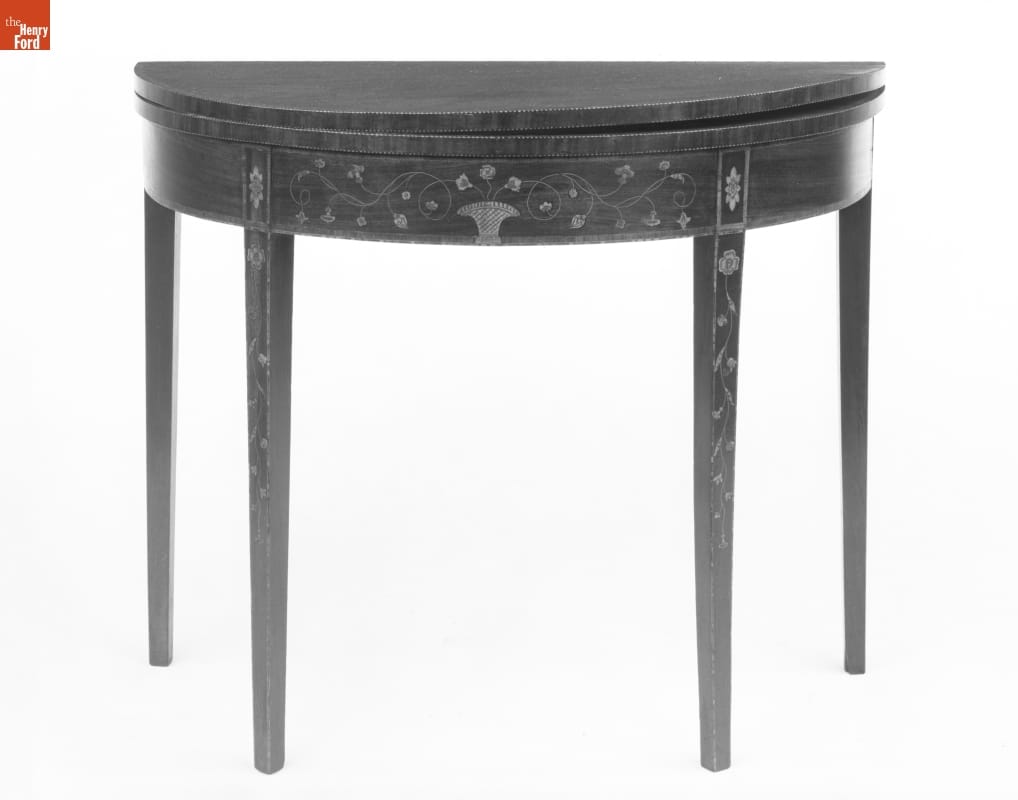
- Card Table, 1785-1805 -
- 1785-1805
- Collections - Artifact
Card Table, 1785-1805
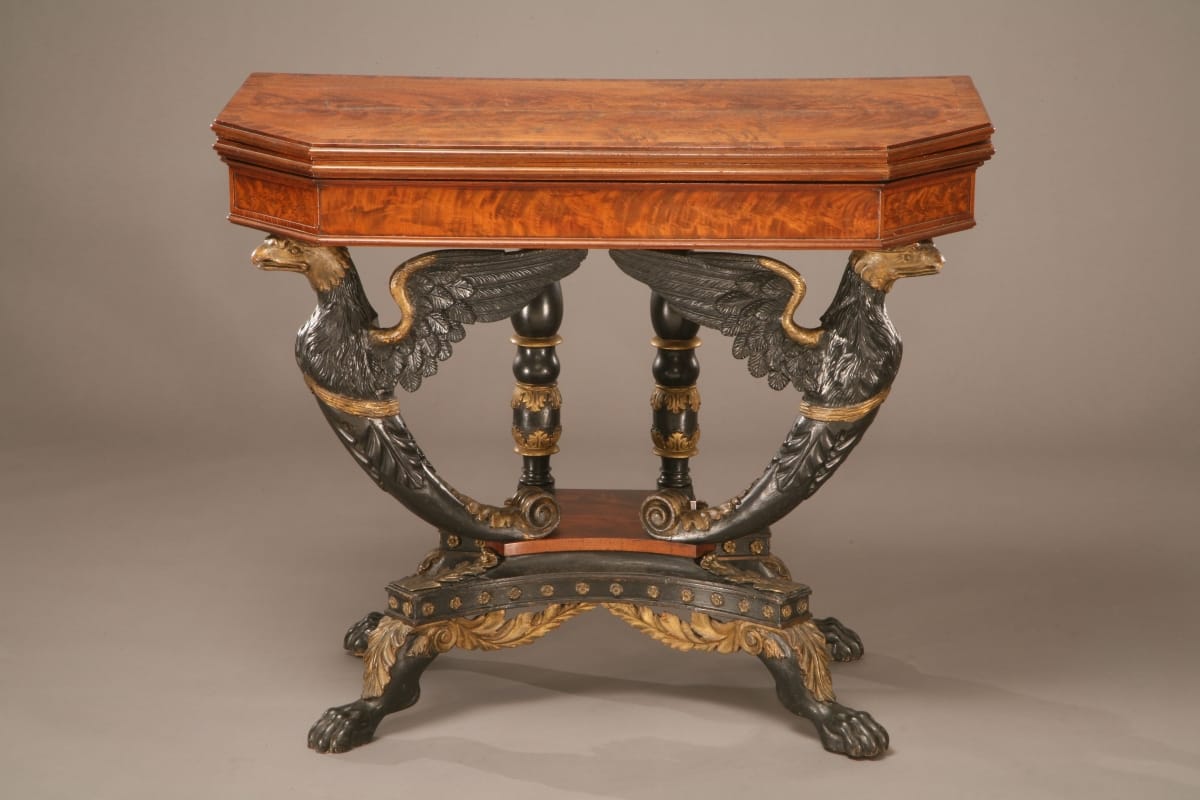
- Game Table, Possibly Made by Charles Honore Lannuier, 1810-1830 - Flip-top game tables were highly desirable objects in early 19th century America. This one is as fancy as they got, complete with carved, winged griffins, and hairy paw legs.
- 1810-1830
- Collections - Artifact
Game Table, Possibly Made by Charles Honore Lannuier, 1810-1830
Flip-top game tables were highly desirable objects in early 19th century America. This one is as fancy as they got, complete with carved, winged griffins, and hairy paw legs.
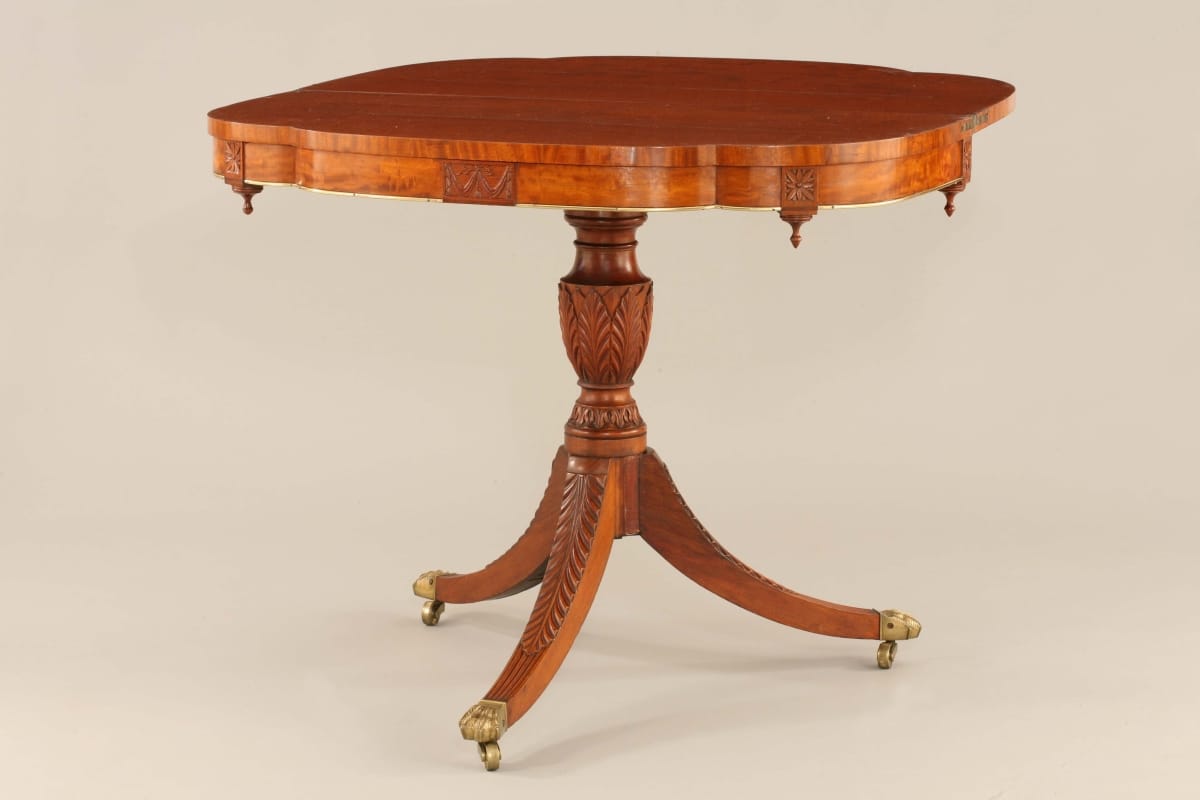
- Card Table, Made by Michael Allison, 1810-1820 - In the early nineteenth century New York City emerged as the largest city and cultural capital of the United States. Consequently, it attracted emigrant European craftsmen like Duncan Phyfe and Charles Honore Lannuier, who created new standards for fashionable furniture. Into this mix, native-born craftsmen like Michael Allison competed with their version in the latest fashion, such as this signed card table.
- 1810-1820
- Collections - Artifact
Card Table, Made by Michael Allison, 1810-1820
In the early nineteenth century New York City emerged as the largest city and cultural capital of the United States. Consequently, it attracted emigrant European craftsmen like Duncan Phyfe and Charles Honore Lannuier, who created new standards for fashionable furniture. Into this mix, native-born craftsmen like Michael Allison competed with their version in the latest fashion, such as this signed card table.
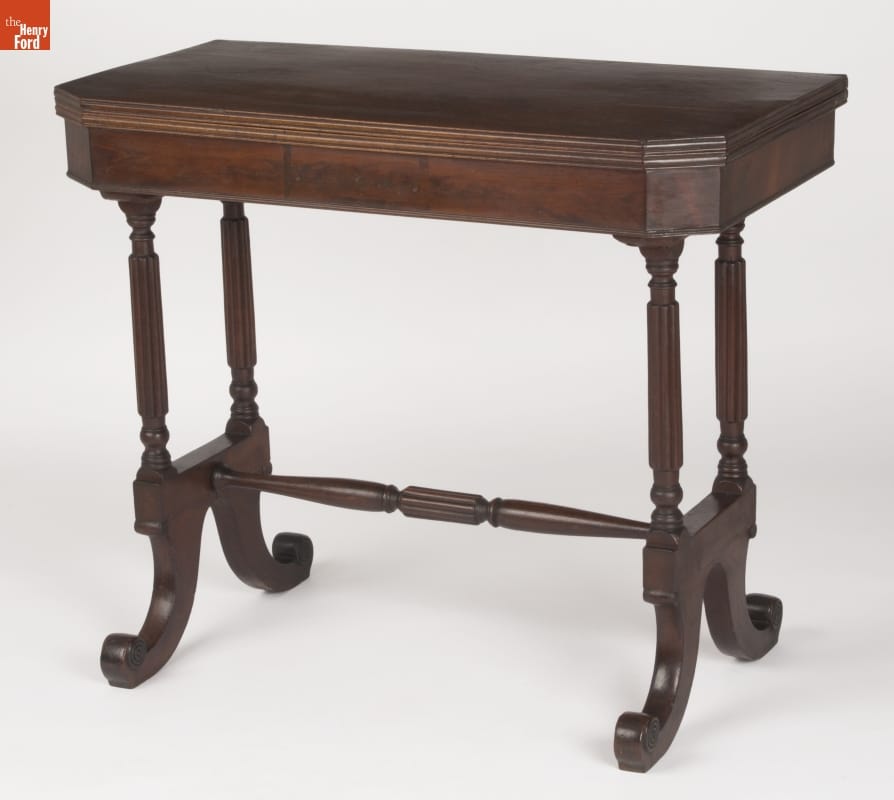
- Card Table, 1820-1840 -
- 1820-1840
- Collections - Artifact
Card Table, 1820-1840
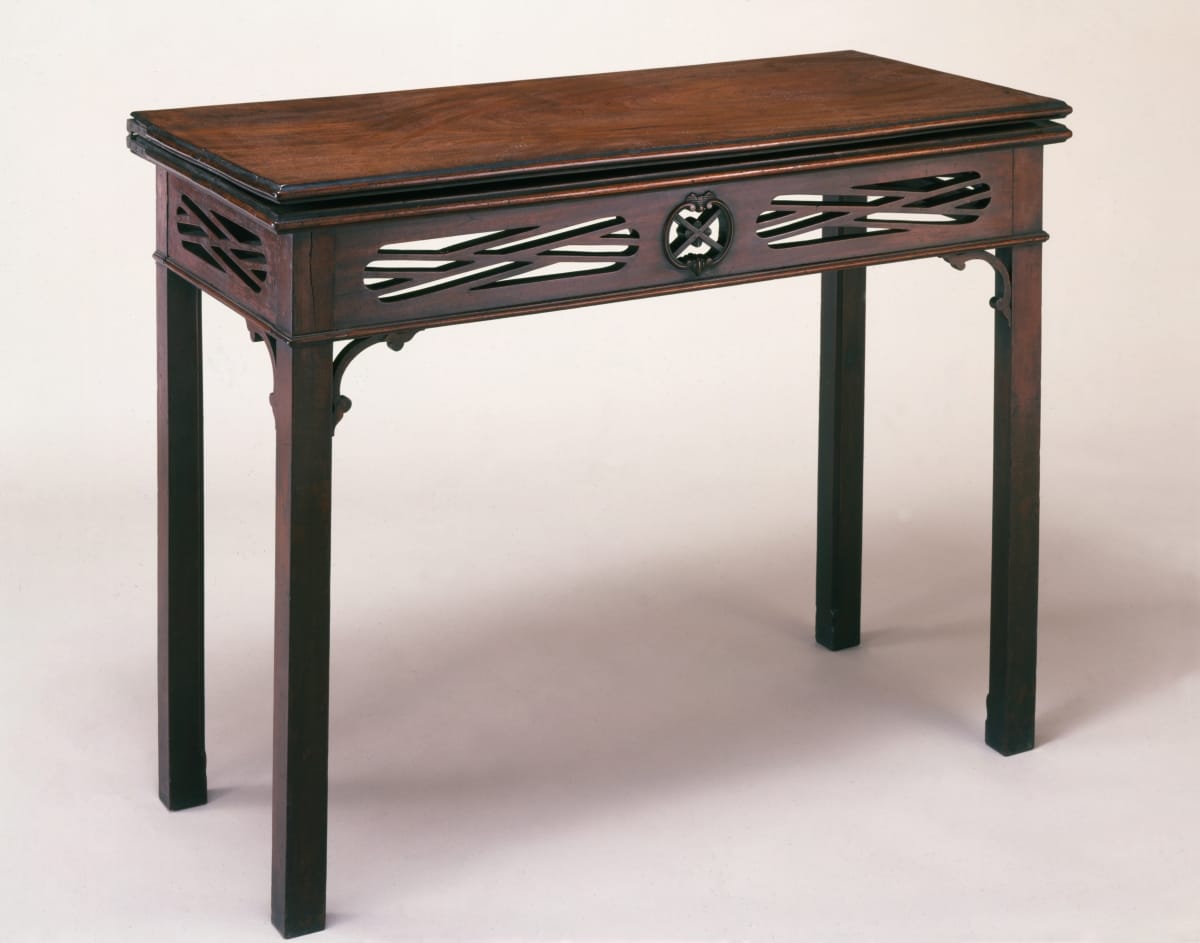
- Card Table, 1765-1790 - This is a rare survival of a Charleston high style, colonial-era card table. Wealthy southerners tended to purchase expensive furniture from London, rather than from local craftsmen. This piece is executed in the Chinese Chippendale taste -- the decorative carvings are derived from an illustration for a "China Case" in Thomas Chippendale's famous pattern book.
- 1765-1790
- Collections - Artifact
Card Table, 1765-1790
This is a rare survival of a Charleston high style, colonial-era card table. Wealthy southerners tended to purchase expensive furniture from London, rather than from local craftsmen. This piece is executed in the Chinese Chippendale taste -- the decorative carvings are derived from an illustration for a "China Case" in Thomas Chippendale's famous pattern book.
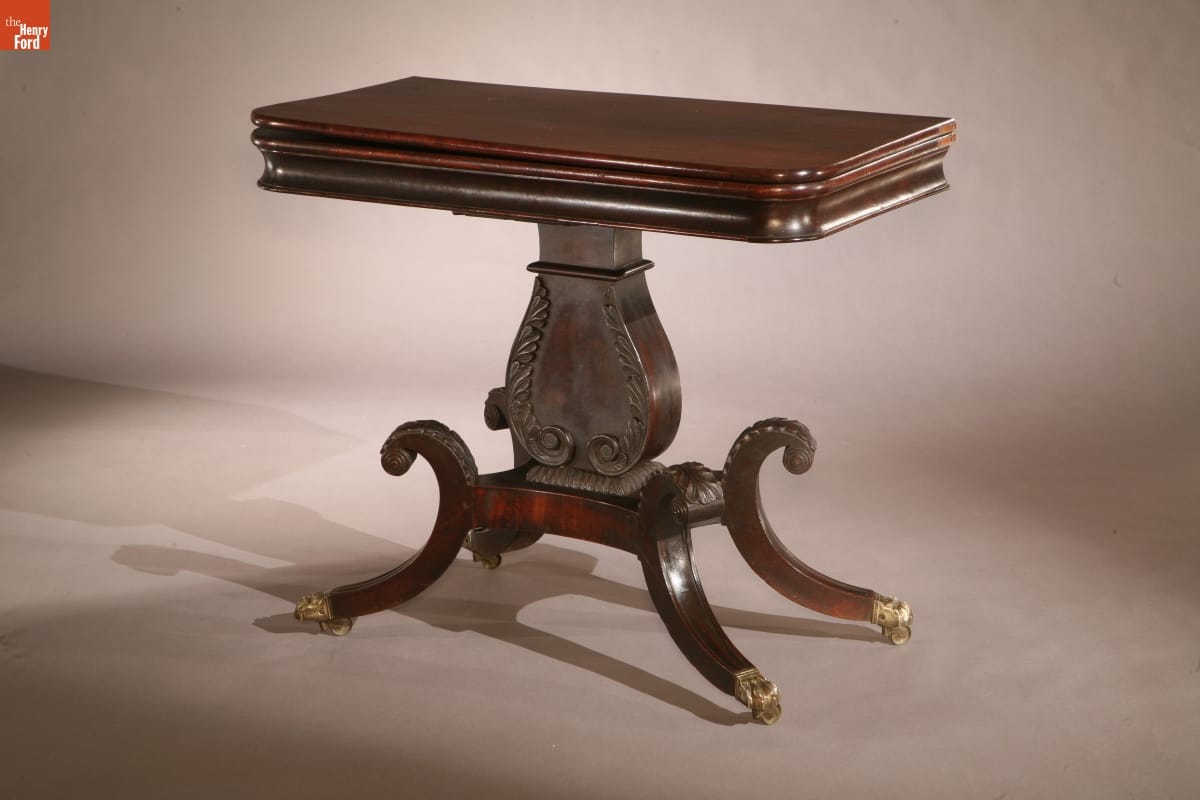
- Center Table, Used in Abraham Lincoln's Springfield, Illinois Home, 1810-1830 - The table is part of a group of furniture owned by the Lincoln Family in Springfield, Illinois. When Abraham Lincoln was elected President in 1860, this table and other furnishings were sold to a neighbor, whose family retained them until 1930, when they were purchased for the Museum. The Lincolns likely used the table for dining and/or card games.
- 1810-1830
- Collections - Artifact
Center Table, Used in Abraham Lincoln's Springfield, Illinois Home, 1810-1830
The table is part of a group of furniture owned by the Lincoln Family in Springfield, Illinois. When Abraham Lincoln was elected President in 1860, this table and other furnishings were sold to a neighbor, whose family retained them until 1930, when they were purchased for the Museum. The Lincolns likely used the table for dining and/or card games.