
Search
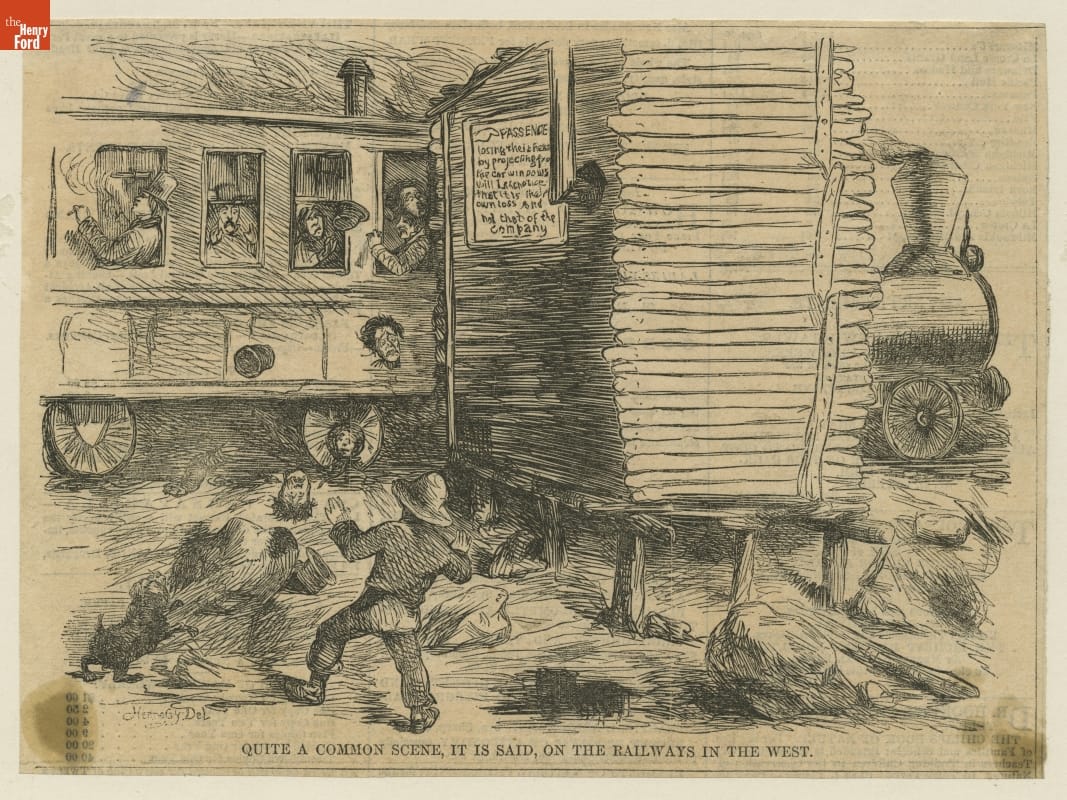
- Wood Engraving, "Quite a Common Scene, it is Said, on the Railways in the West," 1858 - While close clearances -- tight spaces between railroad cars and trackside structures -- did exist, this 1858 illustration from <em>Harper's Weekly</em> exaggerated the dangers faced by passengers who stuck their heads through windows. More likely threats from an open window included sparks, cinders and smoke from the steam locomotive pulling the train -- all of which could irritate eyes and damage clothing.
- 1858
- Collections - Artifact
Wood Engraving, "Quite a Common Scene, it is Said, on the Railways in the West," 1858
While close clearances -- tight spaces between railroad cars and trackside structures -- did exist, this 1858 illustration from Harper's Weekly exaggerated the dangers faced by passengers who stuck their heads through windows. More likely threats from an open window included sparks, cinders and smoke from the steam locomotive pulling the train -- all of which could irritate eyes and damage clothing.
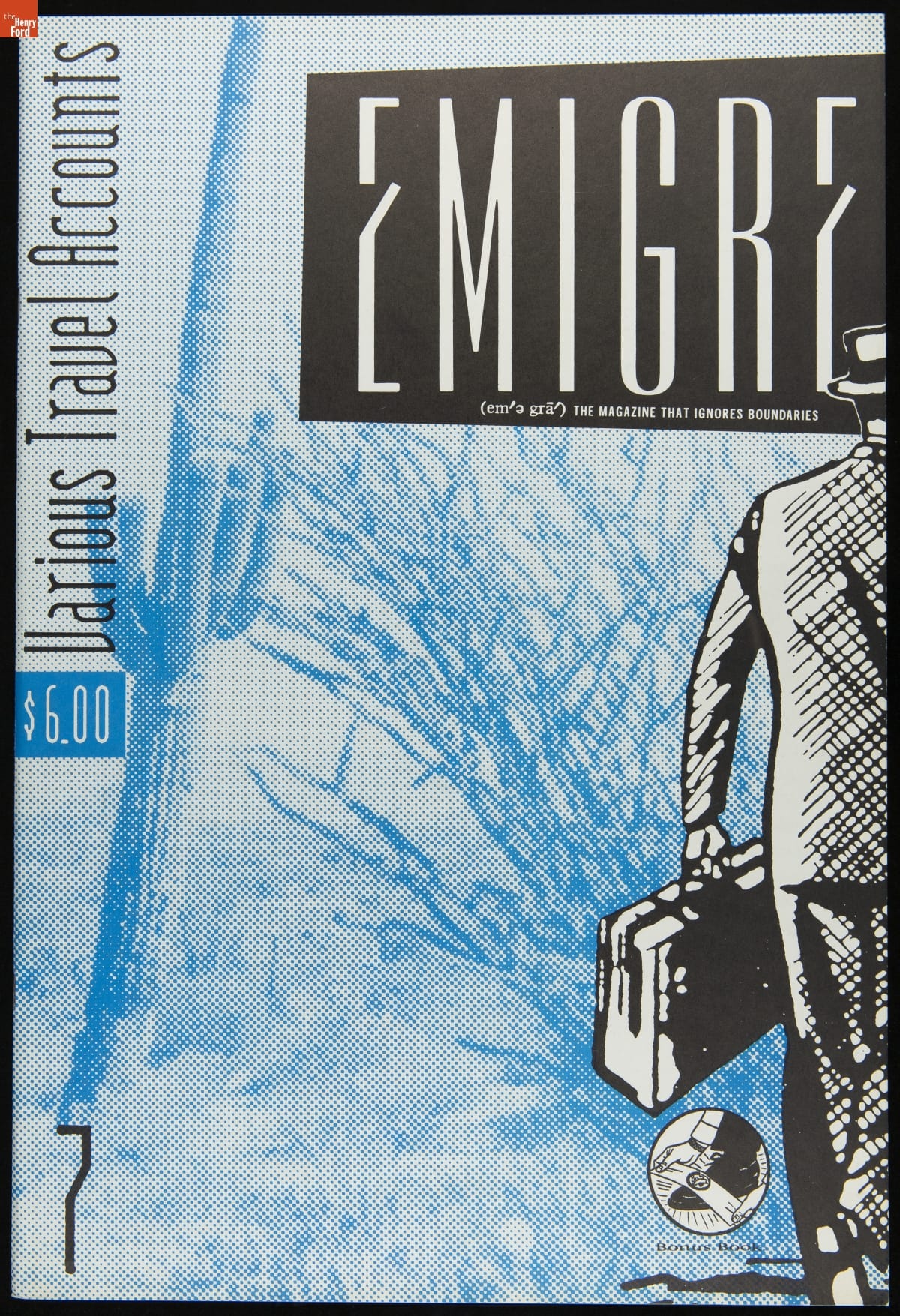
- Magazine, Emigre No. 7, "Various Travel Accounts," 1987 - Emigre is a digital type foundry established by Rudy VanderLans and Zuzana Licko. The company's history is linked with the introduction of the 1984 Macintosh computer, used to design their early bitmapped typefaces. Emigre's digital work gained notoriety -- defying visual communication standards with fractured, layered combinations of text and image. <em>Emigre</em> magazine showcased their fonts and promoted groundbreaking designers.
- 1987
- Collections - Artifact
Magazine, Emigre No. 7, "Various Travel Accounts," 1987
Emigre is a digital type foundry established by Rudy VanderLans and Zuzana Licko. The company's history is linked with the introduction of the 1984 Macintosh computer, used to design their early bitmapped typefaces. Emigre's digital work gained notoriety -- defying visual communication standards with fractured, layered combinations of text and image. Emigre magazine showcased their fonts and promoted groundbreaking designers.
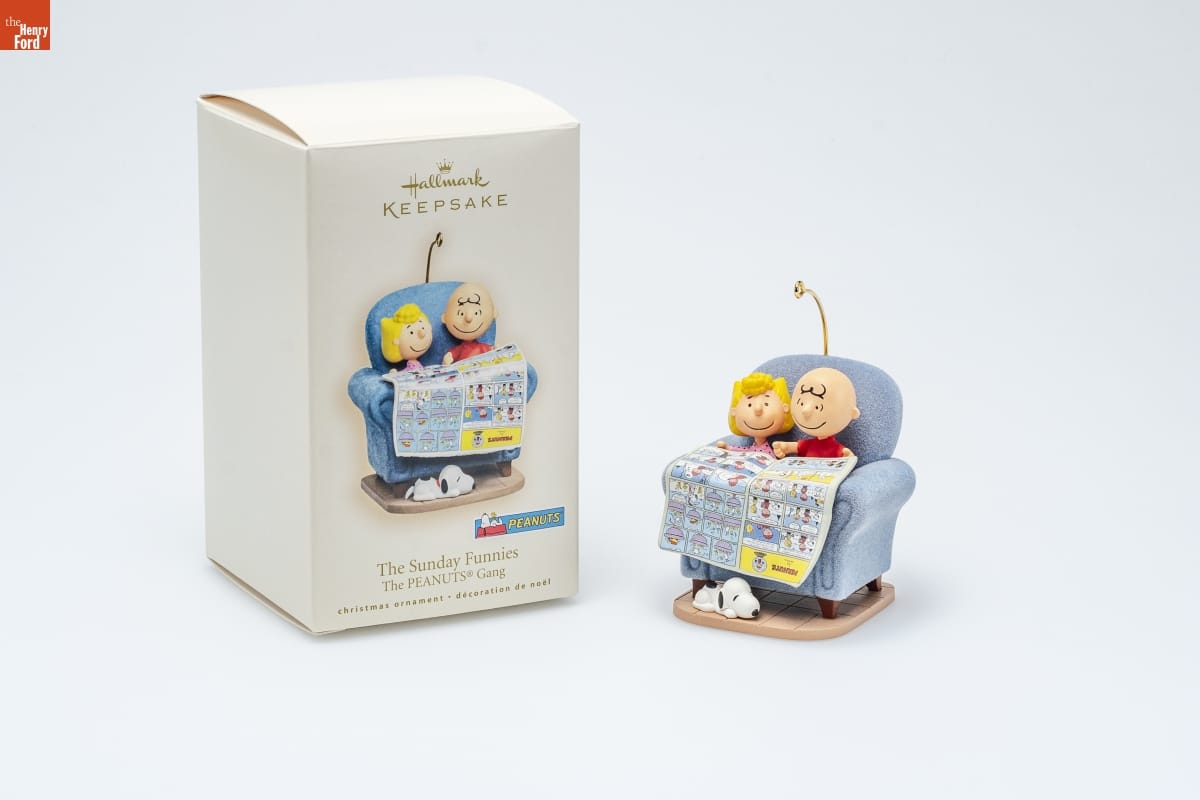
- Hallmark "The PEANUTS Gang Series: The Sunday Funnies" Christmas Ornament, 2007 - Already known for greeting cards, Hallmark introduced a line of Christmas ornaments in 1973. The company's annual release of an increasing array of ornaments revolutionized Christmas decorating, appealing to customers' interest in marking memories and milestones as well as expressing one's personality and unique tastes.
- 2007
- Collections - Artifact
Hallmark "The PEANUTS Gang Series: The Sunday Funnies" Christmas Ornament, 2007
Already known for greeting cards, Hallmark introduced a line of Christmas ornaments in 1973. The company's annual release of an increasing array of ornaments revolutionized Christmas decorating, appealing to customers' interest in marking memories and milestones as well as expressing one's personality and unique tastes.
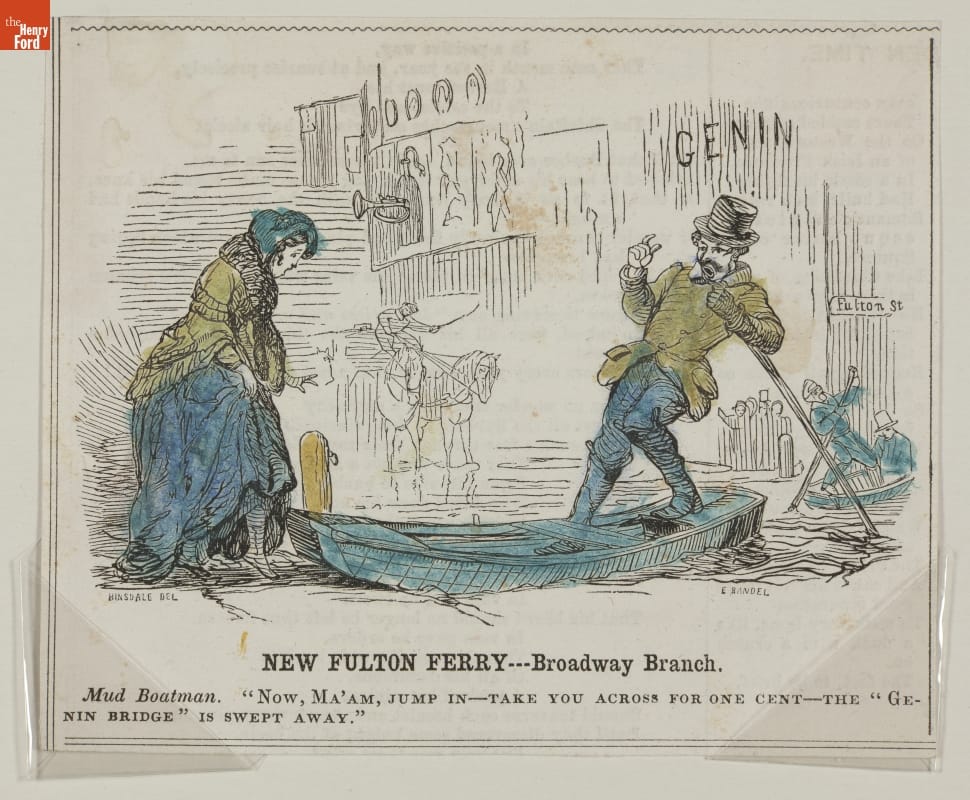
- Cartoon, "New Fulton Ferry - Broadway Branch," circa 1845 -
- circa 1845
- Collections - Artifact
Cartoon, "New Fulton Ferry - Broadway Branch," circa 1845
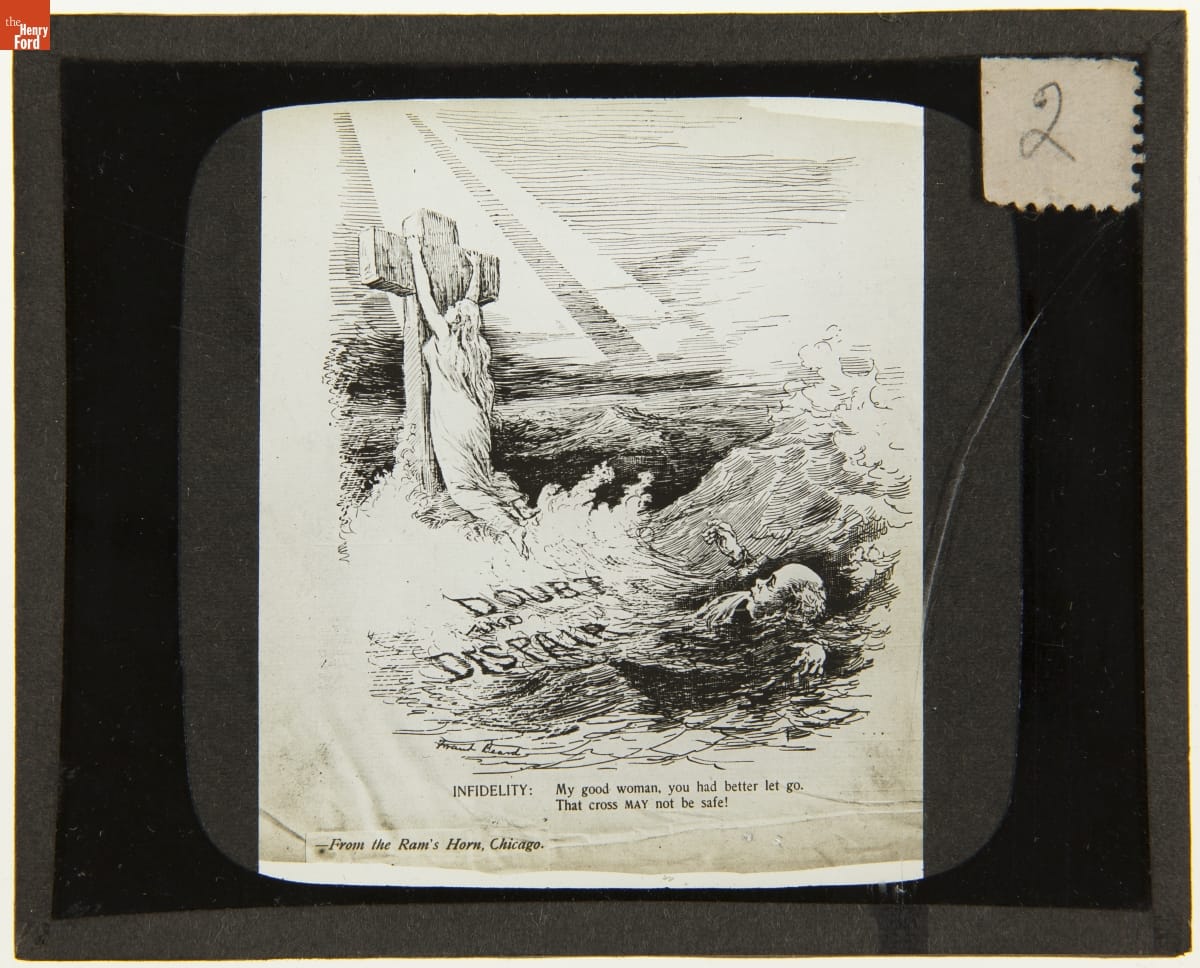
- Lantern Slide, "Doubt and Despair" Cartoon from the Ram's Horn Magazine, 1890-1910 - Frank Beard (1842-1905), an illustrator, caricaturist, and cartoonist, began his career by sketching scenes of military life for popular publications--such as <em>Harper's Weekly</em>--during the Civil War. His later works promoted Christianity, warned against secularism, and targeted the social ills of the Gilded Age. This slide shows one of his illustrations from <em>The Ram's Horn</em>, a non-denominational Christian periodical.
- 1890-1910
- Collections - Artifact
Lantern Slide, "Doubt and Despair" Cartoon from the Ram's Horn Magazine, 1890-1910
Frank Beard (1842-1905), an illustrator, caricaturist, and cartoonist, began his career by sketching scenes of military life for popular publications--such as Harper's Weekly--during the Civil War. His later works promoted Christianity, warned against secularism, and targeted the social ills of the Gilded Age. This slide shows one of his illustrations from The Ram's Horn, a non-denominational Christian periodical.
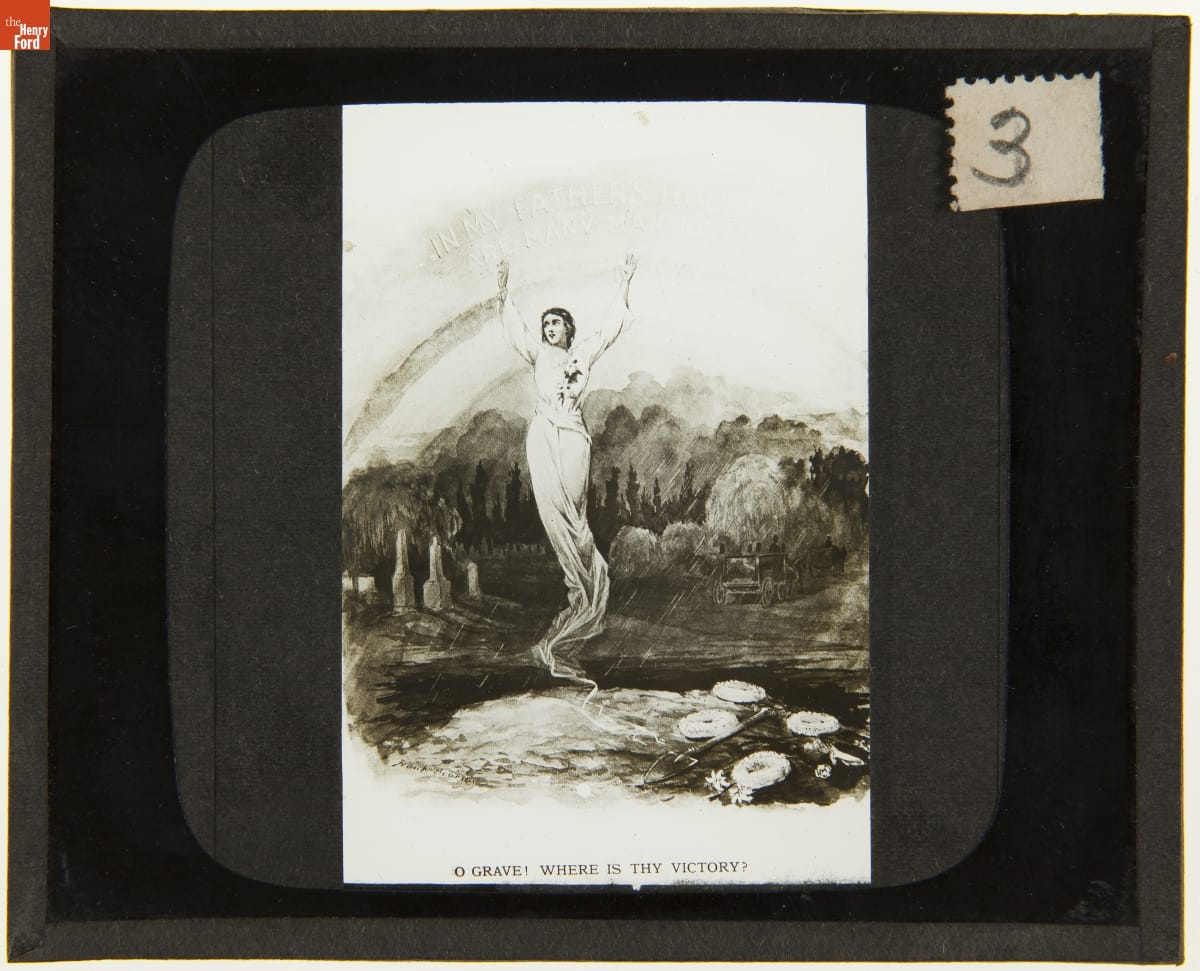
- Lantern Slide, "O Grave! Where is Thy Victory?" Cartoon, 1895 - Frank Beard (1842-1905), an illustrator, caricaturist, and cartoonist, began his career by sketching scenes of military life for popular publications--such as <em>Harper's Weekly</em>--during the Civil War. His later works promoted Christianity, warned against secularism, and targeted the social ills of the Gilded Age. This slide shows one of his illustrations from <em>The Ram's Horn</em>, a non-denominational Christian periodical.
- 1895
- Collections - Artifact
Lantern Slide, "O Grave! Where is Thy Victory?" Cartoon, 1895
Frank Beard (1842-1905), an illustrator, caricaturist, and cartoonist, began his career by sketching scenes of military life for popular publications--such as Harper's Weekly--during the Civil War. His later works promoted Christianity, warned against secularism, and targeted the social ills of the Gilded Age. This slide shows one of his illustrations from The Ram's Horn, a non-denominational Christian periodical.
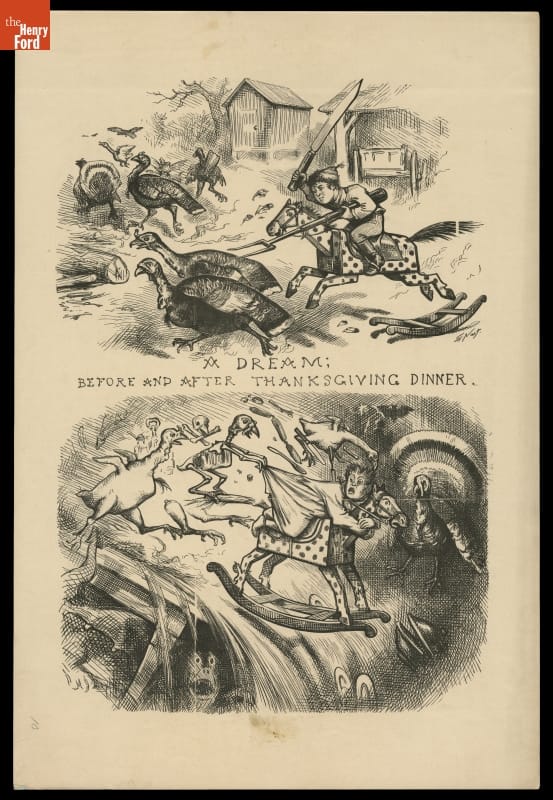
- Etching Proof from a Thomas Nast Drawing, "A Dream, before and after Thanksgiving Dinner," 1878 - Thomas Nast (1840-1902) was an influential illustrator and political cartoonist. Though he is best known for the creation of our modern image of Santa Claus, Nast created many endearing illustrations depicting other holiday activities. This image, originally published in <EM>Harper's Weekly</EM> in 1878, depicts the possible effects of overindulgence on Thanksgiving.
- December 07, 1878
- Collections - Artifact
Etching Proof from a Thomas Nast Drawing, "A Dream, before and after Thanksgiving Dinner," 1878
Thomas Nast (1840-1902) was an influential illustrator and political cartoonist. Though he is best known for the creation of our modern image of Santa Claus, Nast created many endearing illustrations depicting other holiday activities. This image, originally published in Harper's Weekly in 1878, depicts the possible effects of overindulgence on Thanksgiving.
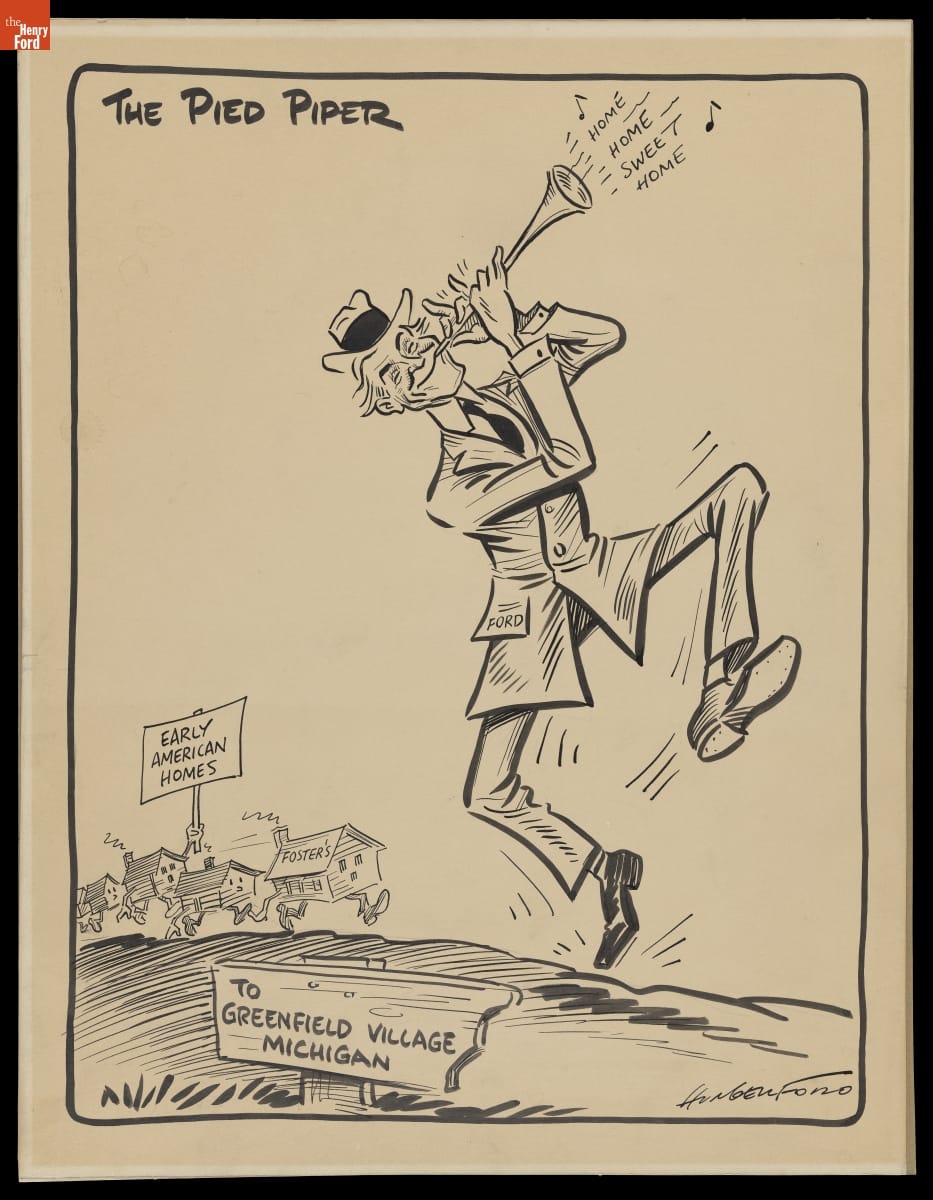
- "The Pied Piper," Depicting Henry Ford Leading Early American Homes to Greenfield Village, 1935 -
- 1935
- Collections - Artifact
"The Pied Piper," Depicting Henry Ford Leading Early American Homes to Greenfield Village, 1935
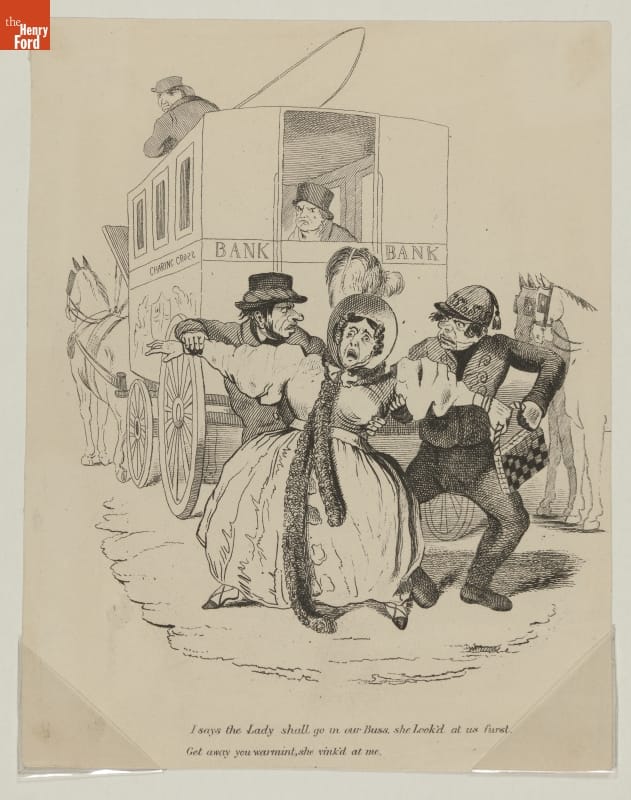
- Cartoon Depicting Omnibus Drivers Competing for Passengers, London, England, 1845-1850 - Horse-drawn omnibuses were in use in London, England, by 1831. These large, enclosed vehicles provided regular, fare-based transportation on fixed routes through cities. The modern motor bus serves the same purpose in metropolitan areas today. "Omnibus" is a Latin word meaning "for all."
- 1845-1850
- Collections - Artifact
Cartoon Depicting Omnibus Drivers Competing for Passengers, London, England, 1845-1850
Horse-drawn omnibuses were in use in London, England, by 1831. These large, enclosed vehicles provided regular, fare-based transportation on fixed routes through cities. The modern motor bus serves the same purpose in metropolitan areas today. "Omnibus" is a Latin word meaning "for all."
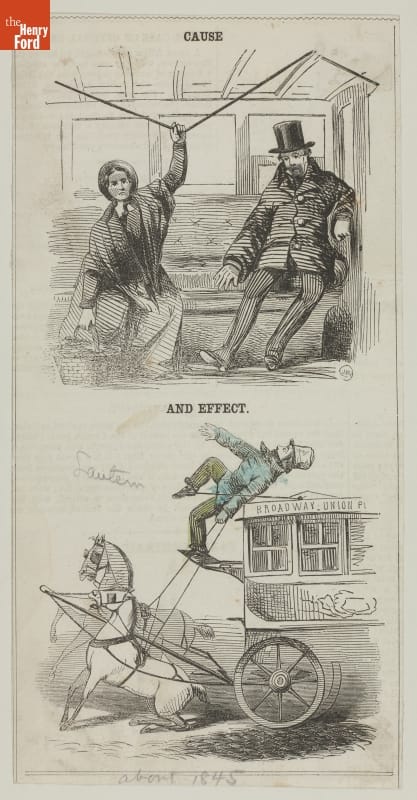
- Cartoon, "Cause and Effect," circa 1845 - The first horse-drawn omnibuses on American streets appeared in the late 1820s. These large, enclosed vehicles provided regular, fare-based transportation on fixed routes through cities. The modern motor bus serves the same purpose in American cities today. "Omnibus" is a Latin word meaning "for all."
- circa 1845
- Collections - Artifact
Cartoon, "Cause and Effect," circa 1845
The first horse-drawn omnibuses on American streets appeared in the late 1820s. These large, enclosed vehicles provided regular, fare-based transportation on fixed routes through cities. The modern motor bus serves the same purpose in American cities today. "Omnibus" is a Latin word meaning "for all."