
Search
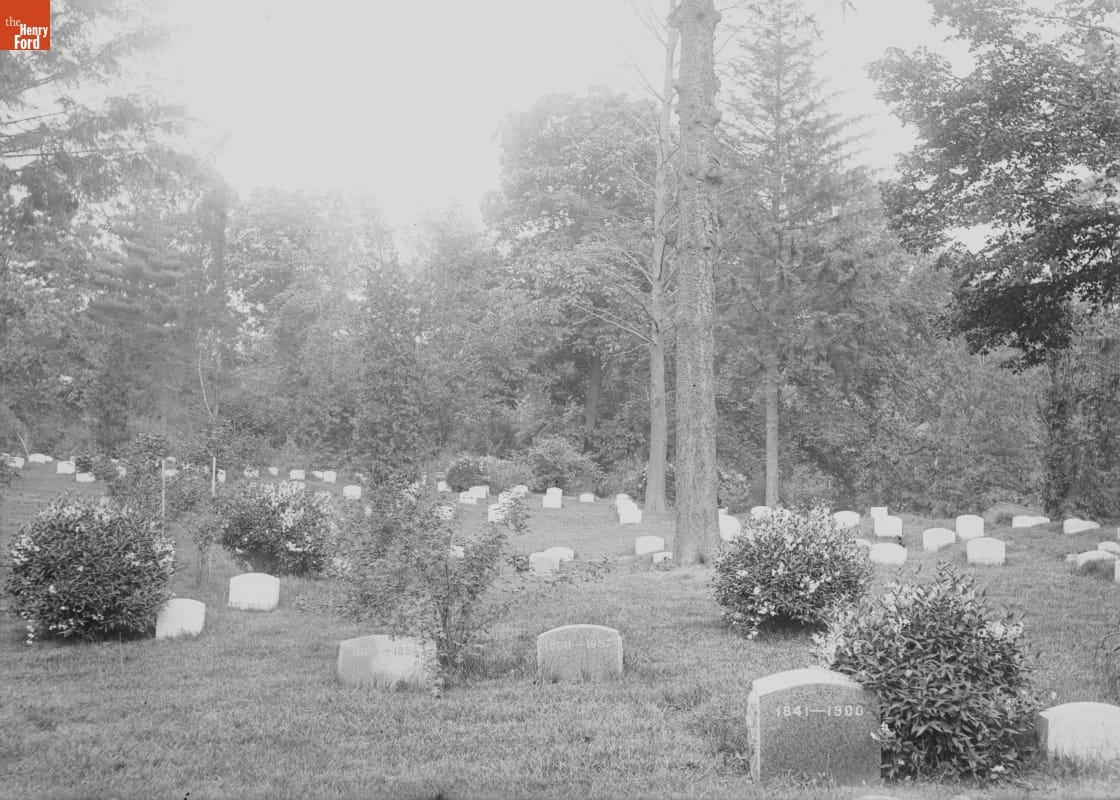
- Quaker Cemetery in Prospect Park, 1890-1915 - In 1890, Jenny Young Chandler, 25 years old and recently widowed, began working for the <EM>New York Herald</EM>. As a photojournalist and feature writer, Chandler captured life in Brooklyn, New York, and vicinity. By 1922, the time of her death, she had produced over 800 glass plate negatives. Her sensitive, insightful photographs depict people from all walks of life and the world in which they lived.
- 1890-1915
- Collections - Artifact
Quaker Cemetery in Prospect Park, 1890-1915
In 1890, Jenny Young Chandler, 25 years old and recently widowed, began working for the New York Herald. As a photojournalist and feature writer, Chandler captured life in Brooklyn, New York, and vicinity. By 1922, the time of her death, she had produced over 800 glass plate negatives. Her sensitive, insightful photographs depict people from all walks of life and the world in which they lived.
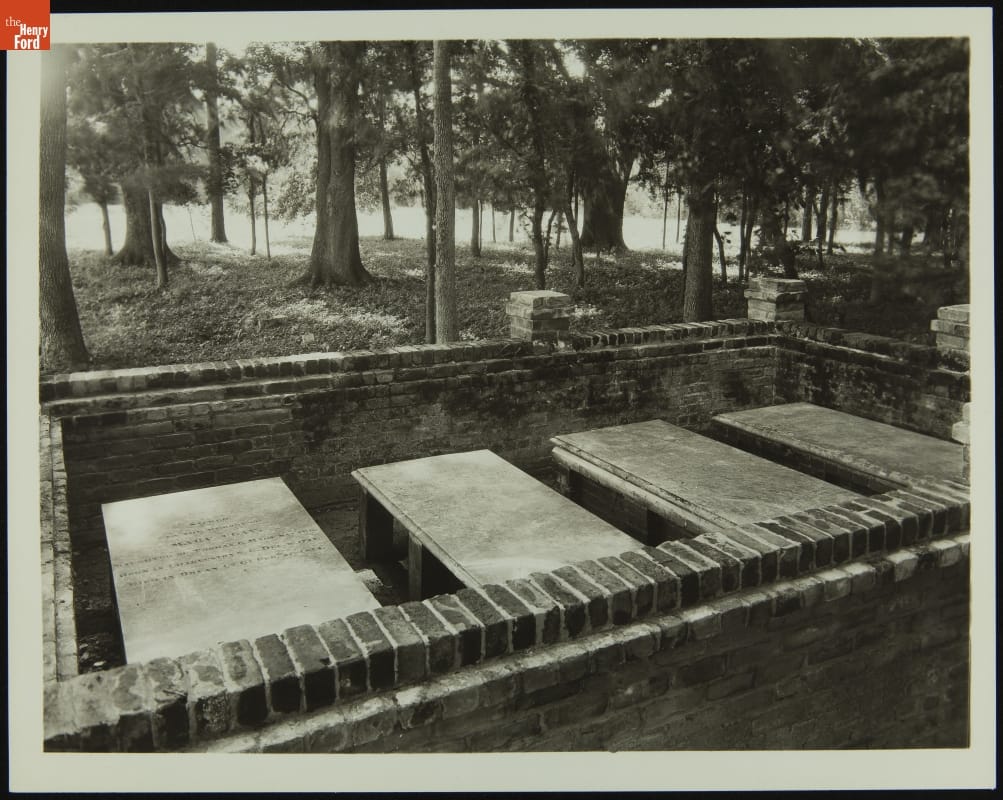
- Burnt Church Cemetery in Richmond Hill, Georgia, circa 1940 - Henry Ford purchased vast amounts of land around present-day Richmond Hill, Georgia, beginning in the 1920s. Ford eventually acquired 85,000 acres -- and even built a winter residence. Located in the area is this historic cemetery. A pre-Civil War Presbyterian Church that served the local plantation community stood nearby, but it burned in 1882. The unfortunate event gave the cemetery its name.
- circa 1940
- Collections - Artifact
Burnt Church Cemetery in Richmond Hill, Georgia, circa 1940
Henry Ford purchased vast amounts of land around present-day Richmond Hill, Georgia, beginning in the 1920s. Ford eventually acquired 85,000 acres -- and even built a winter residence. Located in the area is this historic cemetery. A pre-Civil War Presbyterian Church that served the local plantation community stood nearby, but it burned in 1882. The unfortunate event gave the cemetery its name.
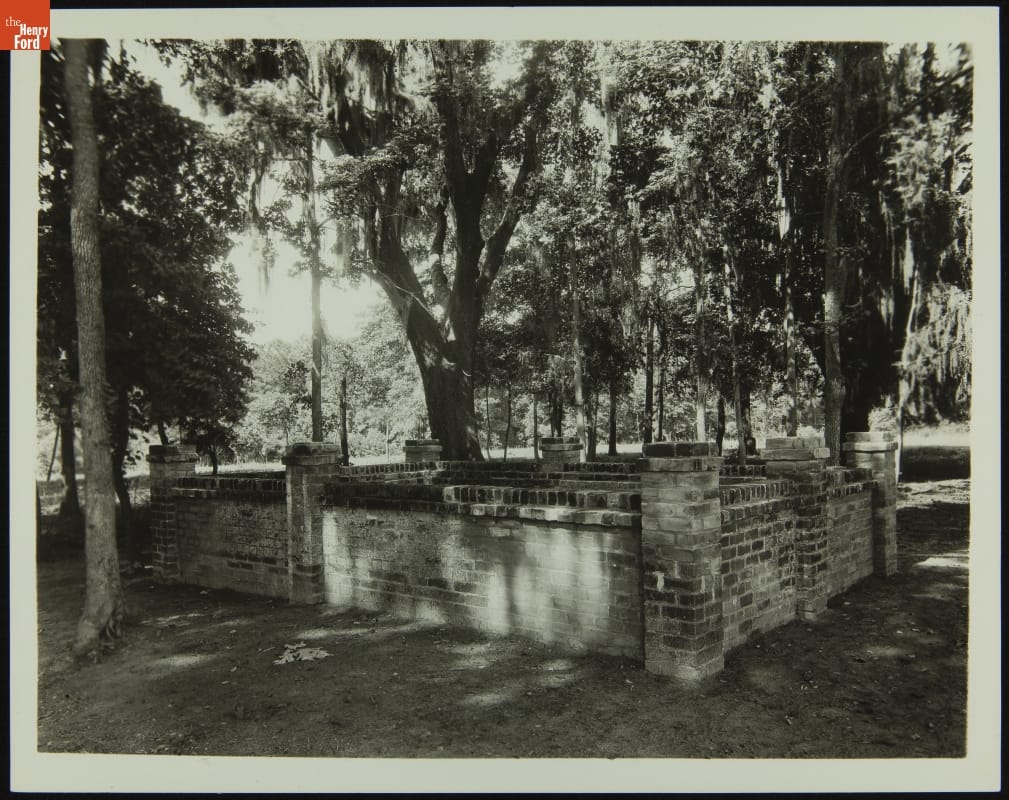
- Burnt Church Cemetery in Richmond Hill, Georgia, circa 1940 - Henry Ford purchased vast amounts of land around present-day Richmond Hill, Georgia, beginning in the 1920s. Ford eventually acquired 85,000 acres -- and even built a winter residence. Located in the area is this historic cemetery. A pre-Civil War Presbyterian Church that served the local plantation community stood nearby, but it burned in 1882. The unfortunate event gave the cemetery its name.
- circa 1940
- Collections - Artifact
Burnt Church Cemetery in Richmond Hill, Georgia, circa 1940
Henry Ford purchased vast amounts of land around present-day Richmond Hill, Georgia, beginning in the 1920s. Ford eventually acquired 85,000 acres -- and even built a winter residence. Located in the area is this historic cemetery. A pre-Civil War Presbyterian Church that served the local plantation community stood nearby, but it burned in 1882. The unfortunate event gave the cemetery its name.
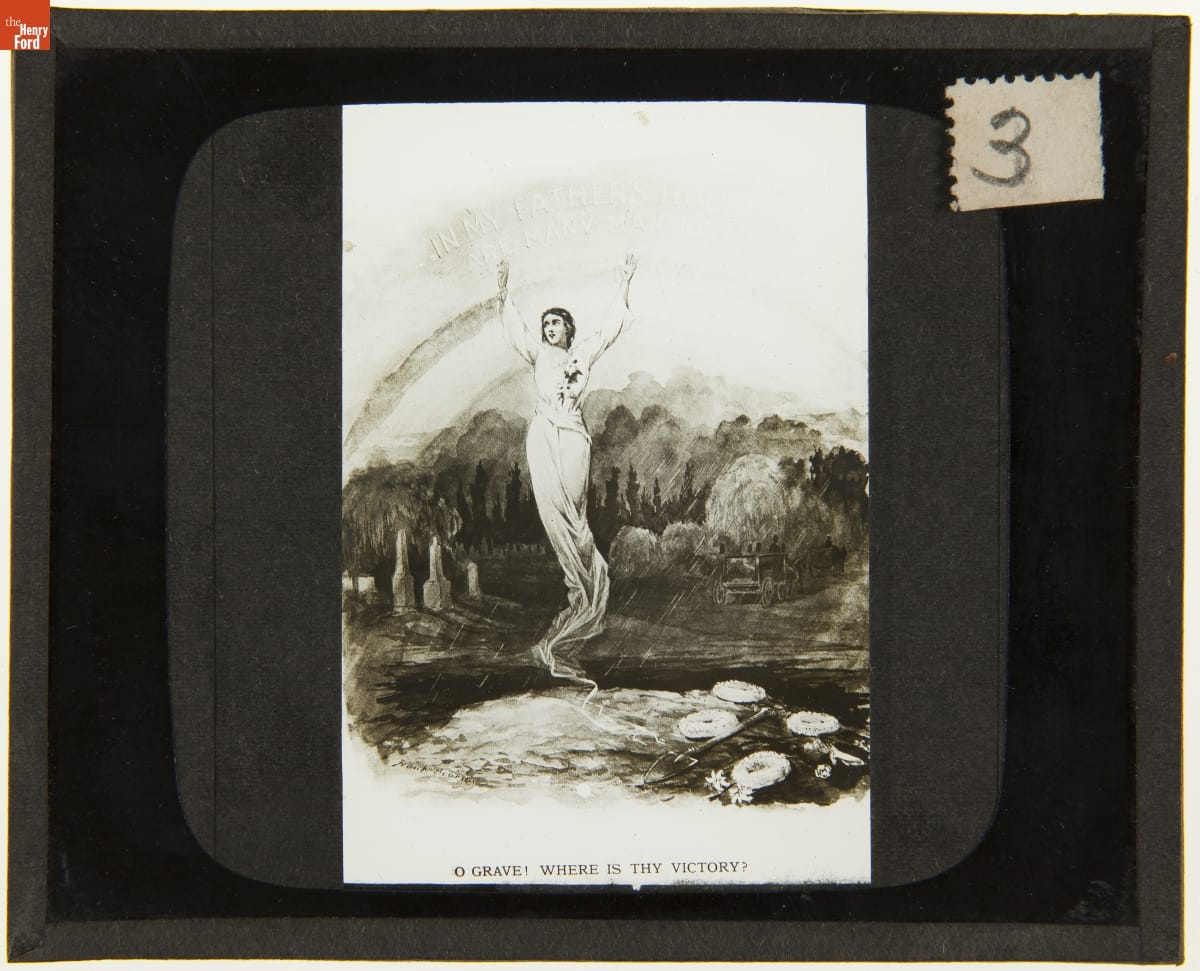
- Lantern Slide, "O Grave! Where is Thy Victory?" Cartoon, 1895 - Frank Beard (1842-1905), an illustrator, caricaturist, and cartoonist, began his career by sketching scenes of military life for popular publications--such as <em>Harper's Weekly</em>--during the Civil War. His later works promoted Christianity, warned against secularism, and targeted the social ills of the Gilded Age. This slide shows one of his illustrations from <em>The Ram's Horn</em>, a non-denominational Christian periodical.
- 1895
- Collections - Artifact
Lantern Slide, "O Grave! Where is Thy Victory?" Cartoon, 1895
Frank Beard (1842-1905), an illustrator, caricaturist, and cartoonist, began his career by sketching scenes of military life for popular publications--such as Harper's Weekly--during the Civil War. His later works promoted Christianity, warned against secularism, and targeted the social ills of the Gilded Age. This slide shows one of his illustrations from The Ram's Horn, a non-denominational Christian periodical.
- Grave of Captain Miles Standish, 1926 -
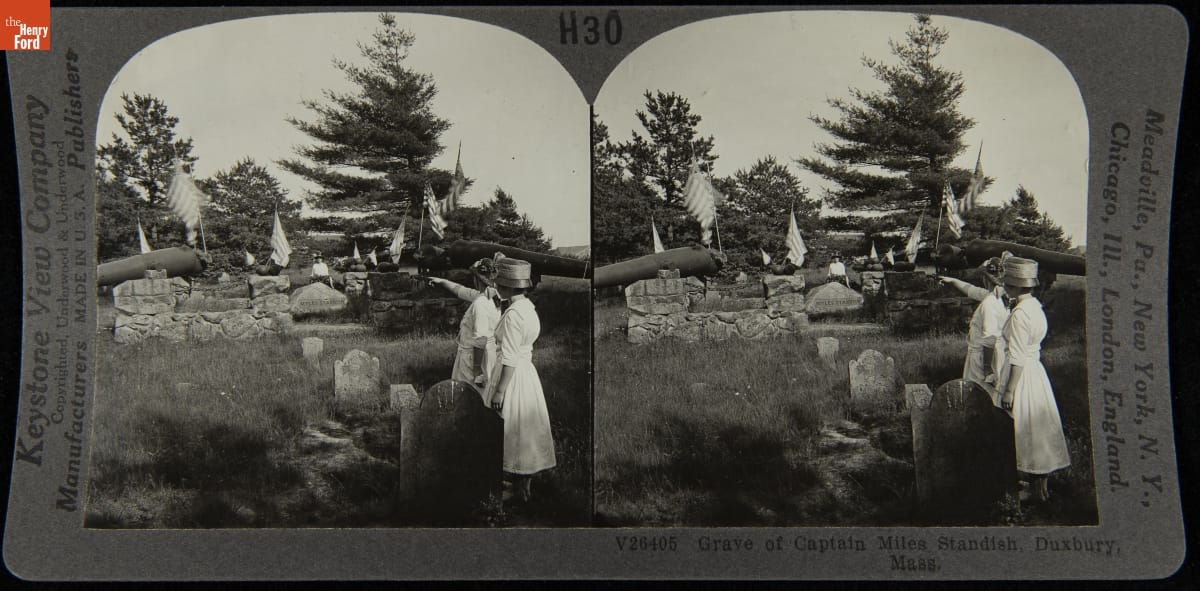
- 1920-1926
- Collections - Artifact
Grave of Captain Miles Standish, 1926
- African American Grave at Richmond Hill Cemetery, circa 1935 -
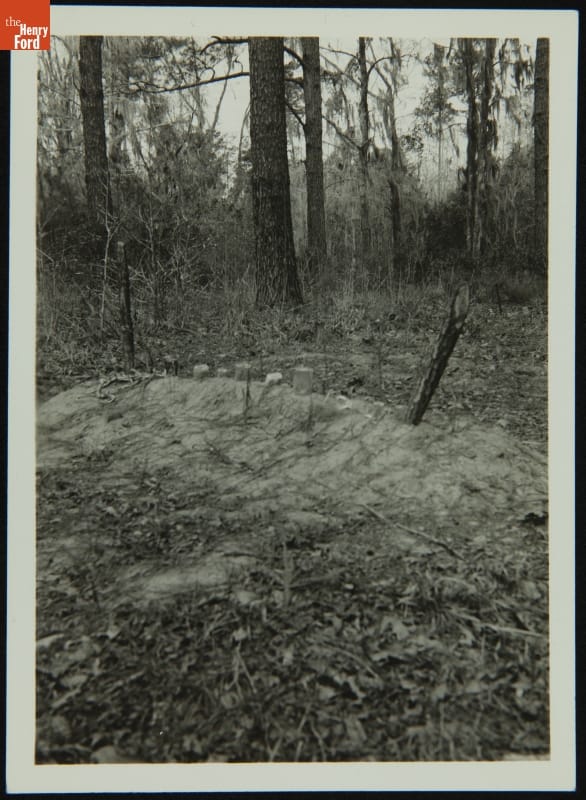
- circa 1935
- Collections - Artifact
African American Grave at Richmond Hill Cemetery, circa 1935
- Isabelle M. Jones Grave in Jones-Maybee Family Plot, Lakeside Cemetery, Holly, Michigan, 1925 -
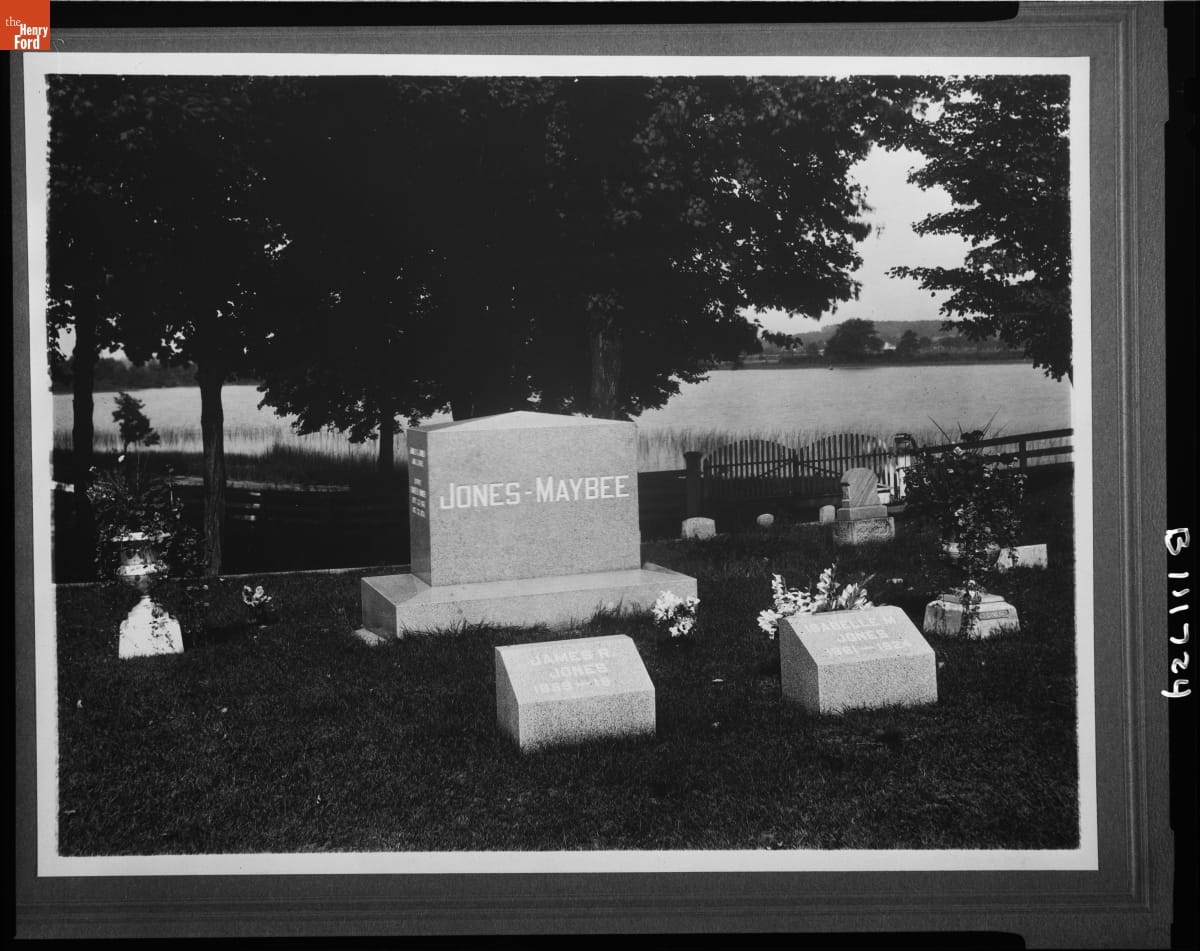
- 1925
- Collections - Artifact
Isabelle M. Jones Grave in Jones-Maybee Family Plot, Lakeside Cemetery, Holly, Michigan, 1925
- Family at Clara Bryant Ford's Burial, Ford Cemetery, Detroit, Michigan, 1950 - Clara Ford died on September 29, 1950. The wife of the famous automobile pioneer and American industrialist, Henry Ford, had suffered a heart attack earlier in the year and her health had steadily declined. Family buried her next to her husband in the Ford family cemetery in Detroit, Michigan.
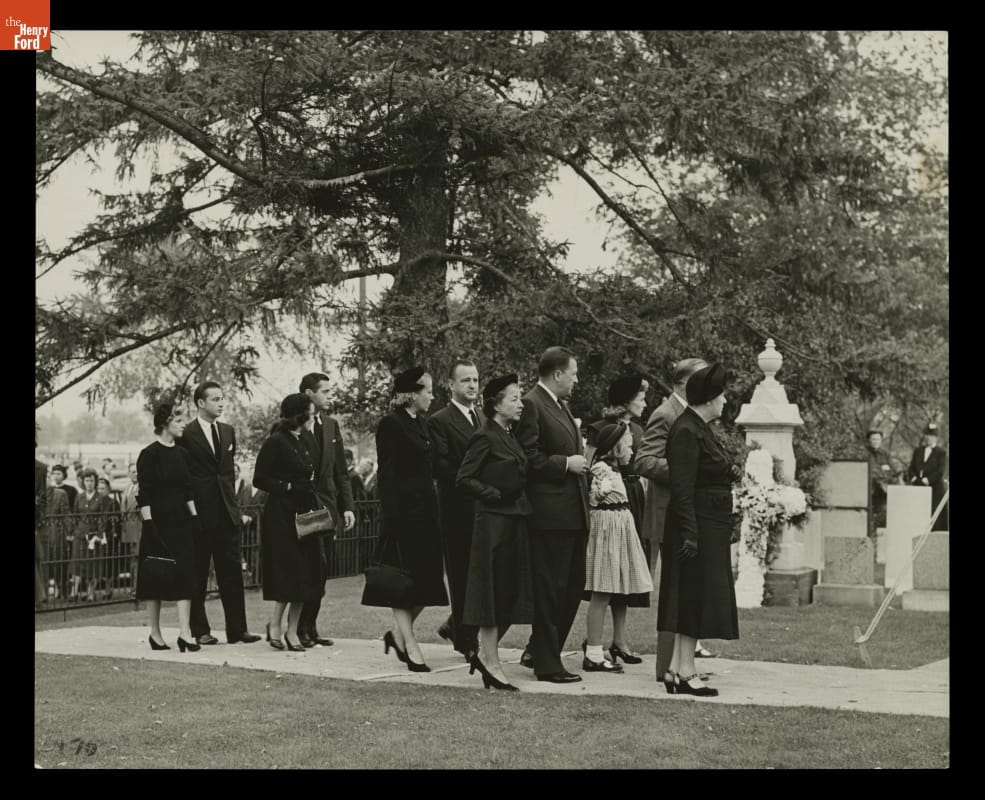
- October 02, 1950
- Collections - Artifact
Family at Clara Bryant Ford's Burial, Ford Cemetery, Detroit, Michigan, 1950
Clara Ford died on September 29, 1950. The wife of the famous automobile pioneer and American industrialist, Henry Ford, had suffered a heart attack earlier in the year and her health had steadily declined. Family buried her next to her husband in the Ford family cemetery in Detroit, Michigan.
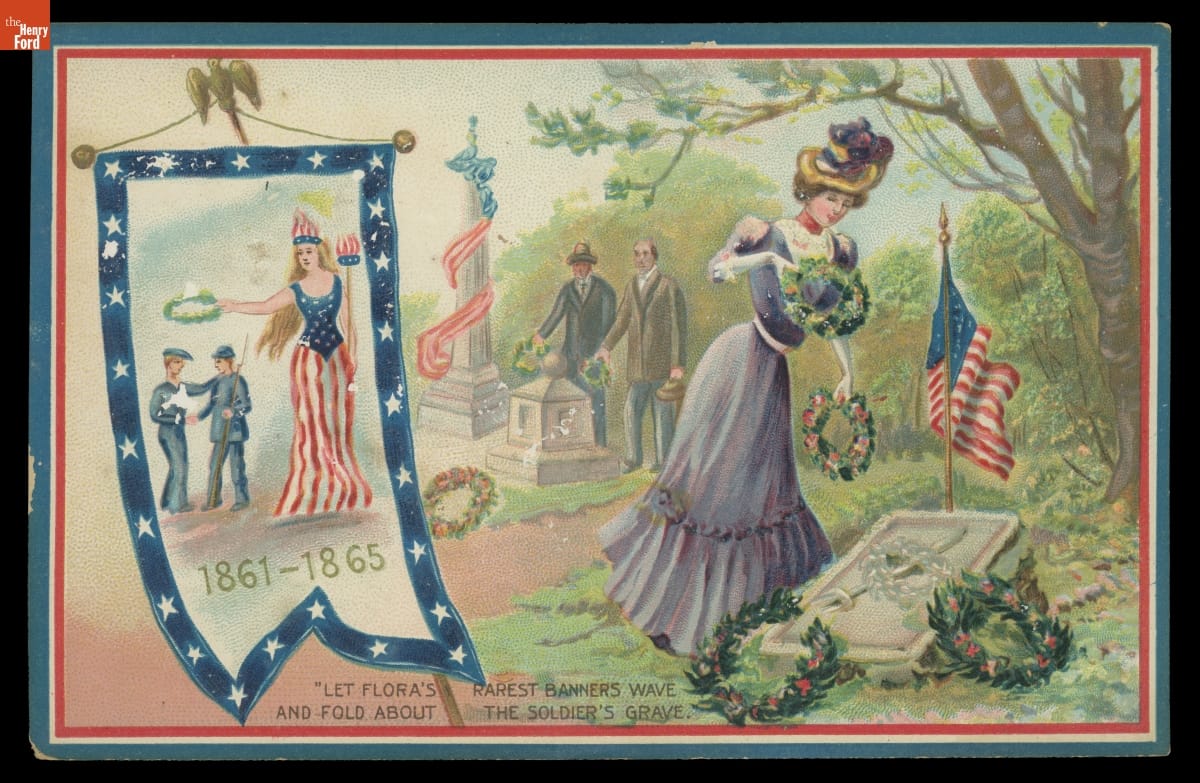
- Decoration Day Postcard, "Let Flora's Rarest Banners Wave and Fold about the Soldier's Grave," 1908 - Beginning in 1868, May 30 was proclaimed "Decoration Day" as a day for mourners to honor the Civil War dead by decorating their graves with flowers. After World War I, the observance became better known as Memorial Day, and it broadened to honor the dead of all America's wars. Memorial Day was declared a national holiday in 1971.
- 1905
- Collections - Artifact
Decoration Day Postcard, "Let Flora's Rarest Banners Wave and Fold about the Soldier's Grave," 1908
Beginning in 1868, May 30 was proclaimed "Decoration Day" as a day for mourners to honor the Civil War dead by decorating their graves with flowers. After World War I, the observance became better known as Memorial Day, and it broadened to honor the dead of all America's wars. Memorial Day was declared a national holiday in 1971.
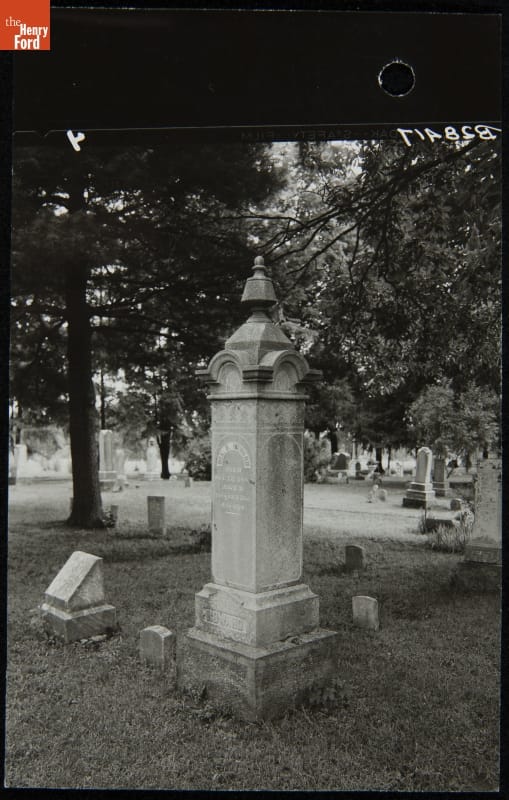
- Dr. Alonson B. Howard's Tombstone at Windfall Cemetery, Tekonsha, Michigan, August 1959 - Alonson Howard, Jr. (1823-1883) studied medicine in Ohio and Michigan before setting up a medical practice in the 1850s in Tekonsha Township, Michigan. Dr. Howard performed surgeries, delivered babies, produced herbal remedies and homemade medicines, and treated illnesses--adapting his treatments to what worked best for his patients. He served his community for more than thirty years.
- August 01, 1959
- Collections - Artifact
Dr. Alonson B. Howard's Tombstone at Windfall Cemetery, Tekonsha, Michigan, August 1959
Alonson Howard, Jr. (1823-1883) studied medicine in Ohio and Michigan before setting up a medical practice in the 1850s in Tekonsha Township, Michigan. Dr. Howard performed surgeries, delivered babies, produced herbal remedies and homemade medicines, and treated illnesses--adapting his treatments to what worked best for his patients. He served his community for more than thirty years.