
Search
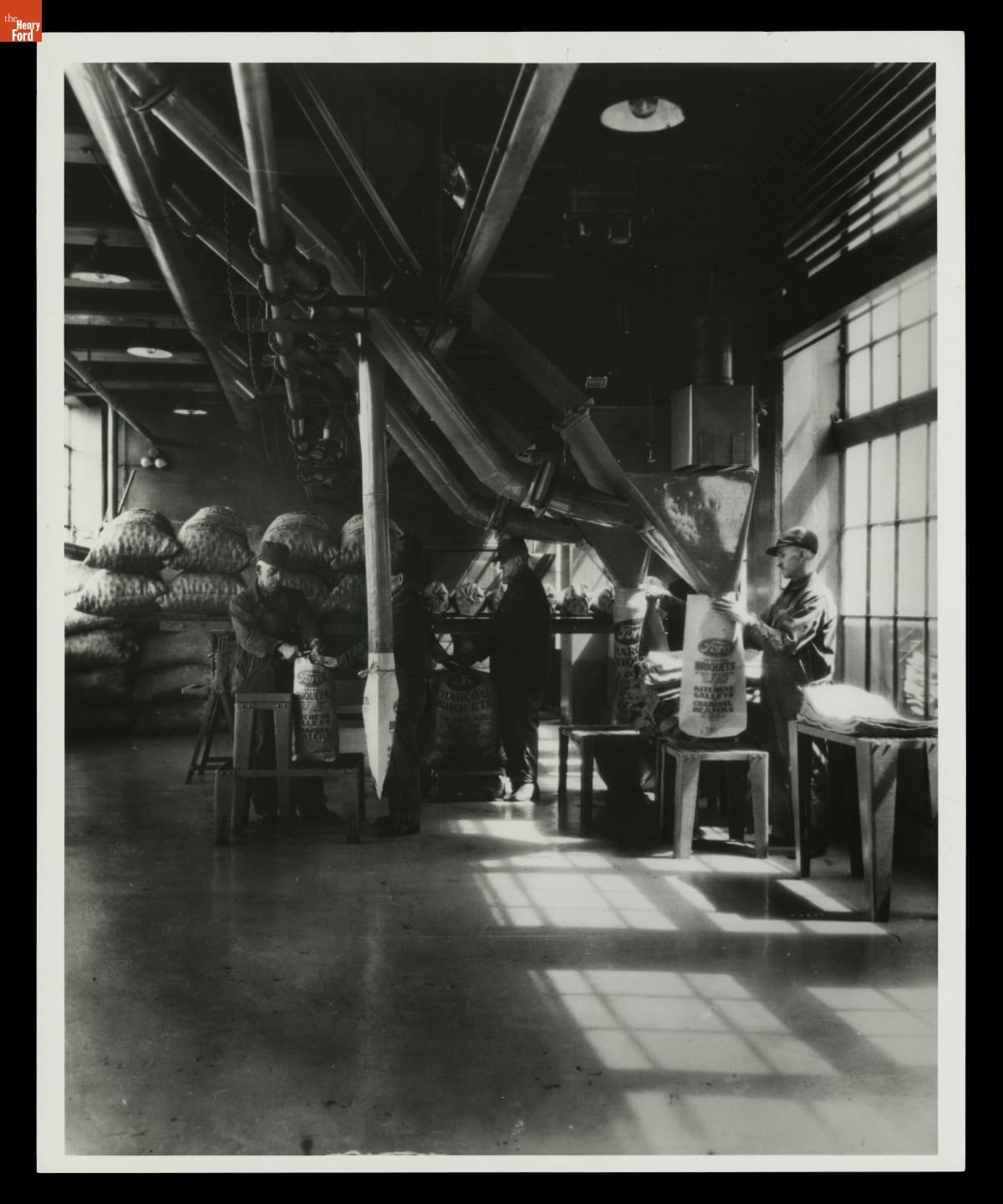
- Bagging Charcoal Briquets at Ford Motor Company Iron Mountain Plant, 1935 - Ford Motor Company sawmills created heaps of wood wastes. Some was used to produce steam for factory operations. The rest was carbonized and compressed into charcoal. Workers mixed charred hardwood chips with starch, forming nearly 100 tons of charcoal briquettes each day. Dealers sold branded barbecue accessories and packages of the popular briquettes in Ford dealerships across the country.
- 1935
- Collections - Artifact
Bagging Charcoal Briquets at Ford Motor Company Iron Mountain Plant, 1935
Ford Motor Company sawmills created heaps of wood wastes. Some was used to produce steam for factory operations. The rest was carbonized and compressed into charcoal. Workers mixed charred hardwood chips with starch, forming nearly 100 tons of charcoal briquettes each day. Dealers sold branded barbecue accessories and packages of the popular briquettes in Ford dealerships across the country.
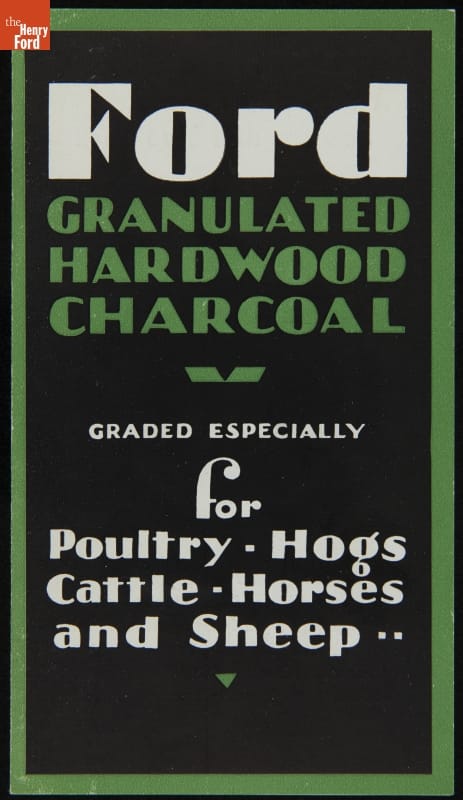
- "Ford Granulated Hardwood Charcoal for Poultry, Hogs, Cattle, Horses and Sheep," 1935-1940 - Ford Motor Company's charcoal briquettes were good for more than just backyard cookouts. This brochure promoted their use as a feed supplement for poultry and livestock. According to the text, Ford charcoal had a purifying effect in animals' digestive systems, absorbing gases that might otherwise make them susceptible to illness. Ford recommended charcoal for hens, chicks, hogs, cattle, horses, and sheep.
- 1935-1940
- Collections - Artifact
"Ford Granulated Hardwood Charcoal for Poultry, Hogs, Cattle, Horses and Sheep," 1935-1940
Ford Motor Company's charcoal briquettes were good for more than just backyard cookouts. This brochure promoted their use as a feed supplement for poultry and livestock. According to the text, Ford charcoal had a purifying effect in animals' digestive systems, absorbing gases that might otherwise make them susceptible to illness. Ford recommended charcoal for hens, chicks, hogs, cattle, horses, and sheep.