
Search
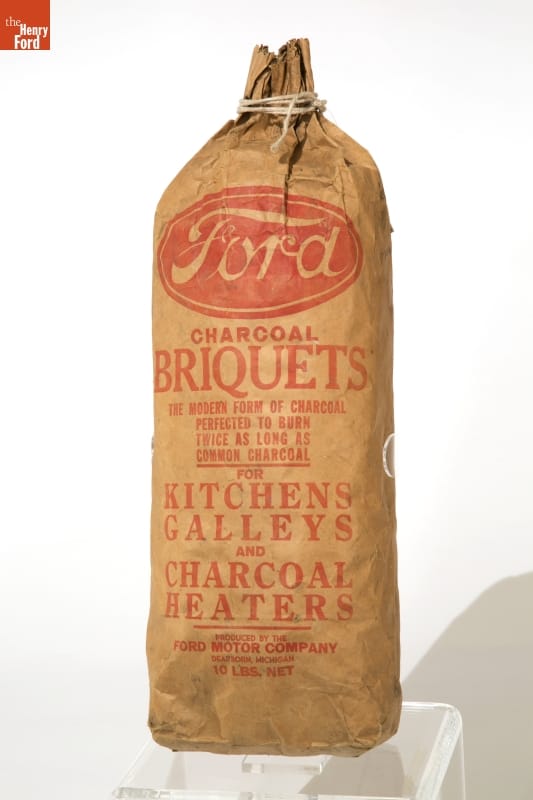
- Ford Charcoal Briquets Bag, 1929-1947 - Ford Motor Company sawmills created heaps of wood wastes. Some was used to produce steam for factory operations. The rest was carbonized and compressed into charcoal. Workers mixed charred hardwood chips with starch, forming nearly 100 tons of charcoal briquettes each day. Dealers sold branded bags of the popular briquettes in Ford dealerships across the country.
- 1929-1947
- Collections - Artifact
Ford Charcoal Briquets Bag, 1929-1947
Ford Motor Company sawmills created heaps of wood wastes. Some was used to produce steam for factory operations. The rest was carbonized and compressed into charcoal. Workers mixed charred hardwood chips with starch, forming nearly 100 tons of charcoal briquettes each day. Dealers sold branded bags of the popular briquettes in Ford dealerships across the country.
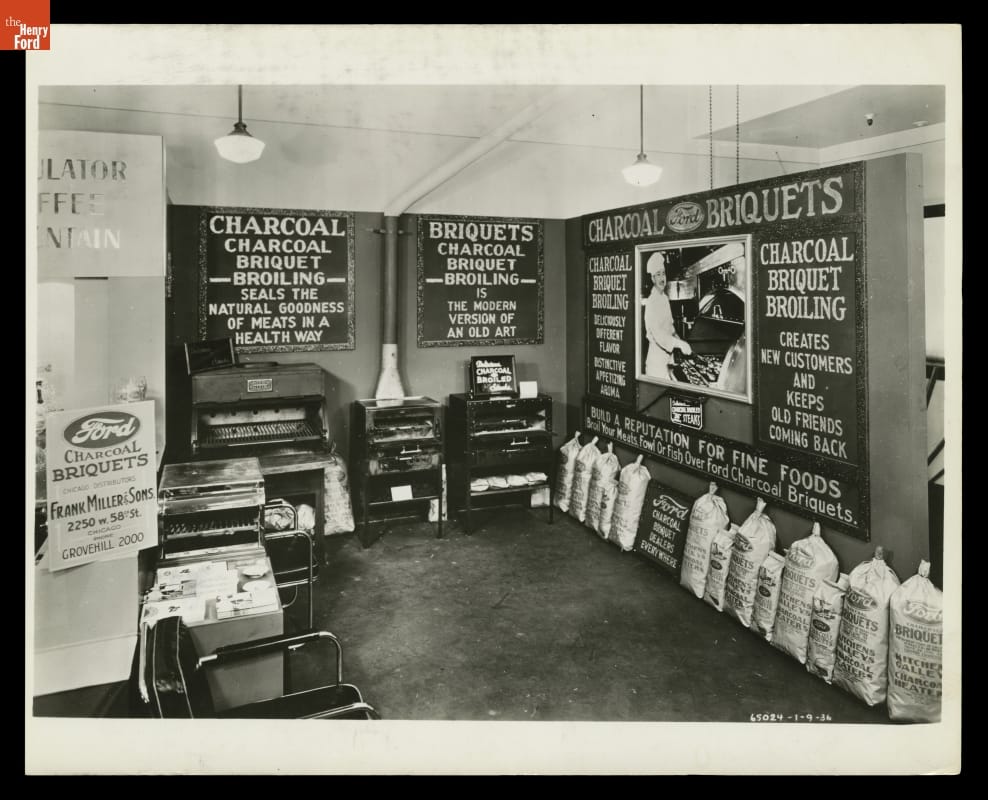
- Showroom Displaying Ford Charcoal Briquets and Advertising, 1936 - Ford Motor Company sawmills created heaps of wood wastes. Some was used to produce steam for factory operations. The rest was carbonized and compressed into charcoal. Workers mixed charred hardwood chips with starch, forming nearly 100 tons of charcoal briquettes each day. Dealers sold branded bags of the popular briquettes in Ford dealerships across the country.
- January 09, 1936
- Collections - Artifact
Showroom Displaying Ford Charcoal Briquets and Advertising, 1936
Ford Motor Company sawmills created heaps of wood wastes. Some was used to produce steam for factory operations. The rest was carbonized and compressed into charcoal. Workers mixed charred hardwood chips with starch, forming nearly 100 tons of charcoal briquettes each day. Dealers sold branded bags of the popular briquettes in Ford dealerships across the country.
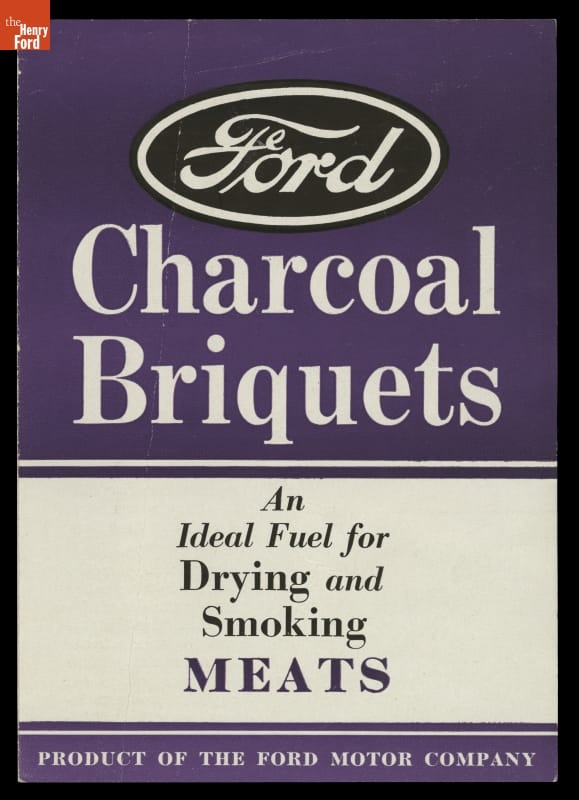
- Brochure, "Ford Charcoal Briquets, An Ideal Fuel for Drying and Smoking Meats," 1935-1941 -
- 1935 - 1941
- Collections - Artifact
Brochure, "Ford Charcoal Briquets, An Ideal Fuel for Drying and Smoking Meats," 1935-1941
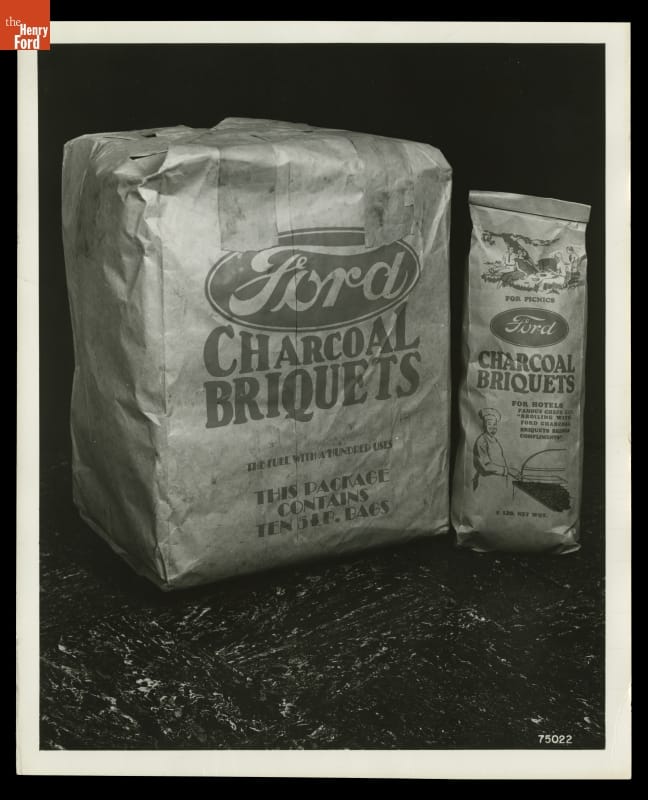
- Bags of Charcoal Briquets Produced by Ford Motor Company, 1941 - Ford Motor Company sawmills created heaps of wood wastes. Some was used to produce steam for factory operations. The rest was carbonized and compressed into charcoal. Workers mixed charred hardwood chips with starch, forming nearly 100 tons of charcoal briquettes each day. Dealers sold branded bags of the popular briquettes in Ford dealerships across the country.
- February 19, 1941
- Collections - Artifact
Bags of Charcoal Briquets Produced by Ford Motor Company, 1941
Ford Motor Company sawmills created heaps of wood wastes. Some was used to produce steam for factory operations. The rest was carbonized and compressed into charcoal. Workers mixed charred hardwood chips with starch, forming nearly 100 tons of charcoal briquettes each day. Dealers sold branded bags of the popular briquettes in Ford dealerships across the country.
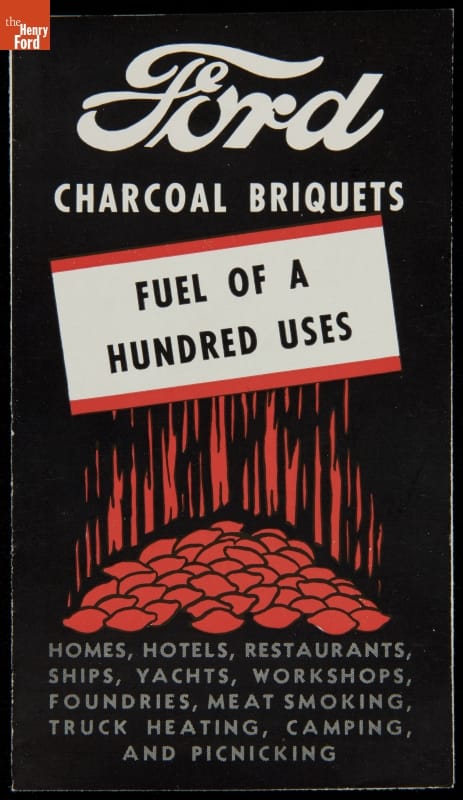
- Brochure, "Ford Charcoal Briquets, Fuel of a Hundred Uses," 1935-1941 - Ford Motor Company sawmills created heaps of wood wastes. Some was used to produce steam for factory operations. The rest was carbonized and compressed into charcoal. Workers mixed charred hardwood chips with starch, forming nearly 100 tons of charcoal briquettes each day. This 1930s brochure suggests the many uses for this Ford byproduct.
- 1935-1941
- Collections - Artifact
Brochure, "Ford Charcoal Briquets, Fuel of a Hundred Uses," 1935-1941
Ford Motor Company sawmills created heaps of wood wastes. Some was used to produce steam for factory operations. The rest was carbonized and compressed into charcoal. Workers mixed charred hardwood chips with starch, forming nearly 100 tons of charcoal briquettes each day. This 1930s brochure suggests the many uses for this Ford byproduct.
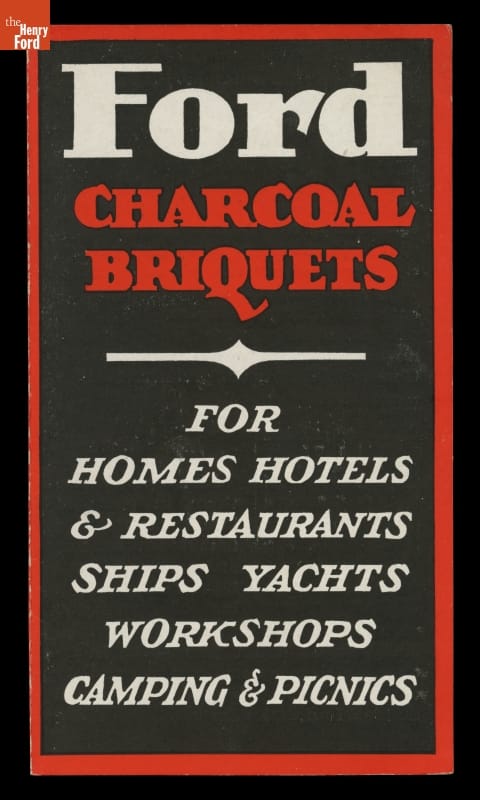
- Brochure, "Ford Charcoal Briquets, For Homes Hotels & Restaurants Ships Yachts Workshops Camping & Picnics," 1935-1941 - Ford Motor Company sawmills created heaps of wood wastes. Some was used to produce steam for factory operations. The rest was carbonized and compressed into charcoal. Workers mixed charred hardwood chips with starch, forming nearly 100 tons of charcoal briquettes each day. This 1930s brochure suggests the many uses for this Ford byproduct.
- 1935 - 1941
- Collections - Artifact
Brochure, "Ford Charcoal Briquets, For Homes Hotels & Restaurants Ships Yachts Workshops Camping & Picnics," 1935-1941
Ford Motor Company sawmills created heaps of wood wastes. Some was used to produce steam for factory operations. The rest was carbonized and compressed into charcoal. Workers mixed charred hardwood chips with starch, forming nearly 100 tons of charcoal briquettes each day. This 1930s brochure suggests the many uses for this Ford byproduct.
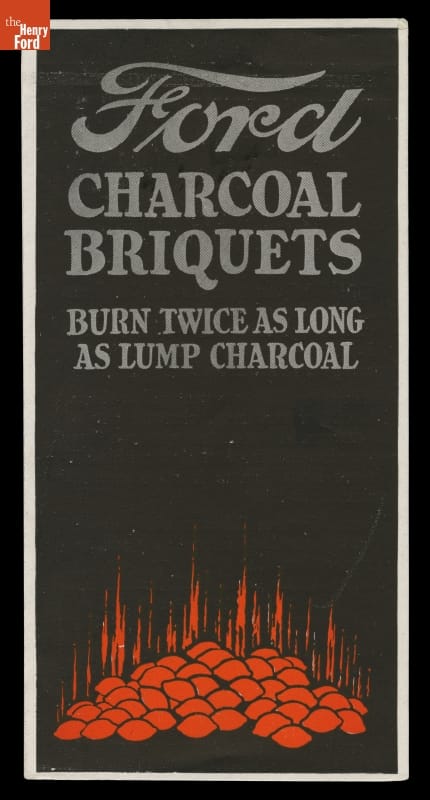
- Brochure, "Ford Charcoal Briquets, Burn Twice as Long as Lump Charcoal," 1935-1941 - Ford Motor Company sawmills created heaps of wood wastes. Some was used to produce steam for factory operations. The rest was carbonized and compressed into charcoal. Workers mixed charred hardwood chips with starch, forming nearly 100 tons of charcoal briquettes each day. This 1930s brochure suggests the many uses for this Ford byproduct.
- 1935 - 1941
- Collections - Artifact
Brochure, "Ford Charcoal Briquets, Burn Twice as Long as Lump Charcoal," 1935-1941
Ford Motor Company sawmills created heaps of wood wastes. Some was used to produce steam for factory operations. The rest was carbonized and compressed into charcoal. Workers mixed charred hardwood chips with starch, forming nearly 100 tons of charcoal briquettes each day. This 1930s brochure suggests the many uses for this Ford byproduct.